Eczema Diet Guide — TCM Tips on Triggers, Foods to Avoid & Daily Care
Recurring eczema is often closely linked to diet and lifestyle habits. Dr Au combines TCM pattern differentiation with his nutritionist expertise to explain the three common eczema patterns, foods to eat and avoid, healing soup recipes, and daily care tips to help you reduce eczema triggers at the root.
Medical review: Dr. Au Kwok Po, Arthur,Registered Chinese Medicine Practitioner #009884
1-Minute Quick Answer
Recurring eczema is often diet-driven. Dr Au (CMCHK 009884, also a qualified nutritionist) at Aspira TCM Lai Chi Kok breaks down what to eat and avoid for the three TCM eczema patterns, healing soup recipes, and daily care tips that reduce triggers at the root.
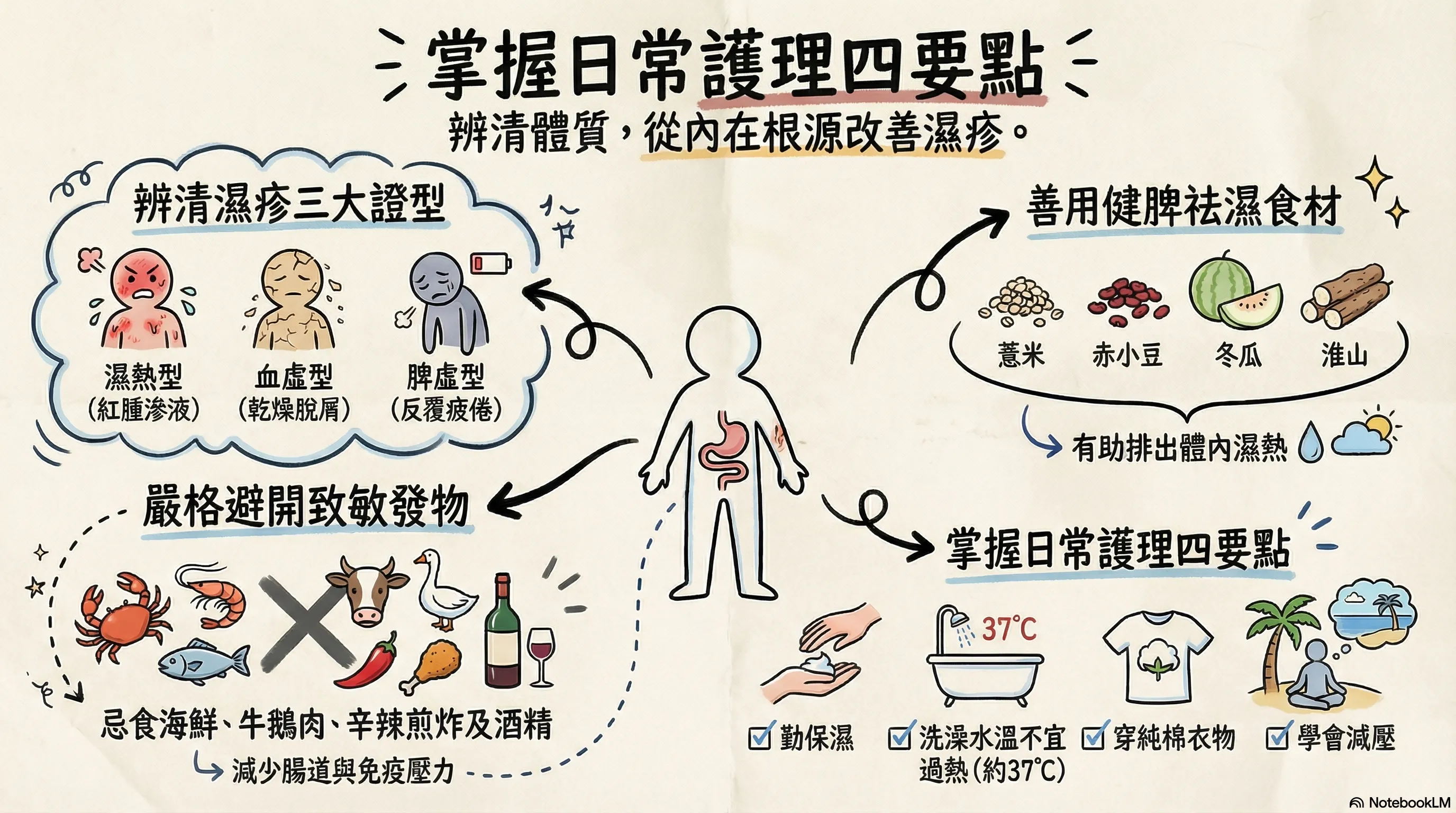 To help readers quickly grasp the content, this image was generated by NotebookLM. Some Chinese characters may not render correctly.
Eczema (also known as atopic dermatitis) is one of the most common skin conditions in Hong Kong. Many sufferers share the same frustration: "I've been so careful about my diet — why does my eczema keep coming back?"
The truth is, eczema has no single cause. Beyond external allergens, internal constitutional imbalances play an equally critical role. Traditional Chinese Medicine (TCM) views improper diet as a key factor driving these imbalances, and the right dietary adjustments can fundamentally reduce the frequency of eczema flare-ups.
Dr Au frequently treats eczema patients in his practice. As he also holds a certified nutritionist qualification, he is able to develop comprehensive dietary plans drawing on both TCM pattern differentiation and modern nutritional science. Below is a summary of his years of clinical experience, aimed at helping eczema patients better understand their condition and make meaningful improvements through diet and daily habits.
How TCM Views Eczema: Three Common Patterns
TCM treatment of eczema centres on "pattern differentiation and treatment" — identifying the underlying cause based on each person's unique constitution and symptoms, then developing a targeted treatment plan. The three most common eczema patterns seen clinically are:
1. Damp-Heat Pattern — Red, Swollen, Weeping Rashes
Typical presentation: Red, hot, swollen skin with dense rashes that weep fluid easily. The affected areas are moist and may become macerated, accompanied by intense itching. Some patients also experience thirst, dark yellow urine, and sticky stools.
Tongue and pulse: Red tongue with yellow, greasy coating; slippery, rapid pulse.
Cause analysis: Often caused by excessive consumption of spicy, fried, and greasy foods, or prolonged exposure to humid and hot environments. Internal dampness and heat combine and manifest on the skin. Hong Kong's humid, muggy climate makes this pattern particularly common.
2. Blood Deficiency with Wind-Dryness — Dry, Flaking Skin
Typical presentation: Dry, rough skin with flaking scales and pigmentation (darkened skin at affected areas). Itching tends to worsen at night, and scratching easily causes bleeding. Lesions commonly appear on the flexural surfaces of the limbs and neck.
Tongue and pulse: Pale tongue with thin white coating; thready, weak pulse.
Cause analysis: Most commonly seen in the chronic stage of recurring eczema. The prolonged illness depletes qi and blood. Blood deficiency leaves the skin undernourished, while wind generated from blood deficiency lingers on the skin surface, causing persistent dryness and itch.
3. Spleen Deficiency with Dampness Accumulation — Recurring, Hard to Resolve
Typical presentation: Eczema that lingers and fluctuates — sometimes better, sometimes worse. The rash is pale in colour with thin, watery discharge. Patients often feel tired and lethargic, have poor appetite, loose or soft stools, and abdominal bloating.
Tongue and pulse: Pale, swollen tongue with teeth marks on the edges and white, greasy coating; deep, moderate pulse.
Cause analysis: The spleen and stomach are central to the body's ability to transform and transport fluids. Irregular eating habits, excessive consumption of cold, raw, or overly sweet foods damage spleen function, leading to internal dampness accumulation that manifests on the skin. This pattern is especially common in Hong Kong, and many patients also experience concurrent digestive issues.
Note: Many eczema patients present with a mixed pattern rather than a single type. For example, "spleen deficiency with dampness accumulation combined with blood deficiency and wind-dryness" is a very common presentation. Accurate pattern identification requires a registered TCM practitioner to assess all four diagnostic methods (observation, listening, questioning, and pulse-taking). Self-diagnosis is not recommended.
Eczema Diet Guide: Foods to Eat and Avoid
Diet has a significant impact on eczema. Below is Dr Au's dietary guide, combining TCM theory with nutritional science:
Foods to Avoid or Minimise
| Food Category | Examples | TCM Explanation |
|---|---|---|
| Seafood (especially shellfish) | Prawns, crab, oysters, scallops | Classified as "trigger foods" (fa wu) that stir wind and generate dampness, aggravating skin allergic reactions |
| Beef and goose | Beef, offal, roast goose | Warm and heating in nature; trigger foods that fan fire and stir wind |
| Spicy and irritating foods | Chilli, Sichuan pepper, curry, mustard | Pungent and dispersing, they promote heat and worsen damp-heat eczema |
| Fried and greasy foods | Fried chicken, chips, doughnuts, instant noodles | Promote dampness and generate heat, burdening the spleen and stomach |
| Alcohol | Beer, wine, spirits | Damp-heat in nature; can directly worsen skin inflammation |
| Processed foods | Canned goods, pickled foods, foods with preservatives | Additives increase allergy risk and damage spleen and stomach function |
| High-sugar foods | Cakes, sweets, sugary drinks | Sweetness generates dampness; excessive consumption traps dampness in the spleen |
| Dairy products (some people) | Milk, cheese, ice cream | From a TCM perspective, prone to generating phlegm-dampness; from a nutritional perspective, some people have lactose intolerance or milk protein sensitivity |
| Wheat products (some people) | Bread, pasta, cake | Contains gluten, which may increase intestinal permeability and trigger immune responses that worsen inflammation (see detailed note below) |
About gluten and eczema: Wheat products contain gluten, a protein composed of glutenin and gliadin. In people with coeliac disease, gluten intolerance, or wheat allergy, gluten can trigger intestinal cells to release zonulin, increasing gut permeability ("leaky gut"). This allows incompletely digested proteins to enter the bloodstream, triggering immune attacks and chronic systemic inflammation. The mechanisms include: (1) loosening of intestinal tight junctions; (2) the immune system treating gluten as a foreign invader, producing autoantibodies; (3) gut microbiome imbalance that amplifies inflammation; (4) modern wheat varieties containing proteins that are harder for digestive enzymes to break down. If you suspect gluten sensitivity, consider an elimination diet under medical guidance.
Recommended Foods
| Food | Benefits |
|---|---|
| Job's tears (yi yi ren) | Strengthens the spleen, promotes diuresis, clears heat and expels pus — the top food for eczema management |
| Mung beans | Clears heat and detoxifies, promotes water metabolism and reduces swelling — ideal for damp-heat eczema |
| Winter melon | Clears heat and promotes urination, generates fluids — mild in nature, neither too cooling nor warming |
| Lotus root | Strengthens the spleen, promotes appetite, cools blood and relieves itch — mild and warming when cooked |
| White radish (daikon) | Aids digestion, regulates qi and resolves phlegm — helps improve spleen and stomach function |
| Chinese yam (huai shan) | Strengthens spleen and qi, tonifies the lungs and kidneys — enhances the spleen's transforming function |
| Adzuki beans (chi xiao dou) | Promotes water metabolism and reduces swelling, clears heat — works even better when paired with Job's tears |
| Poria (fu ling) | Strengthens the spleen and promotes diuresis, calms the mind — can be added to soups or congee |
Healing Soup Recipes
Job's Tears and Adzuki Bean Soup (Basic Dampness-Resolving Recipe)
- Ingredients: 30g Job's tears, 30g adzuki beans, 1 small piece of dried tangerine peel
- Method: Rinse all ingredients. Add approximately 1.5 litres of water. Bring to a boil over high heat, then simmer on low heat for 45-60 minutes.
- Benefits: Strengthens the spleen, resolves dampness, clears heat, and promotes water metabolism
- Suitable for: Daily maintenance for all eczema types, especially damp-heat and spleen deficiency patterns
- Suggestion: Can be consumed 2-3 times per week
Winter Melon and Job's Tears Soup (Heat-Clearing and Dampness-Resolving Recipe)
- Ingredients: 500g winter melon (with skin), 30g Job's tears, 20g Chinese yam, 200g lean pork
- Method: Blanch the pork. Add all ingredients to approximately 2 litres of water. Bring to a boil over high heat, then simmer on low heat for 1-1.5 hours.
- Benefits: Clears heat and resolves dampness, strengthens the spleen and nourishes the stomach
- Suitable for: Drinking during summer when damp-heat is heavier, especially for damp-heat and spleen deficiency patterns
- Suggestion: Cooking with the winter melon skin enhances the effect, as the skin has stronger diuretic properties
Chrysanthemum Tea (Basic Heat-Clearing Recipe)
- Ingredients: 20g chrysanthemum flowers
- Method: Add approximately 1 litre of hot water and steep for 10 minutes
- Benefits: Clears heat and detoxifies
- Suitable for: Especially suited for stagnant-heat type eczema
Note: The above soups and teas are general dietary suggestions for daily wellness. For patients with severe eczema or those currently undergoing treatment, please consult your practitioner before consuming.
6 Essential Daily Care Tips
Beyond dietary adjustment, everyday habits also affect eczema. Here are Dr Au's five key daily care recommendations:
1. Moisturising Is the Most Fundamental Step
Eczema patients have a weakened skin barrier, making it easy for moisture to escape. Apply a moisturiser at least twice daily (morning and evening). The best time is right after bathing, while the skin is still slightly damp.
How to choose a moisturiser:
- Choose fragrance-free, dye-free products
- Creams and ointments provide longer-lasting hydration than lotions
- Avoid products containing alcohol
2. Keep Bath Water Temperature Warm, Not Hot
Hot water strips the skin's natural oil layer, worsening dryness and itching. Use lukewarm water (around 37°C) and limit bathing to 10-15 minutes. Avoid soap-based body washes — opt for gentle bath oils or soap-free cleansers instead.
3. Wear Loose-Fitting Cotton Clothing
Wool, nylon, and other synthetic fibres can irritate the skin and worsen itching. Choose loose, breathable clothing made from pure cotton to minimise friction and irritation. Wash new clothes before wearing them, and use fragrance-free laundry detergent.
4. Manage Stress — The Hidden Eczema Trigger
Stress is a trigger that many eczema patients overlook. Mental tension affects the immune system and endocrine function. From a TCM perspective, emotional distress causes liver qi stagnation, which can transform into fire and further aggravate damp-heat.
Recommendations:
- Get adequate sleep (7-8 hours per night)
- Exercise moderately (walking, yoga, swimming)
- Practise relaxation techniques (deep breathing, meditation)
- Pay extra attention to diet and rest during periods of high work stress
5. Keep a Food Diary to Identify Your Personal Triggers
Everyone's eczema triggers are different. The avoidance list above provides general guidance, but you may have additional foods that trigger or worsen your eczema.
How to do it:
- Record everything you eat and your skin condition daily
- Continue for at least 2-4 weeks
- Look for patterns linking specific foods to eczema flare-ups
- Bring the diary to your follow-up appointments so your practitioner can provide more precise dietary advice
6. Clean Eczema Wounds Promptly with Iodine Solution
When eczema skin develops open wounds, it becomes vulnerable to invasion by external pathogens, leading to infection and a cycle of worsening flare-ups. Clean the affected area with an iodine solution (such as povidone-iodine) morning and evening to help prevent infection and promote healing.
When Should You See a TCM Practitioner?
While diet and daily care can improve eczema to a degree, the following situations warrant professional TCM treatment sooner rather than later:
- Eczema has been recurring for more than a month and cannot be controlled through diet changes and skincare alone
- Increasing reliance on steroid cream — rebound flares after stopping, or early signs of steroid dependence
- Eczema is affecting your sleep and daily life — for example, night-time itching causing chronic insomnia
- Affected areas are expanding — spreading from one area to multiple sites
- You have tried numerous approaches but eczema keeps returning — it may be time to address your underlying constitution
The strength of TCM eczema treatment lies in individualised pattern-based care. Different eczema patterns require entirely different treatment approaches — damp-heat requires clearing heat and resolving dampness; blood deficiency with wind-dryness requires nourishing blood and moisturising dryness; spleen deficiency with dampness requires strengthening the spleen and transforming dampness. Only with accurate pattern identification can the right treatment be applied to fundamentally improve the constitution and reduce recurrence.
Dr Au's Advice
Many eczema patients think "watching your diet" simply means cutting out certain foods. But from a TCM perspective, dietary management goes well beyond avoidance. What matters more is choosing the right foods for your specific constitution.
For example, both patients may have eczema, but a damp-heat patient drinking mung bean soup can help clear heat, whereas a spleen-deficient patient drinking too much mung bean soup may actually worsen their spleen and stomach coldness. Understanding which constitutional type you belong to is therefore essential for effective dietary management.
As a TCM practitioner who also holds a nutritionist qualification, I integrate TCM pattern differentiation with modern nutritional science to develop personalised dietary plans for my patients. I have seen many patients whose skin condition improved faster than expected once they adjusted their diet alongside herbal treatment.
If your eczema keeps recurring and is becoming harder to control, I recommend looking beyond topical creams to suppress symptoms. Instead, address the issue from within — from your underlying constitution. You are welcome to book a consultation so I can provide advice tailored to your specific situation.
— Dr Au Kwok Po, Arthur | Registered Chinese Medicine Practitioner (Certified Nutritionist) (Reg. No.: 009884)
Learn More or Book a Consultation
Want to learn more about TCM eczema treatment? Visit our Complete TCM Guide to Eczema Treatment or book a consultation with Dr Au directly.
How to book:
- WhatsApp: Book here
- Phone: 2110 9337
- Address: Unit 2706, Saxon Tower, 7 Cheung Shun Street, Lai Chi Kok
Disclaimer: The above content is for health education purposes only and does not constitute medical or prescribing advice. Every person's constitution and condition are different, and dietary recommendations vary accordingly. If needed, please book a consultation so a practitioner can develop a plan tailored to your specific situation. The soup recipes are general wellness suggestions only — patients with severe eczema should consult their practitioner first.
Disclaimer: This article is for health education and reference purposes only and does not constitute medical advice, diagnosis, or treatment. Each patient's condition is unique and treatment outcomes vary. Please consult a registered TCM practitioner or qualified healthcare professional for health concerns.
Want to learn more? WhatsApp us for a free consultation
Book via WhatsAppExplore our full range of treatments: Traditional TCM Services
Related Articles
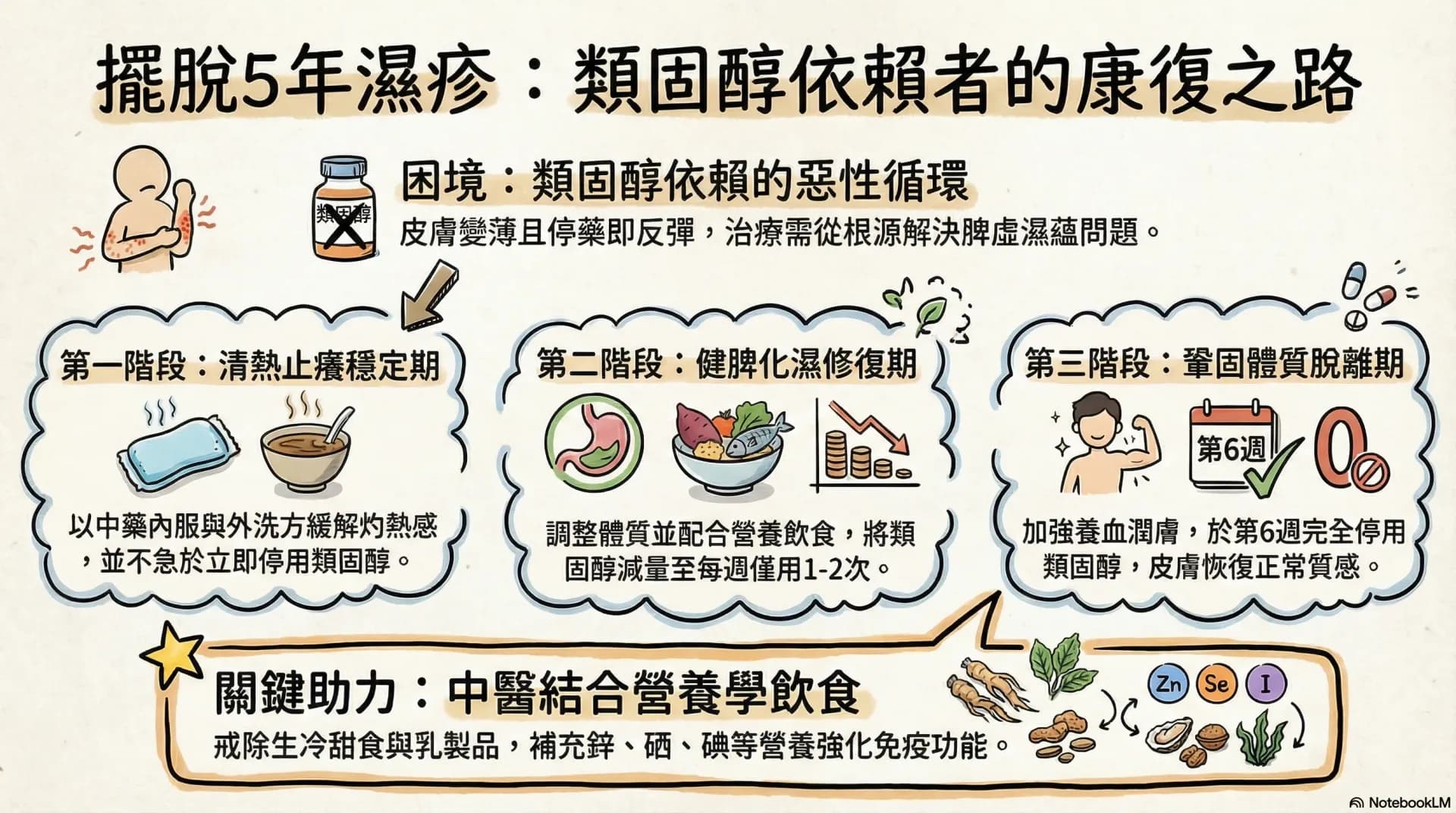
Breaking Free from Steroid Dependence — An Eczema Recovery Story
A woman in her 20s suffered from recurring eczema for five years with long-term steroid cream dependence. After approximately two months of internal and external herbal medicine treatment by Dr Au, she successfully broke free from steroid dependence and her skin returned to normal.
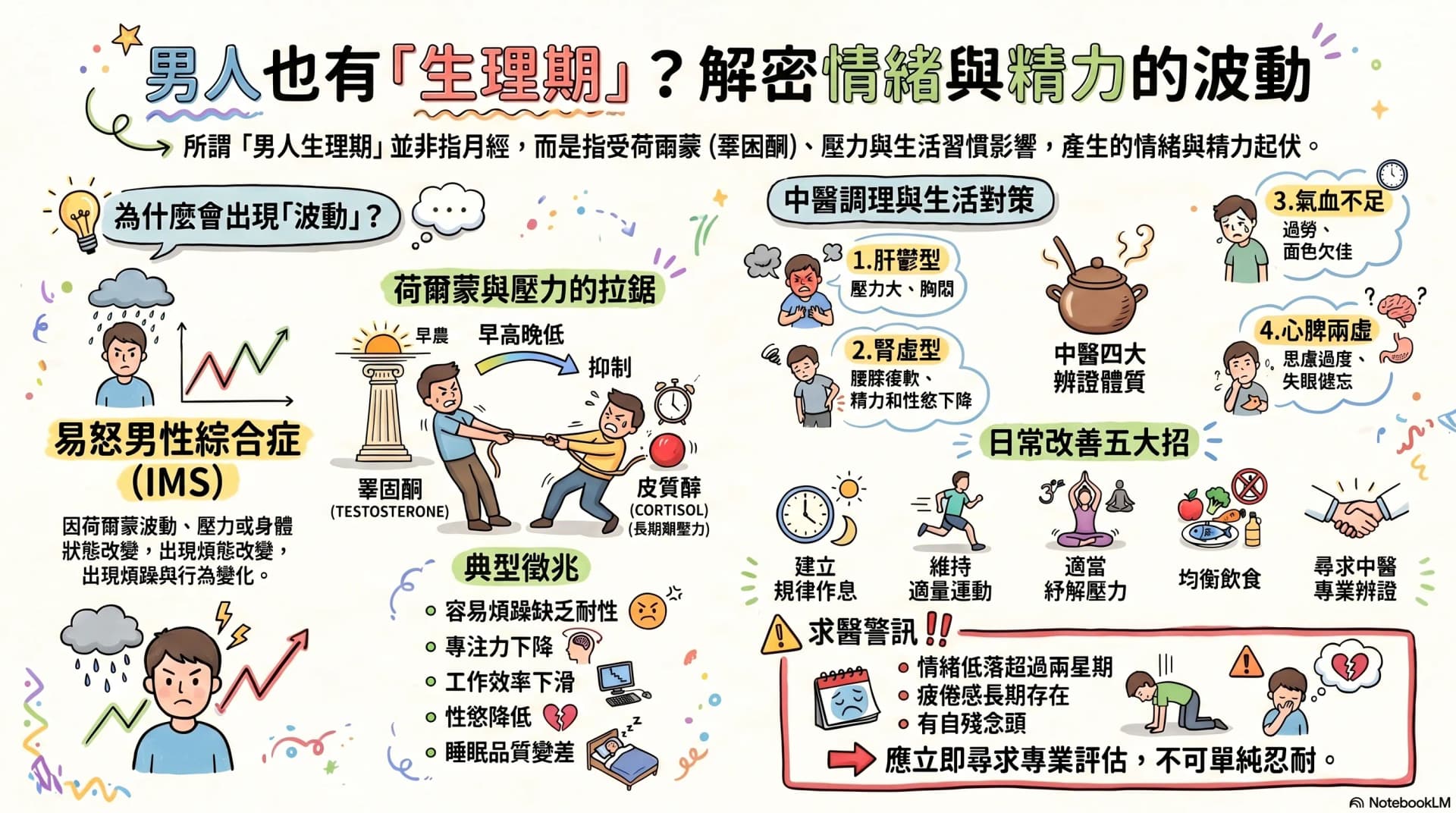
Do Men Have a “Period” Too? A TCM Look at Male Mood Swings, Fatigue and Hormonal Change — Plus 5 Ways to Find Relief
Do men have a period too? Men have no regular cycle like menstruation, so the “male period” is not a formal diagnosis — it describes the mood and energy swings driven by hormones, stress, sleep and lifestyle. This article covers the signs, the causes, how it differs from a woman’s period, how TCM assesses it, and five everyday ways — teas, foods and acupressure points — to find relief.
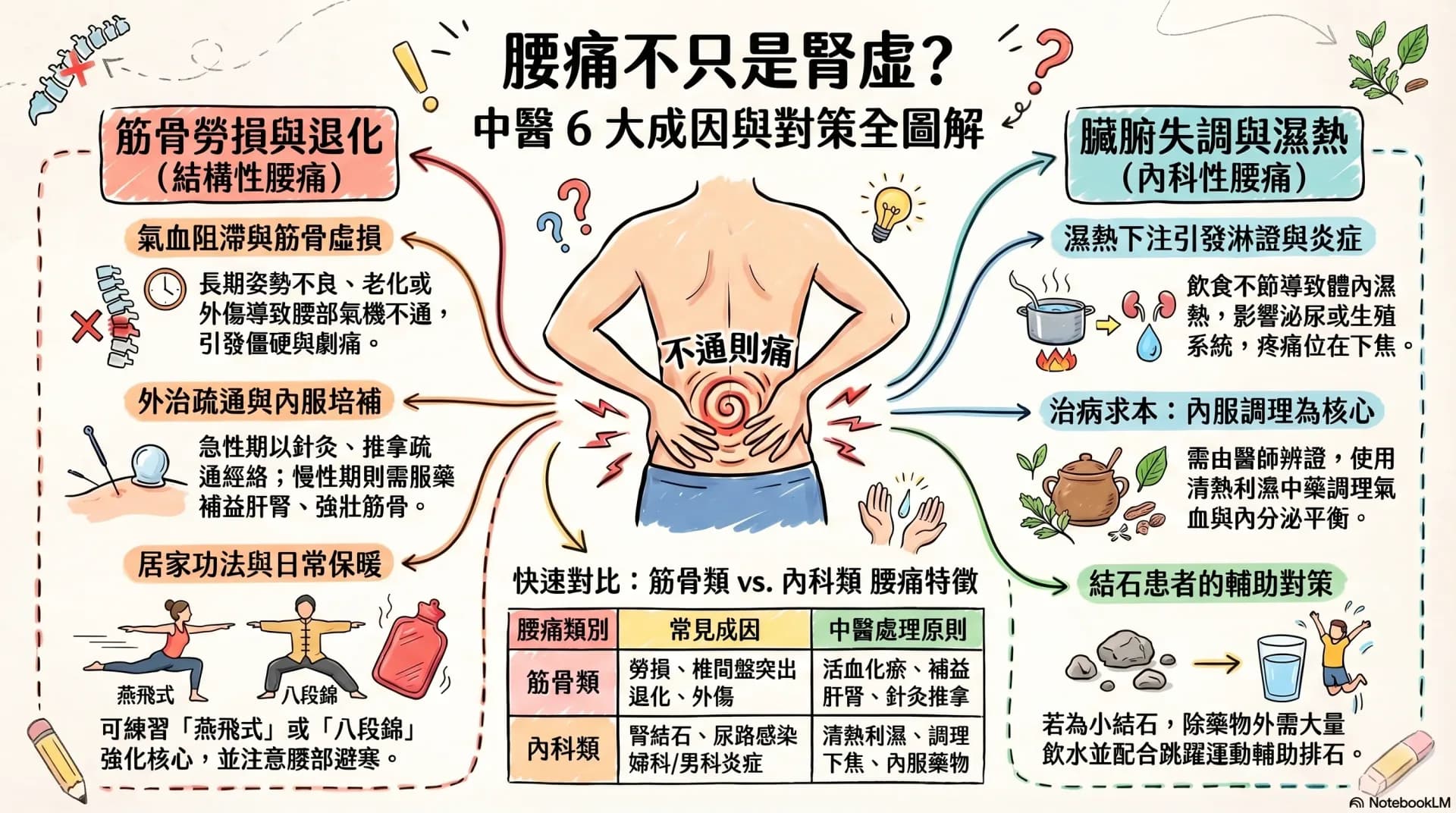
Low Back Pain: 6 Common Causes & TCM Treatment Approaches
Low back pain is not always simply “kidney deficiency” or muscle fatigue. It may also be related to muscle strain, disc herniation, degenerative lumbar disease, kidney stones, urinary tract infection, or pelvic inflammation. This article explains six common causes of low back pain from a TCM perspective and outlines key distinctions and treatment directions.