Health Blog
TCM wellness tips, clinic updates, and health insights
86 / 86 articles
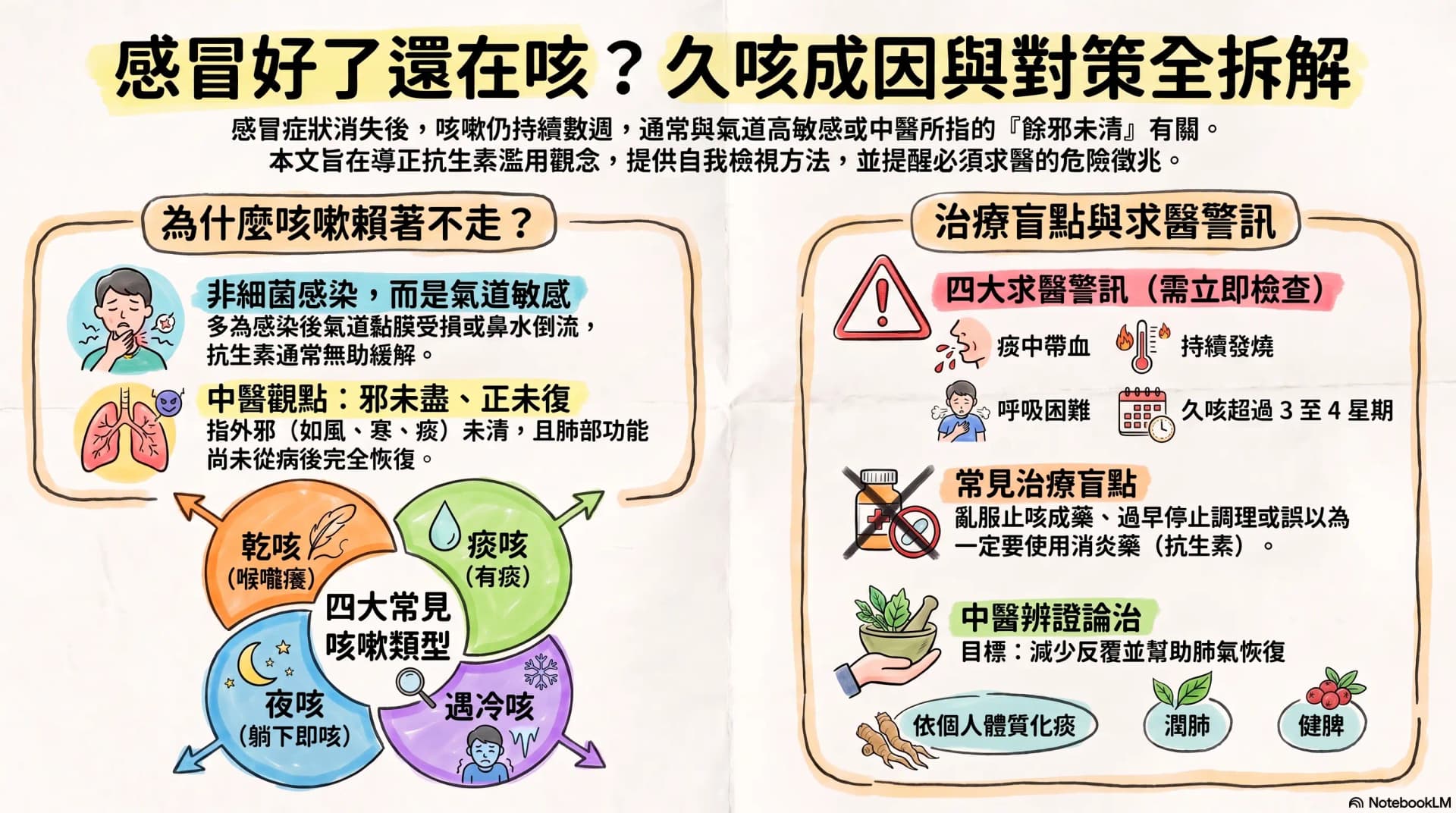
The Cold Has Gone but the Cough Will Not Clear: Causes of a Lingering Post-Cold Cough and How TCM Can Help
The cold is gone, but the cough drags on for weeks. This article breaks down the common types and causes of a lingering post-cold cough, the situations that warrant medical attention, the treatment blind spots, and how Chinese medicine can help through pattern differentiation.
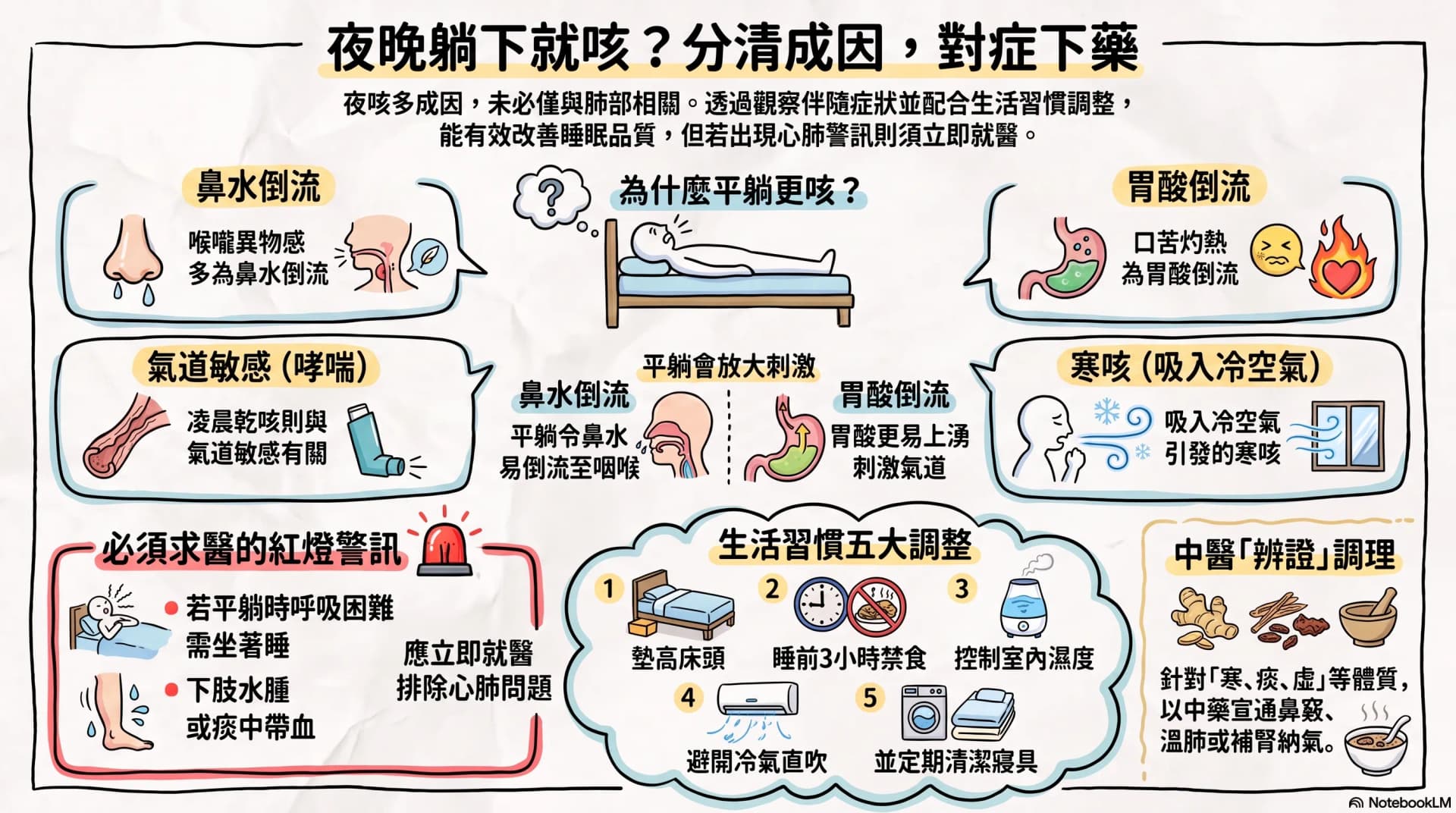
A Cough That Comes On When You Lie Down at Night: Common Causes and How TCM Can Help
Fine during the day, but coughing the moment you lie down, or waking at night? A night cough has more than one cause, and some have little to do with the lungs. Learn how to identify the type by accompanying symptoms, why lying flat makes it worse, when to seek medical care, and how Chinese medicine can help.
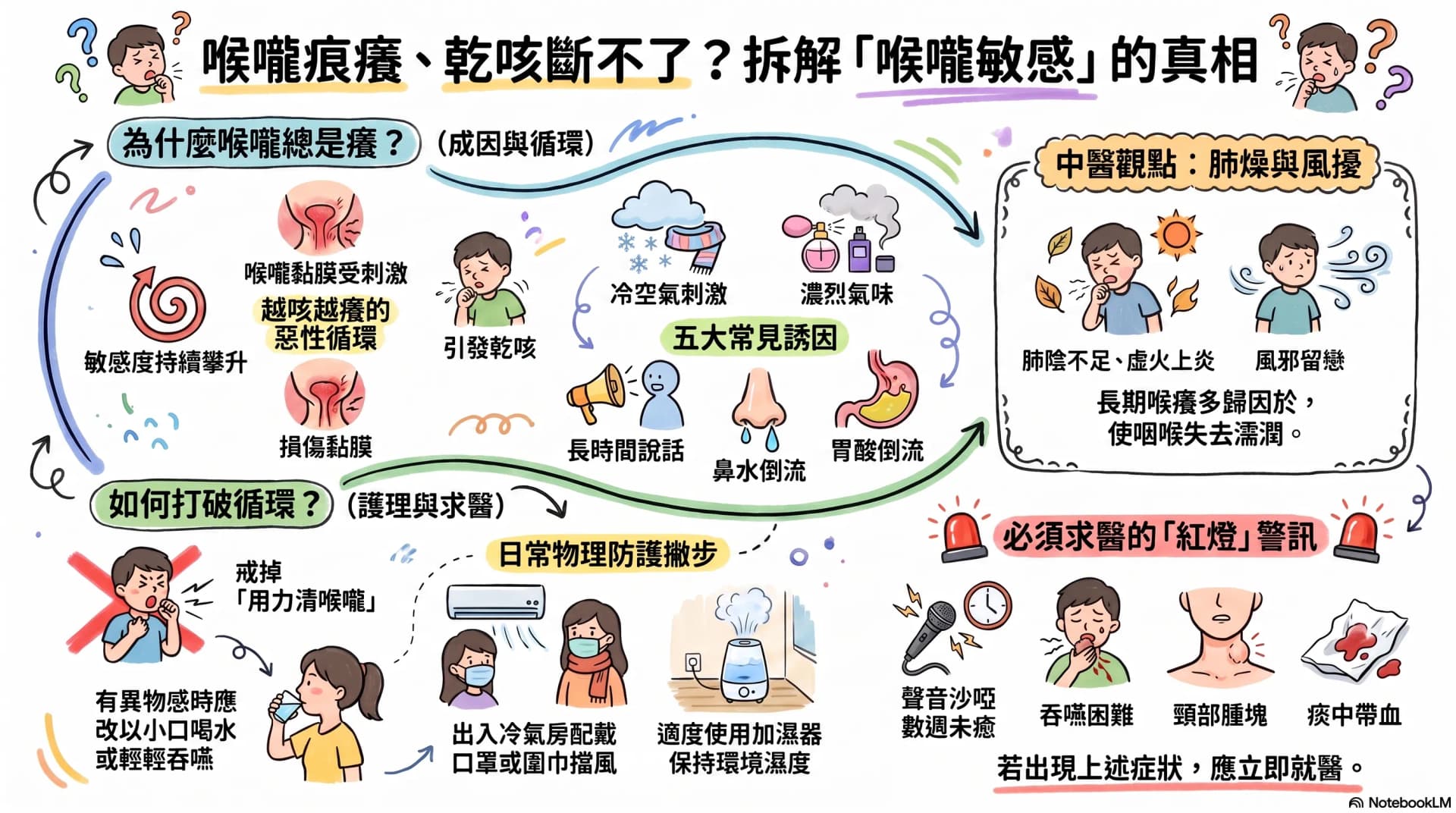
An Itchy Throat and a Cough Whenever You Speak: Throat Sensitivity and Sensitive Cough
A long-standing itchy throat with a dry cough triggered by talking, cold air or smells — not a cold, yet recurring for years. This article explains the causes of throat sensitivity and sensitive cough, how to distinguish its links with allergic rhinitis, acid reflux and voice overuse, when to see a doctor, and how Chinese medicine can help.
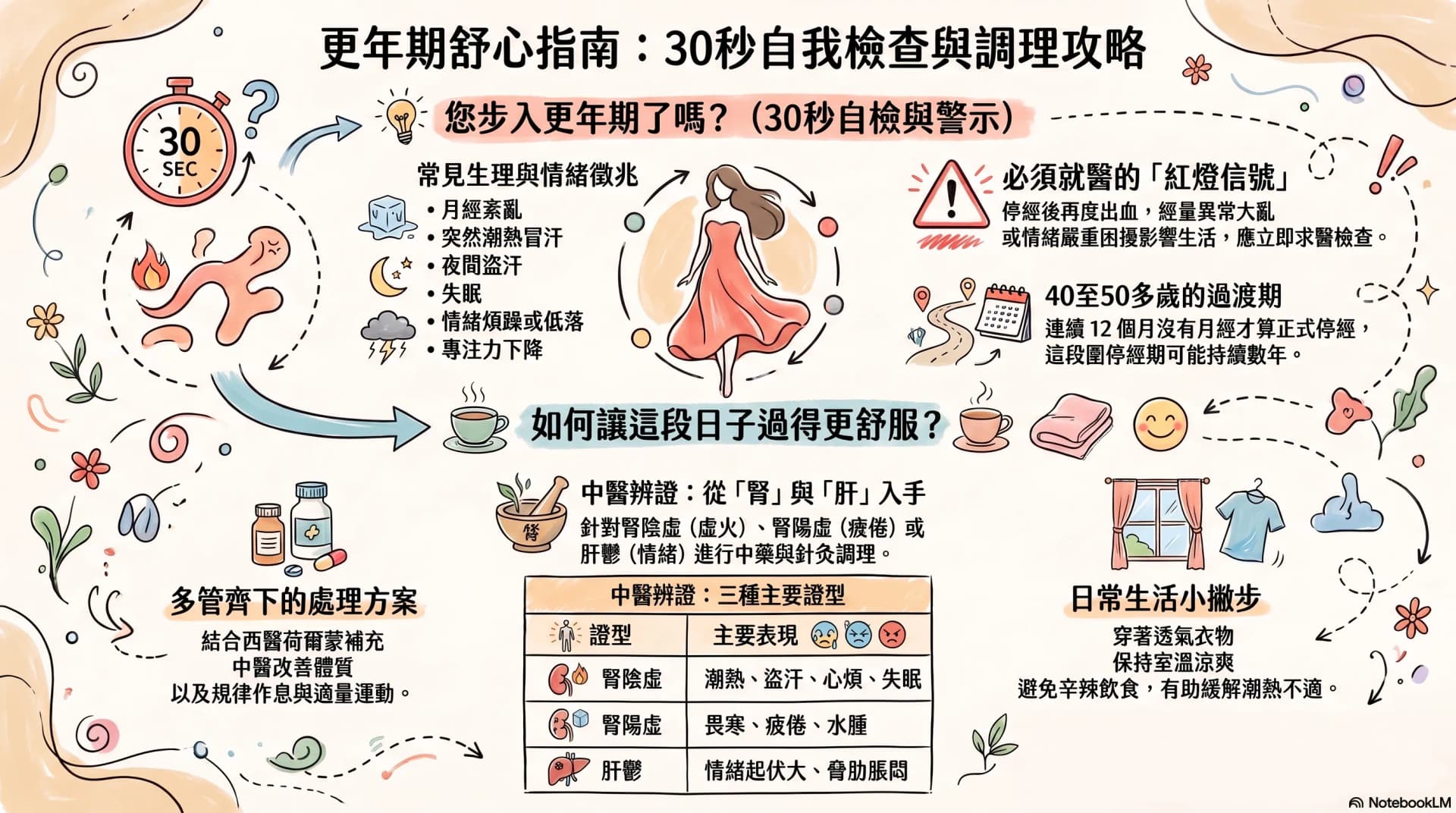
Hot Flushes, Night Sweats, Insomnia and Mood Swings: Are You Entering Menopause?
Hot flushes, night sweats, insomnia, mood swings, irregular periods — is this menopause? This article offers a 30-second self-check, explains what menopause is, which situations warrant medical assessment, and reviews the options: hormone replacement, lifestyle measures and Chinese medicine.
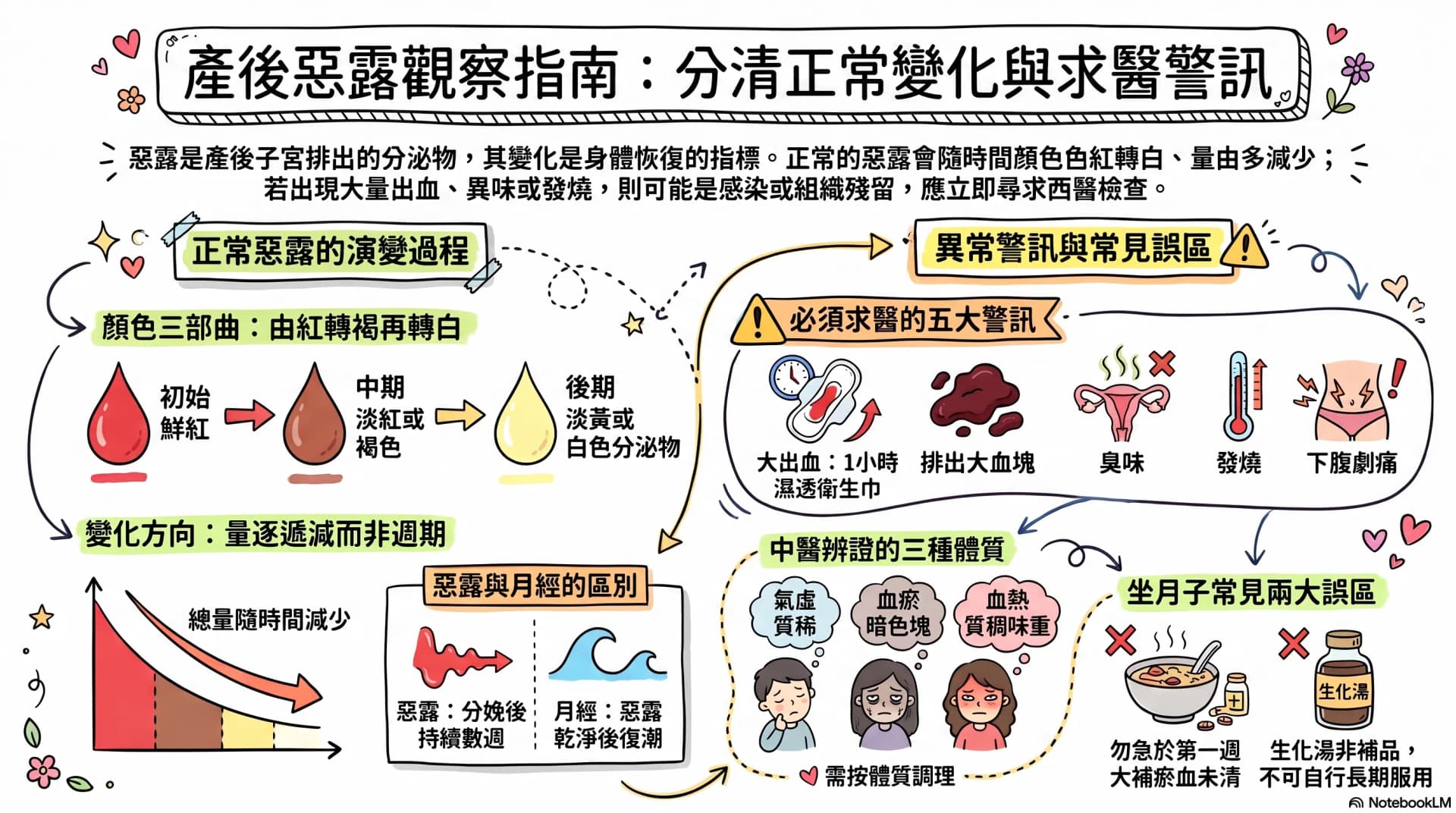
Postpartum Lochia That Will Not Settle: Telling Normal From Abnormal, and When to Seek Care
Weeks after the birth and the lochia still has not settled. This article explains the normal course of lochia, how it differs from a period, which situations require immediate medical care, the common causes and misconceptions, and how Chinese medicine can help.
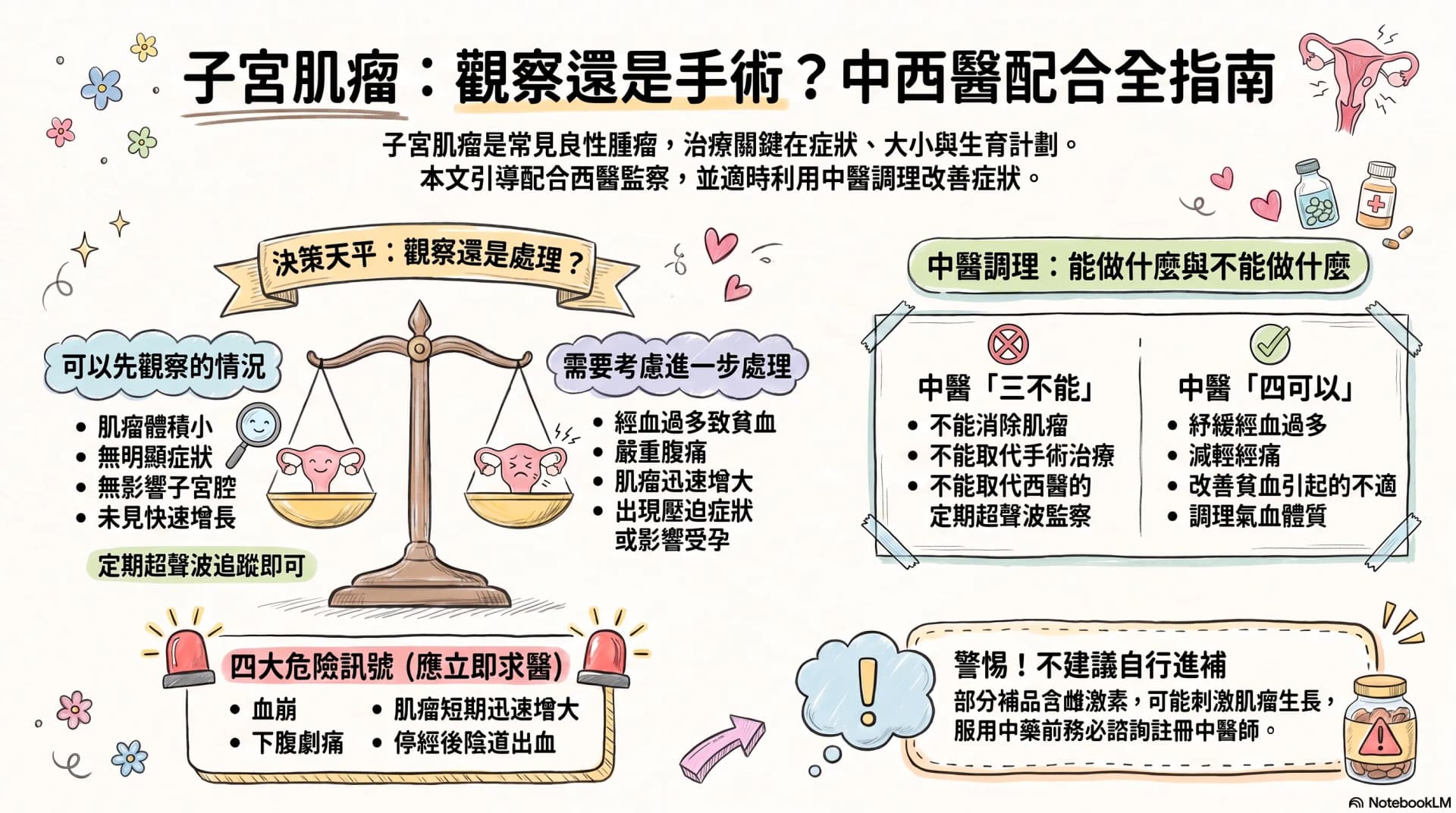
Uterine Fibroids: Do You Need Surgery, and What Can TCM Do?
Fibroids found at a check-up — is surgery inevitable? This article explains what uterine fibroids are, when treatment is needed, when the decision belongs with a gynaecologist, and sets out plainly the role and the limits of Chinese medicine.
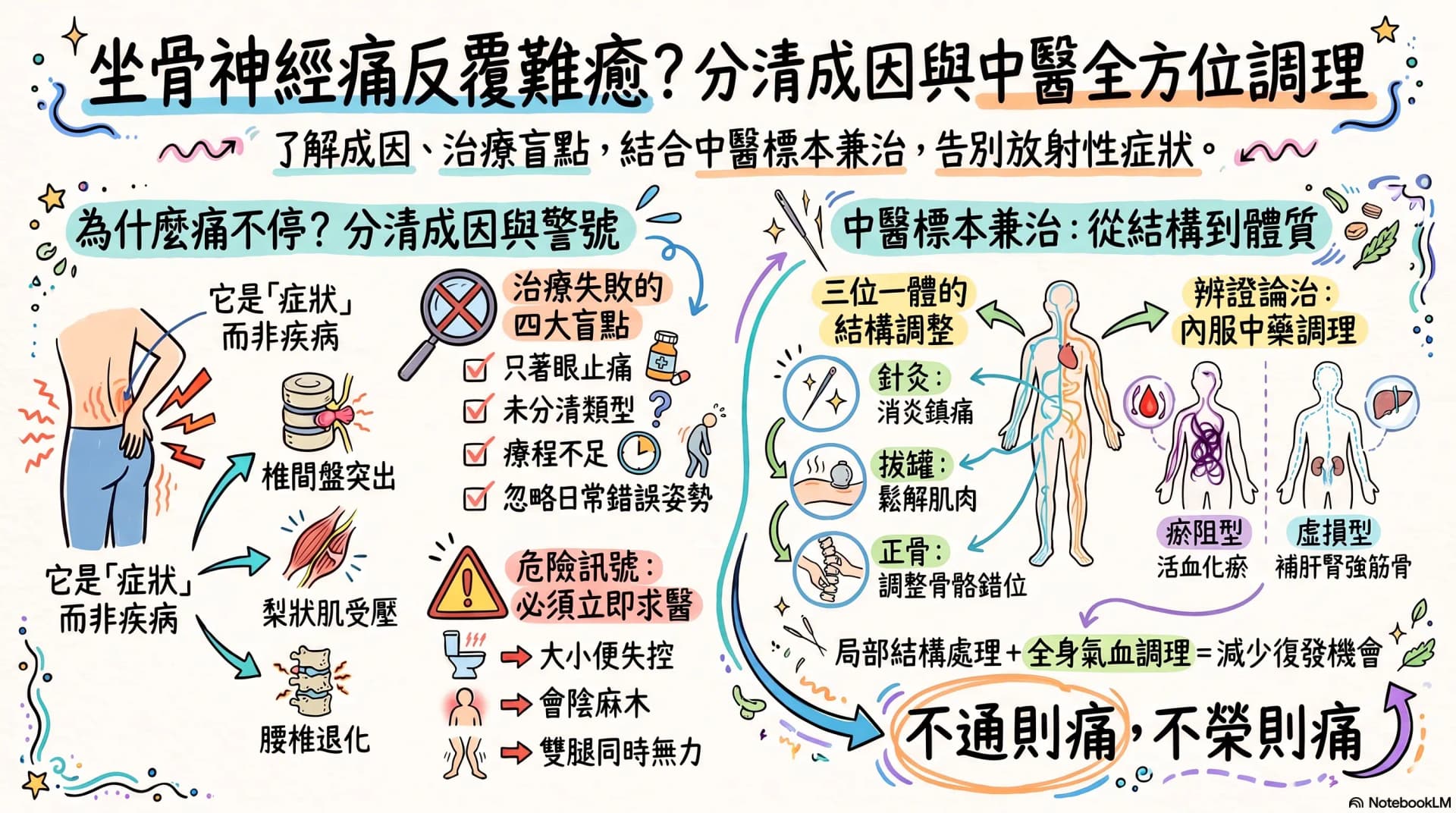
Sciatica That Never Fully Settles and Keeps Coming Back? First Understand the Causes, Types and Common Treatment Pitfalls
Sciatica is a set of symptoms radiating along the sciatic nerve, not one disease. Causes vary — disc herniation, piriformis problems, lumbar degeneration — so treatment differs. Recurrence often comes from only masking pain, not identifying the type, or stopping early. TCM may combine acupuncture, cupping, bone-setting and herbs to ease symptoms; seek urgent care if bladder, bowel or leg strength is suddenly affected.
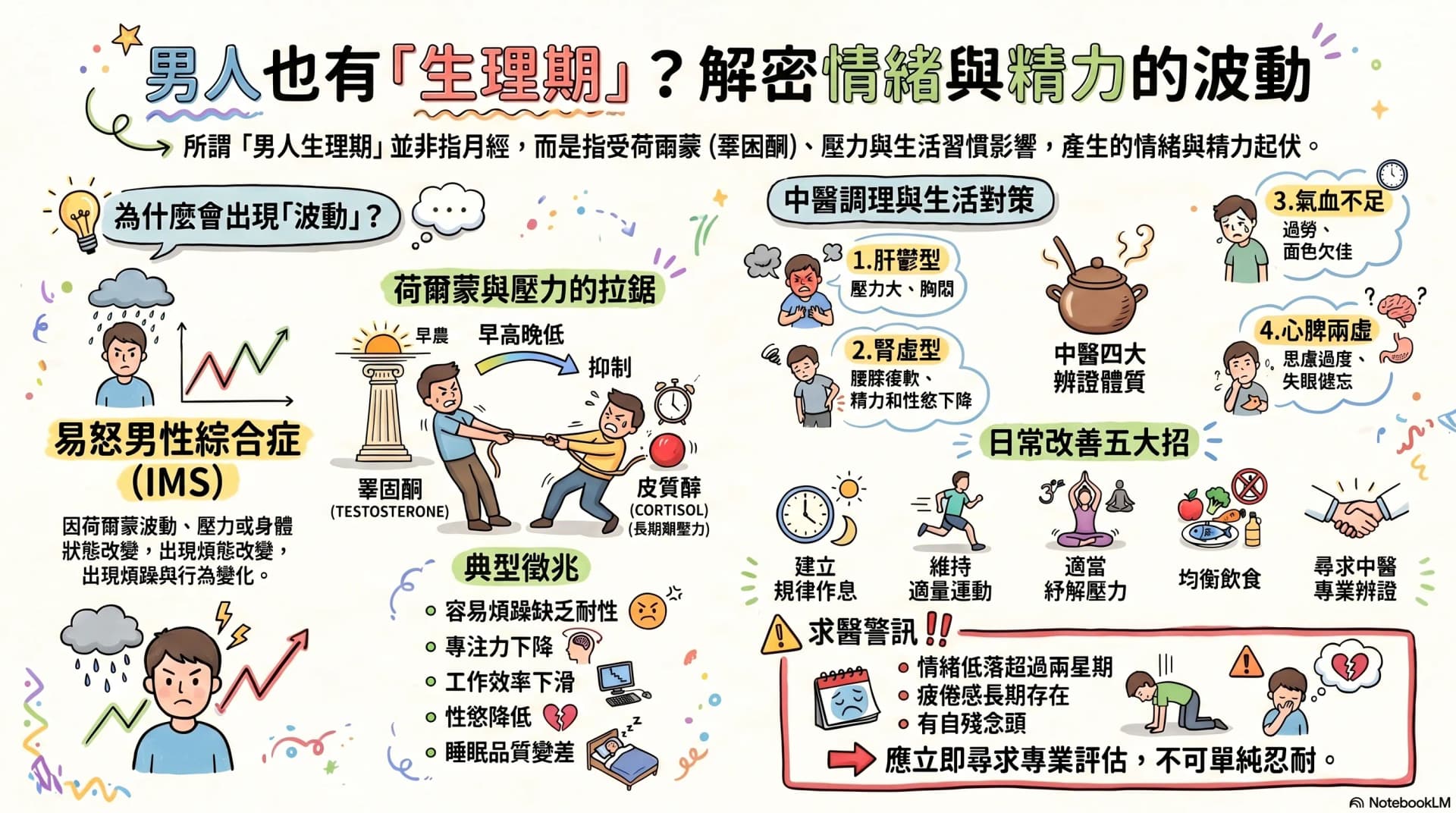
Do Men Have a “Period” Too? A TCM Look at Male Mood Swings, Fatigue and Hormonal Change — Plus 5 Ways to Find Relief
Do men have a period too? Men have no regular cycle like menstruation, so the “male period” is not a formal diagnosis — it describes the mood and energy swings driven by hormones, stress, sleep and lifestyle. This article covers the signs, the causes, how it differs from a woman’s period, how TCM assesses it, and five everyday ways — teas, foods and acupressure points — to find relief.
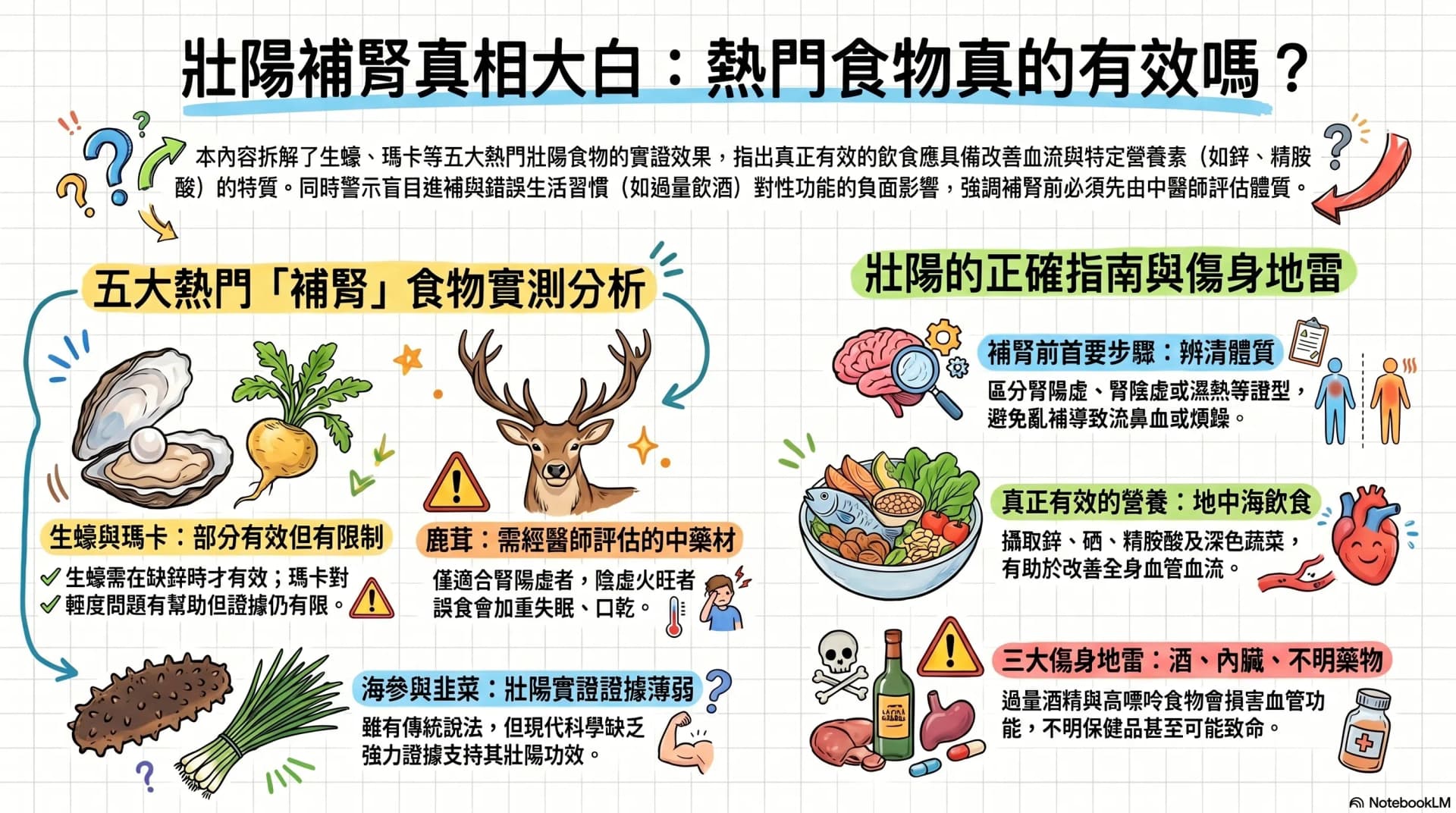
Do Oysters, Maca and Deer Antler Boost Male Vitality? 5 Myths
Do aphrodisiac foods actually work? This article opens with a rating table (effective / partly effective / effective within a TCM framework / weak evidence / no strong evidence), reviews the Chinese and Western medical evidence behind oysters, maca, deer antler, sea cucumber and Chinese chives, distils the 3 shared traits of foods that genuinely support male sexual function, and flags 3 commonly eaten items that can actually harm performance.
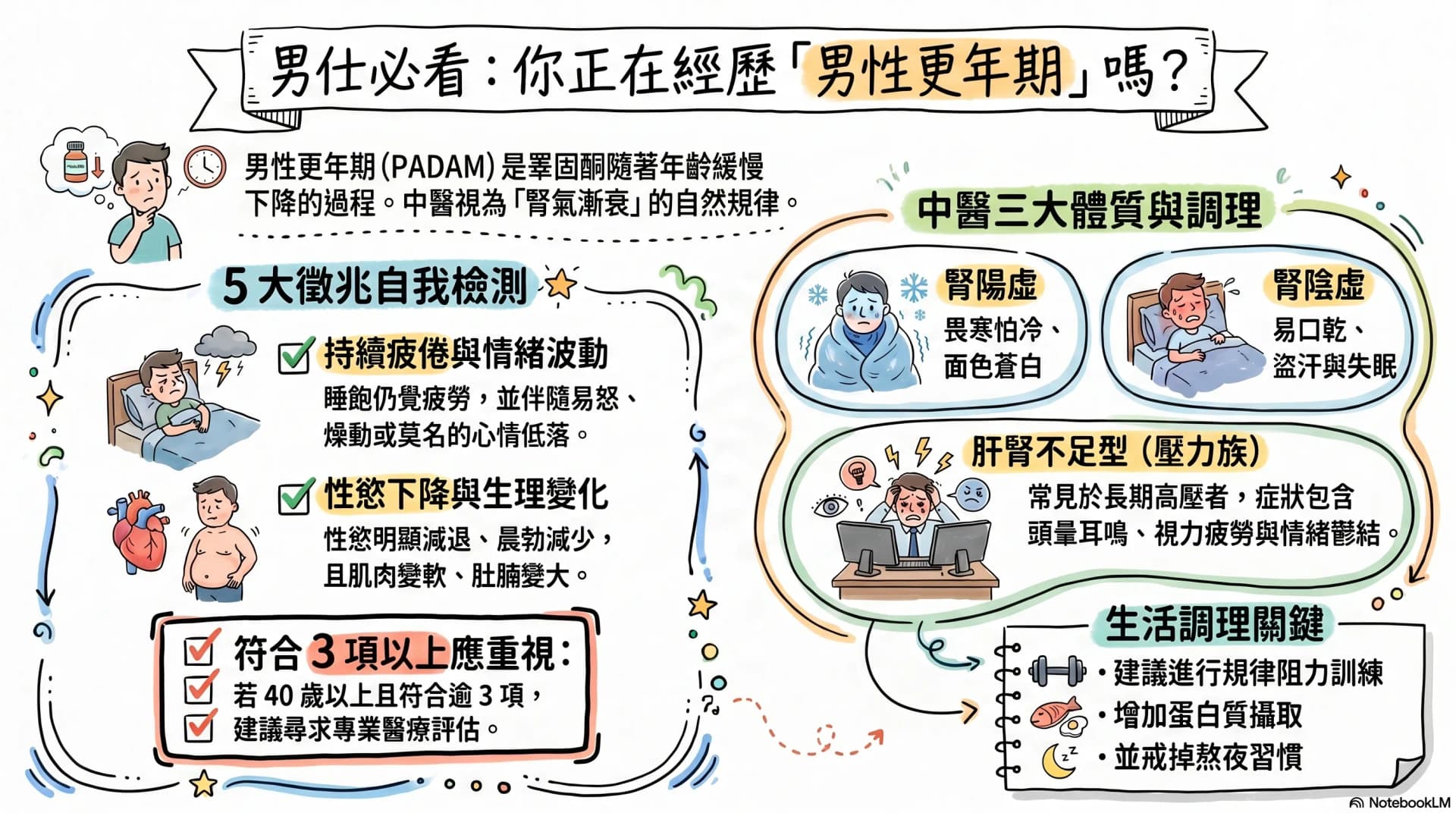
Male Menopause Through the TCM Lens: 5 Signs in Men Over 40
Unexplained fatigue, irritability, lower libido, poorer sleep and a growing belly after 40 are not just ageing or work stress — they may be male menopause. This article begins with a five-sign self-check, sets out three TCM patterns (kidney-yang deficiency, kidney-yin deficiency, liver-and-kidney insufficiency) with matching improvements, and compares the two treatment routes — testosterone replacement therapy versus TCM constitutional care.
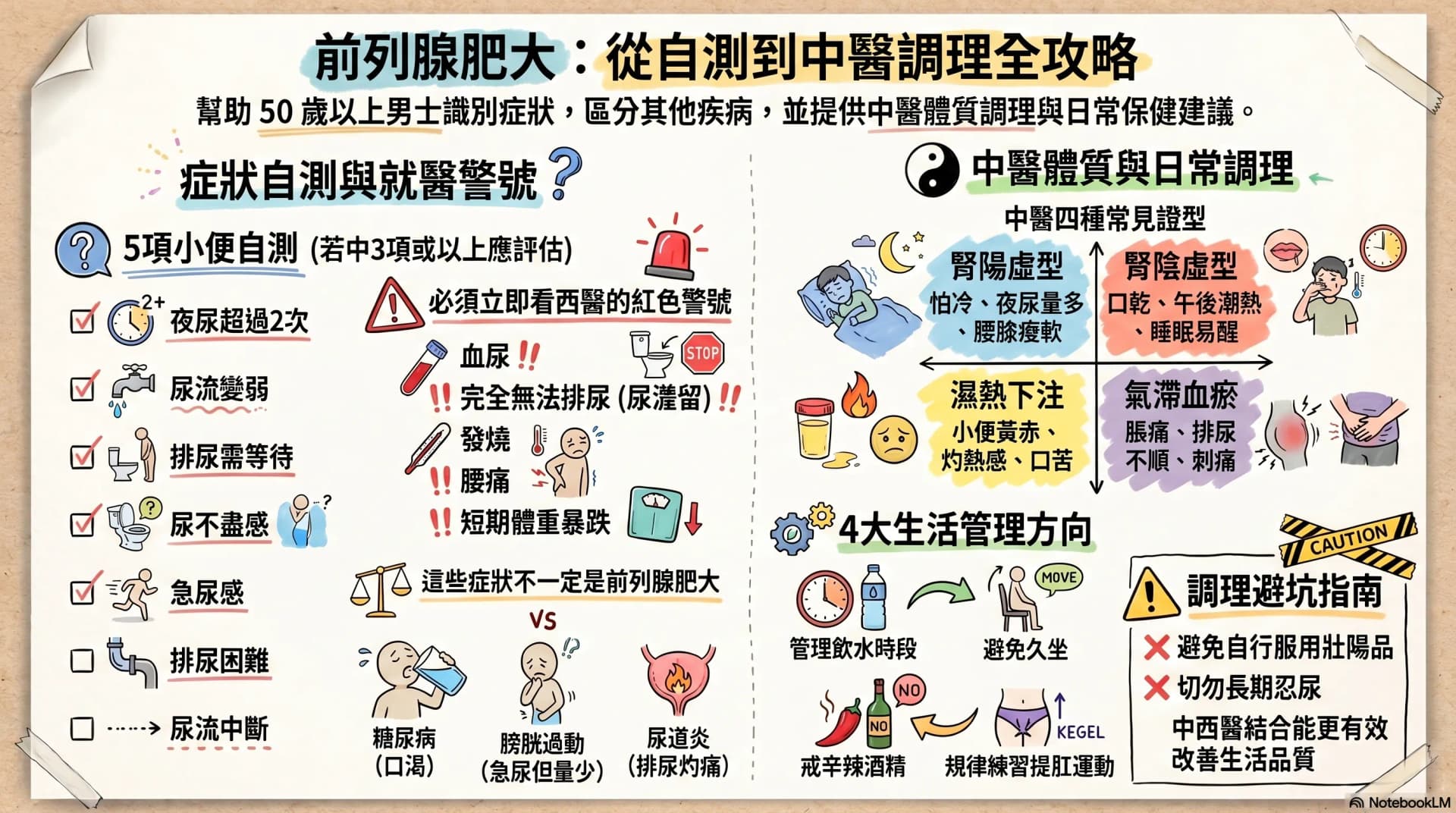
Enlarged Prostate: Are Nocturia and a Weak Stream Warning Signs?
After age 50, urinary frequency, nocturia, a weaker stream and having to urinate in stages may not simply be ageing. This article opens with a 7-symptom self-check, then sets out warning signs that warrant seeing a Western doctor immediately, four TCM constitution patterns, and four daily care directions any man can start with — helping you or your father decide the next step.
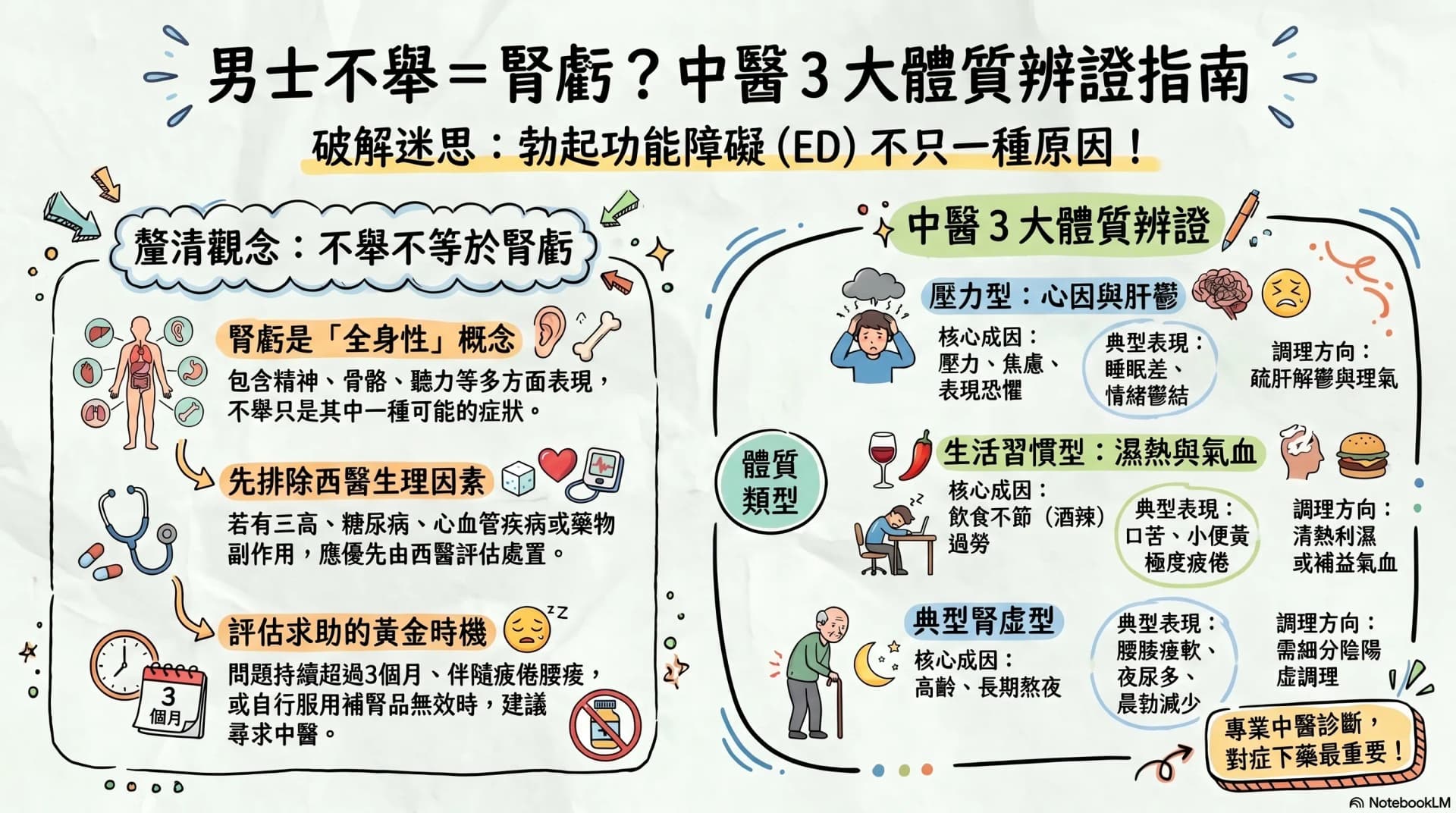
Is Erectile Dysfunction Always Kidney Deficiency? 5 TCM Patterns
Many men reach for kidney-tonic pills the moment they notice an erection problem, but TCM actually divides erectile dysfunction (ED) into 5 distinct patterns. This article starts with a symptom comparison table to help you tell true kidney deficiency from ED that may not involve kidney deficiency, then breaks down the psychogenic, liver-qi stagnation, damp-heat in the lower burner, qi-and-blood deficiency, and kidney deficiency patterns along with how each should be approached. It also flags reversible causes such as the three highs, diabetes and drug side effects that should be ruled out first, so you do not make things worse with the wrong tonic.
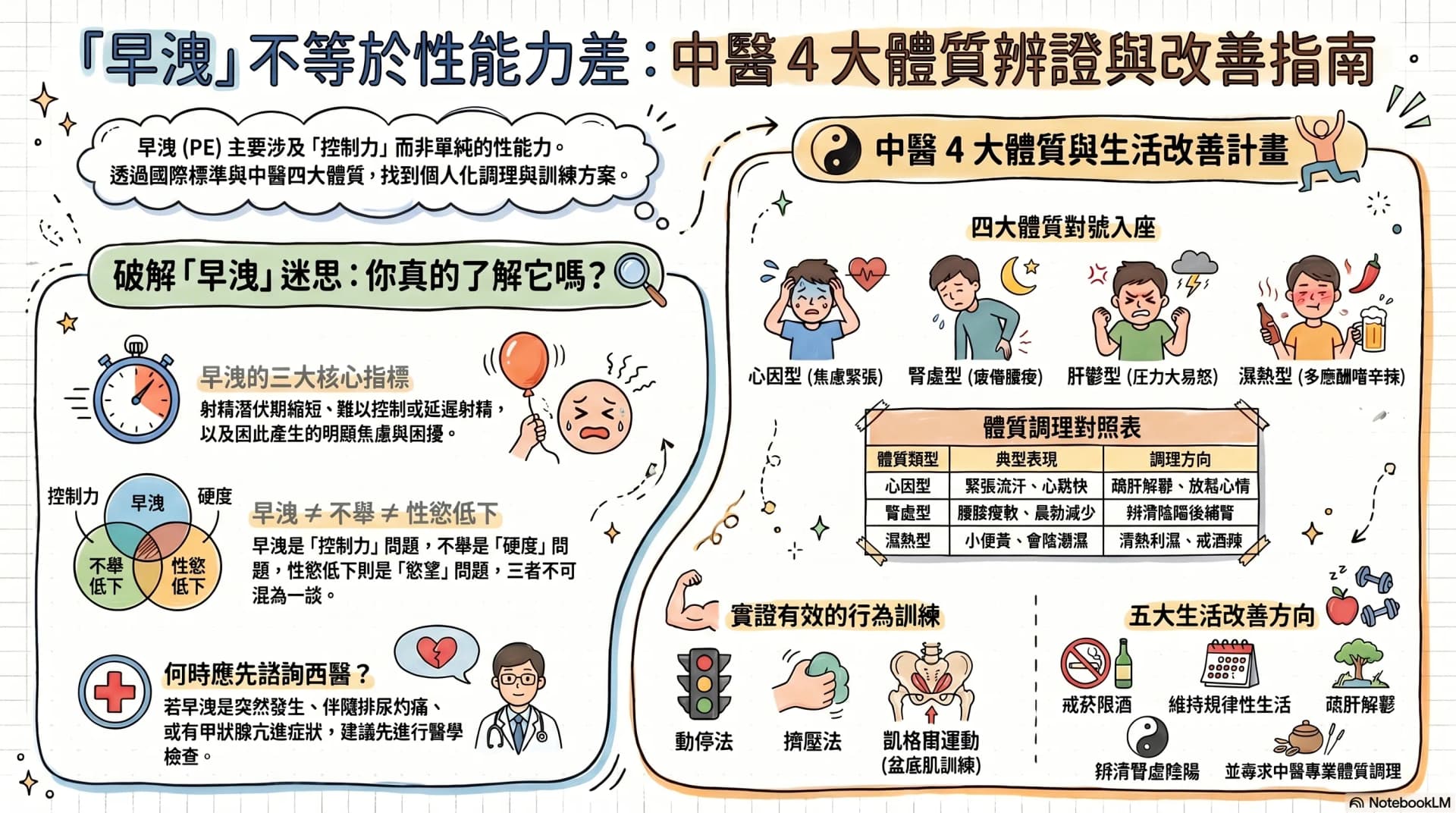
Premature Ejaculation Is Not Poor Performance: 4 TCM Patterns
Many men who feel they "do not last long enough" worry their sexual performance is poor, but premature ejaculation and sexual performance are two separate things. This article uses the ISSM medical definition plus a 4-item self-check to help you tell whether you have true PE, breaks down 4 TCM constitutional patterns (psychogenic, kidney deficiency, liver-qi stagnation, damp-heat in the lower burner), and outlines 5 evidence-based ways to improve control and lasting time — including behavioural training, pelvic floor exercises, lifestyle adjustments and personalised TCM care.
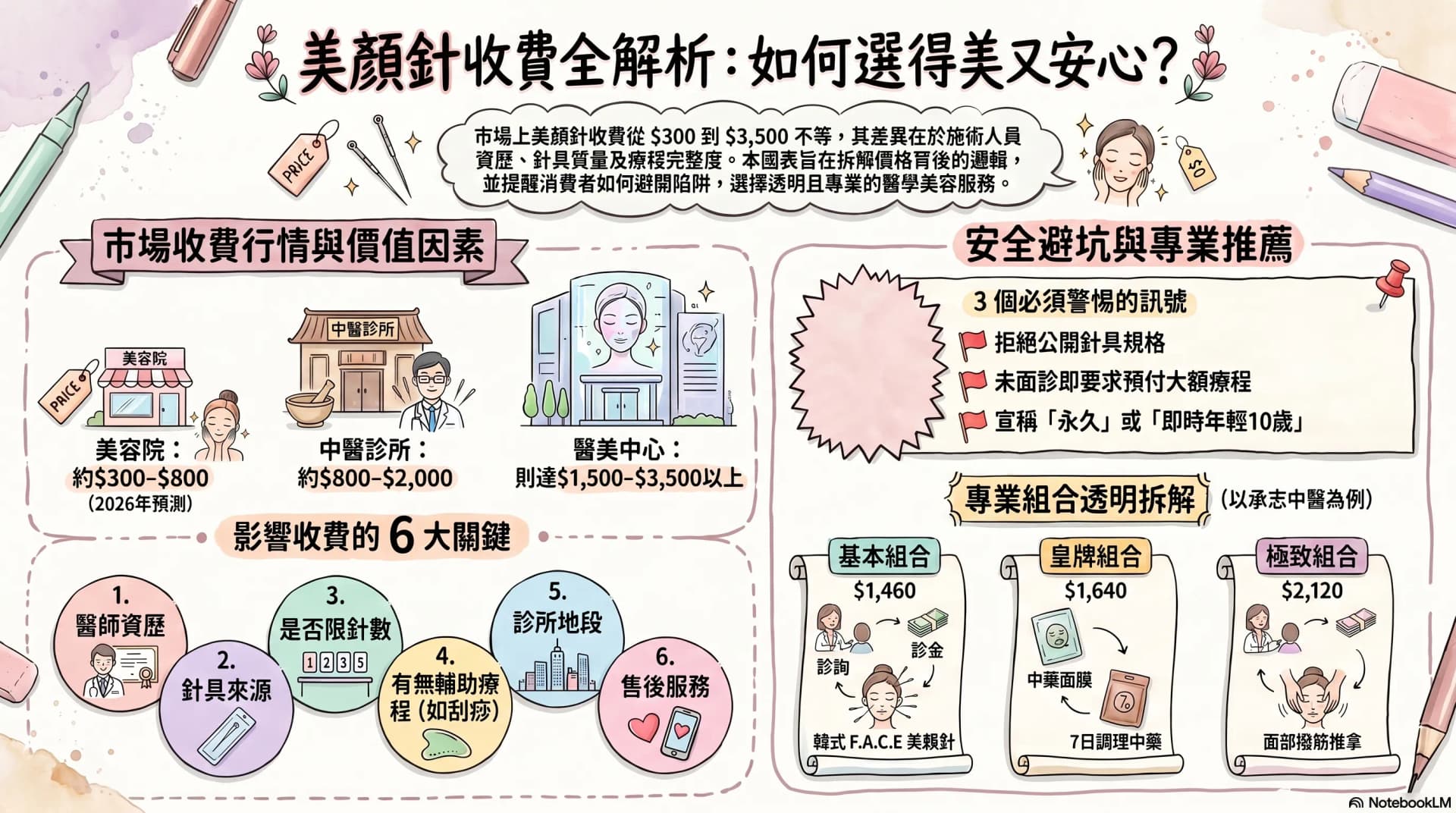
How to Choose Cosmetic Acupuncture That Is Effective and Safe: A 2026 Hong Kong Guide to Pricing, Needles and Clinic Choice
Hong Kong cosmetic acupuncture fees range from a few hundred to over three thousand dollars per session — but why? This guide breaks down 2026 market price ranges, six factors driving the fee differences, seven questions to ask before booking, four warning signs, and a transparent line-by-line look at Aspira TCM's packages — to help you choose what genuinely suits you.
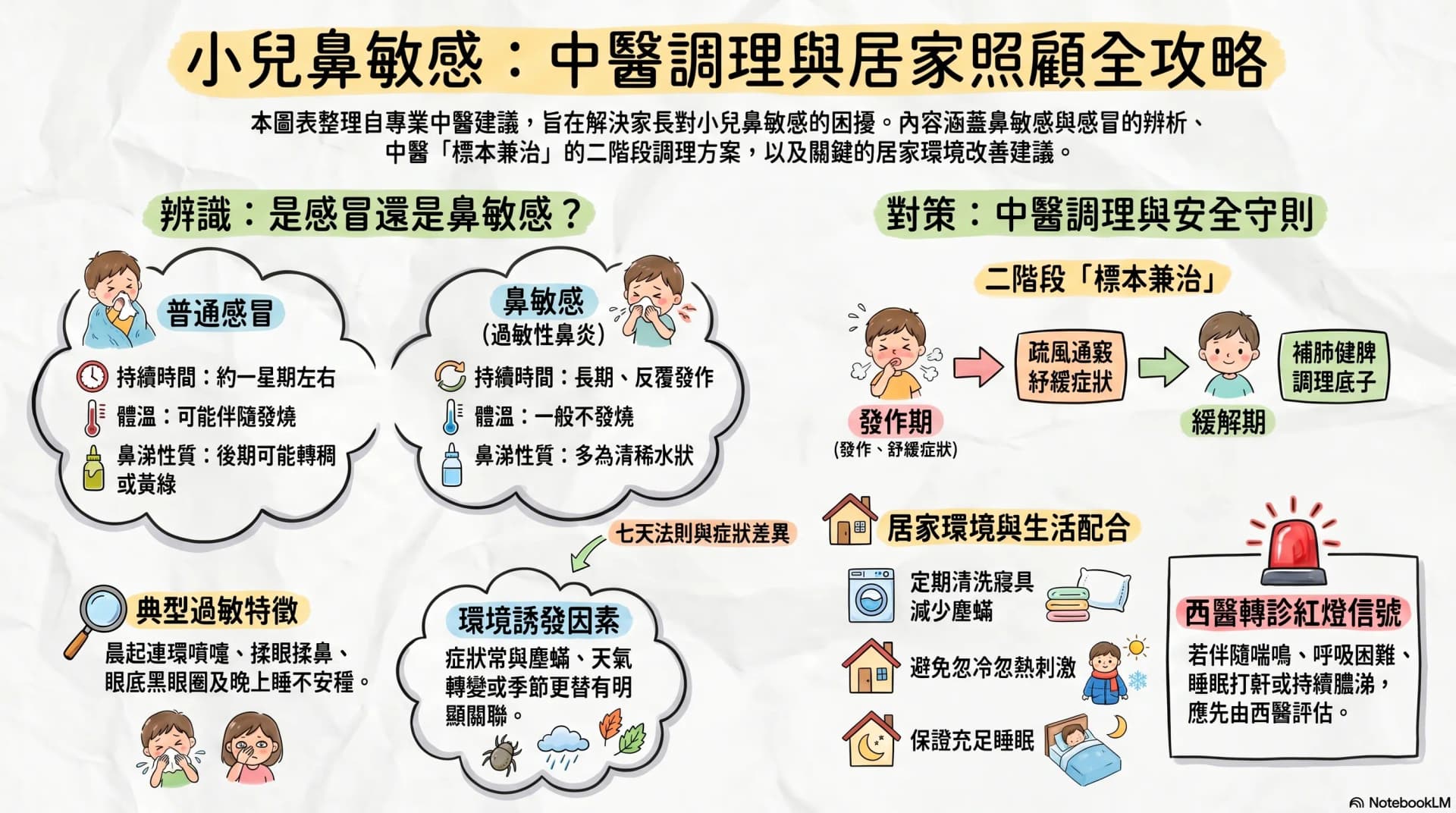
Paediatric Allergic Rhinitis: A TCM Guide for Hong Kong Parents
A child who sneezes every morning with a blocked nose, rubs the nose and eyes, has dark under-eye shadows, sleeps poorly and struggles to concentrate at school — this is very likely allergic rhinitis. This article explains how to tell allergic rhinitis from a cold, how TCM works through lung, spleen and kidney insufficiency and a weak surface defence, treating the flare and the quiet phase differently, how the home dust-mite environment fits in, and when to see a Western doctor first.
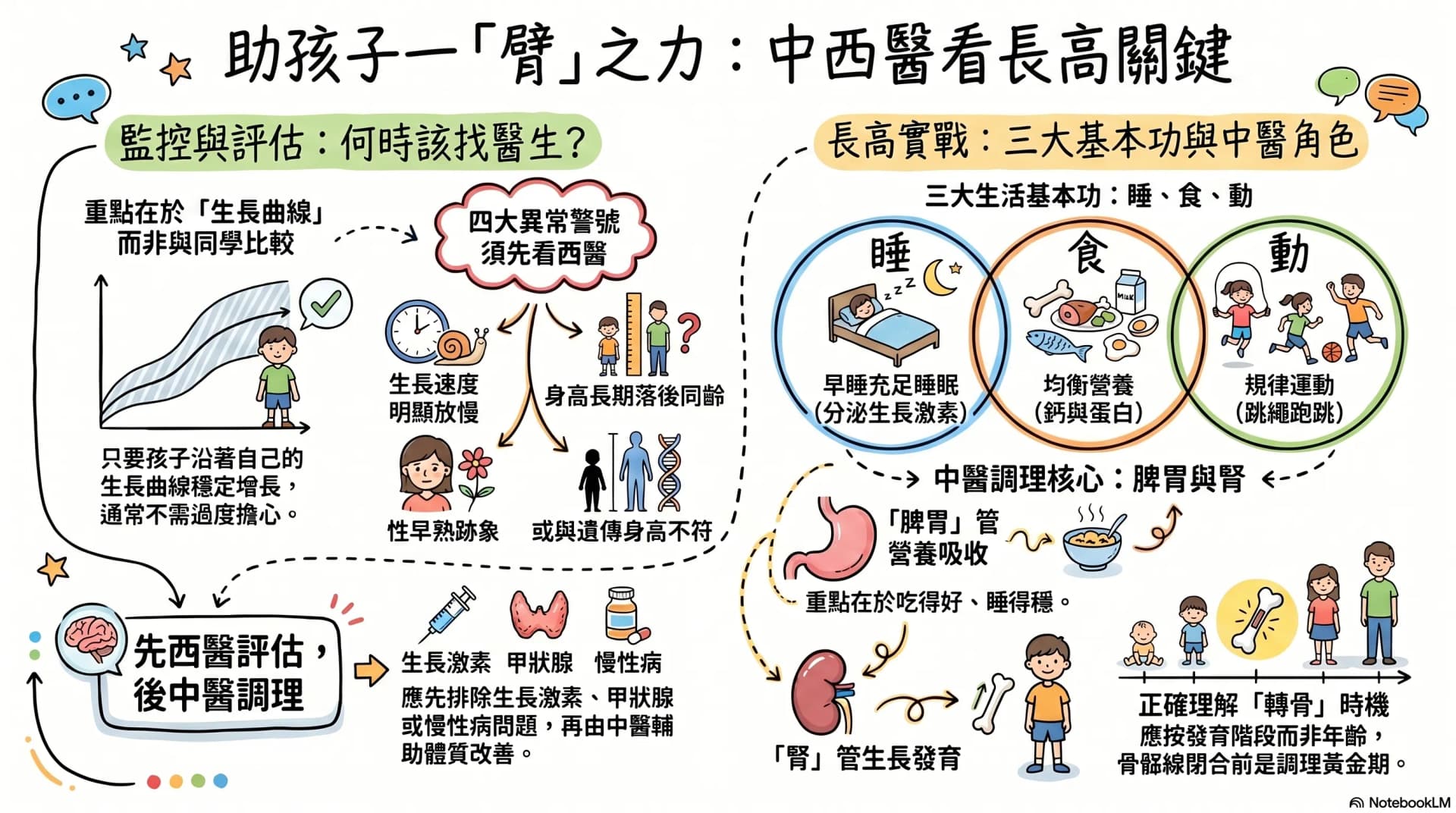
Is My Child Growing Tall Enough? A TCM View of Growth and "Zhuan Gu"
When a child looks shorter than their peers, or grows only a little each year, parents naturally wonder about "bone transformation". This article first explains what normal growth is (the growth curve) and when to see a paediatric endocrinologist, then covers the key drivers of height (genetics, nutrition, sleep, exercise), and how TCM — through "the kidney governs the bones" and "the spleen and stomach are the foundation of later life" — conditions the spleen, stomach and kidney according to the stage of development. The point is to create good conditions for a child to grow, not to "force height", and no centimetre figure is promised.
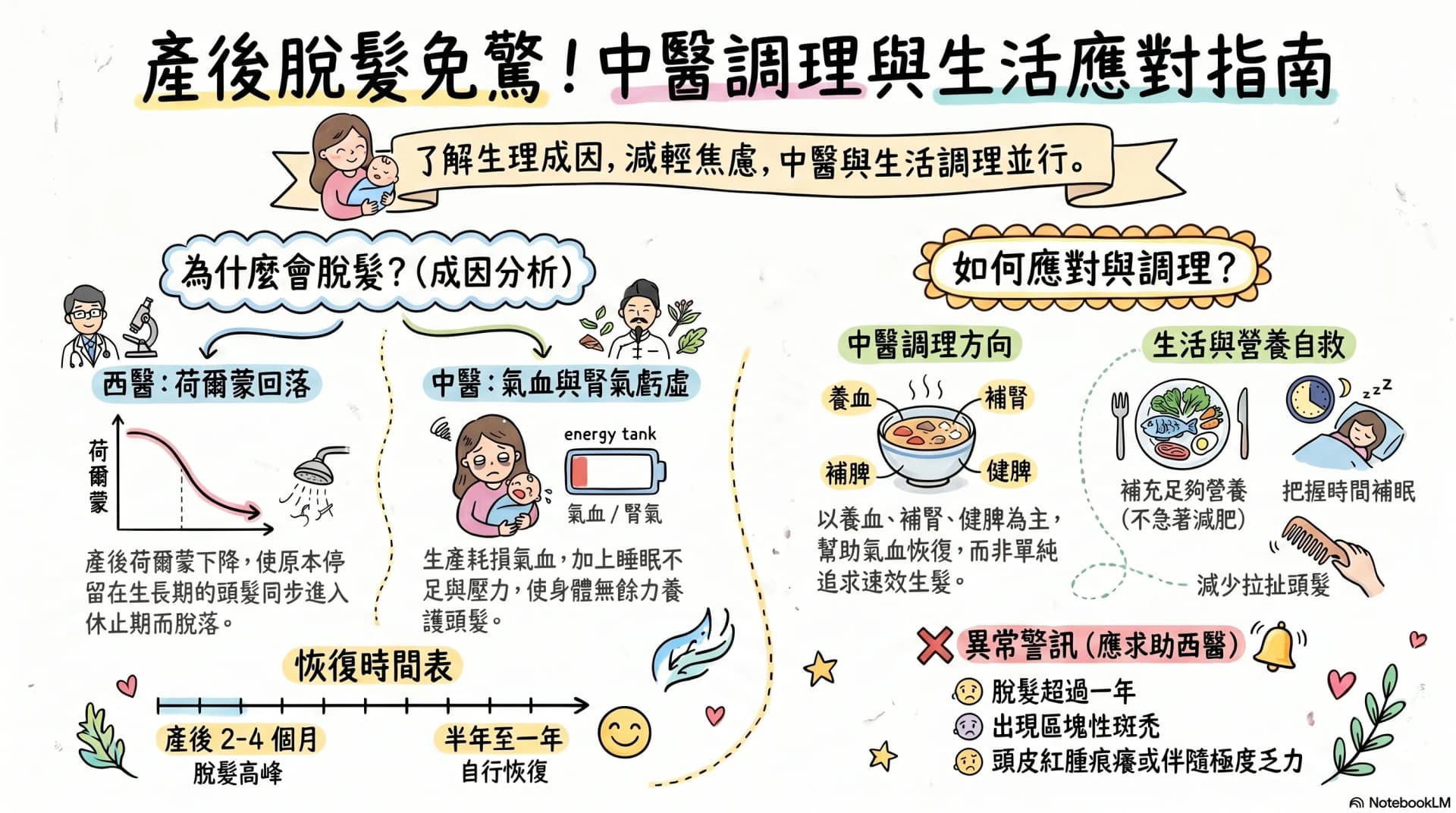
Postpartum Hair Loss: TCM Causes, Recovery Timeline and Care
Two to four months after giving birth, hair comes away by the handful when washing or combing, and many mothers worry about going bald. This article first explains the Western view — postpartum hair loss is usually a temporary telogen effluvium, and most people recover on their own within six months to a year — then uses the TCM ideas that "hair is the surplus of blood" and "the kidney manifests in the hair" to unpack the roles of postpartum qi-and-blood depletion, blood deficiency, kidney deficiency and liver stagnation, and lists when to see a Western doctor first.
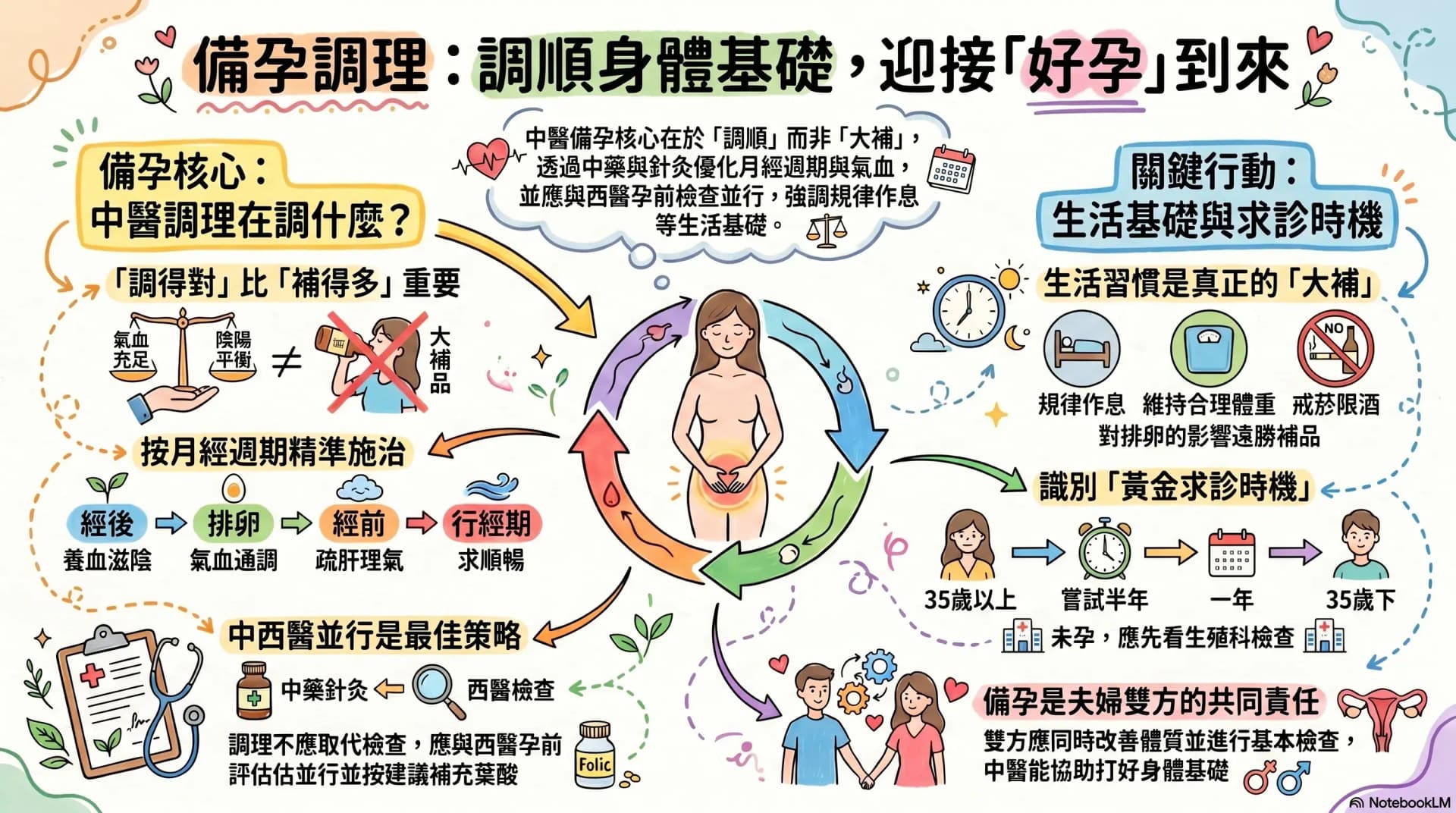
Preparing for Pregnancy: A TCM Preconception Care Guide
When a couple plans for pregnancy, they often hear "condition your body first" — but what does "conditioning" actually mean? This article explains what TCM preconception care focuses on (menstruation, qi and blood, the Chong and Ren channels), how it runs alongside Western pre-pregnancy checks, common constitutional directions and the idea of cycle-based care, and when to see a gynaecologist or fertility specialist first. TCM can improve the constitution and support preparation, but it cannot guarantee pregnancy.
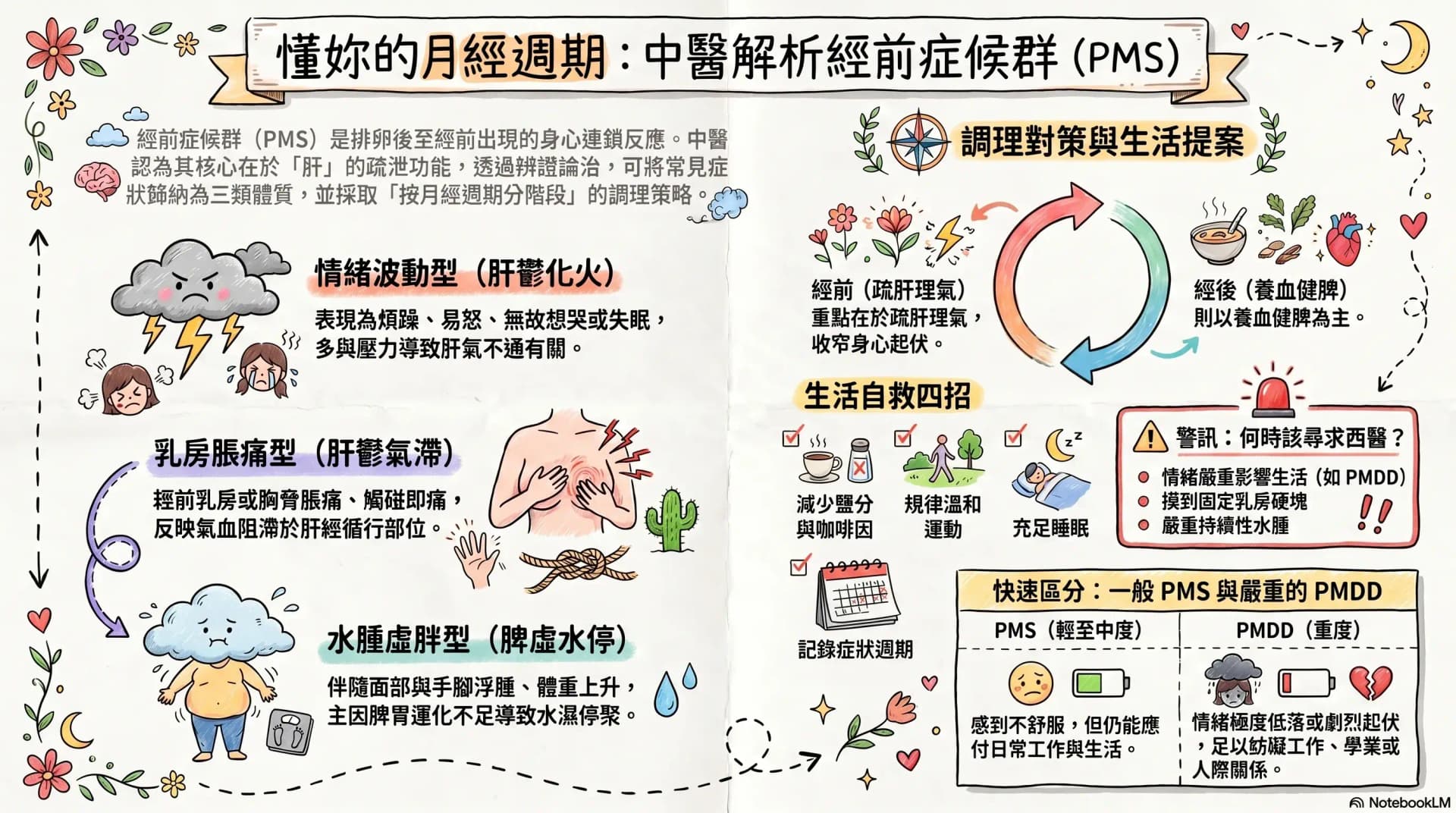
PMS: Mood Swings, Breast Tenderness and Bloating — A TCM Guide
For one to two weeks before each period, many women feel like "a different person" — anxious, irritable, tearful, with tender breasts and bloating. This is very likely premenstrual syndrome (PMS). This article explains the common symptoms, how PMS differs from the more severe premenstrual dysphoric disorder (PMDD), how TCM addresses the mood, breast-tenderness and fluid-retention clusters through liver and spleen patterns across the cycle, and when to see a Western doctor first.
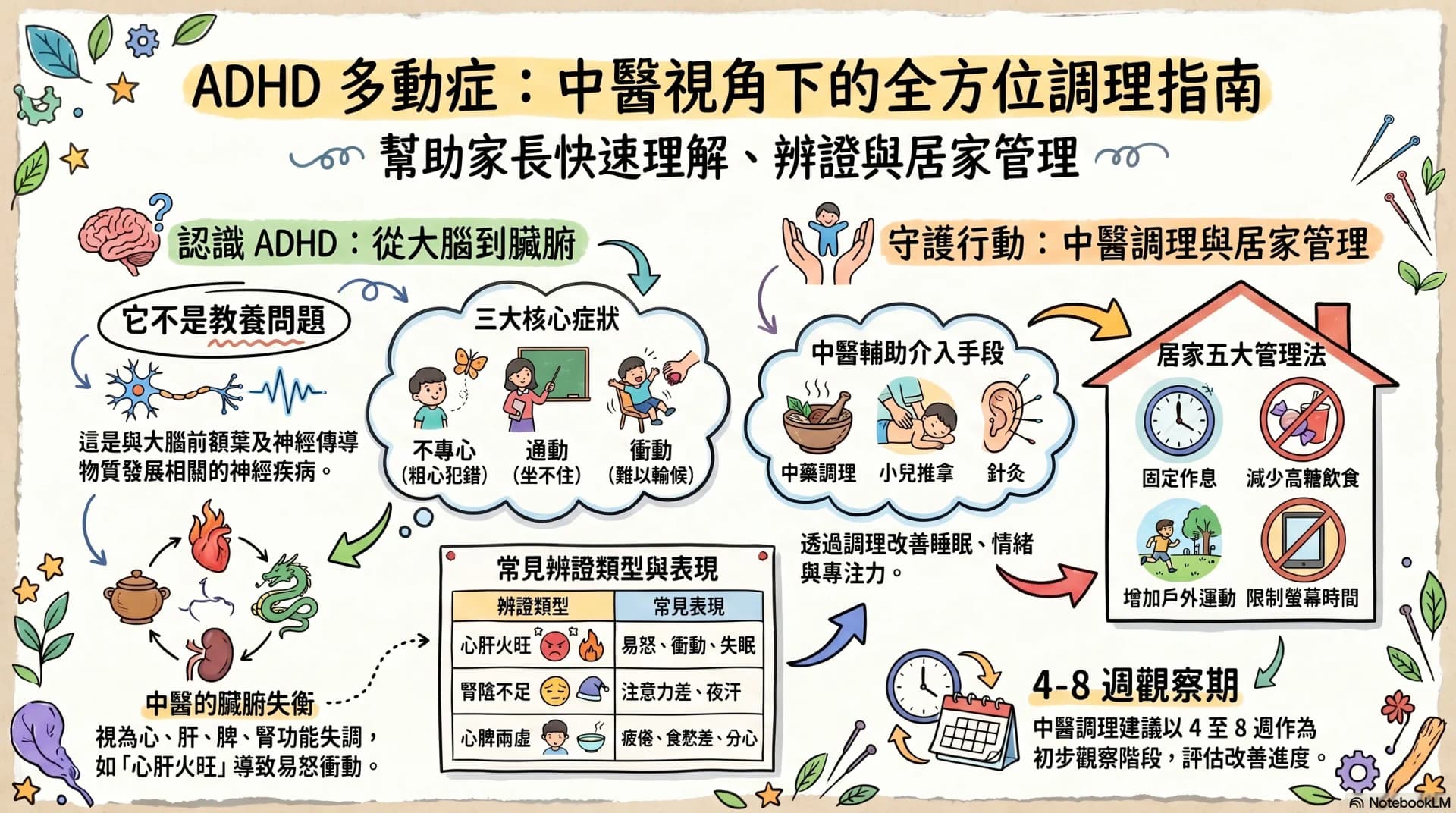
ADHD in Children: Symptoms and the TCM Approach
ADHD is a neurodevelopmental condition, not a parenting issue, and diagnosis must come from a developmental paediatrician or child psychiatrist. This article walks through the three ADHD presentations and their symptoms, the workup involved, four TCM pattern directions, how TCM can complement (not replace) mainstream treatment, five things parents can start today, and the warning signs that require Western medical attention first.
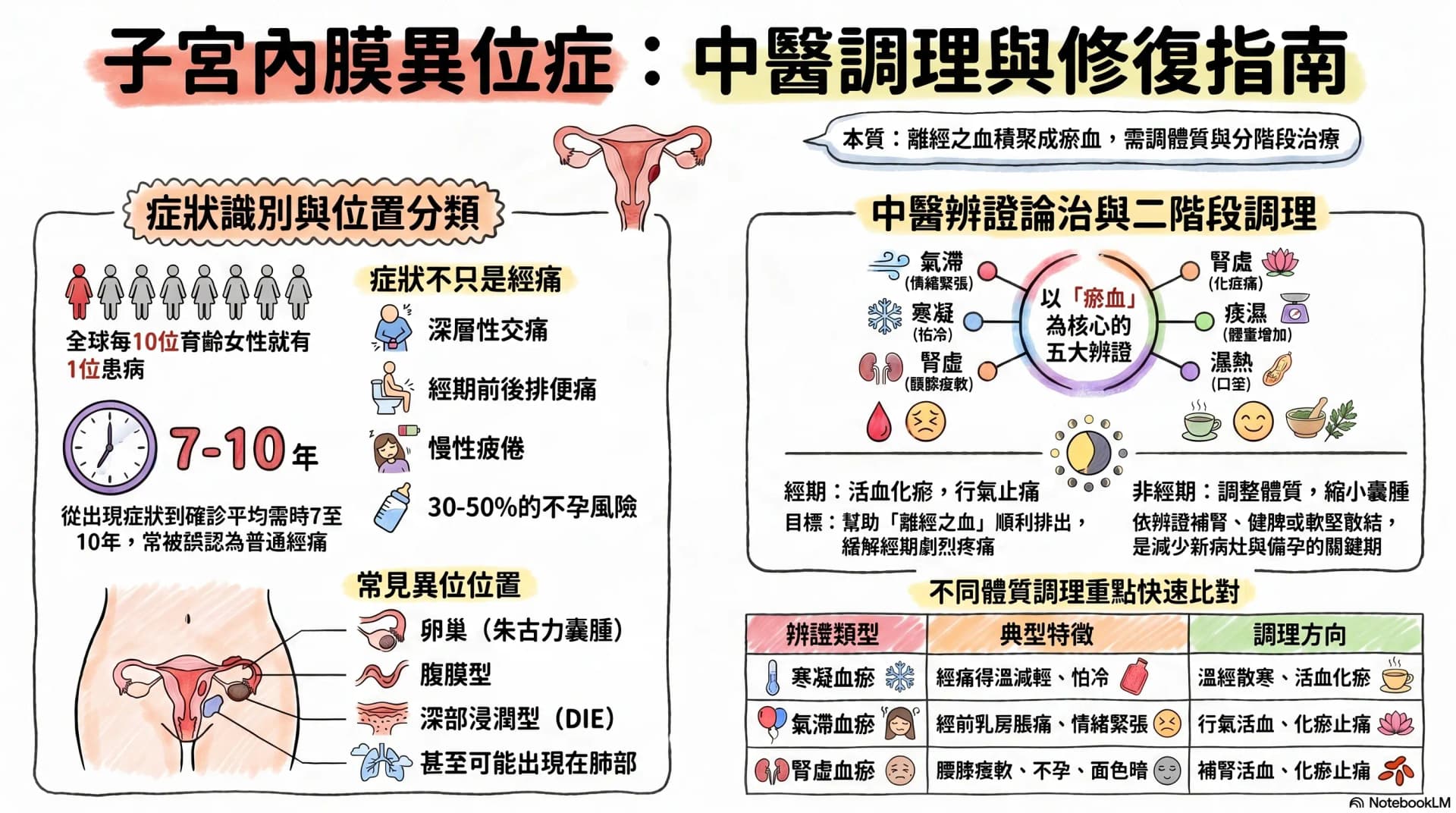
Endometriosis: Causes and TCM Care for Painful Periods, Infertility and Dyspareunia
Endometriosis is one of the most under-recognised chronic conditions in women's health, possible from menarche through to menopause. This article covers common symptoms, lesion locations, five TCM pattern directions, the different TCM approaches during and outside menstruation, how care coordinates with fertility planning, and warning signs that should not be left to TCM alone.
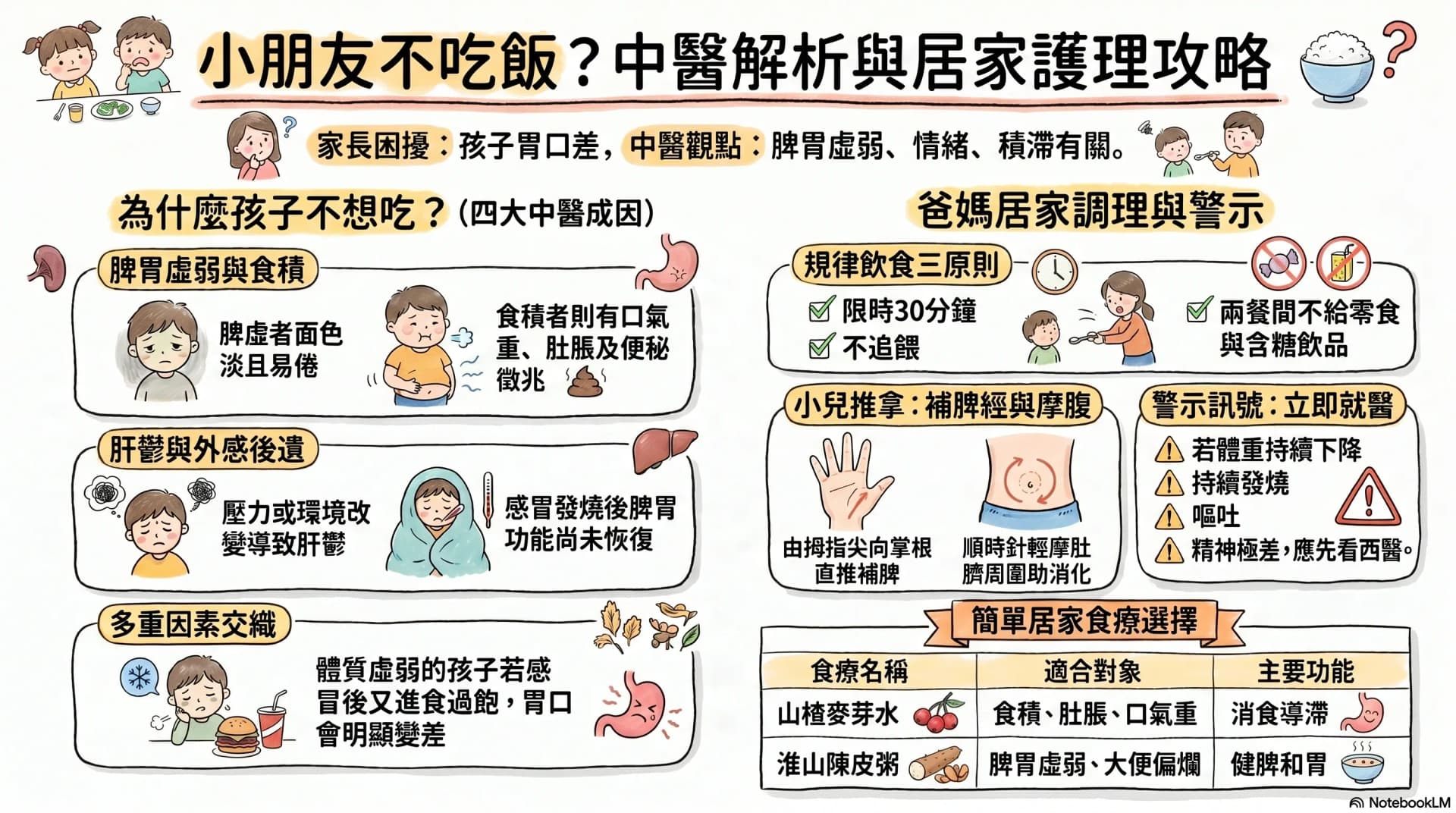
Kids Won't Eat? A TCM Perspective on the Causes and What Parents Can Do
Poor appetite in children is one of the most common parenting headaches. This article breaks down four common causes from a TCM perspective (spleen-stomach weakness, food retention, liver stagnation, post-viral effects), three things parents can start today, five common paediatric tuina techniques, three gentle food therapies, and the warning signs that warrant a paediatrician first.
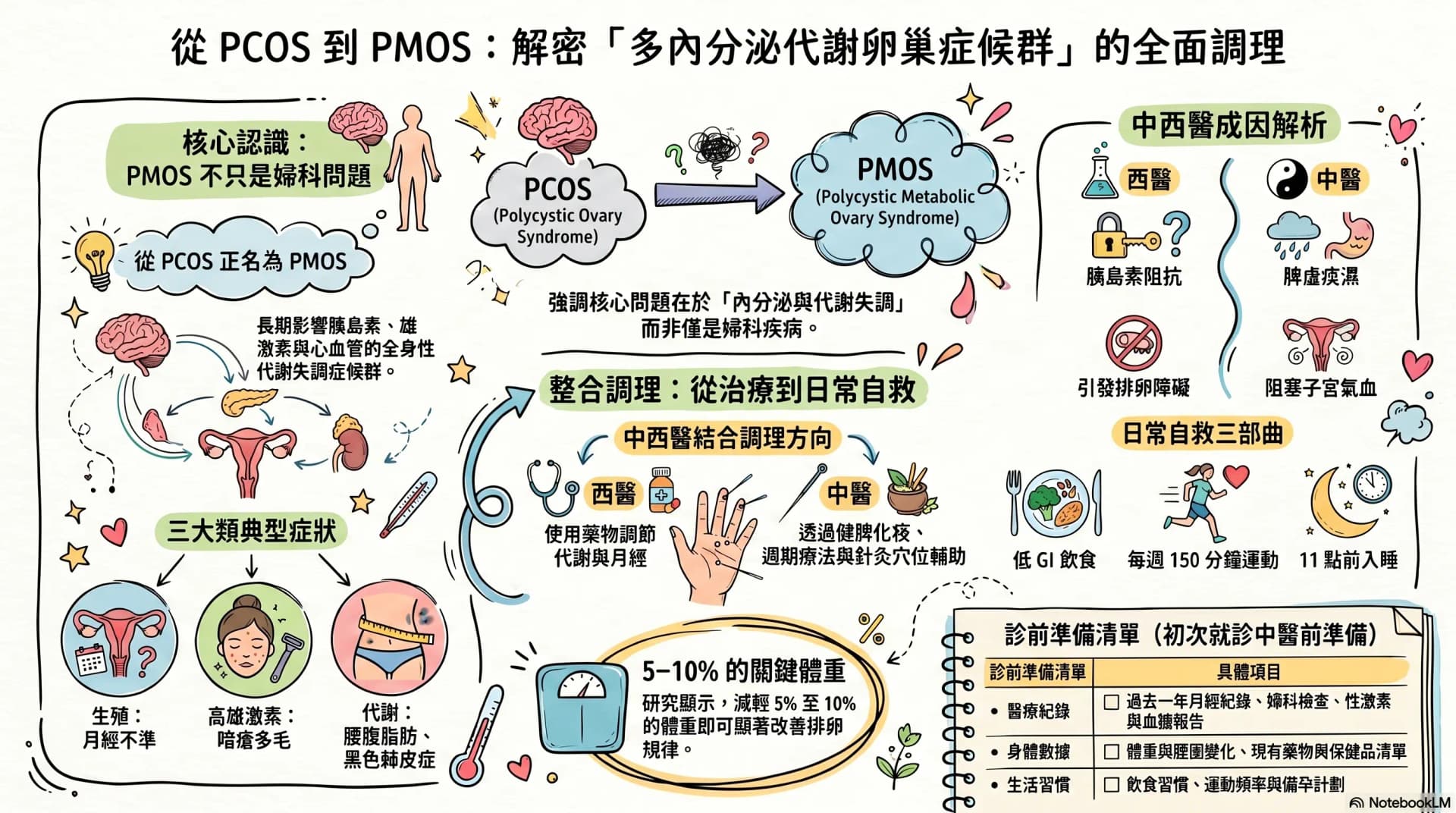
PCOS Renamed PMOS — Symptom Self-Check and Combined Western–TCM Care
PCOS has been renamed PMOS (Polyendocrine Metabolic Ovarian Syndrome) to emphasise that it is not only a gynaecological condition but a metabolic one. This article walks through how PMOS develops (Western and TCM views), a three-category nine-point symptom self-check, the combined Western–TCM treatment plan, and practical low-GI diet and resistance-training steps every patient can start at home.
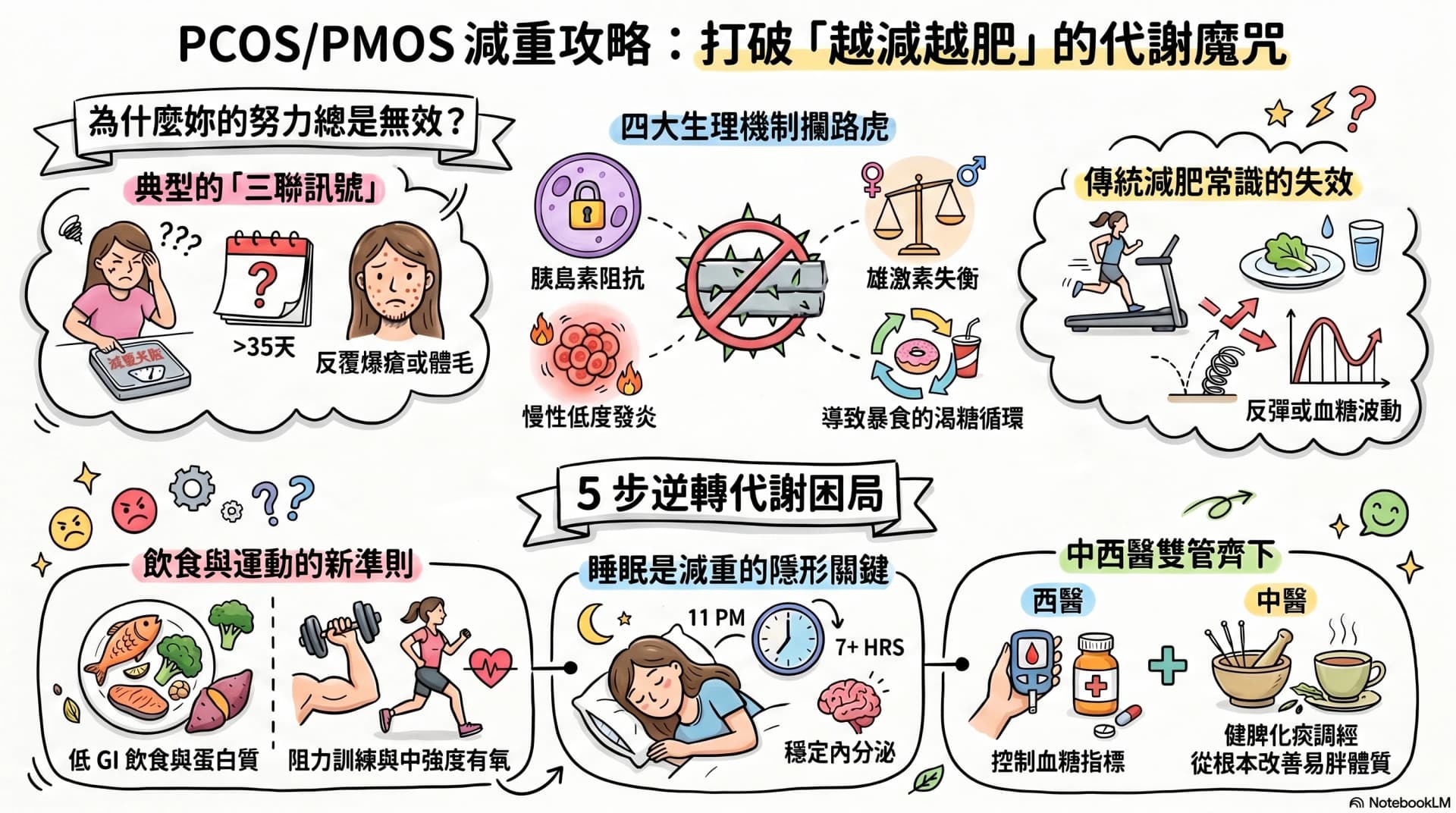
Does PCOS Cause Weight Gain? Weight-Loss Failure May Point to PCOS / PMOS
You've tried dieting, running and cutting sugar — yet the scale won't move, or even creeps up. Combined with irregular cycles, acne or hair growth, this often points to PCOS / PMOS. This article walks through four physiological reasons (insulin resistance, hyperandrogenism, chronic inflammation, the binge–crave loop), why standard diet advice fails in PCOS, and a five-step strategy paired with combined Western–TCM care.
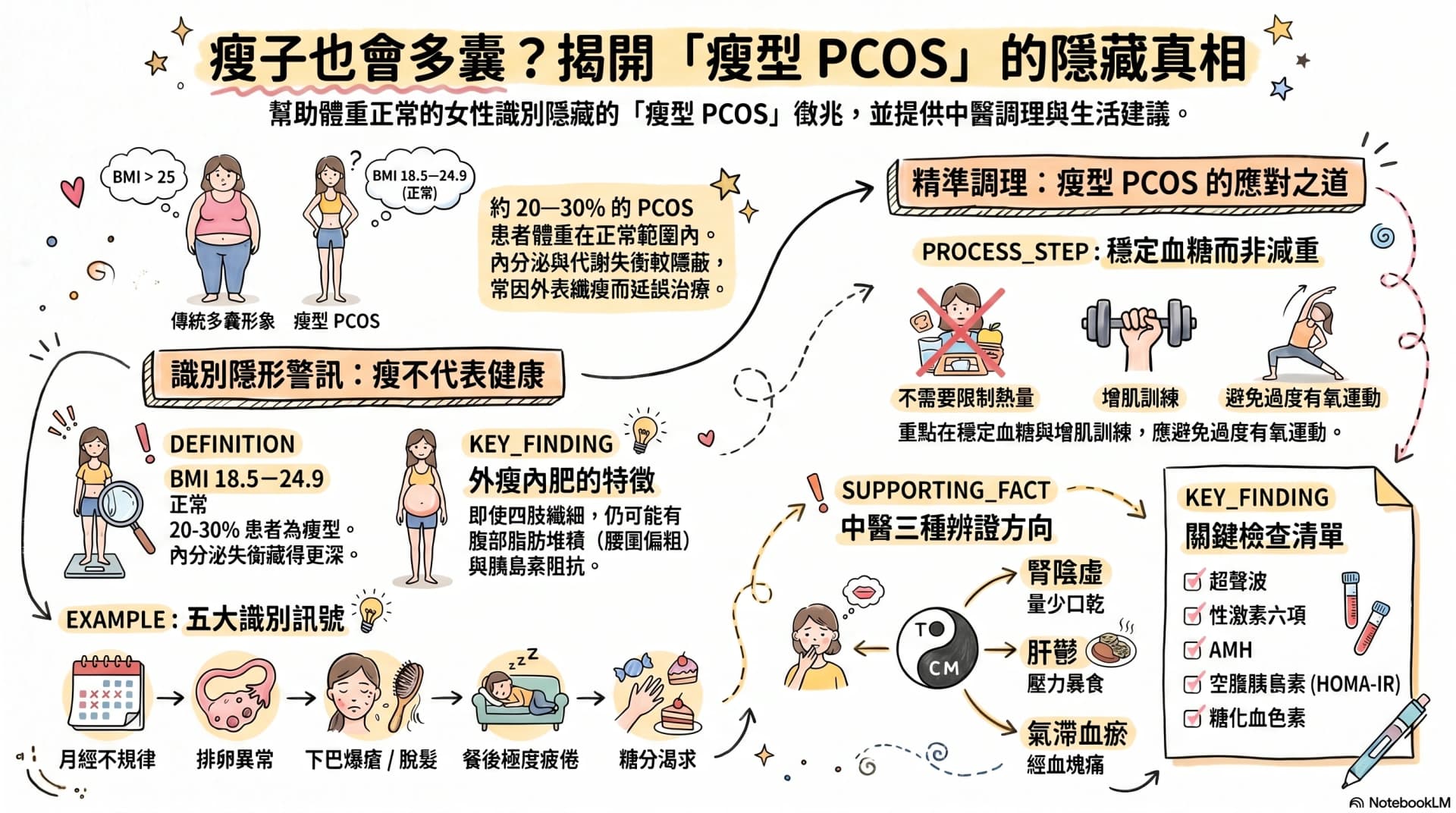
Slim Women Get PCOS / PMOS Too — Recognising and Managing PCOS in Lean Patients
A normal BMI does not rule out PCOS / PMOS. Lean PCOS accounts for around 20–30% of patients — insulin resistance, hyperandrogenism and irregular cycles are all still in play, but the diagnosis is routinely missed because the patient is not overweight. This article walks through the comparison with the classic phenotype, five recognition signals, the necessary investigations, three common TCM pattern directions and why the lean phenotype is managed differently.
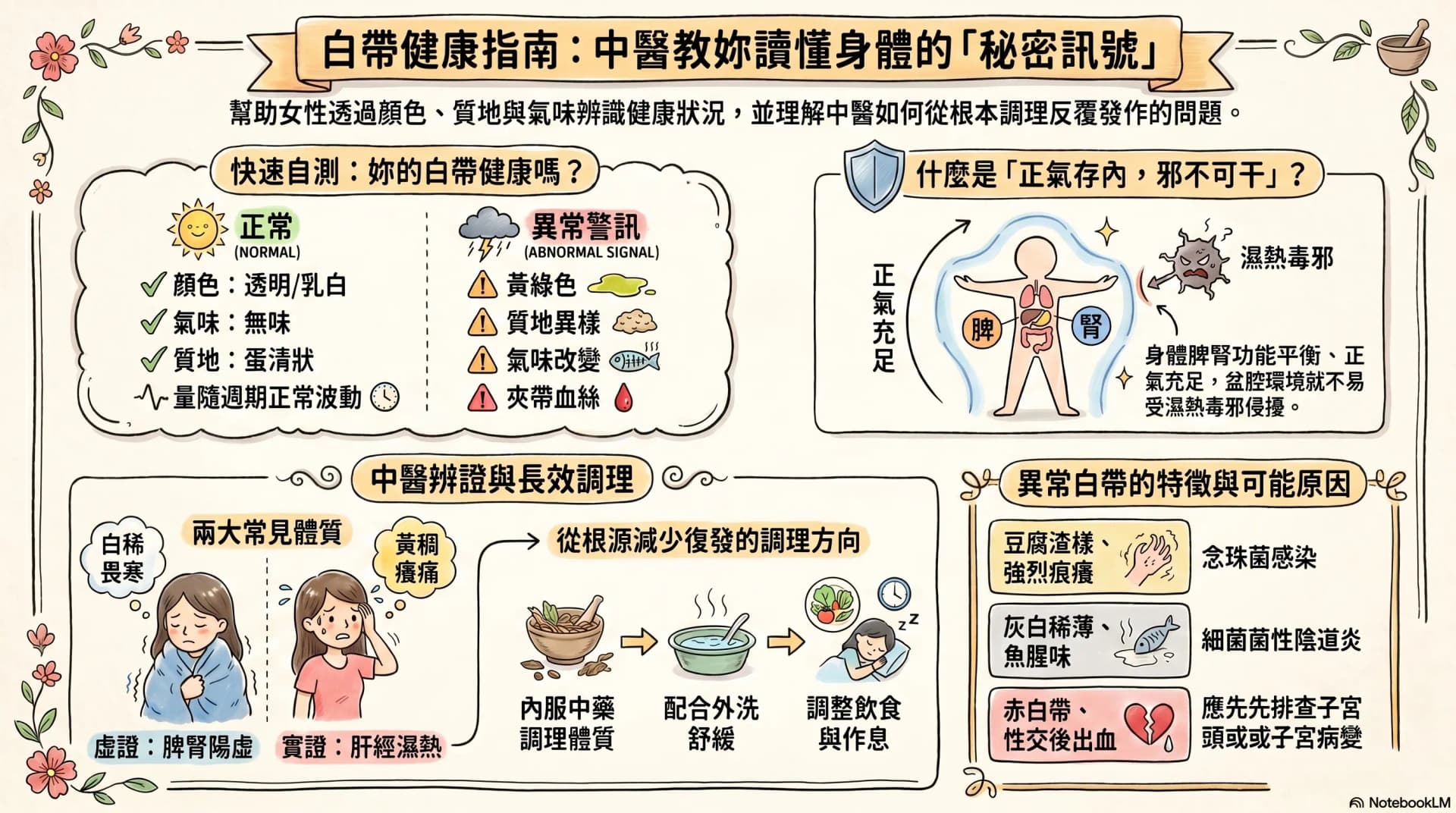
How TCM Reads Vaginal Discharge — Fishy, Yellow-Green, Bloody and Heavy
Persistent changes in vaginal discharge are health signals worth attending to. This article uses four dimensions — colour, smell, texture and volume — to help you tell normal from abnormal, outlines six common abnormal presentations, four TCM pattern directions, and how TCM works on the root constitution to reduce recurrence rather than only relieving itch or treating an infection.
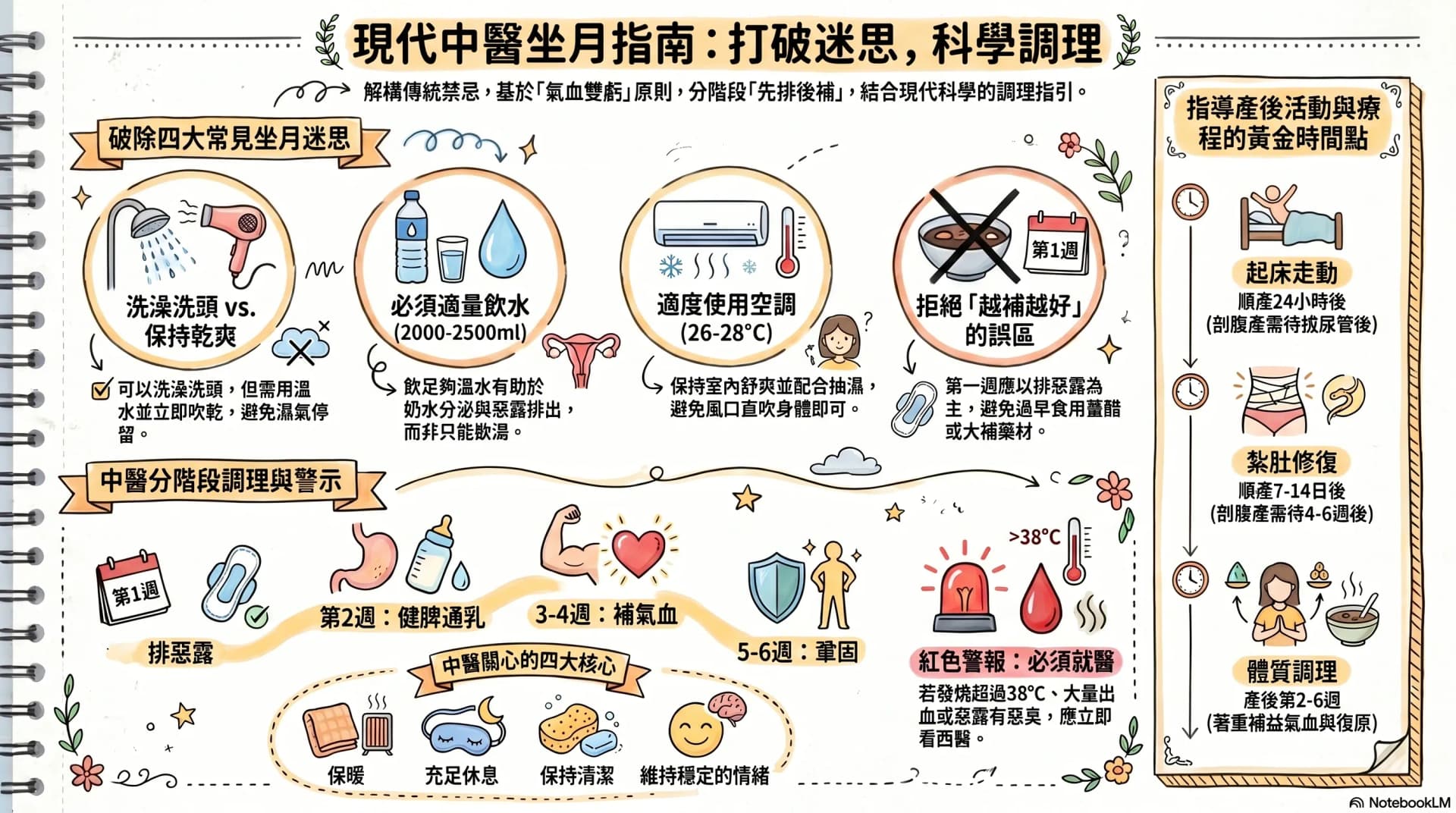
Postpartum Confinement Myths: Bathing? Washing Hair? TCM Advice and What to Avoid
Traditional postpartum confinement rules were shaped by a very different living environment. This article unpacks six common myths (no bathing, no drinking water, avoiding all wind, "the more tonics the better"), gives phased diet and lifestyle guidance, and lists what TCM does ask mothers to genuinely avoid — and when to see a Western doctor first.
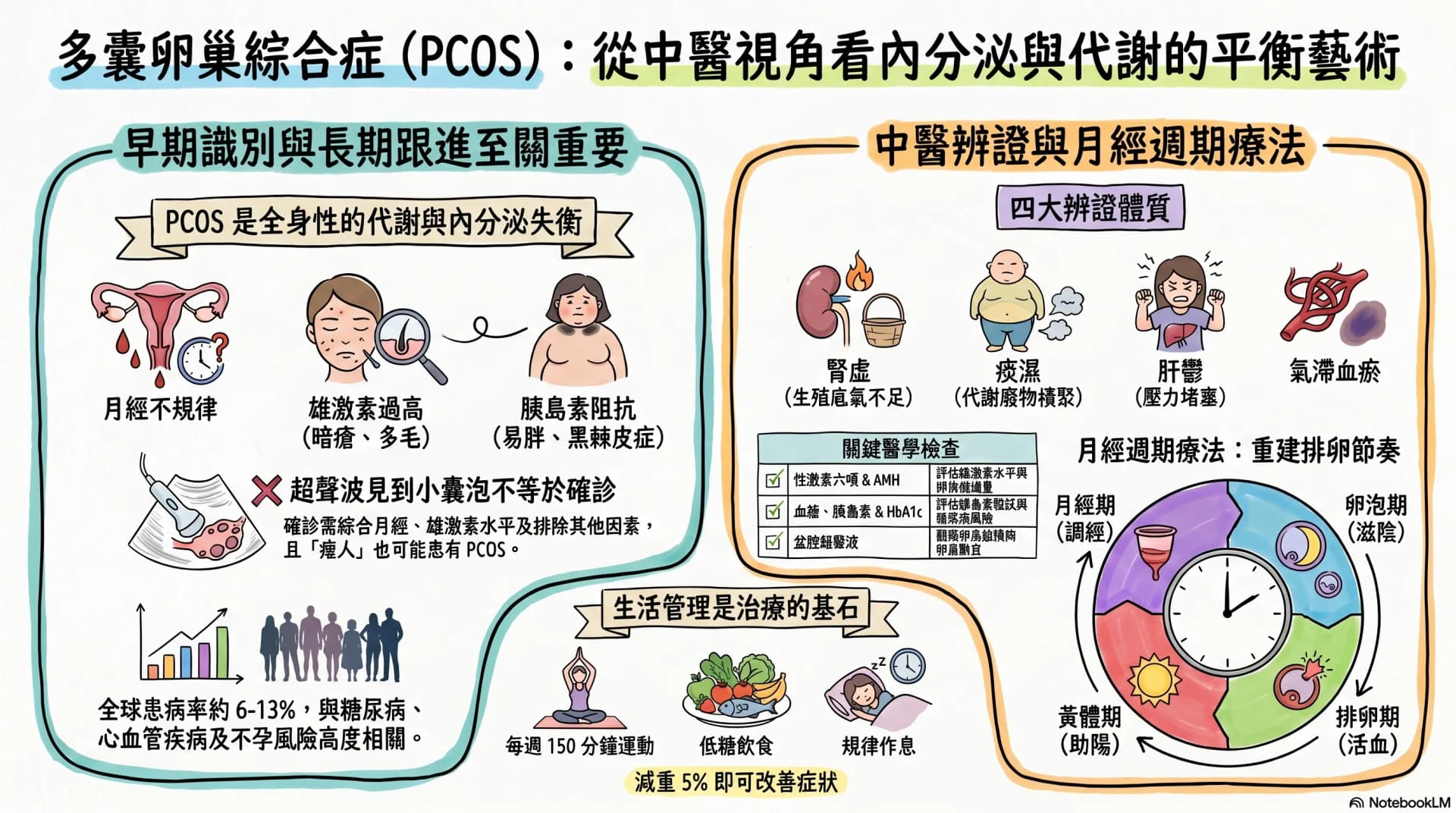
Polycystic Ovary Syndrome (PCOS): Causes and TCM Care for Menstrual Irregularity, Hair Growth, Acne and Infertility
PCOS is not simply "irregular periods" — it is a long-term condition spanning the endocrine, metabolic and reproductive axes. This article covers common symptoms, four TCM pattern directions (kidney deficiency, phlegm-damp, liver stagnation, qi-blood stagnation), TCM care (cycle-based therapy, acupuncture, weight and insulin resistance management), how to coordinate with Western treatment, and the investigations and warning signs to know.
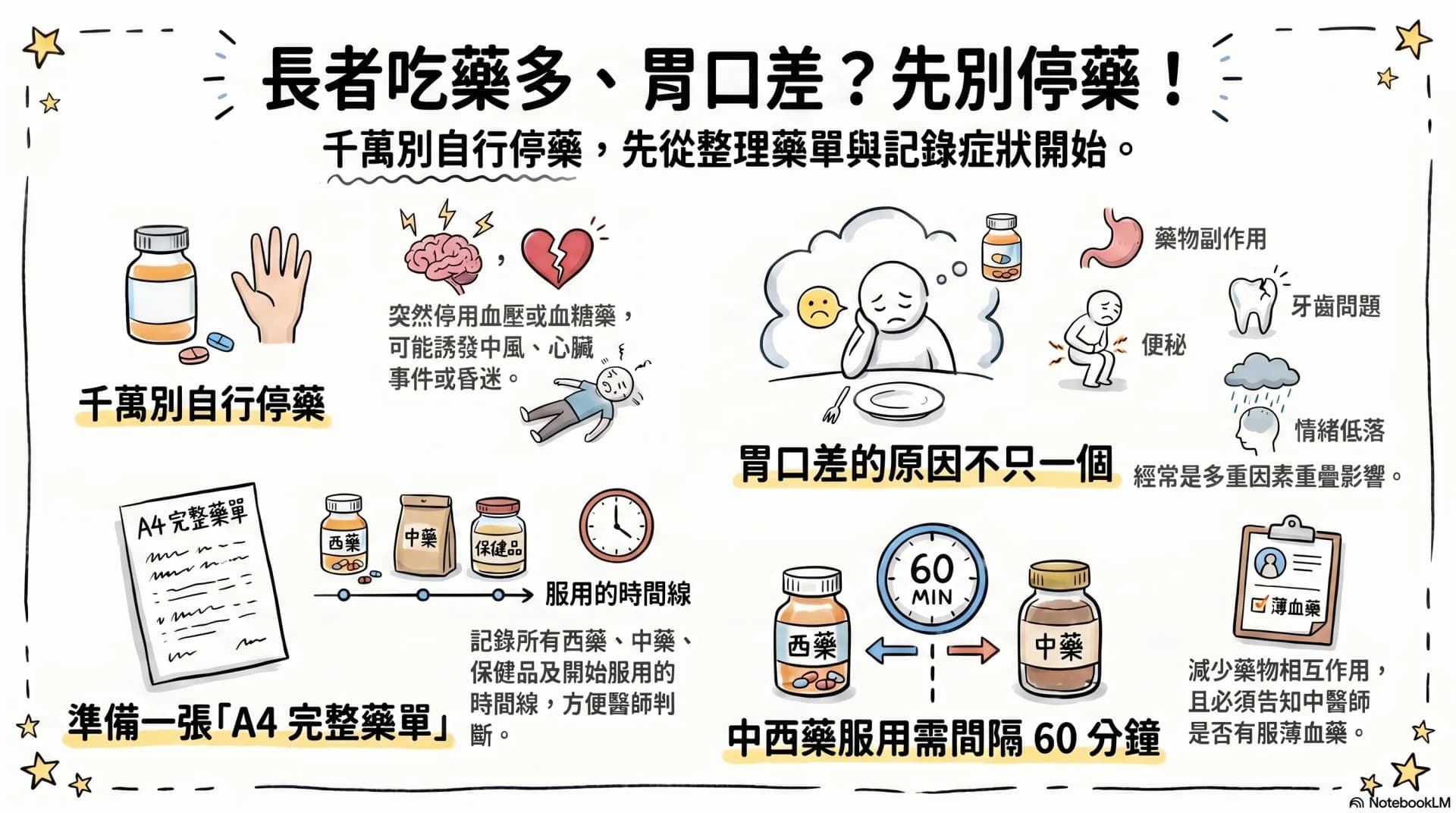
Poor Appetite in Older Adults on Long-Term Medication and Supplements? A TCM Case Study on Spleen-Stomach Care Under Polypharmacy
Several chronic-disease pills, then poor appetite, early fullness and daytime tiredness — family carers naturally wonder whether some of those medications are "harming the stomach". Stopping them on your own, however, can destabilise blood pressure, blood sugar and cardiovascular risk. This case of a 76-year-old maps out 7 possible causes, 6 things family carers should do, the safety conditions for TCM (60-minute spacing between Western and Chinese medicine), and the spleen-stomach directions that TCM can offer.
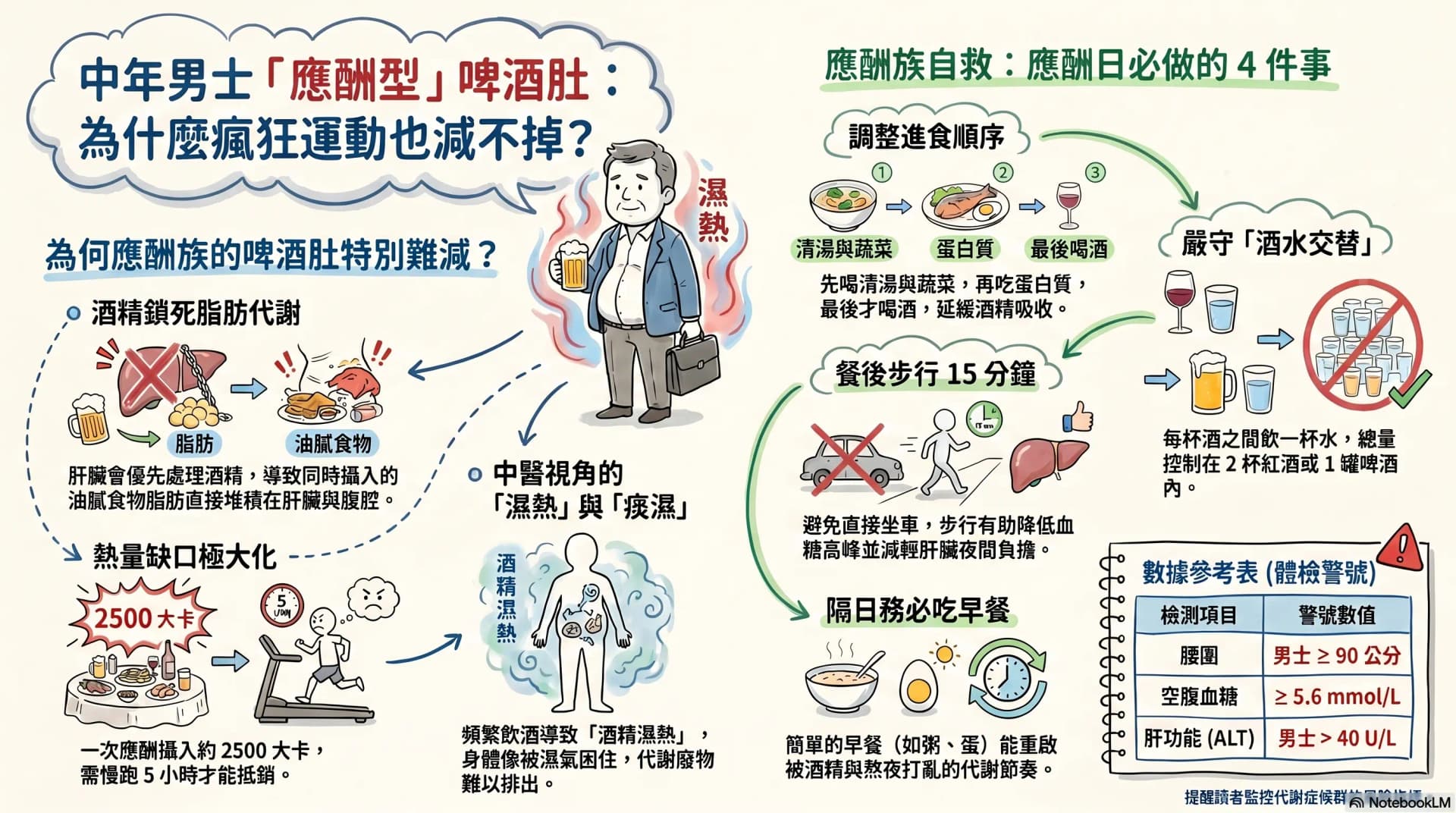
Middle-Aged Beer Belly That Won't Shrink? A TCM Case Study on Business Entertainment and Visceral Fat
Frequent client dinners, late-night meals and rising alcohol intake, yet the waistline keeps growing and the annual check-up flags borderline metabolic syndrome. This case study of a 48-year-old explains why visceral fat accumulates so readily in middle-aged men, how alcohol fuels the fatty-liver pathway, and how TCM evaluates four parallel drivers: damp-heat, phlegm-damp, late eating and stress-induced liver qi stagnation.
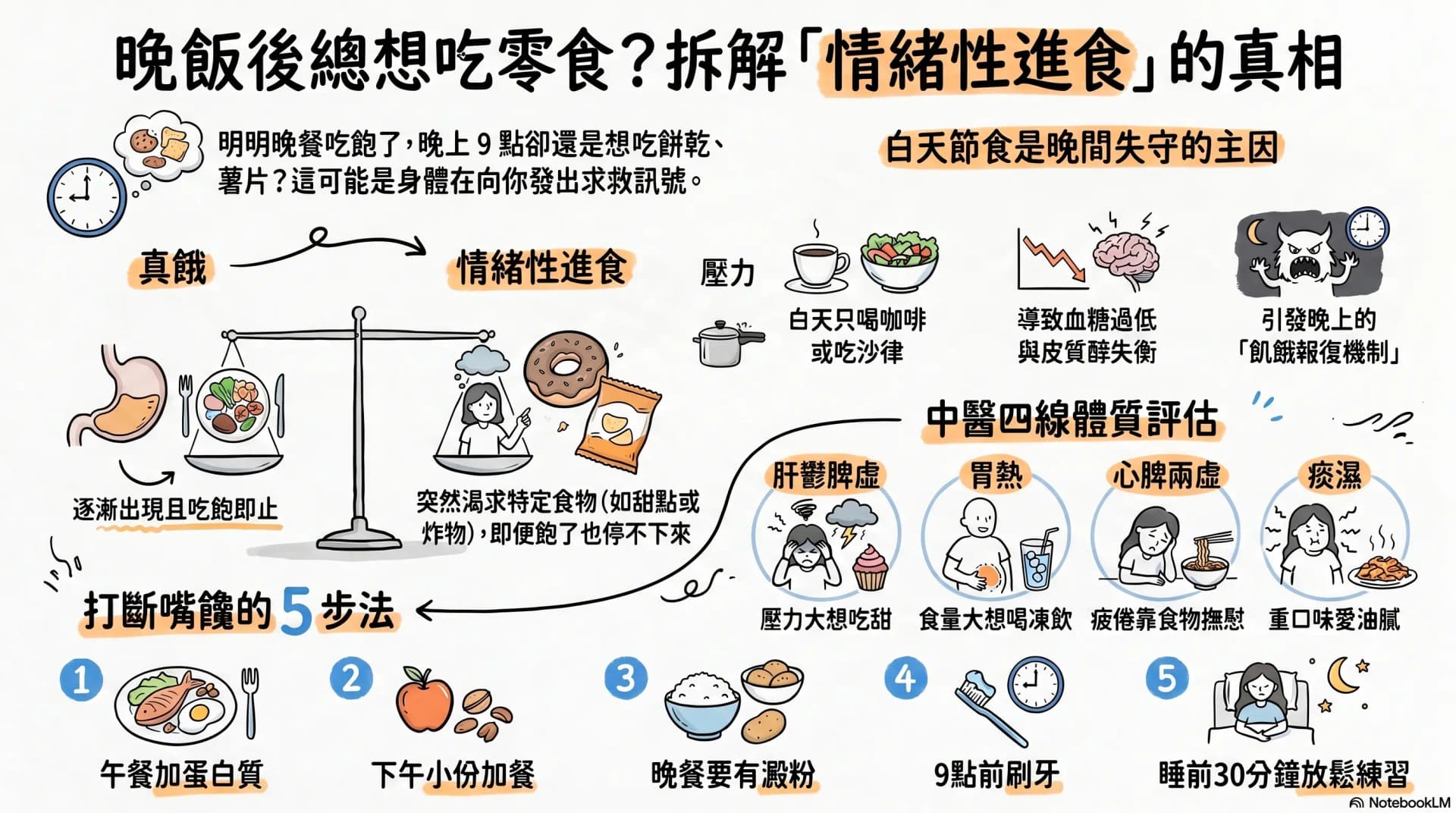
Can't Stop Snacking After Dinner? A TCM Case Study on Emotional Eating and Late-Night Cravings
Dinner was enough, yet after 9 pm the biscuits, chocolate, crisps or ice-cream call again — followed by guilt and a smaller breakfast the next morning. This case study of a 35-year-old office worker walks through how to tell real hunger from emotional eating, the four TCM lines (liver-spleen, stomach heat, heart-spleen deficiency, phlegm-damp), and a five-step routine to break the 9–11 pm craving cycle.
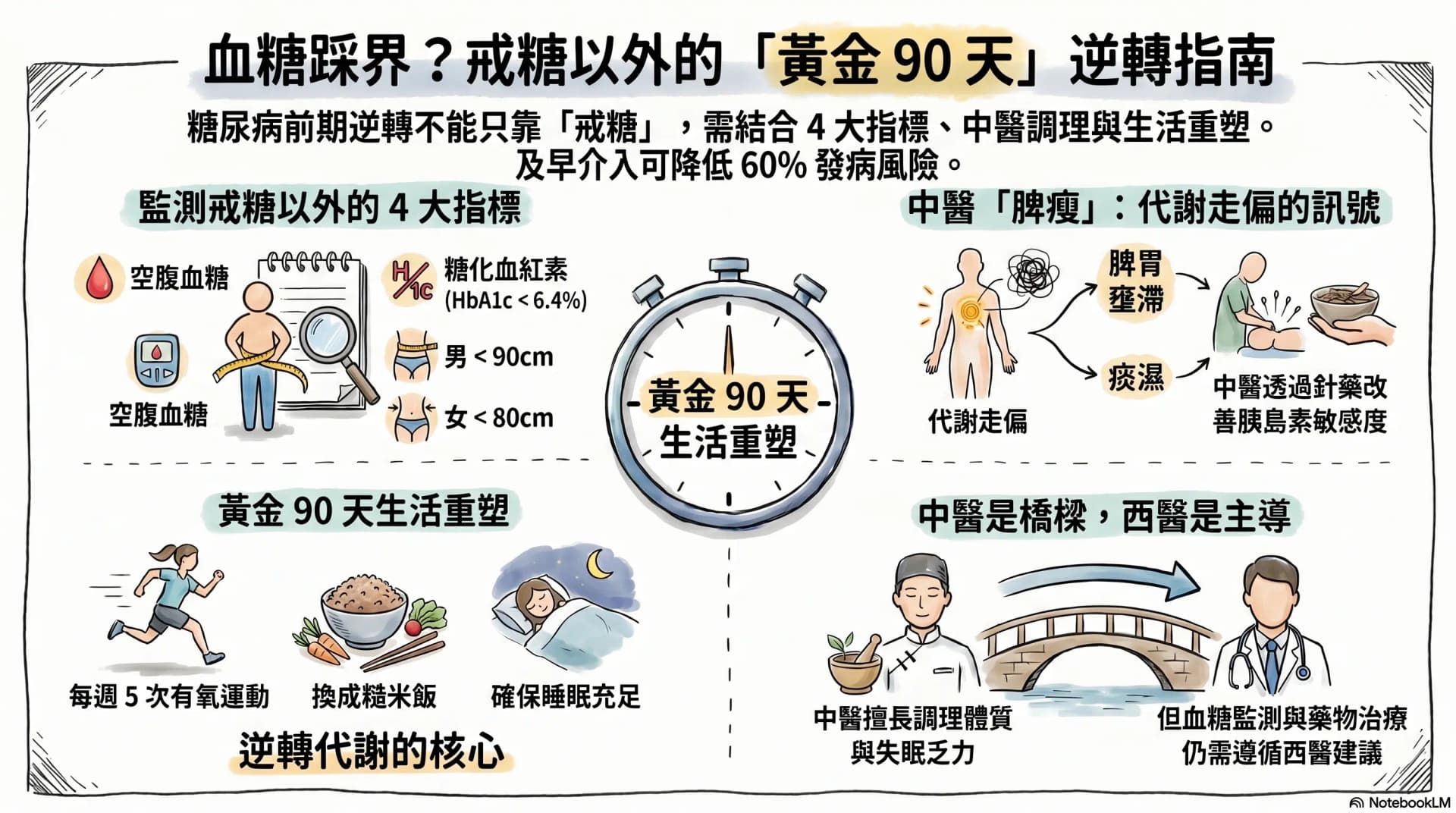
Is Cutting Sugar Alone Enough for Pre-Diabetes? TCM on Blood Sugar, Constitution and Lifestyle
"My check-up says I am pre-diabetic. The doctor told me to cut sugar and come back for another blood test — is that enough?" This guide answers the question directly: the 4 measurements that matter beyond sugar, the 6 TCM constitution patterns in the "spleen dan" stage, what TCM can and cannot do at this window, and a 90-day plan that pairs lifestyle change with constitutional support.
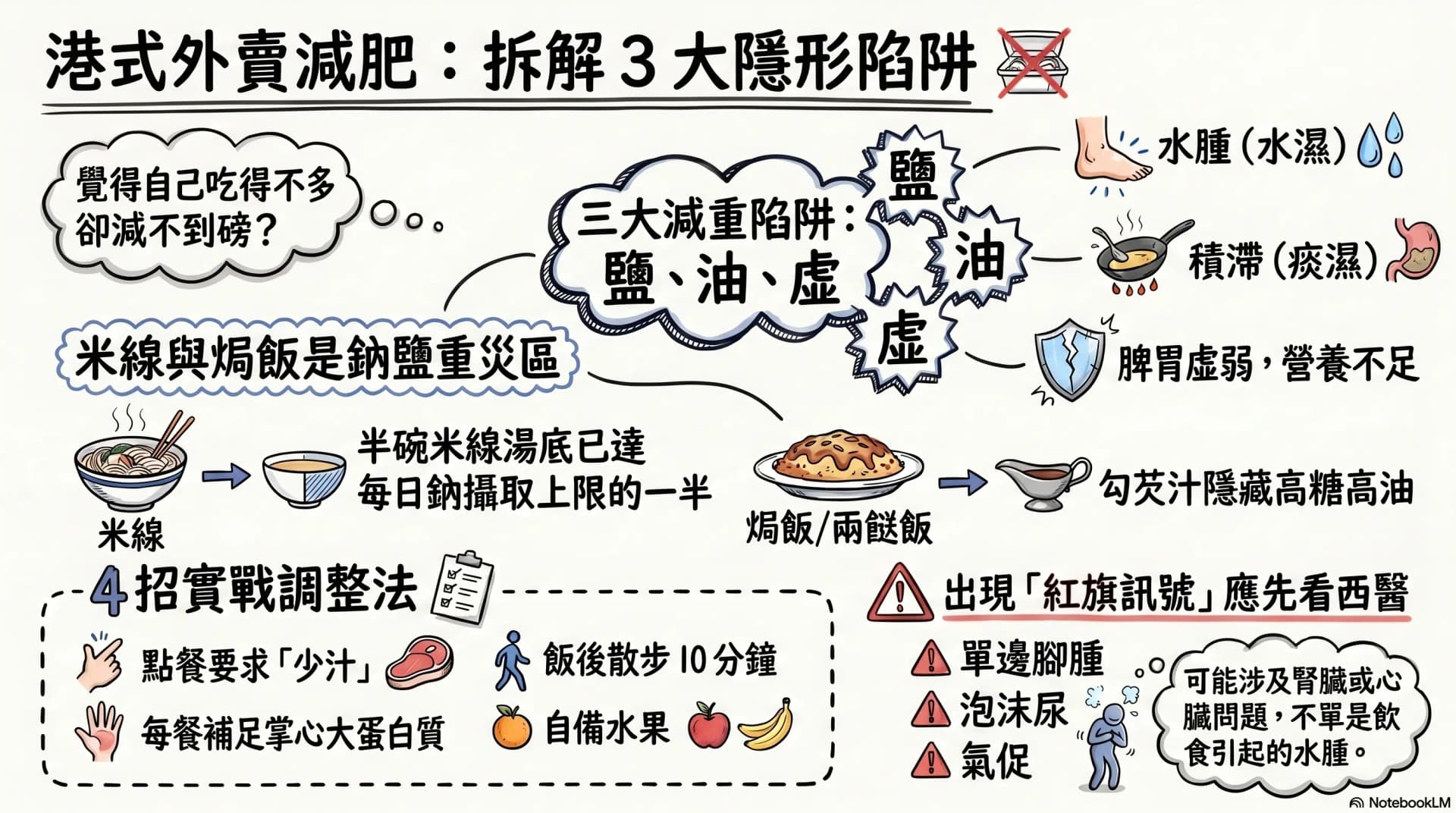
Daily Two-Side Rice and Still Not Slimming Down? TCM on 3 Hong Kong Takeaway Traps
Two-side rice on Monday, cha chaan teng plate lunch on Tuesday, rice noodles, Japanese bento — feels "not that much" but the scale will not move. The problem is rarely overeating; it is the three traps stacked into Hong Kong takeaway: sodium-driven water retention, oily stagnation and undernutrition. This guide unpacks them with a TCM lens of water-damp, phlegm-damp and spleen-stomach weakness, plus a 5-category comparison of salt, oil and sugar.
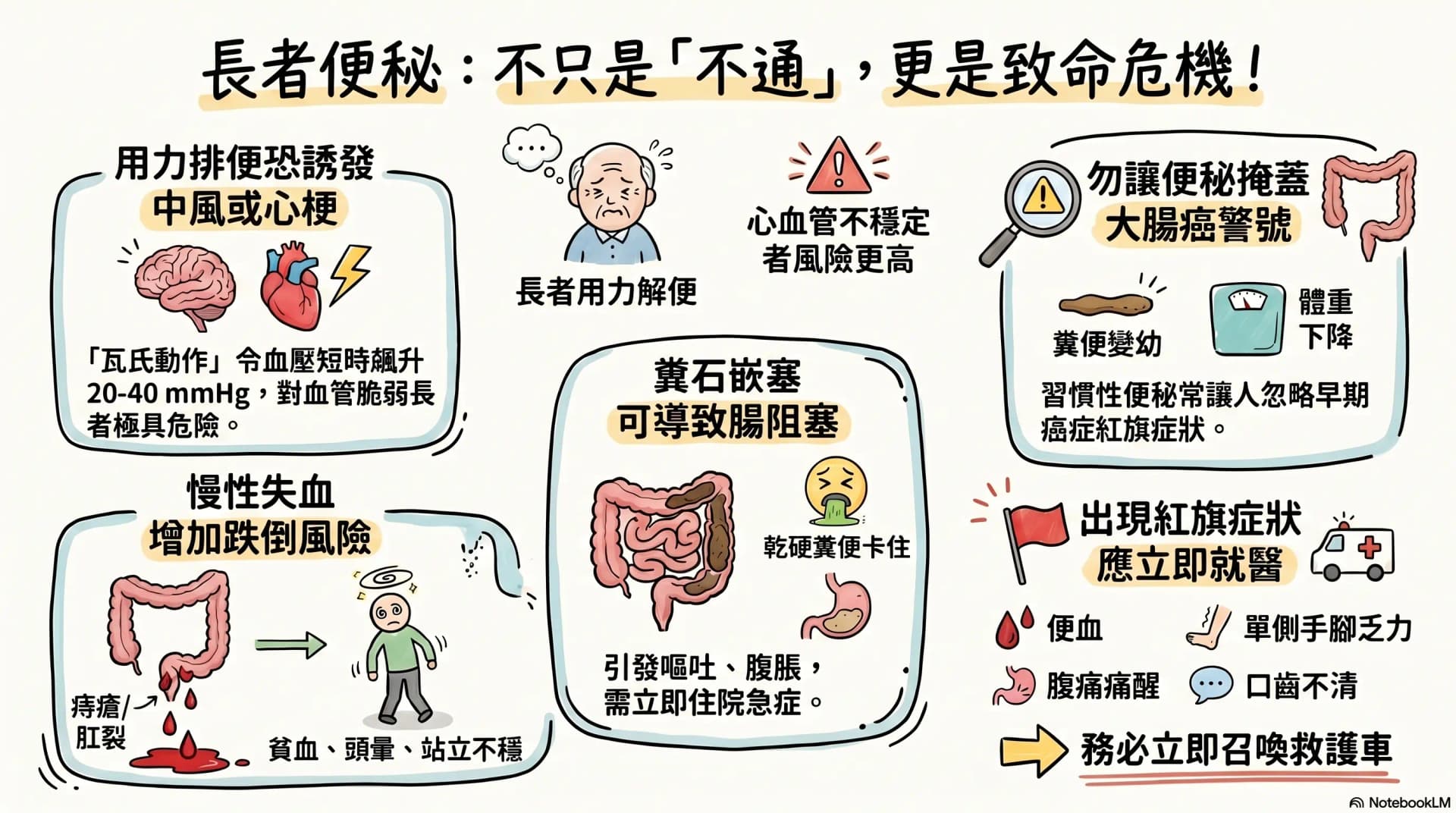
Can Straining on the Toilet Cause a Stroke in Older Adults? A TCM Look at Four Hidden Risks of Chronic Constipation
"Grandpa fainted in the bathroom last night" is not an isolated case. Straining on the toilet can indeed trigger strokes and heart attacks in older adults — but that is only one of four hidden risks of long-term constipation. This guide unpacks the four: cardiovascular events from straining, chronic blood loss from haemorrhoids and fissures, faecal impaction with bowel obstruction, and constipation masking colorectal cancer warning signs. It lists when to seek immediate medical attention, the age range for Hong Kong's colorectal cancer screening programme, and the TCM view of common patterns and direction.
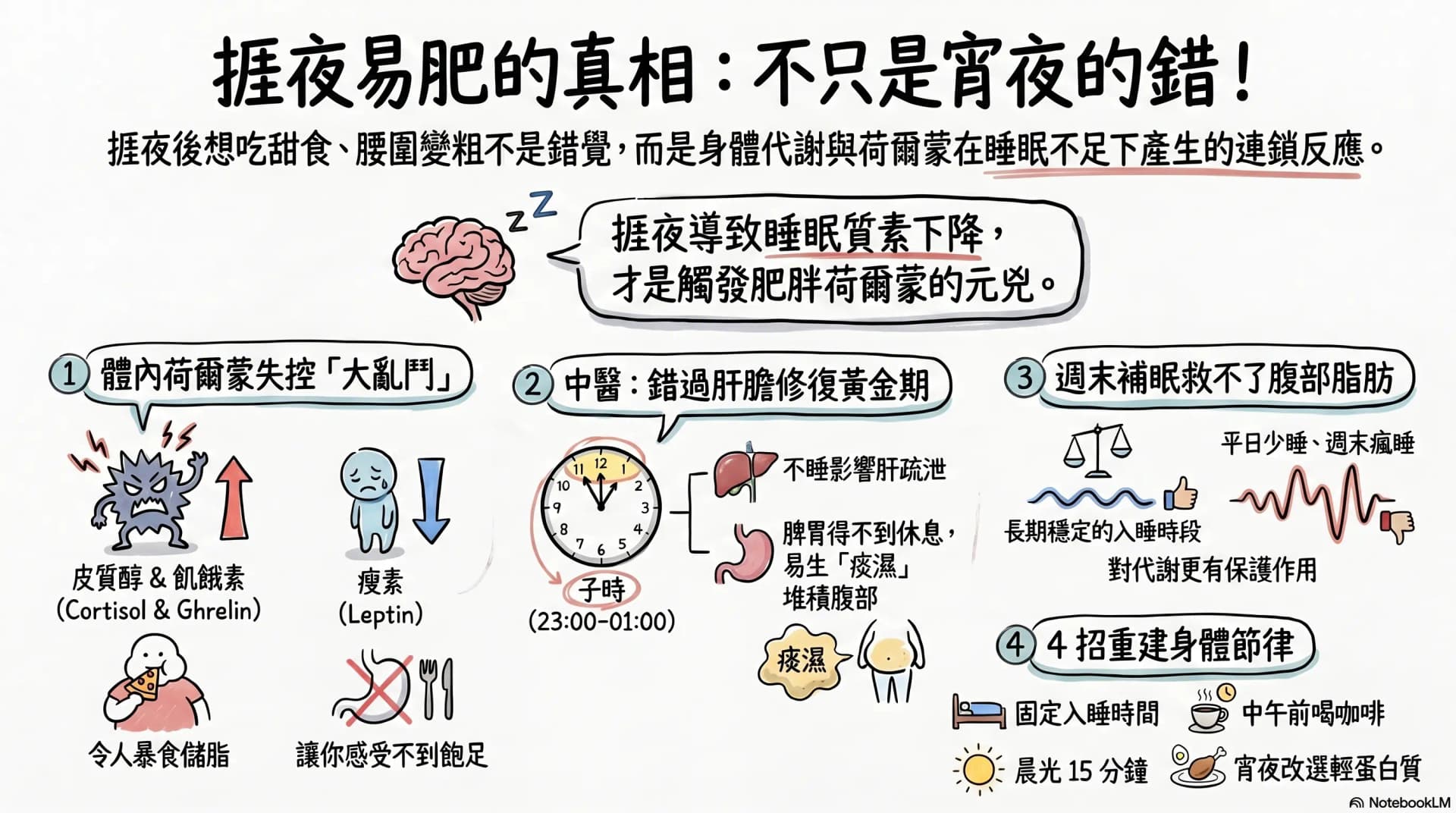
Why Do Late Nights Make You Gain Weight Faster? A TCM Look at Sleep, Cortisol and Runaway Appetite
After an all-nighter the cravings for chips, late snacks and milk tea come hard; the scale hasn't moved but the waistband has; new parents can put on 5 kg within six months. Late-night weight gain is not an illusion — the root cause is not "eating at night" but the cascade triggered when sleep quality drops. This guide explains how poor sleep drives weight gain through cortisol, ghrelin, leptin and insulin sensitivity, adds a TCM view of nighttime liver-gallbladder repair and constitutional patterns, lists when to see a Western doctor first, and offers four things you can start today.
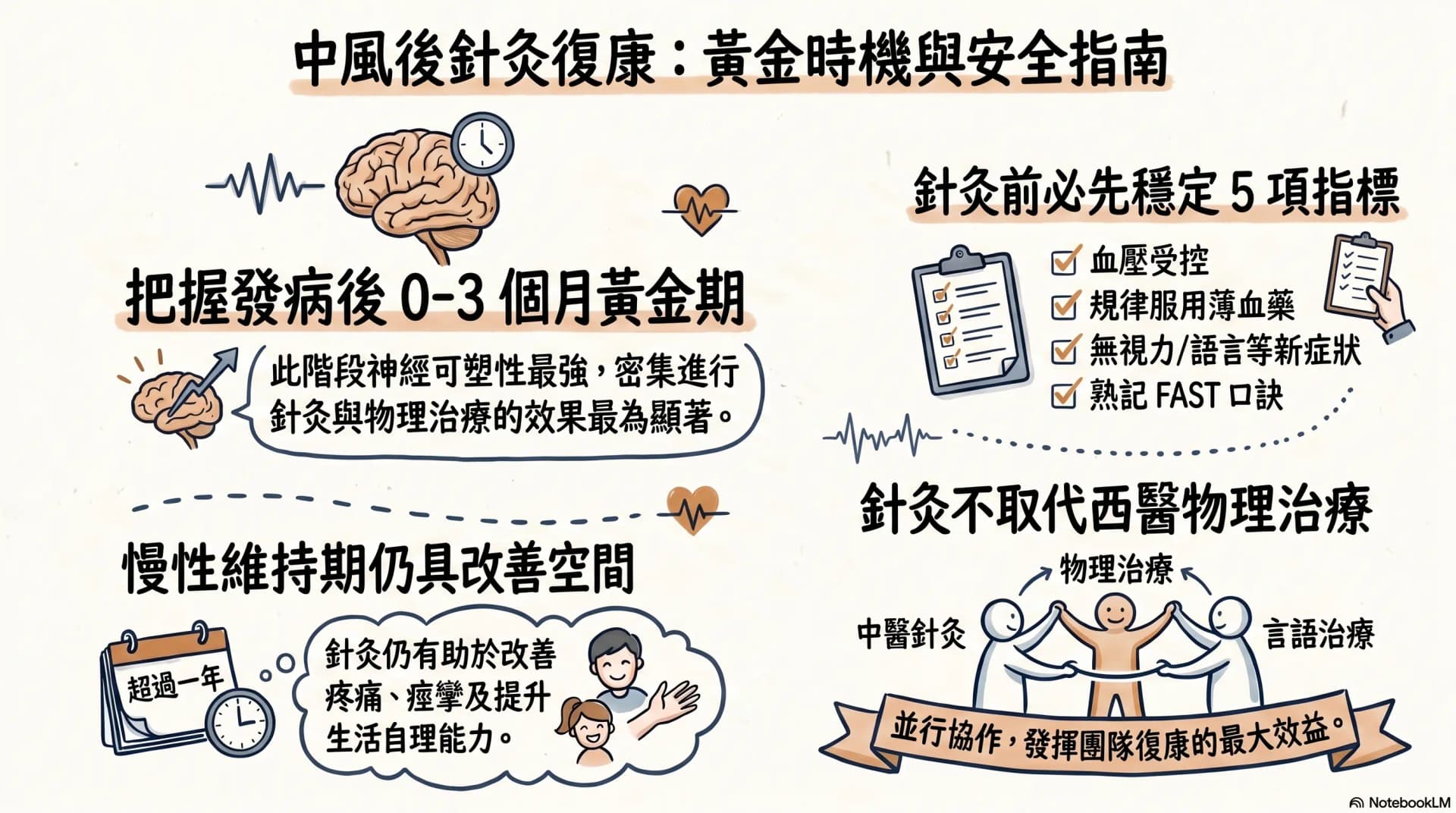
Considering Acupuncture After a Stroke? A TCM Guide to the Golden-Window Timing and Five Things Families Must Know
A family member has just been discharged after a stroke; one side is still weak and speech is slurred. The children want to start TCM acupuncture as soon as possible — but worry about interactions with blood thinners, conflicts with physiotherapy, and whether the "golden window" must be hit. This guide unpacks the meaning of the post-stroke golden-window timeline, lists the five recurrence warning signs that families must address before acupuncture begins, the logic of point selection and treatment direction, four common TCM patterns, contraindications and how to divide work with the Western rehab team.
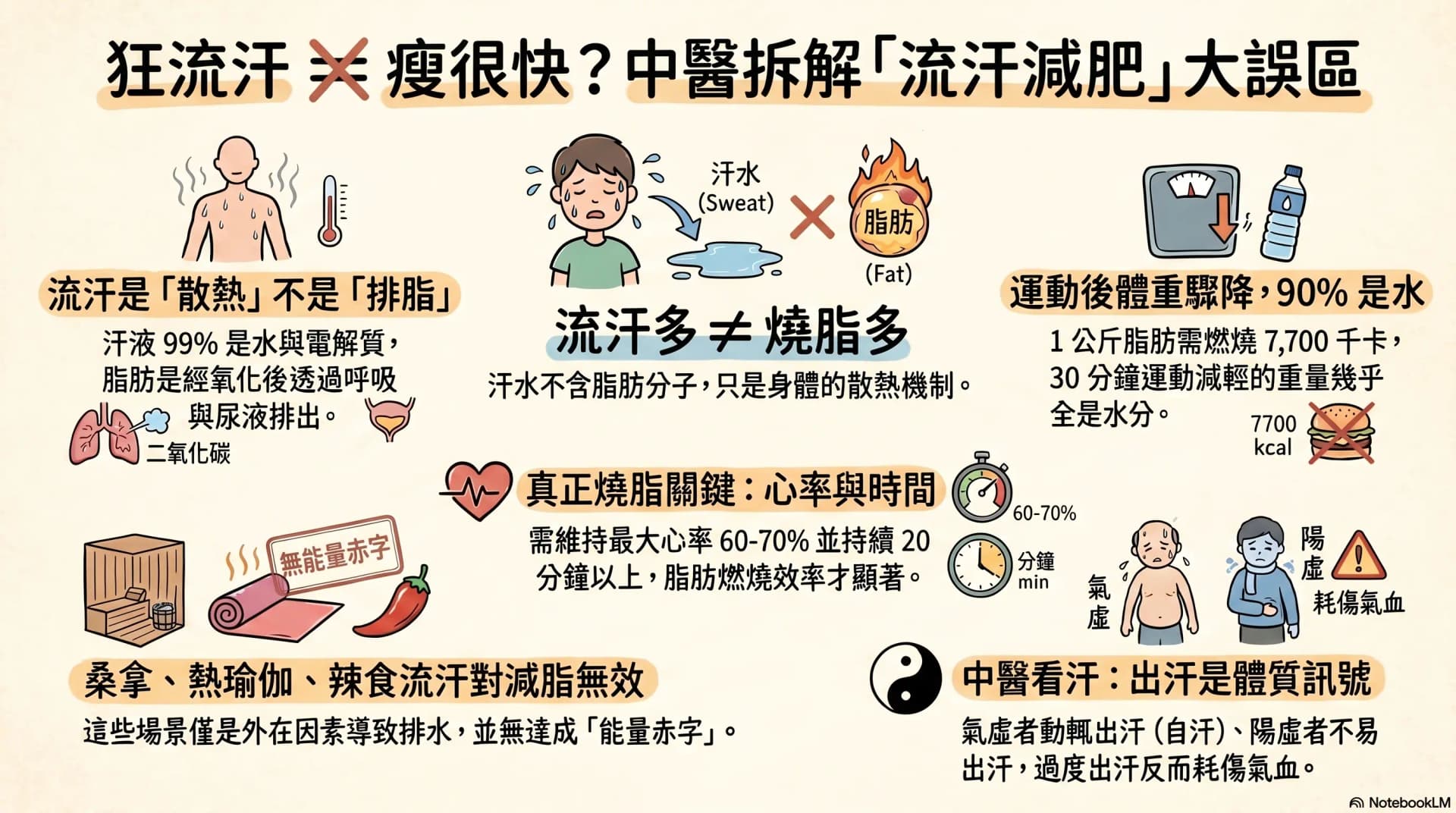
Does More Sweat Mean More Fat Burned When Running? A TCM Look at the Common Misconception
A 30-minute run drops the scale by 1.5 kg — proof of weight loss? A drenching hot yoga class "must have flushed out toxins"? A trip to the sauna makes the belly look smaller? These are the most common sweat-equals-fat-loss myths. This article separates sweating from water loss and from real fat oxidation, explains the actual conditions for fat burning, and adds a TCM view of constitutions that sweat too easily — or barely sweat at all — including five reasons runners may not be losing fat and four ways TCM can help.
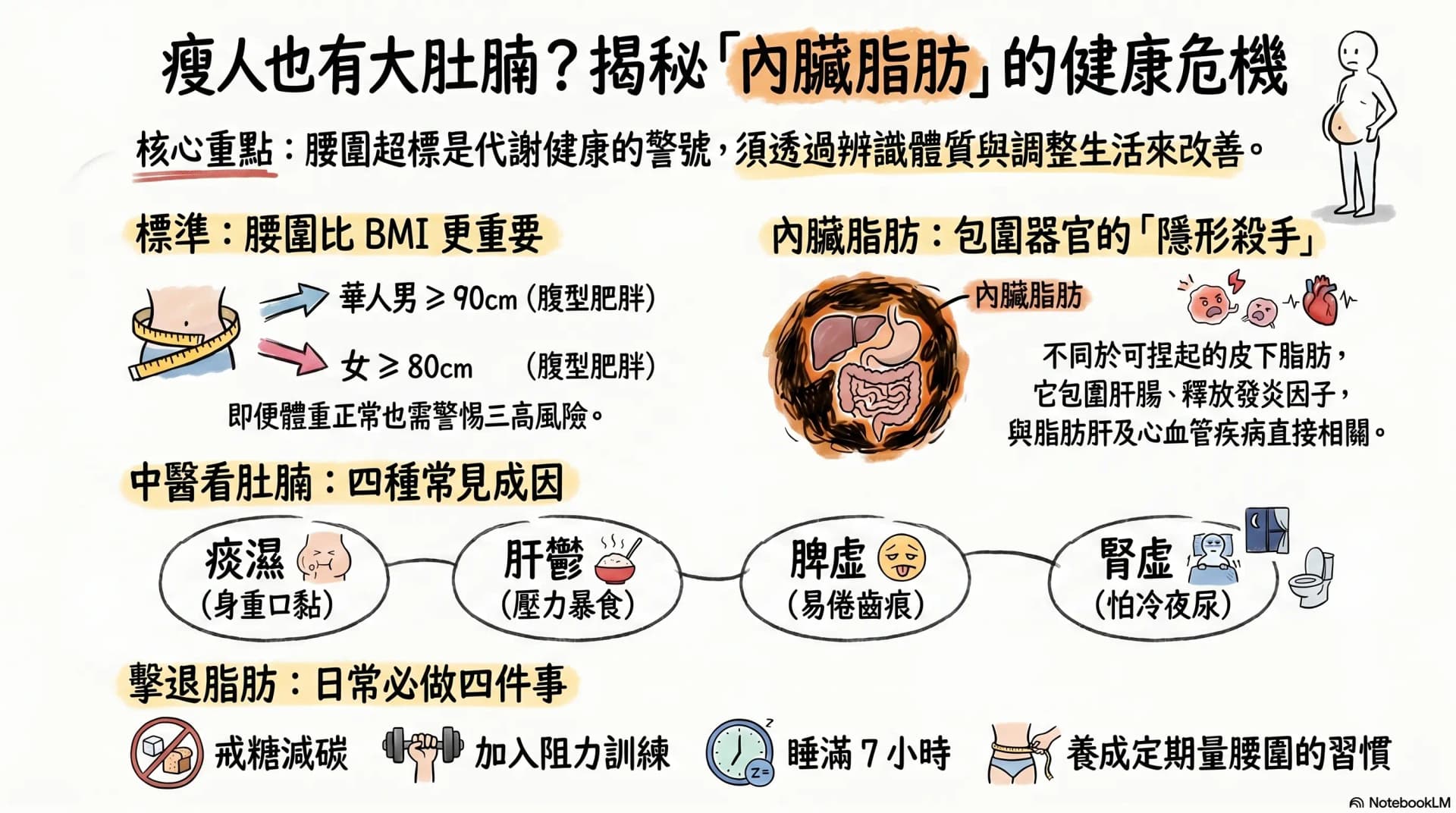
Why Do Slim People Still Get a Belly? A TCM Look at Visceral Fat and Its Risks
A normal BMI does not always mean low metabolic risk. This article explains why slim people can still develop abdominal fat, why visceral fat matters more than the scale, and how TCM interprets common constitutional patterns behind it.
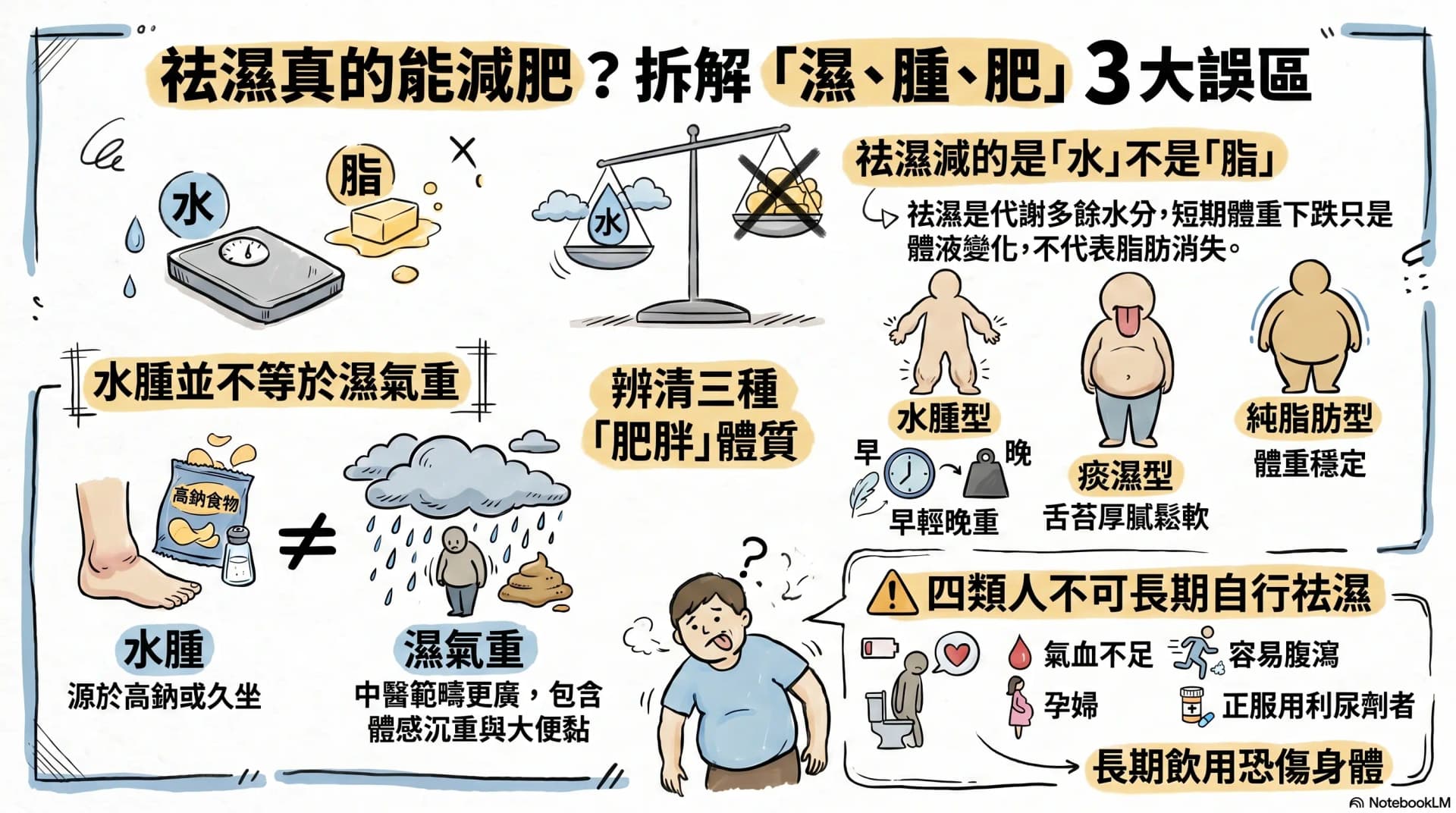
Can “Removing Dampness” Really Help with Weight Loss? 3 Common Myths About Dampness, Swelling and Fat
Herbal “dampness-clearing” drinks are popular, but why do some people feel no lighter after weeks of drinking them? This article explains three common myths and how to tell apart oedema, phlegm-damp obesity and simple fat accumulation.
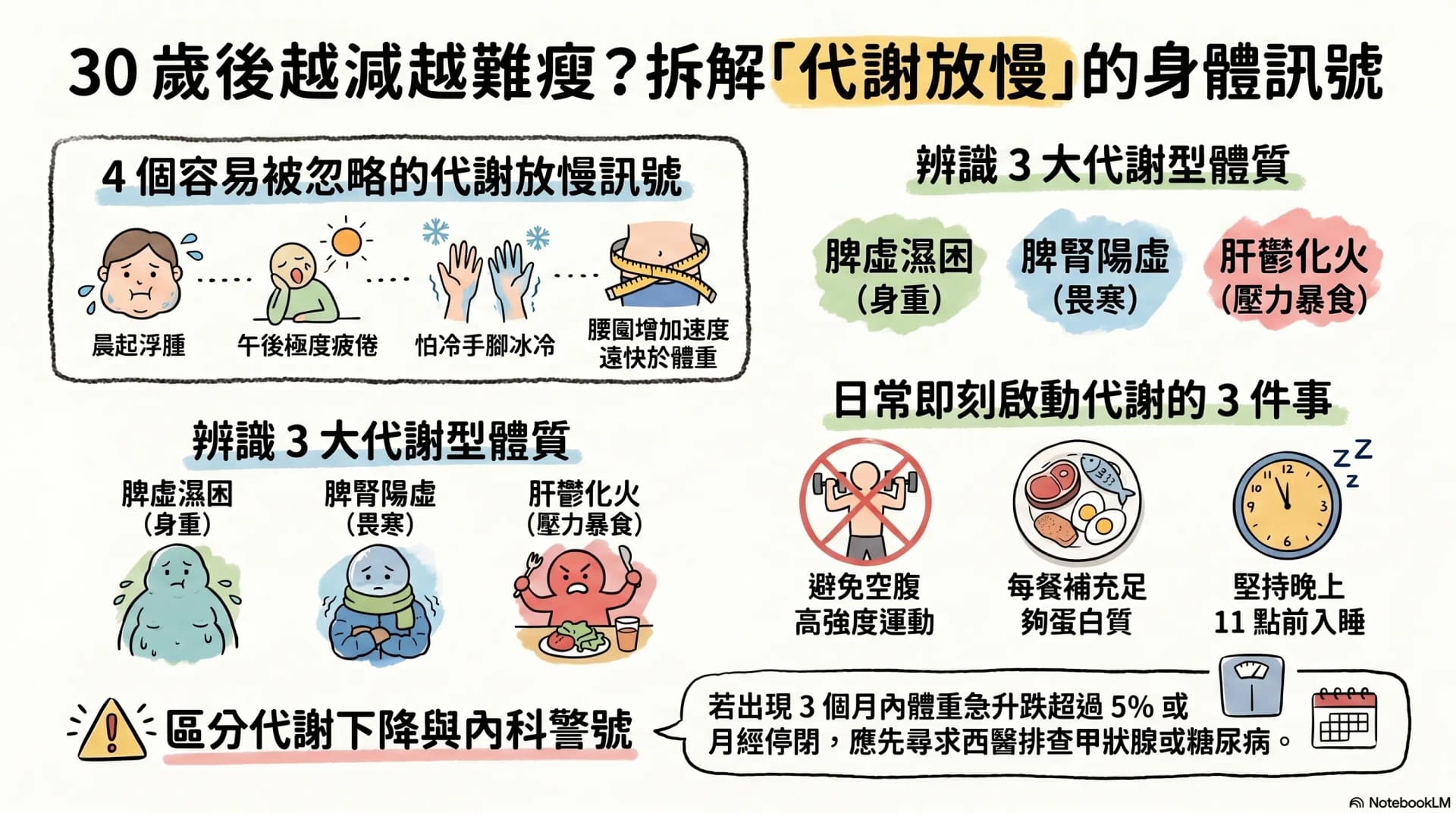
Why Is It Harder to Lose Weight After 30? TCM on 4 Signs of a Slowing Metabolism
Eating the same and exercising the same, yet weight loss stalls after 30 while the waistline creeps up? This guide explains common metabolic slowdown signals, the TCM constitutional patterns behind them, and when Western medical assessment should come first.
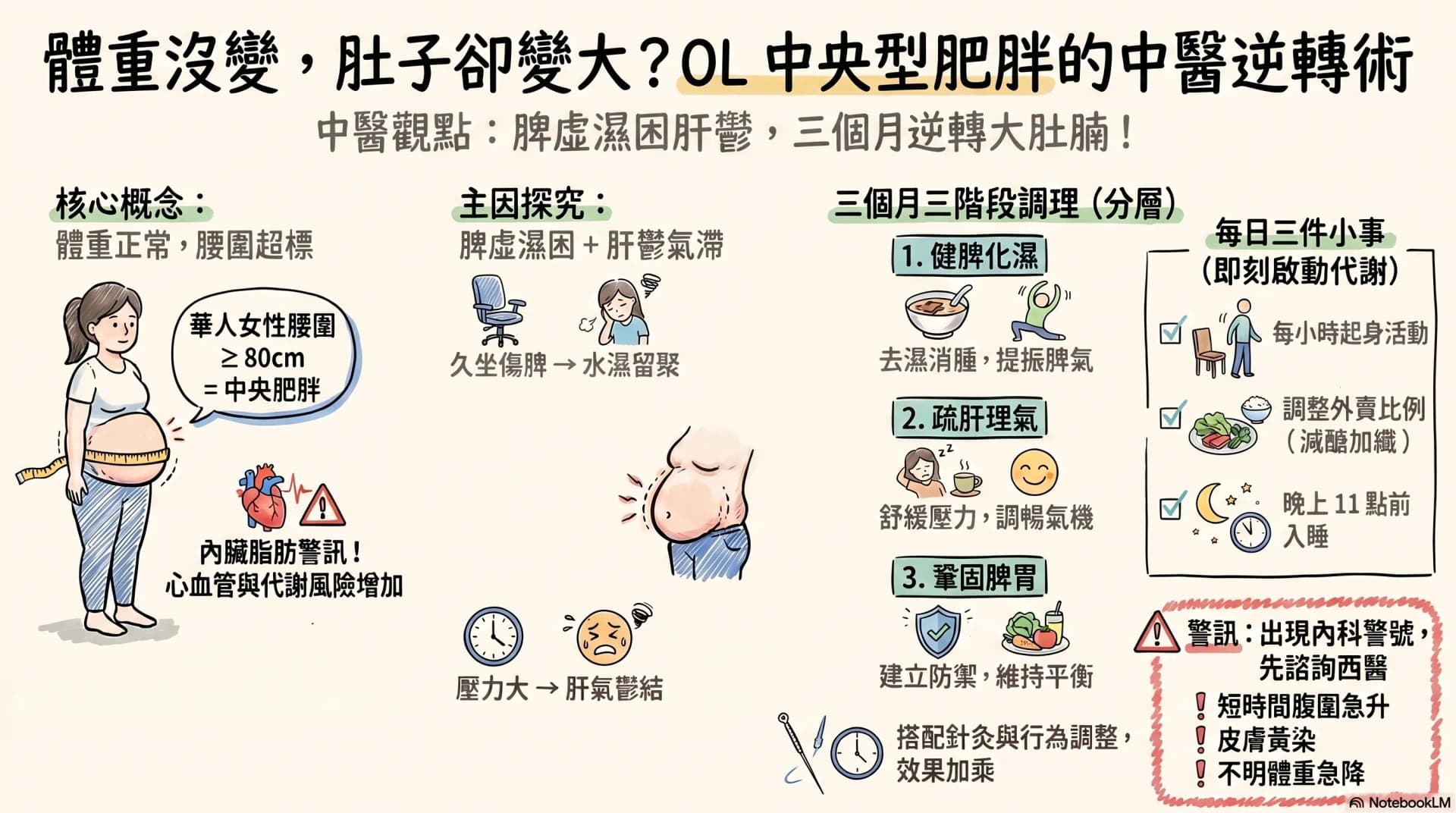
Weight Unchanged but the Belly Keeps Growing? A TCM Turnaround Plan for Central Obesity in Office Workers
Weight has risen only 2 kg in six months, but the waist is 8 cm wider; the health-check report flags "elevated visceral fat" in red. This is a common frustration for women in their 30s working office jobs. This case study follows the typical consultation profile of "Ms Chan" (pseudonym) — explaining the TCM evaluation of sedentary central obesity, the spleen-damp-with-liver-stagnation pattern, the three-month phased plan, when to see a Western doctor first, and three things readers can start doing today.
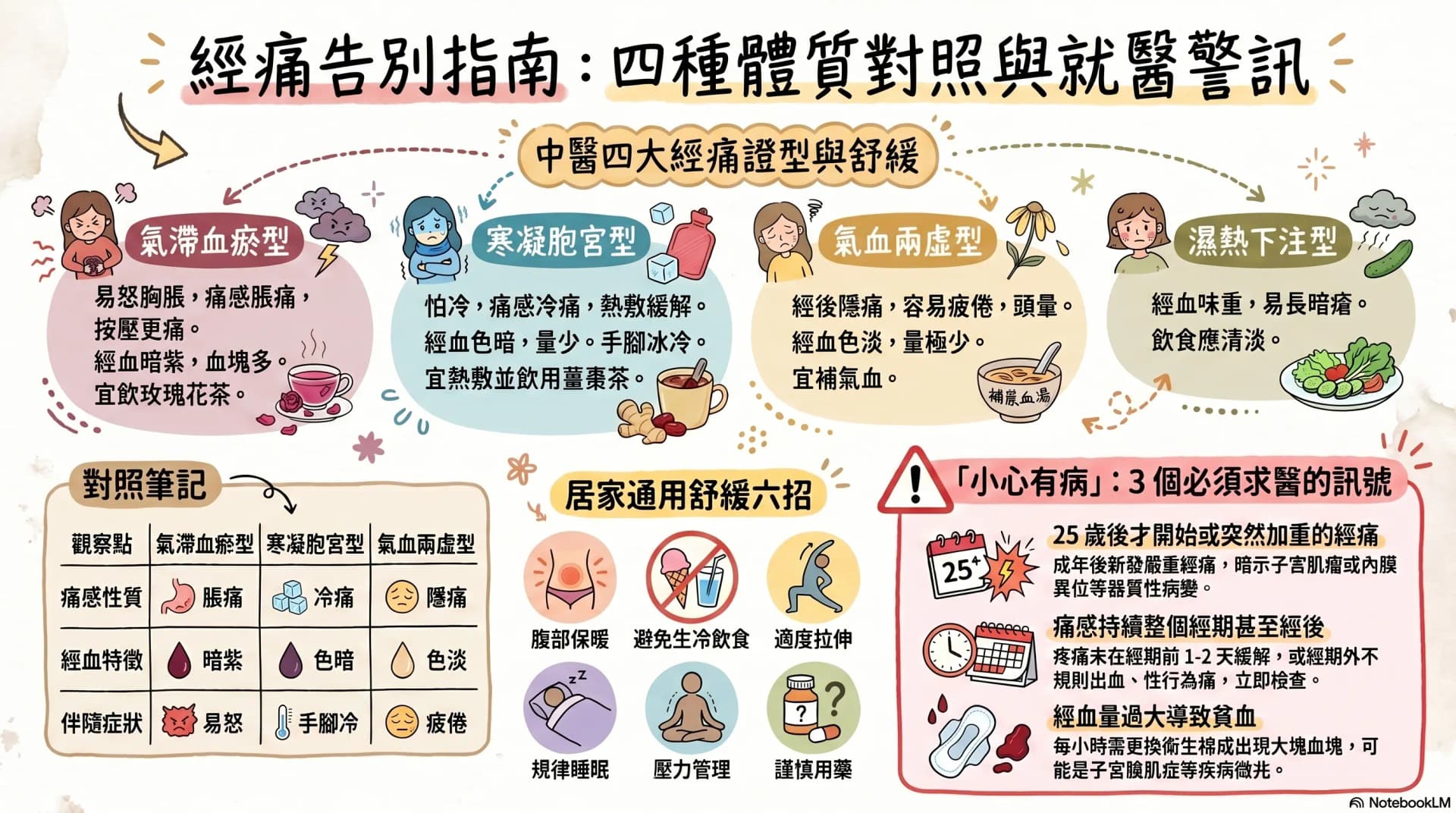
A Self-Check Guide to 4 Types of Menstrual Pain and Relief Tips
Menstrual pain is not something you simply have to endure. This guide explains the difference between primary and secondary dysmenorrhea, outlines four common TCM patterns, highlights five warning signs that need medical review, and offers practical relief strategies for everyday care.
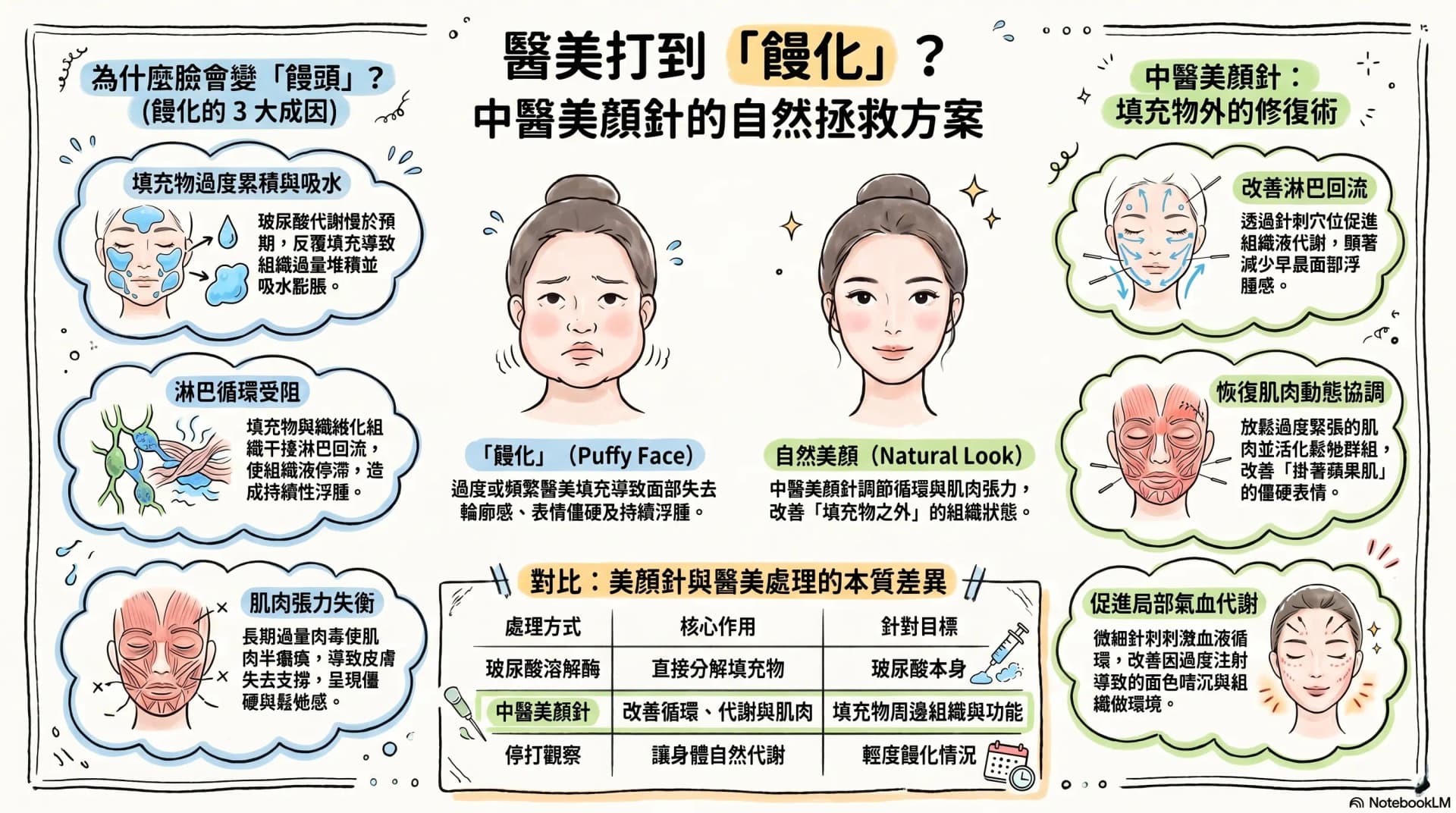
“Pillow Face” After Injectables? 4 Common Causes and How TCM Cosmetic Acupuncture May Help
If the face looks increasingly puffy, heavy or unnatural after injectables, it may not be simple swelling. It may be the “pillow face” look that follows repeated aesthetic injections. This article explains four common causes, when to return to your injector first, and where TCM cosmetic acupuncture may help.
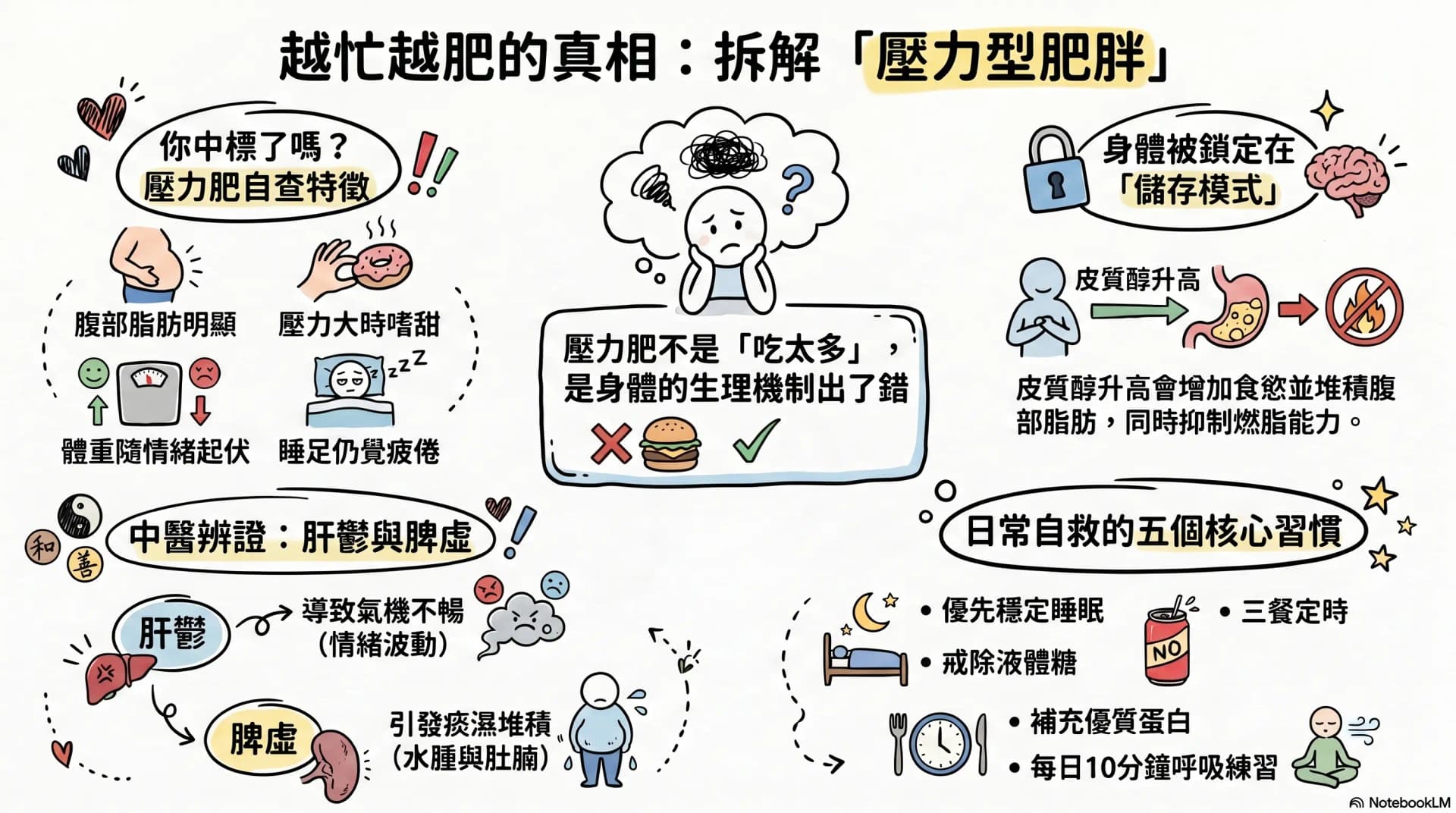
Heavier When Busy, Heavier When Off? A TCM Look at Stress-Induced Obesity and How to Approach It
You count calories, you exercise — yet you put on weight when work gets busy, and put on more during the holiday. The needle moves one or two kilos at a time, and the belly shows it most. This article looks at stress-induced obesity through a TCM lens — cortisol, liver-qi stagnation and spleen-deficiency damp — and outlines when to see a Western doctor first and where TCM care can begin.
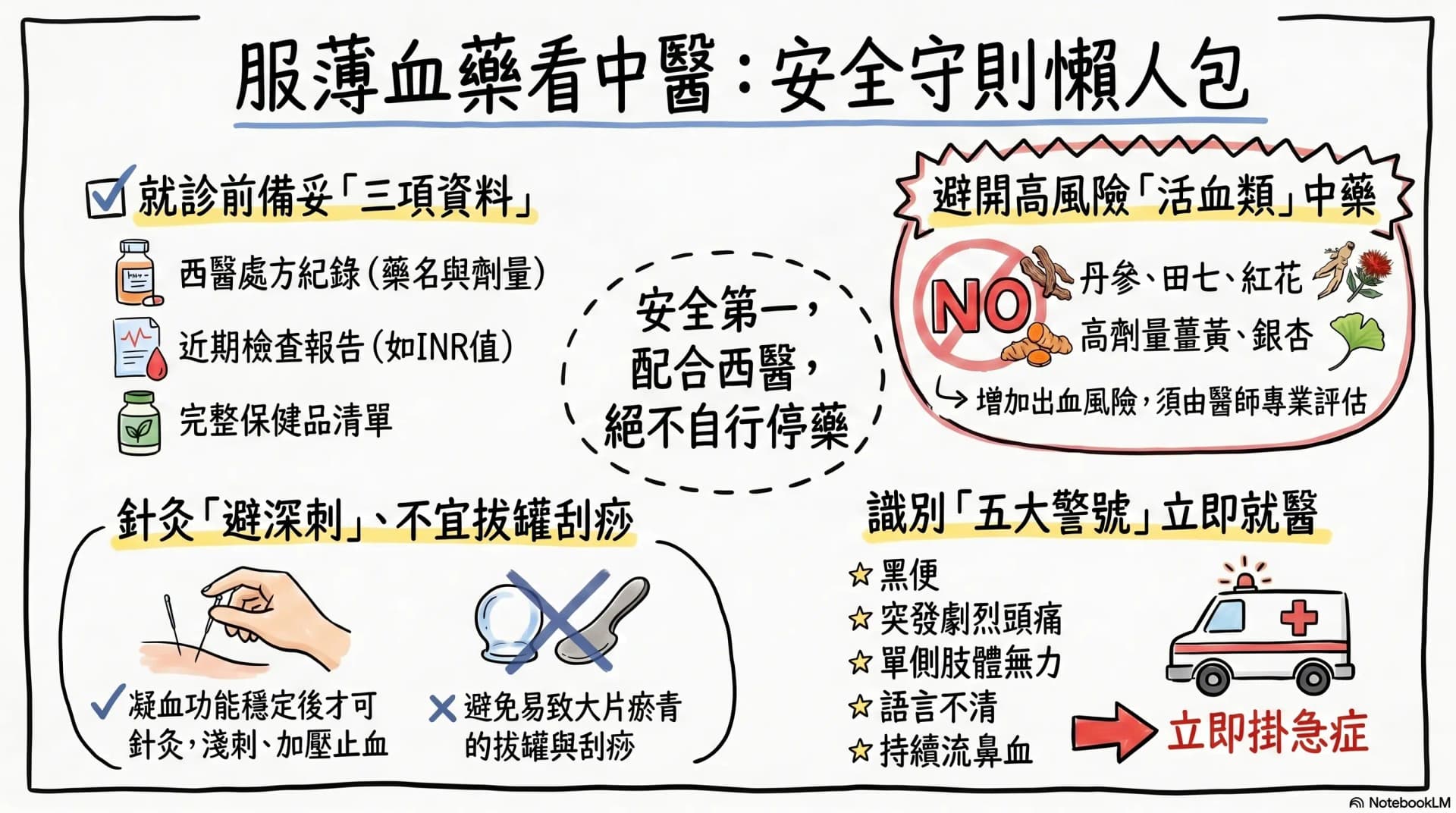
TCM on Blood Thinners: Herbs and Acupuncture in Atrial Fibrillation
The most common question from elderly atrial fibrillation patients on blood thinners is whether they can also take Chinese herbal medicine or have acupuncture. The answer is yes, but with three prerequisites: both practitioners must know about each other; blood-activating and tonifying herbs must be assessed by a registered TCM doctor; and the safety principles for acupuncture, cupping and gua sha must be strictly observed. This article focuses on that single question.
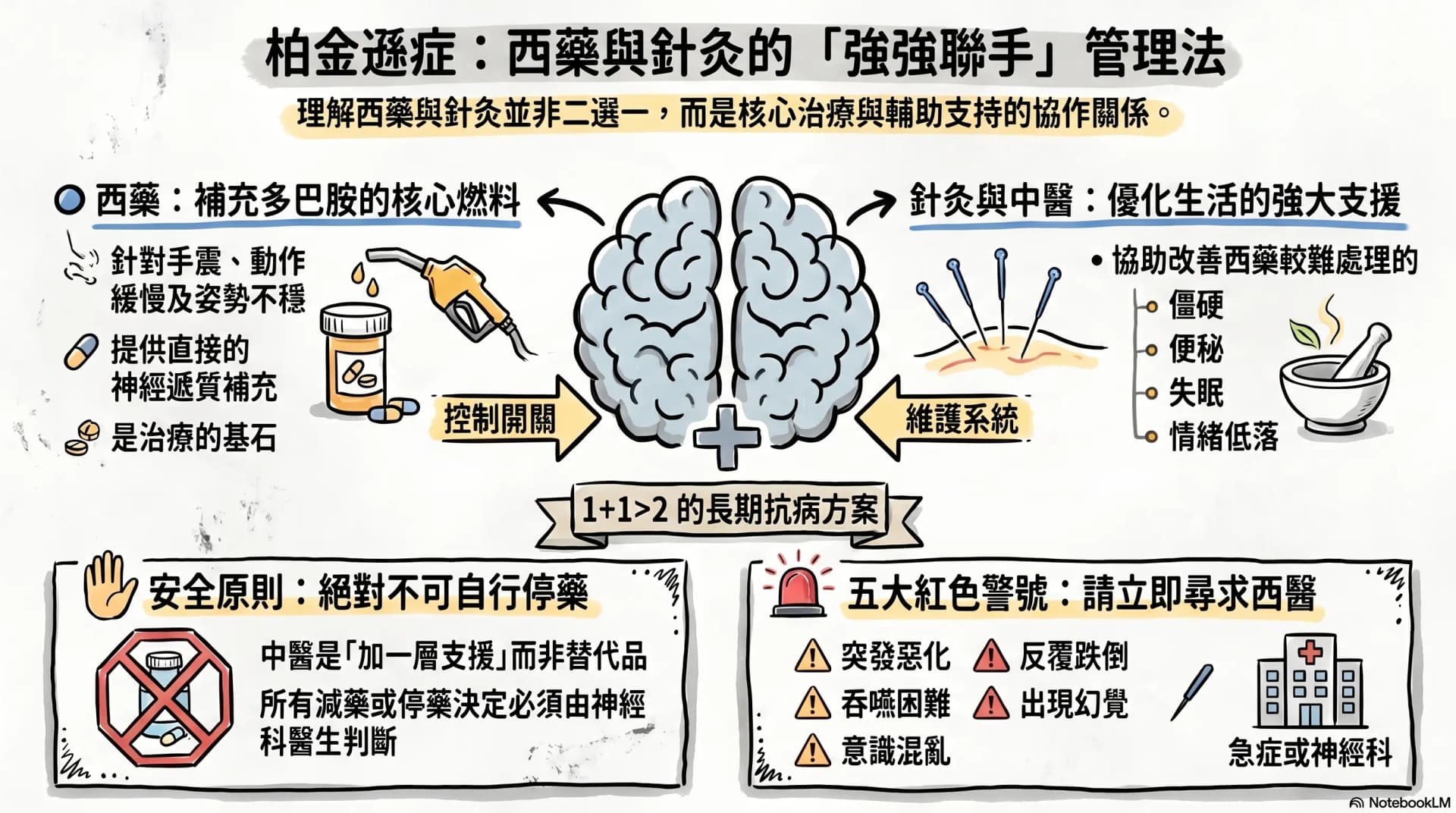
Acupuncture for Parkinson's Disease? Combining TCM and Medication
Parkinson's patients on long-term dopaminergic medication such as Madopar are often asked by family members whether acupuncture and Chinese herbs can help with tremor, stiffness, constipation or insomnia. This article compares the roles of Western medication and acupuncture-based TCM care across disease stages and TCM patterns, lays out where the two combine well, and lists the warning signs that must go to neurology or emergency care first.
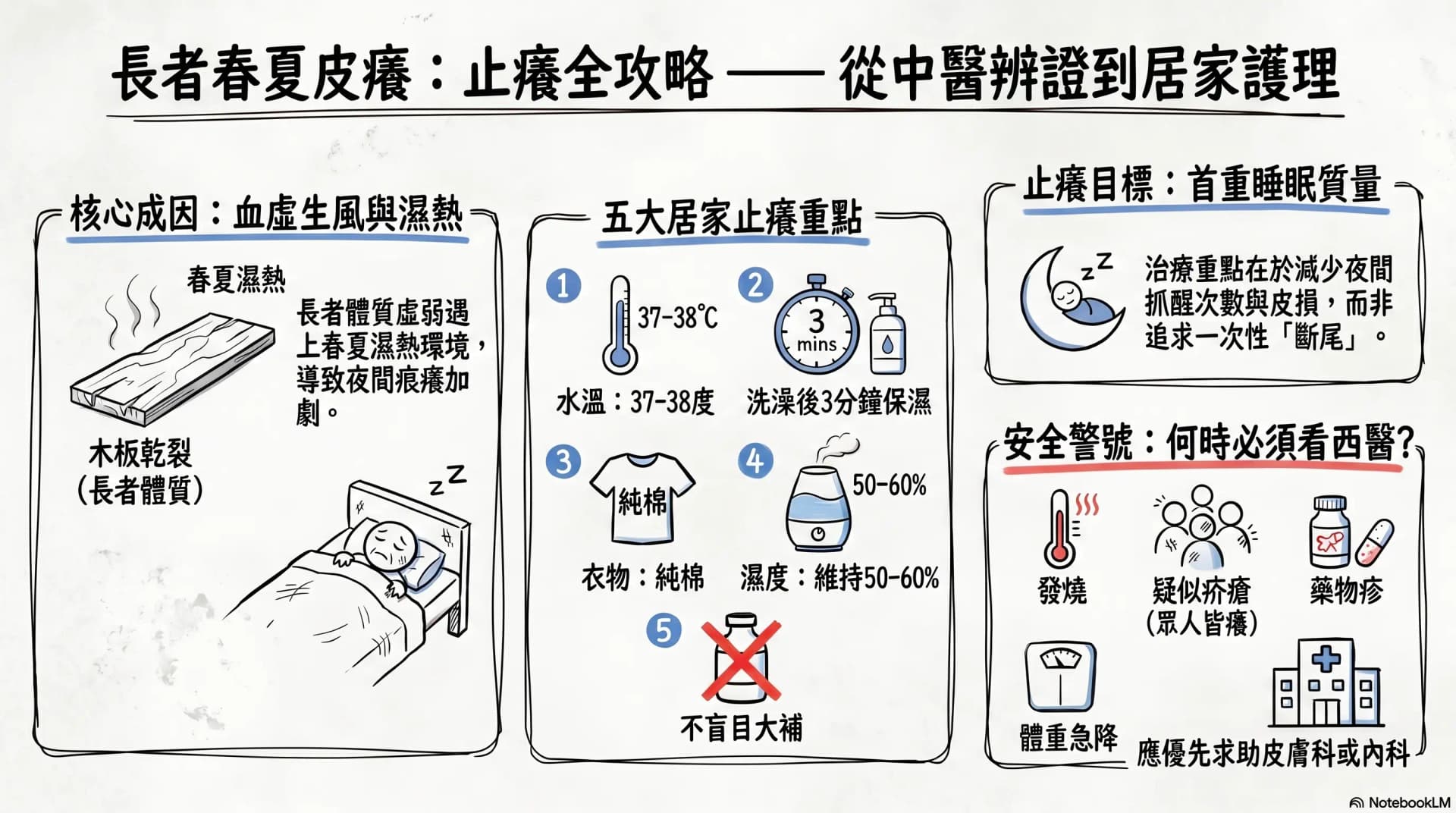
Night-Time Itchy Skin in Older Adults: A TCM Damp-Heat Case Study
When spring and summer arrive, many elderly people see their itchy skin flare up, particularly at night, and topical creams alone become less effective. Through the composite case of "Madam Chan", a 78-year-old, this article explains how TCM assesses elderly itch through the lens of damp-heat in the skin and blood-deficiency wind, walks through a phased approach to relief, and lists the warning signs (scabies, drug eruption, severe skin disease) that need a Western dermatology or internal-medicine assessment first.
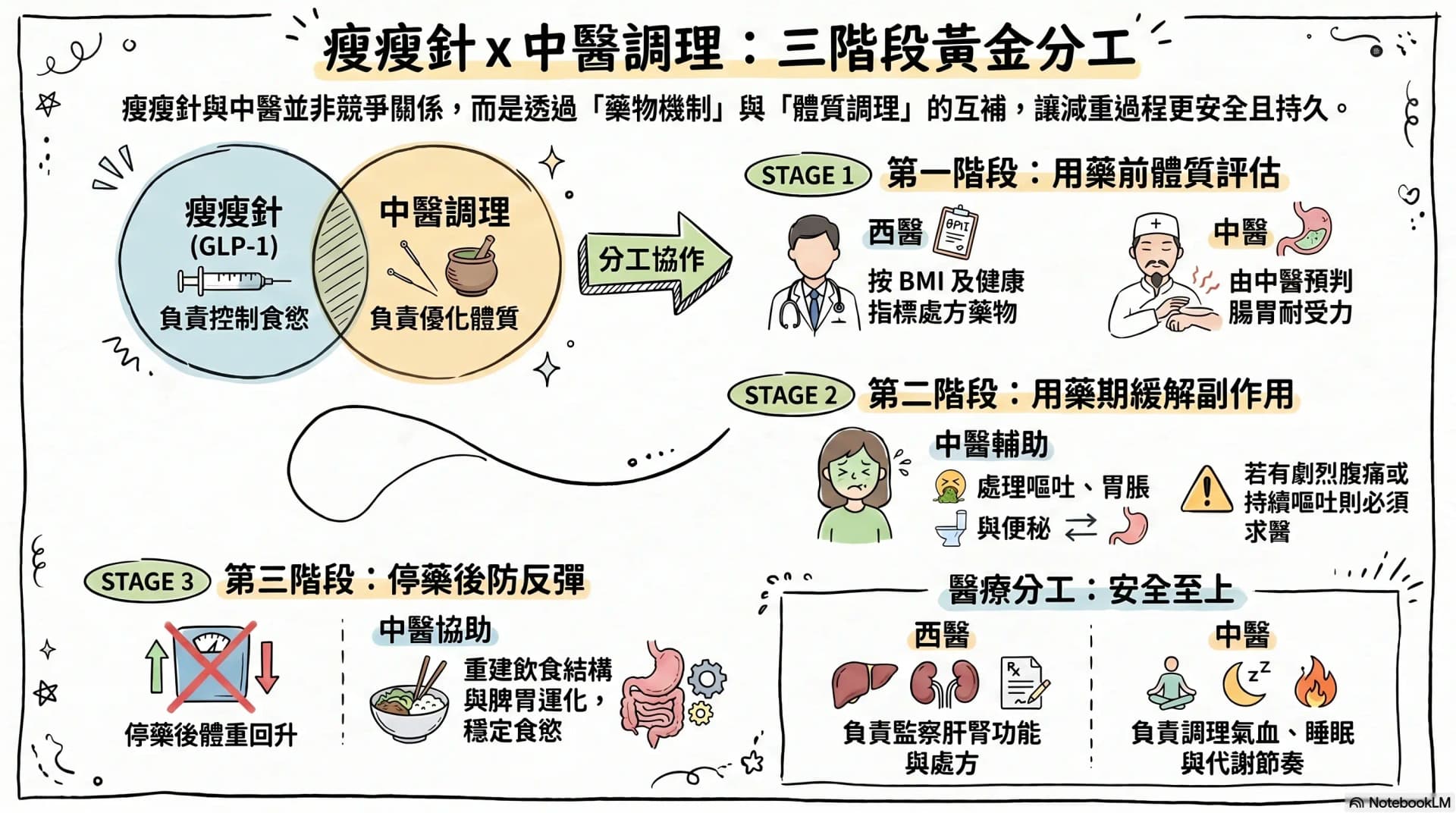
Can I See a TCM Practitioner While on a GLP-1 Injection?
GLP-1 weight-loss injections are now a major talking point in Hong Kong. This article compares the roles of prescribed GLP-1 medication and TCM care across three phases — before treatment, during treatment and after stopping — covering medical monitoring, side-effect relief and post-discontinuation rebound, and identifying scenarios that should not be managed by TCM alone.
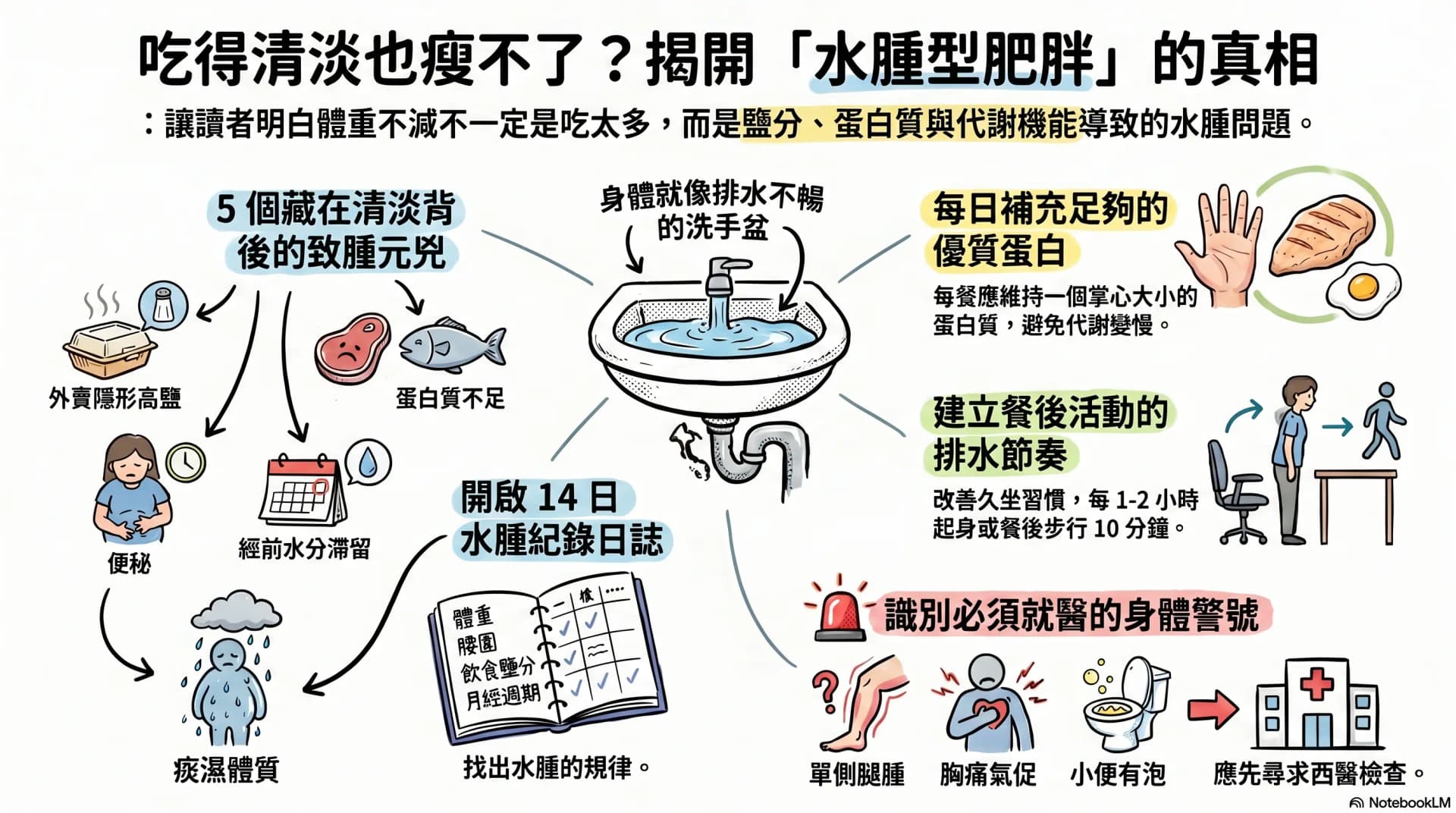
Eating Light but Not Losing Weight? A TCM Edema-Type Case Study
Eating light yet the scale will not budge — only the puffiness in the face, ankles and waistline persists? This case study follows Ya-lin (pseudonym), a 38-year-old office worker, through six months and explains how "eating clean but still not losing weight" often comes from a stack of small issues: salt, low protein, constipation, premenstrual fluid retention, phlegm-damp constitution, or internal disease. It also lists scenarios that warrant seeing a Western doctor first.
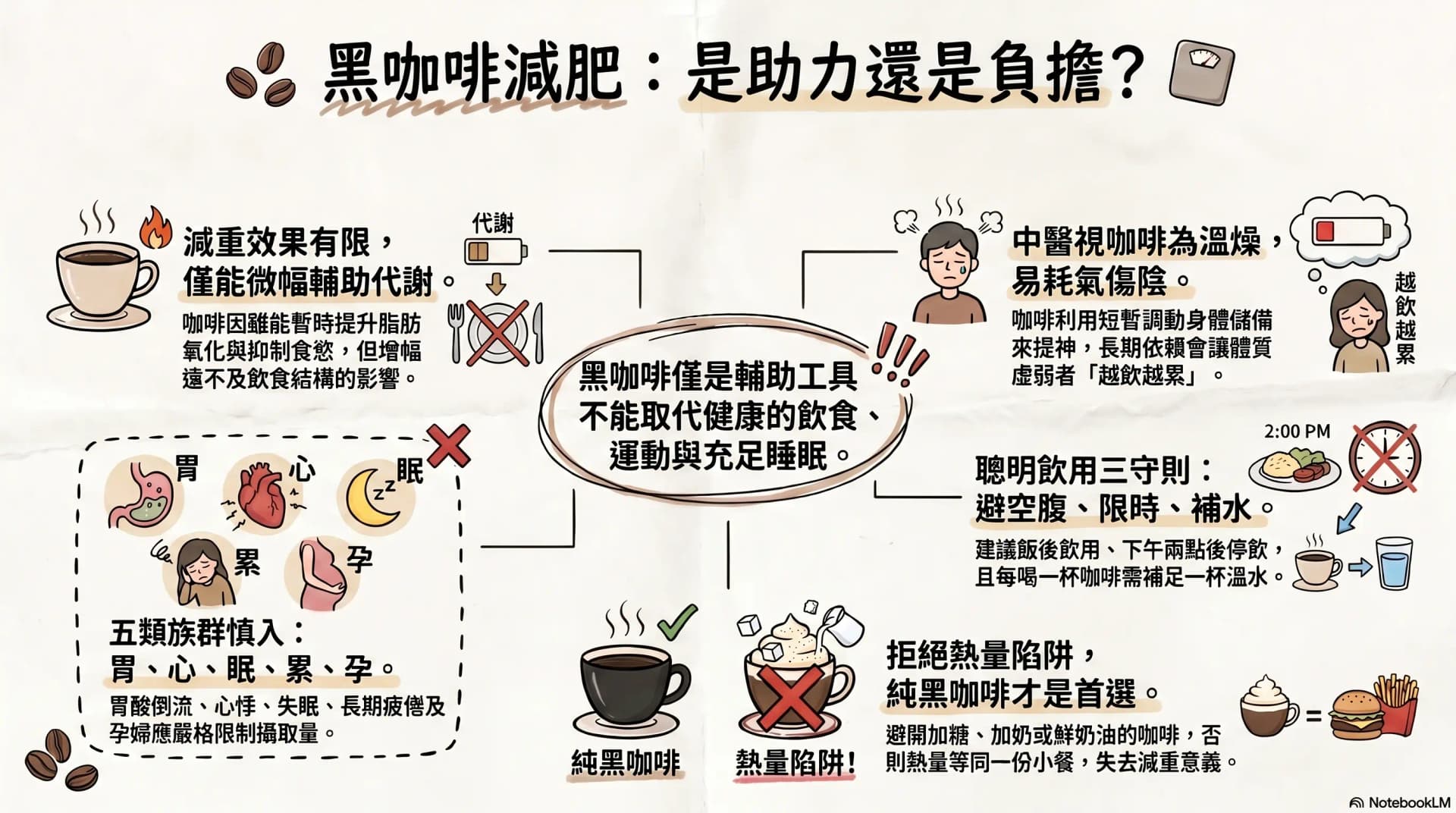
Does Black Coffee Help with Weight Loss? Timing and Side Effects
Black coffee may briefly raise metabolism and suppress appetite, but for those with acid reflux, palpitations, insomnia, chronic fatigue or premenstrual symptoms, it can do more harm than good. This article looks at the evidence and the TCM perspective, identifies five body types that should drink with care, and explains how to arrange timing and quantity sensibly.
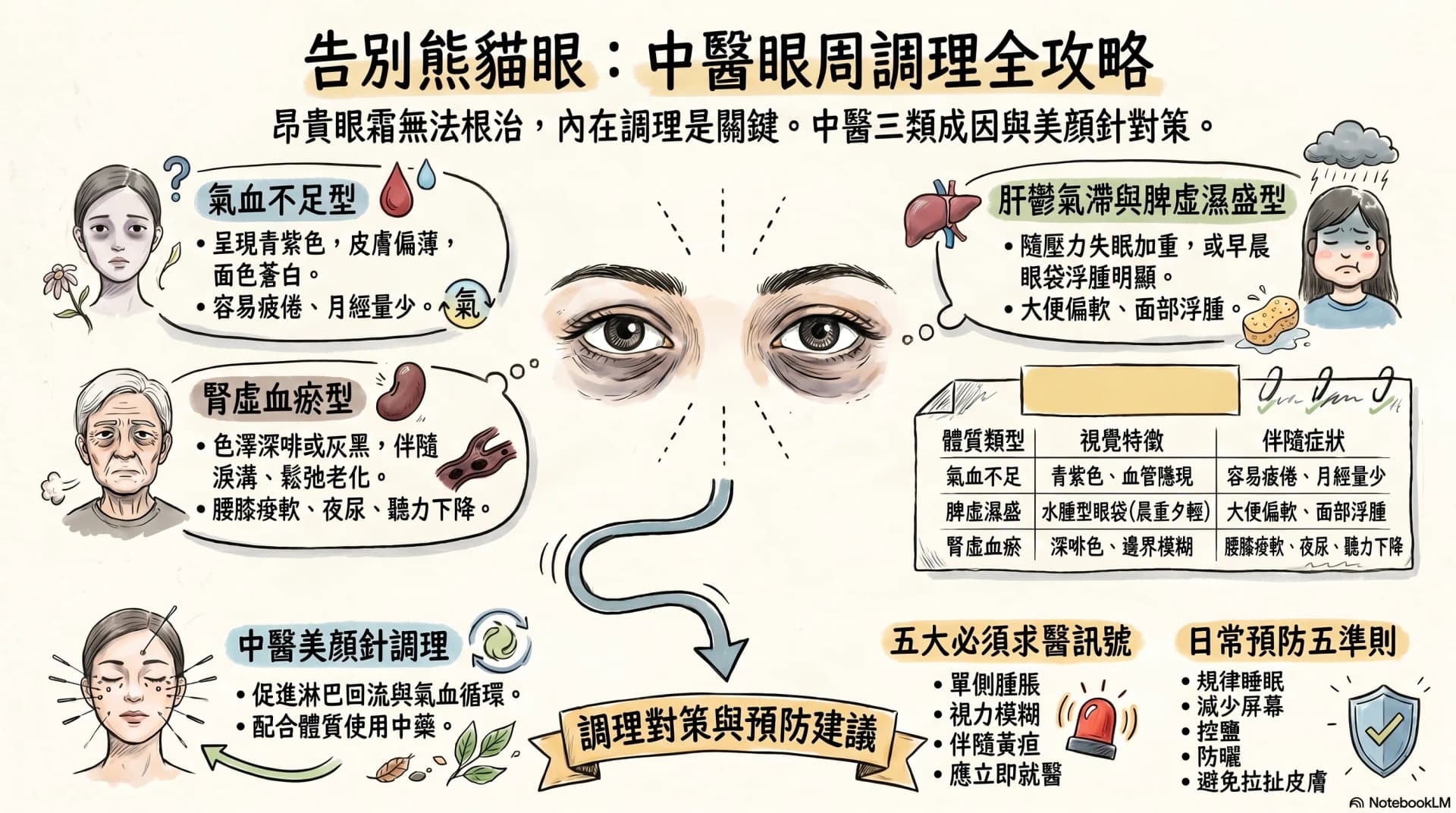
Eye Bags and Dark Circles That Eye Cream Cannot Fix: 4 TCM Patterns and How Cosmetic Acupuncture Can Help
Daily eye cream and eye masks, but the dark circles and eye bags only deepen — is it 'just age', or is the body sending a signal? Dark circles and eye bags can stem from qi-blood deficiency, liver-qi stagnation with insomnia, spleen deficiency with water retention, or kidney deficiency with blood stasis — and they may also reflect structural fat, chronic disease, or allergy. Dr To breaks down four TCM patterns, a self-check guide, five red-flag signals warranting medical investigation, and the cosmetic acupuncture directions that correspond to each pattern.
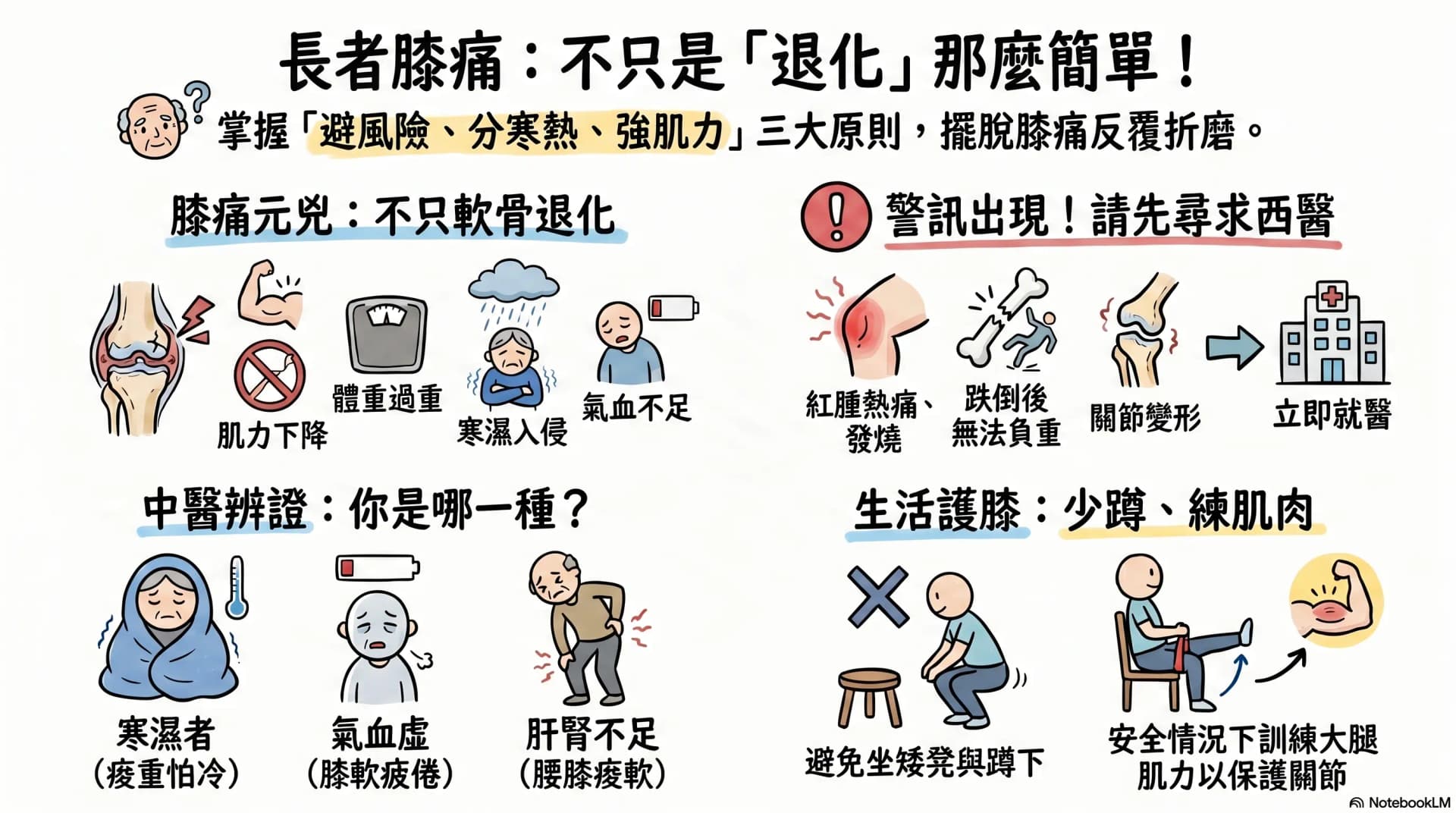
Recurrent Knee Pain in Older Adults: Is It Just Degeneration?
Recurrent knee pain in older adults is not always simple degeneration. Osteoarthritis, muscle weakness, cold-damp patterns, qi-blood deficiency, old injuries, and fall risk may all contribute. This article explains common causes, red-flag signs, TCM patterns, and practical ways to reduce recurrence.
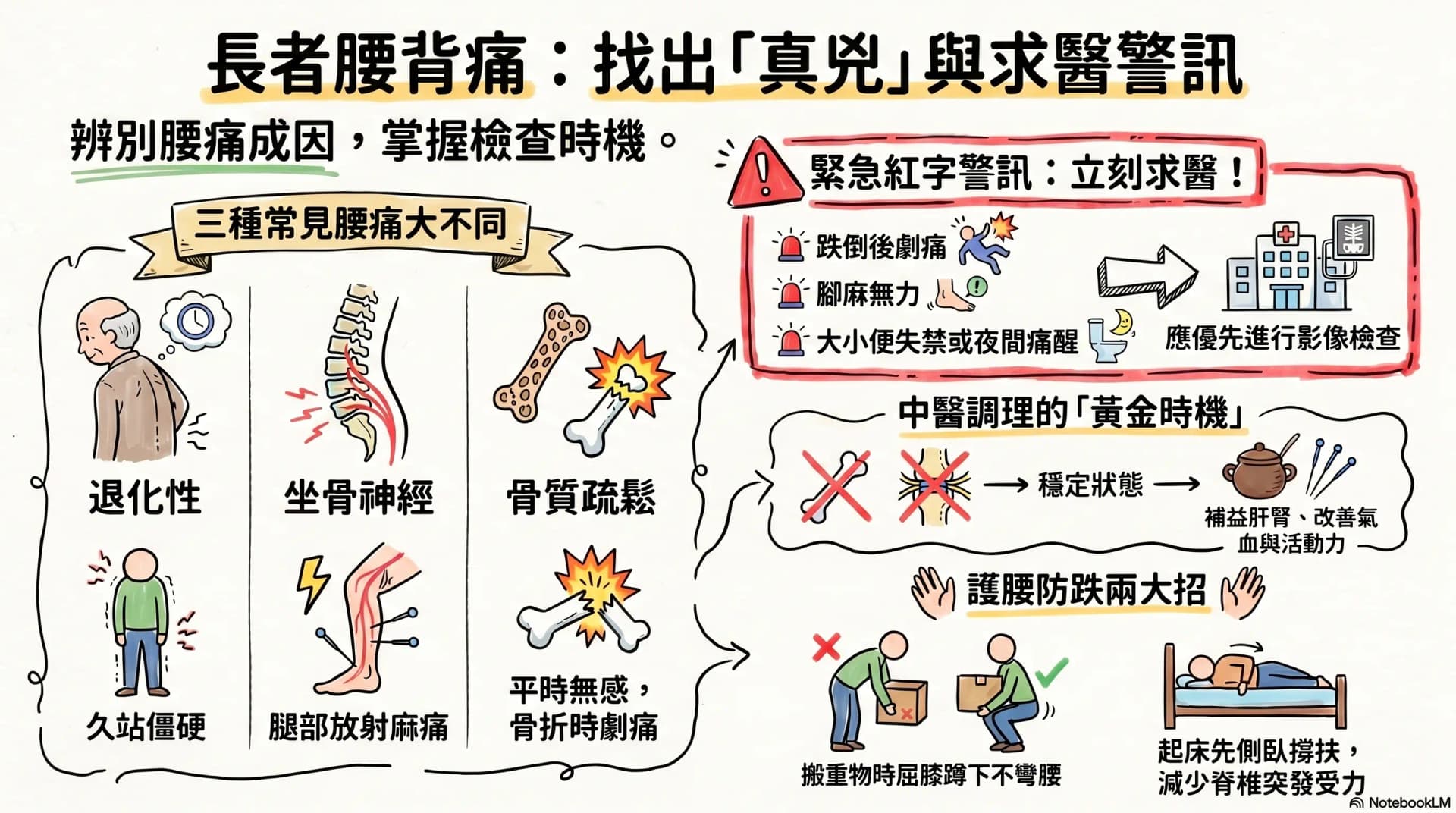
Back Pain in Older Adults: Osteoporosis, Degeneration, or Sciatica?
Back pain in older adults may arise from muscular strain, lumbar degeneration, sciatica, osteoporotic fracture, falls, or other medical conditions. This article compares common causes, red-flag signs, when investigation is needed, and how TCM may help once urgent problems are excluded.
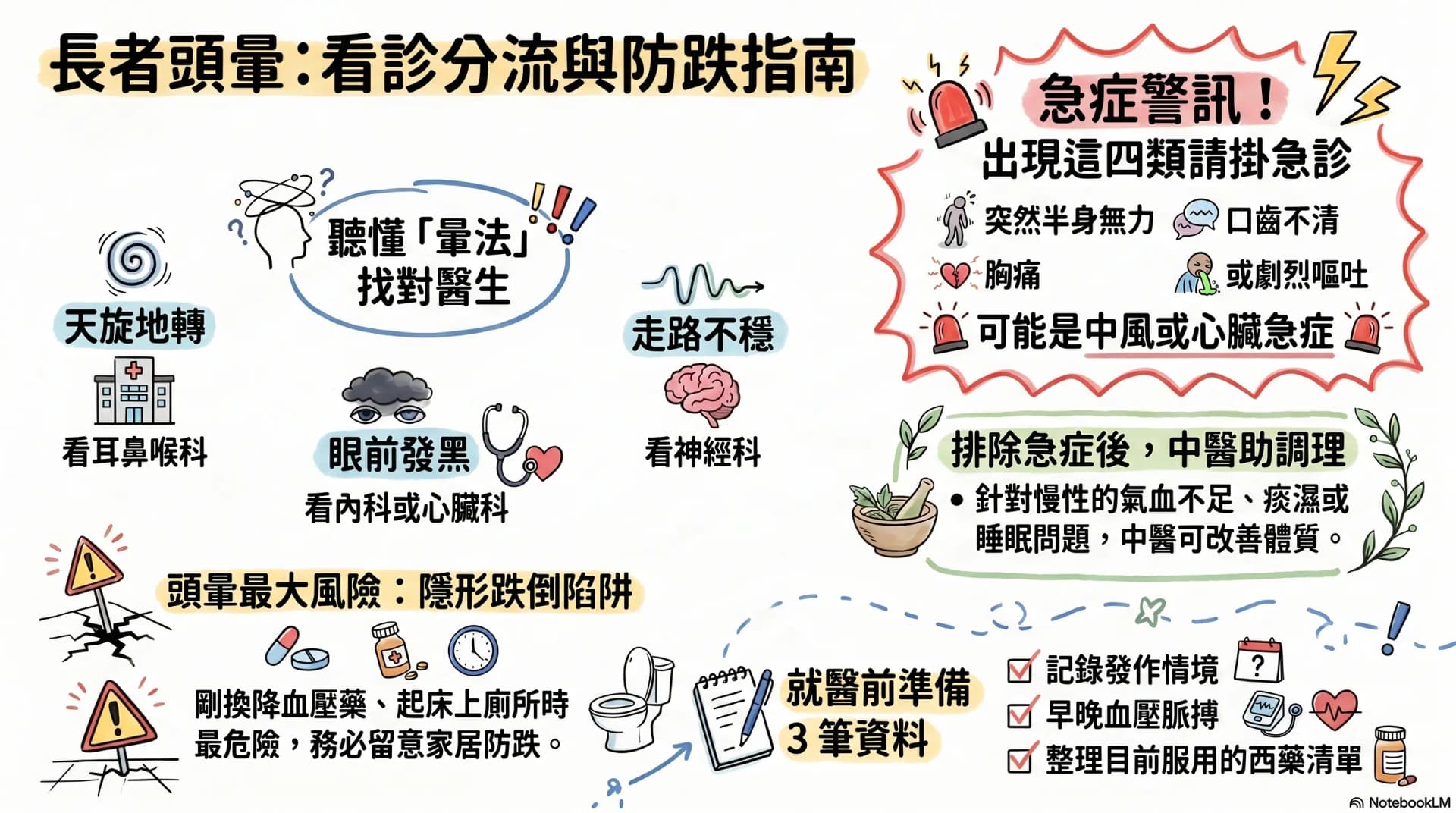
Dizziness in Older Adults: ENT, Cardiology, or TCM?
Dizziness in older adults can mean vertigo, near-blackout on standing, unsteady walking, or a heavy foggy head. Causes range from BPPV and blood-pressure fluctuation to arrhythmia, anaemia, low blood sugar, medication effects, stroke warning signs, and qi-blood deficiency. This article explains which situations suit ENT, cardiology, general medicine, emergency care, or TCM.
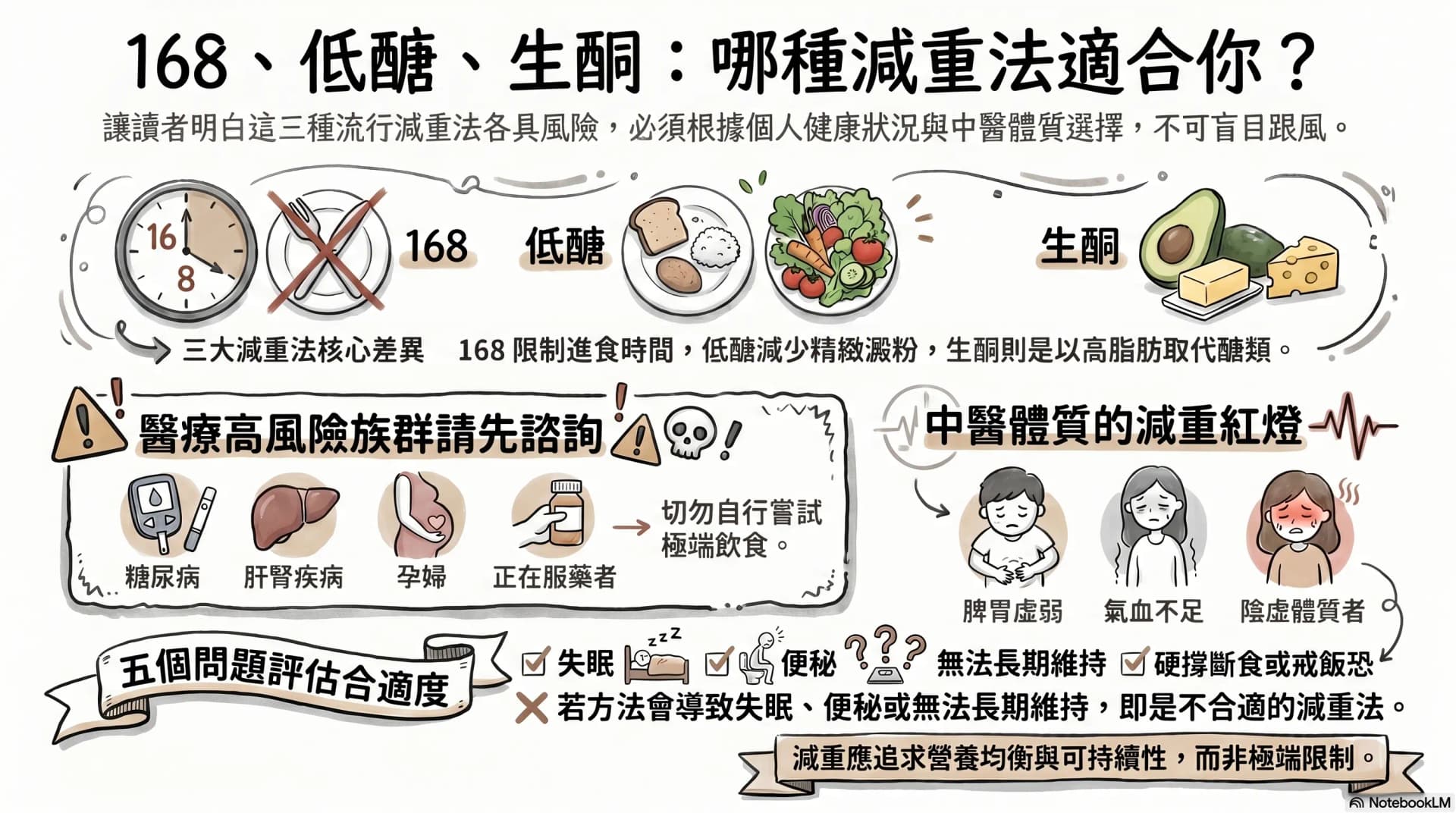
168 Fasting vs Low-Carb vs Keto: A TCM Guide to the Differences
168 fasting, low-carb diets, and keto are all popular weight-loss approaches, but they restrict different things — and their effects on digestion, sleep, blood glucose, bowels, menstruation, and mood differ accordingly. This article compares the three, explains which TCM constitutions need extra caution, and flags situations that warrant prior assessment by a Western doctor or registered dietitian.
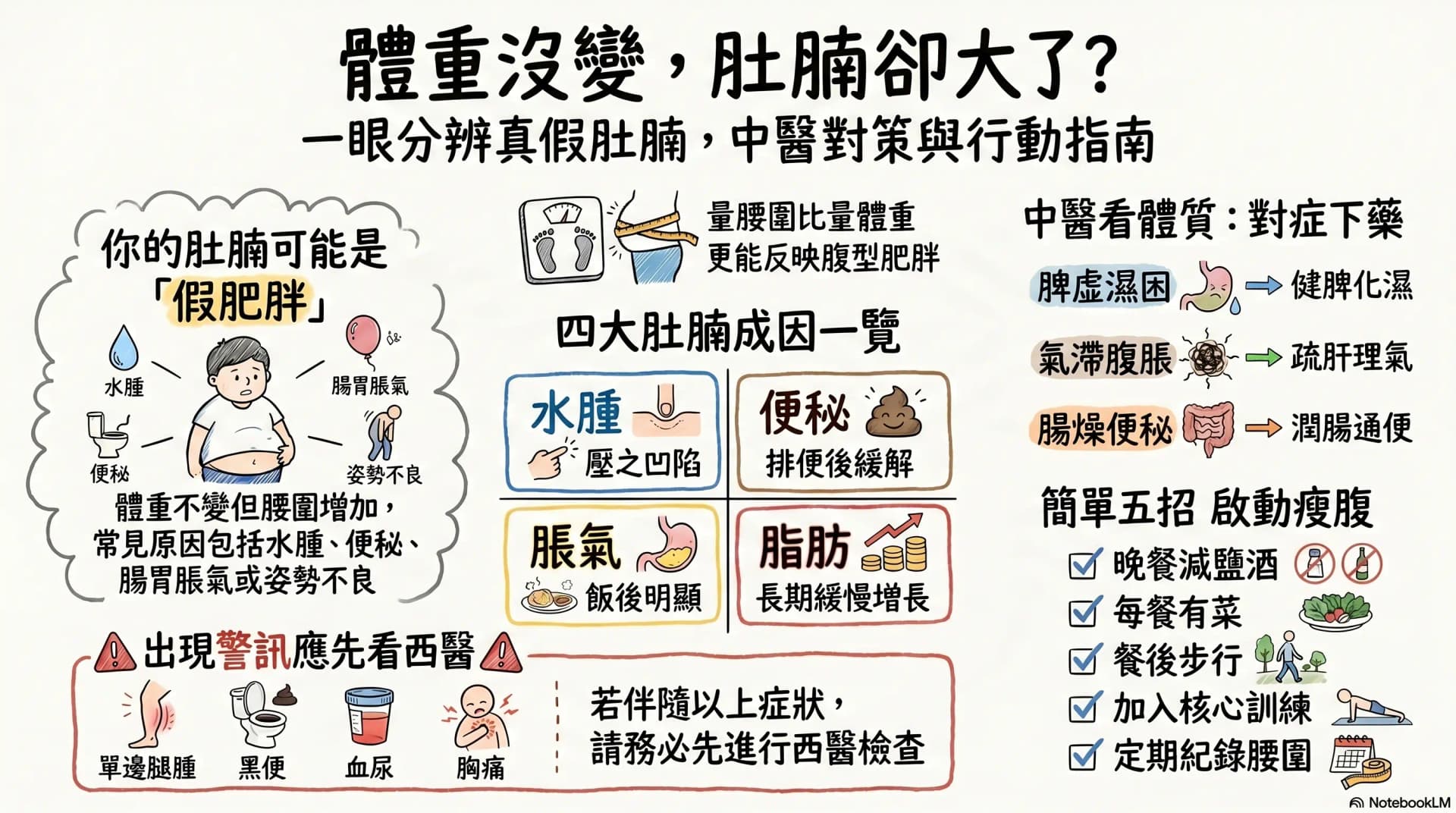
Bigger Belly, Same Weight? TCM on Bloating, Constipation, and Fat
Stable weight but a more prominent belly does not always mean fat. Water retention, constipation, gastrointestinal bloating, posture, reduced muscle mass, and central obesity can all make the abdomen appear larger. This article uses TCM perspectives on digestion, phlegm-damp, qi stagnation, and constipation to help you distinguish situations and decide next steps.
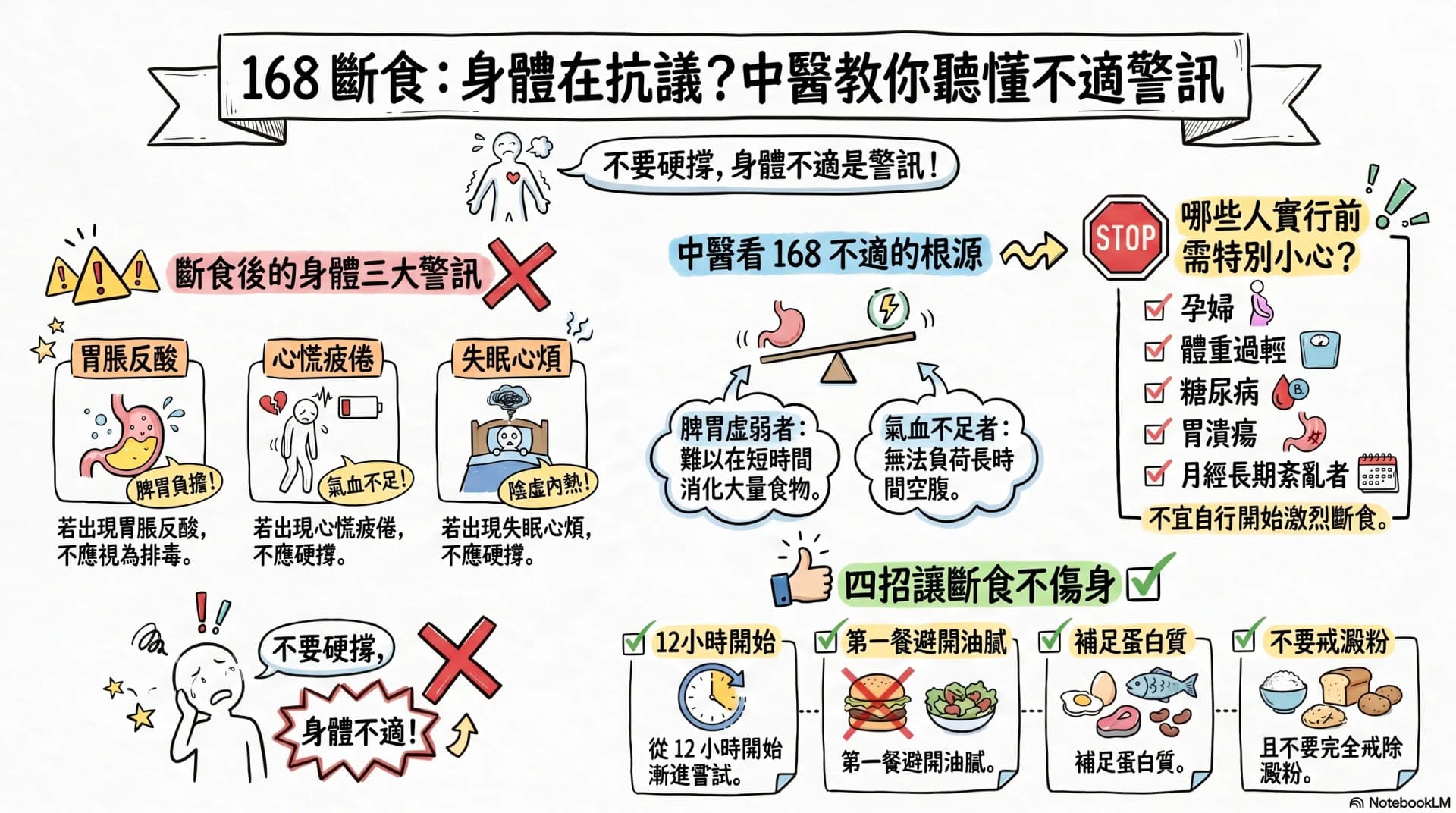
Bloating, Fatigue, Insomnia After 168 Fasting? A TCM View
168 fasting does not suit everyone. Bloating, fatigue, cold intolerance, insomnia, dizziness, constipation, or appetite rebound after starting may signal that the eating window, nutrient distribution, digestion, or qi-blood state is not aligned. This article explains how TCM distinguishes digestive burden, qi-blood deficiency, phlegm-damp with qi stagnation, and yin deficiency with internal heat — and flags situations where pushing through is unwise.
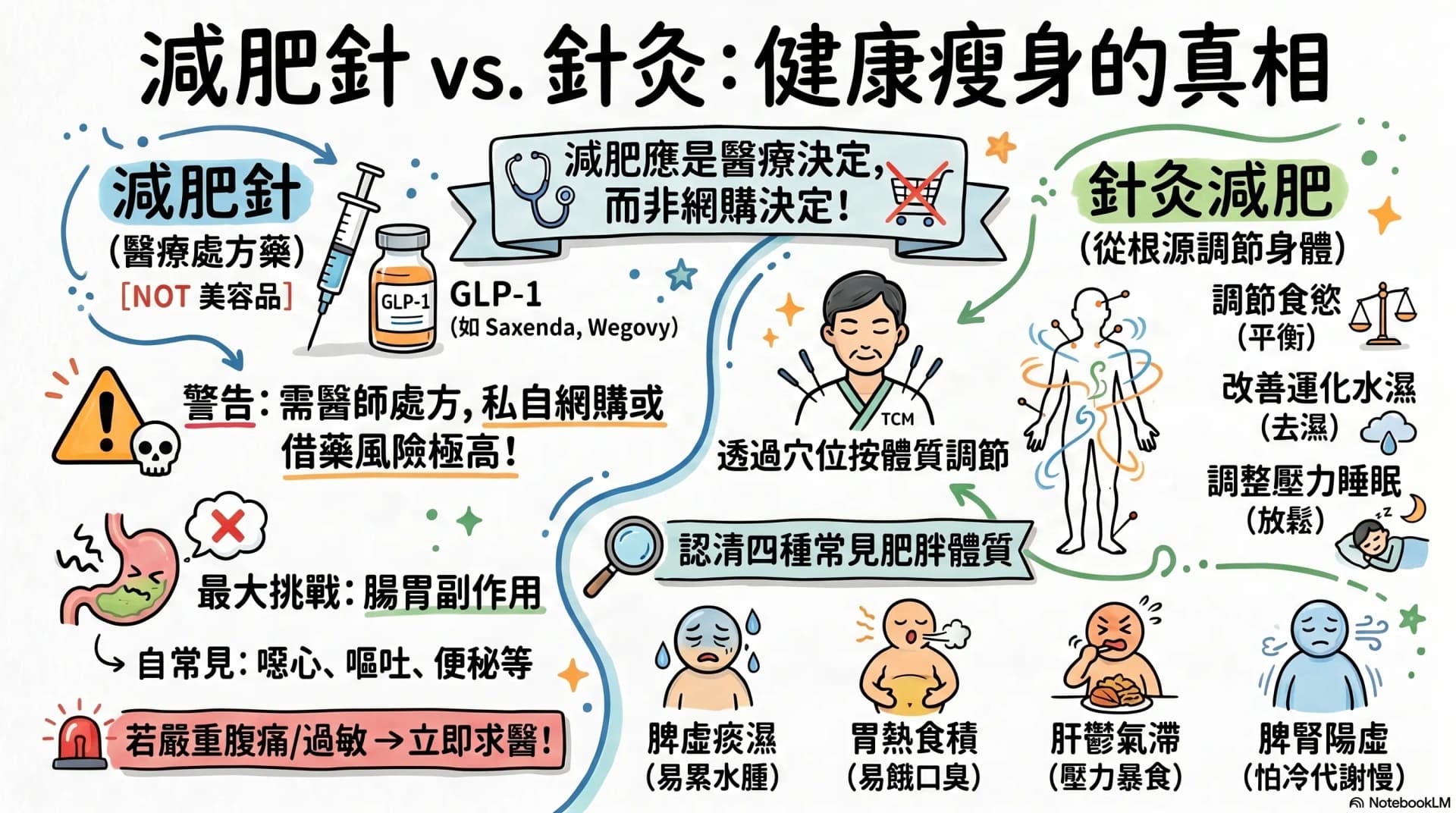
Weight-Loss Injections vs Acupuncture: Side Effects & TCM
Many people in Hong Kong are interested in GLP-1 weight-loss injections but worried about side effects, rebound, and prescription safety. This article explains the common risks of weight-loss injections, then explores obesity patterns in TCM, how acupuncture may support weight management, and who may be more suitable for a TCM weight-loss assessment first.
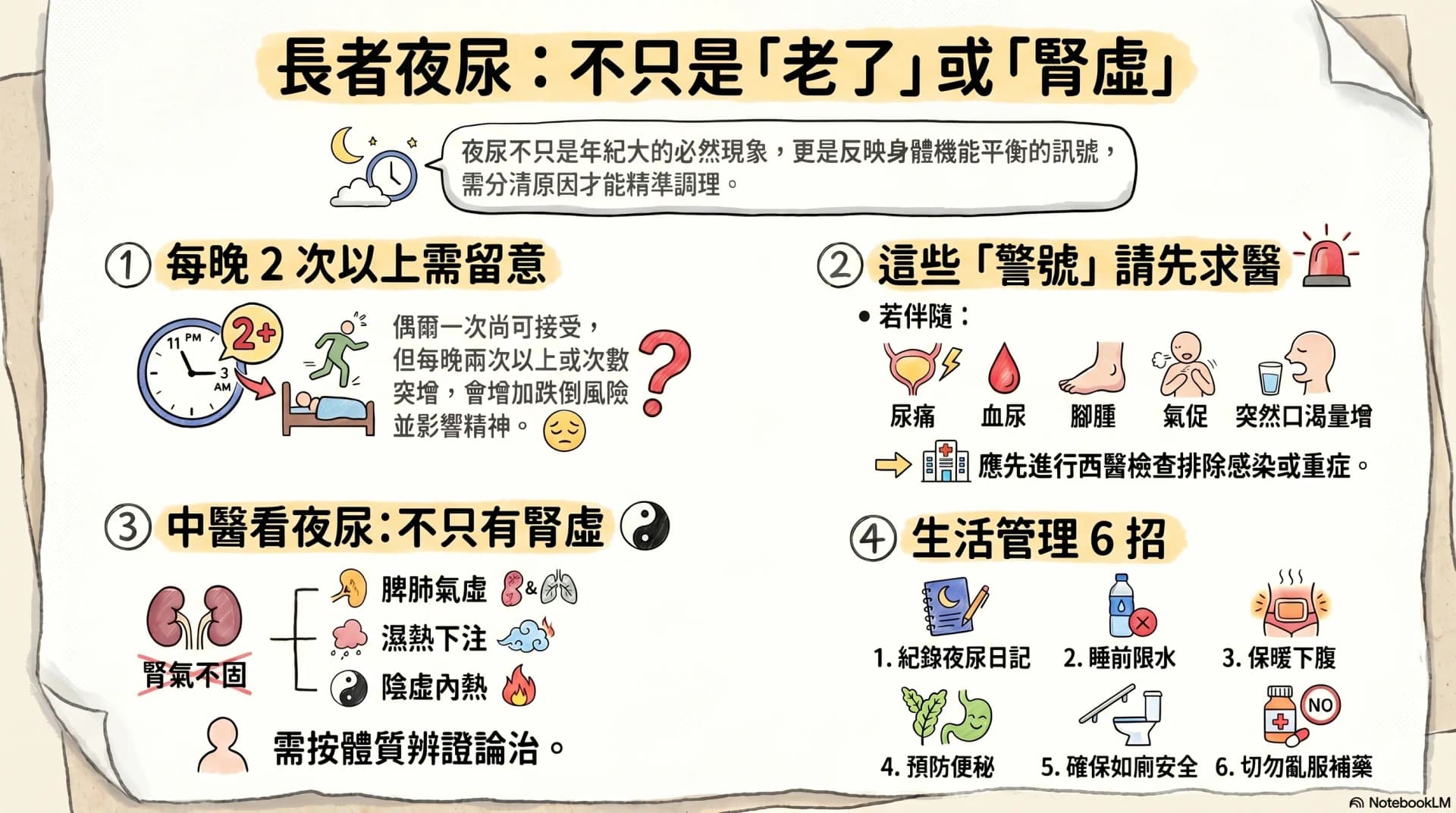
Frequent Night Urination in Older Adults: A TCM Guide
Is it normal for older adults to wake up once or twice at night to urinate? Frequent night urination may relate to drinking habits, infection, prostate or bladder problems, diabetes, medication, or even heart and kidney function. This article explains the common causes, warning signs that need medical attention, and how TCM assesses nocturia in older adults.
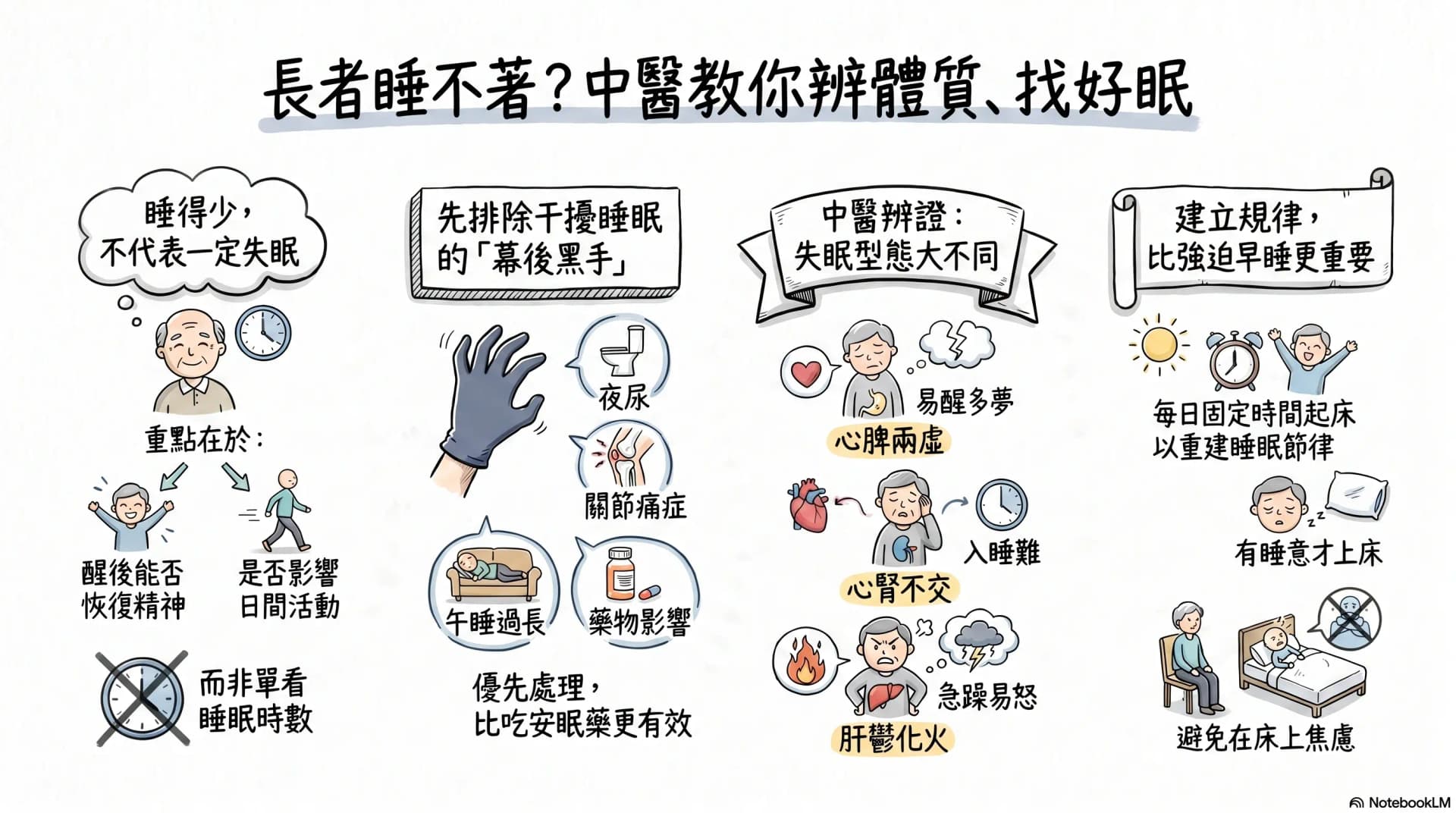
Insomnia in Older Adults: Waking at Night, Dreaming, Early Waking
Does sleeping less in older age always mean insomnia? Waking easily at night, vivid dreaming, early waking, and waking tired may relate to nocturia, pain, mood, medication, sleep apnoea, or sleep habits. This article explains common causes, warning signs, and how TCM interprets insomnia patterns such as heart-spleen deficiency, disharmony between heart and kidney, and liver fire.
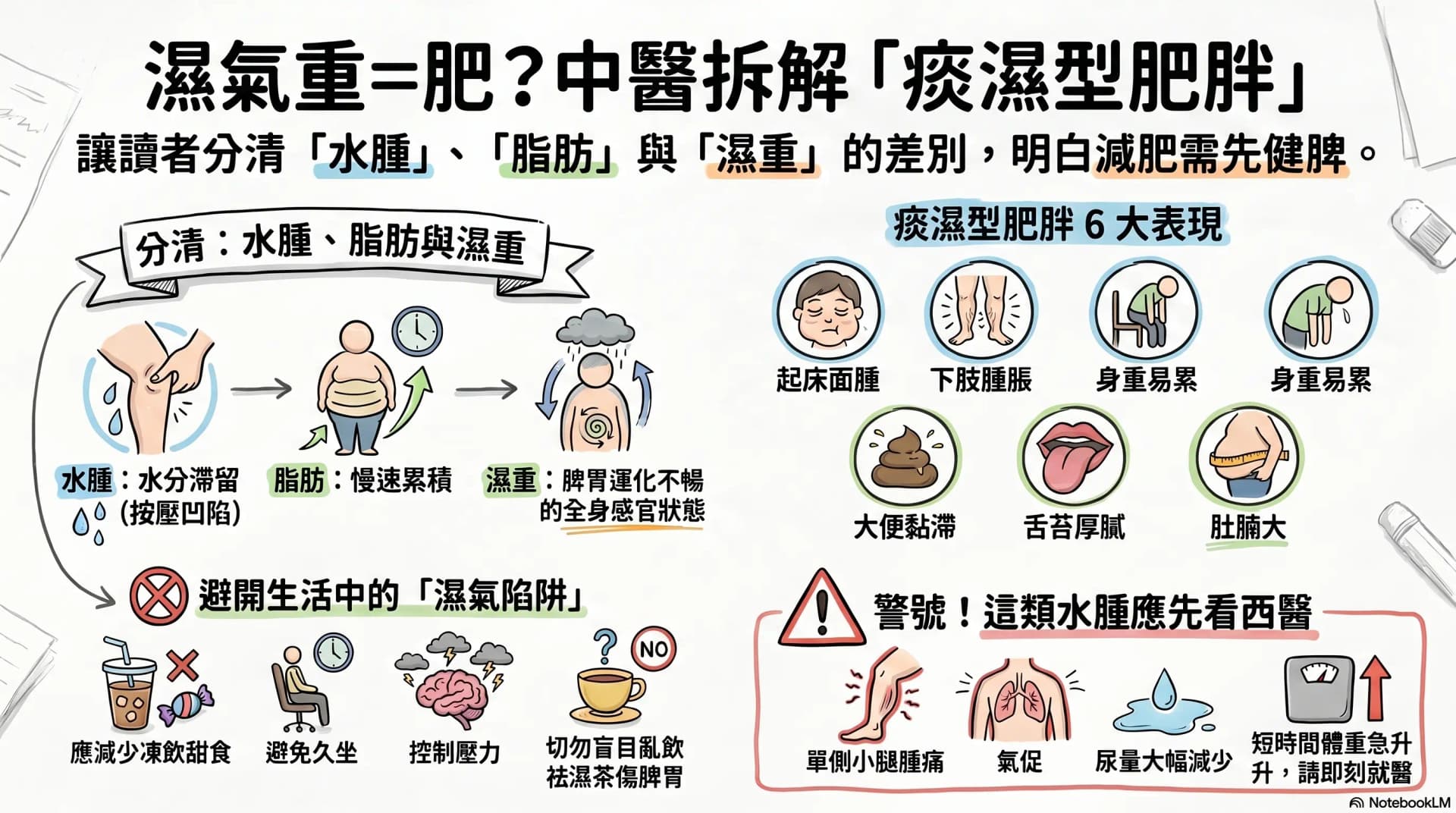
Bloated and Heavy? Phlegm-Damp Obesity and Water Retention in TCM
If you do not eat excessively but often feel puffy, bloated, heavy, and tired, with weight fluctuating up and down, could “dampness” be part of the picture? This article explains the TCM view of water retention, phlegm-damp obesity, and why dampness-focused weight management is not the same as simply “draining water.”
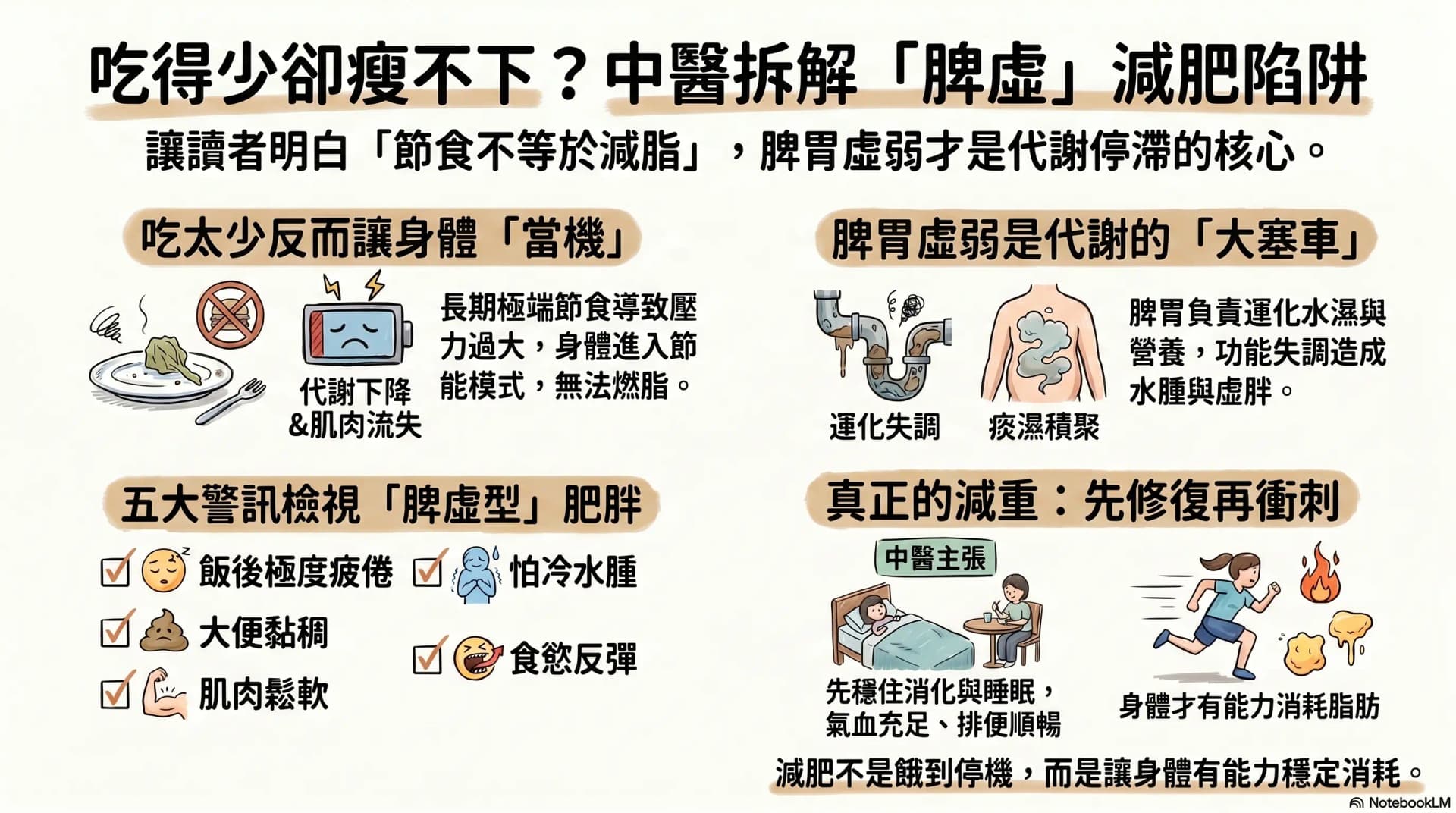
Eating Little but Not Losing Weight? TCM on Weak Digestion
Skipping breakfast, eating only salad for lunch, and cutting rice at dinner may still leave weight unchanged — or even make you more tired, swollen, and stuck. This article explains why eating less does not always lead to better fat loss, and how TCM interprets weak digestion, dampness, deficiency, and the weight-loss plateau.
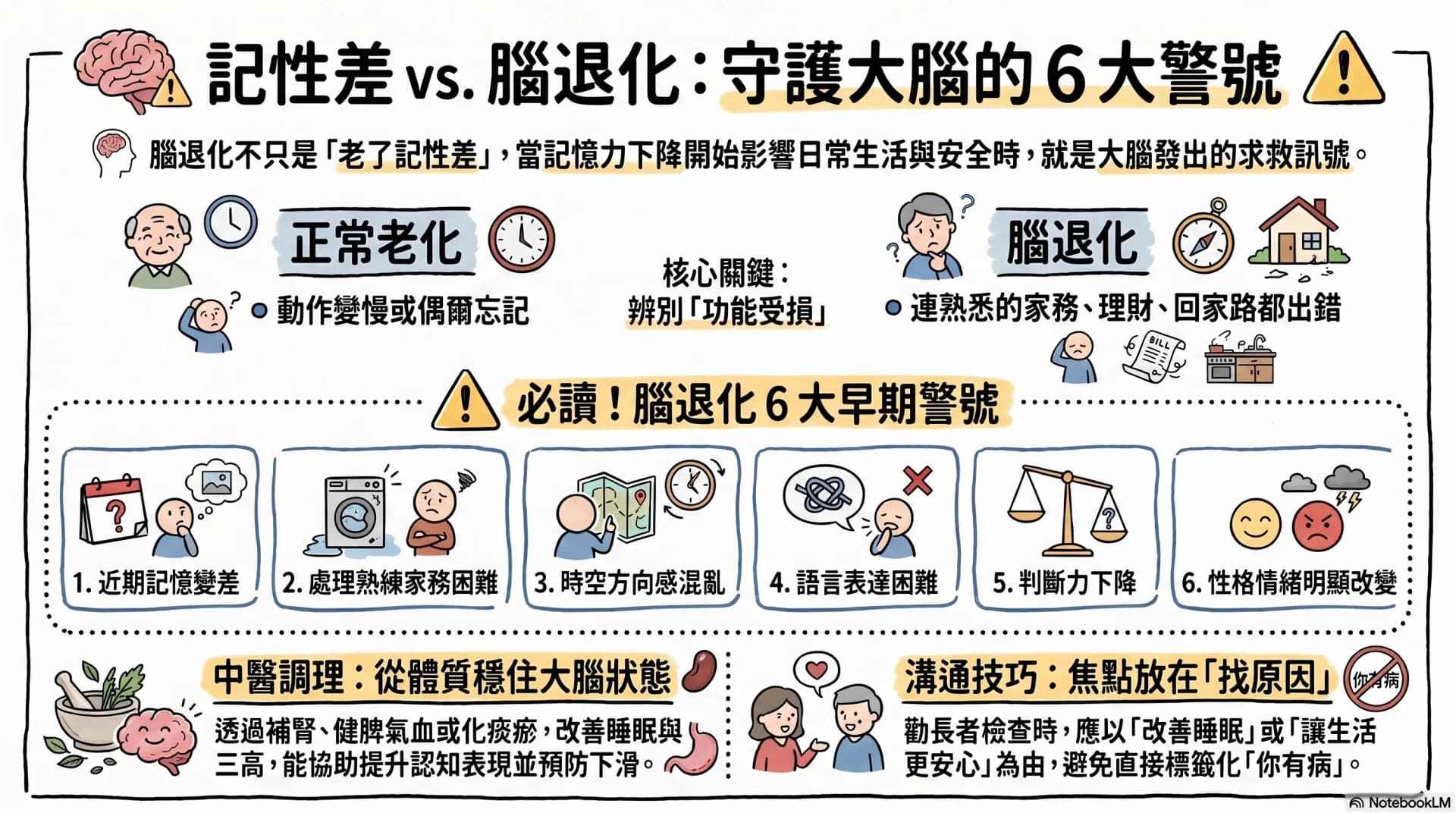
Dementia or Normal Ageing? 6 Early Warning Signs — TCM Guide
Memory lapses in older adults do not always mean dementia. But when a person repeatedly asks the same question, forgets recent events, gets lost, makes mistakes with cooking, or shows clear personality changes, it should not be dismissed as ageing alone. This guide explains the differences between normal ageing and dementia, six early warning signs, common assessment methods, and how TCM may support prevention and overall function.
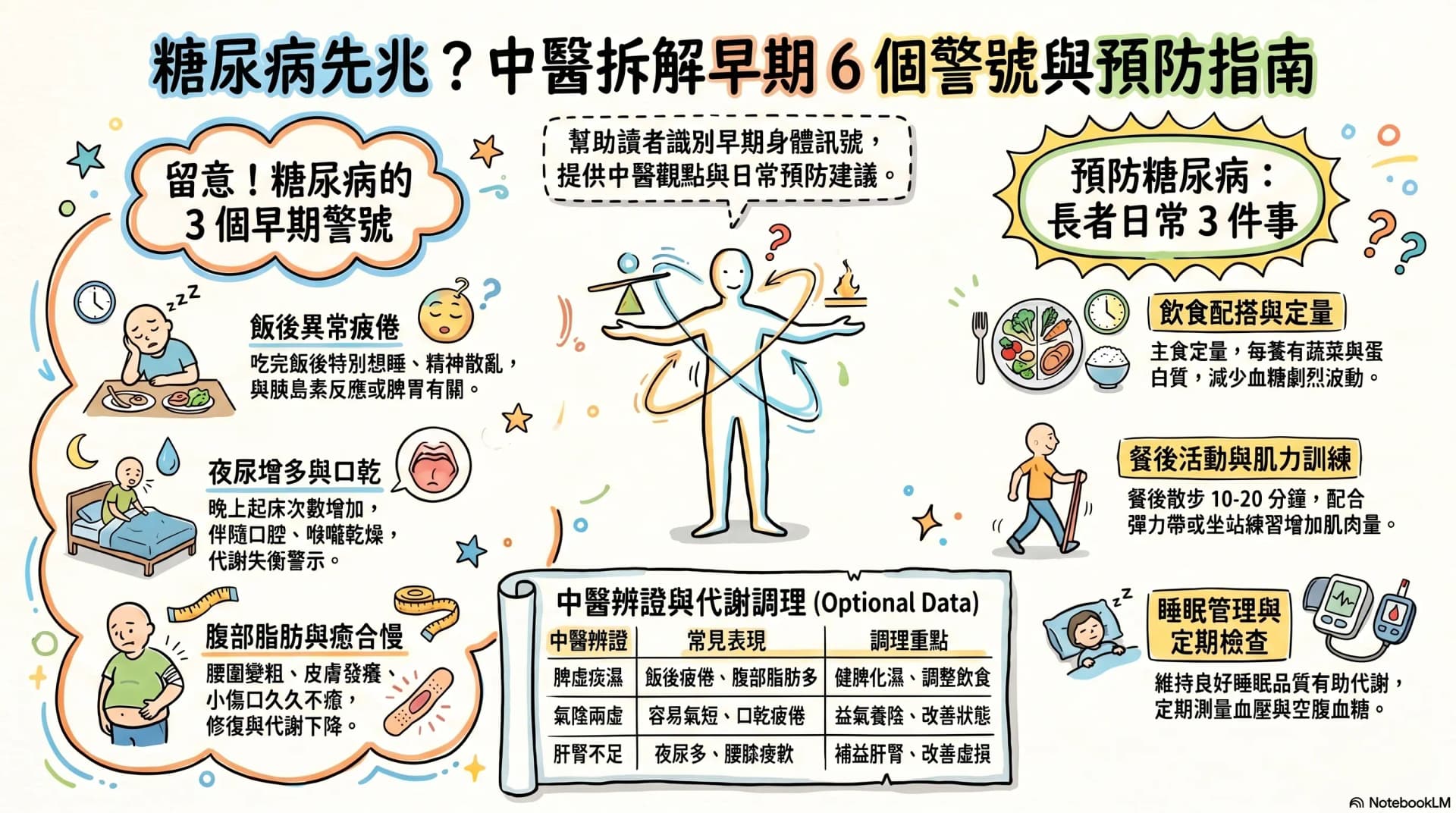
Early Signs of Diabetes: 6 Warning Signs, Tests & TCM Care
Diabetes does not always begin with dramatic symptoms. Many people notice tiredness after meals, more night urination, dry mouth, increasing abdominal fat, itchy skin, or slow wound healing before they are diagnosed. This article explains early warning signs of diabetes, who should be tested early, and how TCM may support people in the prediabetes stage.
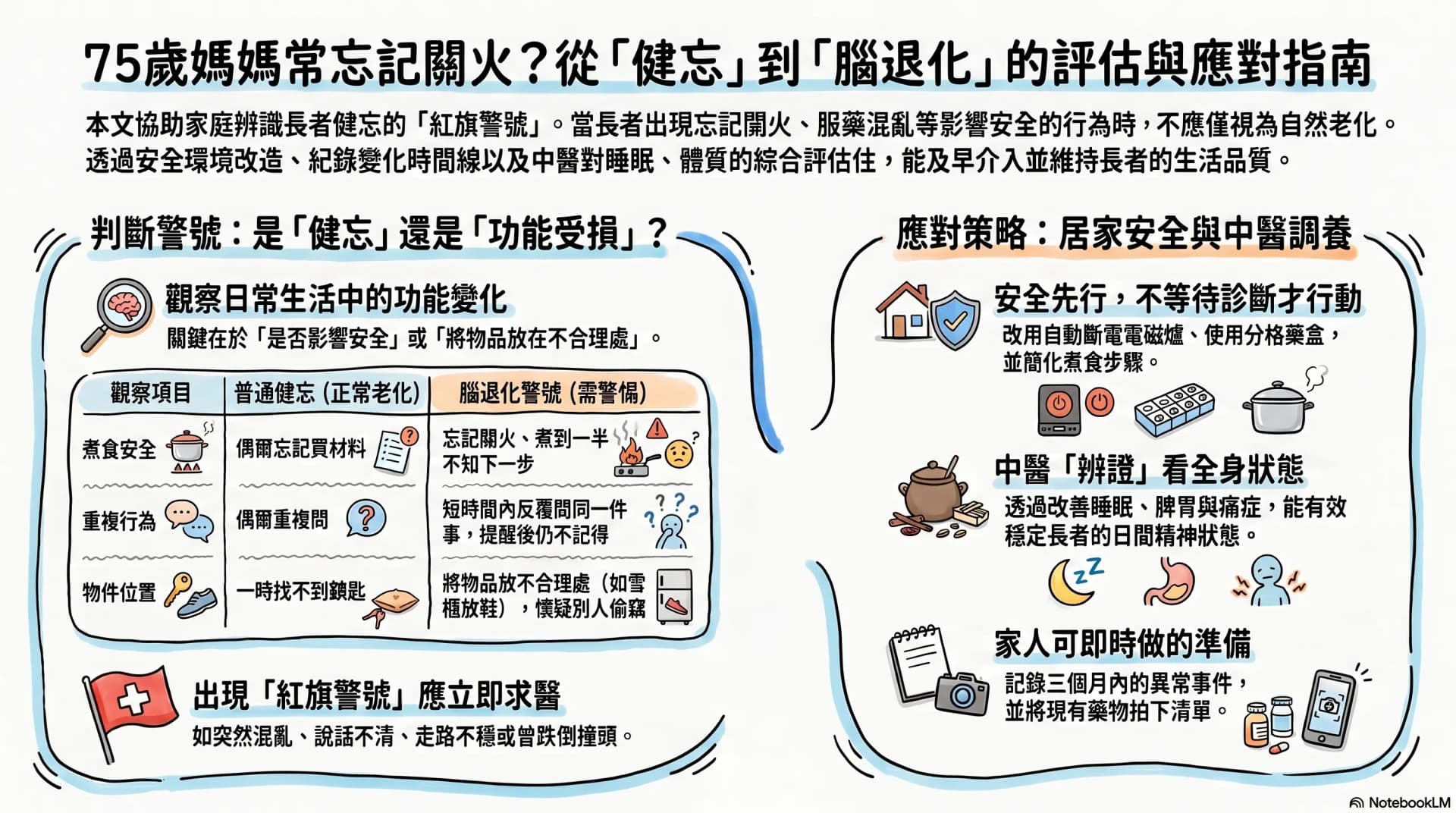
When a Parent Forgets the Stove: A TCM Dementia Assessment
Ms Lee’s 75-year-old mother has recently begun repeating the same questions, mixing up her medication, and even forgetting to turn off the stove. Is this ordinary forgetfulness, poor sleep, or an early dementia warning sign? This article explains how TCM can assess an older adult’s memory changes step by step through the lenses of safety, cognitive function, vascular risk, sleep, constitution, and family caregiving.
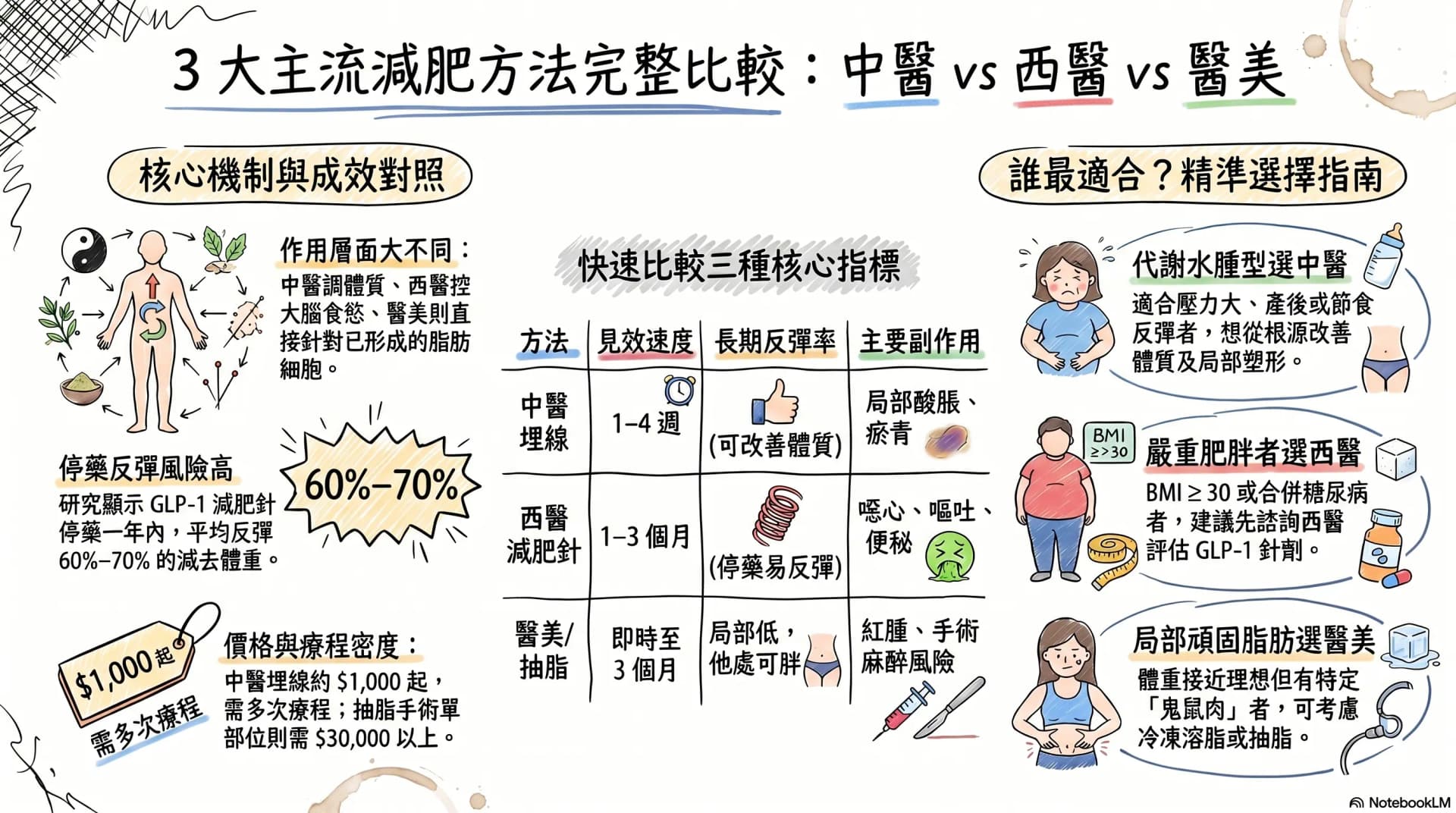
TCM Embedding vs Injections vs Aesthetics vs Liposuction
With so many weight-loss options on the market, which is right for you — TCM embedding, weight-loss injections, fat-freezing, or liposuction? Dr Au compares all four mainstream approaches across mechanism, speed of results, side effects, price range, rebound rate, and suitability — helping you avoid the pitfalls of "stop the drug, gain it back" and "treat the symptom, not the root."
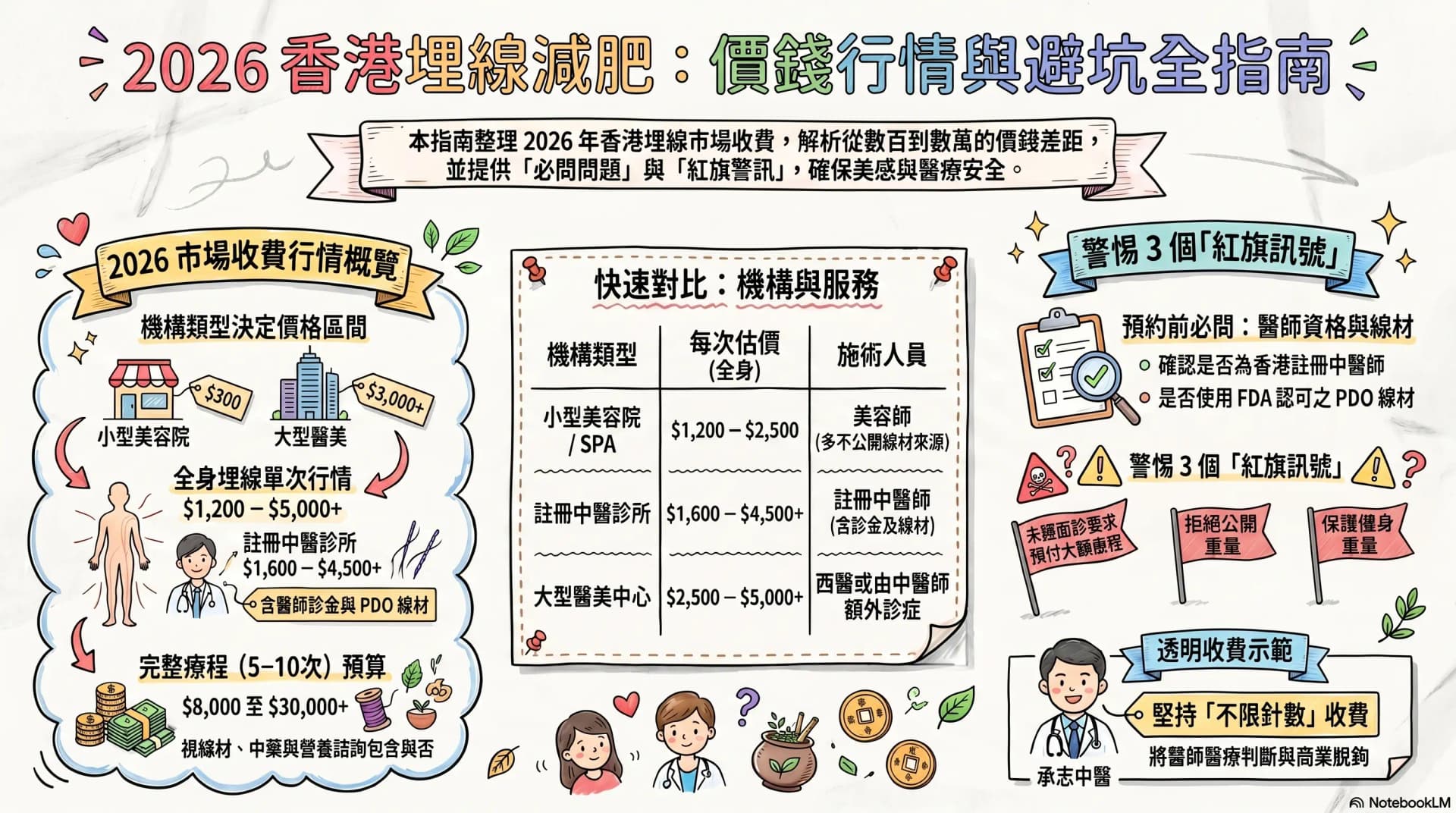
Acupoint Embedding in Hong Kong: 2026 Pricing & Clinic Guide
Hong Kong acupoint embedding fees range from a few hundred to over three thousand dollars per session — but why? This guide breaks down 2026 market price ranges, six factors driving the fee differences, seven questions to ask before booking, four red-flag warnings, and a transparent line-by-line look at Aspira TCM's three packages — to help you choose what genuinely suits you.
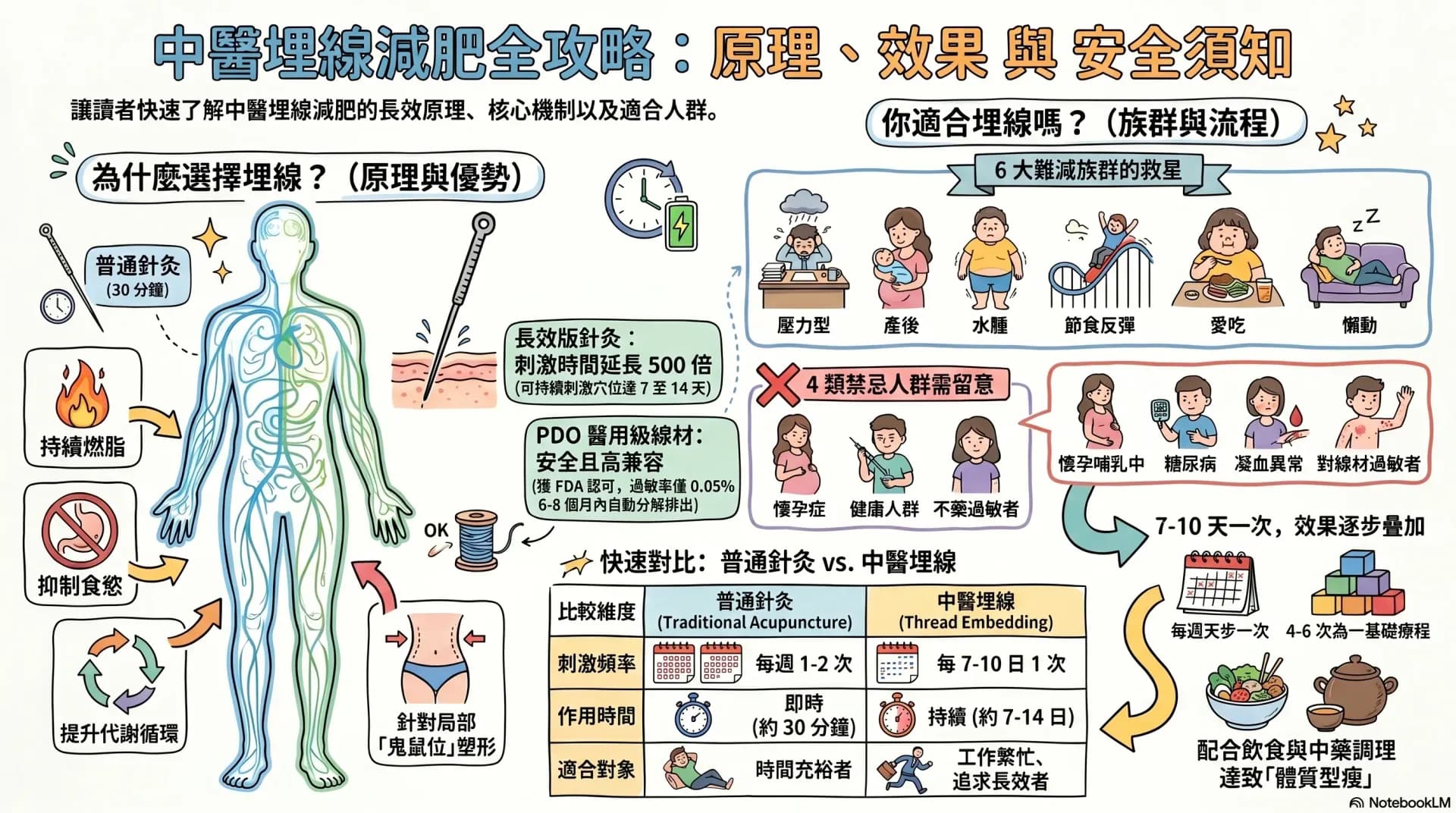
TCM Acupoint Embedding for Weight Loss: Complete Guide + FAQ
TCM acupoint catgut embedding has become a popular weight-loss option in Hong Kong, but online information varies widely. Drawing on clinical experience, Dr Au explains the mechanism, compares thread materials, identifies six common "hard-to-slim" body types, walks through the treatment procedure, and answers 11 frequently asked questions — helping you decide whether the treatment is right for you.
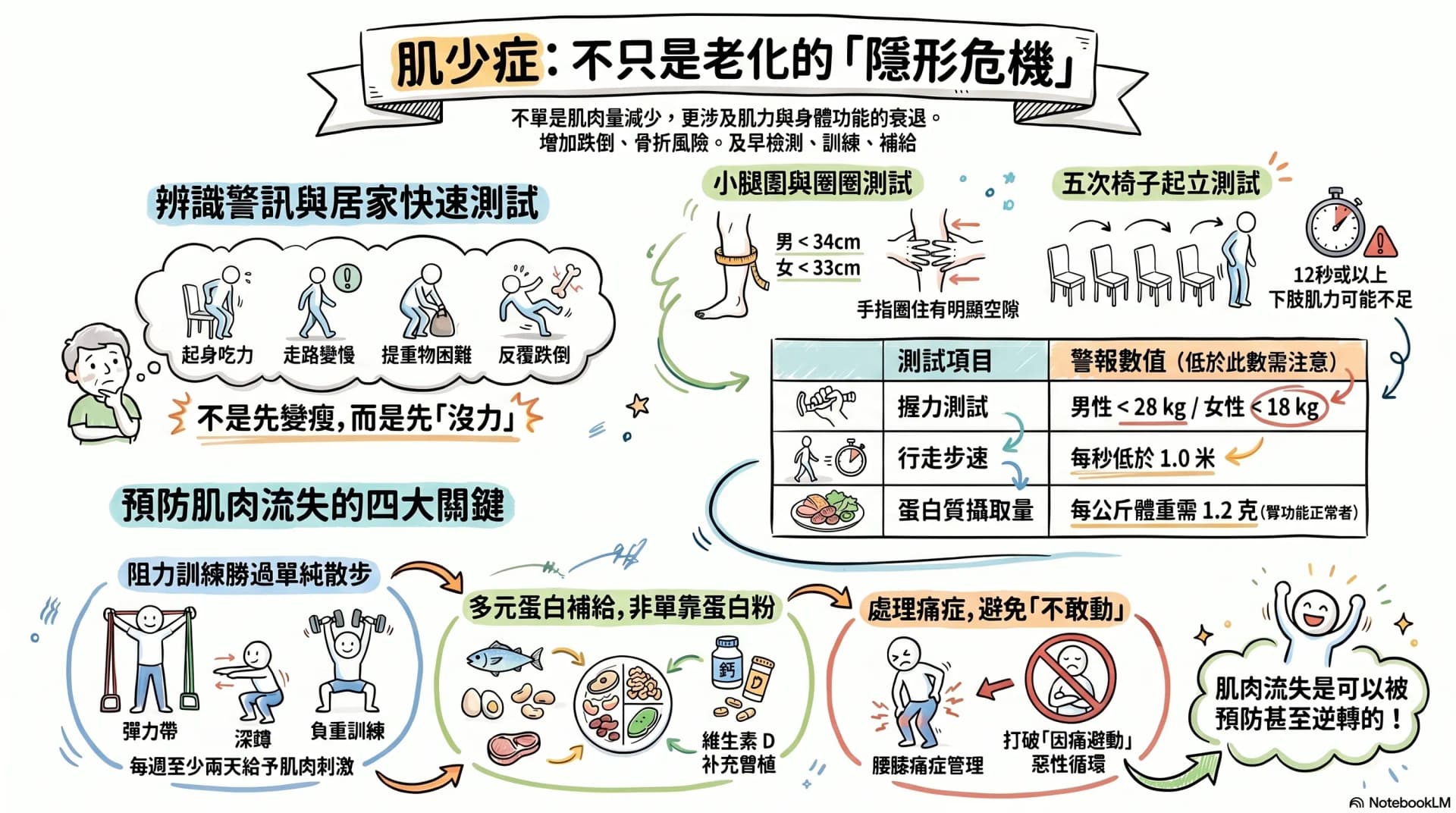
Sarcopenia & Muscle Loss: Warning Signs, Tests & Prevention
If you or an older family member has weaker limbs, poorer grip strength, slower walking, or more frequent falls, it may not be ageing alone. This guide explains common causes of sarcopenia, the risks it brings, how to screen for it, and how exercise, protein intake, and early assessment may help reduce muscle loss.
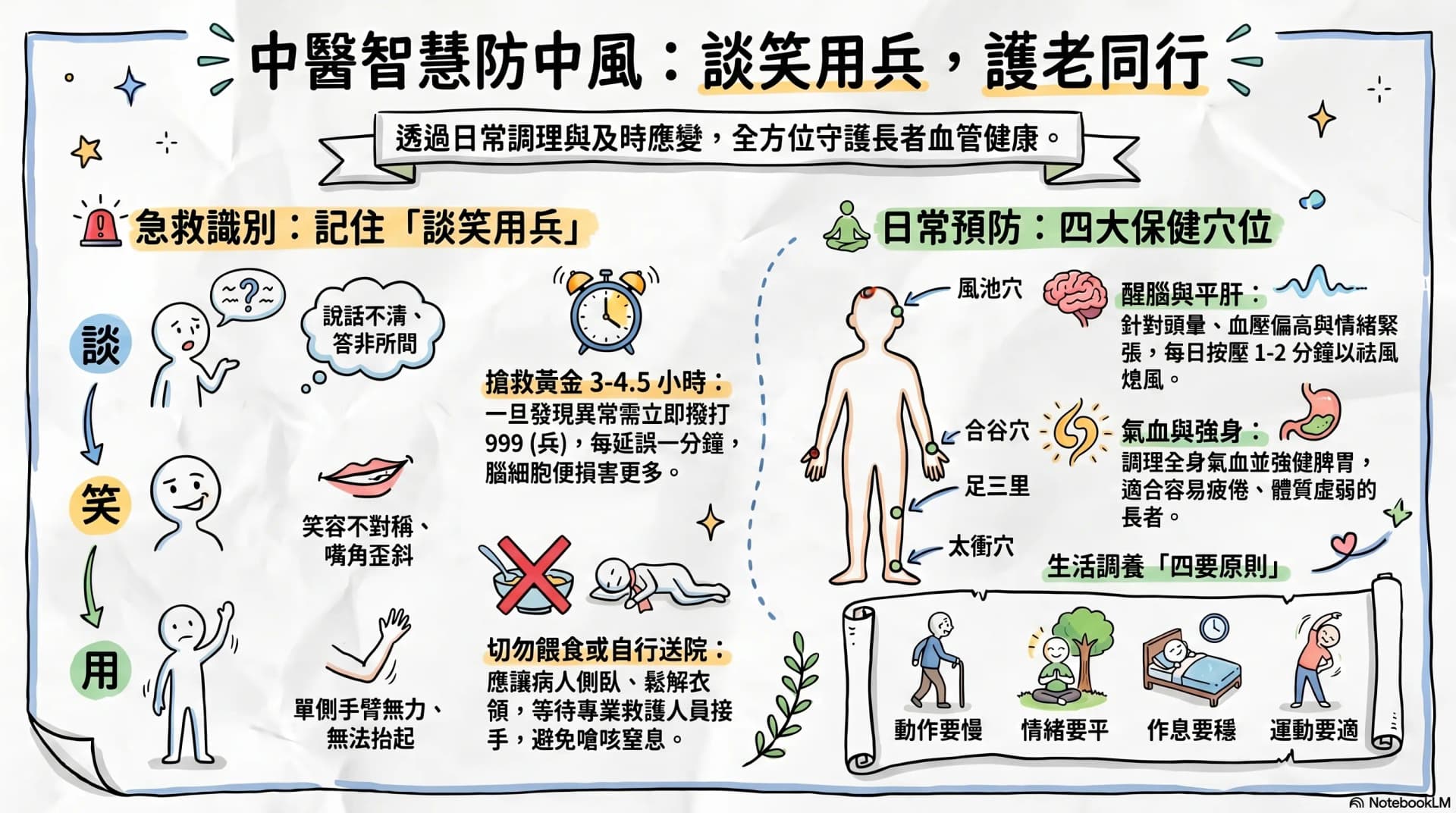
TCM Stroke Prevention for Seniors: Signs & Key Acupoints
Stroke has only a 3-hour golden window. Drawing on Dr Chan Wing-kiu’s lecture, this guide explains the FAST-style "Tan-Siu-Yung-Bing" warning signs, three TCM causes of stroke, four daily acupoints and dietary do’s and don’ts, with an emergency response checklist at the end so you can care for elderly parents day by day.
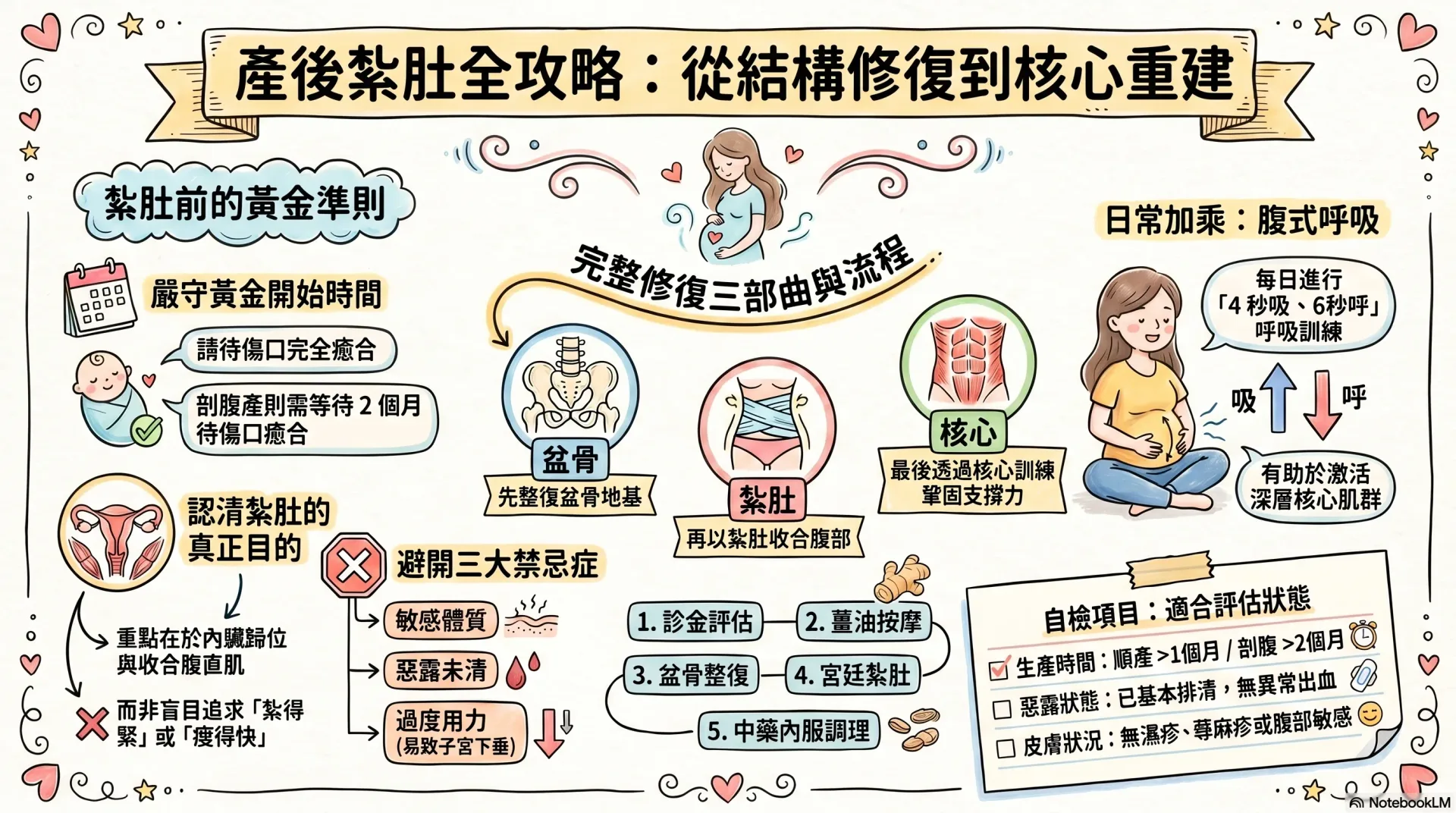
Postpartum Belly Binding Guide: Timing, Cautions & 5 Steps
Rushing into postpartum belly binding can cause uterine prolapse and urinary incontinence. This guide from Dr To covers the golden timeline, three key contraindications, a five-step recovery flow, and how to integrate belly binding, pelvic realignment and core rebuilding into one complete postpartum recovery plan.
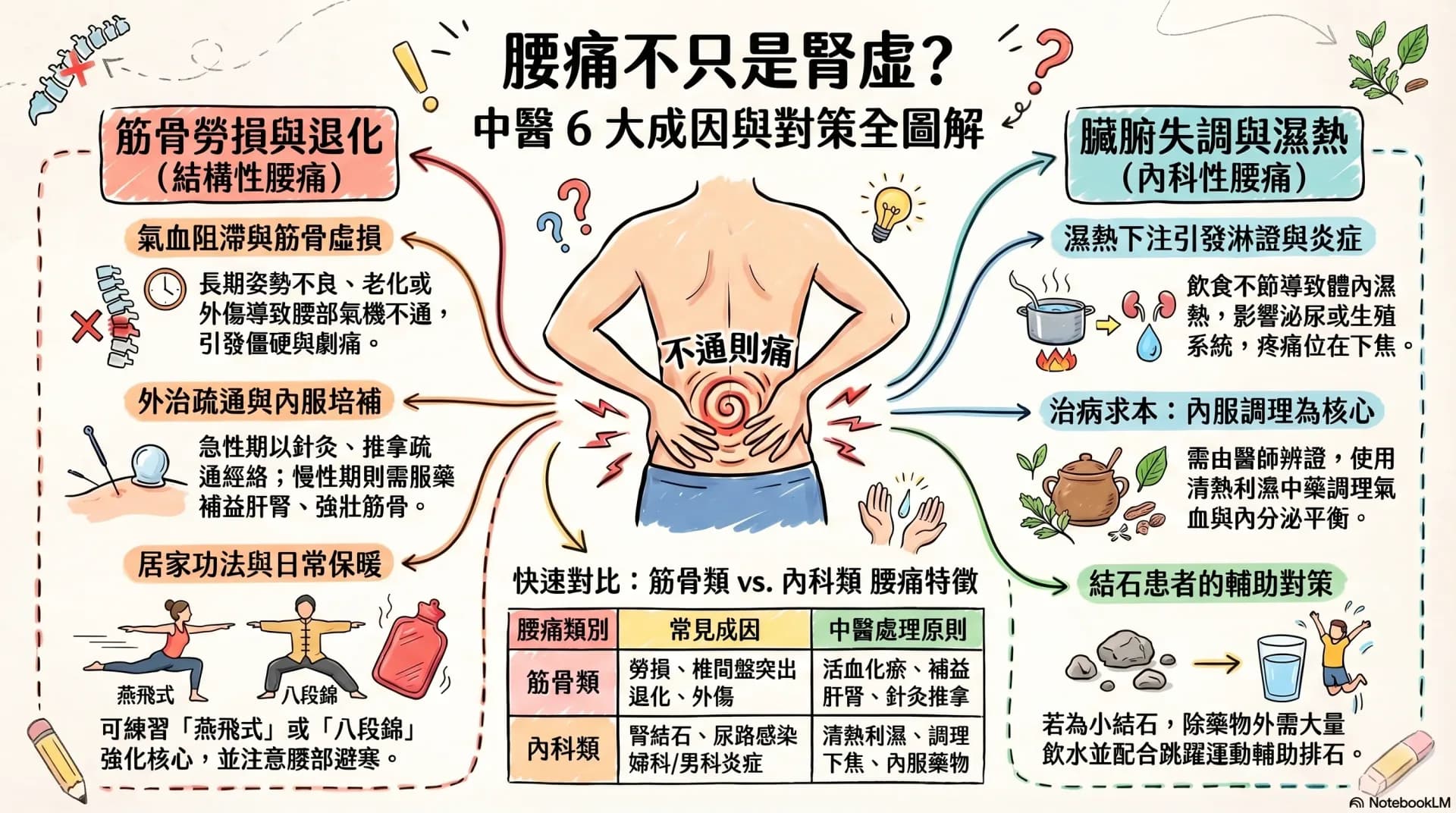
Low Back Pain: 6 Common Causes & TCM Treatment Approaches
Low back pain is not always simply “kidney deficiency” or muscle fatigue. It may also be related to muscle strain, disc herniation, degenerative lumbar disease, kidney stones, urinary tract infection, or pelvic inflammation. This article explains six common causes of low back pain from a TCM perspective and outlines key distinctions and treatment directions.
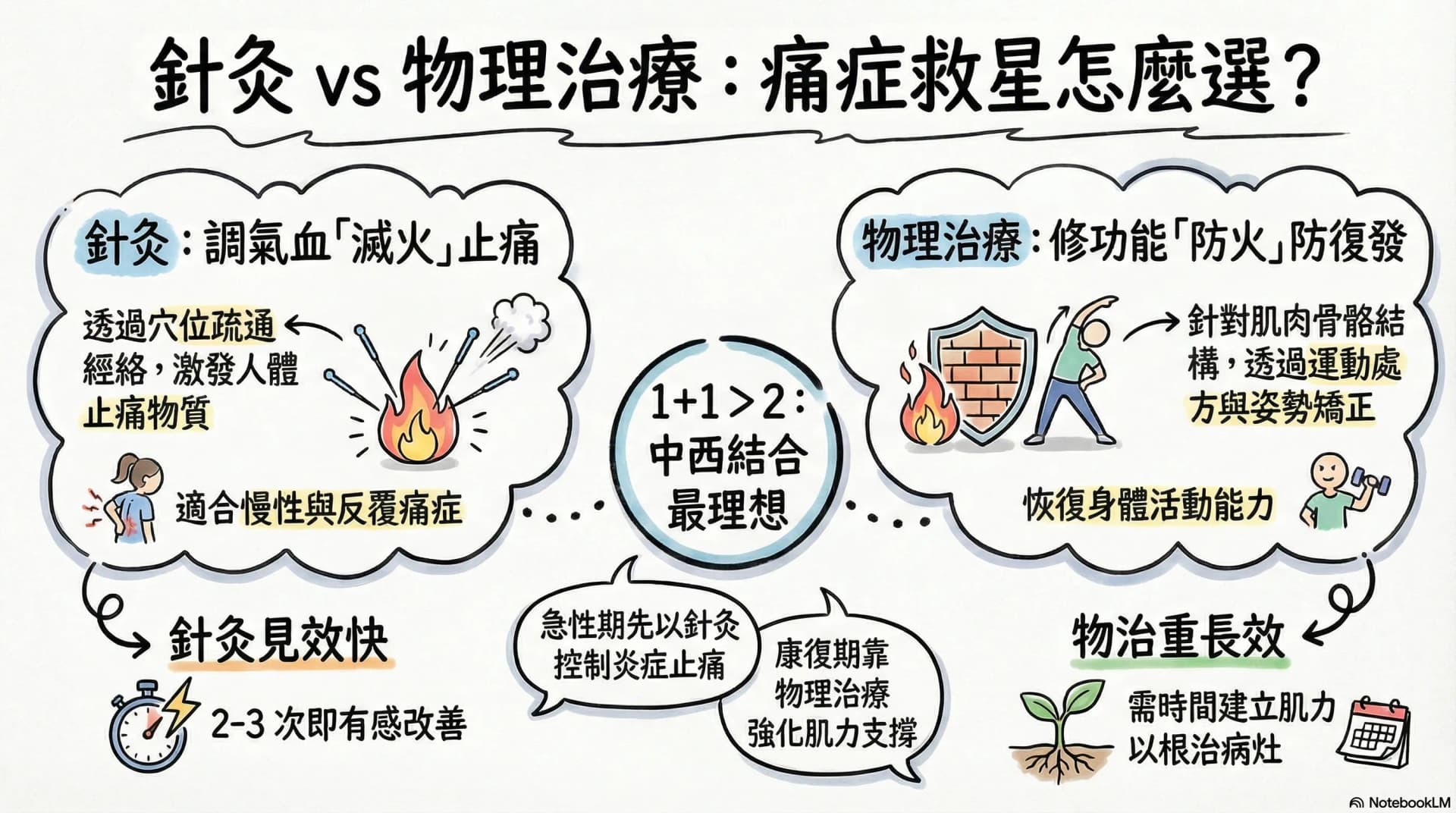
Acupuncture vs Physiotherapy: Which Is Better for Your Pain?
Both acupuncture and physiotherapy can treat pain, but each has its strengths for different conditions. This article offers an honest comparison across treatment principles, suitable conditions, cost, and duration to help you decide.
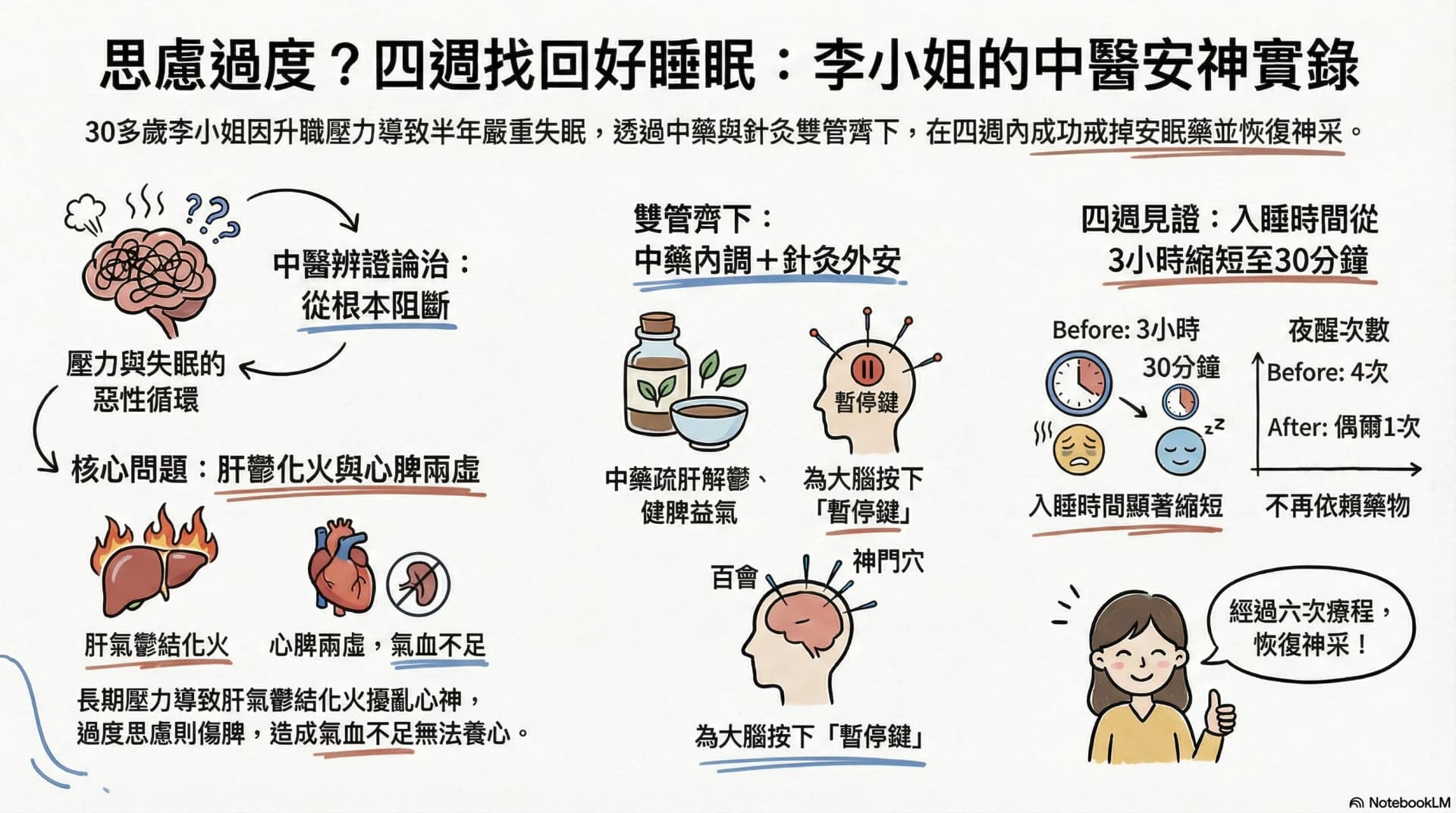
Overthinking and Sleepless Nights — Ms Lee's TCM Journey to Restful Sleep
A female office worker in her 30s struggled with difficulty falling asleep, frequent dreaming, and waking easily due to chronic work stress and anxiety. After six sessions over four weeks combining herbal medicine and acupuncture prescribed by Dr To, her sleep quality improved significantly and she regained her energy and quality of life.
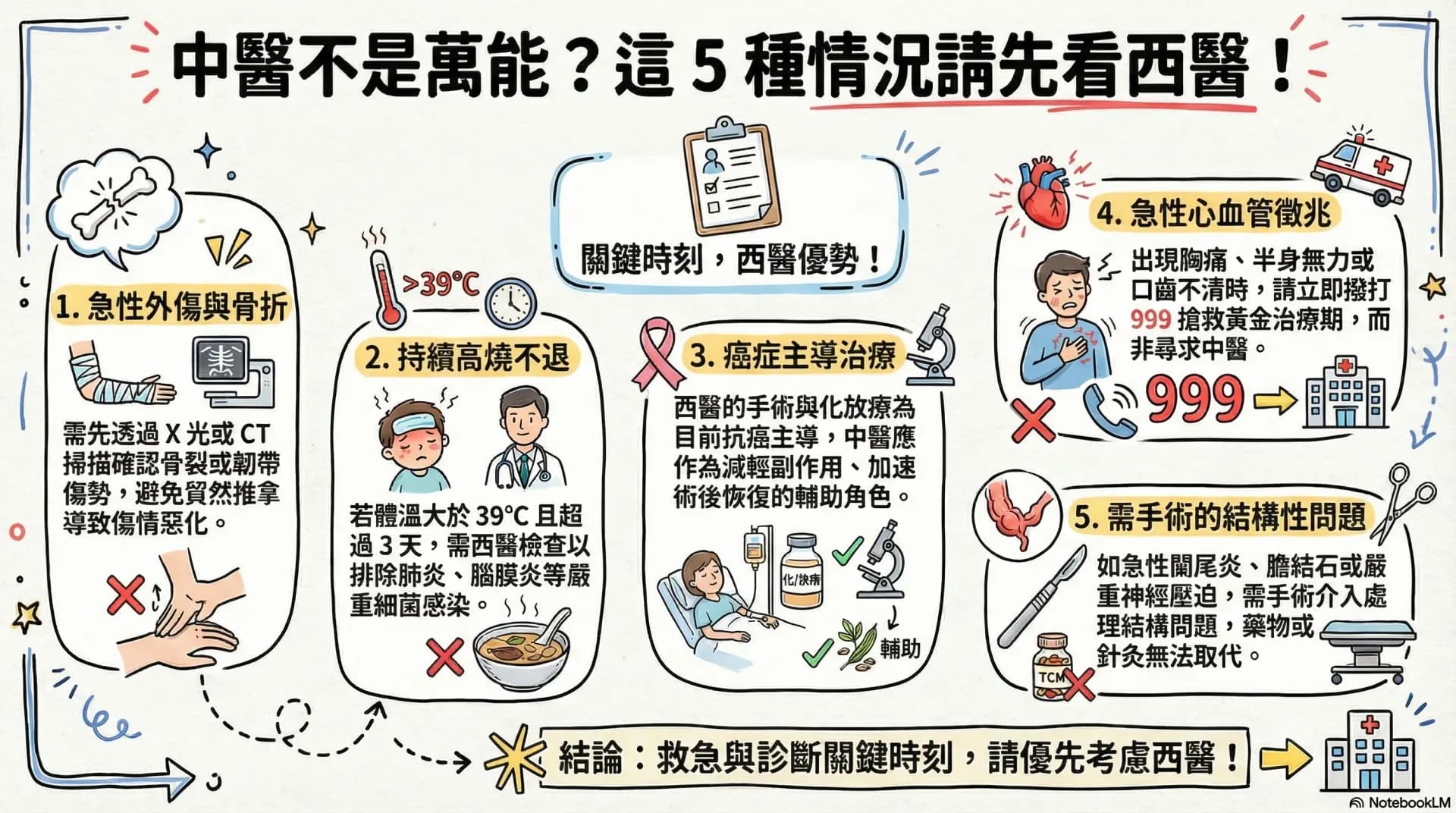
TCM Limitations: 5 Times to See a Western Doctor First
TCM has genuine strengths in chronic care and holistic wellness, but it is not the right first choice for every situation. This article honestly discusses 5 scenarios where Western medicine should come first, what TCM truly excels at, and how to make informed decisions between the two.
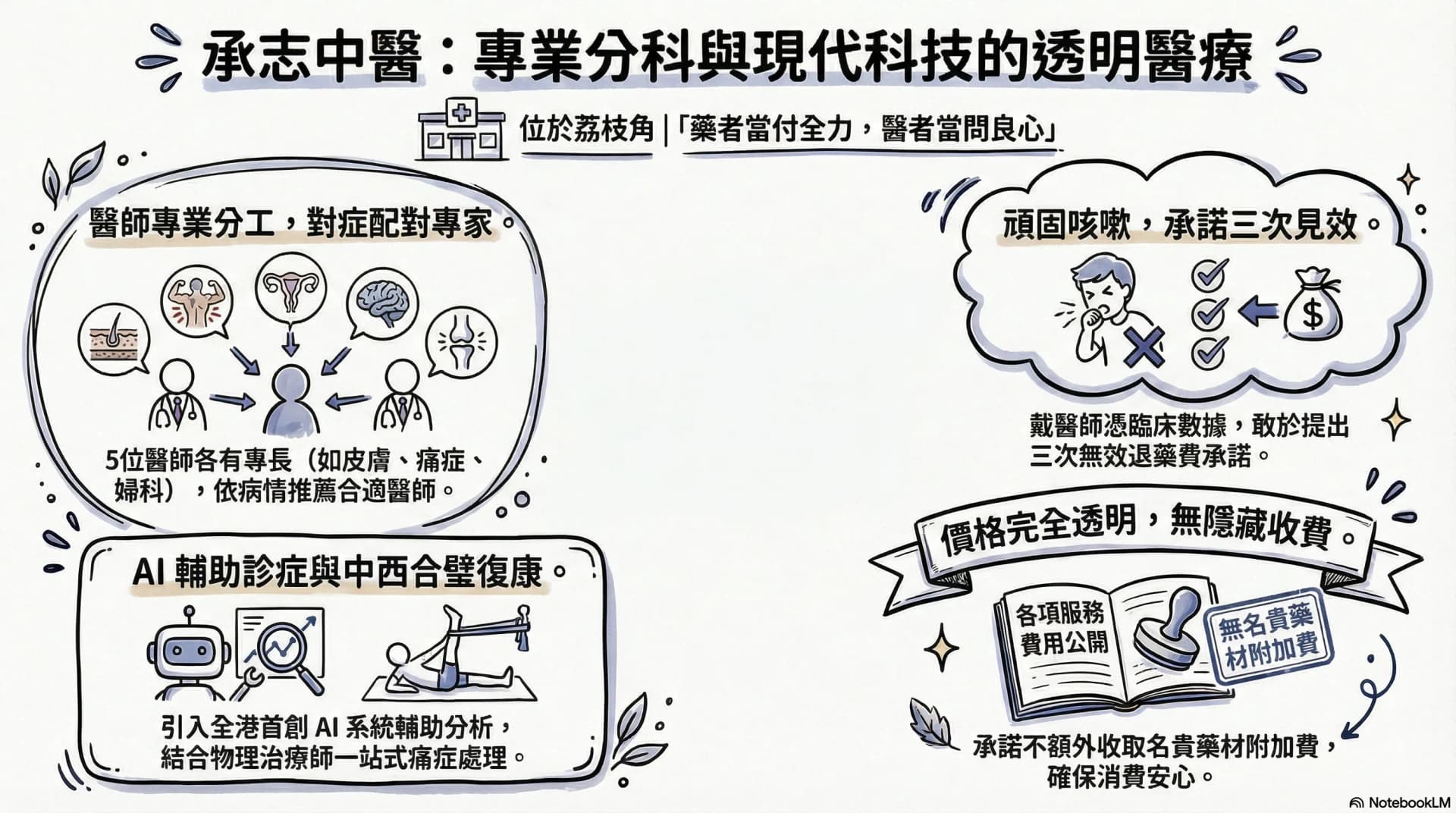
Is Aspira TCM Clinic Good? Doctors, Services & Real Reviews
Searching "Is Aspira TCM good?" means you're doing your homework — and we respect that. This article presents our doctor team, five clinic differentiators, real patient feedback, and our honest limitations, so you can decide if Aspira is right for you.
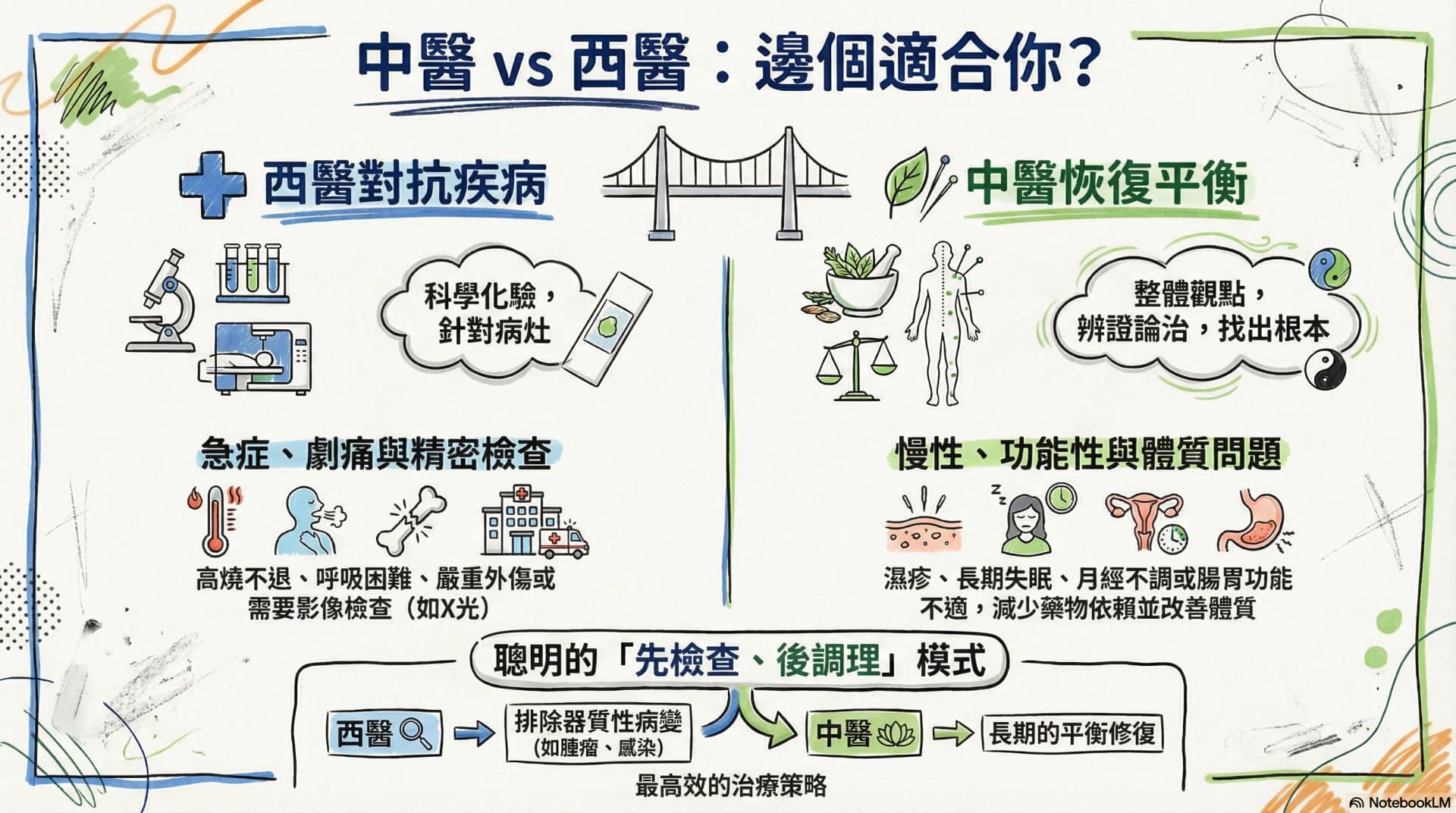
TCM vs Western Medicine: 6 Common Conditions Compared
Is TCM or Western medicine better? The honest answer: it depends on your condition and needs. This article fairly compares both approaches across six common conditions — cough, eczema, pain, insomnia, digestive issues, and menstrual irregularities — to help you make the right choice.
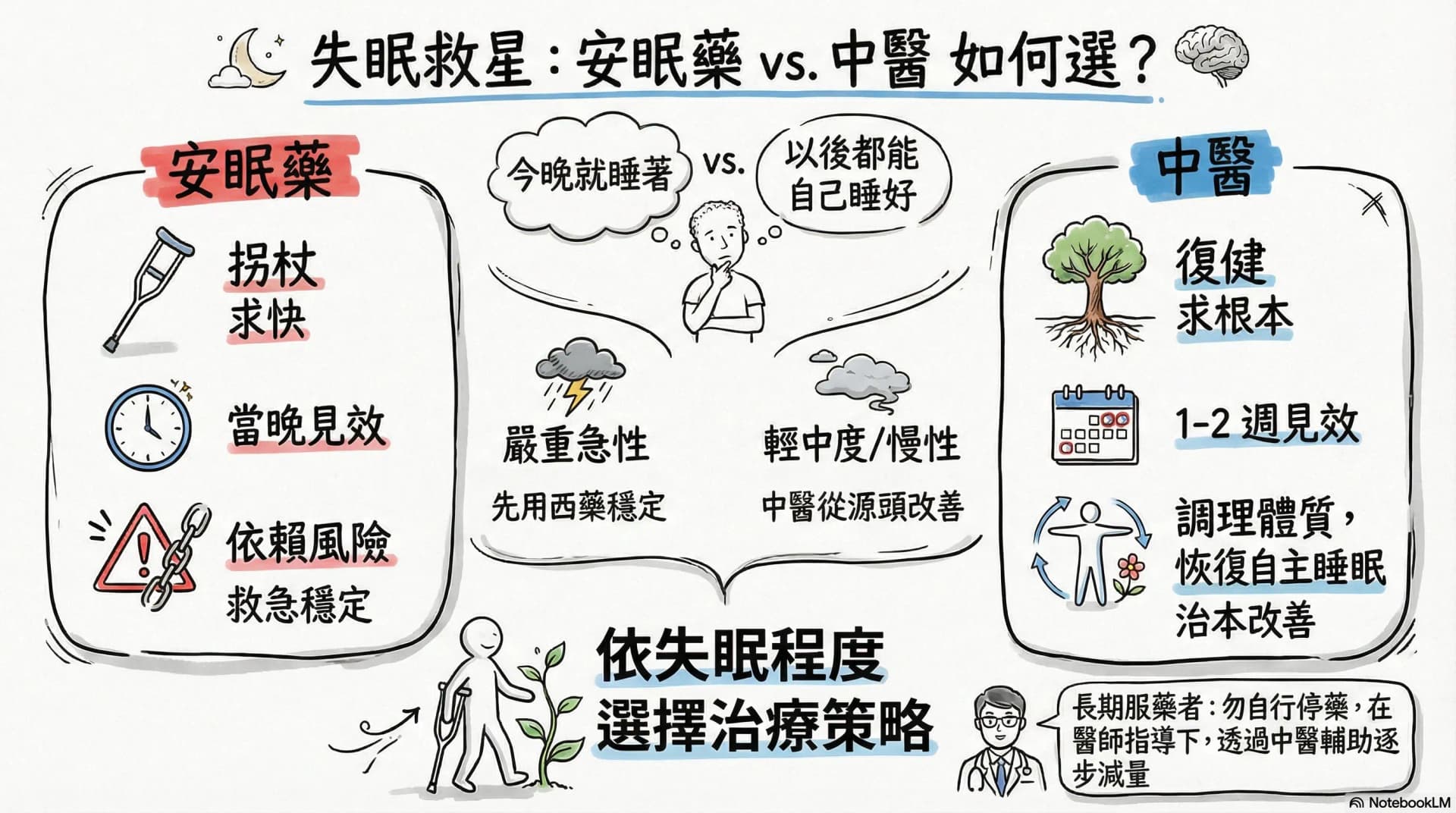
Insomnia: Sleeping Pills or TCM? An Honest Comparison
Sleeping pills offer immediate relief but carry dependency risks; TCM treats insomnia at the root but requires patience. This article honestly compares both approaches — benefits, risks, costs, and who each is best suited for — to help you find the right solution for your sleepless nights.
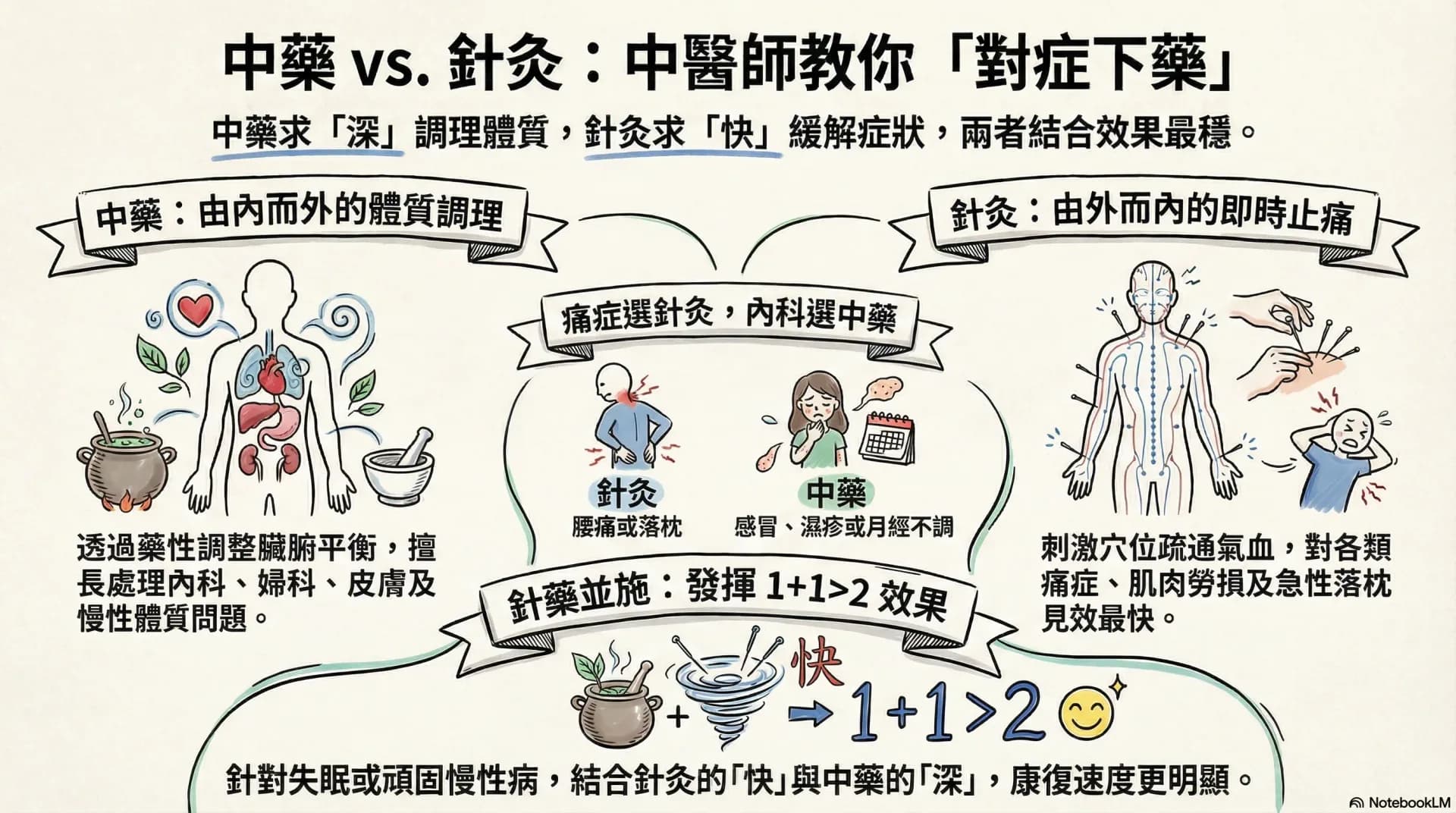
Herbal Medicine or Acupuncture? A TCM Doctor's Guide to Choosing the Right Treatment
"Doctor, should I take herbal medicine or have acupuncture?" This is one of the most common questions in the consultation room. This article compares herbal medicine and acupuncture from a TCM perspective, analysing their principles, suitable conditions, and pros and cons across six common health issues.
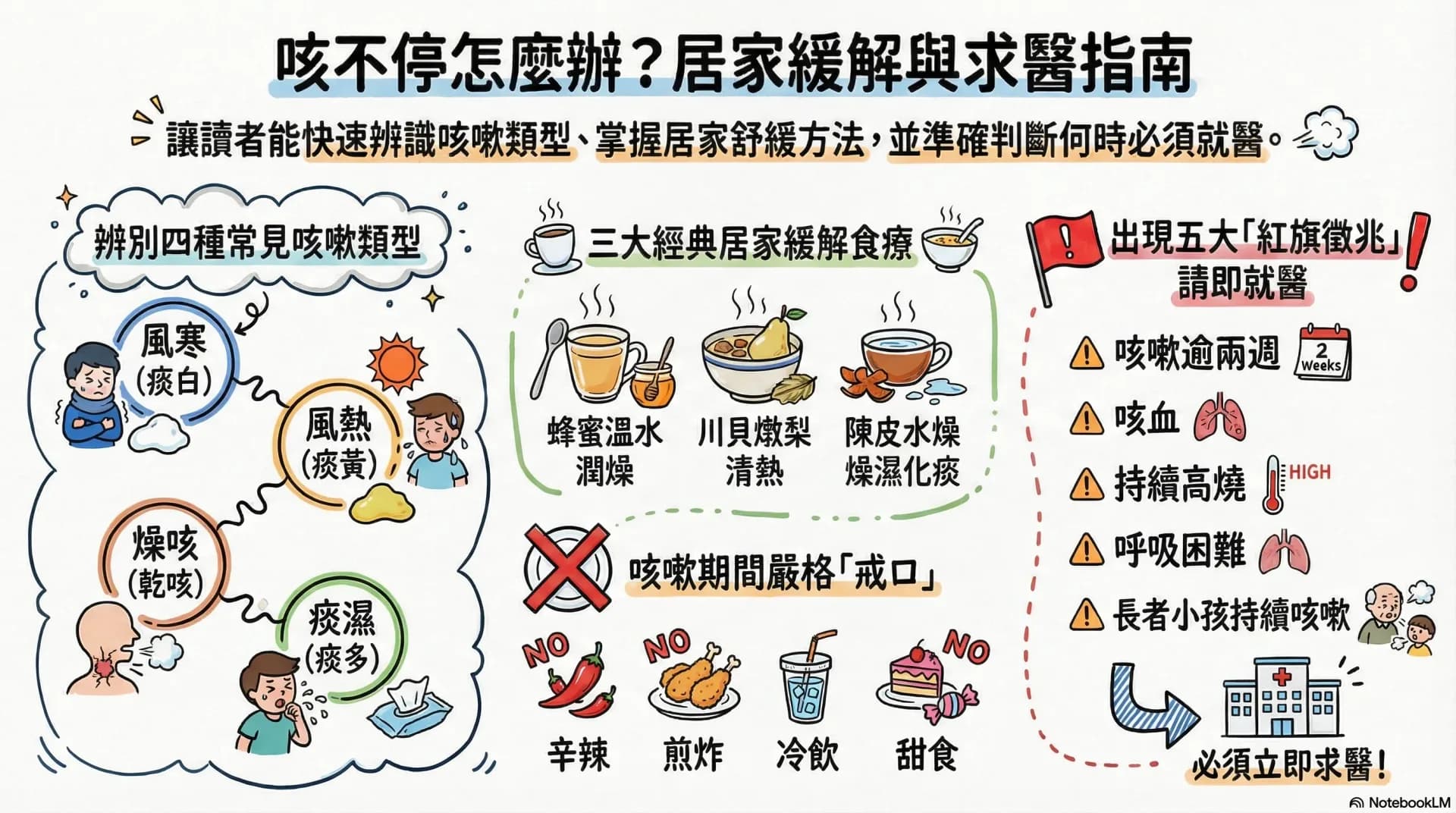
Cough That Won't Go Away? 6 Home Remedies + When to See a Doctor
Coughing is one of the most common reasons for seeking medical attention in Hong Kong — but not every cough requires an immediate doctor visit. This article shares 6 home remedies from a TCM perspective and helps you identify the "red flag" signs that mean you should see a doctor promptly.
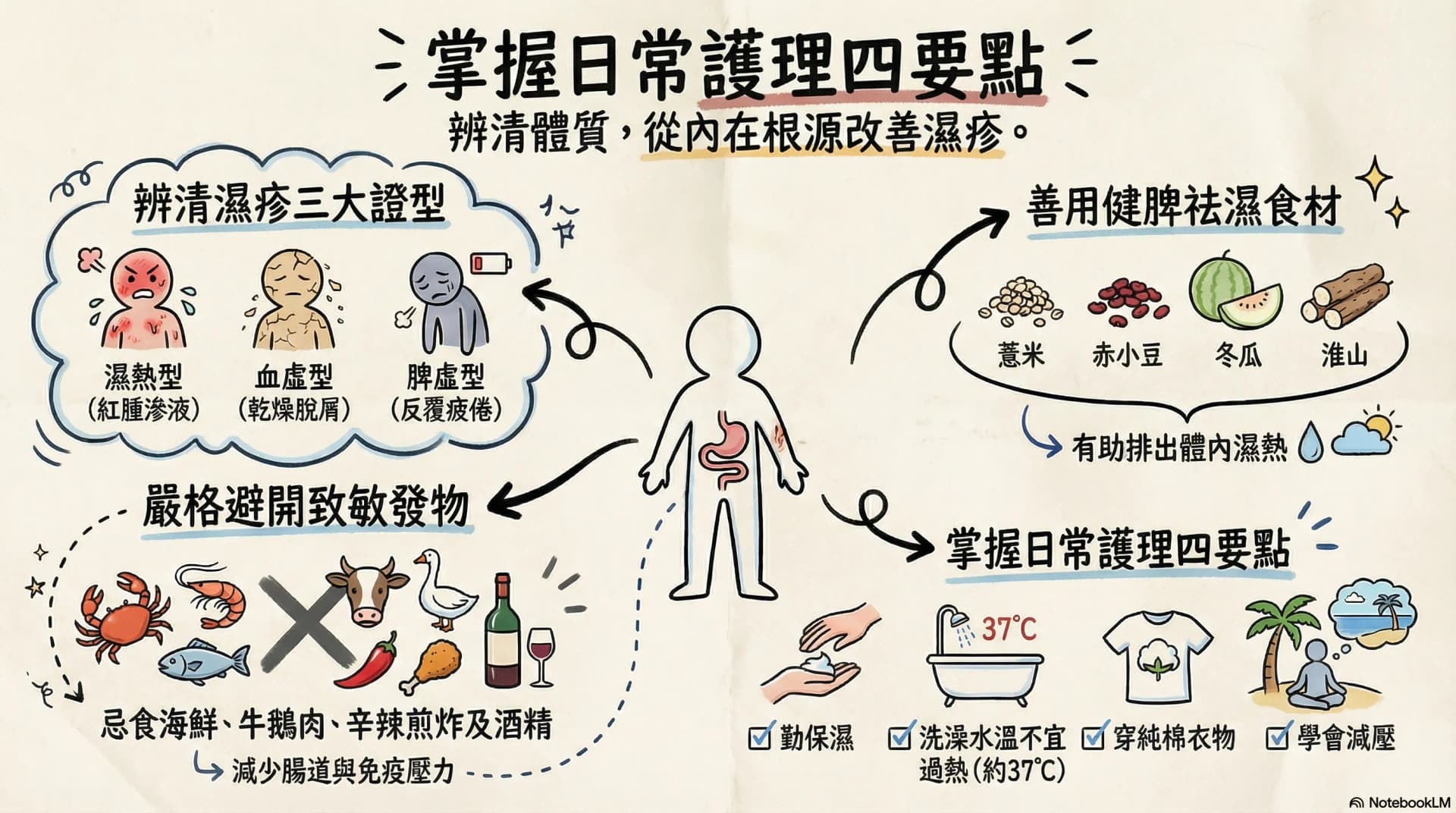
Eczema Diet Guide — TCM Tips on Triggers, Foods to Avoid & Daily Care
Recurring eczema is often closely linked to diet and lifestyle habits. Dr Au combines TCM pattern differentiation with his nutritionist expertise to explain the three common eczema patterns, foods to eat and avoid, healing soup recipes, and daily care tips to help you reduce eczema triggers at the root.
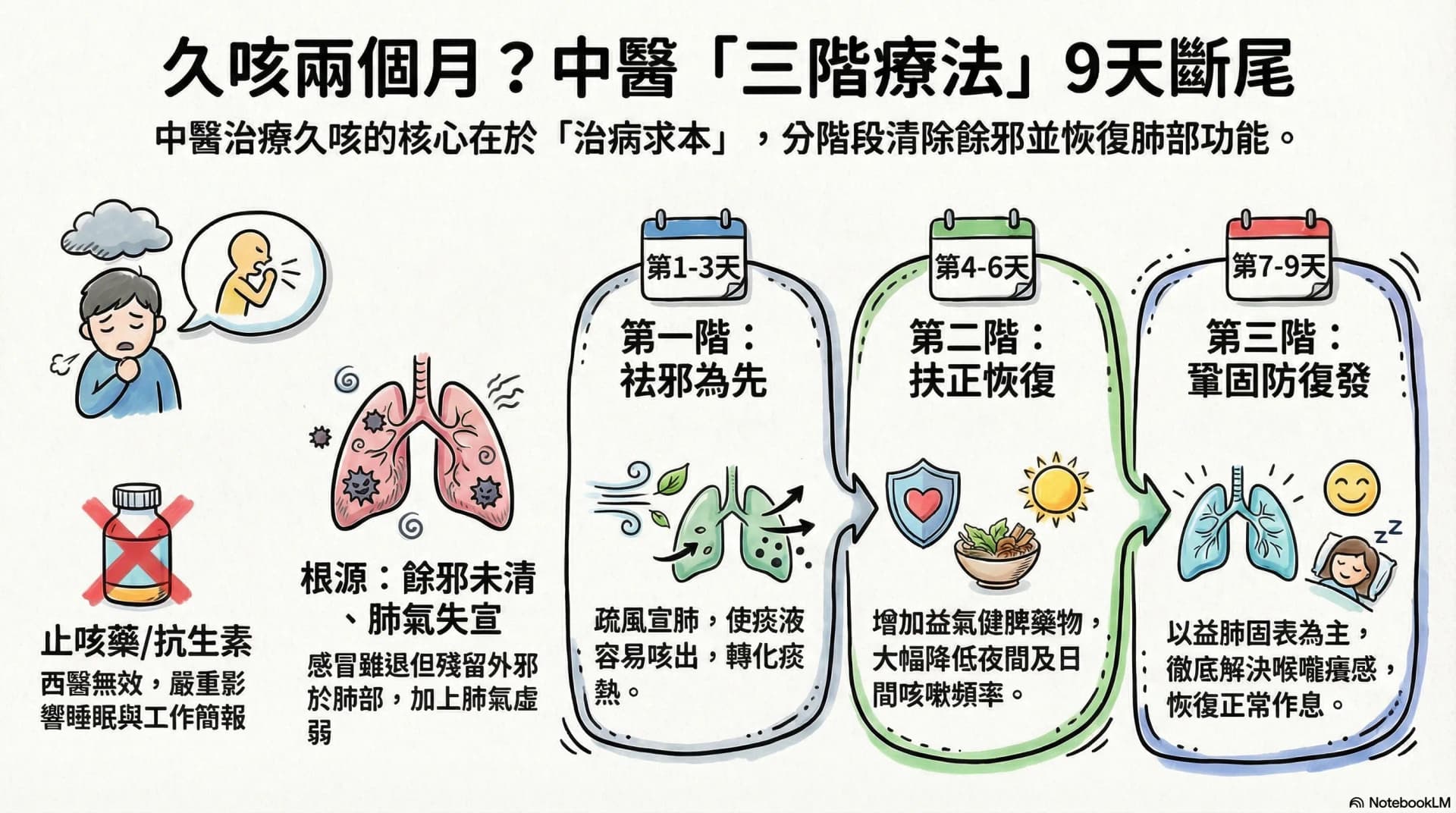
Two Months of Coughing, Relief in Three Sessions — Mr Chan's Story
A male office worker in his 40s suffered from persistent coughing for over two months with no improvement from Western medication. After three sessions of herbal medicine prescribed by Dr Tai, his cough significantly improved and he regained normal work and sleep.
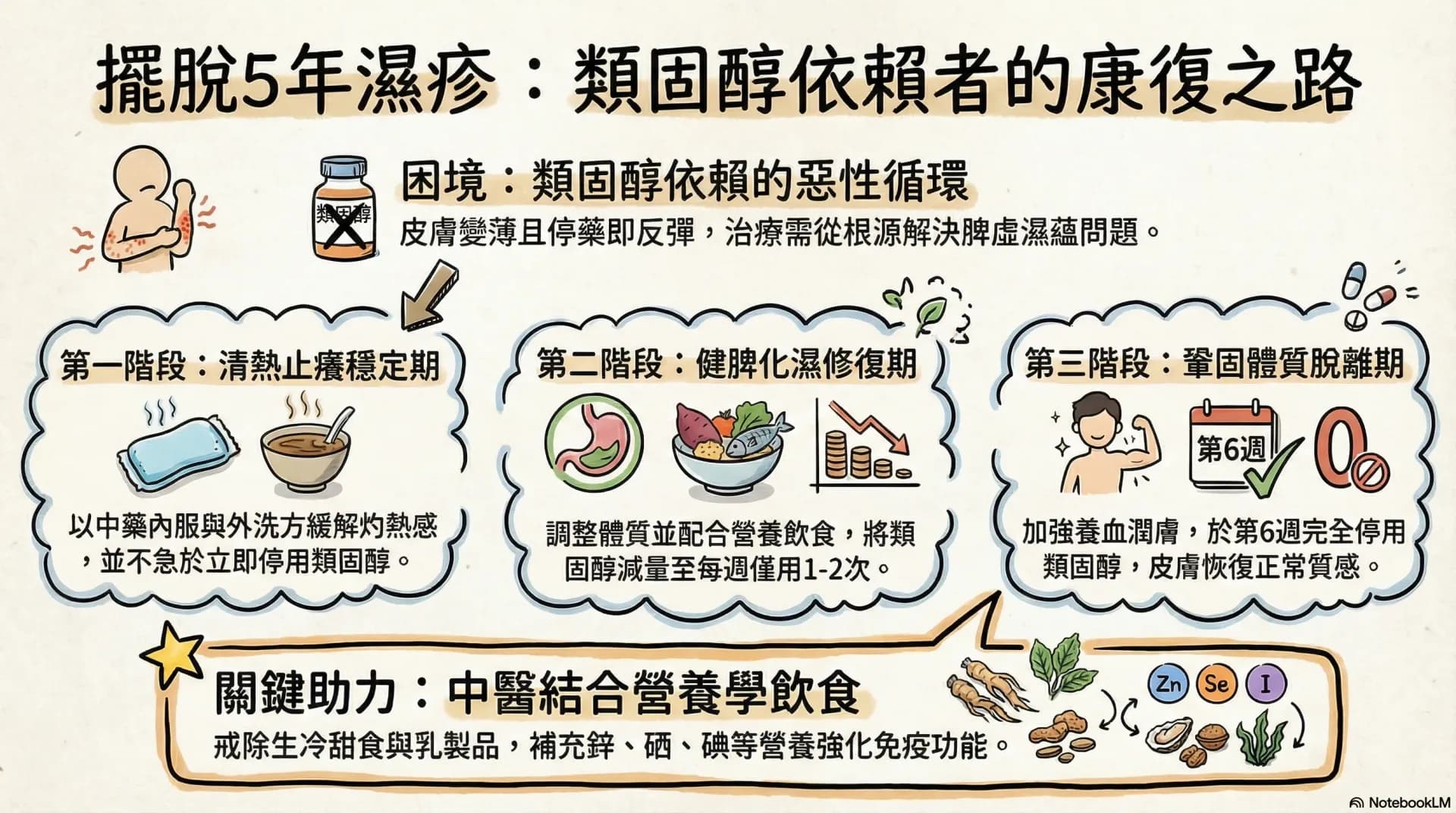
Breaking Free from Steroid Dependence — An Eczema Recovery Story
A woman in her 20s suffered from recurring eczema for five years with long-term steroid cream dependence. After approximately two months of internal and external herbal medicine treatment by Dr Au, she successfully broke free from steroid dependence and her skin returned to normal.
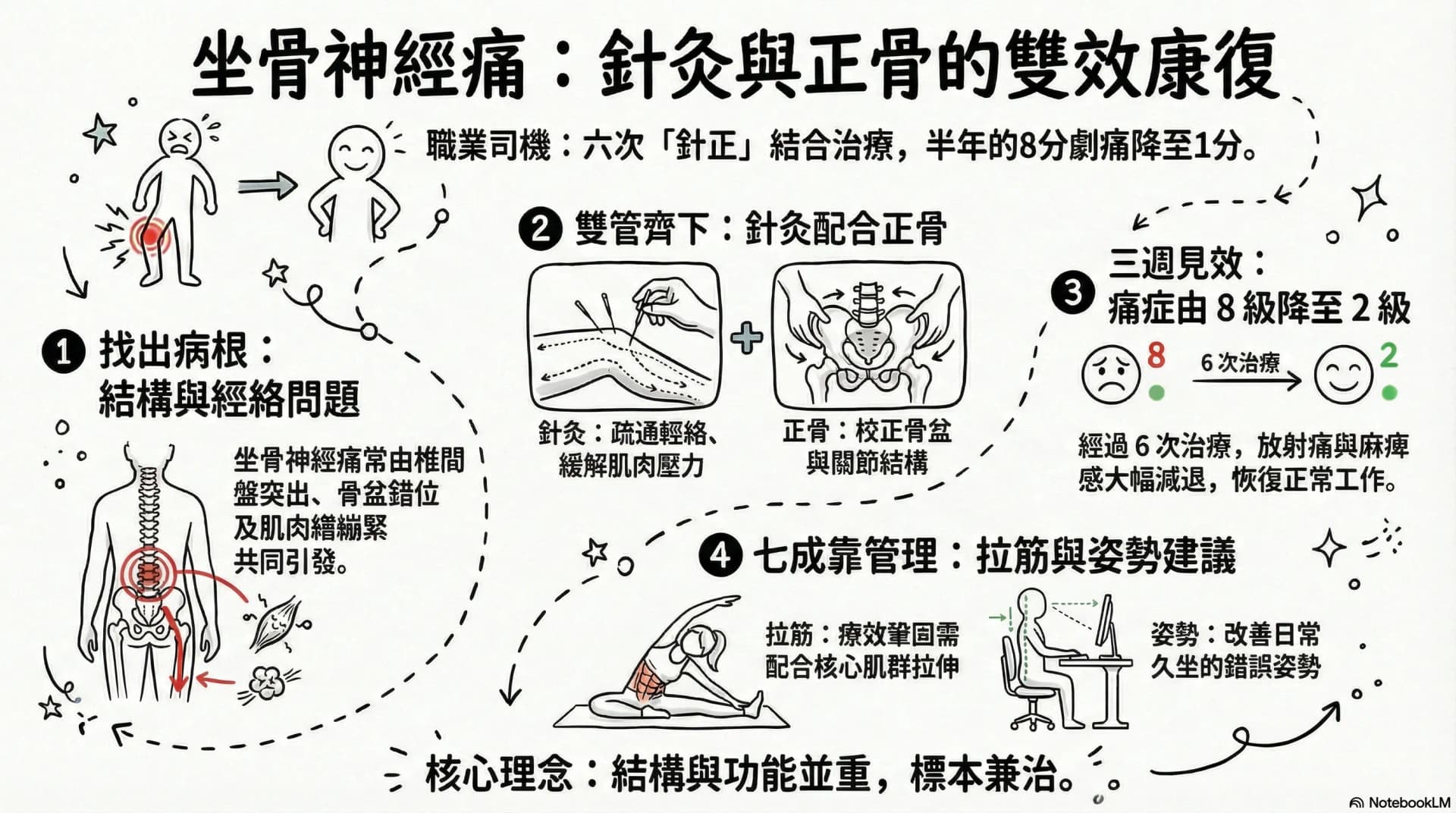
Sciatica Recovery — Combined Acupuncture and Bone-Setting Treatment
A professional driver in his 50s suffered from recurring sciatica for six months that severely impacted his work. After six sessions of combined acupuncture and bone-setting treatment by Dr Wong, his pain significantly improved and he returned to work.
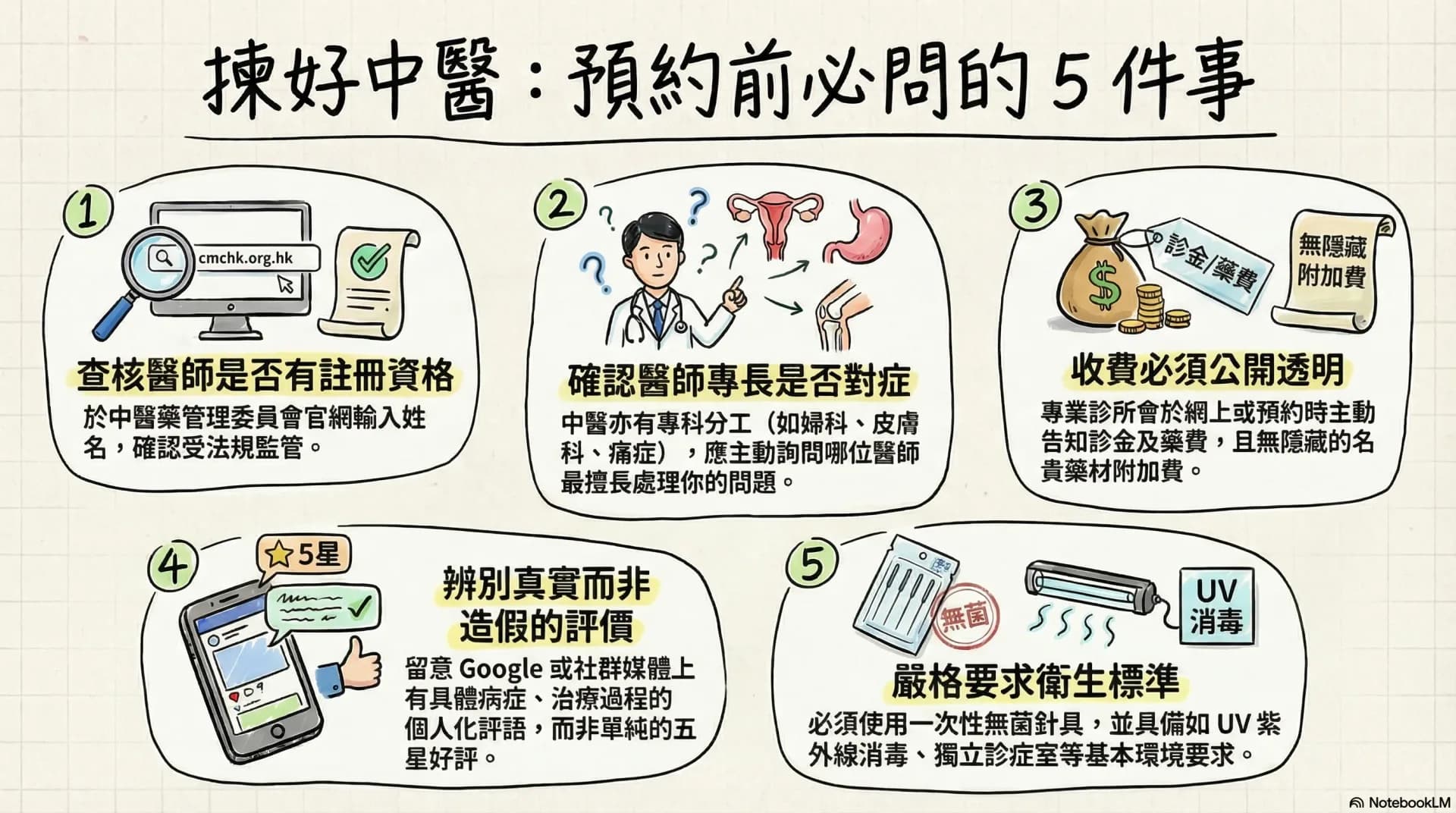
How to Choose a Good TCM Doctor? 5 Questions You Must Ask
Choosing the right TCM doctor shouldn't be a gamble. This guide covers 5 essential questions to ask before your first visit — from verifying credentials to checking fee transparency — so you can find a trustworthy practitioner who truly fits your needs.
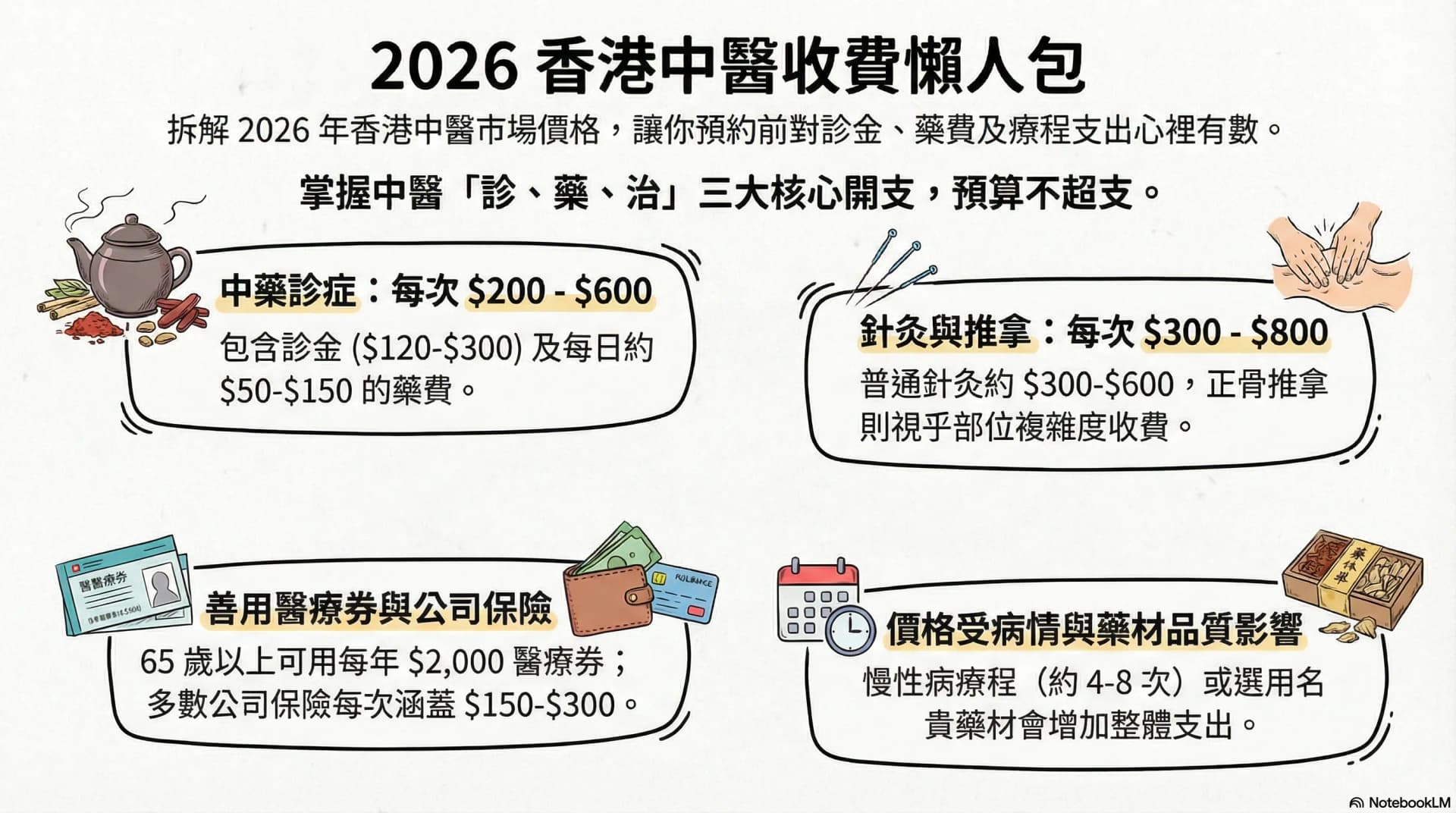
How Much Does TCM Treatment Cost in Hong Kong? 2026 Pricing Guide
TCM treatment costs in Hong Kong typically range from HK$120 to HK$2,000 depending on the type of treatment and condition. This guide covers pricing for herbal medicine, acupuncture, bone-setting, thread embedding, and more — plus the five key factors that affect your total cost.
Book now and start your health journey
Limited slots available today
Book via WhatsAppAspira TCM — Your path back to health