TCM Limitations: 5 Times to See a Western Doctor First
TCM has genuine strengths in chronic care and holistic wellness, but it is not the right first choice for every situation. This article honestly discusses 5 scenarios where Western medicine should come first, what TCM truly excels at, and how to make informed decisions between the two.
Medical review: Dr. Tai Wai Ho, Samson,Registered Chinese Medicine Practitioner #008702
1-Minute Quick Answer
Can TCM cure everything? No. Dr Tai (CMCHK 008702) at Aspira TCM Lai Chi Kok honestly discusses 5 situations where Western medicine should come first — emergencies, infections, trauma, structural conditions, and surgical cases — and where TCM truly excels.
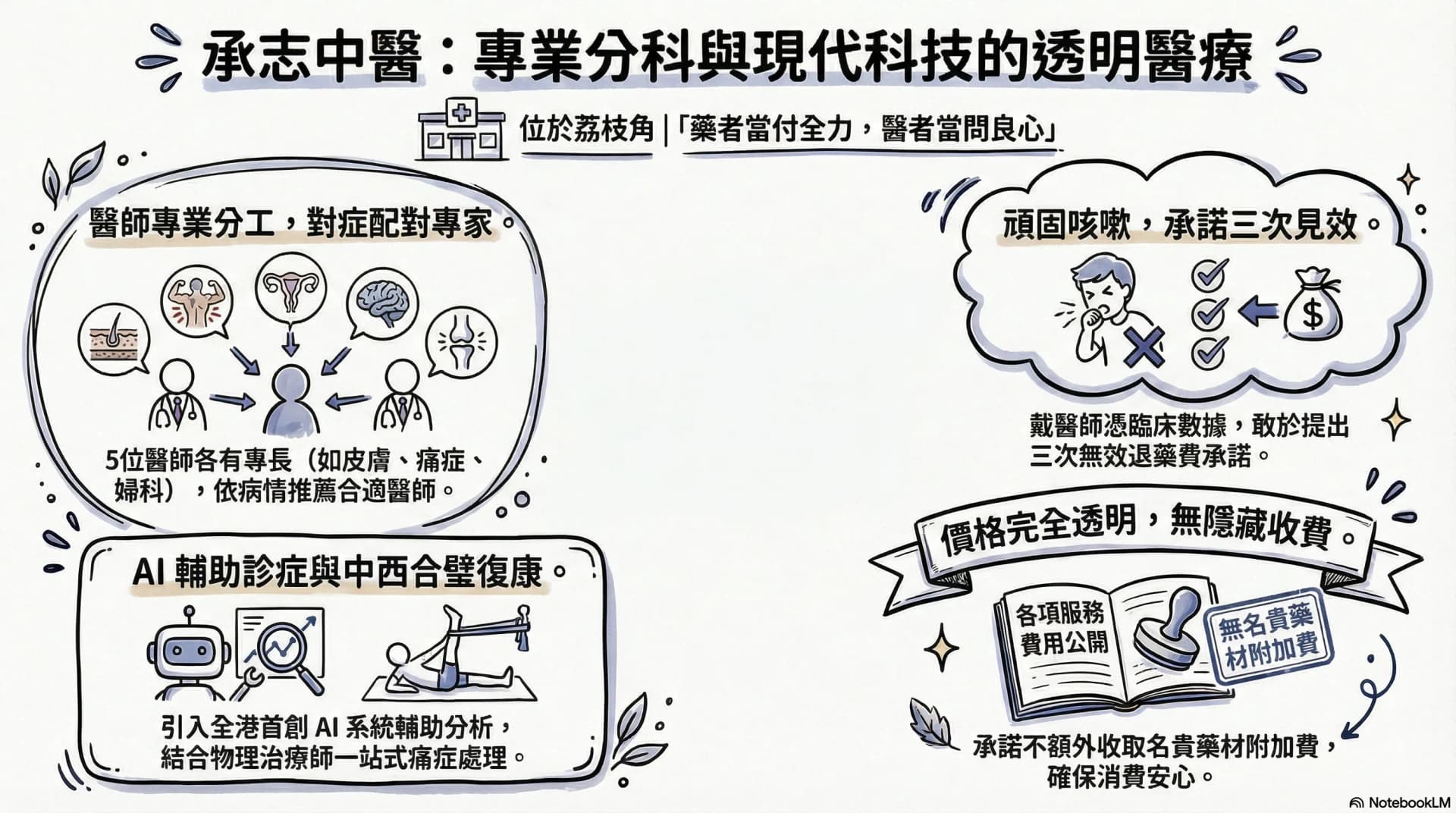
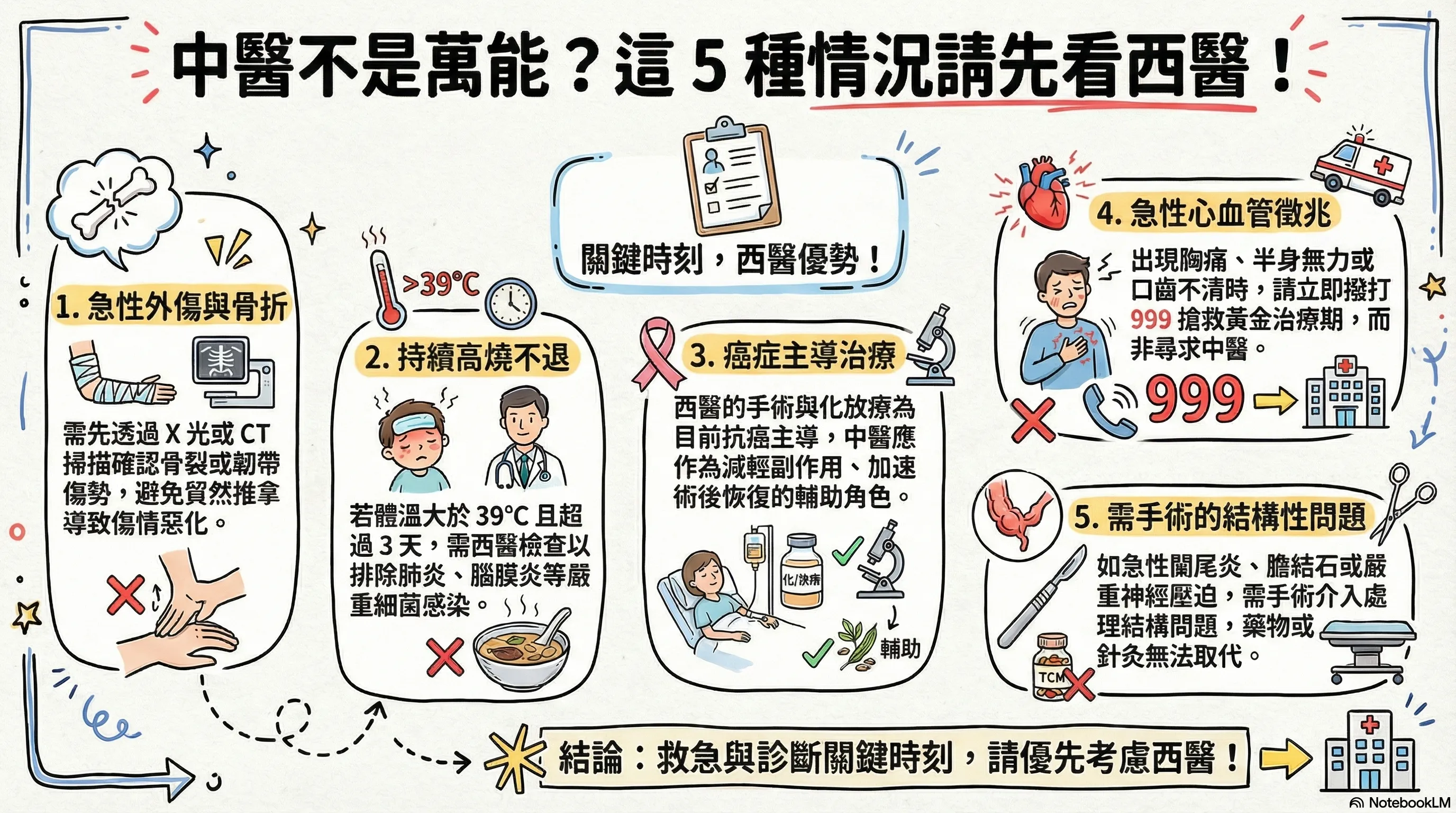 To help readers quickly grasp the content, this image was generated by NotebookLM. Some Chinese characters may not render correctly.
"Can Traditional Chinese Medicine treat everything?"
This is one of the most common questions we receive at Aspira TCM. As a registered Chinese medicine practitioner, my honest answer is: TCM can effectively address many health issues, but it is not a cure-all.
That might surprise you — a TCM clinic openly admitting its own limitations? But we believe honesty is the only way to earn genuine trust. If a practitioner tells you they can cure anything and everything, that is actually the biggest red flag of all.
In this article, we will be upfront about which situations call for Western medicine first and where TCM truly excels.
5 Situations Where You Should See a Western Doctor First
1. Acute Injuries and Fractures
Why Western medicine comes first:
A bad fall, a traffic accident, a sudden sharp pain in a joint during exercise — these situations require X-rays or CT scans to determine whether there is a fracture, hairline crack, or ligament tear.
While TCM bone-setting and tui na can be effective for joint misalignment and soft tissue injuries, manipulating an area without imaging confirmation could potentially worsen an undiagnosed fracture.
The right approach: Go to A&E or an orthopaedic specialist for imaging first. Once the diagnosis is confirmed, TCM can play a valuable role in recovery — herbal medicine for reducing swelling and promoting blood circulation, and acupuncture for pain relief can genuinely accelerate healing after a fracture has been stabilised.
2. Persistent High Fever (Above 39°C for More Than 3 Days)
Why Western medicine comes first:
Fever is the body's natural response to infection. For mild fevers caused by common colds, TCM herbal formulas for releasing exterior pathogens can be quite effective. However, if the temperature stays above 39°C for more than three days, it is essential to rule out serious bacterial infections, pneumonia, or meningitis.
These conditions may require blood tests, bacterial cultures, or imaging to identify the infection source. Some severe infections need intravenous antibiotics — a treatment that TCM simply cannot provide.
The right approach: For persistent high fever, see a Western doctor for the necessary investigations. Once serious infections are ruled out or treated, TCM can complement recovery — helping to restore energy, support the immune system, and reduce the side effects of antibiotics.
3. Cancer — Primary Treatment
Why Western medicine comes first:
When cancer is suspected or diagnosed, surgical removal, chemotherapy, and radiotherapy remain the internationally recognised gold standard for primary treatment. TCM cannot replace these interventions.
We must be clear about this: no responsible TCM practitioner would advise you to abandon conventional cancer treatment in favour of herbal medicine alone. If someone tells you otherwise, please think very carefully.
Where TCM fits in cancer care:
That said, TCM is far from useless in cancer treatment. Alongside Western medical interventions, TCM can play a meaningful adjunctive role:
- During chemotherapy: Herbal medicine can help alleviate nausea, vomiting, and loss of appetite
- During radiotherapy: Herbal medicine can help manage oral ulcers and skin reactions
- Post-surgery: TCM herbal formulas can support wound healing and restore energy and immune function
- During recovery: Holistic TCM care can improve quality of life and may help reduce recurrence risk
The right approach: Western medicine leads, TCM supports. The combination benefits the patient most. If you are undergoing cancer treatment and want to explore TCM support, bring your Western medical reports to your consultation so the TCM practitioner can design a complementary plan that does not conflict with your ongoing treatment.
4. Acute Cardiovascular Events
Why Western medicine comes first:
Sudden crushing chest pain, pain radiating to the left arm or jaw, sudden weakness on one side of the body, or slurred speech — these are warning signs of a heart attack or stroke.
These are time-critical emergencies. The golden window for heart attack intervention (percutaneous coronary intervention) is just 90 minutes from symptom onset. The window for stroke thrombolysis is 4.5 hours. Every minute of delay can result in irreversible damage to heart muscle or brain tissue.
The right approach: If you experience any of these symptoms, call 999 or go to the nearest A&E immediately. This is not the time for TCM. However, after the acute phase, TCM acupuncture and herbal therapy have evidence-based support for improving cardiovascular function and aiding stroke rehabilitation.
5. Structural Problems Requiring Surgery
Why Western medicine comes first:
Severe disc herniation compressing nerves and causing incontinence, acute appendicitis, gallstones causing acute cholecystitis, severe arterial stenosis requiring stents or bypass — these structural problems require surgical intervention. TCM cannot resolve them through herbs or acupuncture alone.
An important nuance: For mild to moderate disc herniation without nerve compression symptoms, TCM acupuncture and bone-setting can actually be quite effective. The key is accurately determining the severity — which is exactly why imaging assessment matters.
The right approach: If a Western doctor has recommended surgery, do not substitute TCM treatment for it. But during post-surgical recovery, TCM can meaningfully help with inflammation, pain management, tissue repair, and functional restoration.
Where TCM Truly Excels
Having discussed TCM's limitations, let us talk about where it genuinely shines. In the following areas, TCM offers unique advantages — and in some cases outperforms Western medicine:
Root-Cause Treatment for Chronic Conditions
Recurring cough, chronic insomnia, persistent eczema, poor digestion, irregular periods — for these common chronic issues, Western medicine often addresses only the symptoms (medication to suppress them), with problems returning once the medication stops.
TCM's advantage lies in pattern differentiation and holistic treatment — identifying the root cause of recurring symptoms (constitutional imbalances) and addressing them at their source. Take cough treatment at Aspira TCM as an example: we do not simply suppress the cough. We investigate why you keep coughing — is it lung qi deficiency, spleen deficiency generating phlegm, or liver fire invading the lungs? Only by treating the root cause can we achieve lasting resolution.
Pain Management
Lower back pain, cervical pain, frozen shoulder, knee pain — TCM acupuncture, tui na, and herbal medicine have extensive clinical experience in pain management. Acupuncture, in particular, has been recognised by the World Health Organization (WHO) as an effective treatment for various pain conditions.
For chronic pain, a combined approach using TCM alongside physiotherapy often delivers more lasting results than relying solely on painkillers — without the risks associated with long-term analgesic use.
Constitutional Improvement and Preventive Care
The TCM concept of "treating disease before it arises" — adjusting the constitution and preventing illness before it manifests — is an area where Western medicine has relatively little to offer.
Catching colds frequently, persistent fatigue, cold hands and feet, a pale or sallow complexion — these "pre-disease" states often show nothing abnormal on Western medical tests, yet you genuinely feel unwell. TCM can identify constitutional imbalances (such as qi deficiency, blood deficiency, yang deficiency, or yin deficiency) and create a personalised plan encompassing diet, lifestyle, and herbal medicine to comprehensively improve your health.
Adjunctive Support During Western Medical Treatment
This was touched on in the cancer section, but it is worth emphasising. Beyond cancer care, TCM can play a supportive role alongside many Western treatments:
- Managing side effects of long-term Western medication: Such as the dry cough caused by ACE inhibitors or muscle pain from statins
- Post-surgical recovery: Accelerating wound healing and restoring vitality
- Fertility support: TCM herbal therapy can complement IVF treatment by helping to improve the uterine environment
- Supporting psychiatric treatment: Under medical guidance, TCM may help manage side effects of antidepressant medication
The Aspira TCM Approach: Patient Interests Come First
At Aspira TCM, we have an unwritten rule:
When a patient's condition falls outside TCM's optimal scope, we proactively recommend they see a Western doctor first.
This is not because we lack confidence in TCM. Quite the opposite — it is precisely because we are confident in what TCM can do that we also know clearly where its boundaries lie.
We believe a good TCM practitioner does not try to handle everything themselves. Instead, they make accurate judgements: Can TCM help with this particular problem? Is TCM the best first choice, or should other investigations come first?
In our daily practice at Aspira TCM, we encounter all kinds of situations. When we determine that a patient needs to see a Western doctor first, we explain why clearly and advise on the next steps. Once the acute issue has been addressed, the patient is always welcome to return for TCM support during recovery.
This approach might mean we earn slightly less in consultation fees in the short term. But in the long run, patients know this: Aspira TCM is a clinic they can trust.
A Word from Dr Tai
"After years of practice, my firm belief is that disease is the only enemy, and everyone who respects life and health is a teammate — patients, TCM practitioners, and Western doctors alike. TCM and Western medicine have never been in opposition — our shared goal is to help patients get better. TCM has its strengths; Western medicine has its strengths. A responsible practitioner puts the patient's life and health first, rather than trying to claim every condition as their own. The right treatment is the best treatment. May all people in the world be free from illness — what does it matter if the medicine shelf gathers dust?"
— Dr Tai Wai-ho | Registered Chinese Medicine Practitioner (Reg. No.: 008702)
Not Sure Whether to See a TCM Practitioner or a Western Doctor?
If you are unsure which approach suits your situation, here is a simple guide:
See a Western doctor first if you have:
- Sudden severe pain
- Persistent high fever that will not break
- Sudden unexplained changes (rapid weight loss, unexplained bleeding)
- A condition that requires imaging for diagnosis
- Any acute symptom that could be life-threatening
TCM may be a good fit if you have:
- Recurring chronic symptoms (cough, insomnia, eczema, digestive issues)
- Western medical tests that come back "all normal" but you still feel unwell
- Chronic pain requiring long-term management
- A desire to improve overall constitution and energy levels
- Recovery needs after Western medical treatment
When in doubt: Send us a WhatsApp message describing your situation. Our medical team will give you an honest recommendation — including telling you if you should see a Western doctor first.
WhatsApp Enquiry | Book an Appointment
This article was reviewed by Dr Tai Wai-ho, Registered Chinese Medicine Practitioner (Reg. No.: 008702).
The information above is for health education purposes only and does not constitute medical advice. Every individual's constitution and condition is different, and treatment plans vary accordingly. If you have health concerns, we recommend booking a consultation with a registered Chinese medicine practitioner for professional guidance tailored to your specific situation. In case of emergency, call 999 or go to the nearest Accident and Emergency department immediately.
Related at Aspira TCM: Dr Tai (general medicine)
Disclaimer: This article is for health education and reference purposes only and does not constitute medical advice, diagnosis, or treatment. Each patient's condition is unique and treatment outcomes vary. Please consult a registered TCM practitioner or qualified healthcare professional for health concerns.
Further Reading
Hand-picked related articles and real cases to read next.
Want to learn more? WhatsApp us for a free consultation
Book via WhatsAppExplore our full range of treatments: Traditional TCM Services
Related Articles
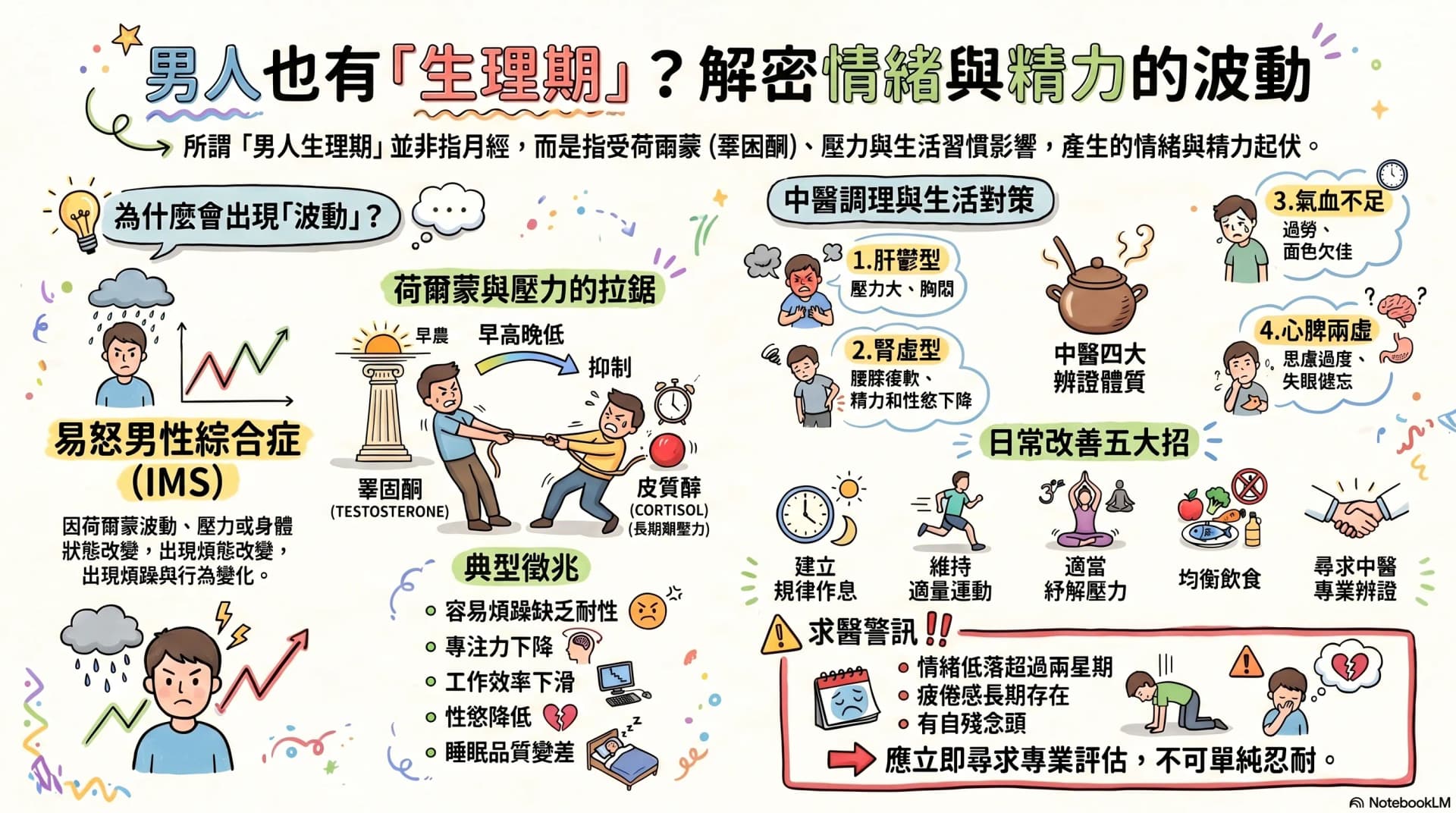
Do Men Have a “Period” Too? A TCM Look at Male Mood Swings, Fatigue and Hormonal Change — Plus 5 Ways to Find Relief
Do men have a period too? Men have no regular cycle like menstruation, so the “male period” is not a formal diagnosis — it describes the mood and energy swings driven by hormones, stress, sleep and lifestyle. This article covers the signs, the causes, how it differs from a woman’s period, how TCM assesses it, and five everyday ways — teas, foods and acupressure points — to find relief.
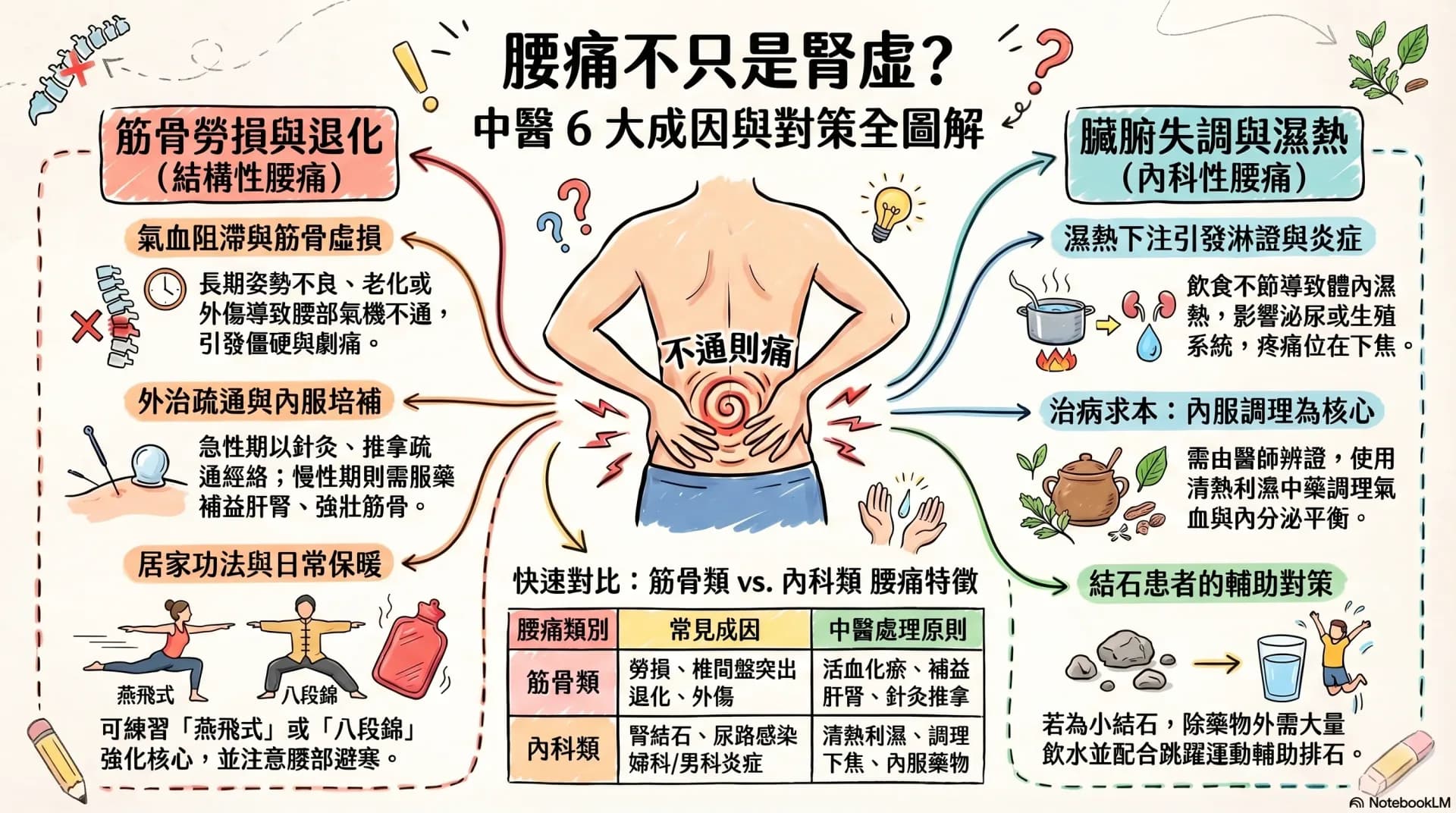
Low Back Pain: 6 Common Causes & TCM Treatment Approaches
Low back pain is not always simply “kidney deficiency” or muscle fatigue. It may also be related to muscle strain, disc herniation, degenerative lumbar disease, kidney stones, urinary tract infection, or pelvic inflammation. This article explains six common causes of low back pain from a TCM perspective and outlines key distinctions and treatment directions.
Is Aspira TCM Clinic Good? Doctors, Services & Real Reviews
Searching "Is Aspira TCM good?" means you're doing your homework — and we respect that. This article presents our doctor team, five clinic differentiators, real patient feedback, and our honest limitations, so you can decide if Aspira is right for you.