Herbal Medicine or Acupuncture? A TCM Doctor's Guide to Choosing the Right Treatment
"Doctor, should I take herbal medicine or have acupuncture?" This is one of the most common questions in the consultation room. This article compares herbal medicine and acupuncture from a TCM perspective, analysing their principles, suitable conditions, and pros and cons across six common health issues.
Medical review: Dr. Wong Ka Fai,Registered Chinese Medicine Practitioner #009985
1-Minute Quick Answer
'Should I take herbs or have acupuncture?' Dr Wong (CMCHK 009985) at Aspira TCM Lai Chi Kok compares both treatments' principles, suitable conditions, and pros/cons across 6 common conditions to help you choose what's best for you.
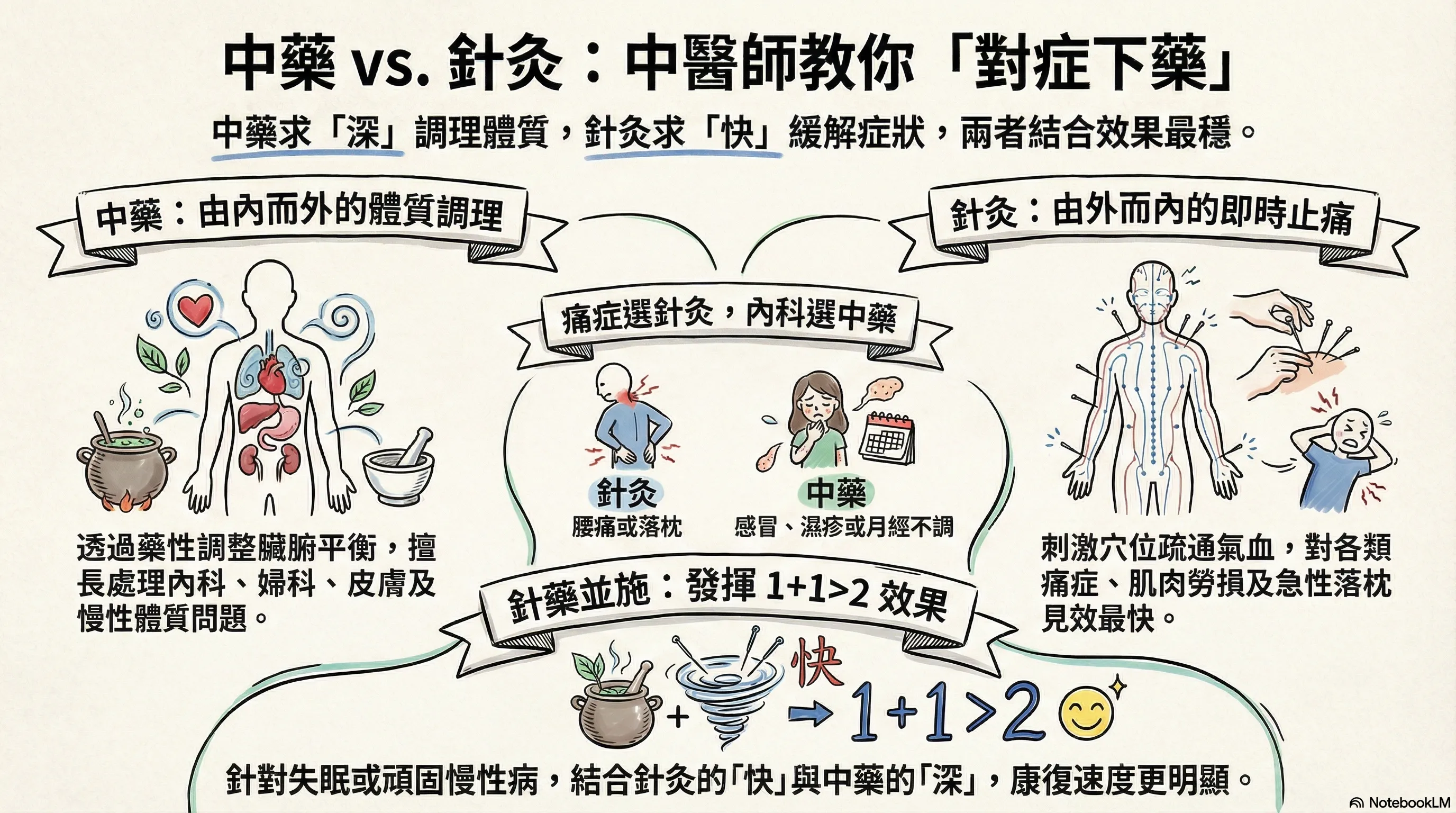 To help readers quickly grasp the content, this image was generated by NotebookLM. Some Chinese characters may not render correctly.
"Doctor, for my condition, should I take herbal medicine or have acupuncture?"
This is probably one of the most common questions I hear at the clinic. Nearly every day, patients ask this during their first consultation. Some have already spent hours researching online before coming in, yet still cannot decide.
I understand the hesitation. Herbal medicine and acupuncture are both core treatment methods in Traditional Chinese Medicine (TCM), and it is not always obvious to non-practitioners how they differ or what each is best suited for. In this article, I want to explain, in the most straightforward way possible, the characteristics of each approach and how to choose between them for different situations.
Let me start with the conclusion: In most cases, there is no single "better" answer -- it depends on which treatment suits your specific symptoms, and very often, combining both yields the best results.
Herbal Medicine: Regulating the Body From Within
How It Works
The core of Chinese herbal medicine lies in using the "nature, flavour, and meridian affinity" of medicinal herbs to regulate the body. Each herb has specific properties (cold, hot, warm, cool), flavours (sour, bitter, sweet, pungent, salty), and meridian affinities (which organ systems it targets). Based on your constitution and symptoms, the practitioner formulates a tailored prescription to restore internal balance.
In simple terms: herbal medicine works from the inside out, adjusting the body's internal environment to resolve health issues.
What Herbal Medicine Excels At
- Internal medicine conditions: cough, cold, digestive complaints, indigestion
- Constitutional regulation: insomnia, fatigue, cold sensitivity, weakened immunity
- Skin conditions: eczema, acne (combining internal herbal medicine with external herbal washes)
- Gynaecological issues: irregular menstruation, period pain, menopausal syndrome
- Chronic disease management: recurring conditions such as chronic cough, allergic rhinitis
Advantages of Herbal Medicine
- Comprehensive regulation: Herbal prescriptions typically address both the primary complaint and accompanying symptoms. For instance, a formula for insomnia often simultaneously improves anxiety, palpitations, and fatigue.
- Well-suited for chronic conditions: For problems requiring long-term management, herbal medicine can progressively adjust the constitution and address root causes.
- Flexible prescriptions: The practitioner can modify the herbal formula at each follow-up visit based on your progress, achieving truly personalised treatment.
- Broad scope of application: From coughs and colds to gynaecology and internal medicine, herbal medicine covers an exceptionally wide range.
Limitations of Herbal Medicine
- Takes time: Herbal regulation is gradual. Constitutional adjustment and chronic conditions typically require weeks or even months before noticeable improvement.
- Taste: Frankly, Chinese herbal medicine does not taste pleasant. While concentrated herbal granules are now available as a milder alternative, some conditions require traditionally decocted formulas that test one's patience.
- Compliance required: Herbal medicine usually needs to be taken daily, sometimes two to three times a day. This requires patient commitment.
- Slower for acute pain: If you are seeking treatment for sudden back pain or severe neck and shoulder pain, herbal medicine will not provide the immediate relief that acupuncture can.
Acupuncture: Unblocking Meridians, Regulating Qi and Blood
How It Works
Acupuncture involves inserting fine needles at specific acupoints to stimulate the meridian system and restore the flow of qi and blood. There is a classic saying in TCM: "Where there is blockage, there is pain; where there is free flow, there is no pain." The core function of acupuncture is to restore smooth circulation and reactivate the body's self-healing mechanisms.
Modern medical research has confirmed that acupuncture stimulates the nervous system to release endorphins (natural painkillers), improves local blood circulation, regulates immune function, and reduces inflammatory responses. The World Health Organization (WHO) recognises acupuncture as an effective treatment for numerous conditions.
In simple terms: acupuncture works from the outside in, stimulating acupoints to activate the body's natural healing response.
What Acupuncture Excels At
- Pain conditions: lower back pain, neck and shoulder pain, knee pain, headaches, sciatica
- Musculoskeletal issues: sprains, repetitive strain, joint stiffness
- Acute symptom relief: sudden lower back pain (acute lumbar sprain), wry neck (stiff neck)
- Neurological regulation: facial paralysis, trigeminal neuralgia
- Adjunct therapy: enhancing the effectiveness of herbal medicine, such as combined acupuncture-herbal treatment for insomnia
Advantages of Acupuncture
- Faster results: Especially for pain conditions, many patients feel noticeable improvement after their first session.
- No medication required: For patients who prefer not to take medicine or have difficulty doing so (such as young children or the elderly), acupuncture is an excellent option.
- Minimal side effects: When performed by a qualified practitioner, acupuncture has an excellent safety profile.
- Immediate feedback: Patients often feel tangible changes during and after treatment (such as reduced pain or muscle relaxation).
Limitations of Acupuncture
- Limited for systemic conditions: If your problem originates from organ dysfunction (such as digestive issues or menstrual irregularities), acupuncture alone may not be as comprehensive as herbal medicine.
- Multiple sessions needed: Although individual sessions produce quick results, maintaining the effects and achieving lasting resolution usually requires a full course of 4 to 8 sessions.
- Needle sensitivity: A small number of patients feel anxious about needles. However, acupuncture needles are much finer than injection needles, and the actual sensation is typically just a mild ache or tingling.
- Requires clinic visits: Unlike herbal medicine, which you can take at home, each acupuncture session requires a visit to the clinic.
Six Common Conditions: Herbal Medicine or Acupuncture?
Below are six of the most common health issues we see at the clinic, with an analysis of the role each treatment plays. Please note that this is a general reference guide; actual treatment plans should be determined by a practitioner based on your specific situation.
| Condition | Role of Herbal Medicine | Role of Acupuncture | Recommended Approach |
|---|---|---|---|
| Pain (lower back / neck & shoulder) | Herbs to invigorate blood, strengthen the kidneys and lower back, consolidating results and preventing recurrence | Unblocks meridians for pain relief; fast-acting for localised pain | Acupuncture-led, supplemented by herbal medicine for constitutional support |
| Cough / Cold | Herbal medicine differentiates between wind-cold, wind-heat, phlegm-dampness etc. for targeted treatment | Acupuncture can assist in cough relief and dispelling external pathogens | Herbal medicine-led, acupuncture as adjunct |
| Insomnia | Herbs regulate the heart and spleen, soothe the liver and calm the mind, improving overall sleep quality | Acupuncture regulates the autonomic nervous system with immediate relaxation effects | Combined herbal medicine + acupuncture for best results |
| Eczema | Internal herbs clear heat and resolve dampness; external herbal washes relieve itching and protect the skin | Acupuncture can assist in regulating immune function | Herbal medicine-led (internal + external), acupuncture as adjunct |
| Menstrual irregularities | Herbs regulate qi and blood, soothe the liver, and treat according to the menstrual cycle | Acupuncture improves pelvic circulation and relieves period pain | Herbal medicine-led, acupuncture to enhance effectiveness |
| Obesity / Weight management | Herbs regulate spleen and stomach function, resolve dampness and phlegm | Catgut embedding (a specialised acupuncture technique) stimulates acupoints to boost metabolism | Catgut embedding + herbal medicine combined, requiring sustained treatment |
Key takeaway: You will notice that the ideal approach for many conditions is actually a combination of both. This is not an evasive answer -- clinical experience consistently shows that herbal medicine and acupuncture together often achieve results greater than the sum of their parts.
When Should Herbal Medicine and Acupuncture Be Used Together?
In clinical practice, I frequently recommend that patients receive both herbal medicine and acupuncture. Here are some typical examples:
Example 1: Chronic Lower Back Pain A patient with recurring lower back pain from long-term strain. Acupuncture immediately unblocks the lumbar meridians, relieving pain and muscle tension. At the same time, herbal medicine taken internally strengthens the kidneys and lower back and invigorates blood circulation, reducing the chance of recurrence at a constitutional level.
Example 2: Persistent Insomnia For patients who have been unable to sleep properly for over three months, either herbal medicine or acupuncture alone may produce limited results. Herbal medicine works on regulating the heart and spleen and nourishing the blood to calm the mind, improving the internal environment for sleep. Acupuncture directly regulates the autonomic nervous system, helping the patient feel more relaxed on the very evening of treatment. Combined, recovery is noticeably faster.
Example 3: Recurring Eczema Internal herbal medicine to clear heat, resolve dampness, and regulate the spleen and stomach is the foundation of treatment. External herbal washes act directly on the skin to relieve itching and reduce inflammation. During acute flare-ups, acupuncture can assist in regulating immune function and reducing the intensity of allergic responses, helping the patient get through the acute phase more quickly.
In summary:
- Acupuncture's strength lies in being fast -- rapid pain relief and quick resolution of acute symptoms
- Herbal medicine's strength lies in going deep -- thorough constitutional regulation that addresses root causes
- Their combined strength lies in being stable -- achieving quick results while building lasting improvement
Dr. Wong's Advice
As a Chinese medicine practitioner who uses both herbal medicine and acupuncture every day, here are some practical suggestions:
1. Do not overthink "which one to choose"
Many patients spend considerable time researching and comparing online before their first visit, unable to decide. The most effective approach is simply to come in for an assessment. TCM is grounded in "differential diagnosis and treatment" -- for the same condition, different constitutions may require different treatment methods. Your practitioner will recommend the most suitable approach based on the findings of the four diagnostic methods (observation, auscultation, inquiry, and palpation).
2. Allow enough time for treatment
Whether herbal medicine or acupuncture, both require adequate treatment time. Herbal regulation is typically assessed in two-week intervals. Acupuncture generally requires an initial course of 4 to 6 sessions. Giving up after just one or two attempts often means missing out on genuine results.
3. Support treatment with lifestyle adjustments
TCM treatment is not limited to taking medicine and having acupuncture. The dietary advice, sleep recommendations, and stress management guidance from your practitioner are equally important. Treatment gives you a push in the right direction; healthy daily habits are what sustain long-term wellness.
4. Ask your practitioner directly
Not sure which treatment suits you? Unclear about what the prescription does? Unsure whether a reaction after treatment is normal? These questions should all be raised directly with your Chinese medicine practitioner. Good doctor-patient communication is key to successful treatment.
Frequently Asked Questions (FAQ)
Q1: Does acupuncture hurt? What if I am afraid of needles?
Acupuncture needles are much finer than injection needles. Most patients describe the sensation as a mild ache or tingling rather than sharp pain. If you are genuinely very afraid of needles, let us know beforehand -- we will use the finest needles available and start with fewer acupoints, allowing you to acclimatise gradually. If acupuncture truly is not for you, Aspira TCM also offers needle-free treatments including herbal medicine, tuina massage, and cupping.
Q2: Is Chinese herbal medicine very bitter? Are there less bitter options?
Honestly, most Chinese herbal medicine is not what you would call tasty. However, there are several ways to ease the issue: first, you can opt for concentrated herbal granules (no decoction needed), which taste considerably milder and are convenient to prepare; second, certain prescriptions can include flavour-modifying herbs. If you are particularly sensitive to bitter tastes, let the practitioner know at your first visit -- we will adjust the approach as much as possible without compromising efficacy.
Q3: Can I have herbal medicine and acupuncture on the same day?
Yes. At Aspira TCM, many patients receive acupuncture and collect their herbal medicine prescription during the same visit. This is a very common arrangement. We generally recommend having acupuncture first, then taking herbal medicine afterwards. The two treatments do not conflict.
Q4: For my first TCM visit, should I choose herbal medicine or acupuncture?
If you are seeking treatment for pain, we will usually start with acupuncture to address the most troublesome symptoms first. For internal medicine issues (such as insomnia or digestive discomfort), herbal medicine is typically the initial approach. However, the final treatment plan is always determined by the practitioner after your consultation -- so the first step is simply to come in for an assessment, without needing to pre-select a treatment method.
Book an Appointment
If you are still unsure whether herbal medicine or acupuncture is right for your situation, the most direct approach is to let a practitioner assess you. Aspira TCM Clinic is conveniently located in Lai Chi Kok. Our practitioners will recommend the most suitable treatment based on your constitution and symptoms.
Aspira TCM Clinic Address: Unit 2706, Saxon Tower, 7 Cheung Shun Street, Lai Chi Kok Tel: 2110 9337 WhatsApp booking: 9679 2293
-- Author -- Dr. Wong Ka Fai | Registered Chinese Medicine Practitioner (Reg. No.: 009985) Aspira TCM Clinic -- Pain & Bone Specialist
This content is for health education purposes only and does not constitute medical diagnosis or treatment advice. Individual conditions vary, and treatment plans should be tailored accordingly. If you have a health concern, we recommend booking a consultation so a qualified practitioner can assess your specific situation.
Related at Aspira TCM: Herbal medicine service · Acupuncture treatment service
Disclaimer: This article is for health education and reference purposes only and does not constitute medical advice, diagnosis, or treatment. Each patient's condition is unique and treatment outcomes vary. Please consult a registered TCM practitioner or qualified healthcare professional for health concerns.
Want to learn more? WhatsApp us for a free consultation
Book via WhatsAppExplore our full range of treatments: Traditional TCM Services
Related Articles
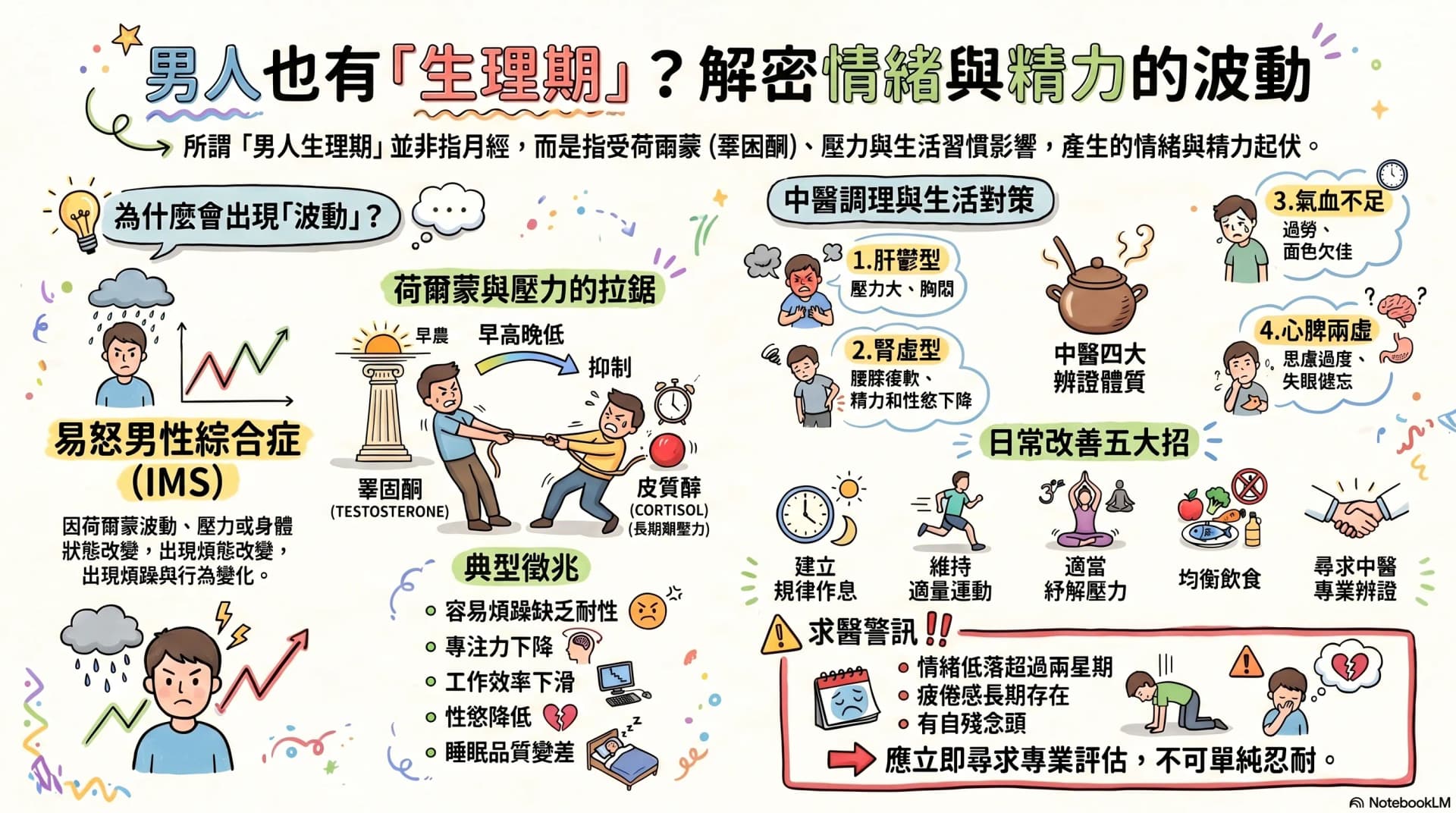
Do Men Have a “Period” Too? A TCM Look at Male Mood Swings, Fatigue and Hormonal Change — Plus 5 Ways to Find Relief
Do men have a period too? Men have no regular cycle like menstruation, so the “male period” is not a formal diagnosis — it describes the mood and energy swings driven by hormones, stress, sleep and lifestyle. This article covers the signs, the causes, how it differs from a woman’s period, how TCM assesses it, and five everyday ways — teas, foods and acupressure points — to find relief.
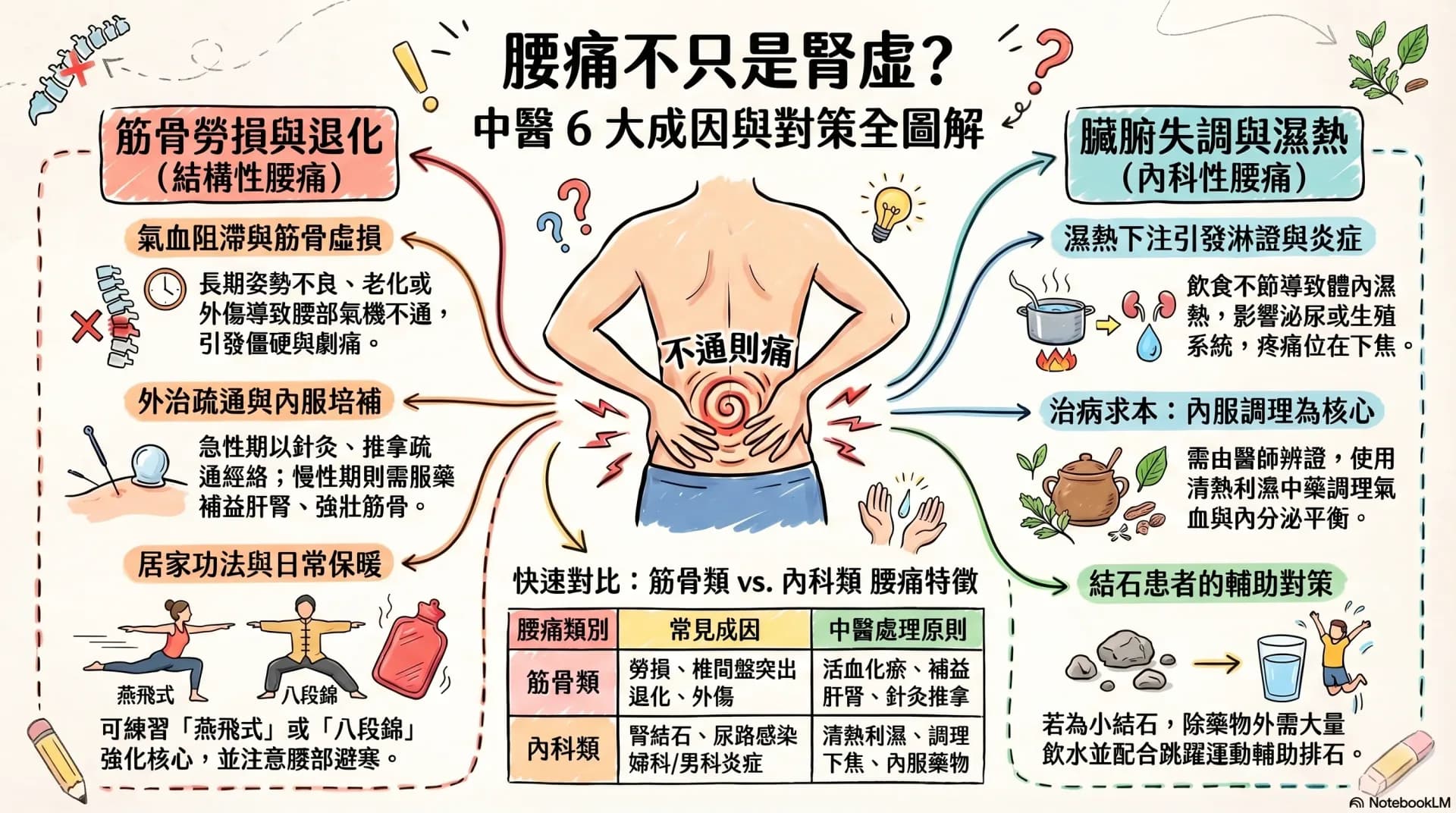
Low Back Pain: 6 Common Causes & TCM Treatment Approaches
Low back pain is not always simply “kidney deficiency” or muscle fatigue. It may also be related to muscle strain, disc herniation, degenerative lumbar disease, kidney stones, urinary tract infection, or pelvic inflammation. This article explains six common causes of low back pain from a TCM perspective and outlines key distinctions and treatment directions.
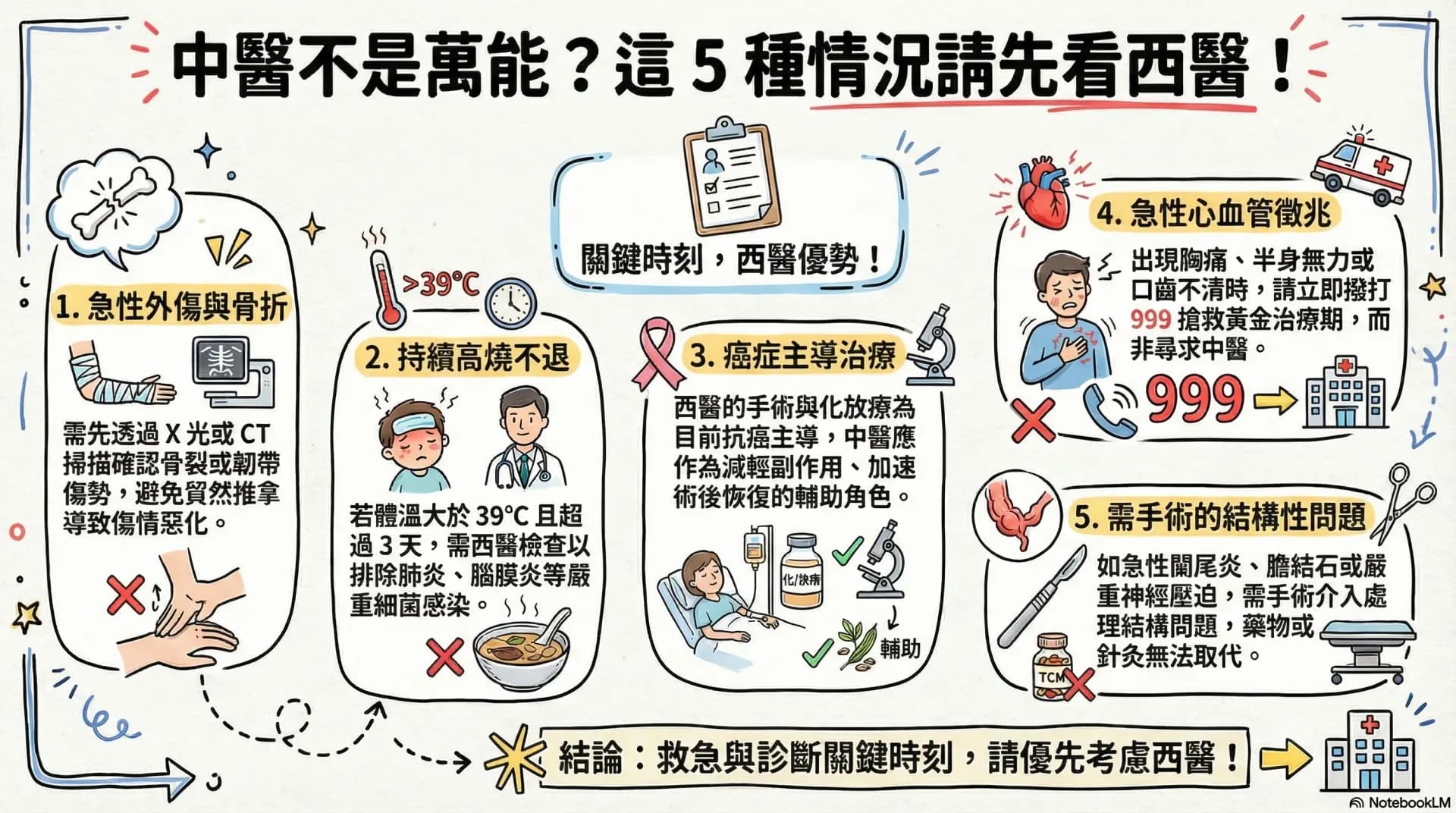
TCM Limitations: 5 Times to See a Western Doctor First
TCM has genuine strengths in chronic care and holistic wellness, but it is not the right first choice for every situation. This article honestly discusses 5 scenarios where Western medicine should come first, what TCM truly excels at, and how to make informed decisions between the two.