Does More Sweat Mean More Fat Burned When Running? A TCM Look at the Common Misconception
A 30-minute run drops the scale by 1.5 kg — proof of weight loss? A drenching hot yoga class "must have flushed out toxins"? A trip to the sauna makes the belly look smaller? These are the most common sweat-equals-fat-loss myths. This article separates sweating from water loss and from real fat oxidation, explains the actual conditions for fat burning, and adds a TCM view of constitutions that sweat too easily — or barely sweat at all — including five reasons runners may not be losing fat and four ways TCM can help.
Medical review: Dr. To Ching, Jenny,Registered Chinese Medicine Practitioner #009330
1-Minute Quick Answer
More sweat does not mean more fat burned. Sweating is a cooling mechanism and sweat contains no fat; the 1.5 kg lost right after a run is mostly water and glycogen. Real fat burning needs a heart rate in the fat-burning zone, enough duration, and an overall caloric deficit. Sauna and spicy-food sweating do almost nothing for fat loss. Reviewed by Dr To Ching (CMCHK 009330).
Does More Sweat Mean More Fat Burned When Running? A TCM Look at the Common Misconception
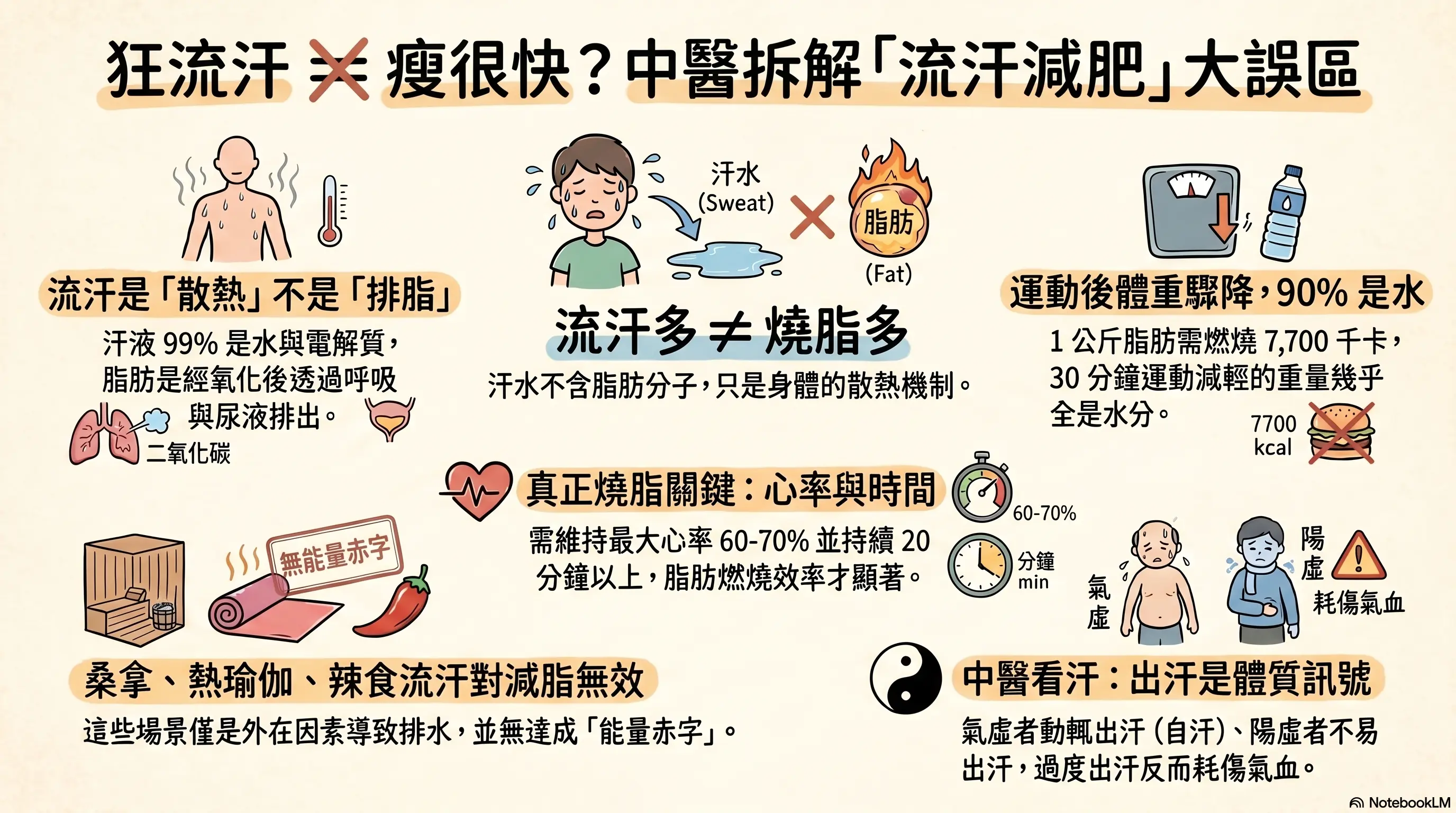 For quick reference, this image was generated by NotebookLM. Some Chinese characters may not render perfectly; we appreciate your understanding.
Medical review: Dr To Ching (CMCHK 009330 | Gynaecology, TCM aesthetics, thread-embedding weight loss, postpartum belly binding)
"After 30 minutes of running, the scale dropped by 1.5 kg — did I really lose that much?"
"After a sauna session my belly looks slimmer — did I burn fat?"
"A colleague swears hot yoga burns hundreds of calories — sweating through your clothes must mean it works, right?"
These are all variations on the same misconception: more sweat does not equal more fat burned. The 1.5 kg drop on the scale right after a run is overwhelmingly water, not fat. One kilogram of body fat holds about 7,700 kcal of energy; a half-hour workout typically burns 250 to 400 kcal — nowhere near enough to incinerate 1.5 kg of fat in 30 minutes.
This article separates sweat from water loss and from real fat oxidation, then adds a TCM view of constitutions that sweat too easily — or barely sweat at all — and lists who should not rely on heavy sweating to lose weight.
Important: If you have heart disease, uncontrolled hypertension, diabetes, kidney disease, low blood pressure, a tendency to faint, are pregnant, or are taking blood thinners or diuretics long-term, discuss exercise type and intensity with your family doctor or specialist first. Do not add high-temperature exercise (hot yoga, sauna, prolonged outdoor sun exposure) on your own.
What Sweating Actually Does: Cooling, Not Fat Removal
Sweating is a thermoregulation mechanism, not a fat-removal mechanism. When core body temperature rises (exercise, heat, spicy food, anxiety), the hypothalamus signals sweat glands to secrete; evaporation carries heat away and keeps the body in a safe range.
Sweat is mostly water (~99%) plus small amounts of electrolytes (sodium, chloride, potassium) and trace metabolites. There are no fat molecules in sweat. Fat must first be hydrolysed within fat cells, enter the bloodstream and be oxidised by muscle and other tissues before it is "burned" — eventually leaving the body as carbon dioxide (exhaled) and water (urine, sweat, breath). The popular claim that "sweating it out flushes the fat" simply does not work physiologically.
In other words: sauna, hot yoga, spicy food and anxiety sweating all just push water out — they do not burn fat.
What Is the "Instant" Weight Loss After a Run?
Stepping on the scale right after a run, you may be 1 to 2 kg lighter. That figure is mostly:
- Water (~80–90%) — lost through sweat and exhalation
- Liver and muscle glycogen (~5–15%) — every gram of glycogen is stored with about 3 to 4 g of water; using glycogen releases that water
- Fat (~1–5%) — the actual fat burned
Drink two cups of water and have a meal afterwards, and 0.5 to 1 kg comes back almost immediately. What truly reflects fat change is the long-term (weeks to months) curve of weight and waist circumference, not a single before-and-after weigh-in.
What Actually Burns Fat: Heart Rate, Time, and Caloric Deficit
Three conditions need to come together — sweating alone is not enough.
First, heart rate has to land in the fat-burning zone. As a rule of thumb, 60–70% of maximum heart rate (roughly 220 minus age) is the "fat-burning zone" — intensity at which you can talk but not sing. Too low (a leisurely walk) burns fat inefficiently; too high (sprinting) shifts fuel toward glycogen and reduces the fat fraction.
Second, the duration has to be long enough. The body uses glycogen first; only after 20 to 30 minutes does the fat-burning fraction rise meaningfully. High-temperature sweat sessions under 15 minutes mostly burn glycogen and water, with limited fat oxidation.
Third, an overall caloric deficit must exist. Even with an hour of exercise daily, if eating brings the calories straight back (a bubble tea plus a snack after a run can easily hit 800 kcal — wiping out most of the workout), body fat will not drop.
In short, more sweat from running does not equal more fat burned. What works is: enough heart rate, enough time, and an overall deficit.
Sauna, Hot Yoga, Spicy Food: A Quick Comparison
The fat-loss reality of different sweat scenarios varies hugely:
| Scenario | Immediate weight change | Real fat burned | Main risks |
|---|---|---|---|
| Running (moderate, 30 min) | 0.5–1 kg (mostly water) | ~250–400 kcal, small amount of fat | Cramps, dizziness if under-hydrated |
| Hot yoga (40 °C) | 1–2 kg (mostly water) | ~200–600 kcal depending on intensity | Risk of fainting in low-BP / cardiovascular cases; high dehydration risk |
| Sauna (10–20 min) | 0.3–1 kg (almost all water) | ≈ 0 | Cardiac strain, dehydration, low sodium |
| Spicy-food sweating | ≈ 0 | ≈ 0 | Spice triggers the nervous system — unrelated to fat burning |
| Prolonged outdoor sun exposure | 1–2 kg (mostly water) | Depends on intensity | Heat stroke, heat exhaustion, severe dehydration |
In short, sauna and spicy-food sweating do almost nothing for fat loss. Hot yoga and running burn fat in proportion to heart rate and duration, not the volume of sweat.
TCM View: Sweating Too Easily — or Not at All
In TCM, sweating itself is a body signal, and different patterns reflect different constitutions. The table below is for orientation only; actual differentiation requires a registered TCM practitioner who reviews tongue, pulse and overall symptoms.
| Sweat type | Common features | Possible TCM constitution |
|---|---|---|
| Spontaneous sweating | Sweating with the slightest movement during the day, even at rest | Qi deficiency, weak defensive qi |
| Night sweats | Sweat after falling asleep, stops on waking; with dry mouth and inner heat | Yin deficiency, deficiency-fire |
| Damp-heat exudation | Sticky, strong-smelling sweat; oily face; acne | Internal damp-heat |
| Yang deficiency / unable to sweat | Half a workout in and still no sweat; cold hands and feet | Yang deficiency, qi-and-blood deficiency |
Notably, "easy to sweat" does not equal "good metabolism" or "fast metabolism". People with qi-deficiency spontaneous sweating may sweat at the slightest movement but actually burn fat inefficiently; those who "still aren't sweating after an hour" may have yang deficiency or qi-and-blood deficiency, requiring constitutional support rather than simply more intensity.
Why You're Still Not Losing After Months of Running: 5 TCM Reasons
"Three runs a week, 5 km each, three months in — the scale and the waistline have barely budged." A familiar frustration. From a TCM perspective, the answer is usually not "you didn't run enough" but a mismatch between constitution and exercise pattern. Five common reasons.
First, qi-deficient runners pushing long distances often end up more tired and more stalled. With baseline weakness in spleen and lung qi, recovery is slower and fatigue comes faster. Pushing past 10 km without proper refuelling further depletes spleen qi — appetite goes erratic, periods become lighter, sleep gets broken. The body shifts into "survival mode" and fat loss stalls.
Second, phlegm-damp runners undo their workout with high-carb post-run meals. With baseline impairment of spleen transport, a bubble tea plus snack right after the run can wipe out most of the calories burned and aggravate phlegm-damp accumulation. Replace with a protein-and-vegetable structure with modest carbs.
Third, liver-stagnation-with-heat runners still wake up at night, feel agitated and binge-eat. Many high-stress office workers run as a release, but the body remains in a state of liver stagnation. Cortisol drops briefly during the run, then rebounds upward hours later — driving night waking and late-night binges. Exercise alone is not enough; emotional-regulation work is needed in parallel.
Fourth, yin-deficient runners under heat further deplete yin. With baseline yin deficiency, heavy sweating drains yin further — manifesting as night sweats, dry mouth, inner heat, insomnia and lighter periods. Run in cooler hours and hydrate more aggressively.
Fifth, spleen-and-kidney yang-deficient runners feel colder and see periods drift later. With baseline yang deficiency, over-exercising depletes yang further; women may see cycles lengthen, flow lighten, period pain worsen. Start with warming and tonifying, then gradually layer in mileage.
In short, "why am I not losing after months of running?" is rarely a question of running too little. It is usually a mismatch between constitution and exercise mode.
How TCM Can Help Runners Burn Fat More Effectively
Four layers in which TCM care complements running for fat loss.
First, pre-run constitutional preparation. Qi-deficient, spleen-deficient and yang-deficient readers benefit from a small carb-and-protein meal 30 minutes before running (an egg and half a banana, for example) — avoid running on an empty stomach. Yin-deficient readers should hydrate well and avoid running in afternoon heat. Phlegm-damp readers should warm up for 10 minutes or more to get qi and blood moving.
Second, in-run heart-rate and pace management. "Don't deplete qi" is the TCM principle here. Sustained running above 80% of maximum heart rate often costs more than it gives, especially for qi- or yin-deficient bodies. Start in the 60–70% (fat-burning) zone, progress around 10% per week, and tune to how the body actually feels rather than forcing a training plan.
Third, post-run recovery and refuelling. Cold drinks and cold showers right after running are particularly unkind to yang- and qi-deficient bodies — joint stiffness, cold at night and worse digestion can follow. Within 15 to 20 minutes after running, take warm water and do gentle stretches; within 30 minutes, eat warm food (eggs, soy milk, lean-meat broth). Avoid large iced drinks and cold meals.
Fourth, acupuncture and herbal medicine as adjuncts. For runners hitting a plateau, acupuncture (especially abdominal and lower-limb yang-channel points) has an adjunctive role in improving insulin resistance, regulating appetite and supporting spleen function. Herbal formulas are tailored to constitution — strengthening the spleen, soothing the liver, tonifying qi, transforming phlegm or warming yang — rather than a single "fat-burning formula". Treatment length is judged by individual response.
It bears emphasising that the TCM contribution is long-term constitutional improvement, not "two needle sessions and you'll run faster, lose more". Expectations may need adjusting if you are after short-term results.
Who Should Not Rely on Heavy Sweating to Lose Weight
These cases should not add hot yoga, sauna or prolonged outdoor sun-exposure exercise on their own; intensity and modality should be discussed with a family doctor first:
- Coronary artery disease, heart failure, arrhythmia
- Uncontrolled hypertension or recent BP swings
- Diabetes with neuropathy or unstable glucose control
- Chronic kidney disease, on diuretics
- Low blood pressure, prone to fainting or dizziness
- Pregnancy
- Adults aged 65+ (especially if living alone or unaccompanied)
- Marked qi or yin deficiency, post-illness recovery
In short, "sweating off a few kilos quickly" offers no real metabolic benefit and raises the risk of dehydration, arrhythmia and fainting.
Hydration and Electrolytes
For any sweat-heavy workout:
- 30 minutes before exercise: 300–500 ml of water
- Every 15–20 minutes during exercise: 100–200 ml
- After exercise: replace fluids based on sweat loss — about 1 to 1.5 L per kilogram of body weight lost
- Sweating continuously for over 1 hour or in hot weather: consider an electrolyte drink or lightly salted water (avoid the high sugar in commercial sports drinks if you are working on fat loss)
- Do not rely on thirst alone, especially for older adults whose thirst signal is weaker.
How Aspira TCM Clinic Supports Runners on Weight Loss
Aspira's care for runners on weight loss is not "a fat-burning formula" — it is personalised to constitution, exercise pattern and lifestyle. Dr To will work through:
- Current exercise type, frequency, intensity, heart-rate tolerance
- Pre- and post-run fatigue, dizziness, palpitations or cramps
- Sweat pattern (spontaneous, night, sticky), location, smell
- Dietary structure, late meals, caffeine intake
- Menstrual cycle (for women), sleep, stressors
- Tongue, pulse, current medications and supplements
Based on the assessment, constitution-aligned exercise advice will follow — for example, qi-deficient runners may start with shorter intervals, yin-deficient runners avoid heat, phlegm-damp runners suit moderate sustained cardio — alongside herbal or acupuncture support. Dr To combines pattern differentiation with exercise and dietary advice. Where the picture suggests an internal-medicine issue (arrhythmia, anaemia, thyroid problem), the recommendation will be to see a family doctor or specialist first.
FAQ
The scale dropped 1.5 kg after my run — was that fat?
No. One kilogram of body fat holds about 7,700 kcal; a half-hour run burns 250 to 400 kcal — far short of 1.5 kg of fat. The lost weight is mostly water and a little glycogen, and comes back quickly with food and drink. Real fat change shows up in weeks-to-months trends in weight and waist.
Can a sauna help me lose weight?
It does almost nothing for fat loss. Sauna sessions remove water that comes back when you rehydrate. Relying on the sauna long-term carries dehydration, low-sodium and cardiac risks, and is particularly unsuitable for cardiovascular conditions, older adults and low-BP patients. Enjoy the sauna for relaxation if you wish — but not as a weight-loss method.
I barely sweat when I exercise. Is my metabolism poor?
Not necessarily. Sweating depends on constitution, intensity, ambient temperature, clothing and hydration. From a TCM angle, "still no sweat after a long workout" can reflect yang deficiency, qi-and-blood deficiency or weak defensive qi — a registered TCM practitioner should look at tongue, pulse and overall symptoms rather than sweat volume alone. Bring related symptoms (cold sensitivity, easy fatigue, light periods) for assessment.
Does hot yoga really "detoxify"?
"Detox" is not a clinical concept. The body's actual detoxification is done mainly by the liver and kidneys — sweat plays a minor role. The real benefits of hot yoga are muscle relaxation and improved flexibility, with some research suggesting mood benefits. Any fat-loss effect comes from the work done, not the sweat itself. Low-BP, cardiovascular and pregnant patients should not attend.
Will a cold shower right after exercise affect fat loss?
A cold shower does not directly "lock in fat", but cold exposure right after exercise can swing heart rate and shift muscle blood flow — not ideal for cardiovascularly unstable patients. Generally, rest 10 to 15 minutes for the heart rate to settle, then shower with warm water.
Disclaimer: This article is for general health education only and does not replace individual diagnosis, investigation, medication or treatment. If you have cardiovascular, kidney, diabetic or endocrine disease, follow your doctor's instructions for follow-up; any change in exercise intensity should be discussed with your treating doctor first.
Disclaimer: This article is for health education and reference purposes only and does not constitute medical advice, diagnosis, or treatment. Each patient's condition is unique and treatment outcomes vary. Please consult a registered TCM practitioner or qualified healthcare professional for health concerns.
Want to learn more? WhatsApp us for a free consultation
Book via WhatsAppExplore our full range of treatments: Traditional TCM Services
Related Articles
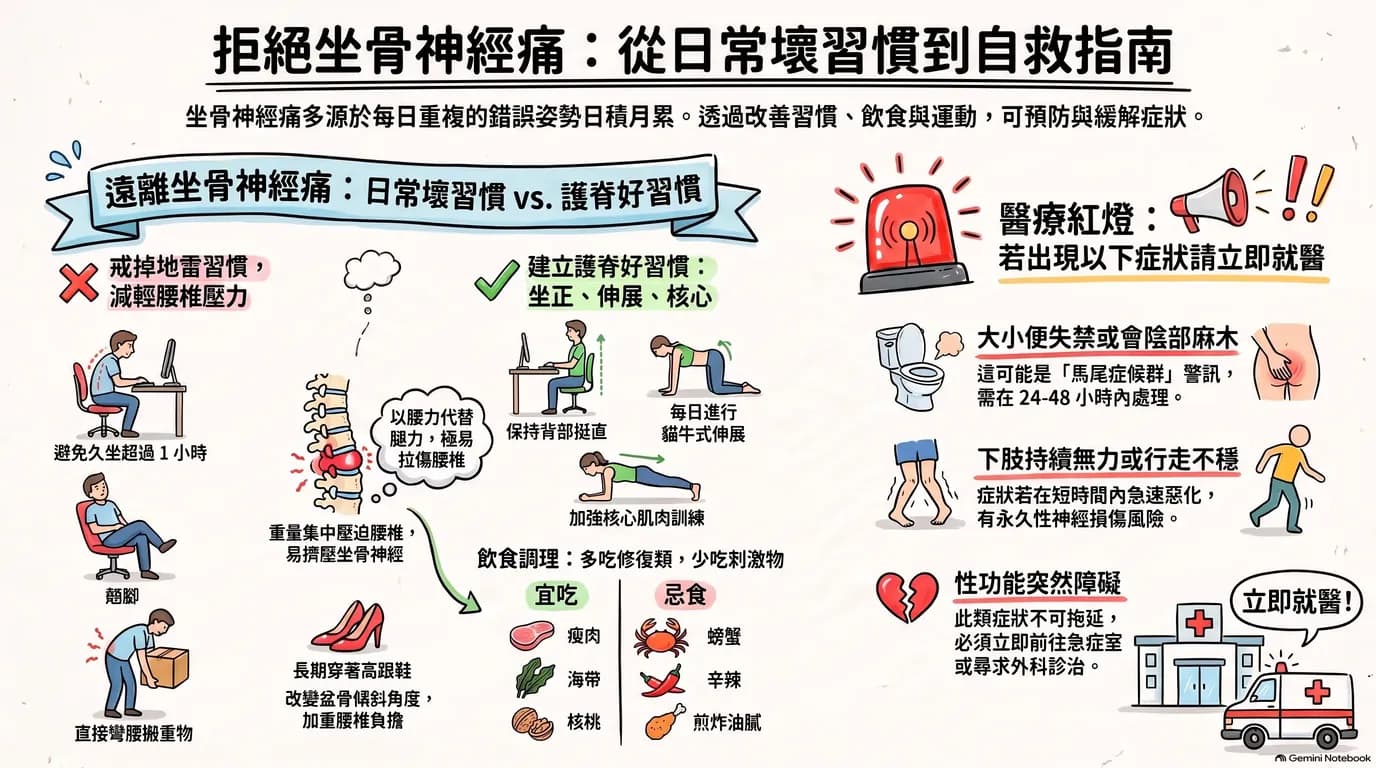
Sciatica Prevention: Bad Habits, Diet and Daily Care Tips
Sciatica isn't only about treatment — your daily habits and diet play a big role too. In this article, Dr Wong explains which everyday habits increase your risk of sciatica, which foods may help ease it, and simple daily habits that reduce the chance of it coming back.
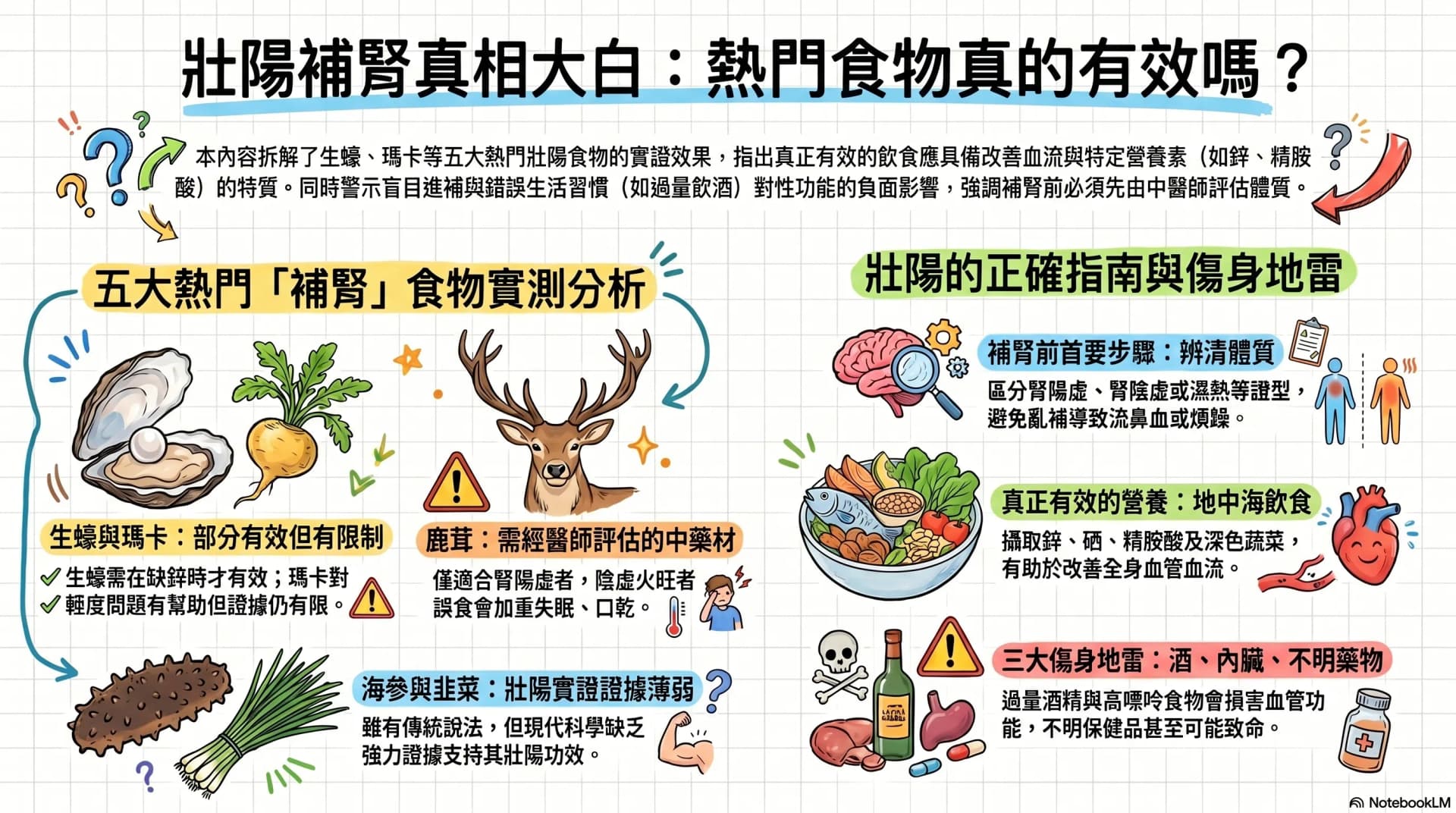
Do Oysters, Maca and Deer Antler Boost Male Vitality? 5 Myths
Do aphrodisiac foods actually work? This article opens with a rating table (effective / partly effective / effective within a TCM framework / weak evidence / no strong evidence), reviews the Chinese and Western medical evidence behind oysters, maca, deer antler, sea cucumber and Chinese chives, distils the 3 shared traits of foods that genuinely support male sexual function, and flags 3 commonly eaten items that can actually harm performance.
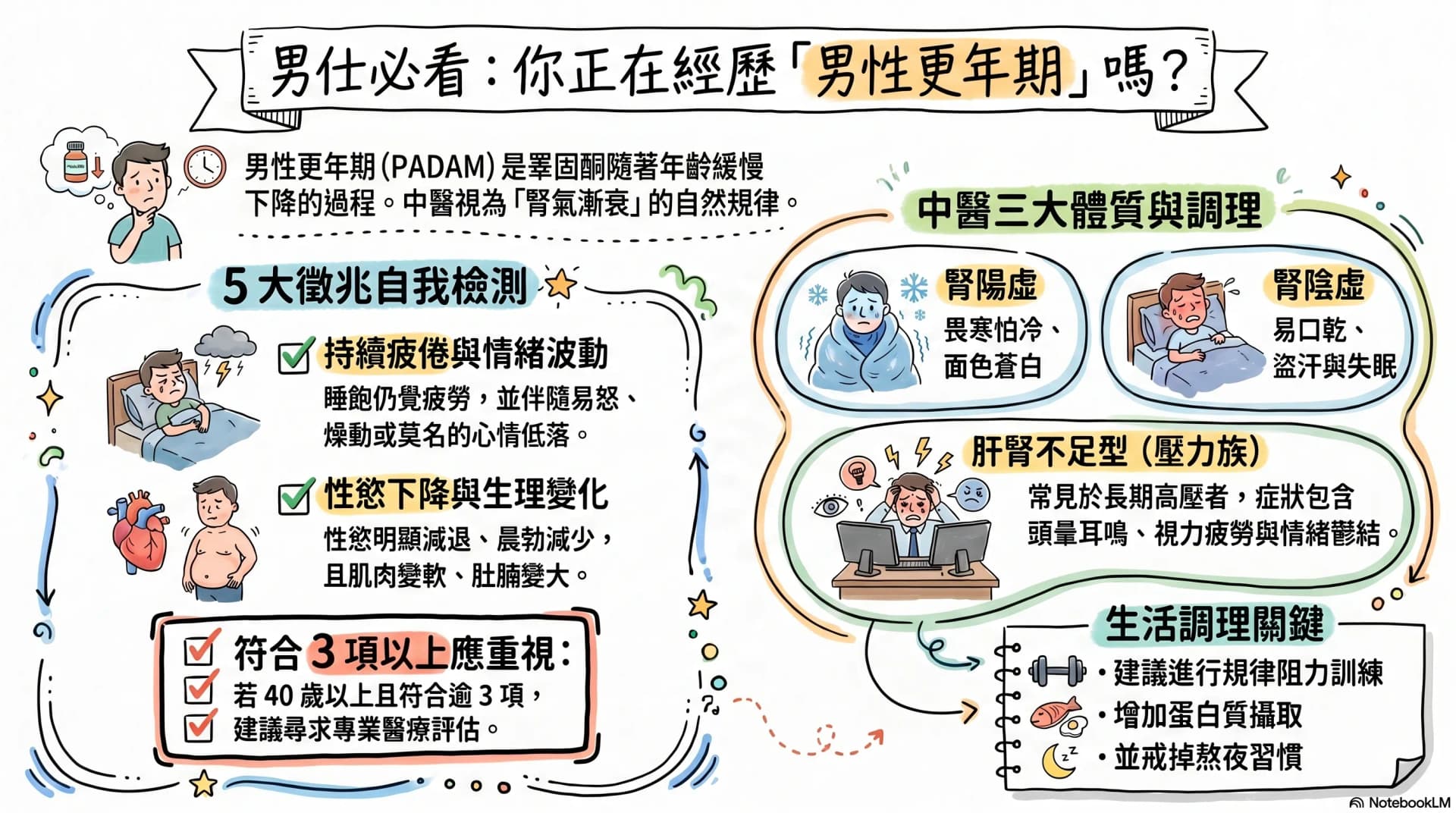
Male Menopause Through the TCM Lens: 5 Signs in Men Over 40
Unexplained fatigue, irritability, lower libido, poorer sleep and a growing belly after 40 are not just ageing or work stress — they may be male menopause. This article begins with a five-sign self-check, sets out three TCM patterns (kidney-yang deficiency, kidney-yin deficiency, liver-and-kidney insufficiency) with matching improvements, and compares the two treatment routes — testosterone replacement therapy versus TCM constitutional care.