Heavier When Busy, Heavier When Off? A TCM Look at Stress-Induced Obesity and How to Approach It
You count calories, you exercise — yet you put on weight when work gets busy, and put on more during the holiday. The needle moves one or two kilos at a time, and the belly shows it most. This article looks at stress-induced obesity through a TCM lens — cortisol, liver-qi stagnation and spleen-deficiency damp — and outlines when to see a Western doctor first and where TCM care can begin.
Medical review: Dr. Chan Wing Kiu, Joanne,Registered Chinese Medicine Practitioner #009463
1-Minute Quick Answer
Stress-induced obesity is not a matter of weak willpower. Under long-term stress, cortisol and neuropeptide Y together raise appetite and suppress brown-fat burning, so energy is stored as white fat around the abdomen. TCM reads it as liver-qi stagnation, spleen-deficiency damp or liver-spleen disharmony. "Stress-induced obesity" is an explanatory direction, not a reason to skip ruling out other disease — rapid weight change, ongoing irregular periods or a binge cycle need Western review first. Reviewed by Dr Chan Wing Kiu (CMCHK 009463).
Heavier When Busy, Heavier When Off? A TCM Look at Stress-Induced Obesity and How to Approach It
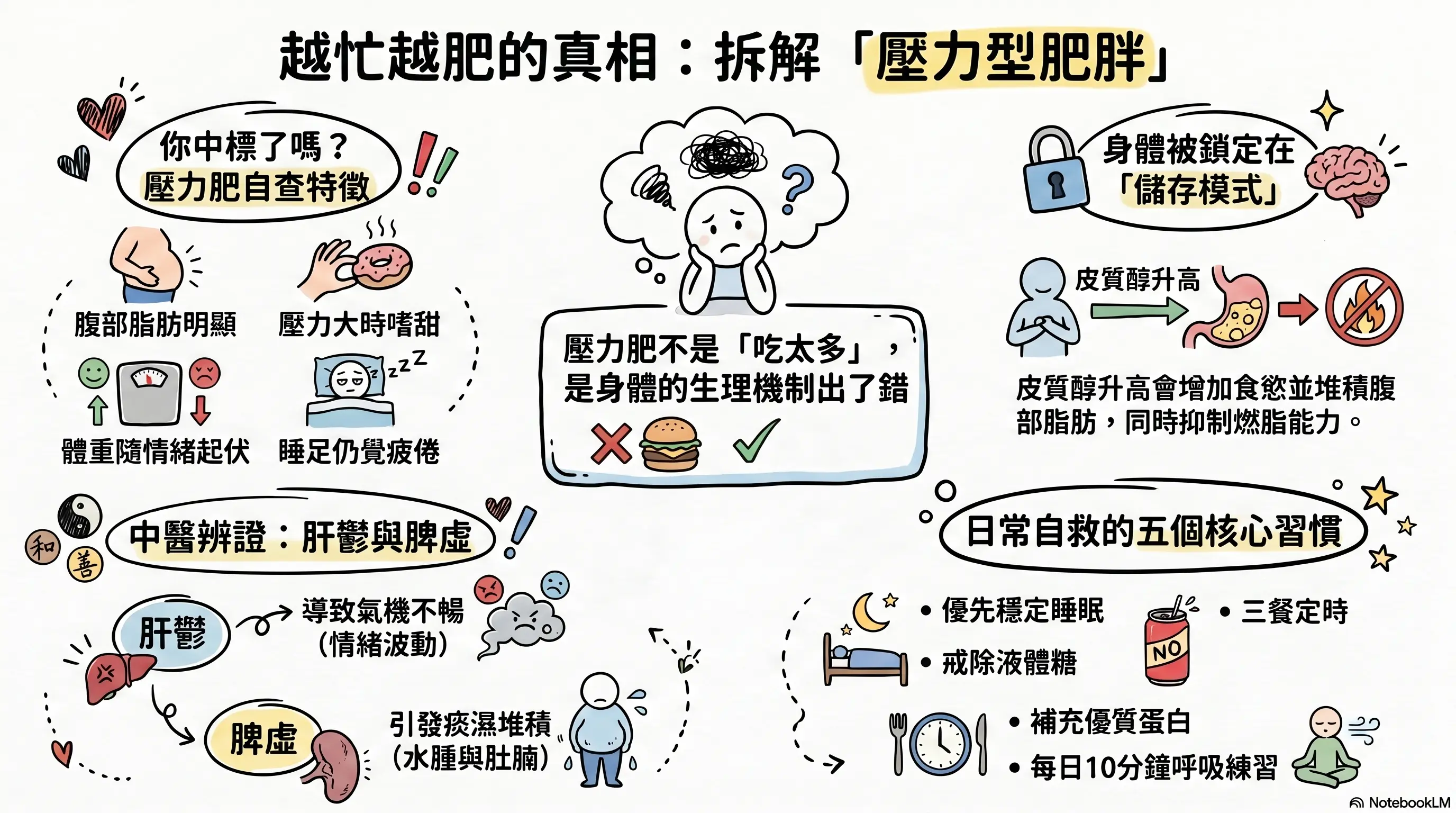 For quick reference, this image was generated by NotebookLM. Some Chinese characters may not render perfectly; we appreciate your understanding.
Medical review: Dr Chan Wing Kiu (CMCHK 009463 | Internal and external medicine, gynaecology, emotional wellbeing, elderly care)
"I don't eat that much, I exercise — but the busier work gets, the heavier I get; and when I take a break to lose a little, I end up overeating and gaining more." This is the version we hear at Aspira TCM Clinic every week.
If your weight bounces by one or two kilos at a time, your belly leads the gain, your appetite for sweet, oily and salty-crunchy food peaks under pressure, and the holiday turns into a binge — calorie counting alone won't explain the curve. Stress-induced obesity engages five lines at once: the endocrine line (cortisol), the nervous system, appetite regulation, sleep and emotion. In TCM terms, the corresponding patterns are liver-qi stagnation, spleen-deficiency damp, and liver-spleen disharmony.
This article walks through the mechanisms in TCM terms, explains when to see a Western doctor first to rule out other causes, and where care can begin.
Note: This article is written as general adult health education. If you already have a diagnosis of thyroid disease, polycystic ovary syndrome, diabetes, an eating disorder or depression, please follow your prescribing doctor's advice.
Self-check: Is It Stress-Induced Obesity?
The more of these features apply, the more likely the picture is stress-induced (this is a self-check, not a diagnostic criterion):
- The busier work gets, the more weight you put on; one or two days off and you overeat
- Weight oscillates by one to two kilos, and abdominal fat is prominent
- Under pressure, appetite tilts toward "sweet, oily, salty-crunchy"
- A "want to eat without being hungry" urge appears in mid-afternoon (3-5 pm) or late at night
- Poor sleep: difficulty falling asleep, night waking or early-morning waking
- Menstrual irregularity or marked premenstrual oedema (in women)
- Even a full seven hours of sleep does not feel restorative
- A recurring sense of "I can lose weight, I just can't keep it up"
This is not a matter of "weak willpower"; the body is going through a cascade of physiological changes under stress. To address it well, the mechanism has to come first.
A Western View: How Stress Drives Weight Gain
| Mechanism | Effect on weight |
|---|---|
| Elevated cortisol | Increases appetite (especially for sugar and fat); promotes abdominal fat |
| Neuropeptide Y (NPY) | Further boosts appetite; favours high-energy food; abdominal storage |
| Reduced brown-fat activity | The body stores energy as white fat rather than burning it |
| Insulin resistance | More fat storage at the same intake; greater glucose swings |
| Leptin resistance | Reduced satiety signal; easier to overeat |
| Ghrelin dysregulation | Hunger cues are inaccurate — wanting food without being hungry |
| Sleep deprivation | Imbalance of appetite hormones; next-day craving for high-energy food |
| Dopamine seeking | Sweet or oily food becomes the stress-relief route, building a food-emotion loop |
In short, stress shifts the body into "storage mode": cortisol and NPY together push appetite up while brown-fat burning capacity falls, so energy ends up stored as white fat in the abdomen. Even when reason says no, physiology says eat.
A TCM View: Liver-Qi Stagnation, Spleen-Deficiency Damp, and Liver-Spleen Disharmony
In TCM, the picture concentrates on two systems — the liver and the spleen. Patient education from China Medical University Hospital notes that "qi stagnation in the liver and spleen is the core pathomechanism of metabolic syndrome" — when qi does not flow freely, food and fluid are not transformed properly and accumulate as phlegm-turbidity, which over time generates heat (China Medical University Hospital, patient leaflet). Three clinical patterns are common.
1. Liver-qi stagnation
Long-term work pressure with unprocessed emotion blocks the flow of qi. Common features: tight chest, frequent sighing, breast and abdominal distension before menstruation, headaches, swinging appetite, vivid dreams and broken sleep.
Effect on weight: slowed fluid and fat metabolism, sometimes producing an asymmetric "puffy face and belly with thinner legs" shape.
2. Spleen-deficiency damp
Years of high-sugar, high-fat eating, frequent cold drinks and little exercise weaken the spleen-stomach's transformation function; fluids stagnate as phlegm-damp. Common features: prominent abdominal fat, soft or sticky stools, thick white tongue coating, fatigue, heavy legs.
Effect on weight: weight rises despite modest intake, mainly in the abdomen and lower limbs.
3. Liver-spleen disharmony
Liver-qi stagnation and spleen deficiency coexist and feed one another. Common features: a rush of appetite under pressure followed by indigestion; strong premenstrual mood swings followed by post-menstrual fatigue.
Effect on weight: visible up-and-down, tied to mood and the menstrual cycle.
Which Pattern Are You Closer To?
The table below offers an initial sort; pattern differentiation must still be carried out by a registered TCM practitioner using tongue and pulse:
| Main feature | Liver-qi stagnation | Spleen-deficiency damp | Liver-spleen disharmony |
|---|---|---|---|
| Weight change | Visible up-and-down, tied to mood | Slow rise, hard to lose | Both up-and-down and rising |
| Appetite | Swings between high and low | Modest but still gaining | Binges under stress, then off-food |
| Body shape | Puffy face and belly, thinner legs | Generally rounded, prominent belly | Mixed |
| Sleep | Difficulty falling asleep, vivid dreams | Early waking, easily tired | Generally poor |
| Stools | Alternating constipation and loose | Soft, incomplete | Unstable |
| Menstruation | Premenstrual breast and abdominal fullness, painful periods | Light flow, late cycle | Mixed |
| Mood | Restless, irritable, sighing | Sluggish, lacking drive | Marked swings |
In other words, "stress-induced obesity" is not one constitution. Different people may need different directions of care.
When to See a Western Doctor First
TCM does not replace baseline endocrine and metabolic testing. The following call for a Western review first:
- Unexplained weight change of more than 5 kg in three months
- Two to three months of irregular periods or amenorrhoea
- Severe fatigue lasting more than a month and not relieved by rest
- Excessive thirst, urination and hunger with rapid weight loss — possible diabetes
- Heat intolerance, fast pulse, tremor, rapid weight loss — possible hyperthyroidism
- Cold intolerance, constipation, drowsiness, rapid weight gain — possible hypothyroidism
- A serious binge / purge / restrict cycle — eating disorder assessment first
- Persistent low mood, loss of interest, extreme changes in sleep and appetite — depression assessment
The point is simple: "stress-induced obesity" is an explanatory direction, not a reason to skip ruling out other diseases.
TCM Care: A Phased Plan
Phase 1: Steady sleep and appetite rhythm (weeks 1 to 4)
The aim of this phase is not "lose X kilos" but to settle the physiological baseline:
- Herbal direction: soothing the liver and regulating qi, strengthening the spleen and resolving damp, adjusted by pattern (specific formulas decided by the practitioner; not listed here)
- Acupuncture direction: points such as Taichong, Neiguan, Zusanli, Sanyinjiao
- Pace: weekly
- Daily habits: a fixed wake time even at weekends; naps capped at 30 minutes; in bed before 11 pm
Phase 2: Adjust eating and emotion (weeks 5 to 10)
- Herbal direction: refined based on response in phase 1
- Acupuncture direction: adding points such as Fenglong (resolving phlegm) and Yinlingquan (strengthening the spleen and draining damp), as appropriate
- Pace: every two weeks
- Daily habits: a sustainable eating structure (protein, fibre, healthy fat); emotional management (breathing practice, exercise, social contact, counselling where needed)
Phase 3: Consolidation and long-term maintenance (week 11 onward)
- Herbal direction: focused on consolidating spleen and qi-blood, adjusted as needed
- Acupuncture direction: fine-tuned to overall state
- Pace: once or twice a month
- Daily habits: continued attention to appetite, sleep and weight changes during peak-stress periods, with early adjustment
Daily Steps You Can Start Now
Whether or not you book a TCM consultation, these steps are reasonable starting points:
- Sleep first: 7 to 8 hours, with consistent bed and wake times
- Cut liquid sugar: hand-shaken drinks, sweetened coffee, juice and energy drinks first
- Eat on rhythm: three meals at consistent times, do not skip any meal (long fasts push cortisol and inter-meal cravings up); avoid prolonged emptiness; no late-night eating
- Steady protein: egg, meat, fish or pulses at every meal to anchor blood sugar and satiety
- Exercise: built around what you can keep up — three to four sessions of moderate aerobic plus strength training a week
- Process emotion: ten minutes of breathing or a walk daily; food should not be the only release
- Don't weigh daily: pick one morning a week and watch the trend rather than a single number
How Aspira TCM Clinic Approaches the Assessment
For a patient who suspects stress-induced obesity, the first visit asks for:
- A 1- to 2-week food diary (including hand-shaken drinks, alcohol, late-night snacks)
- A month of sleep logs
- A menstrual record (women)
- Recent fasting glucose, HbA1c, thyroid function, liver function and lipid reports (if available)
- The current medication and supplement list
- A description of the work pattern (hours, shift work, frequency of overtime)
Dr Chan identifies whether the pattern is closer to liver-qi stagnation, spleen-deficiency damp or liver-spleen disharmony, and adjusts dietary structure from a nutrition standpoint, recommending a referral for baseline Western testing where appropriate. The programme is not built on "guaranteed kilo loss"; it is built on settling the physiological baseline and improving stress-related appetite and sleep.
FAQ
Is "stress-induced obesity" a formal diagnosis?
No. It is a practical descriptive term for the weight-gain pattern produced by long-term stress, including cortisol elevation, poor sleep and emotional eating. If you have severe fatigue, irregular periods or a binge cycle, a Western review should rule out other causes first.
I do not eat much but I still gain weight. Does that mean my metabolism is broken?
Not necessarily. It may reflect spleen-deficiency damp slowing fluid metabolism, or it may relate to sleep loss, hormonal imbalance or hypothyroidism. Baseline blood tests should come first, followed by a decision on where TCM can help.
Can acupuncture help with stress-induced obesity?
Acupuncture can be a useful adjunct for appetite, sleep and mood, but it is not a stand-alone weight-loss tool. In practice, acupuncture combined with herbs, diet and exercise is usually more stable than any single therapy. Be cautious about any promise to lose a fixed amount of weight in a set number of sessions.
Can I see a TCM practitioner while taking antidepressants?
Yes, but both the prescribing doctor and the TCM practitioner must know about the medication. Some antidepressants affect weight in their own right, and any adjustment must be made by the prescribing doctor. TCM should never advise stopping or reducing them on your own.
Is menstrual irregularity related to stress-induced obesity?
It can be. Long-term stress can affect the hypothalamic-pituitary-ovarian axis, leading to irregular cycles and ovulation problems, and it may coexist with polycystic ovary syndrome. If periods are irregular for two to three months, a gynaecology and TCM review is advisable.
I have tried many weight-loss methods and failed. Is there another way?
Yes. Many weight-loss attempts fail not because the person is not trying, but because the method is hard to sustain. Stress-induced obesity usually needs body and mind to be addressed together. In practice, working on sleep, emotion and dietary structure often helps more than chasing a dramatic short-term target.
Disclaimer: This article is for general health education only and does not replace individual diagnosis, examination or treatment. If diabetes, thyroid disease, polycystic ovary syndrome, an eating disorder or depression has already been diagnosed, please follow your prescribing doctor's advice; any change in medication must first be discussed with your prescribing doctor.
Disclaimer: This article is for health education and reference purposes only and does not constitute medical advice, diagnosis, or treatment. Each patient's condition is unique and treatment outcomes vary. Please consult a registered TCM practitioner or qualified healthcare professional for health concerns.
Want to learn more? WhatsApp us for a free consultation
Book via WhatsAppExplore our full range of treatments: Traditional TCM Services
Related Articles
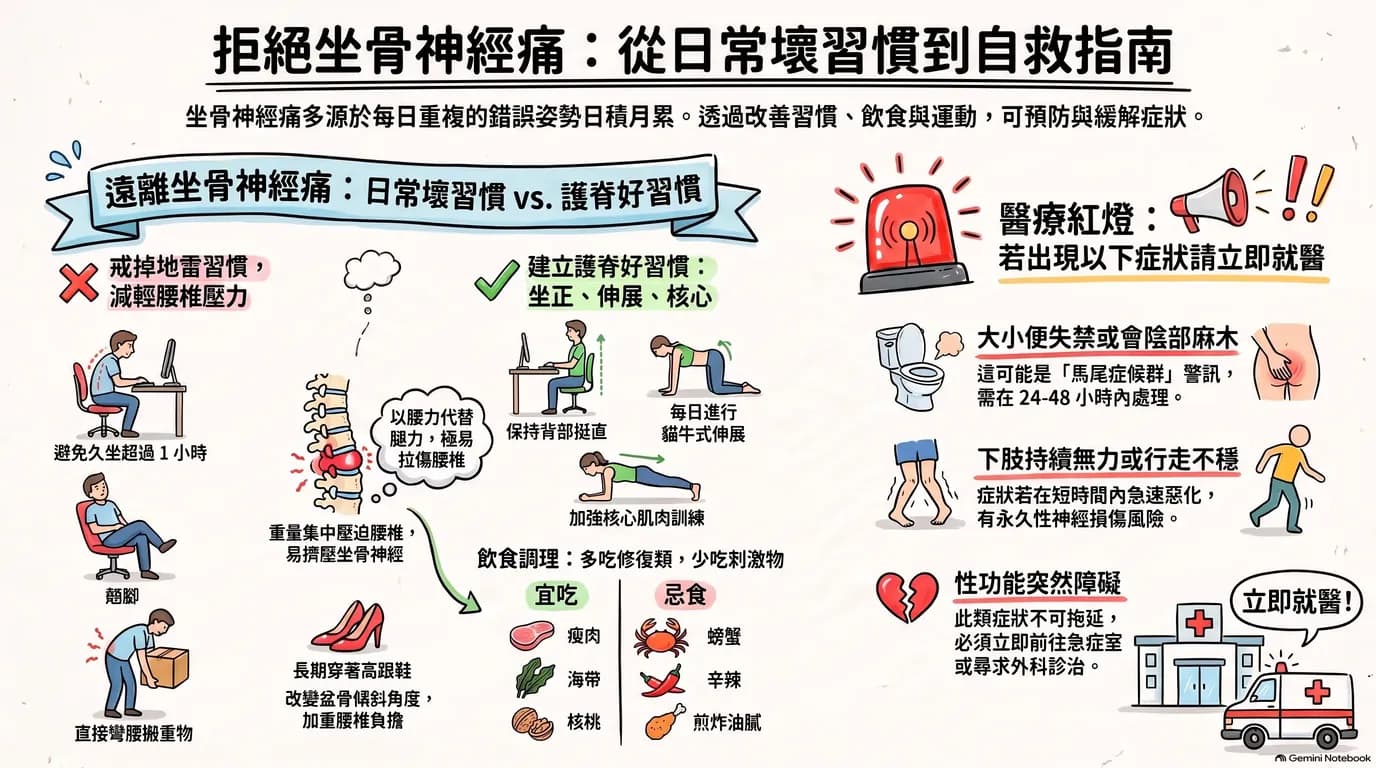
Sciatica Prevention: Bad Habits, Diet and Daily Care Tips
Sciatica isn't only about treatment — your daily habits and diet play a big role too. In this article, Dr Wong explains which everyday habits increase your risk of sciatica, which foods may help ease it, and simple daily habits that reduce the chance of it coming back.
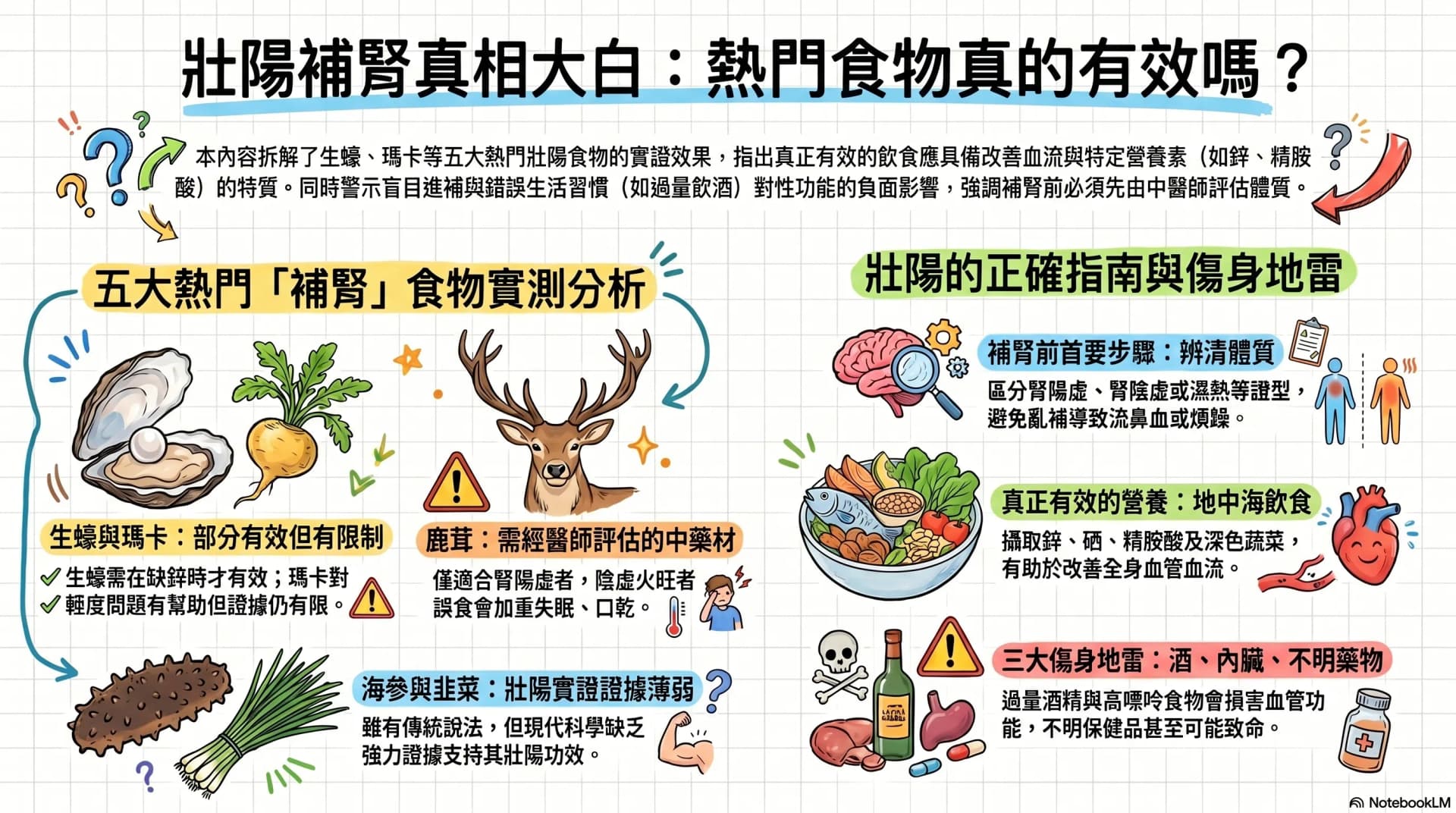
Do Oysters, Maca and Deer Antler Boost Male Vitality? 5 Myths
Do aphrodisiac foods actually work? This article opens with a rating table (effective / partly effective / effective within a TCM framework / weak evidence / no strong evidence), reviews the Chinese and Western medical evidence behind oysters, maca, deer antler, sea cucumber and Chinese chives, distils the 3 shared traits of foods that genuinely support male sexual function, and flags 3 commonly eaten items that can actually harm performance.
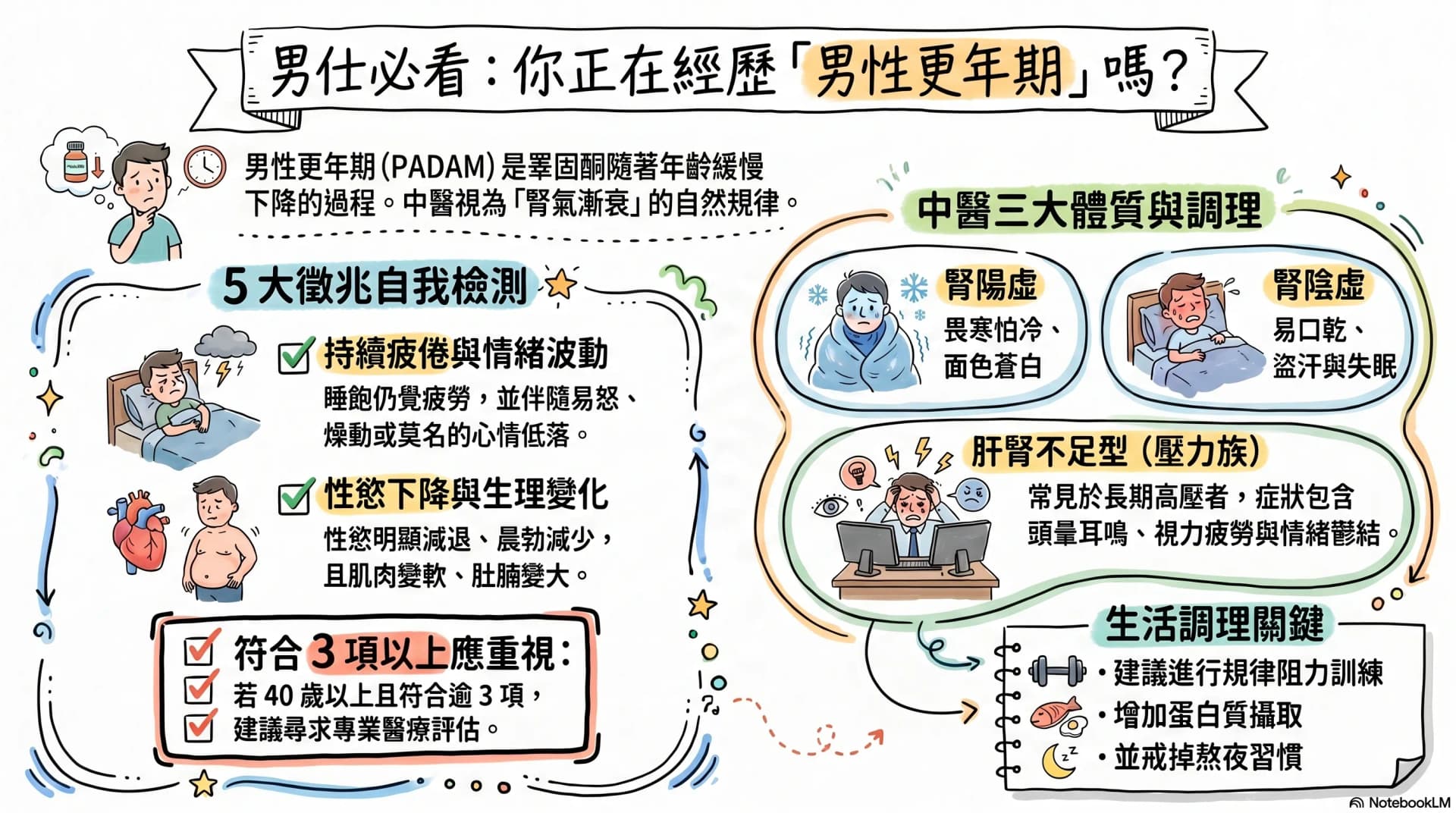
Male Menopause Through the TCM Lens: 5 Signs in Men Over 40
Unexplained fatigue, irritability, lower libido, poorer sleep and a growing belly after 40 are not just ageing or work stress — they may be male menopause. This article begins with a five-sign self-check, sets out three TCM patterns (kidney-yang deficiency, kidney-yin deficiency, liver-and-kidney insufficiency) with matching improvements, and compares the two treatment routes — testosterone replacement therapy versus TCM constitutional care.