Two Months of Coughing, Relief in Three Sessions — Mr Chan's Story
A male office worker in his 40s suffered from persistent coughing for over two months with no improvement from Western medication. After three sessions of herbal medicine prescribed by Dr Tai, his cough significantly improved and he regained normal work and sleep.
Medical review: Dr. Tai Wai Ho, Samson,Registered Chinese Medicine Practitioner #008702
1-Minute Quick Answer
Mr Chan, an office worker in his 40s, suffered persistent cough for 2 months despite Western medication. After Dr Tai (CMCHK 008702) at Aspira TCM Lai Chi Kok prescribed pattern-based herbal medicine, his cough cleared in just 3 sessions. This article documents the full case.
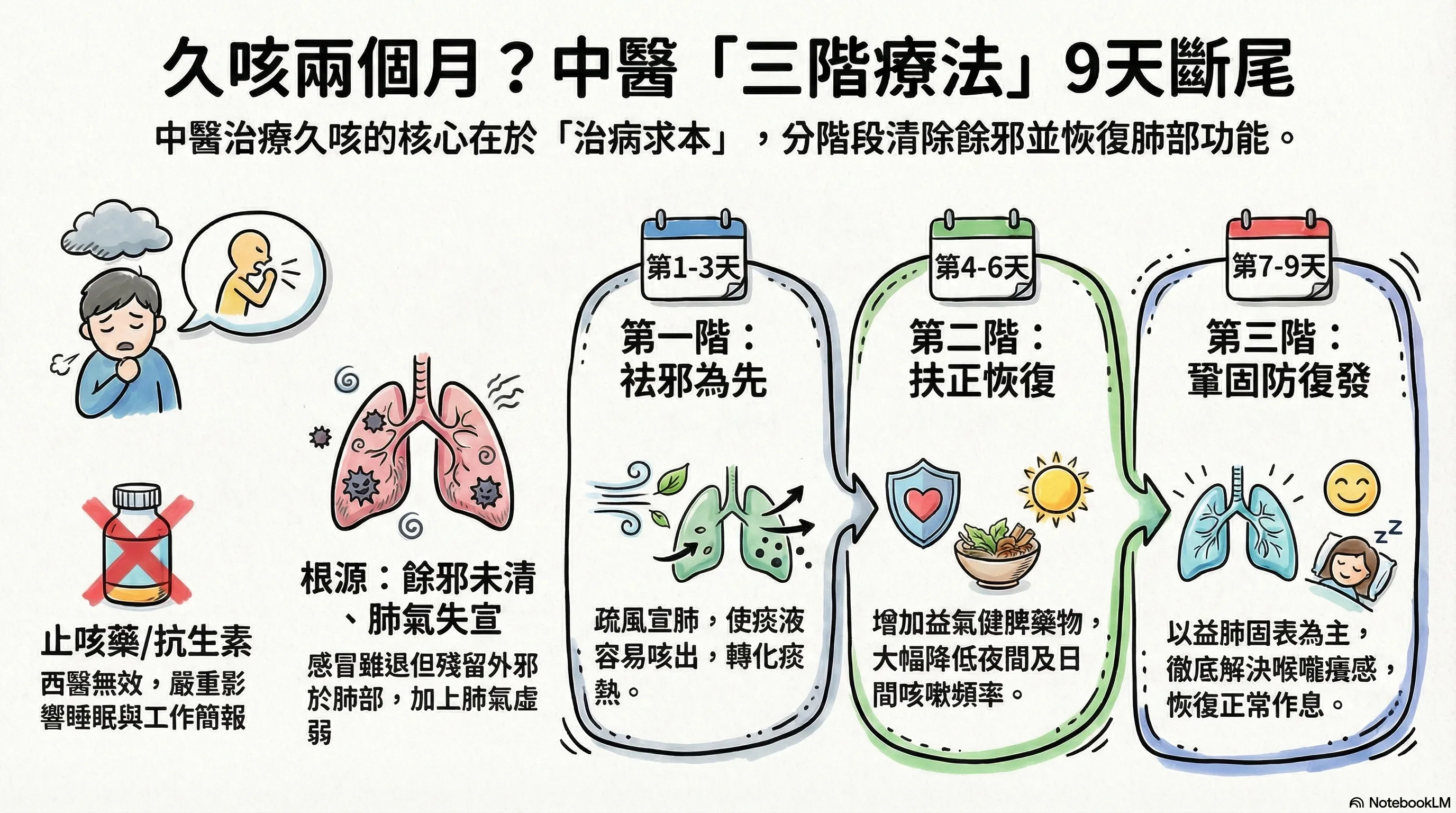 To help readers quickly grasp the content, this image was generated by NotebookLM. Some Chinese characters may not render correctly.
Two Months of Coughing That Disrupted Work and Sleep
Mr Chan (pseudonym) is an office worker in his 40s with a demanding schedule of meetings and presentations. Over two months ago, he caught a cold. While the fever and runny nose subsided, the cough simply would not go away.
At first, he assumed it was just the tail end of the cold and would clear up in a few days. But a week passed, and instead of improving, the cough grew worse. He could not suppress it during office meetings, and at night, lying down only made it more intense, severely disrupting his sleep.
He visited a Western doctor twice, taking cough suppressants and antibiotics. The symptoms eased briefly but kept returning. A chest X-ray showed nothing abnormal. His doctor suggested it might be airway sensitivity and prescribed an inhaler. After two weeks, the results remained limited.
Over two months, Mr Chan tried every over-the-counter remedy he could find — cough syrups, throat lozenges, loquat syrup — but the cough persisted. Colleagues grew concerned, and he himself felt exhausted and frustrated.
Why Does a Cough Linger After a Cold?
Many people consider a cough a minor ailment that medication should quickly resolve. From a Traditional Chinese Medicine (TCM) perspective, however, a lingering post-cold cough often has deeper underlying causes.
During the initial consultation, Dr Tai conducted a thorough assessment including pulse diagnosis and tongue examination. He explained that Mr Chan's condition was a case of "residual pathogenic factors after external invasion with impaired lung qi dispersal." In simpler terms, while most of the cold pathogen had been cleared, traces remained in the lungs. Compounded by lung qi weakened from the prolonged illness, the lungs could no longer properly regulate respiratory function, resulting in the persistent cough.
Tongue diagnosis revealed a pale-red tongue with a thin, slightly greasy white coating. The pulse was slightly floating on the left and wiry on the right — indicators of lung qi deficiency with internal phlegm-dampness.
Treatment Plan: Three Sessions of Herbal Medicine
Based on the differential diagnosis, Dr Tai formulated a treatment plan centred on ventilating the lungs, resolving phlegm, tonifying qi, and stopping the cough.
Session 1 (Days 1-3): Expelling Residual Pathogens
The initial prescription focused on dispersing wind, ventilating the lungs, and resolving phlegm. Dr Tai selected a targeted herbal formula based on Mr Chan's constitution, to be taken once daily for three days.
By day two, Mr Chan reported that while the cough frequency was similar, phlegm was much easier to expectorate, and its colour had changed from yellowish to white. Dr Tai explained this was a positive sign — the phlegm-heat in the lungs was clearing.
Session 2 (Days 4-6): Adjusting the Formula
At the follow-up, Mr Chan reported that his night-time coughing had significantly decreased. He could sleep until the middle of the night before being woken by coughing, a marked improvement from coughing as soon as he lay down. Daytime coughing was also much less frequent.
Dr Tai adjusted the prescription, reducing the pathogen-expelling herbs and increasing qi-tonifying and spleen-strengthening components to help the body restore its vital energy. Another three days of medication followed.
Session 3 (Days 7-9): Consolidating Results
By the third visit, Mr Chan appeared visibly better. He reported sleeping through the entire night without coughing and experiencing only occasional mild throat itchiness during the day.
Dr Tai made a final adjustment, focusing on tonifying lung qi and strengthening the body's defensive exterior to prevent recurrence.
Treatment Outcome
After three sessions — nine days of herbal medicine — the cough that had plagued Mr Chan for over two months was essentially resolved. A follow-up phone call one month later confirmed no recurrence, with normal work and sleep fully restored.
Dr Tai's Commentary
Lingering coughs after colds are one of the most common issues we see in clinic. Many patients rely on cough suppressants to mask the symptoms, but without addressing the root cause, the cough tends to recur.
The TCM approach to treating chronic cough follows the principle of "treating the root cause." We do not simply suppress the cough — we identify its origin. Is it residual pathogenic factors? Lung qi deficiency? Internal phlegm-dampness? Only by accurately differentiating the cause can we prescribe an effective solution.
Mr Chan's case is quite typical: residual pathogens after a cold compounded by constitutional lung qi deficiency. Through a phased approach — first expelling pathogens, then restoring vital energy, and finally consolidating results — we saw clear improvement within three sessions.
Our clinic offers a "visible improvement within three herbal medicine sessions" promise for cough treatment. If there is no noticeable improvement after three sessions, the medicine fee can be refunded. This is not a marketing gimmick — it reflects our confidence in TCM's effectiveness for treating coughs.
— Dr Tai Wai-ho | Registered Chinese Medicine Practitioner (Reg. No.: 008702)
Experiencing a Similar Problem? Book a Consultation
If you are also struggling with a persistent cough or a cough that will not go away after a cold, you are welcome to book a consultation with Dr Tai.
How to book:
- WhatsApp: Book here
- Phone: 2110 9337
- Address: Unit 2706, Saxon Tower, 7 Cheung Shun Street, Lai Chi Kok
Further reading: Complete TCM Guide to Cough Treatment →
Disclaimer: Every patient's constitution and condition are different, and treatment outcomes vary accordingly. The above case is for reference only. Please consult a practitioner for a treatment plan tailored to your specific situation. Prescription details are shared for TCM academic purposes only and do not constitute prescribing advice. Do not self-prescribe.
Disclaimer: This article is for health education and reference purposes only and does not constitute medical advice, diagnosis, or treatment. Each patient's condition is unique and treatment outcomes vary. Please consult a registered TCM practitioner or qualified healthcare professional for health concerns.
Want to learn more? WhatsApp us for a free consultation
Book via WhatsAppExplore our full range of treatments: Traditional TCM Services
Related Articles
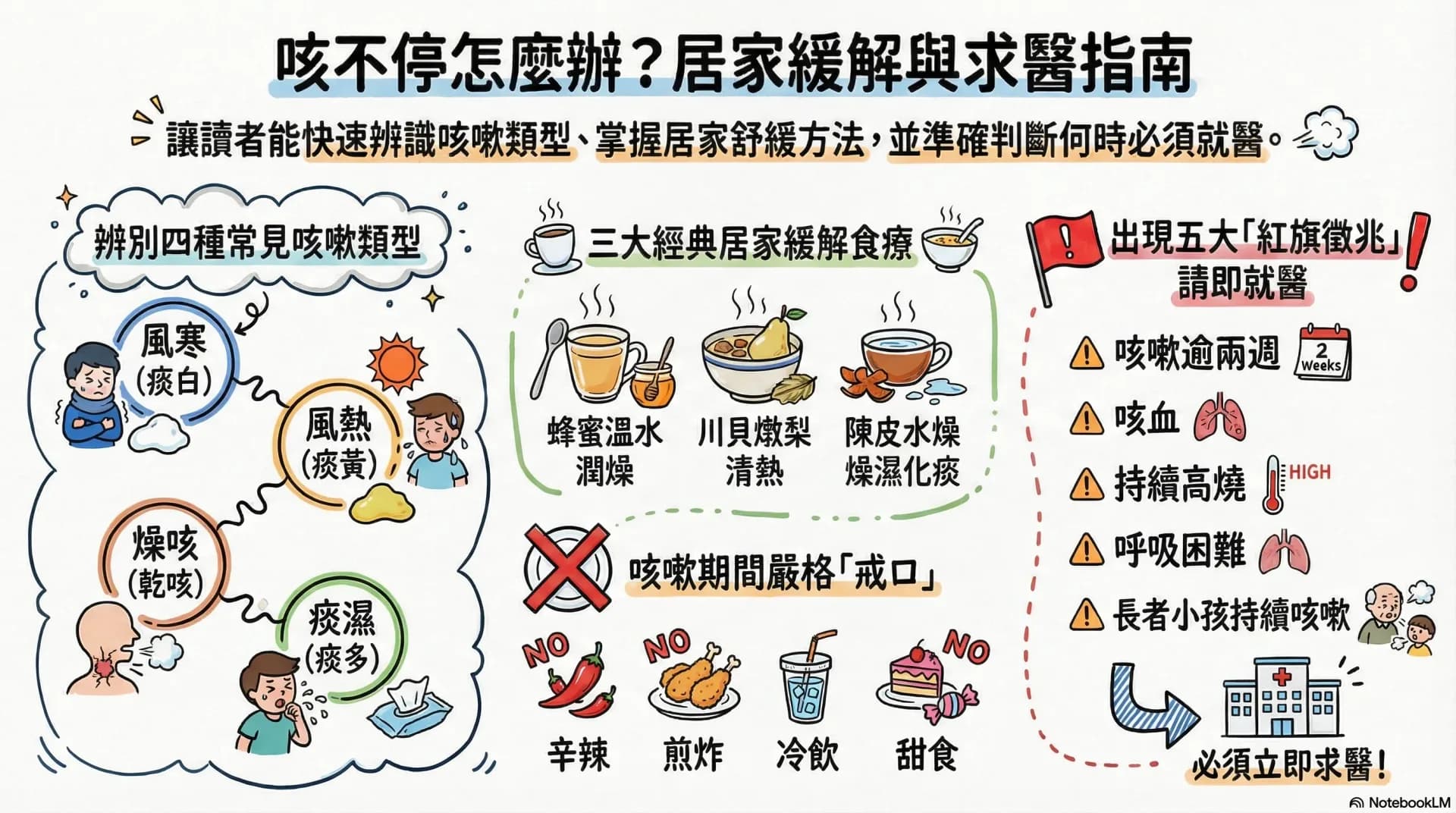
Cough That Won't Go Away? 6 Home Remedies + When to See a Doctor
Coughing is one of the most common reasons for seeking medical attention in Hong Kong — but not every cough requires an immediate doctor visit. This article shares 6 home remedies from a TCM perspective and helps you identify the "red flag" signs that mean you should see a doctor promptly.
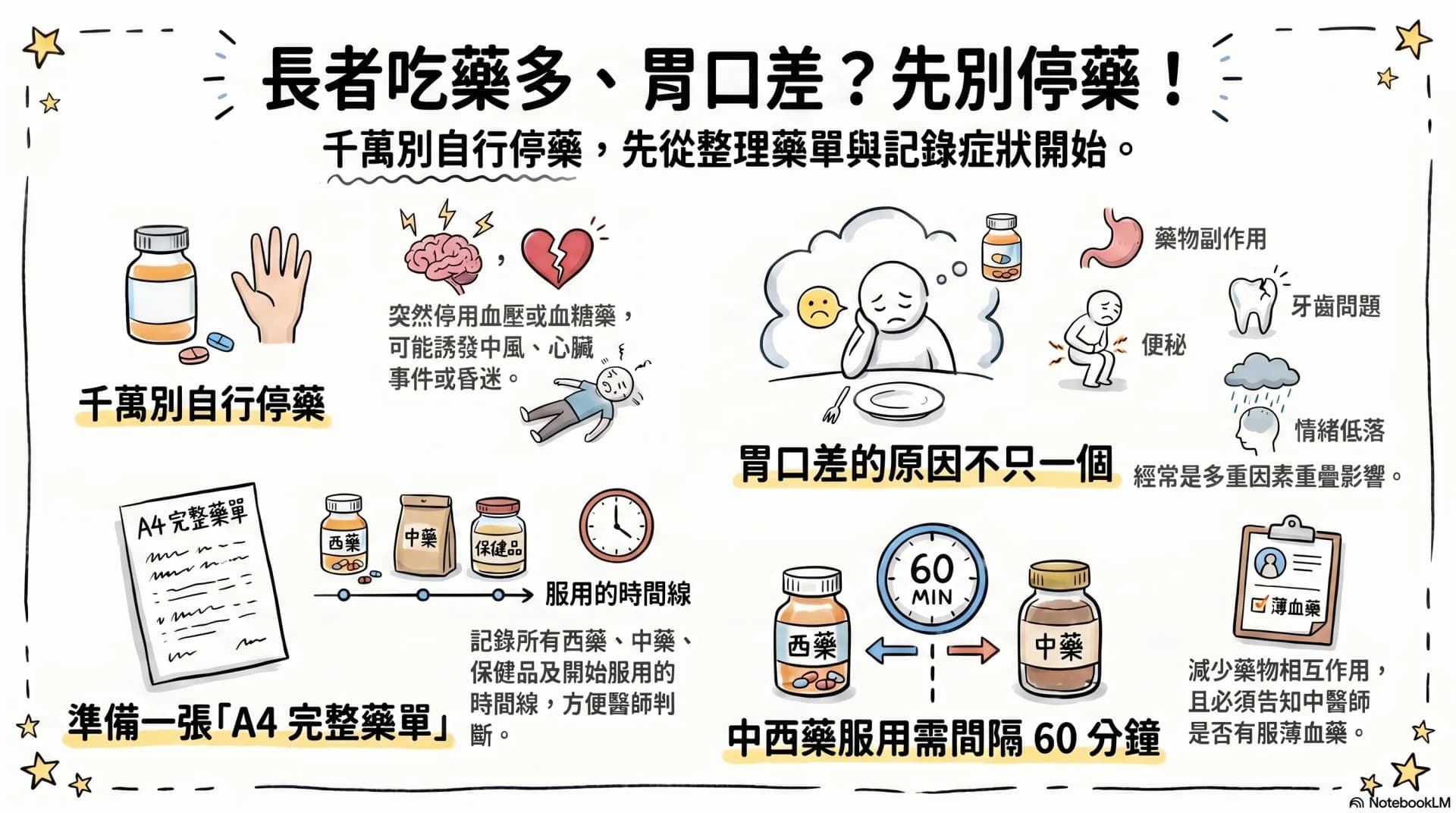
Poor Appetite in Older Adults on Long-Term Medication and Supplements? A TCM Case Study on Spleen-Stomach Care Under Polypharmacy
Several chronic-disease pills, then poor appetite, early fullness and daytime tiredness — family carers naturally wonder whether some of those medications are "harming the stomach". Stopping them on your own, however, can destabilise blood pressure, blood sugar and cardiovascular risk. This case of a 76-year-old maps out 7 possible causes, 6 things family carers should do, the safety conditions for TCM (60-minute spacing between Western and Chinese medicine), and the spleen-stomach directions that TCM can offer.
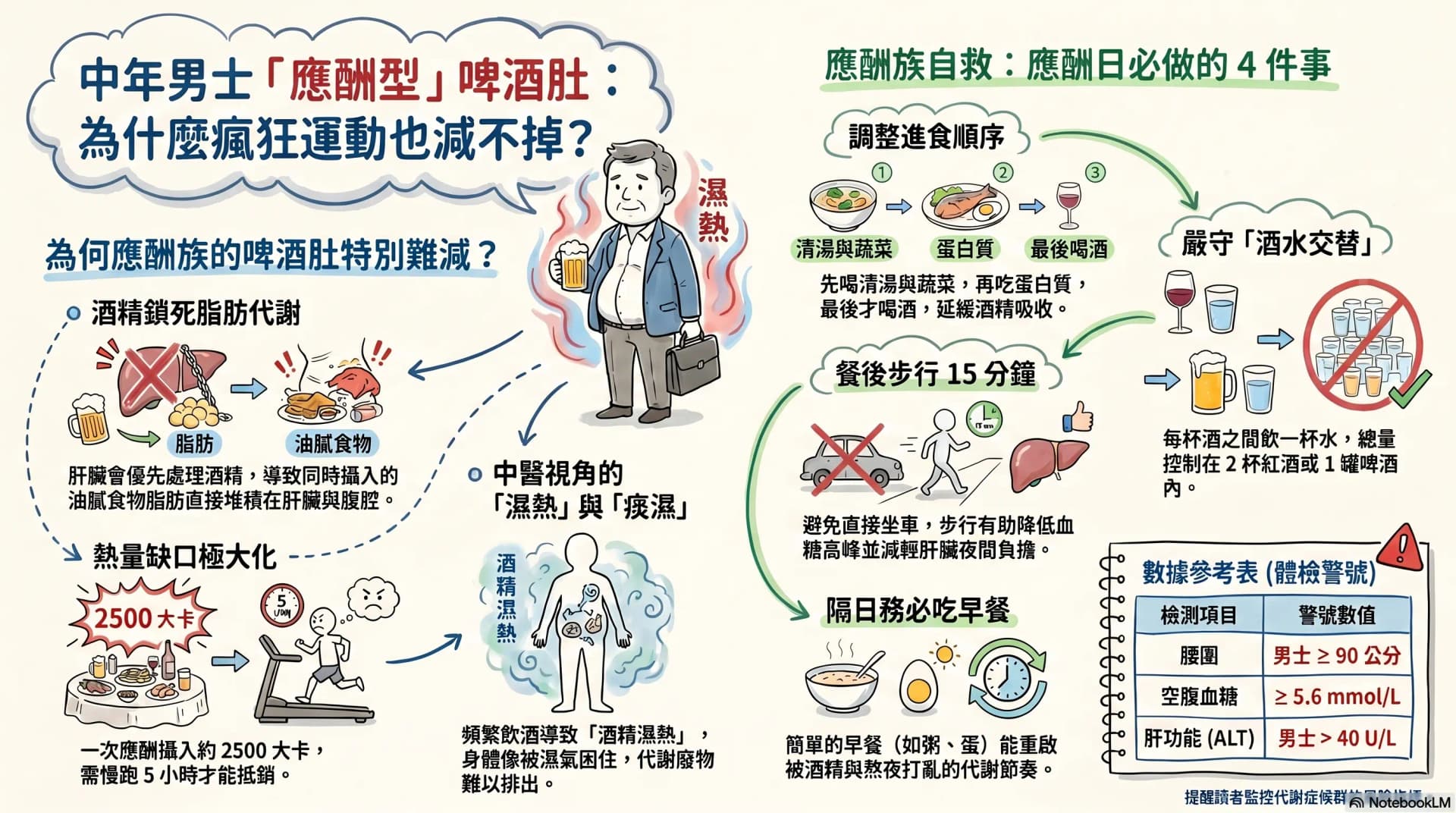
Middle-Aged Beer Belly That Won't Shrink? A TCM Case Study on Business Entertainment and Visceral Fat
Frequent client dinners, late-night meals and rising alcohol intake, yet the waistline keeps growing and the annual check-up flags borderline metabolic syndrome. This case study of a 48-year-old explains why visceral fat accumulates so readily in middle-aged men, how alcohol fuels the fatty-liver pathway, and how TCM evaluates four parallel drivers: damp-heat, phlegm-damp, late eating and stress-induced liver qi stagnation.