Cough That Won't Go Away? 6 Home Remedies + When to See a Doctor
Coughing is one of the most common reasons for seeking medical attention in Hong Kong — but not every cough requires an immediate doctor visit. This article shares 6 home remedies from a TCM perspective and helps you identify the "red flag" signs that mean you should see a doctor promptly.
Medical review: Dr. Tai Wai Ho, Samson,Registered Chinese Medicine Practitioner #008702
1-Minute Quick Answer
Not every cough requires an immediate doctor visit. Dr Tai (CMCHK 008702) at Aspira TCM Lai Chi Kok shares 6 TCM-based home remedies and identifies the red-flag symptoms (blood-tinged sputum, cough over 3 weeks, breathing difficulty) that warrant prompt medical attention.
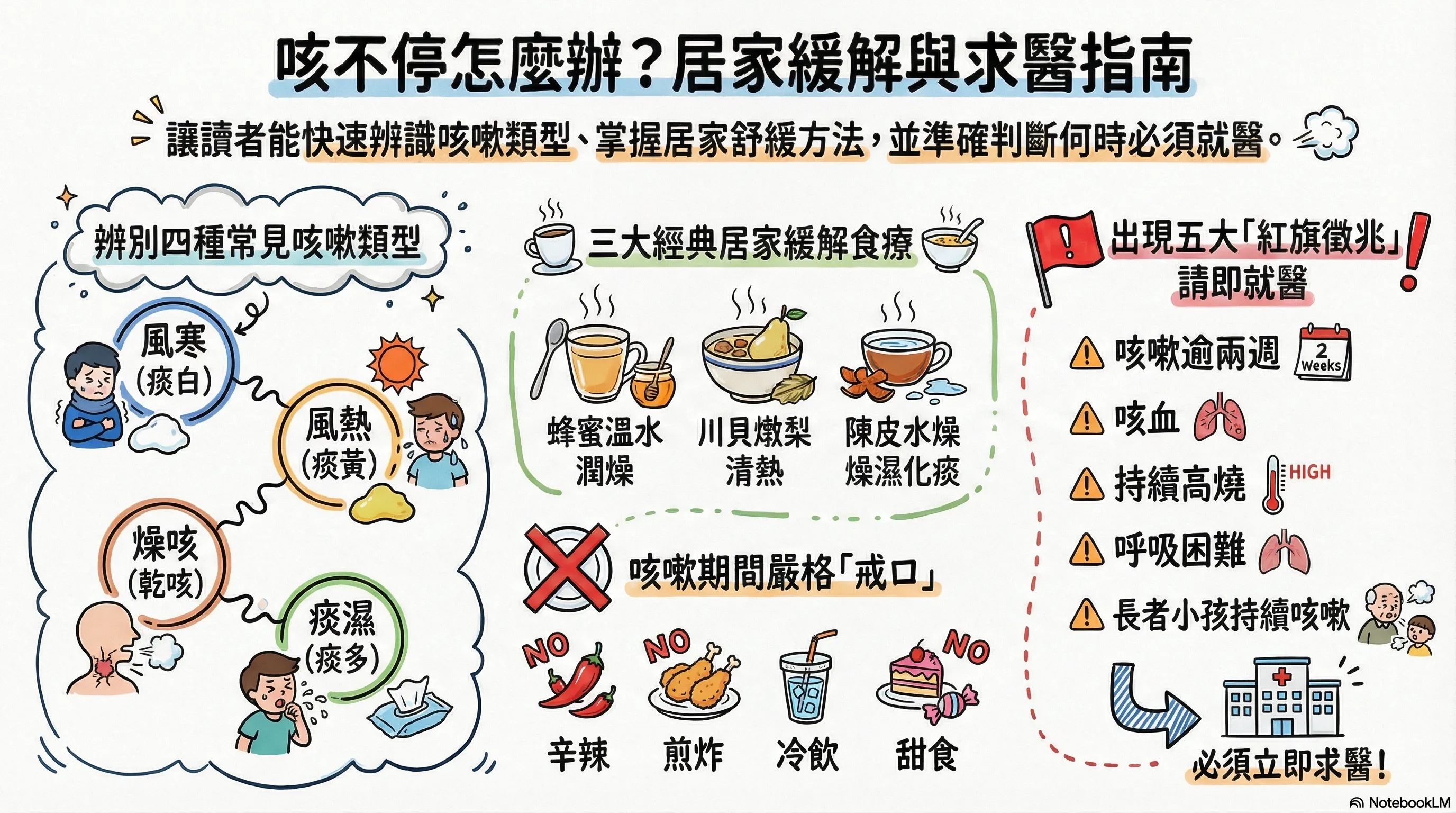 To help readers quickly grasp the content, this image was generated by NotebookLM. Some Chinese characters may not render correctly.
Coughing is one of the most common reasons for seeking medical attention in Hong Kong. Seasonal changes, air-conditioned offices, poor air quality — countless factors mean many people find themselves battling a persistent cough. Some rush to the doctor at the first tickle, while others ignore a cough for weeks on end.
The truth is, a mild cough can often be managed at home first, but if certain "red flag" signs appear, you should not delay seeking medical help.
This article shares 6 practical home remedies from a Traditional Chinese Medicine (TCM) perspective, and helps you decide when it is time to see a doctor.
1. Why Do We Cough? Understanding the Basics
In TCM, coughing is not considered a disease in itself — it is the body's protective response. When external pathogens (such as wind-cold or wind-heat) invade the lungs, or when internal phlegm-dampness accumulates and lung qi becomes disrupted, the body uses coughing to expel foreign matter or regulate qi flow.
Common types of cough include:
- Wind-cold cough: Thin, white phlegm; chills; clear nasal discharge — usually after exposure to cold
- Wind-heat cough: Thick, yellow phlegm; sore throat; dry mouth — common in hot weather or early stages of a cold
- Dry cough: Little or no phlegm; dry, itchy throat — typical in autumn and winter
- Phlegm-dampness cough: Copious white phlegm; chest tightness; poor appetite — common in those with weak digestion
Identifying your cough type helps you choose the most suitable remedy.
2. Six Home Remedies for Cough Relief
These methods are suitable for mild, recently developed coughs. If your cough has lasted more than two weeks or is accompanied by severe symptoms, please skip ahead to the next section, "When You Must See a Doctor."
1. Warm Honey Water
Honey has long been recognised for its ability to soothe the throat and ease coughing. In TCM, honey is considered sweet and neutral in nature, with moistening properties that are particularly helpful for dry coughs and itchy throats.
How to prepare: Add one tablespoon of honey to approximately 200ml of warm water (no hotter than 60 degrees Celsius). Stir well and sip slowly. This can be taken once in the morning and once in the evening.
Note: Honey is not suitable for infants under one year of age due to the risk of botulism spores. It is also not ideal for coughs with copious or yellow phlegm, as honey's rich, moistening nature may worsen phlegm-dampness.
2. Steamed Pear with Fritillary Bulb (Chuan Bei Dun Li)
This is one of the most classic TCM food remedies, particularly effective for dry coughs with little phlegm and an itchy throat. Fritillary bulb (chuan bei mu) is slightly cool in nature and helps clear heat, resolve phlegm, and stop coughing. Pear is cooling and promotes fluid production.
How to prepare: Core one snow pear and place 3-5 grams of fritillary bulb powder inside. Add a small amount of rock sugar. Steam over water for 30-40 minutes. Eat the pear and drink the liquid.
Note: This remedy is cooling in nature. If your cough is of the wind-cold type (white phlegm, chills), it may actually worsen your symptoms. Those with cold-type coughs should choose a different remedy.
3. Dried Tangerine Peel Tea (Chen Pi Water)
Dried tangerine peel (chen pi) is a staple ingredient in Cantonese cuisine and an important herb in TCM. It is warm in nature and helps regulate qi, strengthen the spleen, and resolve phlegm-dampness. It is particularly suitable for coughs with copious white phlegm and chest tightness.
How to prepare: Rinse one to two pieces of dried tangerine peel (about 3-5 grams). Add 300ml of hot water and steep for 10-15 minutes. Drink as a tea. The peel can be re-steeped 2-3 times.
Note: Chen pi is warm and drying in nature. It is not suitable for dry coughs with no phlegm or heat-type coughs with thick, yellow phlegm.
4. Saltwater Gargle
This simple method is effective for relieving throat discomfort and reducing the irritation that triggers coughing. Mild saltwater helps cleanse the throat and reduce mucosal swelling, thereby decreasing the cough reflex caused by throat itchiness.
How to prepare: Dissolve half a teaspoon of salt in approximately 250ml of warm water. Gargle for 15-30 seconds, then spit out. This can be done 2-3 times daily.
Note: Do not swallow the saltwater. This method is not recommended for young children who cannot yet gargle properly.
5. Maintain Indoor Humidity
Dry air irritates the airways and can worsen a cough. During Hong Kong's autumn and winter months, or in heavily air-conditioned indoor environments, humidity levels tend to be low.
Recommendation: Use a humidifier to maintain indoor humidity at 40-60 percent. If you do not have a humidifier, placing a bowl of water or a damp towel in the room can help. This is especially important at night, as night-time coughing often worsens due to dry air.
Note: Humidifiers need regular cleaning to prevent bacterial and mould growth. Humidity should not exceed 70 percent, as excessive moisture encourages dust mites and mould.
6. Dietary Discipline: Avoid Spicy, Fried, and Cold Foods
TCM places great emphasis on the impact of diet on coughing. During a cough, the following foods should be avoided as much as possible:
- Spicy foods: Chilli, pepper, and curry irritate the airways and can worsen coughing
- Fried foods: Fried chicken, chips, and deep-fried items generate internal heat and promote phlegm
- Cold drinks and ice cream: Cold foods damage the spleen and stomach, making phlegm-dampness harder to resolve
- Overly sweet foods: Excessive sugar tends to generate phlegm
Recommendation: Stick to a light diet during a cough. Drink plenty of warm water and eat more vegetables and easily digestible foods.
3. When You Must See a Doctor: 5 Red Flag Signs
While a mild cough can be monitored at home, the following situations call for prompt medical attention — do not continue to self-manage:
1. Cough Lasting More Than 2 Weeks
A cough caused by a common cold usually resolves on its own within one to two weeks. If your cough persists beyond two weeks, it is likely more than just the "tail end of a cold" and requires professional assessment.
2. Coughing Up Blood or Blood-Streaked Phlegm
Blood in the phlegm — whether streaks or fresh blood — may signal bleeding in the airways, lungs, or elsewhere. Regardless of the amount, seek medical attention immediately.
3. Accompanied by Persistent High Fever
A cough accompanied by persistent high fever (above 38.5 degrees Celsius) may indicate pneumonia or another infection that requires timely treatment.
4. Difficulty Breathing or Chest Pain
If you experience shortness of breath, chest tightness, or chest pain when coughing, this may involve pulmonary or cardiac issues. Seek medical attention immediately.
5. Persistent Cough in Children or the Elderly
Children and the elderly have relatively weaker immune systems, and coughs can progress more rapidly in these groups. If a child or elderly family member has been coughing for more than a week without improvement, it is advisable to see a doctor as soon as possible.
4. How Does TCM Treat Coughs?
If your cough warrants medical attention, TCM treatment is well worth considering. Unlike Western cough suppressants that primarily target symptoms, TCM treats coughs through "differential diagnosis and treatment" — formulating a personalised treatment plan based on each patient's constitution, cough type, and accompanying symptoms.
Common TCM approaches to treating coughs include:
- Herbal prescriptions: Targeted herbal formulas prescribed based on differential diagnosis to address the root cause
- Acupuncture: Stimulating specific acupoints (such as Feishu, Lieque, and Hegu) to unblock lung meridian qi flow
- Dietary guidance: Personalised dietary advice based on your constitution
In our clinic's experience, most cough patients see noticeable improvement within 2-3 sessions of herbal medicine. For more details on TCM cough treatment, visit our Complete TCM Guide to Cough Treatment.
A Reminder from Dr Tai
Many people's first instinct when they start coughing is to buy cough syrup. But cough suppressants only mask the symptoms — they do not address the underlying cause. If it is just a brief cough from a common cold, the body can usually recover on its own. But if the cough keeps coming back, it likely points to a constitutional or internal imbalance that requires professional differential diagnosis and treatment.
The home remedies shared above are all safe and gentle, suitable for trying at the early stages of a cough. But remember — food therapy cannot replace proper treatment. If you have tried these methods for a week or two without improvement, or if you notice any of the red flag signs mentioned in this article, please do not hesitate to book an appointment and let a practitioner examine you properly.
— Dr Tai Wai-ho | Registered Chinese Medicine Practitioner (Reg. No.: 008702)
Cough That Will Not Go Away? We Can Help
If your cough has been persisting or you have tried various remedies without success, you are welcome to book a consultation at our clinic for a personalised assessment and treatment plan.
How to book:
- WhatsApp: Book here
- Phone: 2110 9337
- Address: Unit 2706, Saxon Tower, 7 Cheung Shun Street, Lai Chi Kok
Further reading: Complete TCM Guide to Cough Treatment →
Disclaimer: The information above is for general health reference only and does not constitute medical advice or prescribing guidance. Every individual's constitution and condition are different, and treatment plans vary accordingly. If needed, please book a consultation so that a practitioner can formulate a treatment plan based on your specific situation. The food remedies mentioned are for general wellness reference only. If you have a chronic condition or are taking medication, please consult a practitioner first.
Disclaimer: This article is for health education and reference purposes only and does not constitute medical advice, diagnosis, or treatment. Each patient's condition is unique and treatment outcomes vary. Please consult a registered TCM practitioner or qualified healthcare professional for health concerns.
Want to learn more? WhatsApp us for a free consultation
Book via WhatsAppExplore our full range of treatments: Traditional TCM Services
Related Articles
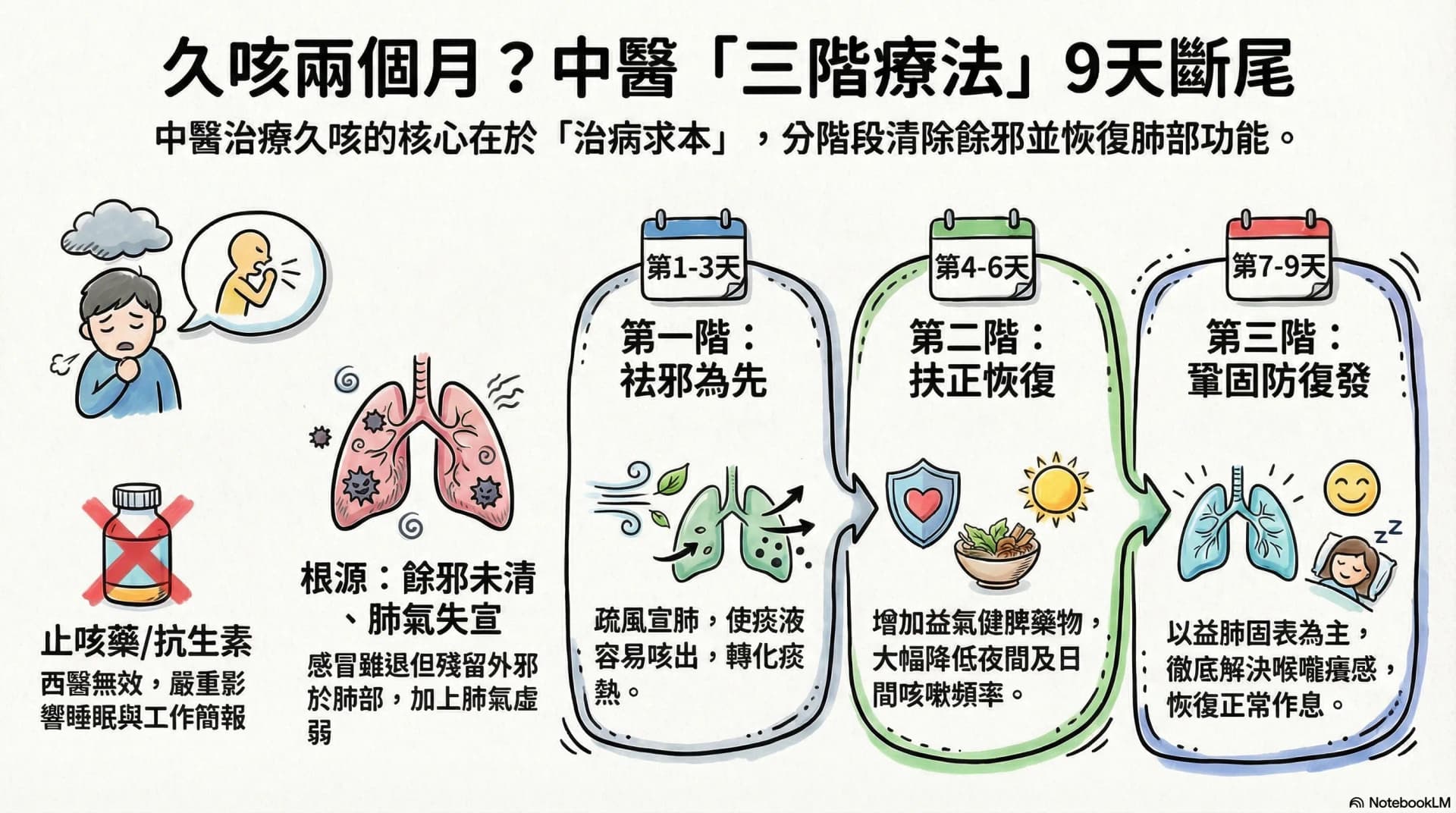
Two Months of Coughing, Relief in Three Sessions — Mr Chan's Story
A male office worker in his 40s suffered from persistent coughing for over two months with no improvement from Western medication. After three sessions of herbal medicine prescribed by Dr Tai, his cough significantly improved and he regained normal work and sleep.
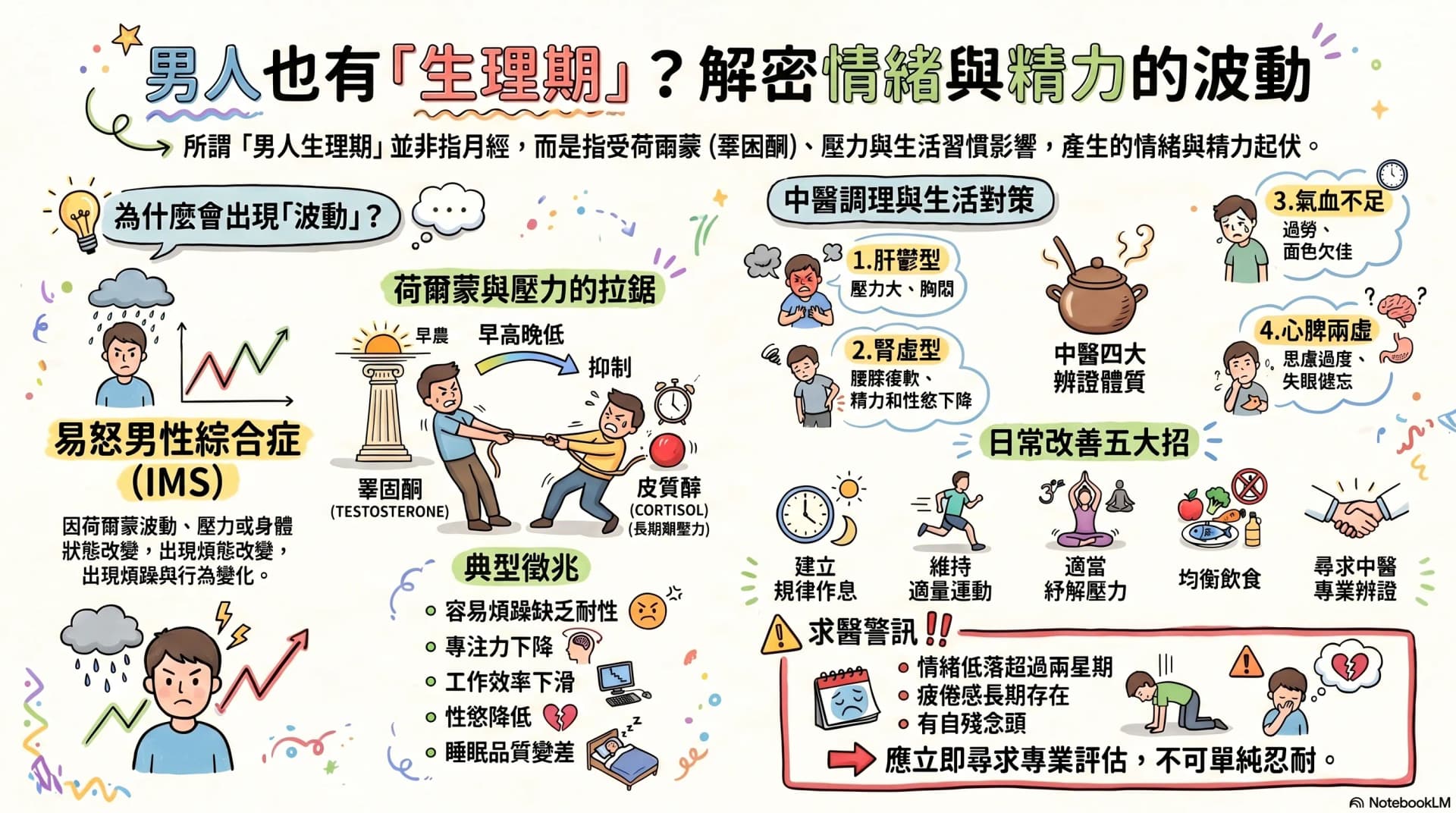
Do Men Have a “Period” Too? A TCM Look at Male Mood Swings, Fatigue and Hormonal Change — Plus 5 Ways to Find Relief
Do men have a period too? Men have no regular cycle like menstruation, so the “male period” is not a formal diagnosis — it describes the mood and energy swings driven by hormones, stress, sleep and lifestyle. This article covers the signs, the causes, how it differs from a woman’s period, how TCM assesses it, and five everyday ways — teas, foods and acupressure points — to find relief.
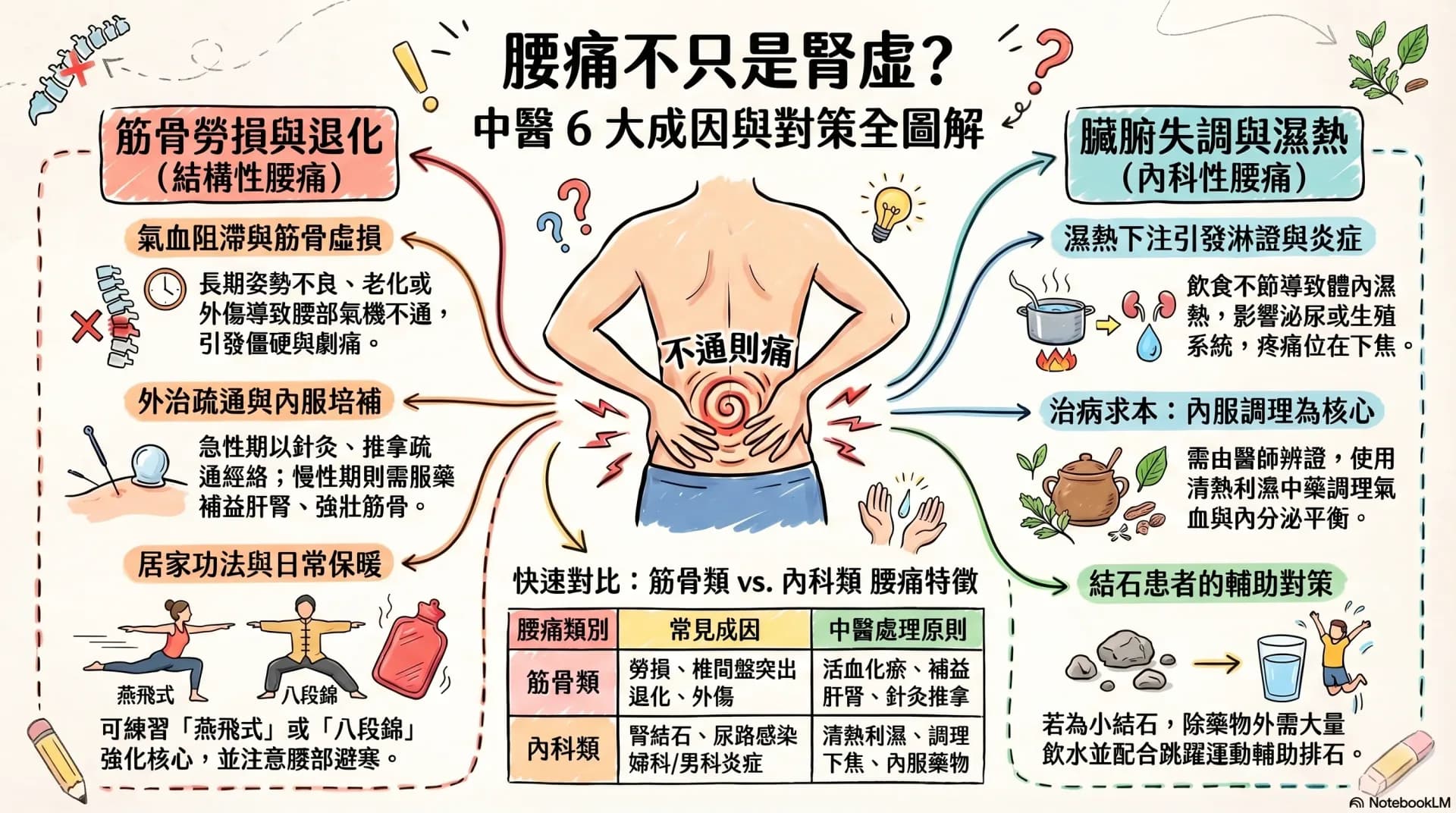
Low Back Pain: 6 Common Causes & TCM Treatment Approaches
Low back pain is not always simply “kidney deficiency” or muscle fatigue. It may also be related to muscle strain, disc herniation, degenerative lumbar disease, kidney stones, urinary tract infection, or pelvic inflammation. This article explains six common causes of low back pain from a TCM perspective and outlines key distinctions and treatment directions.