Early Signs of Diabetes: 6 Warning Signs, Tests & TCM Care
Diabetes does not always begin with dramatic symptoms. Many people notice tiredness after meals, more night urination, dry mouth, increasing abdominal fat, itchy skin, or slow wound healing before they are diagnosed. This article explains early warning signs of diabetes, who should be tested early, and how TCM may support people in the prediabetes stage.
Medical review: Dr. Chan Wing Kiu, Joanne,Registered Chinese Medicine Practitioner #009463
1-Minute Quick Answer
Diabetes doesn't always begin with dramatic symptoms. Feeling tired after meals, more night urination, dry mouth, increased belly fat, itchy skin, or slow wound healing can be early signs. This guide (medically reviewed by Dr Chan, CMCHK 009463) covers 6 warning signs, who should be tested early, and how TCM may support prediabetes care.
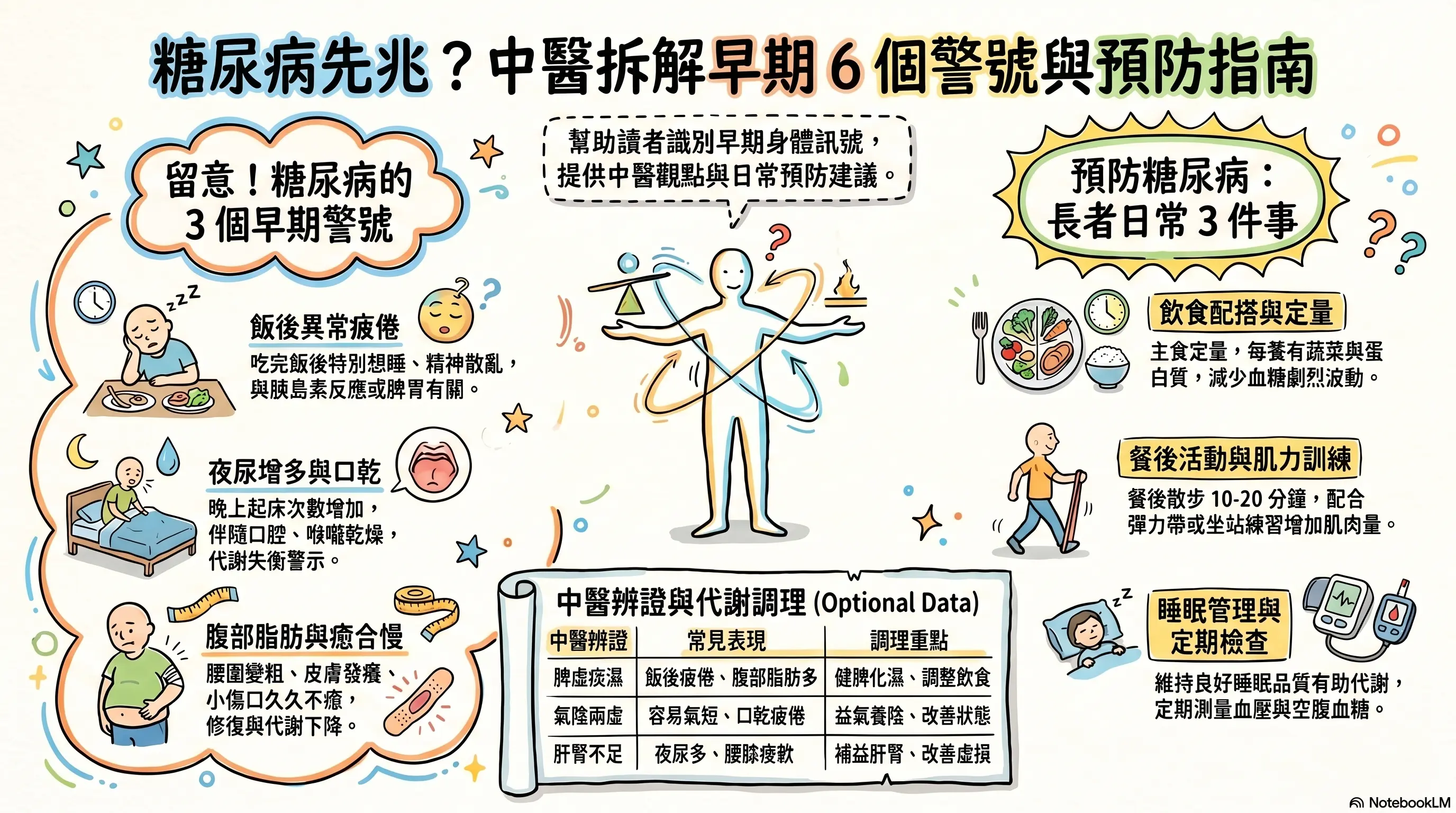 To help readers grasp the content quickly, the cover image was generated with NotebookLM. Some Chinese characters may not render correctly.
Diabetes does not always begin with dramatic symptoms. Many people notice tiredness after meals, more night urination, dry mouth, increasing abdominal fat, itchy skin, or slow wound healing before they are ever diagnosed. This article explains early warning signs of diabetes, who should be tested early, and how TCM may support people in the prediabetes stage.
Many people imagine that diabetes always starts with obvious thirst or marked weight loss. In reality, before diagnosis, some people show only scattered, easy-to-ignore changes.
For example: unusual tiredness after meals, repeated night-time urination, dry mouth, gradually increasing abdominal fat, itchy skin, or wounds that heal more slowly than before. None of these alone proves diabetes, but if several appear together, it is worth arranging tests early.
For many older adults, the key issue is whether the body’s overall metabolic state is already becoming unstable, including blood sugar, blood pressure, blood lipids, weight, sleep, and activity levels. If action only starts after diagnosis, the easiest window for adjustment may already have been missed.
This article focuses on one practical question: which bodily changes may point to early diabetes, when should testing be done promptly, and at what stage can TCM support regulation?
Early Diabetes Is Not Always Obvious — Many People Simply Feel “Less Well”
Prediabetes or early high blood sugar does not always make a person feel acutely unwell. More often, people simply notice that their general condition is slipping, without being able to explain why.
Common changes include:
- Feeling unusually tired after meals and struggling to concentrate
- More frequent night urination and poorer sleep
- Ongoing dry mouth or throat
- Increasing abdominal fat and easier weight gain
- Itchy skin or small wounds that heal more slowly
- Blood tests showing sugar, lipids, or blood pressure approaching borderline levels
These changes are not all specific to diabetes, but they matter because they often reflect reduced metabolic resilience and weaker recovery capacity.
Six Common Early Warning Signs of Diabetes
1. Unusual tiredness after meals
If you feel sleepy, mentally dull, or drained after meals on a regular basis, it should not simply be dismissed as ageing or overeating.
In some people, blood sugar fluctuates more sharply after meals, or insulin response has already started to worsen. In TCM terms, this pattern is also often associated with weak spleen transformation and phlegm-dampness.
2. Increased night urination
Waking more often to urinate at night directly affects sleep quality. If night urination has clearly increased, urinary tract causes should be considered, but high blood sugar should also be kept in mind.
If it comes together with dry mouth, poor sleep, and daytime tiredness, testing should not be delayed.
3. Dry mouth and increased thirst
Early diabetes does not always cause extreme thirst, but some people do notice a constant urge to drink, dry mouth, dry throat, or worsening symptoms at night.
If these symptoms persist, especially together with night urination, tiredness, or body-weight changes, self-treatment with cooling herbal drinks is not enough.
4. Increasing abdominal fat
Some older adults do not gain weight dramatically, but their abdominal fat gradually becomes more obvious and waist size increases. This is often more than a cosmetic issue and is commonly linked to rising metabolic risk.
Abdominal fat often worsens alongside blood sugar, blood lipids, and blood pressure, so it is a very important physical signal.
5. Itchy skin or slow wound healing
If the skin is repeatedly itchy, or small cuts take a long time to heal, or inflammation becomes more common, caution is needed. When blood sugar control is poor, the body’s repair ability weakens, and skin or circulation problems may become more noticeable.
If there is redness, discharge, or clear infection, medical review should not be delayed.
6. Borderline “three highs”
For some people, the first warning does not come from symptoms but from test results. When blood sugar, blood pressure, and blood lipids all begin to rise, even without a formal diabetes diagnosis, it suggests a growing metabolic burden.
At this stage, early action is often much easier than waiting until long-term medication becomes necessary.
Who Should Be More Proactive About Blood Sugar Testing?
The following groups should be tested regularly even if they feel well:
- People aged 40 or above, especially with obvious abdominal fat gain
- Those with a family history of diabetes
- People who already have hypertension or high cholesterol
- Those who are overweight or physically inactive
- People with chronic late sleep schedules or poor sleep quality
- Anyone previously told they have high blood sugar or prediabetes
- Women with a history of gestational diabetes
If you already fall into a higher-risk group and also have tiredness after meals, increased night urination, or dry mouth, testing should be arranged sooner rather than later.
What Tests Should Be Done First if Early Diabetes Is Suspected?
If you begin to suspect early diabetes in yourself or an elderly family member, do not rush into buying supplements blindly. Start with basic investigations so that the actual level of diabetes risk is clearly understood.
Common tests include:
- Fasting blood glucose
- HbA1c
- Blood pressure
- Blood lipids
- Kidney function and urine protein
- Further metabolic assessment when advised by a doctor
The value of these tests lies in clarifying the stage: whether risk is rising, whether the person has prediabetes, or whether the criteria for diabetes are already met.
How Does TCM View Early Diabetes?
TCM does not look only at the number on a glucose test. It also looks at overall constitution and symptom patterns.
For example, one person with rising blood sugar may mainly have dry mouth, constipation, and night heat; another may have tiredness after meals, excess phlegm, poor appetite, and abdominal fat gain; someone else may also have poor sleep, more night urination, and numbness in the hands and feet. These differences affect the treatment direction.
Common TCM patterns include:
| TCM pattern | Common features | Main treatment focus |
|---|---|---|
| Spleen deficiency with phlegm-dampness | Tiredness after meals, bloating, phlegm, abdominal fat gain | Strengthen the spleen, resolve dampness, and support diet and activity change |
| Qi and yin deficiency | Tiredness, dry mouth, shortness of breath, slow recovery | Tonify qi and nourish yin |
| Yin deficiency with dryness-heat | Dry mouth, constipation, poor sleep, more heat at night | Nourish yin and moisten dryness |
| Liver-kidney deficiency | More night urination, sore low back and knees, light sleep | Tonify liver and kidneys |
| Blood stasis in the channels | Numbness, tingling, poorer circulation | Move blood and unblock the channels after urgent vascular or neurological causes are excluded |
The role of TCM is not to replace Western diagnosis of diabetes. Rather, under safe conditions, it may help improve tiredness, dry mouth, poor sleep, unstable appetite, and night urination so that a person is better able to sustain lifestyle change.
How Can TCM Support Prediabetes?
One frustrating part of prediabetes is that many people know they are at risk but still struggle to change. Often this is not because they do not want to, but because the body already feels difficult to manage.
For example:
- They want to exercise, but knee pain, low back pain, or breathlessness gets in the way
- They want to control food, but keep feeling hungry or thirsty at night
- They want to sleep earlier, but have chronic poor sleep
- They want to lose weight, but feel so tired after meals that activity never becomes consistent
At this stage, TCM may help by reducing these barriers one by one — supporting digestion, reducing phlegm-dampness, improving sleep, relieving fatigue, or helping constipation. Once the body becomes more stable, diet and activity management are often easier to sustain.
That said, this must be stated clearly: TCM does not guarantee that diabetes will never develop. Its role is to help reduce risk in a more organised way while there is still room for adjustment. Blood sugar changes should still be confirmed through regular testing.
If Diabetes Is Already Diagnosed, How Should Western Medicine and TCM Divide Roles?
Once diabetes is diagnosed, the safer approach is not choosing one over the other, but clarifying each role.
| Situation | Who should lead | Why |
|---|---|---|
| Newly diagnosed diabetes with clearly high blood sugar | Western medicine | Diagnosis, medication, and complication risk assessment are needed |
| Diabetic kidney disease, retinopathy, foot wounds, or infection | Western medicine, sometimes with specialist follow-up | Requires investigation, medication, and wound care |
| Blood sugar under monitoring but with fatigue, poor sleep, dry mouth, constipation, or night urination | Combined care can help | Western medicine monitors objective markers; TCM may support symptom and constitution management |
| Wanting to stop or reduce medication independently | Treating Western doctor must be consulted first | Insulin or Western diabetes medication should never be stopped casually |
The key to combined care is not simply seeing both sides. It is making sure each side has a clear role.
Seven Daily Steps Older Adults Can Start With
If you are currently still in a higher-risk or prediabetes stage, do not chase short-term strictness. Stabilising the most important daily habits is usually more worthwhile.
-
Keep staple foods in portion control — “sugar-free” does not mean blood sugar neutral
Rice, congee, rice noodles, bread, potatoes, taro, pumpkin, and fruit all contain carbohydrate. What matters is portion and pairing. -
Make sure each meal includes vegetables and protein, while cutting back on sweet drinks and refined snacks
This helps fullness and reduces large blood sugar swings. -
Walk for 10 to 20 minutes after meals
If physically able, light walking after meals is usually better for blood sugar management than remaining seated. -
Add simple strength training each week
Older adults do not need a gym. Sit-to-stand practice, resistance bands, or light weights can all be started gradually. -
Deal with sleep rather than ignoring it
Poor sleep affects appetite, mood, and metabolism, and makes exercise and eating habits harder to sustain. -
Check blood pressure and attend regular blood tests
Both hypertension and diabetes can be silent in the early stage. Testing is more reliable than relying on how one feels. -
Do not delay foot wounds
If there are cuts, redness, heat, swelling, discharge, or wounds on the toes or soles that do not heal, seek medical care promptly.
When Should Western Medicine or Emergency Care Come First?
The following situations are not suitable for TCM regulation alone:
- Very high blood sugar together with vomiting, severe thirst, dehydration, or confusion
- Chest pain, shortness of breath, or cold sweats suggesting heart disease
- One-sided weakness, slurred speech, facial drooping, or sudden visual change
- Foot infection, blackened tissue, pus, or increasing pain
- Sudden collapse, repeated hypoglycaemia, shaking, or sweating
- Clearly worsening kidney function or unstable health while on multiple medications
In these situations, Western medical treatment should come first for safety.
How Can Aspira TCM Help?
At Aspira TCM, Dr Chan will first review the Western diagnosis, current medication, blood sugar and blood pressure records, sleep, appetite, bowel and bladder habits, pain, activity level, and caregiving arrangement, before deciding whether herbal medicine, acupuncture, lifestyle adjustment, or referral back for Western review is more appropriate.
We pay particular attention to three things:
- We do not encourage patients to stop Western medication, insulin, or reduce their dose on their own
- We do not lazily attribute every symptom of fatigue, dry mouth, or numbness to diabetes
- We prioritise the problems that truly affect daily life, such as poor sleep, poor intake, poor mobility, numb limbs, repeated constipation, or persistent fatigue
If you or an older family member is already dealing with high blood sugar, prediabetes, hypertension, high cholesterol, increasing abdominal fat, or borderline metabolic risk, you can first arrange a TCM assessment to see whether a combined approach is suitable. Eligible older adults may also use Elderly Health Care Vouchers for TCM care to address sleep, digestion, fatigue, phlegm-dampness, and metabolic risk at an earlier stage.
FAQ
Q1: If I feel tired after meals, does that definitely mean diabetes?
Not necessarily. Tiredness after meals may also relate to poor sleep, weaker digestion, excess refined starch intake, or other metabolic issues. But if it persists together with more night urination, dry mouth, or increasing abdominal fat, blood sugar testing is worth arranging.
Q2: Does prediabetes always need medication?
That depends on the test results and the doctor’s judgment. Some people can begin with diet, weight, sleep, and activity management; others need closer follow-up. The key is not to ignore the problem simply because it is “not yet full diabetes”.
Q3: Does TCM care for prediabetes mean avoiding all fruit?
Not necessarily. The important issues are type, portion, and timing. If diabetes or prediabetes has already been confirmed, overall carbohydrate distribution should still follow the doctor’s or dietitian’s advice.
Q4: Can Chinese and Western medicines be taken together?
This should not be decided casually. Tell the practitioner about all current medication, supplements, and test results so that timing and compatibility can be judged properly.
Q5: How should an older adult start preventing diabetes?
Start by reviewing recent blood sugar, blood pressure, and lipid records, then assess sleep, appetite, bowel and bladder habits, weight, waistline, and activity level. If there is already hypertension, abdominal fat gain, or family history, early testing becomes even more important.
Disclaimer: This article is for health education only and does not replace individual consultation, testing, medication, or treatment advice. If you already have diabetes, hypertension, or are taking medication, continue follow-up and monitoring as advised by your doctor. Any medication adjustment should be discussed with the treating doctor first.
Related at Aspira TCM: Dr Au (also a registered dietitian)
Disclaimer: This article is for health education and reference purposes only and does not constitute medical advice, diagnosis, or treatment. Each patient's condition is unique and treatment outcomes vary. Please consult a registered TCM practitioner or qualified healthcare professional for health concerns.
Further Reading
Hand-picked related articles and real cases to read next.
Want to learn more? WhatsApp us for a free consultation
Book via WhatsAppExplore our full range of treatments: Traditional TCM Services
Related Articles
Do Oysters, Maca and Deer Antler Boost Male Vitality? 5 Myths
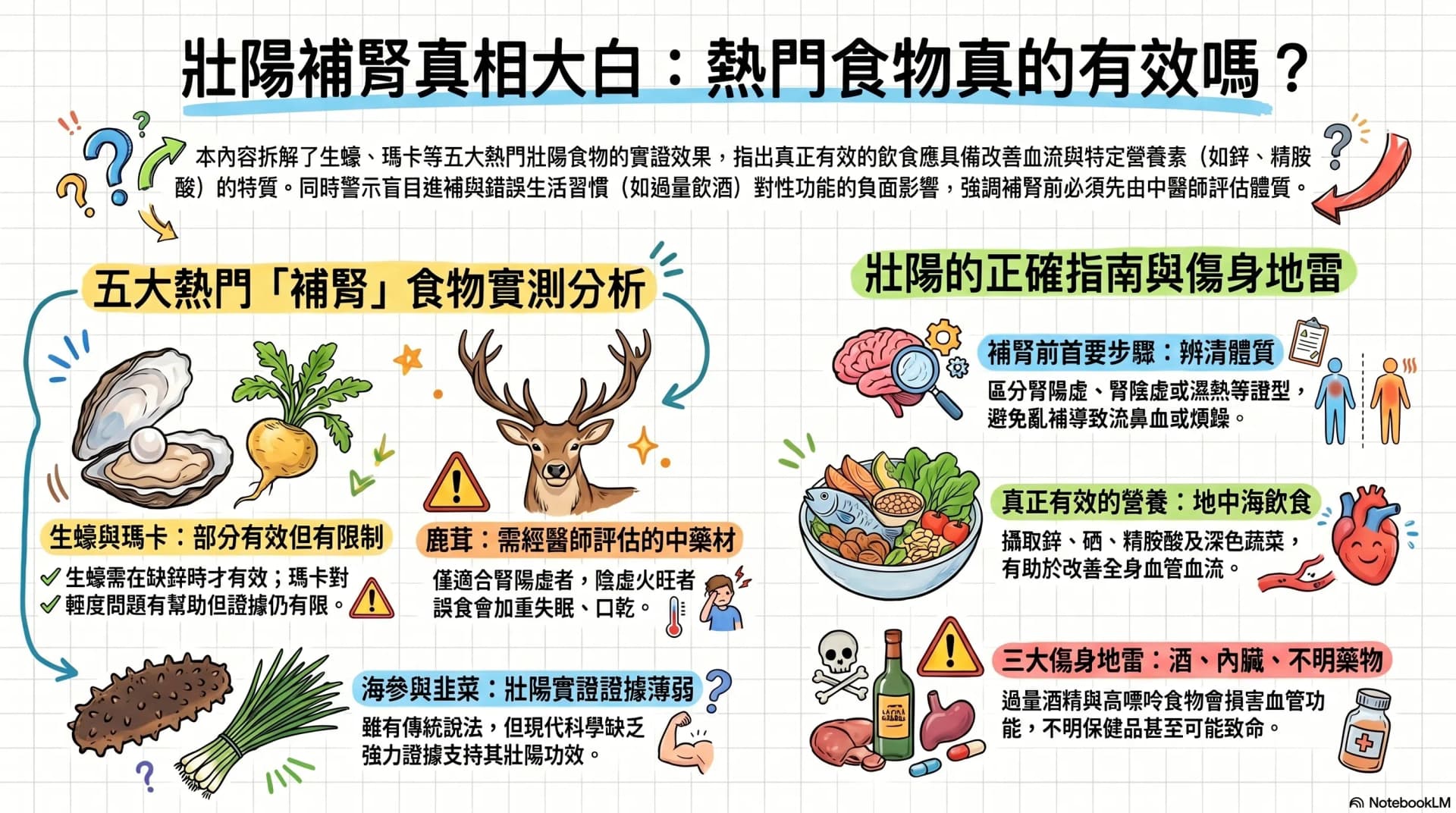
Do aphrodisiac foods actually work? This article opens with a rating table (effective / partly effective / effective within a TCM framework / weak evidence / no strong evidence), reviews the Chinese and Western medical evidence behind oysters, maca, deer antler, sea cucumber and Chinese chives, distils the 3 shared traits of foods that genuinely support male sexual function, and flags 3 commonly eaten items that can actually harm performance.
Male Menopause Through the TCM Lens: 5 Signs in Men Over 40
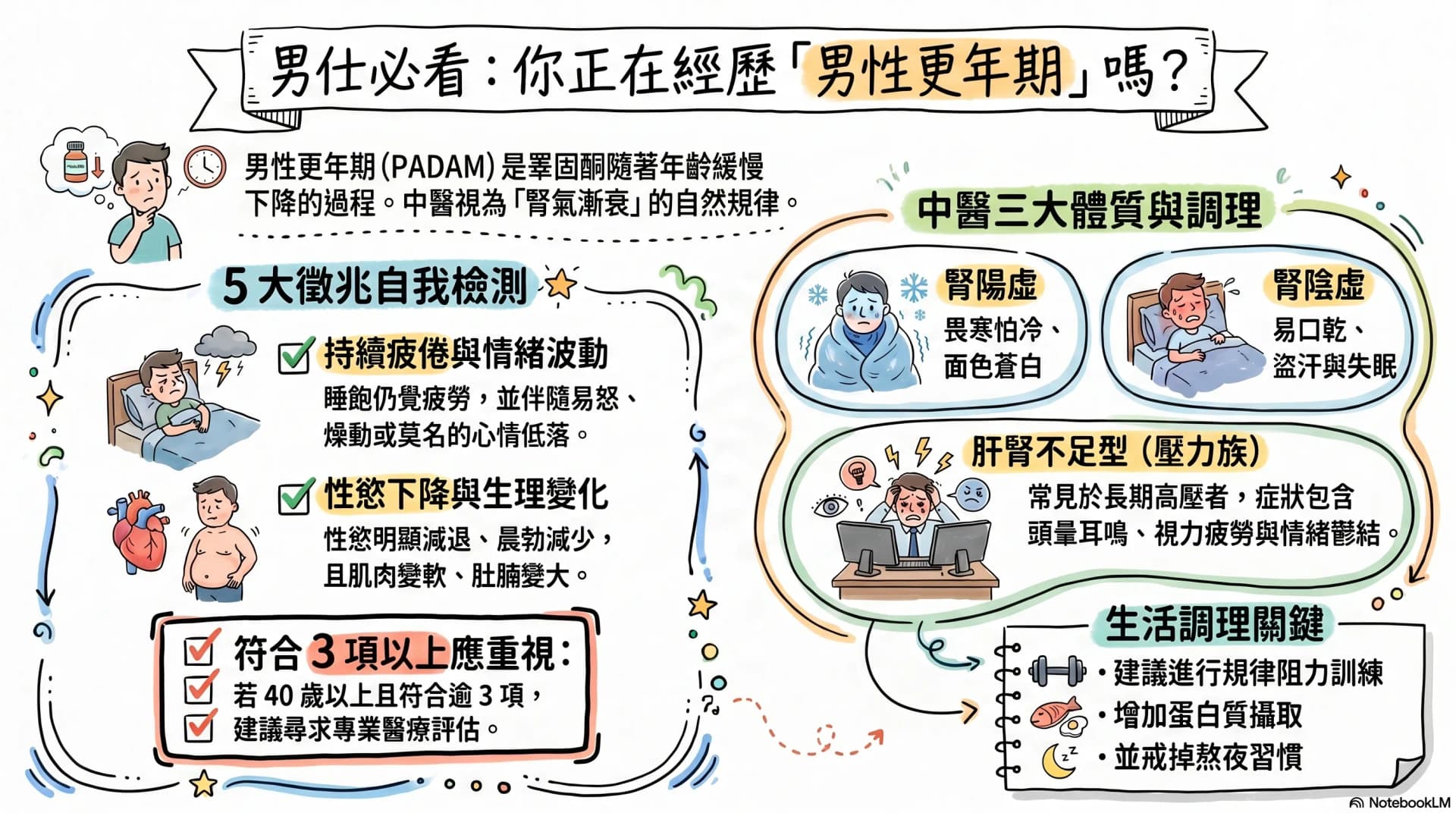
Unexplained fatigue, irritability, lower libido, poorer sleep and a growing belly after 40 are not just ageing or work stress — they may be male menopause. This article begins with a five-sign self-check, sets out three TCM patterns (kidney-yang deficiency, kidney-yin deficiency, liver-and-kidney insufficiency) with matching improvements, and compares the two treatment routes — testosterone replacement therapy versus TCM constitutional care.
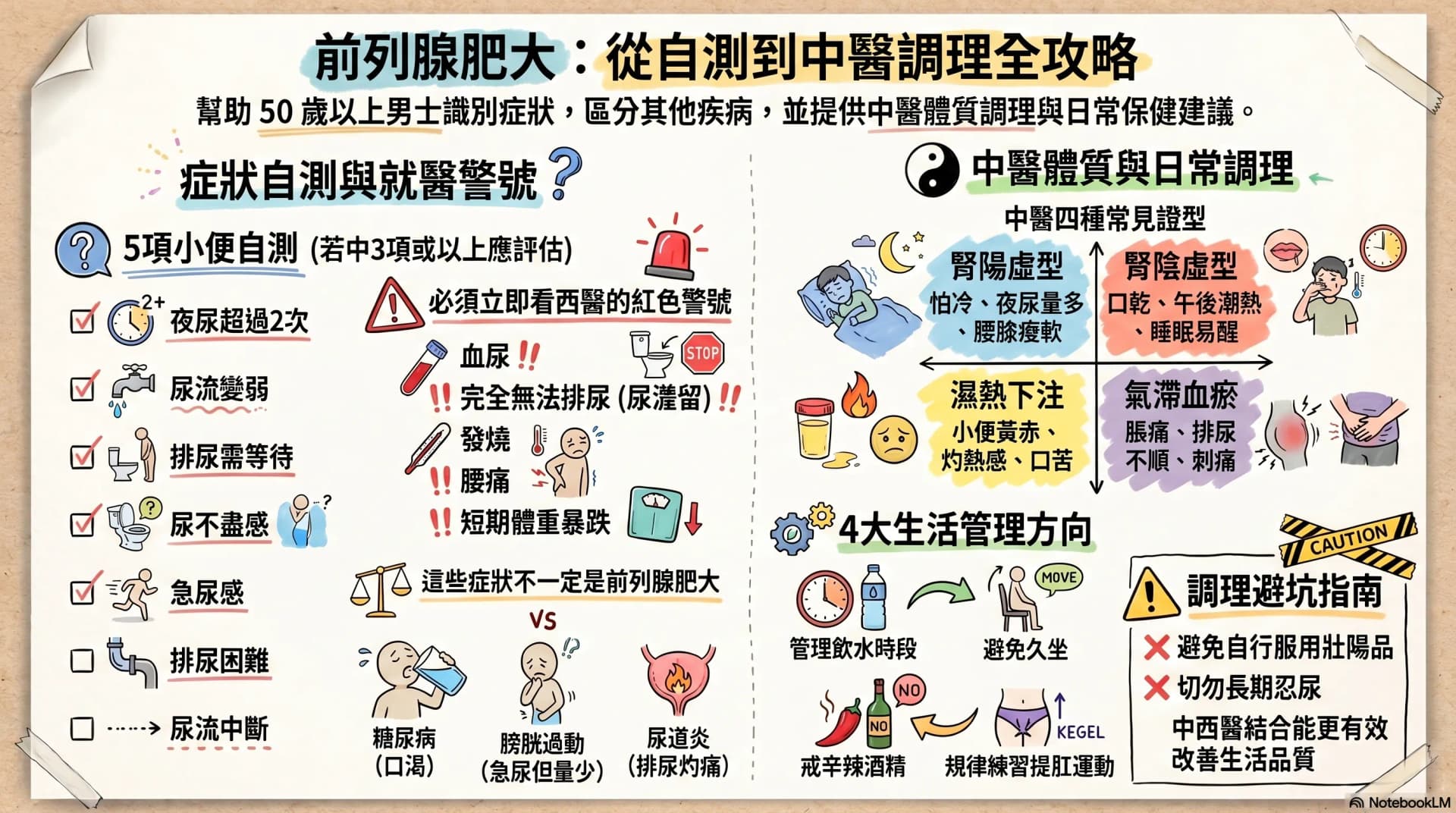
Enlarged Prostate: Are Nocturia and a Weak Stream Warning Signs?
After age 50, urinary frequency, nocturia, a weaker stream and having to urinate in stages may not simply be ageing. This article opens with a 7-symptom self-check, then sets out warning signs that warrant seeing a Western doctor immediately, four TCM constitution patterns, and four daily care directions any man can start with — helping you or your father decide the next step.