Insomnia: Sleeping Pills or TCM? An Honest Comparison
Sleeping pills offer immediate relief but carry dependency risks; TCM treats insomnia at the root but requires patience. This article honestly compares both approaches — benefits, risks, costs, and who each is best suited for — to help you find the right solution for your sleepless nights.
Medical review: Dr. To Ching, Jenny,Registered Chinese Medicine Practitioner #009330
1-Minute Quick Answer
Sleeping pills act fast but carry dependency risk; TCM treats insomnia at the root but takes time. Dr To (CMCHK 009330) at Aspira TCM Lai Chi Kok offers an honest comparison of benefits, risks, costs, and who each approach suits.
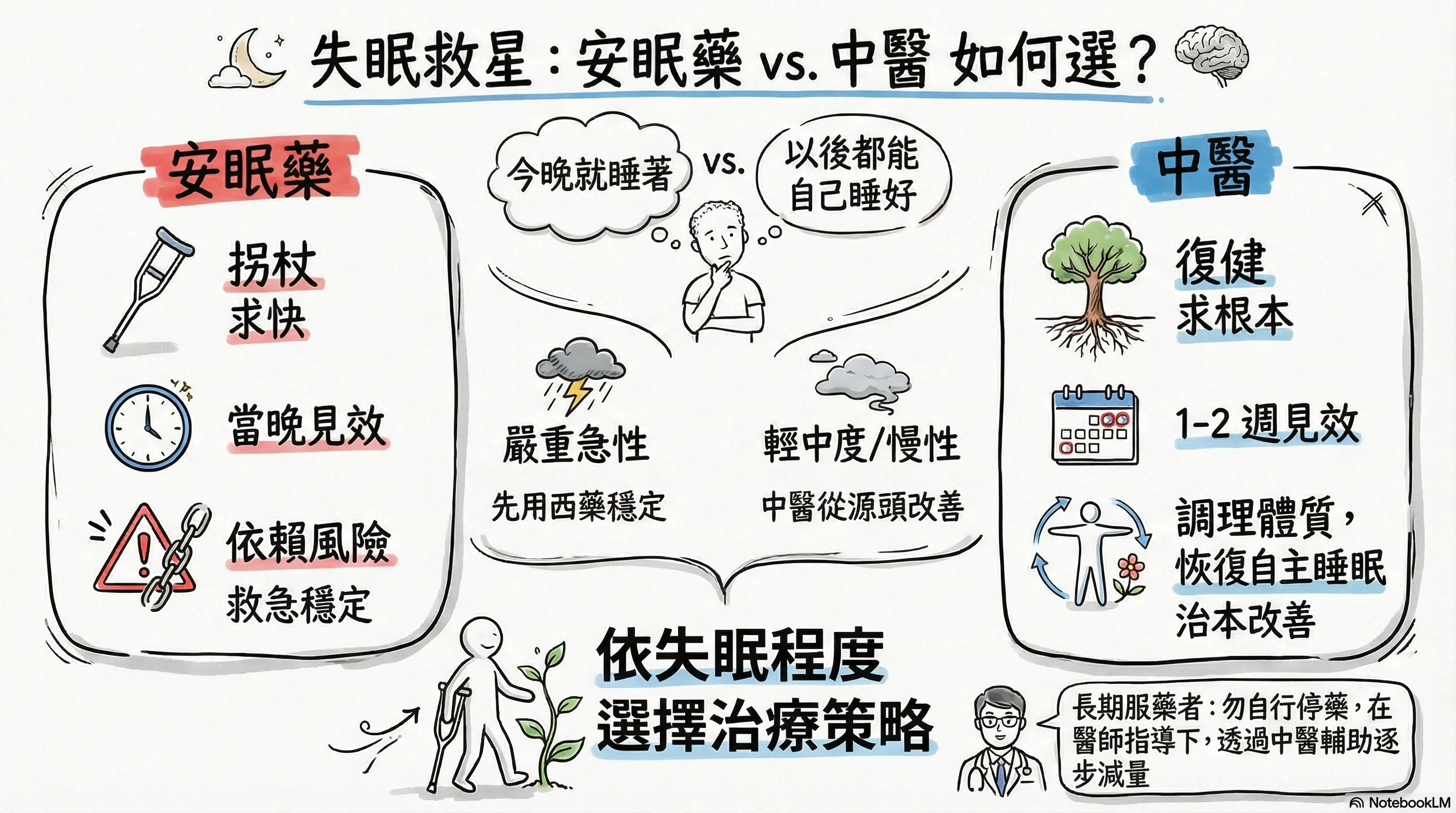 To help readers quickly grasp the content, this image was generated by NotebookLM. Some Chinese characters may not render correctly.
It is 3 a.m. and you are staring at the ceiling again. You have an important meeting tomorrow. You tell yourself you must sleep, but the harder you try, the more awake you become. Your sleeping pill sits on the bedside table — last time it left you groggy the next morning, but at least you got five hours.
This scenario is all too familiar for many Hong Kong residents.
According to research by the Chinese University of Hong Kong, approximately 70% of Hong Kong people experience sleep problems of varying severity. When insomnia strikes, sleeping pills are the fastest solution — take one pill, and you are asleep within 30 minutes. But is that really the best option? What does TCM offer for insomnia? And how should you choose between the two?
This article will not tell you that "sleeping pills are bad" or "TCM is definitely better." We simply want to present an honest picture of both treatment approaches, so you can make the choice that best suits your situation.
The Real Picture of Sleeping Pills
Let us start with the more familiar option: sleeping pills. They are neither a menace nor a perfect solution. Understanding the types, benefits, and risks helps you use them wisely.
Three Main Categories of Sleeping Pills
1. Benzodiazepines Including commonly prescribed diazepam and clonazepam. These have a long history and offer anti-anxiety and muscle-relaxant effects alongside their sleep-inducing properties. However, their dependency potential is relatively high, and doctors now rarely prescribe them as a first-line treatment for insomnia.
2. Non-benzodiazepines (Z-drugs) Including zopiclone and zolpidem. These are currently the most commonly prescribed sleeping pills, designed to have lower dependency risk than older medications. However, long-term use can still lead to dependence.
3. Melatonin and Melatonin Receptor Agonists Including melatonin and ramelteon. Melatonin is available over the counter at pharmacies in Hong Kong. Its effects are relatively mild, primarily used for circadian rhythm adjustment. It carries the lowest dependency risk but has limited efficacy for severe insomnia.
The Benefits of Sleeping Pills — Let Us Be Fair
- Immediate effect: This is the greatest advantage of sleeping pills. When you have been severely sleep-deprived for days, unable to function at work, or feeling unsafe to drive, sleeping pills can help you sleep that very night, restoring basic daytime function
- A necessary choice for severe insomnia: For insomnia caused by severe anxiety or depression, doctors may need to stabilise sleep with medication first while simultaneously pursuing psychological therapy or antidepressants
- Relatively safe for short-term use: Under medical supervision and for short periods (generally no more than 2-4 weeks), the risks are manageable
The Risks of Sleeping Pills — Equally Undeniable
- Dependency: This is the most concerning issue. The body gradually adapts to the medication, requiring higher doses for the same effect, creating a vicious cycle
- Withdrawal reactions: Abruptly stopping medication can cause rebound insomnia (worse than before), increased anxiety, tremors, and sweating
- Daytime drowsiness and cognitive effects: Some sleeping pills' effects carry over into the next day, causing grogginess, slowed reactions, and memory problems. This is particularly dangerous for those who drive or operate machinery
- Sleepwalking and other unusual behaviours: Z-drugs have rare but serious reported cases of sleepwalking, sleep-eating, and even sleep-driving
- Doubled risk for elderly patients: Older adults metabolise sleeping pills more slowly, significantly increasing the risk of falls and fractures
Who Are Sleeping Pills Best Suited For?
- Acute insomnia (caused by sudden stress events, jet lag, etc., expected to resolve in the short term)
- Severe insomnia that is significantly impairing daily function and safety
- Short-term adjunct medication under psychiatric guidance, combined with other treatments
How TCM Treats Insomnia
In TCM, insomnia is not simply a problem of "cannot fall asleep" — it is a mirror reflecting overall health. Different people have insomnia for different reasons, so treatment approaches differ accordingly.
Why Can You Not Sleep? — TCM's Diagnostic Thinking
The first step in TCM treatment is identifying "why you sleep poorly." Here are the most common clinical patterns:
Heart-Spleen Deficiency Pattern Common among office workers who overthink or long-term carers who worry constantly. Main symptoms include difficulty falling asleep, excessive dreaming, waking easily, difficulty returning to sleep, daytime fatigue, poor appetite, and sallow complexion. These individuals do not just "cannot fall asleep" — they "cannot sleep deeply." TCM theory holds that excessive thinking injures the spleen; spleen deficiency leads to insufficient qi and blood production, leaving the heart spirit malnourished.
Liver Depression Transforming to Fire Pattern Common among highly stressed individuals prone to emotional fluctuation. Symptoms include difficulty falling asleep, irritability, bitter or dry mouth, rib-side distension, and excessive chaotic dreams. The core issue is that emotional stress causes liver qi stagnation, which over time transforms into fire that disturbs the heart spirit.
Heart-Kidney Disharmony Pattern Common around menopause, in those with long-term late-night habits, or those weakened by chronic illness. Symptoms include difficulty falling asleep or early waking, restlessness, hot flushes with night sweats, lower back and knee weakness, tinnitus, and forgetfulness. TCM considers this a deficiency of kidney water failing to nourish and counterbalance heart fire, leaving the spirit unsettled.
Stomach Disharmony Pattern As the classical saying goes: "when the stomach is unsettled, sleep is disturbed." Eating too much or too rich a dinner, or having inherently poor digestive function, often leads to restless sleep, tossing and turning, chest tightness, and belching.
Chinese Herbal Medicine for Sleep — More Than Just "Sedation"
TCM does not use a single "sleeping herb" to replace sleeping pills. Based on different diagnostic patterns, different herbal strategies are employed:
- Heart-spleen deficiency — tonify the heart and spleen, nourish blood and calm the spirit; classic formula direction: Gui Pi Tang (Restore the Spleen Decoction) with modifications
- Liver depression transforming to fire — soothe the liver, resolve stagnation, clear fire and calm the spirit; classic formula direction: Dan Zhi Xiao Yao San with modifications
- Heart-kidney disharmony — nourish yin, reduce fire, reconnect heart and kidney; classic formula direction: Tian Wang Bu Xin Dan (Heavenly Emperor's Heart-Supplementing Elixir) or Huang Lian E Jiao Tang with modifications
- Stomach disharmony — promote digestion and harmonise the stomach; classic formula direction: Bao He Wan with modifications
Additionally, Suan Zao Ren (sour jujube seed) is the quintessential TCM herb for calming the spirit. Regardless of the insomnia pattern, it may be incorporated on the basis of pattern differentiation. Suan Zao Ren Tang, a classic formula from Zhang Zhongjing's "Jin Gui Yao Lue" (Essential Prescriptions from the Golden Cabinet) of the Eastern Han dynasty, remains widely used today for treating restlessness and insomnia.
Acupuncture for Sleep — Another Key to Regulating the Nervous System
International research increasingly supports acupuncture for insomnia. Commonly used acupuncture points include:
- Bai Hui (GV20, crown of the head): Refreshes the mind and calms the spirit; regulates cerebral cortex excitation and inhibition
- Shen Men (HT7, wrist): Calms and settles the heart spirit; a key point for treating insomnia
- Tai Chong (LR3, dorsum of the foot): Soothes the liver and regulates qi; alleviates insomnia caused by stress and emotions
- San Yin Jiao (SP6, lower leg): Regulates the liver, spleen, and kidney meridians; beneficial for multiple types of insomnia
- An Mian (behind the ear): As its name "peaceful sleep" suggests, this is an empirical point specifically for treating insomnia
Many patients report feeling relaxed and drowsy during acupuncture treatment — this is not a placebo effect but the result of acupuncture regulating the autonomic nervous system (balancing the sympathetic and parasympathetic nervous systems) to promote a relaxation response.
Benefits of TCM for Insomnia
- Treats the root cause: Does not just make you "fall asleep" but improves the constitutional issues causing poor sleep
- No dependency: You will not need increasing doses or find yourself unable to stop
- Holistic improvement: While treating insomnia, accompanying symptoms (fatigue, digestive issues, emotional instability) often improve simultaneously
- Can be used alongside sleeping pills: Under medical guidance, TCM treatment can proceed while taking sleeping pills, with gradual dose reduction over time
Honest Limitations of TCM for Insomnia
- Takes time to work: Typically 1-2 weeks before sleep improvements are felt; full regulation may require 4-8 weeks. If you need to sleep tonight, TCM cannot deliver that
- Requires patient compliance: Herbal medicine must be taken daily as prescribed, and dietary and lifestyle adjustments are part of the process
- Results vary by individual: Some people respond quickly; others require longer, depending on constitution and complexity of the condition
- Requires accurate pattern differentiation: If the diagnosis is inaccurate, the prescription will not match the condition, and results will be suboptimal
Sleeping Pills vs TCM for Insomnia: A Clear Comparison
| Dimension | Sleeping Pills | TCM (Herbs + Acupuncture) |
|---|---|---|
| Speed of results | Sleep that same night | Gradual improvement over 1-2 weeks |
| Long-term outcomes | Does not address root cause; relapse common after stopping | Treats constitutional root; lower relapse rate |
| Dependency risk | Moderate to high (especially beyond 4 weeks) | None |
| Side effects | Daytime drowsiness, memory impact, withdrawal reactions | Very few (occasional mild digestive adjustment initially) |
| Monthly cost estimate | Public healthcare: lower; private psychiatry: HK$1,500-$3,000+ | TCM consultation plus herbs: HK$2,000-$4,000 (varies by frequency) |
| Treatment duration | Recommended short-term (2-4 weeks), though many use long-term | Typically 4-8 weeks per course |
| Best suited for | Acute severe insomnia; need to restore daytime function immediately | Chronic insomnia; desire to avoid medication dependency; accompanying constitutional issues |
| Combination use | — | Can be used alongside sleeping pills under guidance, with gradual dose reduction |
The Smartest Approach: Choose Based on Your Situation
Insomnia does not have to be an either-or decision. The most sensible strategy depends on your specific circumstances:
Severe Insomnia (Significantly Affecting Work and Daily Life)
Recommendation: Stabilise with sleeping pills first while beginning TCM treatment simultaneously.
When you have been unable to sleep for multiple consecutive nights, are mentally exhausted during the day, cannot function at work, or are developing anxiety or depressive symptoms, sleeping pills are a reasonable and necessary choice. Restore basic sleep function first while starting TCM regulation. As the herbal medicine gradually takes effect and sleep improves, work with your doctors to progressively reduce the sleeping pill dosage.
Mild to Moderate Insomnia (Occasional Poor Sleep, Not Severely Affecting Life)
Recommendation: You can try TCM treatment directly.
If your sleep quality has only recently declined — taking longer to fall asleep, waking more easily, dreaming excessively — but you can still manage daily activities, this is the ideal time for TCM intervention. The earlier you begin regulation, the better the results, and you may avoid progressing to the point where sleeping pills become necessary.
Currently Taking Sleeping Pills and Wanting to Reduce
Recommendation: Never stop on your own. Work with your doctors to reduce gradually while incorporating TCM.
This point is critical: abruptly stopping sleeping pills can trigger severe withdrawal reactions, including rebound insomnia, worsening anxiety, and even seizures. The correct approach is to inform both your Western doctor and TCM practitioner about your medication. Together, they can devise a reduction plan. TCM treatment during the tapering process helps the body adjust and eases withdrawal discomfort. This process may take weeks to months, but many patients ultimately succeed in reducing or even stopping their medication entirely.
A Word from Dr To
At the clinic, Dr To frequently encounters patients seeking help after prolonged sleeping pill use. Her observation:
"About half the insomnia patients I see have experience with sleeping pills. They do not necessarily think sleeping pills are bad — rather, they have noticed growing dependency, increasing doses, and they worry about long-term effects on their health.
My advice is this: do not treat sleeping pills as an enemy, but do not treat them as a permanent crutch either. Think of them as a walking stick — you need one when you have a fracture, but the goal is ultimately to walk on your own. TCM's role is to help your body regain the ability to fall asleep naturally.
Everyone's insomnia has different causes. Some people have liver fire from work stress. Others have heart-spleen deficiency from chronic worrying. Some are experiencing heart-kidney disharmony around menopause. Identifying your specific root cause and treating it accordingly is the only sustainable solution."
Frequently Asked Questions (FAQ)
Q1: Can I take Chinese herbs and sleeping pills at the same time?
Yes, but this must be done under medical guidance. Generally, we recommend taking Chinese herbs and sleeping pills at least two hours apart to avoid interactions. Please always inform your TCM practitioner of the type and dosage of sleeping pills you are taking, so this can be factored into the prescription.
Q2: How long does TCM treatment take to improve insomnia?
Most patients begin to notice sleep quality improvements within 1-2 weeks (such as falling asleep faster, fewer night awakenings, and deeper sleep). However, individual constitution and insomnia severity vary — some respond more quickly, while others may need 3-4 weeks. A full treatment course of 4-8 weeks is generally recommended.
Q3: I have been taking sleeping pills for years. Can I still come off them?
Yes, but it must be done gradually. People who have taken sleeping pills long-term should never stop abruptly. Instead, they need to taper under medical supervision. Incorporating TCM during the tapering process can help the body re-establish natural sleep rhythms and reduce withdrawal discomfort. This process may take weeks to months, but many patients ultimately succeed in reducing or even stopping their medication.
Q4: Does acupuncture for insomnia hurt? How many sessions are needed?
Modern acupuncture needles are extremely fine (much thinner than blood-drawing needles). Most people feel only a mild aching or tingling sensation, not pain. Many patients naturally fall asleep during treatment. We generally recommend 1-2 sessions per week for 4-6 weeks, with the exact number adjusted based on individual response.
If you are struggling with insomnia — whether you are considering starting sleeping pills, already taking them and wanting to reduce, or interested in trying TCM — we welcome you to book a consultation. Dr To will give you the most straightforward advice based on your specific situation.
Learn more: Aspira TCM Insomnia Page
WhatsApp Booking: Book Now Phone: 2110 9337 Aspira TCM Clinic — Unit 2706, Saxon Tower, 7 Cheung Shun Street, Lai Chi Kok
-- Reviewing Practitioner -- Dr To | Registered Chinese Medicine Practitioner (Reg. No.: 009330) Aspira TCM Clinic — Internal Medicine, Gynaecology, Acupuncture
This content is for health education purposes only and does not constitute medical diagnosis or treatment advice. Individual conditions vary, and treatment plans should be tailored accordingly. The use and adjustment of sleeping pills must be carried out under the guidance of a Western doctor or psychiatrist — never stop or adjust your dosage on your own. TCM treatment plans should be formulated by a qualified practitioner after proper diagnosis. If you have a health concern, we recommend booking a consultation so a qualified practitioner can assess your specific situation.
Related at Aspira TCM: Insomnia (TCM) overview
Disclaimer: This article is for health education and reference purposes only and does not constitute medical advice, diagnosis, or treatment. Each patient's condition is unique and treatment outcomes vary. Please consult a registered TCM practitioner or qualified healthcare professional for health concerns.
Further Reading
Hand-picked related articles and real cases to read next.
Want to learn more? WhatsApp us for a free consultation
Book via WhatsAppExplore our full range of treatments: Traditional TCM Services
Related Articles
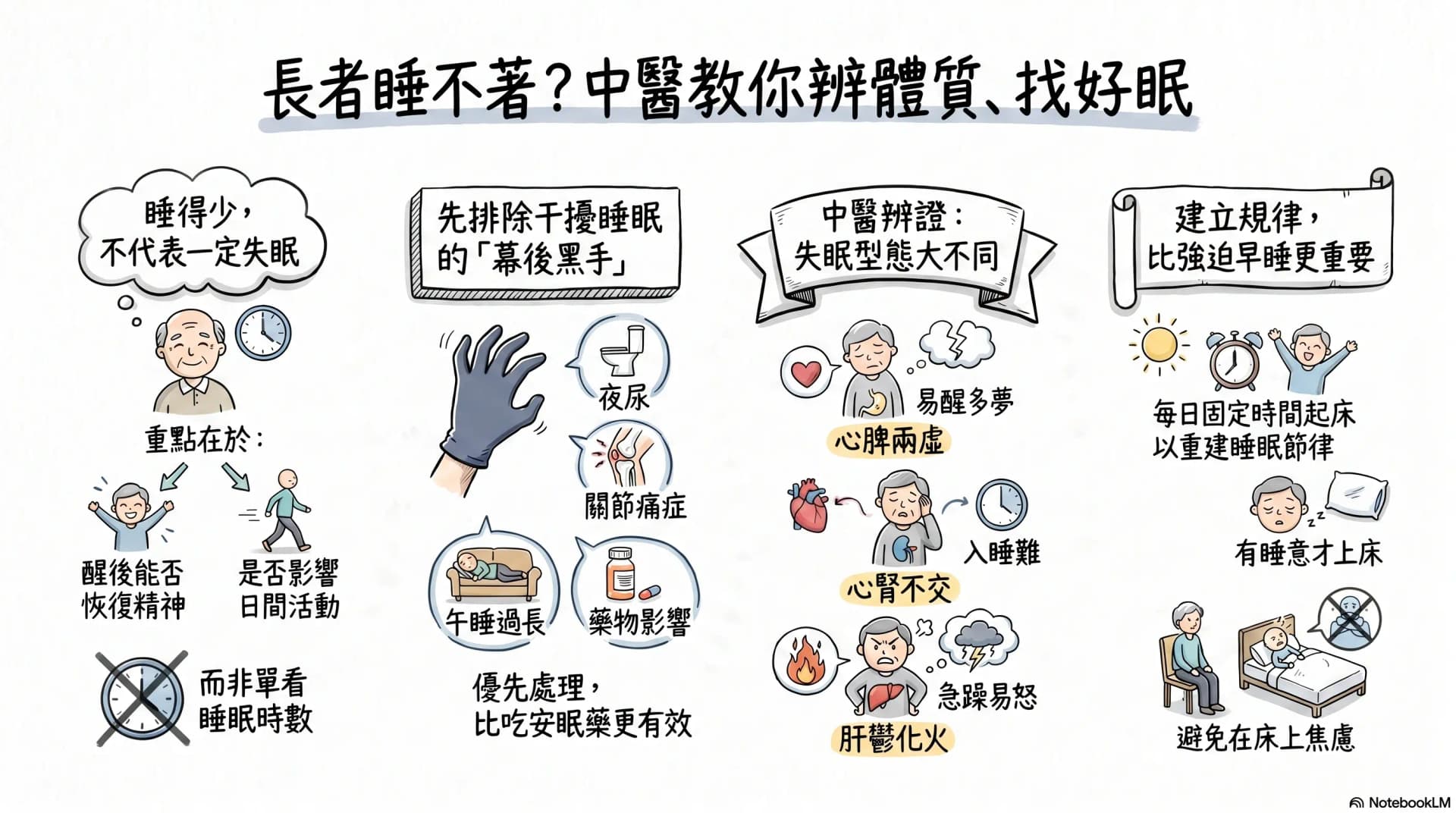
Insomnia in Older Adults: Waking at Night, Dreaming, Early Waking
Does sleeping less in older age always mean insomnia? Waking easily at night, vivid dreaming, early waking, and waking tired may relate to nocturia, pain, mood, medication, sleep apnoea, or sleep habits. This article explains common causes, warning signs, and how TCM interprets insomnia patterns such as heart-spleen deficiency, disharmony between heart and kidney, and liver fire.
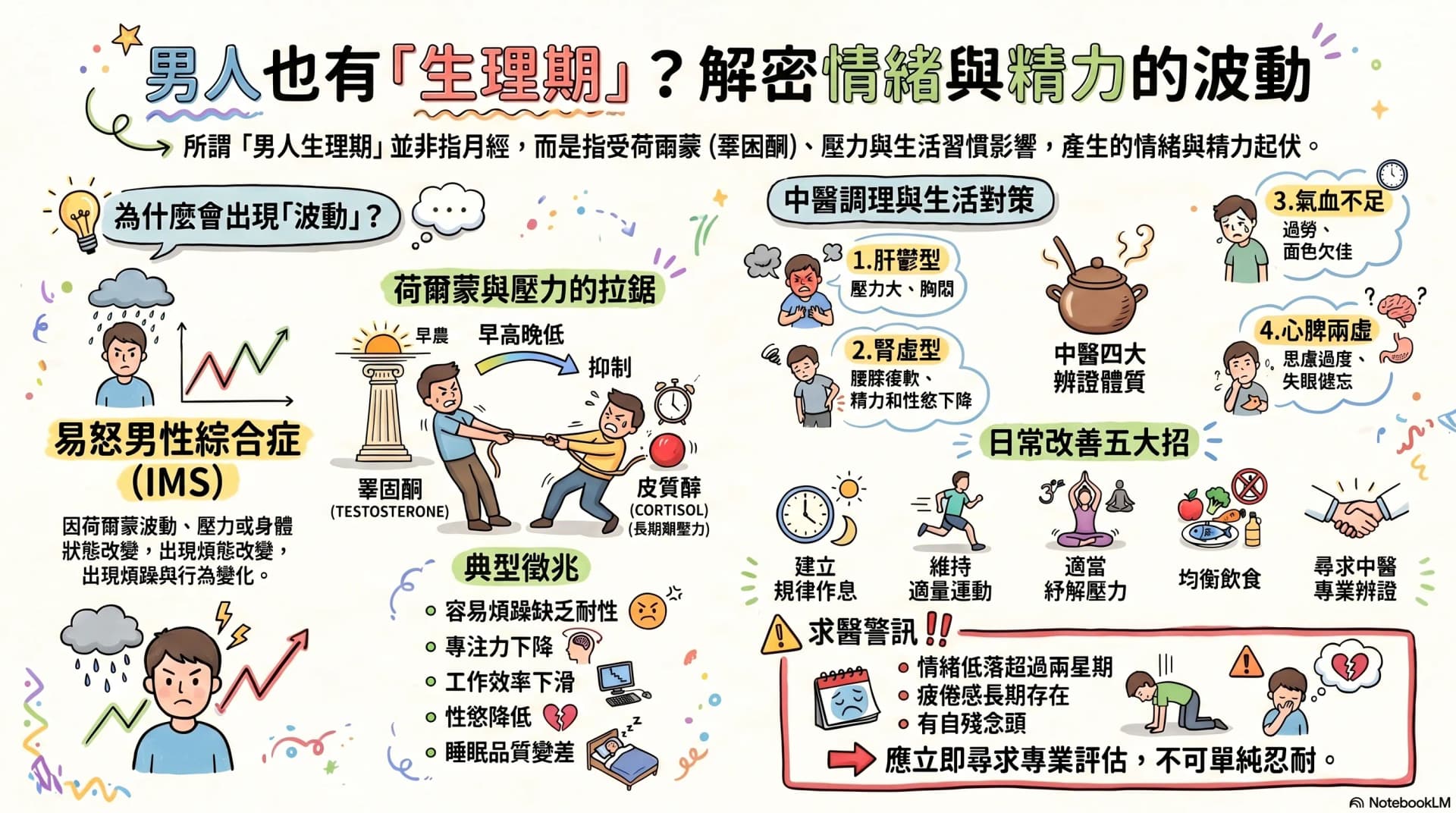
Do Men Have a “Period” Too? A TCM Look at Male Mood Swings, Fatigue and Hormonal Change — Plus 5 Ways to Find Relief
Do men have a period too? Men have no regular cycle like menstruation, so the “male period” is not a formal diagnosis — it describes the mood and energy swings driven by hormones, stress, sleep and lifestyle. This article covers the signs, the causes, how it differs from a woman’s period, how TCM assesses it, and five everyday ways — teas, foods and acupressure points — to find relief.
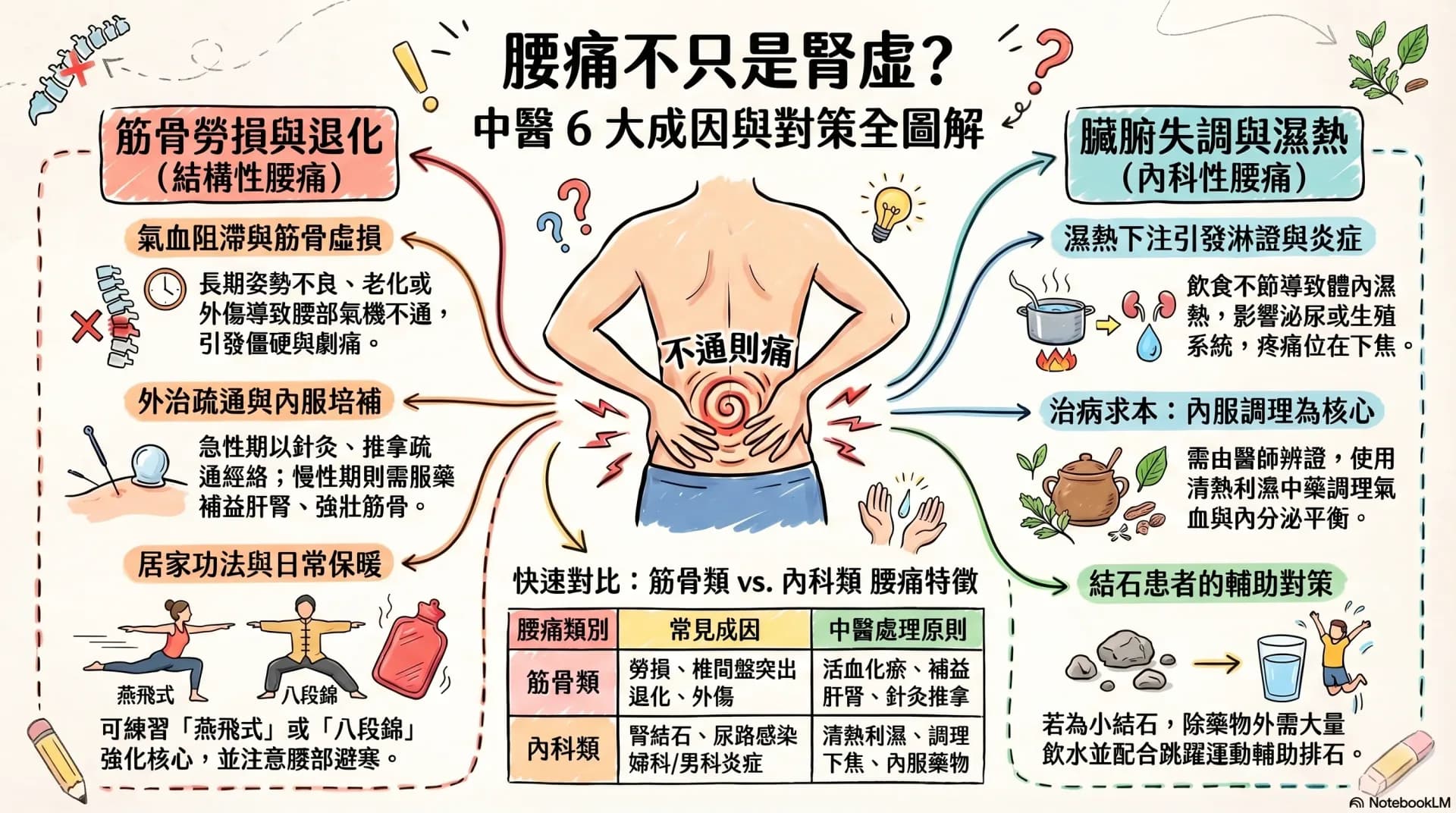
Low Back Pain: 6 Common Causes & TCM Treatment Approaches
Low back pain is not always simply “kidney deficiency” or muscle fatigue. It may also be related to muscle strain, disc herniation, degenerative lumbar disease, kidney stones, urinary tract infection, or pelvic inflammation. This article explains six common causes of low back pain from a TCM perspective and outlines key distinctions and treatment directions.