Kids Won't Eat? A TCM Perspective on the Causes and What Parents Can Do
Poor appetite in children is one of the most common parenting headaches. This article breaks down four common causes from a TCM perspective (spleen-stomach weakness, food retention, liver stagnation, post-viral effects), three things parents can start today, five common paediatric tuina techniques, three gentle food therapies, and the warning signs that warrant a paediatrician first.
Medical review: Dr. To Ching, Jenny,Registered Chinese Medicine Practitioner #009330
1-Minute Quick Answer
Poor appetite in children commonly stems from four TCM patterns: spleen-stomach weakness, food retention, liver-qi stagnation and post-viral effects. Parents can start with regular meals without chasing, no force-feeding and fewer sugary snacks, alongside paediatric tuina. If weight stalls or drops, fever lasts beyond three days, or vomiting brings blood, see a paediatrician first.
Kids Won't Eat? A TCM Perspective on the Causes and What Parents Can Do
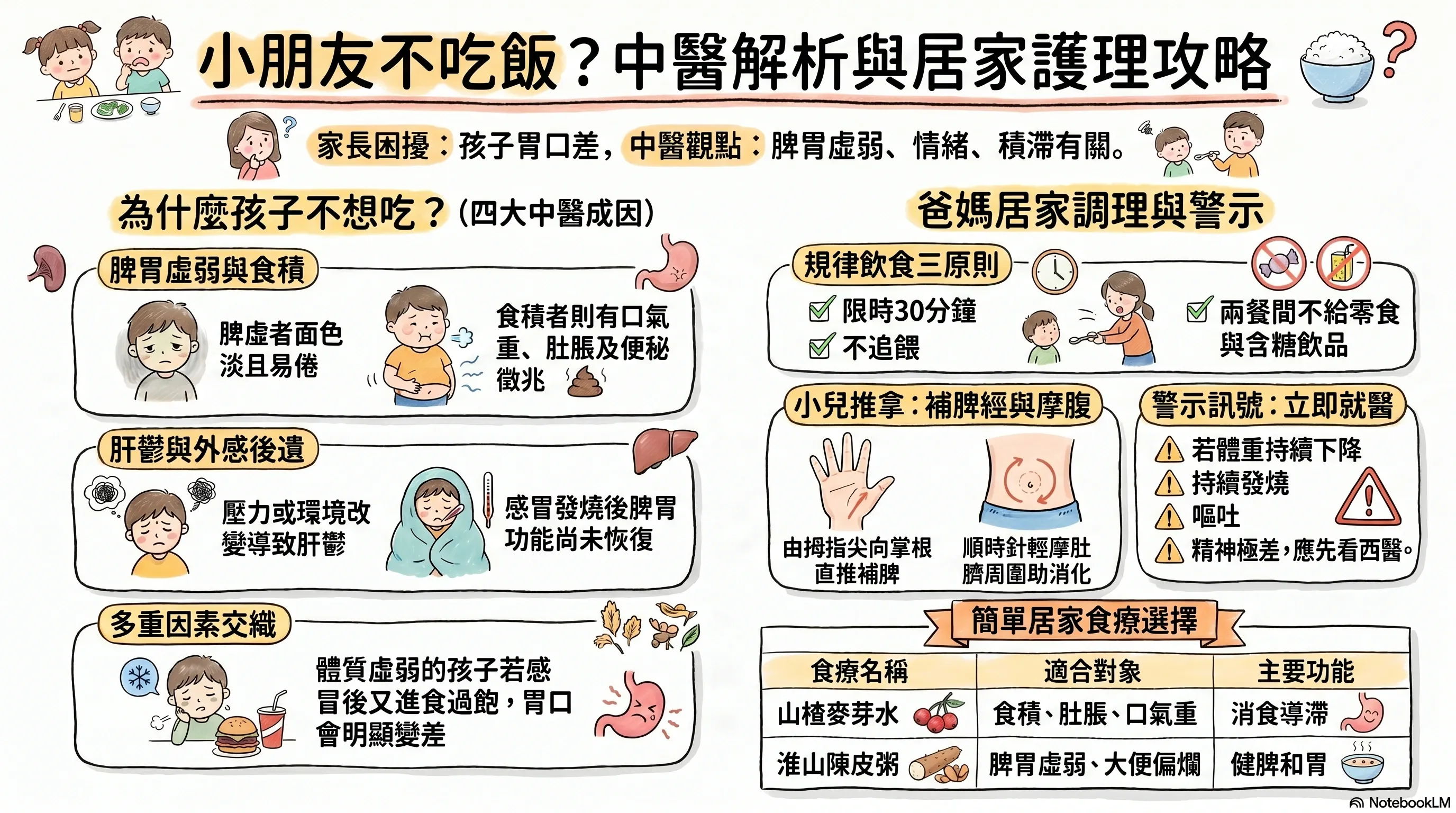 For quick reference, this image was generated by NotebookLM. Some Chinese characters may not render perfectly; we appreciate your understanding.
Medical review: Dr To (CMCHK 009330 | Gynaecology, TCM aesthetics, thread-embedding weight loss, postpartum belly binding)
"He takes two bites and then he's done." "She just stares at her food without a word." "Why is her classmate clearing the plate while she only manages a spoonful?" — almost every parent has met this. The first instinct is often to coax, chase or bribe — yet these approaches usually make the situation worse, turning every meal into a quiet battle.
In TCM, a child's spleen-stomach is more delicate than an adult's (classically described as "constitutionally insufficient"); combined with a child's limited ability to articulate discomfort, appetite is often the body's earliest signal that something is off. This article walks through the four common TCM causes of poor appetite, three things parents can do straight away, the five most commonly used paediatric tuina techniques, simple food therapy, and when a Western doctor must come first.
1. The TCM View: Four Common Causes
| Type | Common features | Direction |
|---|---|---|
| Spleen-stomach weakness | Small intake, pale complexion, easy fatigue, loose stools, weight gain plateau | Strengthen the spleen, support qi |
| Food retention (积滞) | Strong breath odour, abdominal fullness, sour belching, sour or constipated stools, restless sleep, teeth-grinding | Resolve food retention |
| Liver-qi stagnation (emotional) | Appetite drops sharply before school, when meeting unfamiliar people or after environmental changes; nervousness, weepiness, difficulty falling asleep | Soothe the liver, support the spleen |
| Post-viral effects | Appetite has not returned after a cold, fever or gastroenteritis; thick tongue coating | Resolve food retention, harmonise the stomach, strengthen the spleen |
Worth noting: multiple causes can co-exist. A child with a constitutionally weak spleen-stomach who then catches a cold will often present with worse appetite than usual. Practitioners differentiate the pattern from tongue coating, complexion, bowels, sleep and temperament together.
In plainer language: "spleen-stomach weakness" describes a digestion that is running on the soft side; "food retention" describes food that has not been digested cleanly and is sitting in the gut; "liver-qi stagnation" describes how emotional pressure interrupts qi flow and digestion.
2. Three Things Parents Can Start Today
Even before an appointment, three things make a real difference.
1. Regular meals, no chasing.
- Three meals plus two snacks daily, at set times and places
- Cap each meal at 30 minutes — clear the table when time is up
- No snacks, sugary drinks, fruit juice or milk between meals (they kill the next meal's appetite)
- No screens at the table — let the child focus on the food
2. No forcing, no bribery.
- Forcing a child to eat links food with stress; the more you push, the more they resist
- Adopt "parents decide what is offered, the child decides how much" — you choose the menu, they choose the portion
- One light meal will be followed by hunger at the next — a single small meal will not "make them skinny"
3. Reduce snacks, sugary drinks and fruit juice.
- A single glass of fruit juice may carry the sugar of three to four whole fruits
- Snacks (biscuits, sweets, ice cream) push blood sugar up and crashing down, wrecking appetite for the next meal
- Offer water, plain tea, whole fruit, plain yoghurt, unsalted nuts (age-appropriate)
3. Five Common Paediatric Tuina Techniques
Paediatric tuina is a long-standing TCM tool for children's poor appetite, suitable from 6 months to 12 years. It is painless, non-invasive and can be performed by parents at home. The keys are gentle technique, steady rhythm and appropriate pressure.
1. Tonifying the Spleen Channel (Bu Pi Jing)
- Location: pad of the thumb (the side facing inward)
- Technique: with your thumb, push from the child's fingertip toward the palm base (centripetal direction)
- Times: 200 to 300 strokes
- Purpose: strengthen spleen-stomach, support appetite
2. Rubbing Banmen
- Location: the thenar eminence (the muscular pad below the thumb)
- Technique: with your thumb pad, knead clockwise
- Times: 100 to 200
- Purpose: resolve food retention, harmonise the stomach, calm nausea
3. Abdominal Circling (Mo Fu)
- Location: around the umbilicus
- Technique: with four fingers together, gently circle the child's abdomen with your palm
- Direction: clockwise (aids digestion and bowel movement); counter-clockwise for loose stools from spleen-deficiency
- Duration: 3 to 5 minutes
- Purpose: promote gastrointestinal motility, resolve food retention
4. Yunneibagua (Inner Bagua Circling)
- Location: centre of the palm
- Technique: with your thumb, trace a circle clockwise around the centre of the palm
- Times: 100 to 200
- Purpose: regulate qi, ease the chest, support digestion
5. Spine Pinching (Nie Ji)
- Location: along both sides of the spine, from the sacrum up to Dazhui (the prominent bone at the base of the neck)
- Technique: gently pinch and roll the skin between the thumb and index/middle fingers, working upward
- Times: 3 to 5 passes
- Purpose: tonify the organs, build constitution; useful for spleen-stomach weakness, frequent colds and restless sleep
Practical notes:
- Avoid 30 minutes before and after meals
- Warm room; clean and warm hands
- A little baby powder or oil can reduce friction
- Once daily for 1 to 2 weeks as one observation cycle
- If the child resists, do not force — distract (with a book or song) and try again
- Tuina does not replace medical assessment; if the child consistently refuses food or does not gain weight, see a doctor first
4. Three Simple Food Therapy Options
The following are mild options suitable for general spleen-stomach weakness or food retention, but consult a TCM practitioner first if the child has any allergy history or chronic condition.
1. Hawthorn and Malt Drink (for food retention with strong breath odour or bloating)
- Ingredients: 10 g hawthorn, 10 g malt, 500 ml water
- Method: wash, simmer for 20 minutes; a little rock sugar may be added
- Use: once a day for 3 to 5 days
- Note: relatively strong digestion-moving action; stop once appetite normalises; not for long-term daily use
2. Chinese Yam and Tangerine Peel Congee (for spleen-stomach weakness with loose stools)
- Ingredients: 30 g Chinese yam (fresh or dried), 3 g aged tangerine peel, half a cup of rice
- Method: soften the tangerine peel and slice; cook with yam and rice into a thin congee
- Use: 2 to 3 times a week, as breakfast or dinner
- Note: gentle flavour, suitable as a daily option
3. Chicken Gizzard Lining Powder (Ji Nei Jin) (for food retention with bloating)
- Ingredients: chicken gizzard lining (from a Chinese herb shop), washed, dried and ground fine
- Use: 1 to 2 g per dose (about half a teaspoon), mixed into congee, rice cereal or warm water once daily
- Note: not for children under 3, those with chronic conditions, or those on medication, without a TCM practitioner's advice
5. Warning Signs — When to See a Doctor First
These are not "just poor appetite" — see a paediatrician or attend emergency:
- Weight not increasing, or losing weight — growth curve drifting off the child's own line for 2 to 3 months
- Fever lasting more than 3 days — rule out infection
- Persistent vomiting; blood or bile in vomitus — rule out obstruction or acute gastroenteritis
- Persistent abdominal pain; blood or abnormal-coloured stool — rule out enteritis, allergy or other bowel disease
- Difficulty swallowing, food sticking, increased drooling — rule out throat or oesophageal problems
- Marked lethargy, sleepiness, hard to rouse — emergency
- Developmental delay (height, weight, language, motor) — paediatric developmental assessment
- Skin yellowing, rash, severe night sweats — rule out other disease
TCM tuina, food therapy and constitutional care do not replace paediatric diagnosis and treatment. If you are unsure whether it is "just appetite", see a paediatrician first — it is the safest move.
6. How Aspira TCM Clinic Assesses
Before the child's first visit, parents are encouraged to bring:
- Growth records for the past 6 months (height and weight curves, available from school or MCHC)
- A food log (the past week's actual intake, types and between-meal snacks)
- Bowel notes (frequency, shape, colour, smell)
- Sleep notes (timing, night wakings, teeth-grinding, sleep talking)
- Temperament changes (irritability, weepiness, school refusal)
- Recent illnesses, fevers and medication
Dr To reads tongue, complexion, bowel pattern and temperament to identify the pattern, and tailors the plan to the child's age and personality — usually a combination of paediatric tuina, very mild herbal medicine (often granules or with a touch of honey for flavour; no honey under age 3), food therapy and behavioural recommendations. An observation cycle is typically 4 to 8 weeks, with parents implementing the eating-structure changes alongside.
— Dr To | Registered Chinese Medicine Practitioner (Gynaecology, TCM Aesthetics, Thread-Embedding Weight Loss, Postpartum Belly Binding) Reg. No.: 009330 Aspira TCM Clinic
Frequently Asked Questions
Q1: From what age can paediatric tuina be done?
Home wellness tuina (such as abdominal circling and spine pinching) is generally suitable from 6 months. Therapeutic tuina (for appetite, constipation or post-viral effects) is best from 1 year and after guidance from a TCM practitioner. For newborns (under 3 months), tuina should only be done by a TCM practitioner, not attempted by parents.
Q2: Can sweetness be added to children's Chinese herbs?
A small amount of honey (over age 3), maltose, brown sugar or rock sugar is acceptable for flavour. Under age 3, no honey (infant botulism risk). Children's herbs are usually given as granules or powder, which can be dissolved in warm water with a touch of sweetness — far more palatable than traditional decoctions.
Q3: My child is just picky — do I need a TCM consultation?
If the child has (1) a normal growth curve, (2) good energy and mood, and (3) some protein and produce in the diet despite a limited menu, a consultation may not be urgent. Try the three changes in Section 2 for one to two months, then reassess. If weight tracks behind, energy is low, the child gets sick often or sleeps poorly, a TCM or paediatric assessment is worth booking.
Q4: My child eats little and catches colds often — are the two related?
In TCM, "the spleen is the source of qi and blood; lung qi relies on spleen qi to thrive". Children with weaker spleen-stomach function also tend to have weaker immunity ("wei qi"), making colds more frequent and appetite worse after each — a vicious circle. The fix works on both at once — strengthening the spleen and supporting the constitution — rather than only "tonifying the lung" or only "opening the appetite".
Q5: How long does paediatric tuina take to show results?
A typical observation cycle is once daily for one to two weeks. Mild food retention or appetite dips often respond within three to seven days; spleen-stomach weakness takes longer (four to eight weeks) and depends on parallel dietary changes for stable improvement in weight and energy. If there is no change in two weeks, a TCM practitioner should reassess in person.
Poor Appetite Wearing Down the Family? Book a Consultation
If your child has long-standing poor appetite, frequent colds, restless sleep or stagnating weight, please bring growth records, a food log, bowel notes and recent illness and medication notes before booking a consultation with Dr To. For marked weight loss, persistent fever, vomiting blood or extreme lethargy, please see a paediatrician or attend emergency first.
How to book:
- WhatsApp: Book here
- Phone: 2110 9337
- Address: Unit 2706, 27/F, Saxon Tower, 7 Cheung Shun Street, Lai Chi Kok
Disclaimer: This article is for general health education only and does not replace individual diagnosis, examination, medication or treatment advice. Children differ in constitution, age and developmental stage; please consult a registered TCM practitioner or paediatrician for a specific plan. Persistent weight loss, fever, vomiting or severe lethargy must be seen by a Western doctor immediately.
Disclaimer: This article is for health education and reference purposes only and does not constitute medical advice, diagnosis, or treatment. Each patient's condition is unique and treatment outcomes vary. Please consult a registered TCM practitioner or qualified healthcare professional for health concerns.
Further Reading
Hand-picked related articles and real cases to read next.
Postpartum Confinement Myths: Bathing? Washing Hair? TCM Advice and What to Avoid
Traditional postpartum confinement rules were shaped by a very different living environment. This article unpacks six common myths (no bathing, no drinking water, avoiding all wind, "the more tonics the better"), gives phased diet and lifestyle guidance, and lists what TCM does ask mothers to genuinely avoid — and when to see a Western doctor first.
TCM Limitations: 5 Times to See a Western Doctor First
TCM has genuine strengths in chronic care and holistic wellness, but it is not the right first choice for every situation. This article honestly discusses 5 scenarios where Western medicine should come first, what TCM truly excels at, and how to make informed decisions between the two.
Cough That Won't Go Away? 6 Home Remedies + When to See a Doctor
Coughing is one of the most common reasons for seeking medical attention in Hong Kong — but not every cough requires an immediate doctor visit. This article shares 6 home remedies from a TCM perspective and helps you identify the "red flag" signs that mean you should see a doctor promptly.
Want to learn more? WhatsApp us for a free consultation
Book via WhatsAppExplore our full range of treatments: Traditional TCM Services
Related Articles
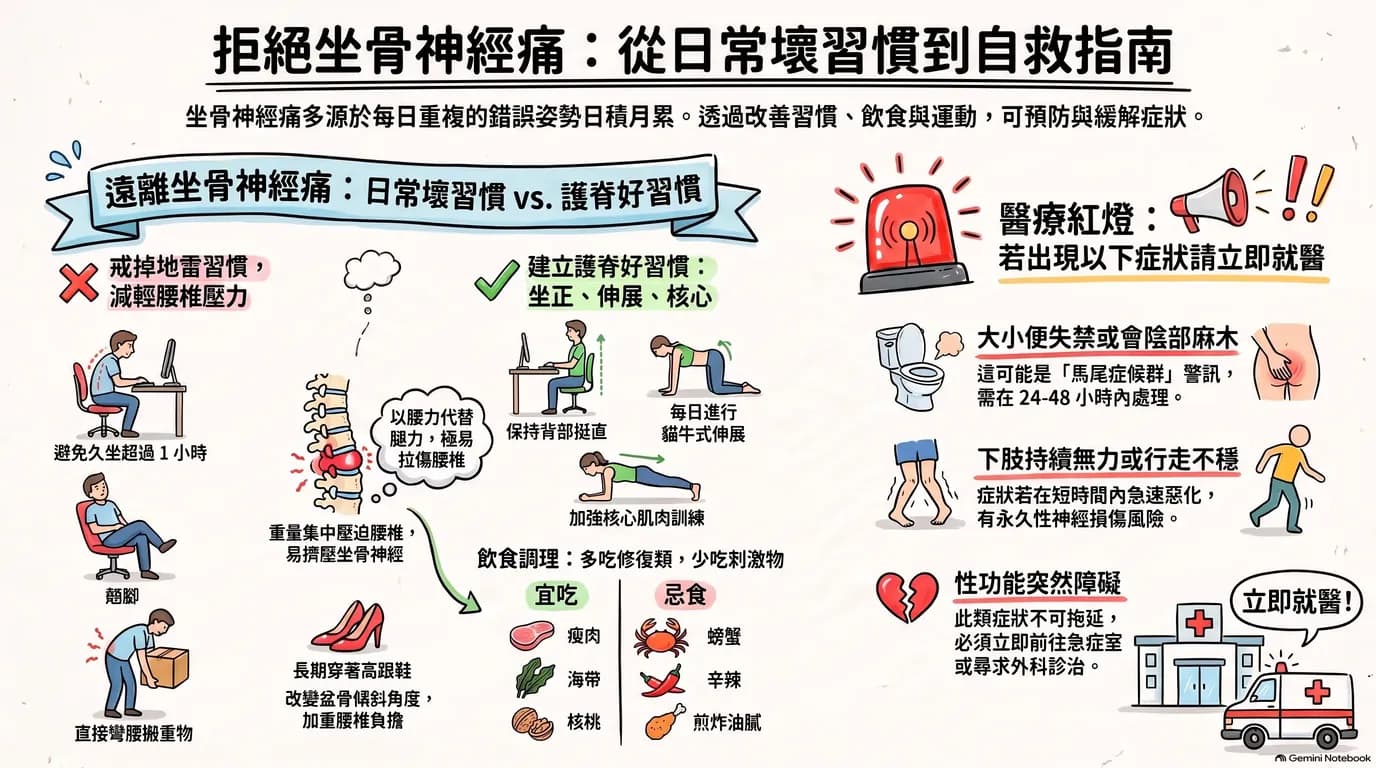
Sciatica Prevention: Bad Habits, Diet and Daily Care Tips
Sciatica isn't only about treatment — your daily habits and diet play a big role too. In this article, Dr Wong explains which everyday habits increase your risk of sciatica, which foods may help ease it, and simple daily habits that reduce the chance of it coming back.
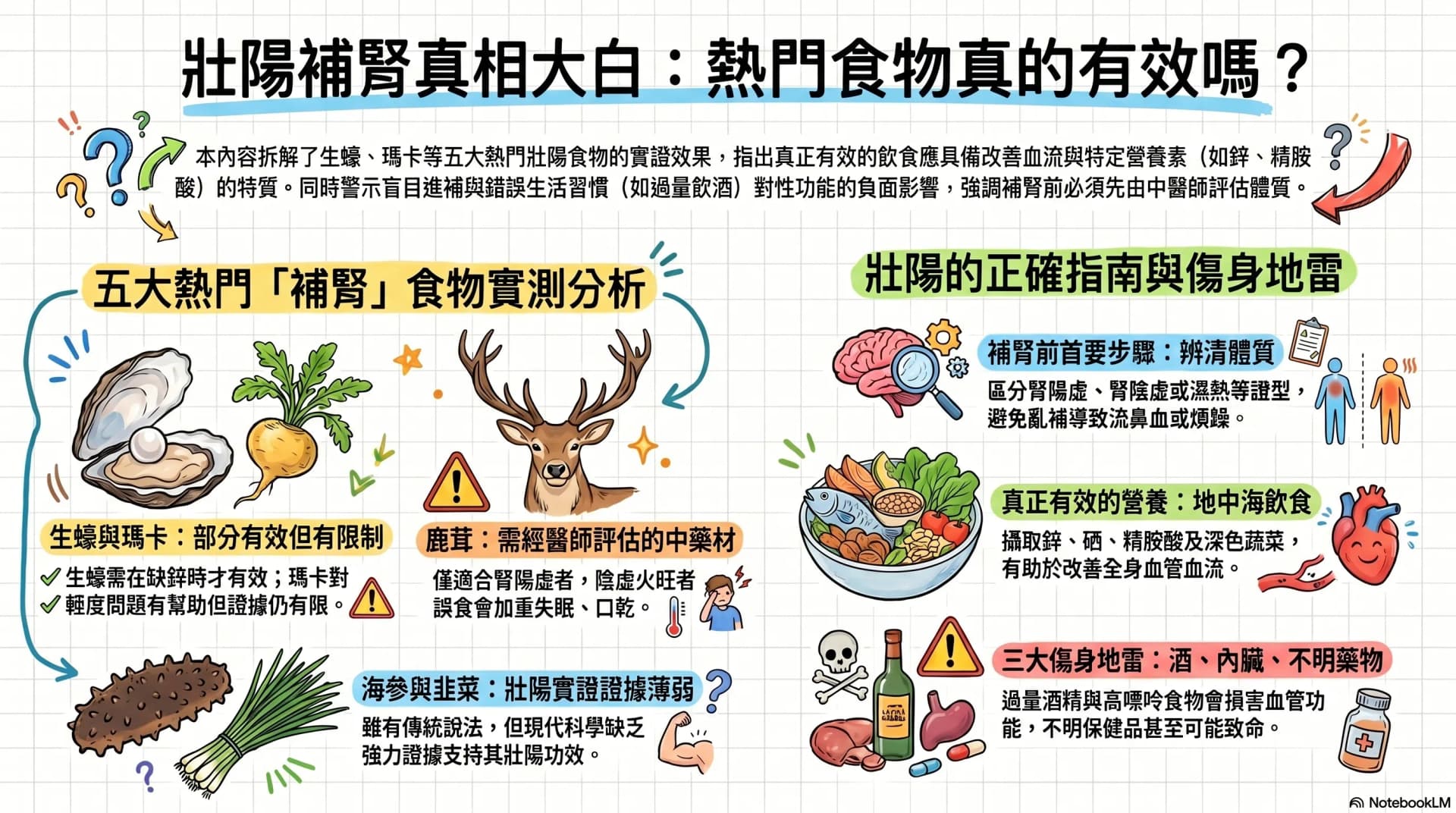
Do Oysters, Maca and Deer Antler Boost Male Vitality? 5 Myths
Do aphrodisiac foods actually work? This article opens with a rating table (effective / partly effective / effective within a TCM framework / weak evidence / no strong evidence), reviews the Chinese and Western medical evidence behind oysters, maca, deer antler, sea cucumber and Chinese chives, distils the 3 shared traits of foods that genuinely support male sexual function, and flags 3 commonly eaten items that can actually harm performance.
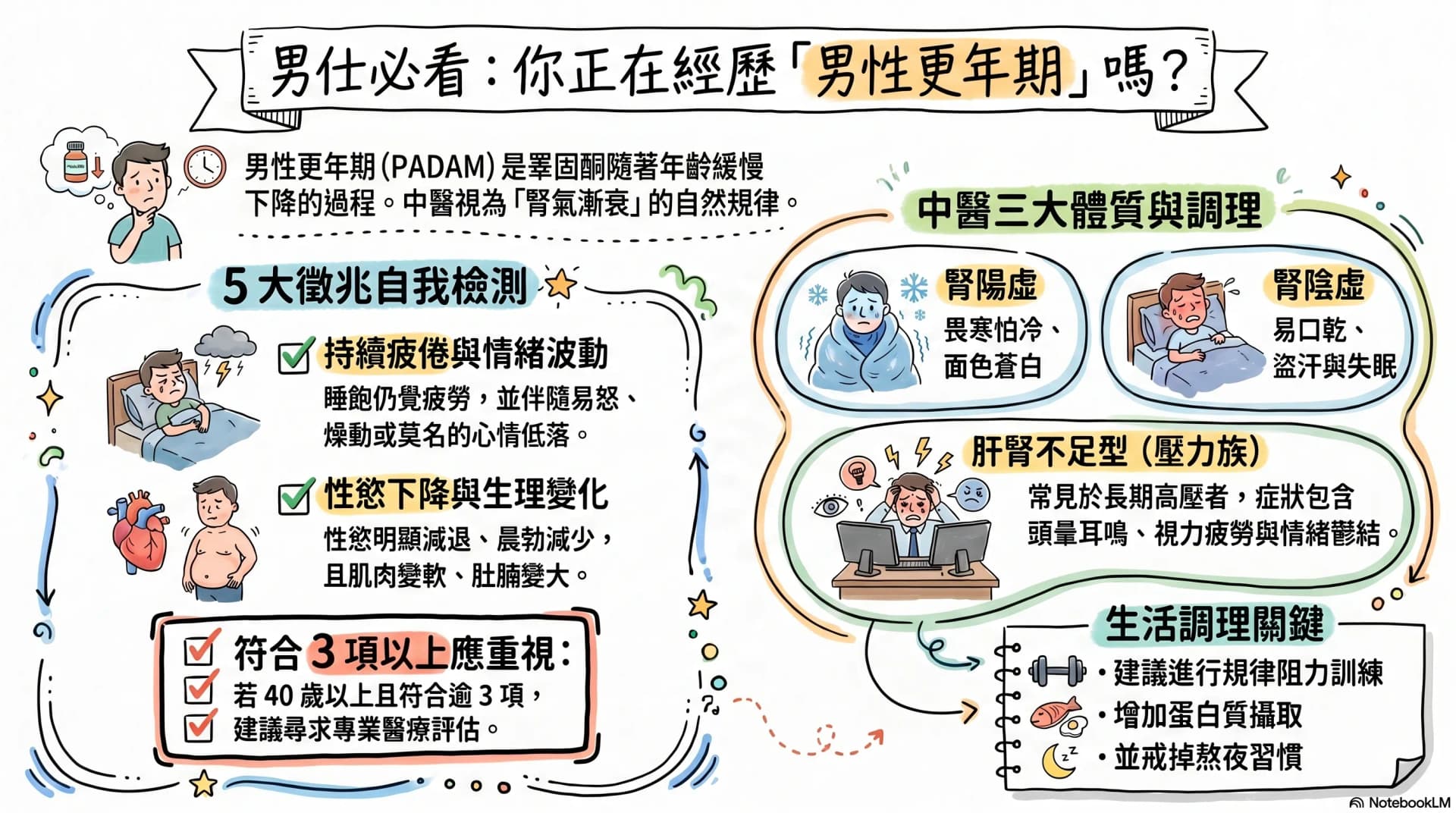
Male Menopause Through the TCM Lens: 5 Signs in Men Over 40
Unexplained fatigue, irritability, lower libido, poorer sleep and a growing belly after 40 are not just ageing or work stress — they may be male menopause. This article begins with a five-sign self-check, sets out three TCM patterns (kidney-yang deficiency, kidney-yin deficiency, liver-and-kidney insufficiency) with matching improvements, and compares the two treatment routes — testosterone replacement therapy versus TCM constitutional care.