Weight Unchanged but the Belly Keeps Growing? A TCM Turnaround Plan for Central Obesity in Office Workers
Weight has risen only 2 kg in six months, but the waist is 8 cm wider; the health-check report flags "elevated visceral fat" in red. This is a common frustration for women in their 30s working office jobs. This case study follows the typical consultation profile of "Ms Chan" (pseudonym) — explaining the TCM evaluation of sedentary central obesity, the spleen-damp-with-liver-stagnation pattern, the three-month phased plan, when to see a Western doctor first, and three things readers can start doing today.
Medical review: Dr. To Ching, Jenny,Registered Chinese Medicine Practitioner #009330
1-Minute Quick Answer
A "weight unchanged, waist rising" pattern is typical central obesity in sedentary office workers in their 30s, driven by prolonged sitting, weakened spleen function, liver qi stagnation, sleep and stress. Even with a normal BMI, a waist of 90 cm in men or 80 cm in women is an abdominal-obesity warning. TCM commonly reads it as spleen-damp with liver stagnation, working in phases alongside diet and behaviour change. A rapid rise in girth or skin yellowing needs Western assessment first. Reviewed by Dr To Ching (CMCHK 009330).
Weight Unchanged but the Belly Keeps Growing? A TCM Turnaround Plan for Central Obesity in Office Workers
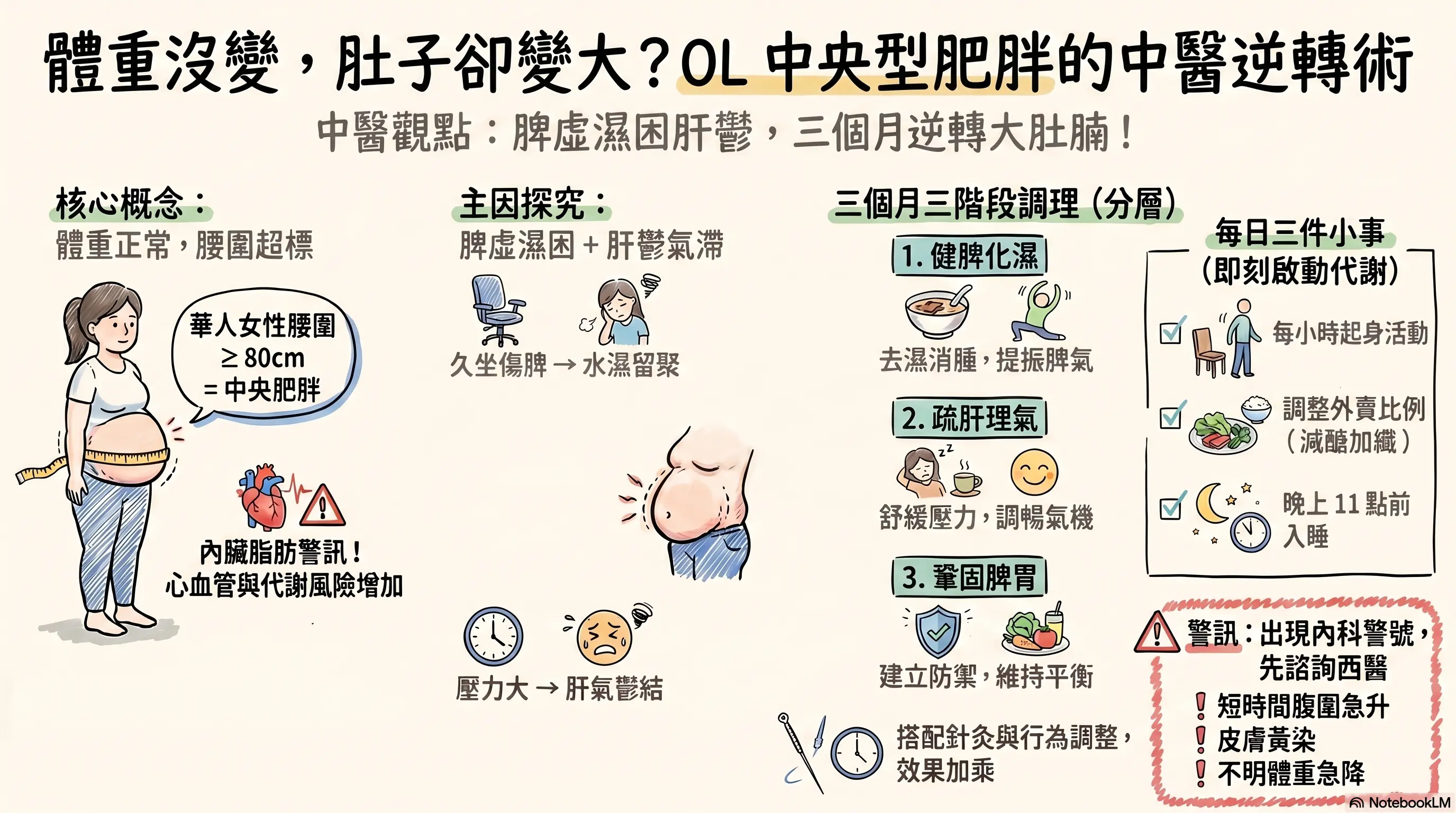 For quick reference, this image was generated by NotebookLM. Some Chinese characters may not render perfectly; we appreciate your understanding.
Medical review: Dr To Ching (CMCHK 009330 | Gynaecology, TCM aesthetics, thread-embedding weight loss, postpartum belly binding)
"My weight hasn't really changed, but my waistband keeps getting tighter — the rest of me is fine, only the belly is sticking out, and exercise doesn't seem to help." This is a common complaint among women in their 30s in office jobs.
A "weight unchanged but waist rising" pattern that emerges after 30 is clinically very typical. It differs from the even, whole-body weight gain of younger years — behind it sit prolonged sitting, weakening spleen function, liver-qi stagnation, sleep and stress layered together — and it matches what Western medicine calls central obesity or apple-shaped obesity.
This case study follows the typical consultation profile of "Ms Chan" (pseudonym), explaining the TCM evaluation of central obesity, the three-month phased plan, and three things readers in the same position can start today. The case is a composite of common clinical features rather than a single real patient.
Note: If abdominal girth rises sharply over a short period, with skin yellowing, persistent abdominal pain, unexplained weight loss or severe night sweats, see a Western doctor first to rule out liver, gastrointestinal or endocrine disease. This article does not replace internal medicine diagnosis.
Ms Chan's Past Six Months
Ms Chan is 36, works in office administration, sits about 9 hours a day, eats mostly takeaways and goes out for late-night meals with colleagues 1–2 times a week. Her consultation record:
- Weight: 58 kg six months ago, 60 kg now (up 2 kg)
- Waist: 76 cm six months ago, 84 cm now (up 8 cm)
- BMI: 23.5 (still within normal, but waist over the threshold)
- Company health-check: visceral fat index in red, fasting glucose at the upper end of normal, lipids normal
- Menstruation: regular, but obvious fluid retention in the 5–7 days before her period (puffy face, tight ring, tighter waistband)
- Sleep: bedtime 12 to 1 am on weekdays, 5–6 hours a night; catches up until 10 am on weekends
- Bowels: once every 2–3 days, leaning dry
- Fluid intake: about 800–1000 ml a day, plus 2 cups of coffee
- Past weight-loss attempts: dieting plus treadmill, 1 kg lost over 3 months, regained within a month of stopping
What troubled Ms Chan was not the scale itself but the tightening waistband and the red flag on her health-check. A friend's referral brought her to the treating practitioner at Aspira TCM Clinic for assessment.
Why This Happens — the TCM Reading
The treating practitioner's first-visit observations:
| Item | Observation |
|---|---|
| Tongue | Pale, teeth-marked edges, thick greasy white coating |
| Pulse | Wiry and slippery |
| Complexion | Slightly yellow, oily forehead |
| Temperature sense | Not particularly cold-averse, but neck and shoulders tight after long air-con exposure |
| Drinking | Drinks little before meals; bloated after eating |
| Bowels and urine | Urine normal; stool dry, once every 2–3 days |
| Mood | Binges on sweets when work pressure spikes |
The treating practitioner's pattern reading was spleen-deficiency with damp layered on liver-qi stagnation. In simpler terms:
- Spleen deficiency with damp: prolonged sitting impairs qi movement and transformation; high-sodium takeaways, late-night eating and short sleep further damage spleen-stomach function. With the spleen failing to transform fluids, the picture becomes soft belly, thick white tongue coating and morning fatigue.
- Liver-qi stagnation: long-term work pressure without an outlet locks the liver qi. Liver stagnation is more than mood — clinically it directly shapes eating patterns (binges alternating with poor appetite), sleep (difficulty falling and staying asleep) and the menstrual cycle. When stagnation generates heat, sugar cravings intensify.
- The two stacked: fat redistributes around the abdominal organs — what is called visceral fat — producing the typical "weight barely up, waist sharply up" central-obesity profile.
In other words, Ms Chan's problem is not simply "she eats too much"; the picture is spleen transformation, liver stagnation, prolonged sitting and inadequate sleep all pulling on one another. Plain restriction or running on its own can fail to address the underlying picture and may further weaken the spleen.
Why Central Obesity Deserves Earlier Action
The Centre for Health Protection of the Department of Health uses a waist threshold of ≥ 90 cm for Chinese men and ≥ 80 cm for Chinese women as a marker of central obesity — a core indicator of metabolic syndrome. Visceral fat surrounds the liver, pancreas and intestines in the abdomen and directly raises hypertension, diabetes, cardiovascular and fatty-liver risk.
It is worth noting that even when BMI sits within the normal range, a waist measurement that has crossed this threshold is already a reason to act — "BMI still okay" should not be used as a reason to wait.
Treatment Plan — TCM Care in Three Phases
The treating practitioner built a three-month, phased plan and asked Ms Chan to record weight, waist and main symptoms once a week.
Phase 1 — Strengthen spleen, resolve damp, move qi (weeks 1–3)
- Herbal direction: strengthening the spleen, resolving damp, moving qi (clearing stagnation and bloating) and reducing fat — specific formulas determined by pattern; this article does not list formula names or doses
- Acupuncture direction: Zhongwan, Tianshu, Zusanli, Fenglong, Yinlingquan
- Treatment cadence: one acupuncture session a week
- Behavioural changes:
- Get up and move 2–3 minutes every hour
- Walk 10–20 minutes after meals; do not sit down straight after eating
- Skip the takeaway soup base; keep at least a palm-sized portion of protein per meal
The aim in this phase is not immediate weight loss but to improve spleen transformation and reduce fluid and phlegm-damp load in the abdomen.
Phase 2 — Soothe liver, strengthen spleen, regulate qi flow (weeks 4–8)
- Herbal direction: on top of strengthening spleen and resolving damp, add a liver-soothing direction
- Acupuncture direction: add Taichong and Hegu for soothing liver and moving qi
- Treatment cadence: one acupuncture session every two weeks
- Behavioural changes:
- Stop late-night eating; if truly necessary, limit to a boiled egg or unsweetened soy milk
- Aim for sleep before 11 pm (start with 3–4 nights a week)
- 20–30 minutes of walking or gentle resistance training daily
The aim is to address sugar cravings and stress binges that come with liver-fire patterns, and to improve sleep at the same time.
Phase 3 — Consolidate the spleen-stomach and build a sustainable food structure (weeks 9–12)
- Herbal direction: focused on consolidating the spleen-stomach; doses can taper as the body settles
- Acupuncture direction: adjusted as needed
- Treatment cadence: follow-up every 3–4 weeks
- Behavioural changes: build a long-term takeaway-choice list, a simple exercise habit and a stable sleep window
Three-Month Observations
At the three-month follow-up, Ms Chan's changes (qualitative; individual responses vary):
- Waist: 84 cm → 76 cm (down about 8 cm)
- Weight: 60 kg → 57.5 kg (down about 2.5 kg; modest)
- Company health-check visceral-fat index: red → yellow
- Bowels: back to once a day
- Sleep: bedtime about an hour earlier; fewer night wakings
- Subjective: waistband eased; better afternoon energy
The treating practitioner's clinical observation: "The most easily overlooked thing about central obesity is that the scale may move very little while visceral fat and metabolic risk creep up. The TCM role is not to 'push the scale down hard'; the priority is to stabilise spleen transformation and liver-qi together, and let behaviour change support the long-term result."
Three Things You Can Start Today
- Get up every hour and walk after meals. Sitting more than 8 hours a day is a core risk for central obesity. Two or three minutes of movement every hour and a 10- to 20-minute post-meal walk beat a "catch-up" 3-hour weekend session.
- Restructure your takeaways instead of slashing portions. Skip the soup base, cut refined carbohydrates, keep a palm of protein and a serving of vegetables every meal. Volume stays; structure shifts.
- Try to be asleep before 11 pm. Liver-gallbladder repair runs through the early-morning hours; late nights worsen liver-fire patterns and lower next-day metabolism. If daily isn't realistic, start with 3–4 nights a week.
When Not to Treat It as "Just Obesity"
These signals warrant seeing a Western doctor first:
- Rapid rise in abdominal girth over a short period (e.g. +5 cm or more in 1–2 months)
- Skin or sclera yellowing, dark urine
- Persistent abdominal pain, gastrointestinal bleeding, distinct change in stool colour
- Unexplained weight loss (not from deliberate dieting, > 5% over 3 months)
- Severe night sweats with persistent low-grade fever
- For women: periods that have stopped entirely for more than 3 months (not pregnancy, not within menopause-typical age)
TCM weight-related care cannot replace abdominal imaging, liver-function tests or tumour markers; any suspected internal-medicine disease warrants a Western workup.
How Aspira TCM Clinic Evaluates Central Obesity
Before the first visit, please bring:
- Weight and waist records over the past year (where available)
- Company or clinic health-check reports (visceral fat, blood sugar, lipids, liver function)
- A current medication list (including antihypertensives, contraceptives and supplements)
- Notes on past weight-loss attempts and how the body responded
The treating practitioner will decide on a plan combining herbs, acupuncture and behaviour change based on pattern differentiation, and will flag scenarios that warrant seeing a Western doctor first; the overall principle is to fit in around Western health-check monitoring.
FAQ
Does normal body weight with a high waist still count as obesity?
By the Centre for Health Protection's standard, a waist of ≥ 90 cm in Chinese men and ≥ 80 cm in Chinese women is central obesity and directly tied to metabolic-syndrome risk. Even when BMI sits in the normal range, a waist over this threshold is already a reason to intervene.
Do men and women have different drivers of central obesity?
Both groups share prolonged sitting, eating out, short sleep and stress as factors. The differences: men with frequent business dining and alcohol often show phlegm-damp combined with damp-heat; women may add premenstrual fluid retention, post-partum changes, contraceptive-related shifts, or perimenopausal hormonal swings. Clinical direction is adjusted case by case.
Will sit-ups reduce belly fat?
Sit-ups train the rectus abdominis and can improve abdominal definition, but they do not selectively reduce visceral fat. Reducing visceral fat requires an overall calorie deficit, preserved muscle mass, adequate sleep and stress management. Central-obesity care is about spleen transformation, liver-qi management and behaviour change in combination — not about isolating one or two movements.
Will TCM weight management rebound?
Whether weight rebounds turns less on whether you stop the herbs or acupuncture than on whether dietary structure, activity, sleep and stress management are maintained afterwards. If herbs are used purely to push the scale down without lifestyle change, weight returns when the regimen ends; by contrast, if takeaway structure, sleep windows and muscle care have been reset along the way, gains hold for a period. The role of TCM is to make sustainable change easier.
Disclaimer: This article is for general health education only and does not replace individual diagnosis, examination, medication or treatment advice. The case is a composite of common clinical patterns, not a single real patient. If you have diabetes, fatty liver, cardiovascular or endocrine disease, follow your doctor's instructions for follow-up; any medication or supplement change should be discussed with your treating doctor first.
Disclaimer: This article is for health education and reference purposes only and does not constitute medical advice, diagnosis, or treatment. Each patient's condition is unique and treatment outcomes vary. Please consult a registered TCM practitioner or qualified healthcare professional for health concerns.
Want to learn more? WhatsApp us for a free consultation
Book via WhatsAppExplore our full range of treatments: Traditional TCM Services
Related Articles
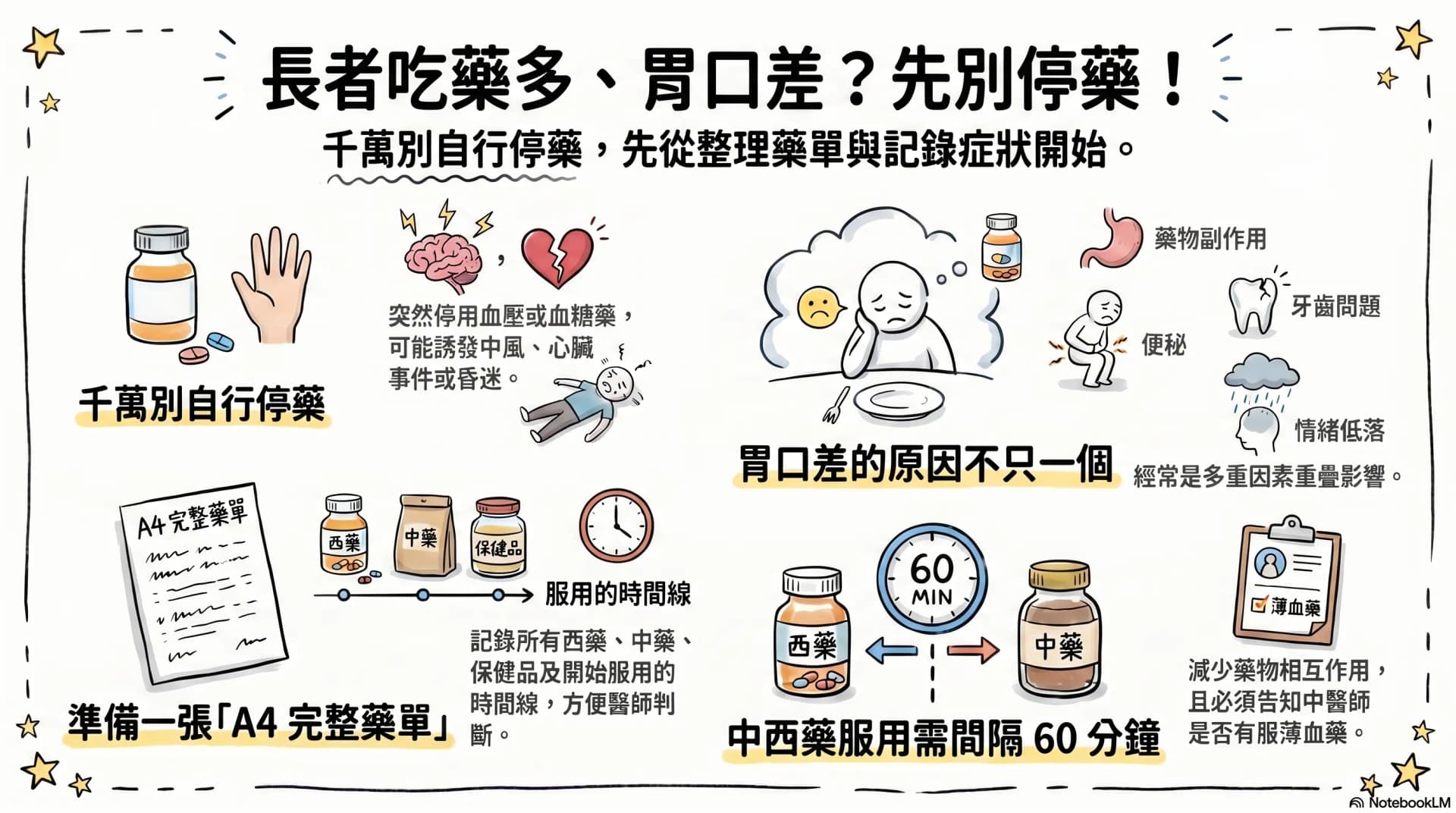
Poor Appetite in Older Adults on Long-Term Medication and Supplements? A TCM Case Study on Spleen-Stomach Care Under Polypharmacy
Several chronic-disease pills, then poor appetite, early fullness and daytime tiredness — family carers naturally wonder whether some of those medications are "harming the stomach". Stopping them on your own, however, can destabilise blood pressure, blood sugar and cardiovascular risk. This case of a 76-year-old maps out 7 possible causes, 6 things family carers should do, the safety conditions for TCM (60-minute spacing between Western and Chinese medicine), and the spleen-stomach directions that TCM can offer.
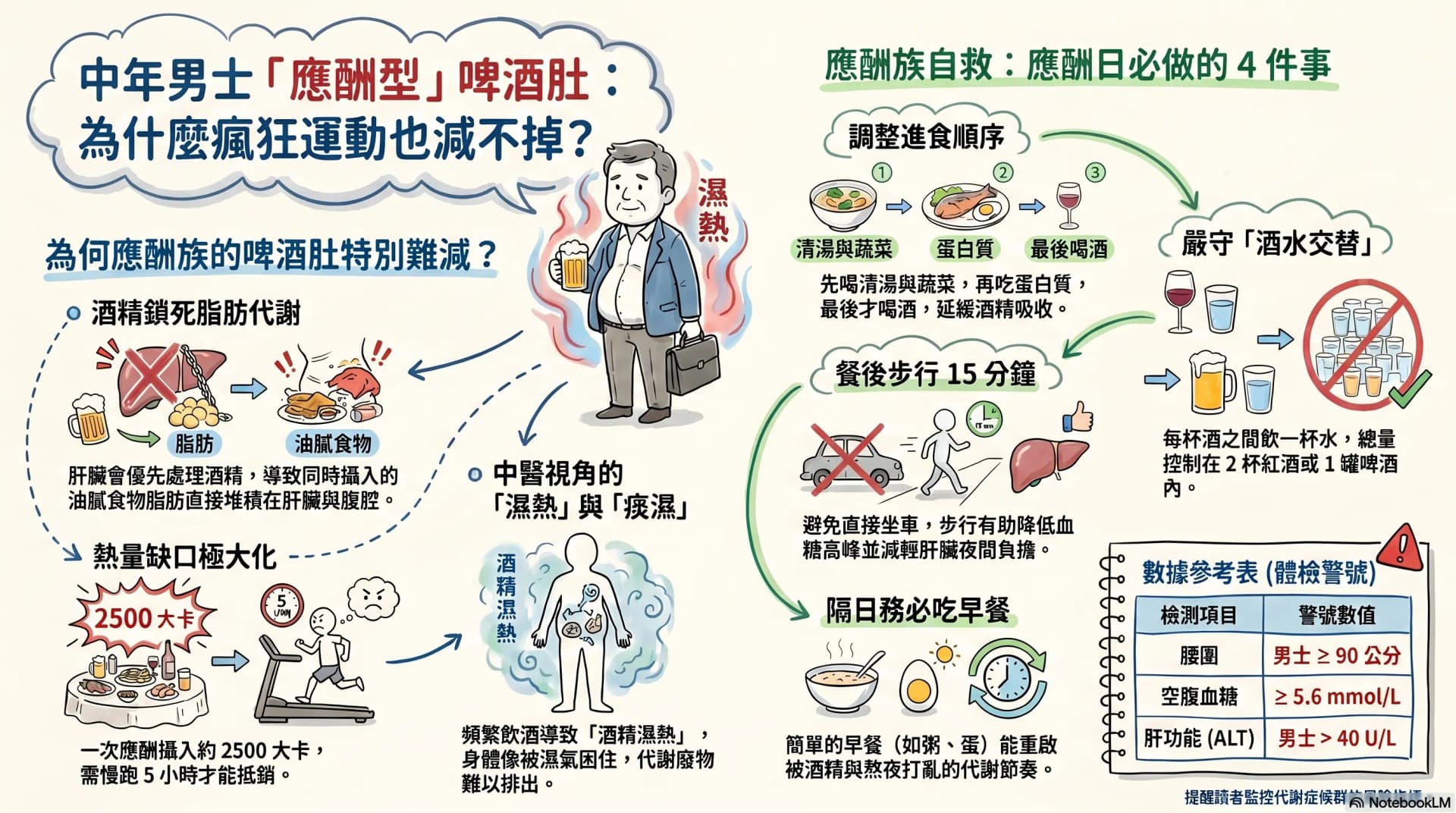
Middle-Aged Beer Belly That Won't Shrink? A TCM Case Study on Business Entertainment and Visceral Fat
Frequent client dinners, late-night meals and rising alcohol intake, yet the waistline keeps growing and the annual check-up flags borderline metabolic syndrome. This case study of a 48-year-old explains why visceral fat accumulates so readily in middle-aged men, how alcohol fuels the fatty-liver pathway, and how TCM evaluates four parallel drivers: damp-heat, phlegm-damp, late eating and stress-induced liver qi stagnation.
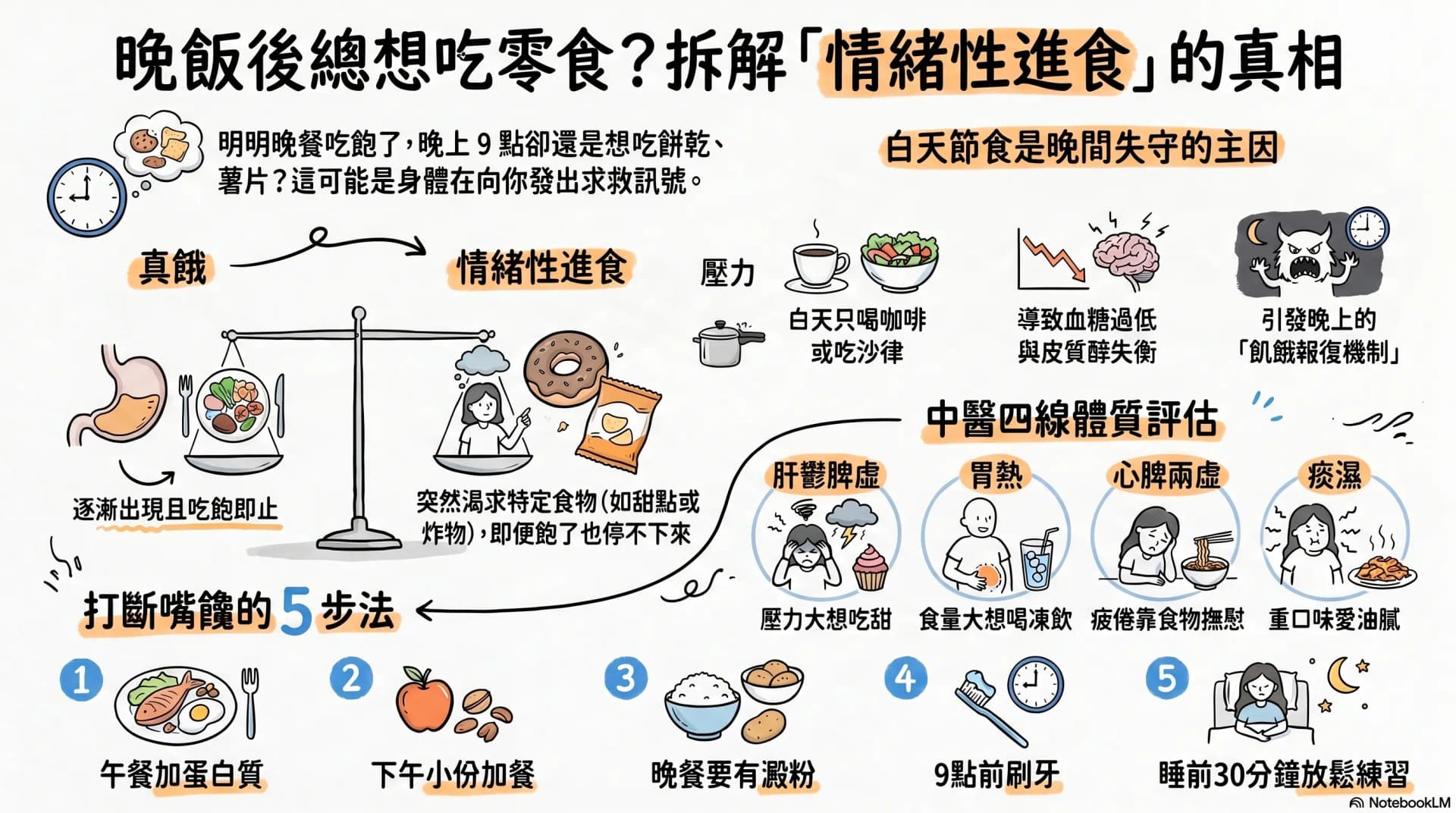
Can't Stop Snacking After Dinner? A TCM Case Study on Emotional Eating and Late-Night Cravings
Dinner was enough, yet after 9 pm the biscuits, chocolate, crisps or ice-cream call again — followed by guilt and a smaller breakfast the next morning. This case study of a 35-year-old office worker walks through how to tell real hunger from emotional eating, the four TCM lines (liver-spleen, stomach heat, heart-spleen deficiency, phlegm-damp), and a five-step routine to break the 9–11 pm craving cycle.