Middle-Aged Beer Belly That Won't Shrink? A TCM Case Study on Business Entertainment and Visceral Fat
Frequent client dinners, late-night meals and rising alcohol intake, yet the waistline keeps growing and the annual check-up flags borderline metabolic syndrome. This case study of a 48-year-old explains why visceral fat accumulates so readily in middle-aged men, how alcohol fuels the fatty-liver pathway, and how TCM evaluates four parallel drivers: damp-heat, phlegm-damp, late eating and stress-induced liver qi stagnation.
Medical review: Dr. To Ching, Jenny,Registered Chinese Medicine Practitioner #009330
1-Minute Quick Answer
An entertainment-driven beer belly is fed by four stacked drivers: declining testosterone routing fat to the abdomen, alcohol priming the fatty-liver pathway, frequent dinners disrupting meal rhythm, and stress-induced liver qi stagnation. Losing kilos is not the same as losing visceral fat, and weekend exercise alone cannot offset banquet calories. TCM assesses four threads; moderate fatty liver or borderline glucose needs continued Western follow-up. Reviewed by Dr To Ching (CMCHK 009330).
Middle-Aged Beer Belly That Won't Shrink? A TCM Case Study on Business Entertainment and Visceral Fat
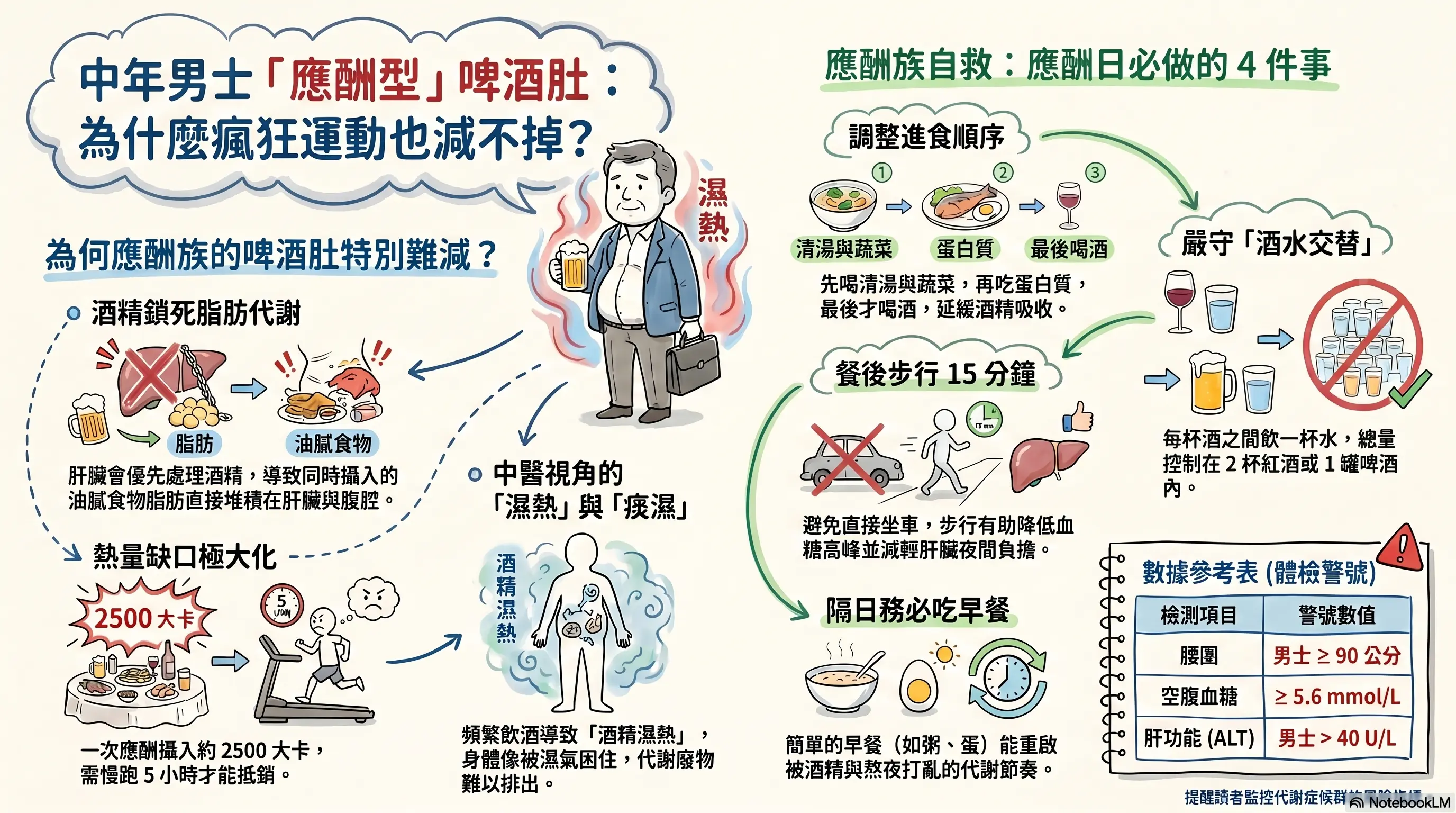 Image generated by NotebookLM for quick visual reference; some Chinese characters may not render correctly.
Medical review: Dr To Ching (CMCHK 009330 | Gynaecology, TCM aesthetics, thread-embedding weight loss, postpartum belly binding).
Mr Chan (alias), 48, is a senior sales manager. His month typically includes 8 to 10 client dinners — rotating between red wine, spirits and beer — most of which start past 9 pm. Over the past six months his waist has grown from 32 to 36 inches, and his annual check-up flagged mild fatty liver, borderline fasting glucose, and elevated LDL cholesterol. He runs for 30 minutes three times a week, yet the belly refuses to budge.
This is a common scene for Hong Kong men over 45 in sales, property, finance and SME management, where client entertainment is part of the job. Saying no to a glass is awkward, dinner timing is out of one's hands, and the waist line quietly creeps up while medical markers drift toward red. This case study walks through three points: why an entertainment-driven beer belly is different from ordinary weight gain, which medical risk endpoints matter, and how TCM evaluates the four overlapping drivers. For background on visceral fat itself (and why slim people may have it too), please see our companion piece "Why slim people still have a belly".
Why an entertainment-driven beer belly is different
A beer belly is often dismissed as the result of "eating too much and moving too little". For the entertainment crowd, however, four specific drivers stack up at once.
Why middle-aged men accumulate abdominal fat more readily. From the early forties onward, testosterone gradually declines, muscle mass tapers and basal metabolism slows. Surplus calories tend to settle around the abdomen rather than the thighs or hips. Chronic entertainment stress and short sleep raise cortisol, which preferentially routes fat to the visceral compartment around the organs. At the same body weight, middle-aged men park more of their fat at the waist than women do.
Alcohol primes the "liver fat → fatty liver" pathway. When alcohol arrives, the liver prioritises clearing it before processing fats. When alcohol and fatty food arrive together at a banquet table, surplus fat queues up in the liver and abdominal cavity, and gradually becomes hepatic steatosis. The Centre for Health Protection notes that men drinking more than 14 alcohol units per week (about seven cans of beer) face markedly higher fatty-liver and cardiovascular risk.
The frequency and rhythm of dinners. Eight client dinners a month does not simply mean eight heavy meals. Each one tends to push dinner past 9 pm, drift into a second round, end with a late-night cab ride, then sabotage the next morning's breakfast and lunch. One dinner often disrupts three normal meals. Two dinners a week means roughly 24 meals a month with broken rhythm — visceral fat accumulates faster than in run-of-the-mill obesity.
Four medical checks for the entertainment crowd
If you have four or more client dinners a month, a growing waist and no recent check-up, the following baseline tests are worth booking proactively.
| Test | What it shows | Red-flag value | Frequency |
|---|---|---|---|
| Abdominal ultrasound | Severity of fatty liver | Moderate or severe steatosis | Every 1–2 years |
| Fasting glucose + HbA1c | Pre-diabetes or diabetes | Fasting ≥ 5.6 mmol/L: pre-diabetes; ≥ 7.0: diabetes | Annually |
| Liver function (ALT, AST) | Liver inflammation | Male ALT > 40 U/L | Annually |
| Lipids (LDL, HDL, TG) | Cardiovascular risk | LDL ≥ 3.4, HDL < 1.0, TG ≥ 1.7 mmol/L | Annually |
A waist circumference of 90 cm or above in men, combined with three of the above markers tipping over, meets the clinical criteria for metabolic syndrome. If any single result is outside the normal range, please consult your family doctor or internist first, then consider TCM as a supportive layer.
Four TCM threads: why the entertainment crowd struggles to slim down
TCM does not stop at "you eat too much". It looks at four threads of physiological strain that tend to braid together.
| TCM line | Entertainment context | Common signs |
|---|---|---|
| Alcoholic damp-heat (wine-damp lodges in the liver, simmers into heat) | Frequent drinking, dense entertainment schedule | Bitter or sticky mouth, flushed face, irritability, sticky stools |
| Oily phlegm-damp (spleen-stomach overload) | Heavy seafood and grilled meats, fried or thick-sauced dishes | Post-meal bloating, heaviness, copious phlegm, thick greasy tongue coating |
| Late-eating disrupting spleen-stomach rhythm | Dinners starting after 9 pm, frequent late-night snacks | No appetite in the morning, low energy in the day, ravenous at night |
| Liver qi stagnation from entertainment stress | Long-term social fatigue | Irritability, difficulty falling asleep, vivid dreams, tight neck and shoulders |
Mr Chan reports feeling especially exhausted and "heavy-headed" the day after each banquet, with a bitter taste lingering in the mouth — a classic signature of damp-heat and late-eating activating in parallel.
In plainer terms: "damp-heat" describes the body feeling soaked in heavy moisture and a slow-burning inner heat — sticky mouth, oily skin. "Phlegm-damp" describes excess fluids and metabolic by-products that the body cannot clear, expressing as heaviness and constant phlegm. "Liver qi stagnation" describes a stuck flow of energy under pressure, surfacing as chest tightness and frequent sighing.
Why weekend exercise alone cannot offset client dinners
A four-hour banquet with alcohol can easily deliver 1,500–2,500 kilocalories. Two banquets a week is an extra 3,000–5,000 kilocalories. A 30-minute jog burns 250–300. Two jogs over the weekend barely offset a single banquet.
More importantly, losing kilograms is not the same as losing visceral fat. Visceral fat is the real risk driver, and it does not melt under weekend exercise alone. Three things have to move together: lower alcohol frequency, restructure what and when you eat on entertainment days, and rebuild a proper recovery rhythm afterwards.
Four things to do on an entertainment day
- Order in the right sequence. Lead with clear soup, vegetables and seafood; deal with grilled and fried dishes later. Protein and fibre first, alcohol after — this slows alcohol absorption.
- Pace the drinking. Drink a glass of water between every alcoholic drink. Cap intake at "two glasses of red wine or one beer". Avoid sugary cocktails (mojito, whisky-cola). Rotating sparkling water looks inconspicuous and helps decline a refill.
- Walk for 30 minutes after the meal. Do not jump straight into a taxi. Ten to fifteen minutes on foot helps blunt the post-meal glucose peak and eases the liver's overnight load.
- Eat breakfast the next morning. Skipping breakfast worsens the broken rhythm. A simple but real breakfast — congee, wholegrain toast with egg, soy milk — restarts metabolism for the day.
How Aspira TCM Clinic assesses such cases
The treating practitioner reviews the patient's tongue and pulse, the last three months of medical reports, entertainment frequency, eating structure, sleep hours, and sources of stress. The first consultation runs around 30 to 45 minutes and concludes with a tailored combination of herbal medicine, acupuncture or thread-embedding where appropriate. If a check-up already shows moderate-to-severe fatty liver, HbA1c ≥ 6.5 or blood pressure ≥ 140/90, follow-up with the patient's Western doctor continues in parallel; TCM works on constitution and metabolism, not as a substitute for medical monitoring.
FAQ
Is red wine healthier than beer or spirits?
Regardless of type, the main harm comes from alcohol itself and the total amount. The antioxidant polyphenols in red wine are interesting from a research perspective, but they do not cancel out alcohol's load on the liver. What matters is weekly alcohol units and drinking frequency.
Is thread-embedding suitable for someone with a heavy entertainment schedule?
Thread-embedding can be a useful adjunct, but its impact on an "alcoholic damp-heat" beer belly is limited. If drinking frequency and late-eating rhythm do not change, thread-embedding alone is unlikely to deliver lasting results. We recommend a constitution and lifestyle review first, then deciding on the right mix of thread-embedding, herbal medicine and acupuncture.
Can TCM cure fatty liver?
TCM can improve constitution, ease phlegm-damp and alcoholic damp, and reset metabolic rhythm, which may help in mild fatty liver. But fatty liver is fundamentally fat accumulating in the liver; reversal depends on overall lifestyle change, and TCM is one part of that picture. Moderate or severe fatty liver still requires Western medical follow-up.
Disclaimer: Every patient's constitution and condition are different, and treatment outcomes vary accordingly. The above is for reference only. Please consult a practitioner for a treatment plan tailored to your specific situation. Prescription details are shared for TCM academic purposes only and do not constitute prescribing advice. Do not self-prescribe.
References
- Centre for Health Protection, Department of Health — Healthy weight tips https://www.chp.gov.hk/en/static/100013.html
- Department of Health — Cardiovascular disease and hypertension https://www.chp.gov.hk/en/healthtopics/content/25/35390.html
- CUHK Faculty of Medicine — Metabolic syndrome and fatty liver research https://www.med.cuhk.edu.hk/en
- Hospital Authority — Health information: hyperlipidaemia https://www21.ha.org.hk/smartpatient/en/encyclopaedia-of-health.html
Disclaimer: This article is for health education and reference purposes only and does not constitute medical advice, diagnosis, or treatment. Each patient's condition is unique and treatment outcomes vary. Please consult a registered TCM practitioner or qualified healthcare professional for health concerns.
Further Reading
Hand-picked related articles and real cases to read next.
Why Do Slim People Still Get a Belly? A TCM Look at Visceral Fat and Its Risks
A normal BMI does not always mean low metabolic risk. This article explains why slim people can still develop abdominal fat, why visceral fat matters more than the scale, and how TCM interprets common constitutional patterns behind it.
Bloated and Heavy? Phlegm-Damp Obesity and Water Retention in TCM
If you do not eat excessively but often feel puffy, bloated, heavy, and tired, with weight fluctuating up and down, could “dampness” be part of the picture? This article explains the TCM view of water retention, phlegm-damp obesity, and why dampness-focused weight management is not the same as simply “draining water.”
Bigger Belly, Same Weight? TCM on Bloating, Constipation, and Fat
Stable weight but a more prominent belly does not always mean fat. Water retention, constipation, gastrointestinal bloating, posture, reduced muscle mass, and central obesity can all make the abdomen appear larger. This article uses TCM perspectives on digestion, phlegm-damp, qi stagnation, and constipation to help you distinguish situations and decide next steps.
Want to learn more? WhatsApp us for a free consultation
Book via WhatsAppExplore our full range of treatments: Traditional TCM Services
Related Articles
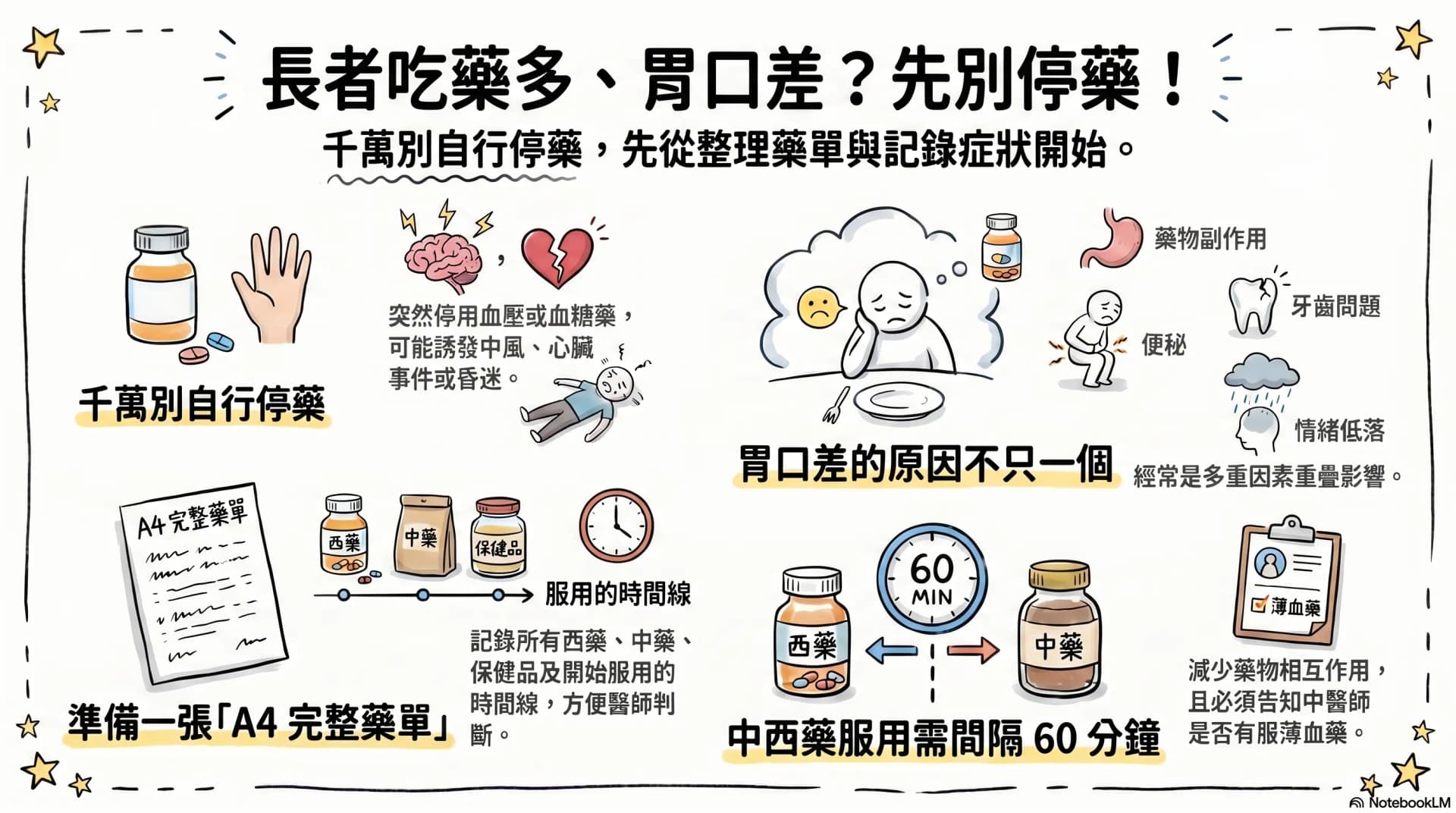
Poor Appetite in Older Adults on Long-Term Medication and Supplements? A TCM Case Study on Spleen-Stomach Care Under Polypharmacy
Several chronic-disease pills, then poor appetite, early fullness and daytime tiredness — family carers naturally wonder whether some of those medications are "harming the stomach". Stopping them on your own, however, can destabilise blood pressure, blood sugar and cardiovascular risk. This case of a 76-year-old maps out 7 possible causes, 6 things family carers should do, the safety conditions for TCM (60-minute spacing between Western and Chinese medicine), and the spleen-stomach directions that TCM can offer.
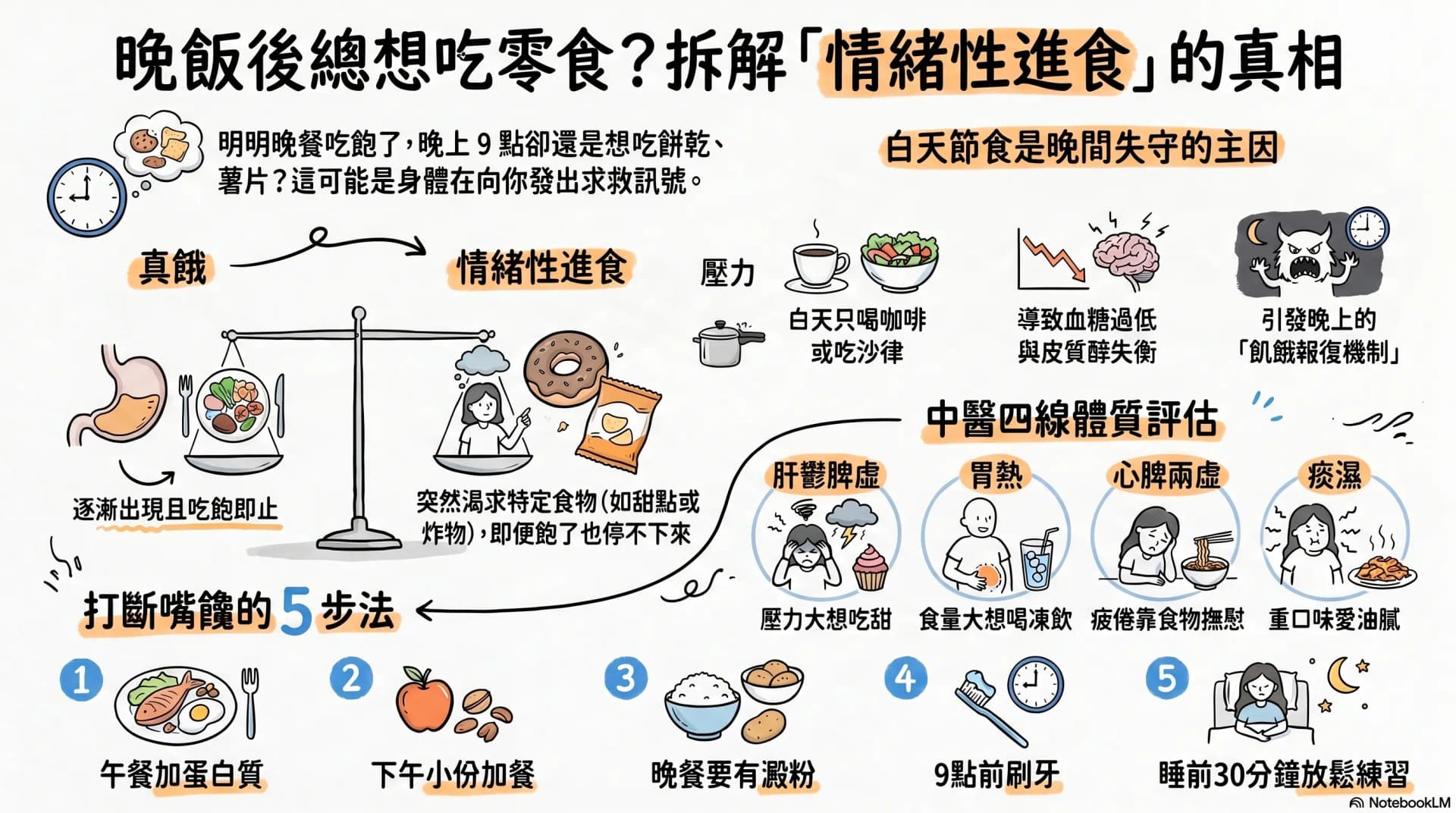
Can't Stop Snacking After Dinner? A TCM Case Study on Emotional Eating and Late-Night Cravings
Dinner was enough, yet after 9 pm the biscuits, chocolate, crisps or ice-cream call again — followed by guilt and a smaller breakfast the next morning. This case study of a 35-year-old office worker walks through how to tell real hunger from emotional eating, the four TCM lines (liver-spleen, stomach heat, heart-spleen deficiency, phlegm-damp), and a five-step routine to break the 9–11 pm craving cycle.
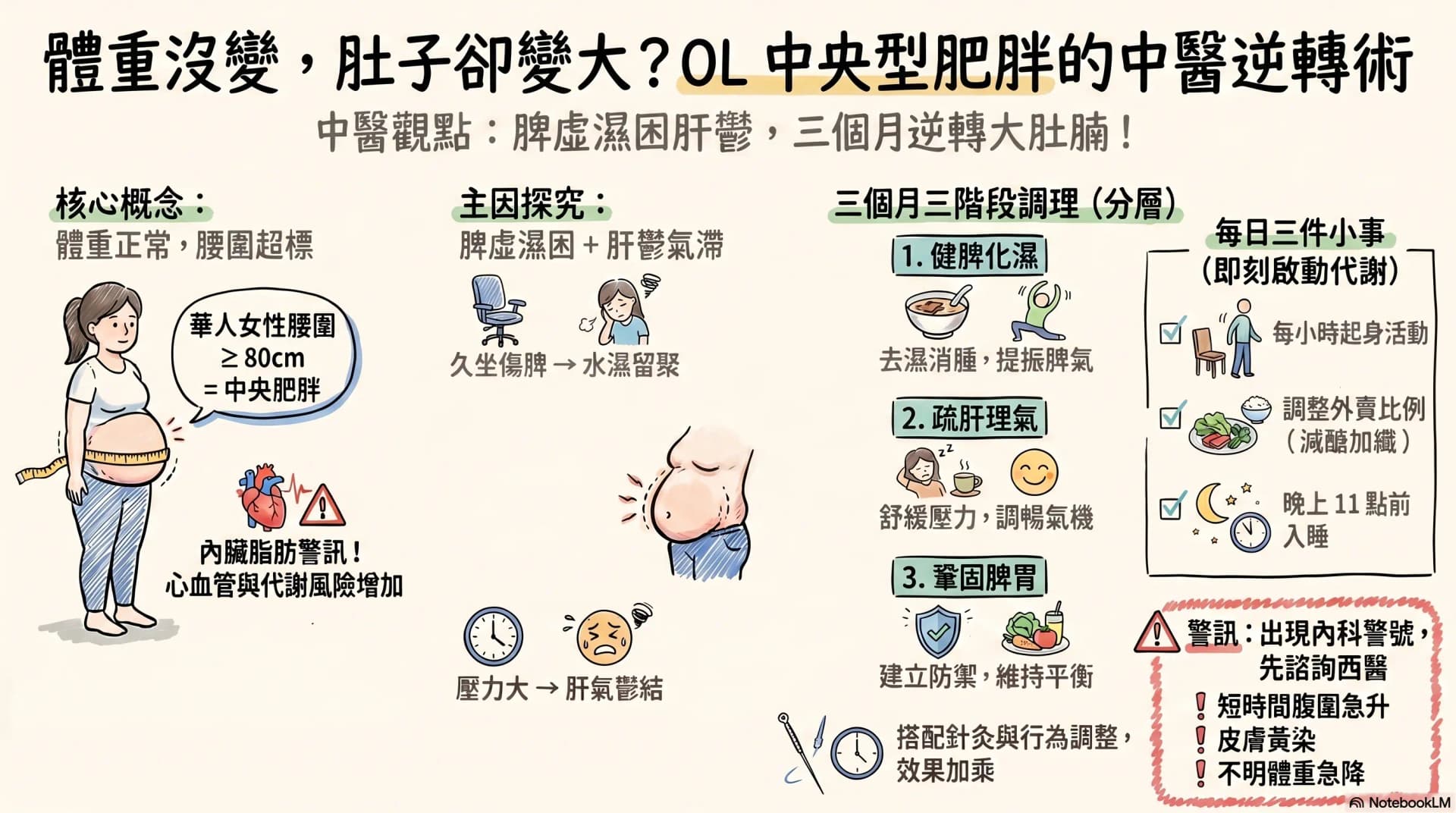
Weight Unchanged but the Belly Keeps Growing? A TCM Turnaround Plan for Central Obesity in Office Workers
Weight has risen only 2 kg in six months, but the waist is 8 cm wider; the health-check report flags "elevated visceral fat" in red. This is a common frustration for women in their 30s working office jobs. This case study follows the typical consultation profile of "Ms Chan" (pseudonym) — explaining the TCM evaluation of sedentary central obesity, the spleen-damp-with-liver-stagnation pattern, the three-month phased plan, when to see a Western doctor first, and three things readers can start doing today.