Poor Appetite in Older Adults on Long-Term Medication and Supplements? A TCM Case Study on Spleen-Stomach Care Under Polypharmacy
Several chronic-disease pills, then poor appetite, early fullness and daytime tiredness — family carers naturally wonder whether some of those medications are "harming the stomach". Stopping them on your own, however, can destabilise blood pressure, blood sugar and cardiovascular risk. This case of a 76-year-old maps out 7 possible causes, 6 things family carers should do, the safety conditions for TCM (60-minute spacing between Western and Chinese medicine), and the spleen-stomach directions that TCM can offer.
Medical review: Dr. Chan Wing Kiu, Joanne,Registered Chinese Medicine Practitioner #009463
1-Minute Quick Answer
When an older adult on several medications loses appetite, families should not stop drugs on their own — abruptly halting antihypertensives or diabetes medication can trigger a stroke or uncontrolled blood sugar. The right first steps are to list every medication, log a symptom timeline and book a follow-up with the prescribing doctor. TCM can support spleen-stomach care after Western assessment. Reviewed by Dr Chan (CMCHK 009463).
Poor Appetite in Older Adults on Long-Term Medication and Supplements? A TCM Case Study on Spleen-Stomach Care Under Polypharmacy
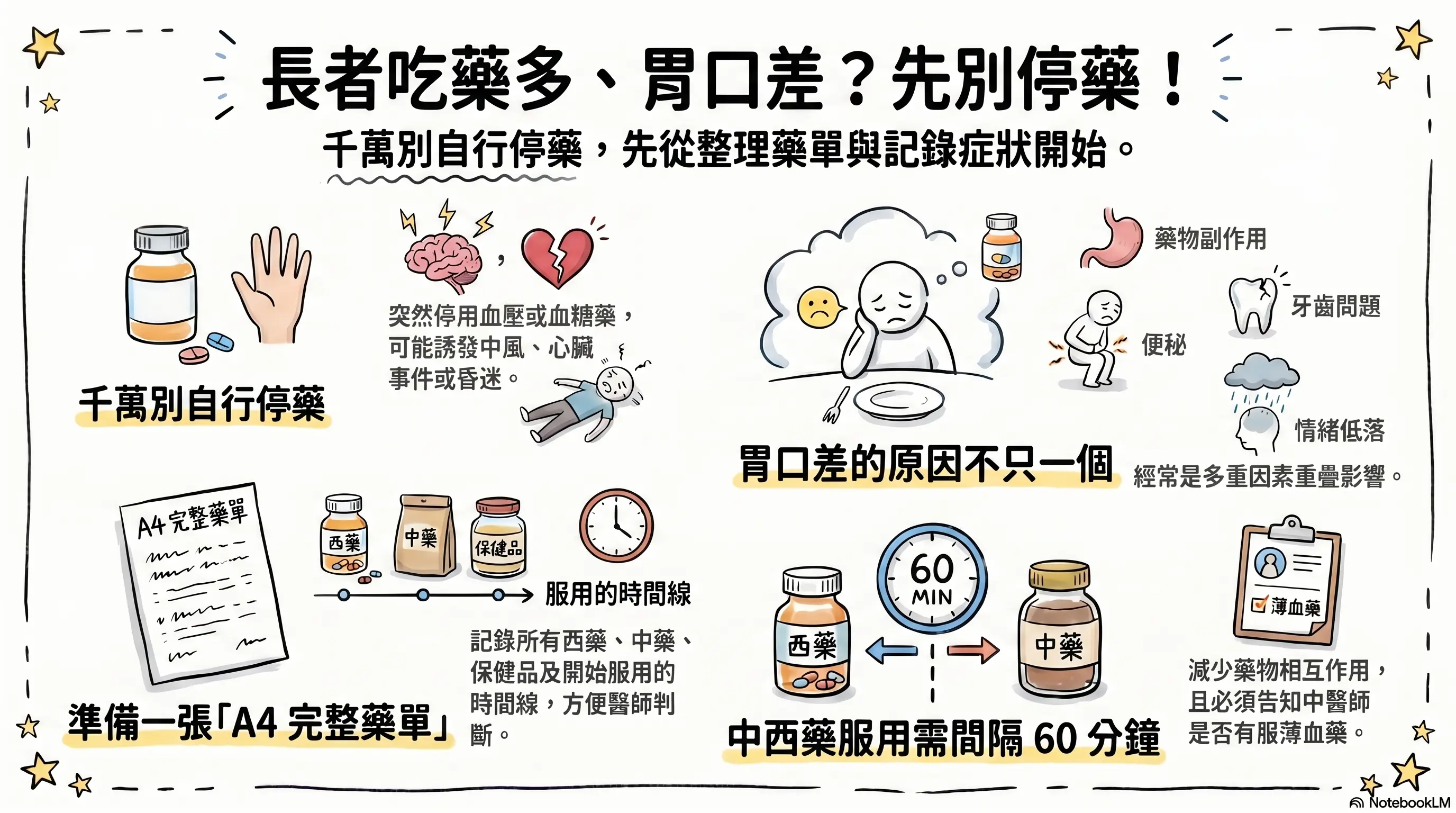 Image generated by NotebookLM for quick visual reference; some Chinese characters may not render correctly.
Medical review: Dr Chan Wing-kiu (CMCHK 009463 | Internal and external medicine, gynaecology, emotional wellbeing, elderly care).
Mr Wong (alias), 76, has hypertension, type-2 diabetes and knee arthritis. His daily regimen includes 5 medications: an antihypertensive, two diabetes drugs (including metformin), a non-steroidal anti-inflammatory pain reliever, a calcium tablet and vitamin D. His family has noticed in recent months that he puts down his chopsticks after only a few bites, complains of post-meal distension, is more tired during the day, and has lost 3 kg in half a year.
The family wonders, "Is this 'too many pills harming the stomach' — should we just stop a few?" The concern is understandable, but stopping a chronic-disease medication without medical advice can destabilise blood pressure, blood sugar or cardiovascular risk. This case study walks through three points: what may actually be driving the poor appetite, why "list the medications and book a follow-up" matters more than "stop a drug", and how Traditional Chinese Medicine (TCM) can safely sit alongside Western care.
Do not stop medication first — these 3 steps are more urgent
A family's first instinct is often "let's try stopping one or two pills". That carries real risks:
- Stopping an antihypertensive abruptly can rebound blood pressure and may trigger a stroke or cardiac event
- Stopping a glucose-lowering drug abruptly can spiral into uncontrolled blood sugar, including hyperosmolar hyperglycaemic states
- Stopping pain relief abruptly brings joint pain back in full, the person moves less, and muscle strength keeps dropping
The correct first 3 steps:
- Make a complete medication list. Write down every Western drug, Chinese proprietary medicine and supplement (name, dose, timing, start date) on a single sheet of paper.
- Build a symptom timeline. When did the poor appetite begin? Did it appear after a new prescription or a dose change?
- Book a follow-up with the prescribing doctor. Bring the list and the timeline; the doctor decides whether to adjust, reduce, switch or investigate further.
The prescribing doctor is the one who can judge "is this a side effect", "do we need to test kidney function or blood sugar", "do we need a referral". This judgement is not something the family or the patient should make on their own.
7 differential causes of poor appetite
| Possible cause | Common clue | Suggested direction |
|---|---|---|
| Medication side effect | Nausea, distension, constipation or fatigue after a new drug | Bring the medication list to the prescribing doctor |
| Constipation | Bowel movement every few days, bloating, early fullness on small portions | Address bowels first, in parallel with checking medications |
| Acid reflux or gastric disease | Burning sensation in the chest, sour taste, stomach pain | Needs medical assessment; gastroscopy may be indicated |
| Dental or swallowing problem | Difficulty chewing, food getting stuck, choking on liquids | Address oral or swallowing safety first |
| Glucose swings | Dry mouth, frequent urination, tremor, palpitations, fatigue | Internist to adjust diabetes medication |
| Worsening kidney function or chronic disease | Reduced appetite, leg swelling, urine output changes, itchy skin | Blood test for renal function and electrolytes |
| Low mood | Loss of interest in food, poor sleep, social withdrawal | Assess for depression |
Poor appetite in older adults rarely has a single cause. In Mr Wong's case it may be three at once: (a) gastric irritation from the anti-inflammatory, (b) constipation from the calcium tablet, (c) gastrointestinal side effects from metformin. Stopping one is unlikely to solve the picture.
When to see a Western doctor or call emergency
- Significant short-term weight loss (5% or more over 3 months) — rule out malignancy, hyperthyroidism, worsening diabetes
- Black stools, blood in stool or vomit — possible upper gastrointestinal bleeding, an emergency
- Persistent stomach pain that worsens with eating — rule out gastric ulcer or cancer
- Difficulty swallowing or food sticking — rule out oesophageal issues
- Vomiting lasting more than 2 days — risk of dehydration and electrolyte disturbance
- Confusion, extreme fatigue or jaundice — possible hepatic, renal or metabolic problems
How TCM views this
| TCM pattern | Common signs | Direction of care |
|---|---|---|
| Spleen-stomach weakness | Small appetite, post-meal distension, soft stools, pale face, easy fatigue | Strengthen the spleen and tonify qi; harmonise the stomach |
| Liver qi stagnation | Low mood, sighing, epigastric distension, frequent belching | Soothe the liver and regulate qi; harmonise the middle |
| Stomach heat | Bitter-dry mouth, bad breath, constipation, irritability | Clear stomach heat; moisten the intestines |
| Qi-and-yin deficiency | Fatigue, dry mouth, night-time thirst, warm palms and soles, constipation | Tonify qi and nourish yin; calm the mind |
Specific herbal formulae and doses must be tailored by a registered TCM practitioner based on tongue, pulse, the medication list and the recent medical reports; self-prescribing is not appropriate.
In simpler terms: "spleen-stomach weakness" describes weakened digestion; "qi-and-yin deficiency" describes a body running short on both energy and moisture. Older adults often present two or three patterns at once.
Safety conditions for combining TCM and Western medicine
- Both clinicians informed. Tell your Western doctor that you are seeing a TCM practitioner, and tell your TCM practitioner about every Western medication.
- Do not stop Western medication on your own. TCM's role is to support constitution, not to replace chronic-disease therapy.
- 60-minute spacing between Western and Chinese medicine to reduce interaction risk.
- Avoid combining blood-activating herbs with blood thinners. If the patient takes warfarin or aspirin, this must be mentioned to the TCM practitioner.
- Tonic herbs require assessment. Ginseng, deer antler, donkey-hide gelatin and similar tonics are not appropriate for everyone on polypharmacy.
- Continue regular blood tests. Maintain the Western follow-up schedule to monitor renal function, liver function and blood sugar.
6 things family carers should do
- Maintain a medication list. A single A4 sheet listing every drug (Western, Chinese proprietary, supplements), brought to every consultation.
- Keep a meal record. Note how much your elderly relative actually eats each day; seven days of records help the prescribing doctor judge the trend.
- Check swallowing safety. Watch for choking; consider whether food needs to be cut smaller or cooked softer.
- Tighten the follow-up rhythm. If poor appetite is accompanied by weight loss, book a follow-up within one month rather than waiting three.
- Do not over-supplement. Avoid giving "tonics" or "appetite soups" recommended by friends without checking.
- Post an emergency-sign list. Tape a list of red flags (black stools, vomit with blood, persistent stomach pain, extreme fatigue) on the fridge so the whole family is clear.
How Aspira TCM Clinic assesses such cases
Dr Chan reviews the complete medication list, the last 3 months of medical reports, family observation records, the meal log, and the patient's tongue and pulse. Herbal prescribing under polypharmacy follows the principle of "gentle, not cloying, not overly cold"; common formulae focus on strengthening the spleen and easing food stagnation, while avoiding constituents prone to interact with Western medicine. A typical course runs 4–8 weeks as an observation window, with Western follow-ups continuing in parallel.
FAQ
Will Chinese herbs clash with Western medicines?
Some will. Combinations worth flagging include:
- Blood-activating herbs (Salvia, safflower, ligusticum) plus blood thinners — may increase bleeding risk
- Liquorice plus diuretics or antihypertensives — may affect electrolytes
- Ginseng plus glucose-lowering drugs — may affect blood-sugar control
Telling your TCM practitioner exactly what Western medicines you take is the basis of safe combination.
Can older adults take tonic supplements to boost appetite?
Mild, food-grade ingredients such as Chinese yam (Huai Shan), aged tangerine peel, malted barley and ginger are generally well tolerated as small additions to soup. However, more potent tonics such as ginseng, deer antler and donkey-hide gelatin are not suitable for everyone on polypharmacy and should be checked with a TCM practitioner first.
Can Chinese herbs replace some Western drugs?
No, not for chronic-disease drugs (antihypertensives, antidiabetics, blood thinners). The role of TCM is to improve constitution and ease symptoms; the role of Western medication is to control the disease.
Is polypharmacy in older adults unavoidable?
Older adults often have several chronic conditions, so multiple medications are common. However, taking five or more concurrent medications is itself a recognised risk factor for falls and adverse drug reactions. We recommend an annual "medication review" by the family doctor or a clinical pharmacist to check whether every drug is still necessary at the current dose.
Disclaimer: Every patient's constitution and condition are different, and treatment outcomes vary accordingly. The above is for reference only. Please consult a practitioner for a treatment plan tailored to your specific situation. Prescription details are shared for TCM academic purposes only and do not constitute prescribing advice. Do not self-prescribe.
References
- Department of Health, Drug Office — Safe medication information https://www.drugoffice.gov.hk/eps/do/en/consumer/
- Department of Health, Elderly Health Service — Medication safety for older adults https://www.elderly.gov.hk/english/healthy_ageing/healthy_ageing.html
- Hospital Authority — Polypharmacy and elderly care https://www21.ha.org.hk/smartpatient/en/encyclopaedia-of-health.html
- Department of Health, Chinese Medicine Regulatory Office — Safety information for Chinese medicines https://www.cmro.gov.hk/
Disclaimer: This article is for health education and reference purposes only and does not constitute medical advice, diagnosis, or treatment. Each patient's condition is unique and treatment outcomes vary. Please consult a registered TCM practitioner or qualified healthcare professional for health concerns.
Further Reading
Hand-picked related articles and real cases to read next.
TCM on Blood Thinners: Herbs and Acupuncture in Atrial Fibrillation
The most common question from elderly atrial fibrillation patients on blood thinners is whether they can also take Chinese herbal medicine or have acupuncture. The answer is yes, but with three prerequisites: both practitioners must know about each other; blood-activating and tonifying herbs must be assessed by a registered TCM doctor; and the safety principles for acupuncture, cupping and gua sha must be strictly observed. This article focuses on that single question.
Is Cutting Sugar Alone Enough for Pre-Diabetes? TCM on Blood Sugar, Constitution and Lifestyle
"My check-up says I am pre-diabetic. The doctor told me to cut sugar and come back for another blood test — is that enough?" This guide answers the question directly: the 4 measurements that matter beyond sugar, the 6 TCM constitution patterns in the "spleen dan" stage, what TCM can and cannot do at this window, and a 90-day plan that pairs lifestyle change with constitutional support.
Frequent Night Urination in Older Adults: A TCM Guide
Is it normal for older adults to wake up once or twice at night to urinate? Frequent night urination may relate to drinking habits, infection, prostate or bladder problems, diabetes, medication, or even heart and kidney function. This article explains the common causes, warning signs that need medical attention, and how TCM assesses nocturia in older adults.
Want to learn more? WhatsApp us for a free consultation
Book via WhatsAppExplore our full range of treatments: Traditional TCM Services
Related Articles
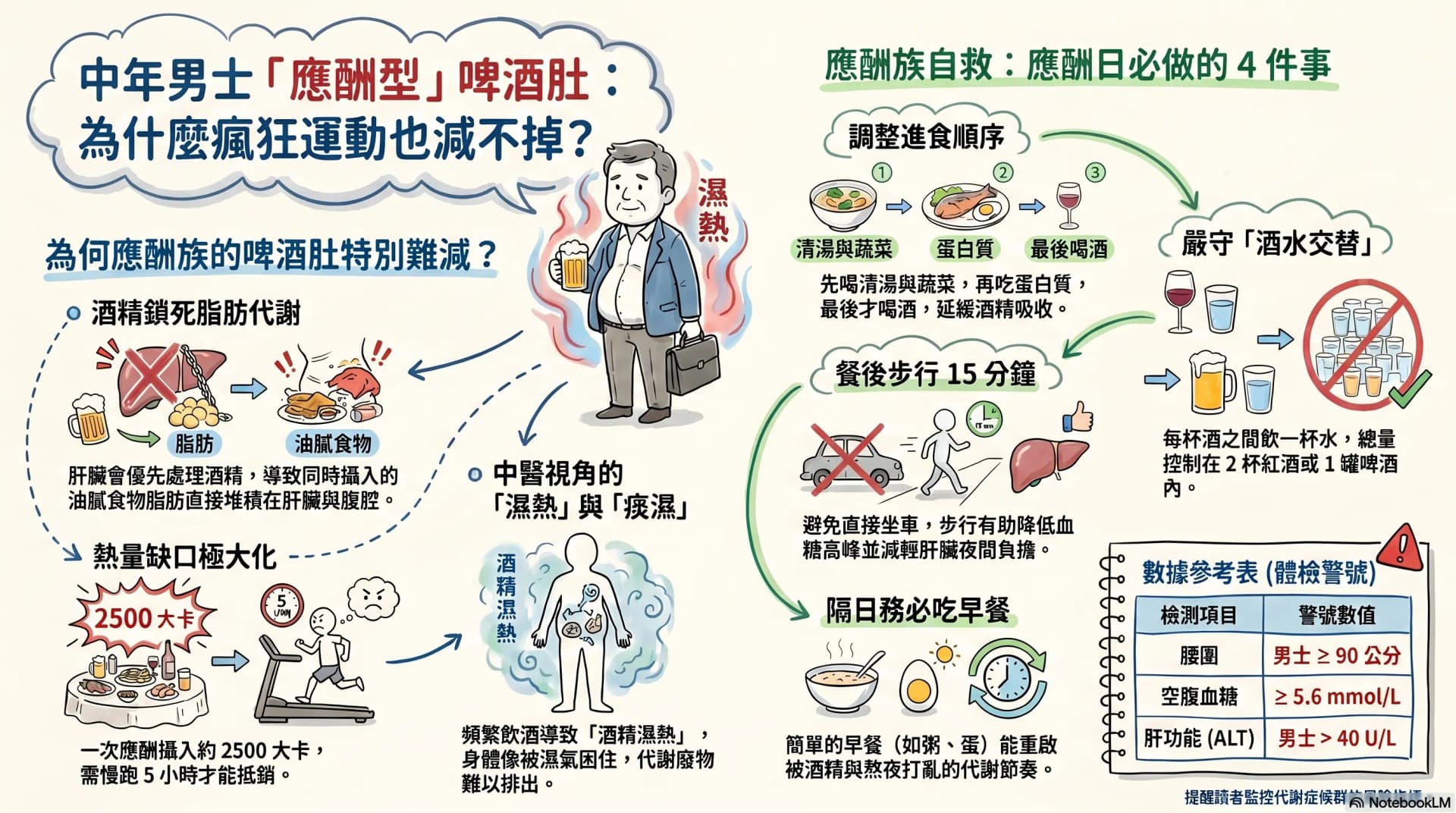
Middle-Aged Beer Belly That Won't Shrink? A TCM Case Study on Business Entertainment and Visceral Fat
Frequent client dinners, late-night meals and rising alcohol intake, yet the waistline keeps growing and the annual check-up flags borderline metabolic syndrome. This case study of a 48-year-old explains why visceral fat accumulates so readily in middle-aged men, how alcohol fuels the fatty-liver pathway, and how TCM evaluates four parallel drivers: damp-heat, phlegm-damp, late eating and stress-induced liver qi stagnation.
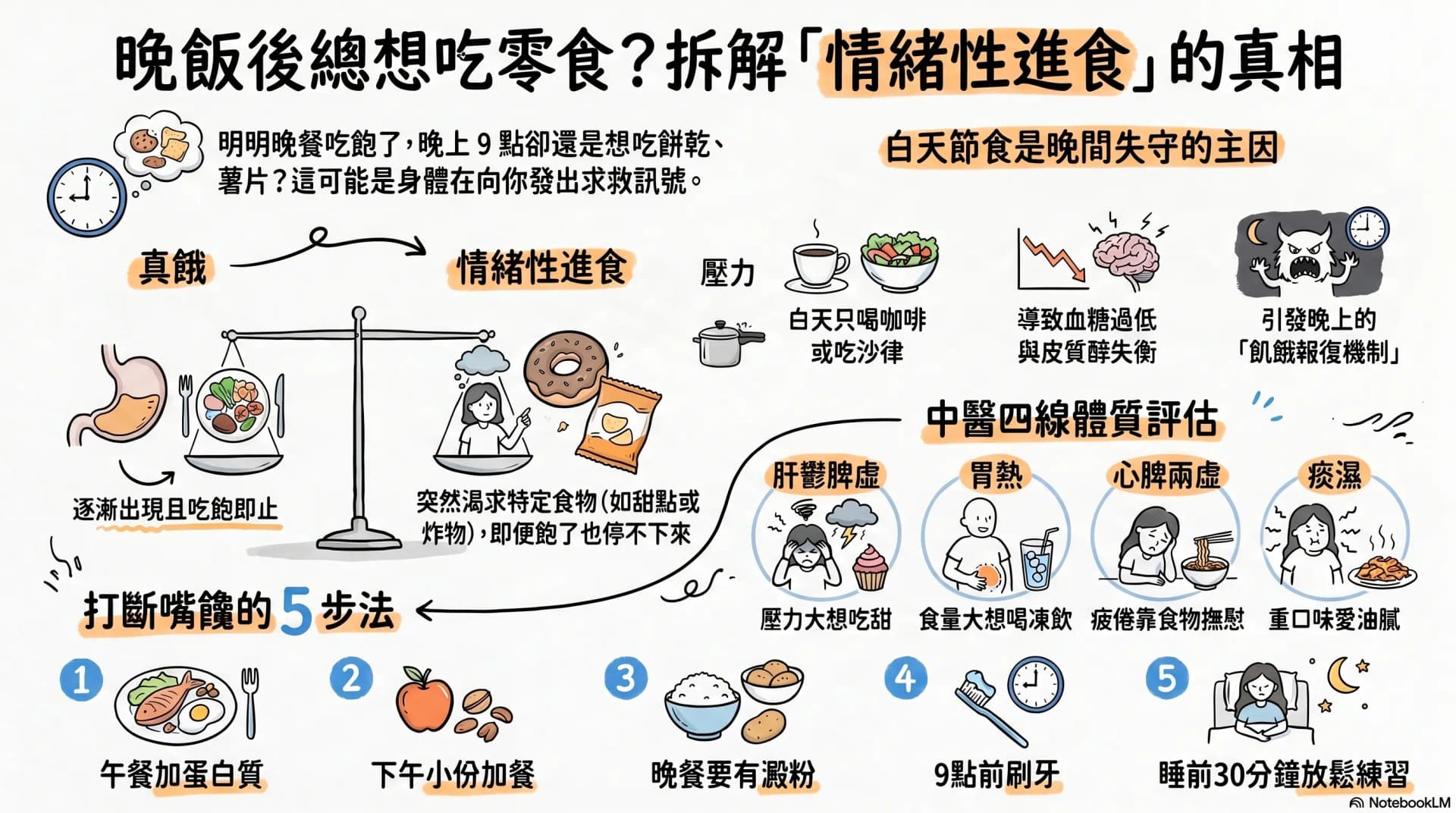
Can't Stop Snacking After Dinner? A TCM Case Study on Emotional Eating and Late-Night Cravings
Dinner was enough, yet after 9 pm the biscuits, chocolate, crisps or ice-cream call again — followed by guilt and a smaller breakfast the next morning. This case study of a 35-year-old office worker walks through how to tell real hunger from emotional eating, the four TCM lines (liver-spleen, stomach heat, heart-spleen deficiency, phlegm-damp), and a five-step routine to break the 9–11 pm craving cycle.
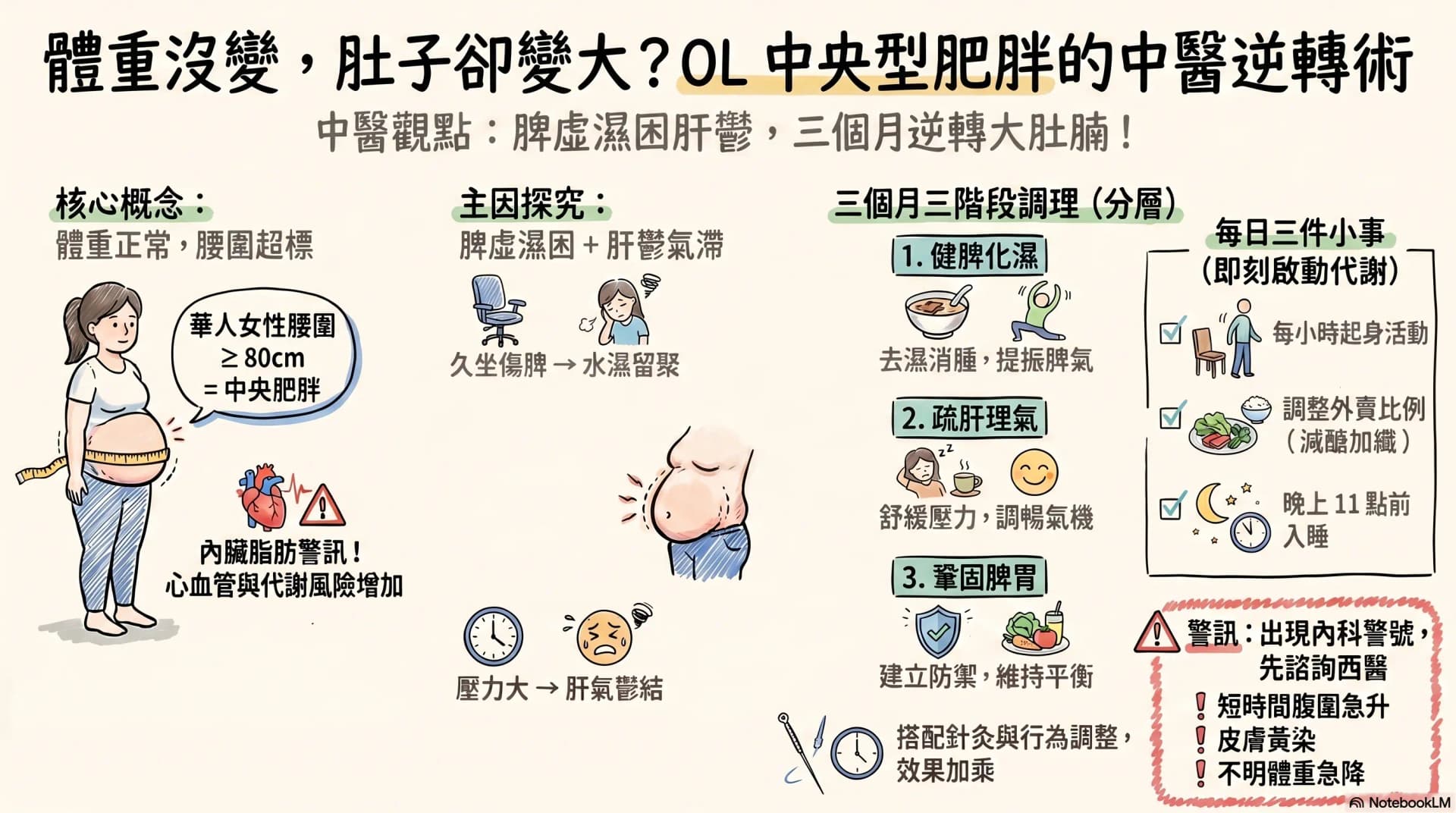
Weight Unchanged but the Belly Keeps Growing? A TCM Turnaround Plan for Central Obesity in Office Workers
Weight has risen only 2 kg in six months, but the waist is 8 cm wider; the health-check report flags "elevated visceral fat" in red. This is a common frustration for women in their 30s working office jobs. This case study follows the typical consultation profile of "Ms Chan" (pseudonym) — explaining the TCM evaluation of sedentary central obesity, the spleen-damp-with-liver-stagnation pattern, the three-month phased plan, when to see a Western doctor first, and three things readers can start doing today.