Does Black Coffee Help with Weight Loss? Timing and Side Effects
Black coffee may briefly raise metabolism and suppress appetite, but for those with acid reflux, palpitations, insomnia, chronic fatigue or premenstrual symptoms, it can do more harm than good. This article looks at the evidence and the TCM perspective, identifies five body types that should drink with care, and explains how to arrange timing and quantity sensibly.
Medical review: Dr. Au Kwok Po, Arthur,Registered Chinese Medicine Practitioner #009884
1-Minute Quick Answer
Black coffee offers limited help for weight loss — caffeine briefly raises metabolism but cannot replace diet, exercise and sleep, and milk and sugar can push one cup to 200–400 kcal. For those with acid reflux, palpitations, insomnia or premenstrual symptoms it can do more harm than good (reviewed by Dr Au, CMCHK 009884).
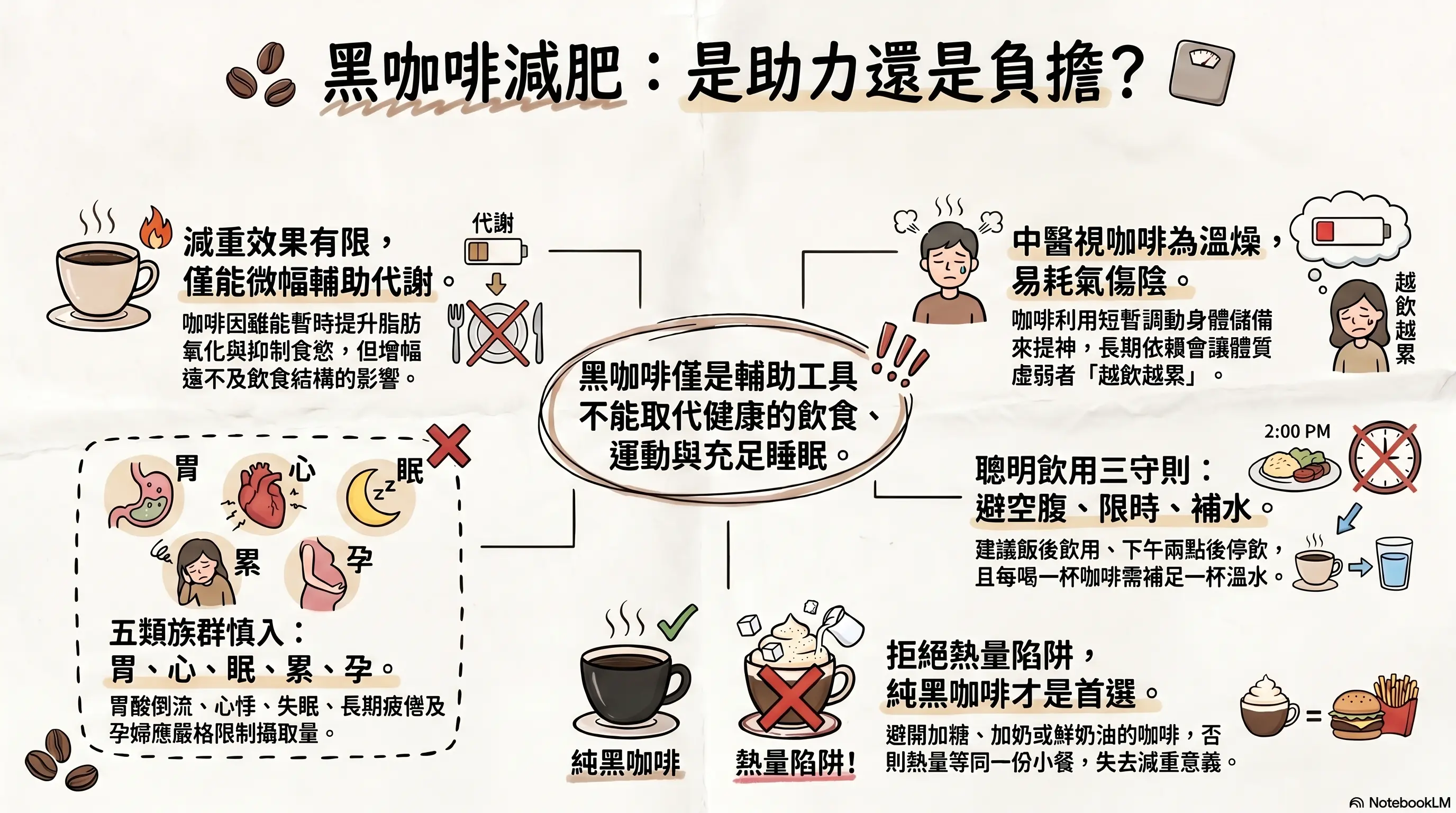 For quick reference, this image was generated by NotebookLM. Some Chinese characters may not render perfectly; we appreciate your understanding.
Medical review: Dr Au Kwok-bo (CMCHK 009884; TCM weight management, nutrition, flu, hair loss; qualified nutritionist)
Many people have heard the line that "a cup of black coffee in the morning helps burn fat", and so they down one on an empty stomach hoping for both energy and weight loss. The result, for some, is heartburn and a racing heart; for others, an even sharper afternoon slump and trouble falling asleep at night; for a smaller group, facial puffiness, ankle swelling, an early period or worse cramps.
The short answer: black coffee offers only limited help for weight loss; it cannot replace a sound diet, exercise and sleep. For certain body types — those with acid reflux, palpitations, insomnia, chronic fatigue or premenstrual symptoms — it can in fact worsen the picture.
This article addresses three things: how much black coffee actually contributes to weight loss, who tends to feel worse after drinking it, and how to arrange timing, quantity and pairing so that you do not trade your gut and sleep for very little gain.
Why Is Black Coffee Considered a "Weight-Loss Aid"?
The research linking black coffee to weight loss centres on two effects. First, caffeine briefly raises metabolic rate and fat oxidation, but the increase is modest — only a few percentage points of daily energy expenditure, far smaller than the impact of diet and exercise. Second, caffeine taken before a meal can mildly suppress appetite in some people, helping with portion control, though the effect varies between individuals and weakens with habituation.
Note that plain black coffee is essentially zero-calorie. Add milk, sugar, cream or syrup, however, and a single drink can climb from 5 kcal to 200–400 kcal — comparable to a small meal. A Cappuccino, Latte or Caramel Macchiato is no longer a "weight-loss drink" by any sensible reckoning.
In other words, black coffee can be a useful adjunct, but only under three conditions: choose genuine black coffee (unsweetened, no milk or only a small amount of skimmed milk), keep portions reasonable, and time it so that it does not interfere with sleep or meals. Outside these conditions, the "weight-loss" effect quickly disappears.
How Does TCM View Coffee?
Classical Chinese medicine has no entry for coffee, but its pharmacological character can be described as warm and drying, ascending and diuretic. It briefly invigorates the mind and accelerates upward movement of qi and blood, while at the same time depleting qi, harming yin and irritating the stomach. In clinical observation: those with weak spleen and stomach often notice more acid reflux on an empty stomach; those with heart-qi deficiency or qi-yin deficiency tend to experience palpitations and trouble sleeping; people with stuck liver-qi see greater mood swings in the afternoon and evening; those with phlegm-damp constitution feel briefly lighter but, with prolonged reliance, more easily fatigued; for the chronically sleep-deprived, coffee only postpones rather than resolves tiredness. Put simply, coffee is not a "damp-clearing drink" — it borrows briefly from the body's reserves. The lower those reserves, the heavier the eventual repayment.
Five Groups Who Should Drink Black Coffee with Special Care
| Situation | Common reaction | Suggested approach |
|---|---|---|
| Acid reflux, chronic gastritis | Burning in the upper abdomen on an empty stomach, sour taste in the throat | Switch to drinking 1 hour after a meal; reduce quantity; pause if needed |
| Palpitations, arrhythmia or on cardiac medication | Faster heartbeat, chest tightness, trembling hands | Consult the prescribing doctor; no more than 1 cup a day; avoid empty-stomach and evening intake |
| Chronic insomnia or trouble falling asleep | Drinking after midday leads to restless, vivid sleep | Stop after 12 noon; switch to herbal tea or warm water in the evening |
| Anxiety, chronic fatigue, light periods or marked premenstrual symptoms | More tense mood; worse breast tenderness and headache before period | Reduce in the week before menstruation; restore sleep and meal structure |
| Pregnancy, breastfeeding or trying to conceive | Affects fetal development and milk supply; can worsen swelling | Consult an obstetrician; limit caffeine to under 200 mg a day |
The Centre for Food Safety in Hong Kong recommends that healthy adults take no more than 400 mg of caffeine a day, and pregnant women under 200 mg. A standard americano or filter black coffee contains roughly 80–200 mg of caffeine, so 1–2 cups a day usually fits within these limits. Tea, energy drinks, chocolate and caffeine-containing painkillers, however, all add to the daily total.
How to Arrange Black Coffee Sensibly
First, eat something before drinking. Coffee on an empty stomach directly stimulates gastric acid, which is particularly unwise for anyone with reflux. Pairing it with a breakfast that contains protein and fibre — eggs, oats or soy milk — eases the load on the stomach.
Second, manage timing and quantity. Aim to finish your coffee by midday; from 2 pm onwards, switch to decaf or non-caffeinated drinks. One to two cups a day is reasonable.
Third, avoid the calorie trap. During weight loss, choose black coffee, americano or hand-drip with no sugar and minimal milk. Whole milk, syrup and whipped cream quietly add a small meal's worth of energy.
Fourth, balance with water. Coffee is mildly diuretic; without enough fluid intake, it tends to leave you more fatigued, constipated and prone to swelling. A useful rule is to drink an extra cup of warm water for each cup of coffee.
Fifth, stop if "the more I drink, the more tired I feel". If you find yourself constantly increasing the dose, or experience headaches, low mood and poor focus on a day off coffee, the body has become over-reliant. The right response is gradual reduction together with better sleep — not yet another cup.
Does Black Coffee Pair Well with 16:8 Fasting or Bulletproof Coffee?
Several variations are popular. Drinking only black coffee in the morning to extend the fasting window (a 16:8 variant) does help some people lose weight in the short term, but commonly brings on acid reflux, dizziness, afternoon glucose swings and insomnia. So-called "bulletproof coffee" is far from calorie-free — at 300–500 kcal per cup — and the high fat load is not suitable for those with gallbladder disease, high cholesterol or fatty liver. Replacing meals with coffee plus a meal-replacement drink starves the body of protein, fibre and micronutrients, slowing metabolism and disrupting menstruation and muscle mass. In all of these the scale may move briefly, but the long-term plan is fragile. The right yardstick for weight loss is whether the routine can be safely sustained for six months or more, not how many pounds came off in the past fortnight.
How Aspira TCM Clinic Approaches Coffee Habits in Weight Management
Dr Au asks three concrete questions at the first visit: how many cups a day, at what times, and whether you notice any specific reactions. Common assessment angles include tongue and pulse alongside appetite (distinguishing spleen-stomach cold deficiency, stomach yin deficiency or liver-stomach disharmony), sleep and emotional state (heart-qi deficiency, liver fire, or simply too much caffeine), the menstrual cycle and mood, and dietary structure (whether coffee is replacing breakfast or being used to suppress hunger). Based on the assessment, the doctor will suggest changes to timing and quantity and, if needed, add Chinese herbal medicine, acupuncture or lifestyle adjustments to address acid reflux, palpitations, sleep or premenstrual symptoms. Our aim is not to "guarantee X kilograms lost" but to help you sustain weight management safely over the long term.
FAQ
Q1: Does black coffee really help burn fat?
It can briefly raise metabolic rate and fat oxidation, but the effect is small — far less than the impact of diet and exercise. It is at best a modest adjunct, not the main driver of weight loss.
Q2: Is drinking black coffee on an empty stomach in the morning the most effective approach?
For those with no stomach issues it makes little difference. For people with acid reflux, chronic gastritis, or sensitive stomachs after taking medication, an empty stomach amplifies the irritation; drinking after a meal is preferable.
Q3: Will adding milk negate the weight-loss benefit?
A small amount of skimmed milk has limited impact. Sugar, syrup, whipped cream or whole-milk foam, however, push the calorie count well beyond a "weight-loss drink". Black coffee, americano, or hand-drip with no sugar and minimal milk is the better choice.
Q4: Can bulletproof coffee replace breakfast?
Bulletproof coffee is not low in calories and lacks protein, fibre and micronutrients. Anyone with gallbladder disease, high cholesterol, fatty liver, diabetes or who is pregnant should not adopt it without medical advice.
Q5: Will giving up coffee disrupt weight loss? Does TCM consider coffee unsuitable for everyone?
Stopping coffee will not derail weight loss; the core levers remain total intake, dietary structure, activity and sleep. TCM does not blanket-ban coffee either — adults with reasonable spleen-stomach function, no palpitations or insomnia and regular meals can usually drink 1–2 cups a day. The TCM emphasis is on body type and timing. If you experience palpitations, insomnia, stomach pain or chronic fatigue, pausing or reducing actually serves long-term management better.
Disclaimer: This article is for general health education only and does not substitute for individual diagnosis, prescription or treatment. If you have acid reflux, arrhythmia, chronic insomnia, pregnancy-related concerns or are on medication, please follow your doctor's guidance on caffeine intake and lifestyle changes; consult a professional before making any major dietary change.
Disclaimer: This article is for health education and reference purposes only and does not constitute medical advice, diagnosis, or treatment. Each patient's condition is unique and treatment outcomes vary. Please consult a registered TCM practitioner or qualified healthcare professional for health concerns.
Further Reading
Hand-picked related articles and real cases to read next.
Eating Little but Not Losing Weight? TCM on Weak Digestion
Skipping breakfast, eating only salad for lunch, and cutting rice at dinner may still leave weight unchanged — or even make you more tired, swollen, and stuck. This article explains why eating less does not always lead to better fat loss, and how TCM interprets weak digestion, dampness, deficiency, and the weight-loss plateau.
168 Fasting vs Low-Carb vs Keto: A TCM Guide to the Differences
168 fasting, low-carb diets, and keto are all popular weight-loss approaches, but they restrict different things — and their effects on digestion, sleep, blood glucose, bowels, menstruation, and mood differ accordingly. This article compares the three, explains which TCM constitutions need extra caution, and flags situations that warrant prior assessment by a Western doctor or registered dietitian.
Bloated and Heavy? Phlegm-Damp Obesity and Water Retention in TCM
If you do not eat excessively but often feel puffy, bloated, heavy, and tired, with weight fluctuating up and down, could “dampness” be part of the picture? This article explains the TCM view of water retention, phlegm-damp obesity, and why dampness-focused weight management is not the same as simply “draining water.”
Want to learn more? WhatsApp us for a free consultation
Book via WhatsAppExplore our full range of treatments: Traditional TCM Services
Related Articles
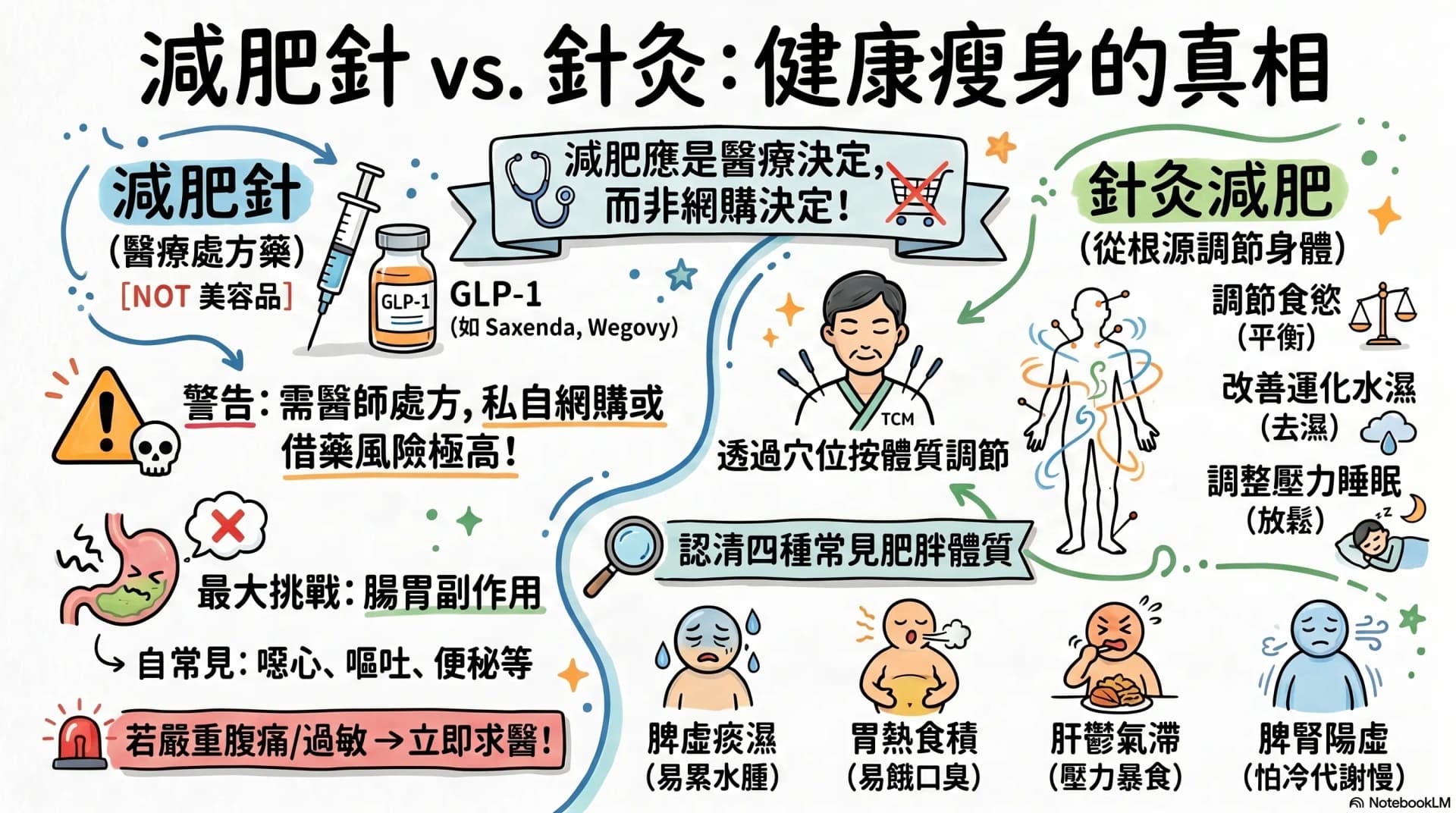
Weight-Loss Injections vs Acupuncture: Side Effects & TCM
Many people in Hong Kong are interested in GLP-1 weight-loss injections but worried about side effects, rebound, and prescription safety. This article explains the common risks of weight-loss injections, then explores obesity patterns in TCM, how acupuncture may support weight management, and who may be more suitable for a TCM weight-loss assessment first.
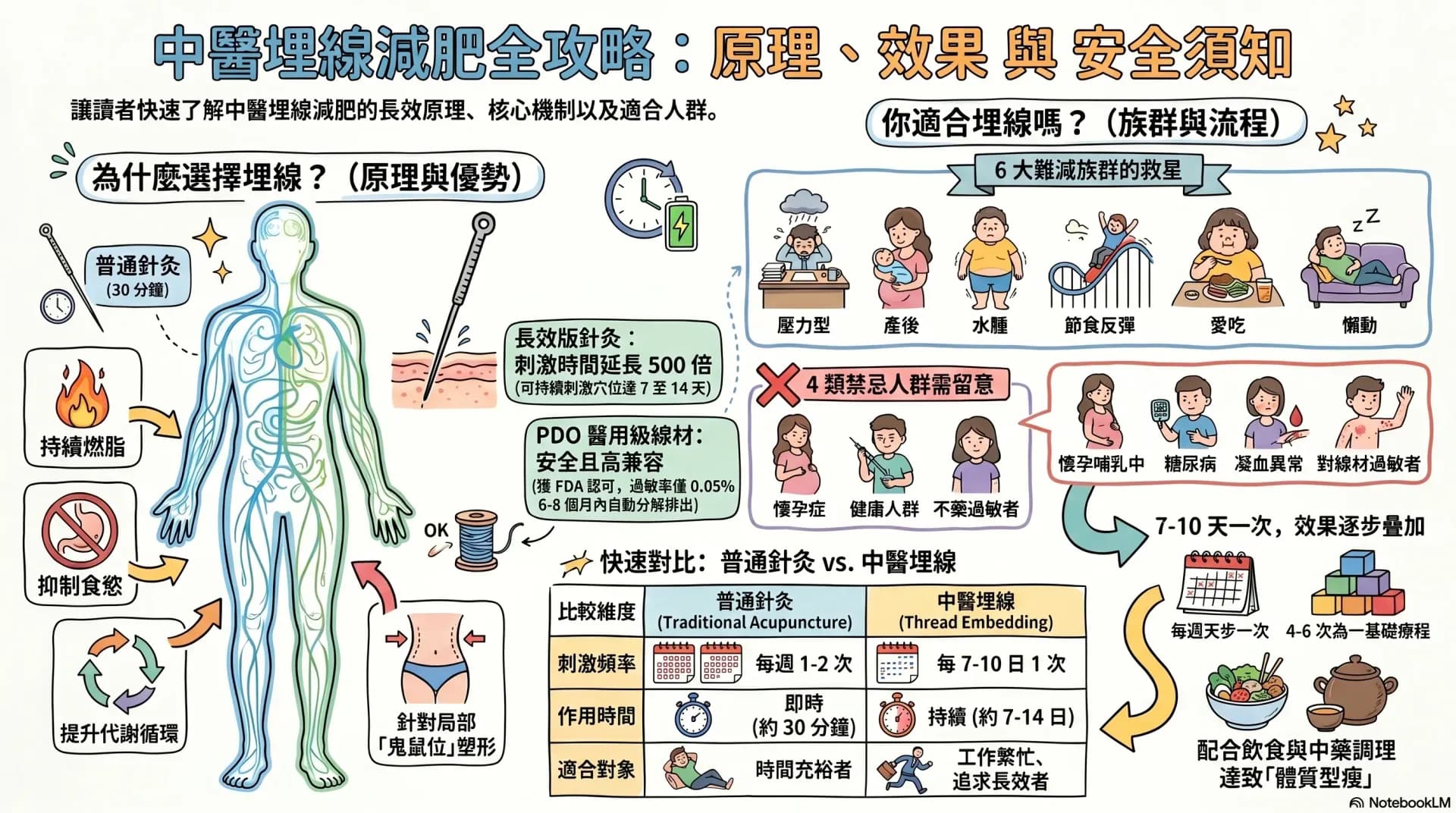
TCM Acupoint Embedding for Weight Loss: Complete Guide + FAQ
TCM acupoint catgut embedding has become a popular weight-loss option in Hong Kong, but online information varies widely. Drawing on clinical experience, Dr Au explains the mechanism, compares thread materials, identifies six common "hard-to-slim" body types, walks through the treatment procedure, and answers 11 frequently asked questions — helping you decide whether the treatment is right for you.
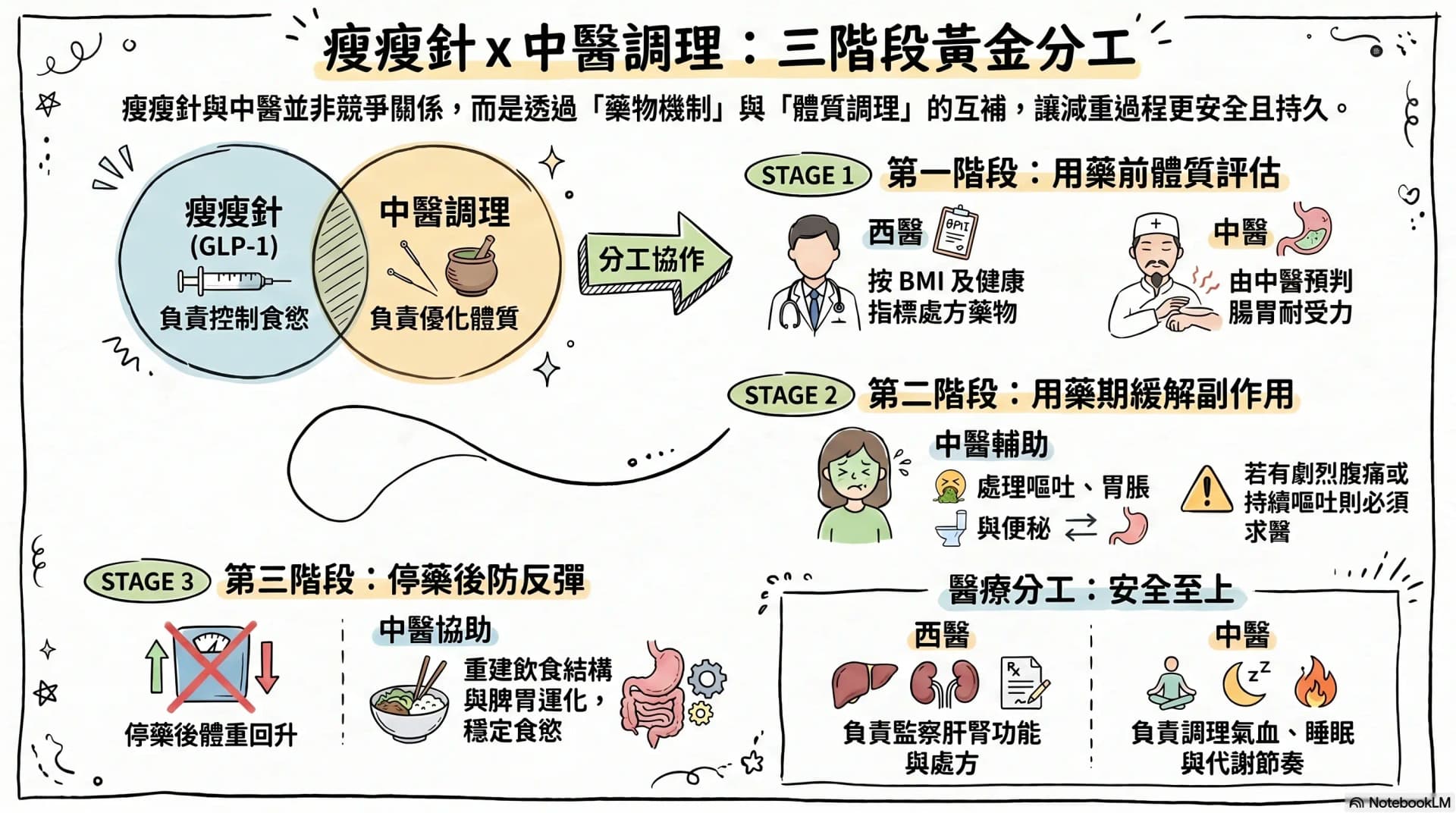
Can I See a TCM Practitioner While on a GLP-1 Injection?
GLP-1 weight-loss injections are now a major talking point in Hong Kong. This article compares the roles of prescribed GLP-1 medication and TCM care across three phases — before treatment, during treatment and after stopping — covering medical monitoring, side-effect relief and post-discontinuation rebound, and identifying scenarios that should not be managed by TCM alone.