Weight-Loss Injections vs Acupuncture: Side Effects & TCM
Many people in Hong Kong are interested in GLP-1 weight-loss injections but worried about side effects, rebound, and prescription safety. This article explains the common risks of weight-loss injections, then explores obesity patterns in TCM, how acupuncture may support weight management, and who may be more suitable for a TCM weight-loss assessment first.
Medical review: Dr. Au Kwok Po, Arthur,Registered Chinese Medicine Practitioner #009884
1-Minute Quick Answer
GLP-1 weight-loss injection side effects, rebound risk, and prescription safety are growing concerns. This guide (reviewed by Dr Au, CMCHK 009884) explains the common risks, then breaks down obesity patterns in TCM, how acupuncture may support weight management, and who may be better suited for a TCM assessment first.
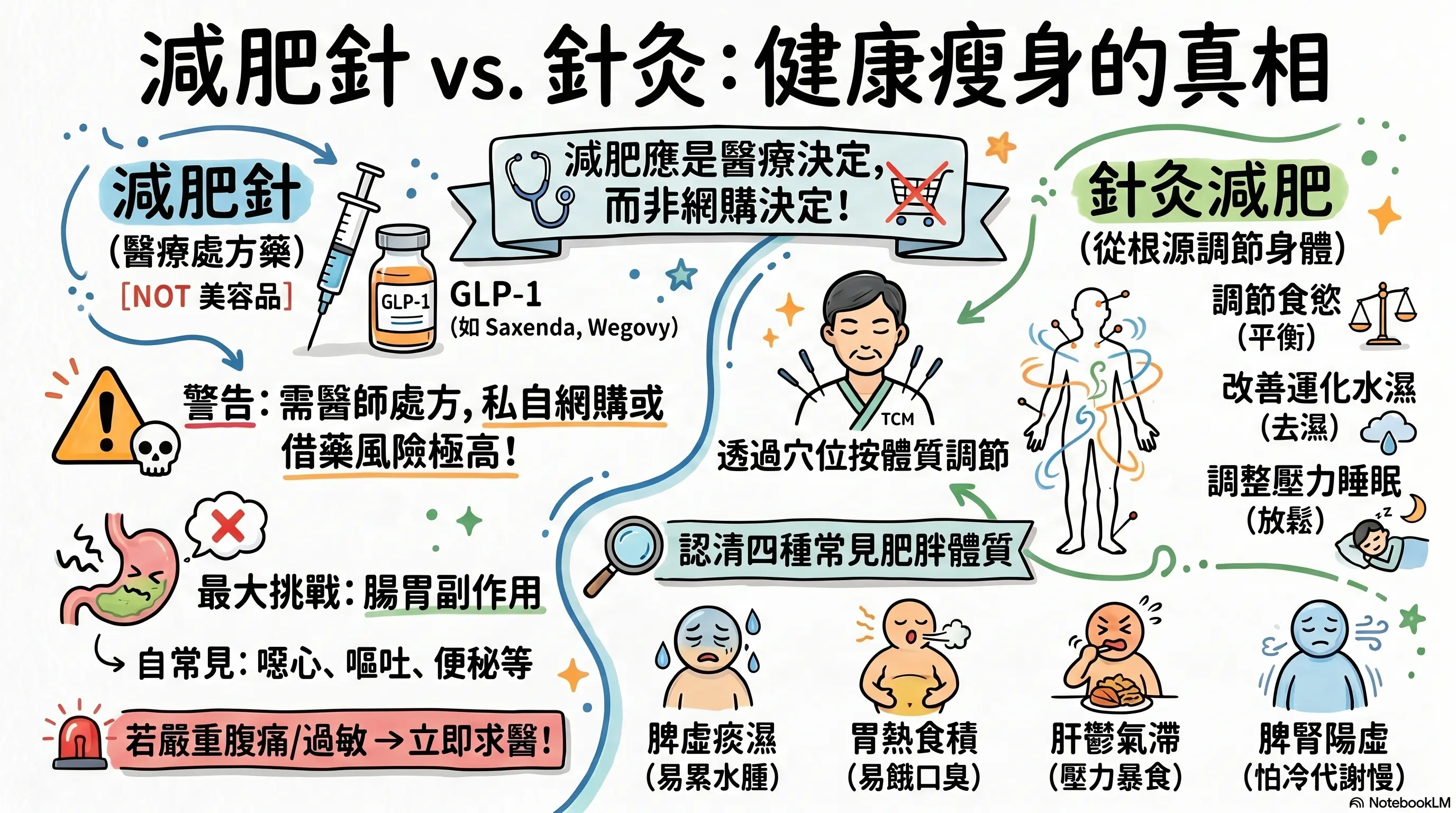 To help readers quickly understand the topic, this image was generated by NotebookLM. Some Chinese characters may not render correctly.
Many people in Hong Kong search for “weight-loss injection side effects.” Some hear that appetite drops dramatically after GLP-1 treatment. Others worry about nausea, vomiting, constipation, rebound after stopping, or unsafe products sold online.
The first point should be made clearly: weight-loss injections are neither inherently dangerous nor a shortcut suitable for everyone. Some GLP-1 medications are legitimate tools in medical weight management, but they should be assessed, prescribed, and monitored by a doctor. Buying them online, borrowing them from others, or treating them like cosmetic products can be risky.
TCM weight management is not the “opposite side” of weight-loss injections. In TCM, the more important question is: why does this person gain weight easily? Is it strong appetite, dampness and phlegm retention, water retention, stress eating, poor sleep, or metabolic slowdown after repeated dieting? Acupuncture for weight loss is not about “one session and you become slim,” but about using constitution-based treatment to support appetite regulation, digestion, fluid metabolism, stress, and routine.
Why Do Weight-Loss Injection Side Effects Receive So Much Attention?
What people call “weight-loss injections” usually refers to GLP-1 receptor agonists or related medicines, such as liraglutide or semaglutide. These drugs affect appetite, fullness, and blood sugar regulation, which is why some have been used in weight management.
Common side effects are mainly gastrointestinal, including nausea, vomiting, diarrhoea, constipation, abdominal pain, indigestion, and bloating. More serious risks that need medical monitoring include low blood sugar risk, gallbladder problems, pancreatitis, kidney stress, allergic reactions, and drug-specific contraindications.
In Hong Kong, products such as Saxenda, Wegovy, and Ozempic are prescription medicines. So the main danger is not “all weight-loss injections,” but using them without medical assessment, without a legitimate source, or without proper follow-up.
The key message: choosing a weight-loss injection should be a medical decision, not an online shopping decision.
How TCM Understands Obesity: Not Just “Eat Less”
In TCM, obesity is not reduced to calorie intake alone. The practitioner first asks why the body tends to retain, swell, stagnate, or lose control of appetite. Behind weight gain there may be problems involving digestion, dampness and phlegm, qi movement, stomach heat, kidney qi, sleep, and emotional strain.
| TCM pattern | Common presentation | Main treatment focus |
|---|---|---|
| Spleen deficiency with damp-phlegm | Heaviness, fatigue, bloating, thick tongue coating, sticky stools, oedema | Strengthen the spleen and resolve dampness |
| Stomach heat with food accumulation | Strong appetite, dry mouth, bad breath, preference for cold drinks, constipation | Clear stomach heat and regulate appetite |
| Liver qi stagnation | Stress eating, chest or abdominal tightness, premenstrual swelling | Soothe the liver and regulate qi, mood, and sleep |
| Spleen-kidney yang deficiency | Feeling cold, cold hands and feet, low energy, slow metabolism | Warm yang and strengthen the spleen |
| Post-diet qi and blood deficiency | Fatigue despite eating little, pale complexion, low muscle tone, menstrual disruption | Tonify qi and blood and rebuild function |
These patterns are not labels for their own sake. They help determine the treatment direction. Someone with strong appetite and stomach heat should not automatically be given warming tonics, while someone who feels cold, has loose stools, and low energy may not suit long-term cold “detox” drinks.
How Acupuncture Supports Weight Management
In TCM practice, acupuncture for weight loss is constitution-based, not a one-size-fits-all protocol. Its practical aims often include:
-
Regulating appetite
For people with strong cravings, emotional eating, or frequent snacking, acupuncture may support better control over eating patterns. -
Improving digestive function
This is relevant in cases of bloating after meals, sluggish digestion, constipation, or unstable appetite. -
Supporting fluid metabolism
For patients with oedema, heaviness, thick greasy tongue coating, or a clear dampness pattern. -
Adjusting stress and sleep
Many people do not fail to lose weight because they lack knowledge, but because stress and poor sleep drive late-night eating and unstable routines. -
Helping people move more comfortably
Knee pain, low back pain, or foot pain often reduce activity and slow weight loss. In such cases, pain management becomes part of weight management.
Acupuncture is not a guarantee of rapid weight loss, and it does not replace diet, exercise, or medical assessment. The more responsible approach is always a combination of constitution assessment, lifestyle adjustment, and follow-up review.
Who May Be More Suitable for Acupuncture First?
People who may benefit from a TCM weight-loss assessment include:
- Those with poor appetite control, especially stress eating or frequent evening snacking
- Those with bloating, oedema, heaviness, or signs of dampness
- Sedentary individuals with central weight gain who do not want to start with medication
- People who have repeatedly dieted and rebounded
- Those who have reached a plateau and want to review sleep, digestion, bowel habits, and activity
- Those already trying to lose weight through lifestyle change and wanting additional support
If a person already meets obesity criteria or also has diabetes, hypertension, high lipids, fatty liver, or sleep apnoea, a single method is usually not enough. In that situation, BMI, waist circumference, blood sugar, lipids, blood pressure, and liver-kidney function should all be reviewed.
Weight-Loss Injections vs Acupuncture: How Should You Choose?
| Question | Weight-loss injections | Acupuncture and TCM support |
|---|---|---|
| Main role | A medical weight-management tool requiring prescription and monitoring | Supports appetite, digestion, oedema, stress, and constitution-based regulation |
| Best suited for | Obesity or overweight with related health risks after medical assessment | Those who want to understand their constitution first, fear drug side effects, or need help sustaining lifestyle change |
| Main limitations | Gastrointestinal side effects, contraindications, monitoring, source authenticity | Requires ongoing cooperation with diet and activity; outcomes vary by constitution and adherence |
| Can you start by yourself? | No — should never be self-bought or borrowed | Also should be assessed by a registered practitioner, not self-administered |
| Long-term focus | Healthy habits must still be built during treatment | Focuses on the factors behind weight gain and rebound |
The two approaches are not mutually exclusive. Some patients are more suitable for doctor-led medication with TCM support for sleep, bowel habits, or fluid retention. Others do not need, or do not yet want, weight-loss injections and may begin with constitution assessment and acupuncture instead.
Can You See a TCM Practitioner While Using Weight-Loss Injections?
Yes, but communication is essential.
If you are currently using a GLP-1 medicine, tell the TCM practitioner the drug name, dose, start date, side effects, blood sugar pattern, and all other medicines you take. If you have persistent vomiting, severe abdominal pain, dehydration, jaundice, chest pain, severe allergy, or low blood sugar symptoms, you should seek Western medical or emergency assessment first.
A TCM practitioner should never tell you to change, stop, or adjust the dose of a prescription weight-loss injection by yourself. What TCM can do is help assess constitution, diet, sleep, digestive tolerance, and recovery status within a safe framework.
When Should Weight Management Not Rely on TCM Alone?
You should prioritise Western medical assessment if:
- Weight rises or falls quickly without a clear explanation
- There is severe oedema, breathlessness, chest pain, or major change in urine output
- There may be thyroid disease, polycystic ovarian syndrome, diabetes, or another endocrine disorder
- Diabetes, hypertension, or high lipids are already unstable
- There is binge eating, self-induced vomiting, or extreme restriction
- Severe vomiting, abdominal pain, dehydration, or allergy develops after injection use
- The patient is pregnant, breastfeeding, planning pregnancy, or is an adolescent
Responsible weight management means excluding dangerous causes before focusing on regulation or speed.
How Aspira TCM Approaches Weight-Loss Assessment
At Aspira TCM, Dr Au first reviews several areas:
-
Physical indicators
BMI, waist circumference, weight changes, medical history, and whether metabolic risks are already present. -
Eating pattern and appetite
Meal timing, eating out, sugary drinks, late-night food, stress eating, and dieting history. -
Digestion and bowel function
Bloating, appetite, constipation, loose stools, sticky stools, and reflux. -
Sleep and stress
Late sleeping, insomnia, emotional strain, work stress, and cyclical symptoms. -
Constitution differentiation
Together with tongue and pulse findings, the practitioner considers whether the picture fits damp-phlegm, food stagnation with heat, liver qi stagnation, yang deficiency, or a mixed pattern.
If acupuncture-based weight management is suitable, the plan is adjusted according to constitution and follow-up rhythm. If Western medical assessment or medication review is needed first, that will also be explained clearly.
Start with a Proper Assessment
If you are considering weight-loss injections but worry about side effects, rebound, or whether the treatment is suitable for you, a TCM weight-loss assessment can be a reasonable first step. The point is not to rush into choosing “injections” versus “acupuncture,” but to understand the main drivers behind your current weight pattern.
At Aspira TCM, we assess appetite, sleep, digestion, oedema, tongue and pulse findings, habits, and past medical history to decide whether you are more suitable for acupuncture, TCM regulation, nutritional advice, or prior Western medical review.
FAQ — Weight-Loss Injections and Acupuncture
Q1: Does acupuncture for weight loss have side effects?
When performed with sterile needles by a qualified practitioner, acupuncture is generally considered relatively safe. Common reactions include temporary soreness at the needle site, small bruises, fatigue, or mild dizziness. If you have a bleeding tendency, are taking blood thinners, have a skin infection, are pregnant, or have a pacemaker and are considering electroacupuncture, tell the practitioner first.
Q2: How soon does acupuncture for weight loss work?
It depends on constitution, diet, activity level, and the reason for the weight gain. People whose main issues are water retention, bloating, or uncontrolled appetite may notice that the body feels lighter or appetite feels steadier earlier. Long-standing fat accumulation still requires diet and exercise support.
Q3: Can I do acupuncture while using weight-loss injections?
Often yes, but both your Western doctor and TCM practitioner should know what medicine you are using. If the injection is already causing marked gastrointestinal side effects or low blood sugar risk, the prescribing doctor should assess that first.
Q4: If I am worried about injection side effects, can I choose acupuncture only?
That depends on your BMI, waist circumference, metabolic risk, and weight-loss goals. If your case is mild to moderate and you mainly want support with appetite, oedema, or digestive function, TCM may be a reasonable first direction. If obesity risk is already high, medical assessment should still be part of the plan.
Q5: If I do acupuncture, do I still need diet control?
Yes. Acupuncture may help regulate appetite and constitution, but it does not cancel out sugary drinks, late-night eating, sedentary behaviour, or chronic sleep deprivation. Sustainable weight loss always returns to diet, activity, and routine.
Disclaimer: This article is for health education only and does not replace individual consultation, prescriptions, or treatment advice. Weight-loss injections are prescription medicines and should only be assessed and prescribed by a doctor. Acupuncture and TCM weight management should likewise be individualised by a qualified practitioner. If you develop severe abdominal pain, persistent vomiting, dehydration, low blood sugar, chest pain, breathlessness, or an allergic reaction, seek medical care immediately.
Disclaimer: This article is for health education and reference purposes only and does not constitute medical advice, diagnosis, or treatment. Each patient's condition is unique and treatment outcomes vary. Please consult a registered TCM practitioner or qualified healthcare professional for health concerns.
Further Reading
Hand-picked related articles and real cases to read next.
TCM Acupoint Embedding for Weight Loss: Complete Guide + FAQ
TCM acupoint catgut embedding has become a popular weight-loss option in Hong Kong, but online information varies widely. Drawing on clinical experience, Dr Au explains the mechanism, compares thread materials, identifies six common "hard-to-slim" body types, walks through the treatment procedure, and answers 11 frequently asked questions — helping you decide whether the treatment is right for you.
Acupoint Embedding in Hong Kong: 2026 Pricing & Clinic Guide
Hong Kong acupoint embedding fees range from a few hundred to over three thousand dollars per session — but why? This guide breaks down 2026 market price ranges, six factors driving the fee differences, seven questions to ask before booking, four red-flag warnings, and a transparent line-by-line look at Aspira TCM's three packages — to help you choose what genuinely suits you.
TCM Embedding vs Injections vs Aesthetics vs Liposuction
With so many weight-loss options on the market, which is right for you — TCM embedding, weight-loss injections, fat-freezing, or liposuction? Dr Au compares all four mainstream approaches across mechanism, speed of results, side effects, price range, rebound rate, and suitability — helping you avoid the pitfalls of "stop the drug, gain it back" and "treat the symptom, not the root."
Want to learn more? WhatsApp us for a free consultation
Book via WhatsAppExplore our full range of treatments: Traditional TCM Services
Related Articles
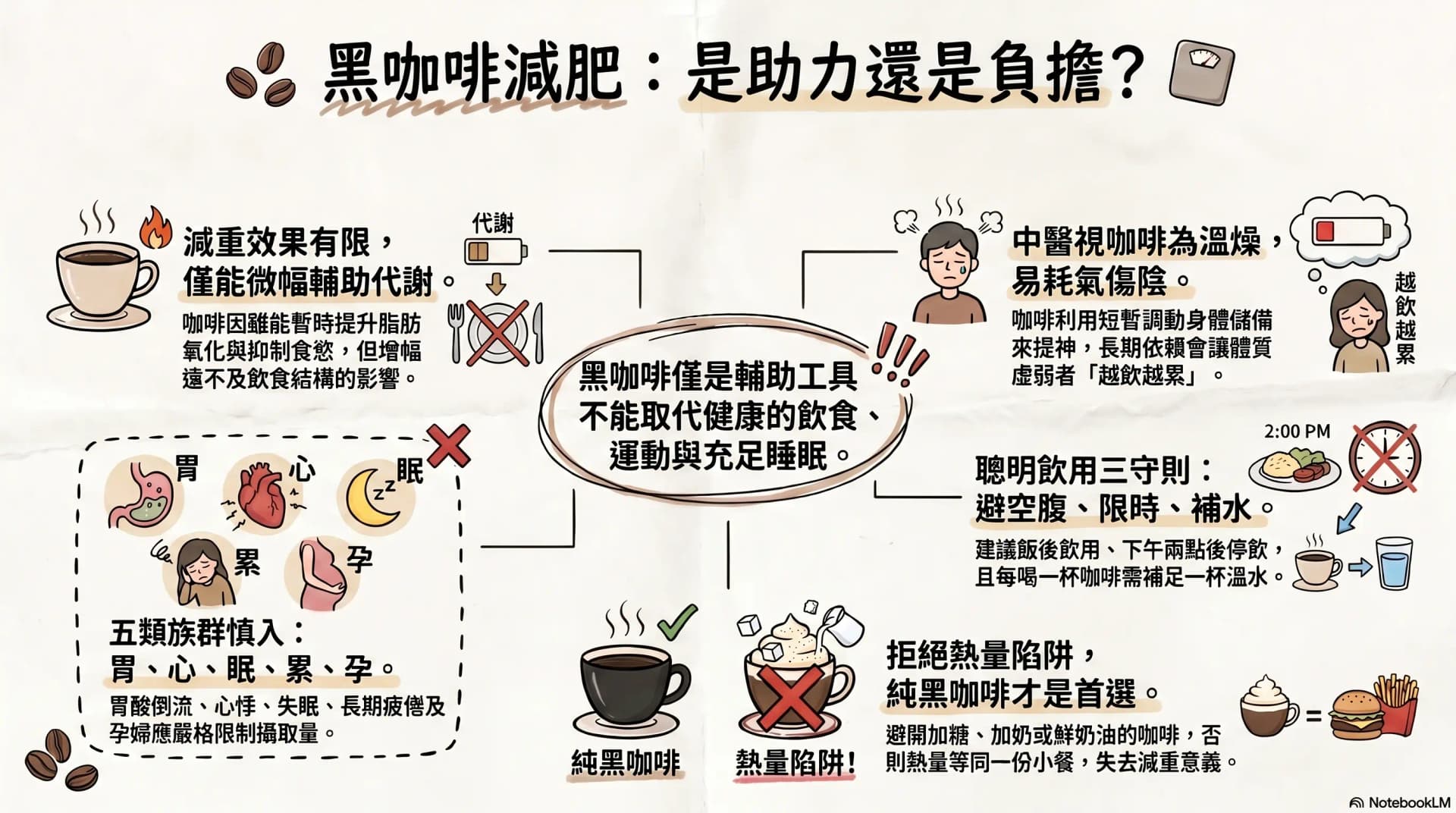
Does Black Coffee Help with Weight Loss? Timing and Side Effects
Black coffee may briefly raise metabolism and suppress appetite, but for those with acid reflux, palpitations, insomnia, chronic fatigue or premenstrual symptoms, it can do more harm than good. This article looks at the evidence and the TCM perspective, identifies five body types that should drink with care, and explains how to arrange timing and quantity sensibly.
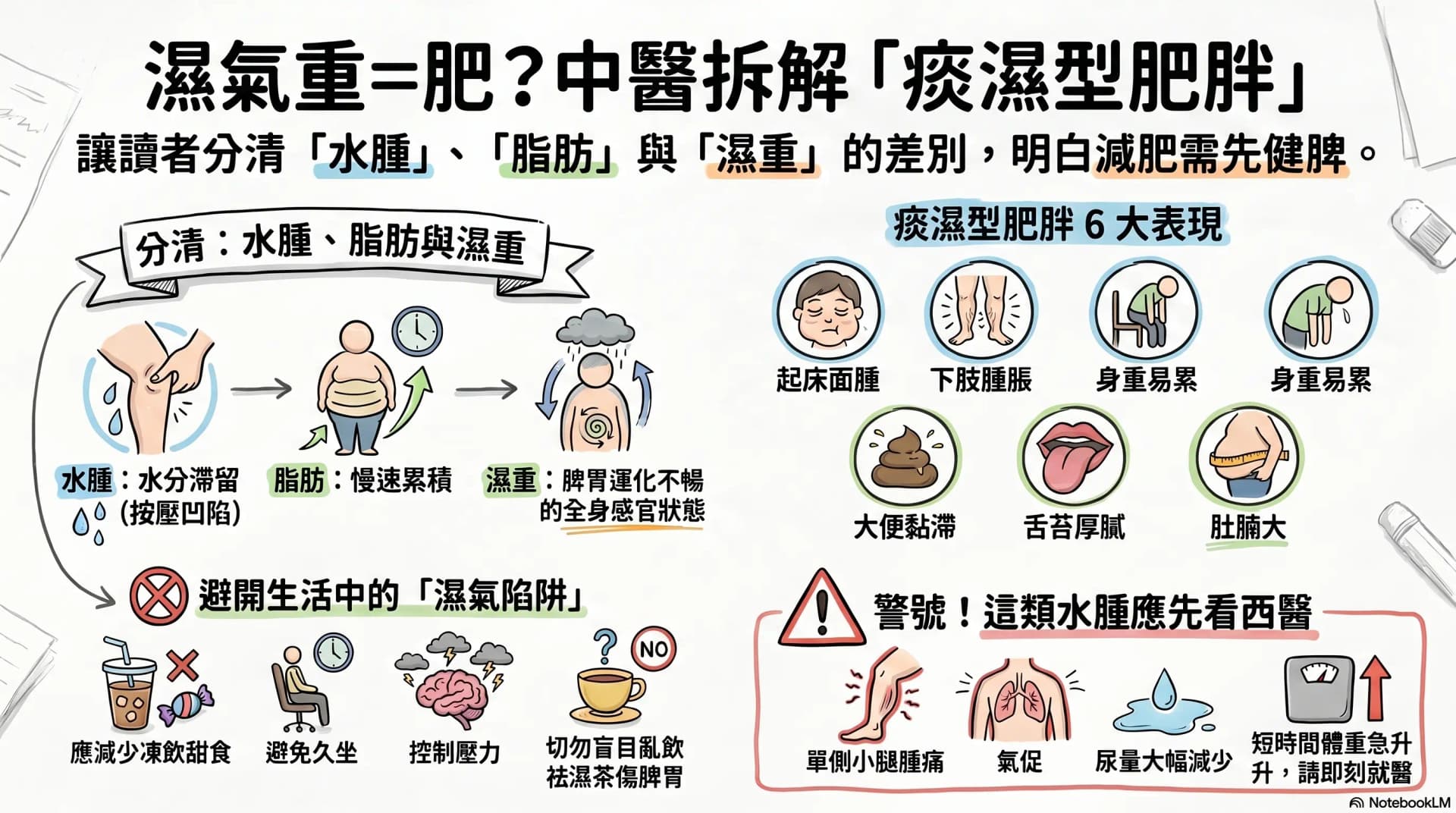
Bloated and Heavy? Phlegm-Damp Obesity and Water Retention in TCM
If you do not eat excessively but often feel puffy, bloated, heavy, and tired, with weight fluctuating up and down, could “dampness” be part of the picture? This article explains the TCM view of water retention, phlegm-damp obesity, and why dampness-focused weight management is not the same as simply “draining water.”
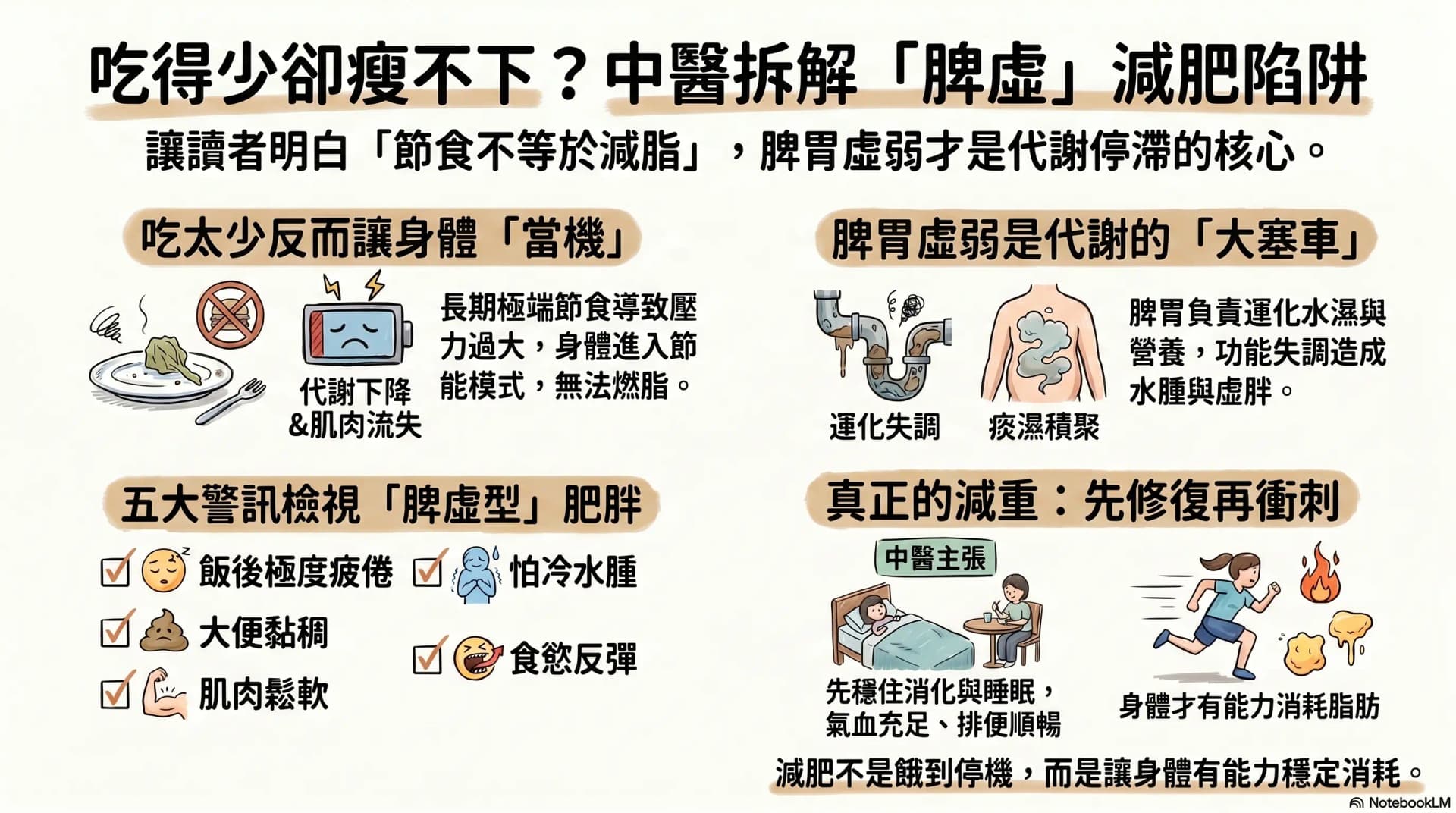
Eating Little but Not Losing Weight? TCM on Weak Digestion
Skipping breakfast, eating only salad for lunch, and cutting rice at dinner may still leave weight unchanged — or even make you more tired, swollen, and stuck. This article explains why eating less does not always lead to better fat loss, and how TCM interprets weak digestion, dampness, deficiency, and the weight-loss plateau.