Postpartum Belly Binding Guide: Timing, Cautions & 5 Steps
Rushing into postpartum belly binding can cause uterine prolapse and urinary incontinence. This guide from Dr To covers the golden timeline, three key contraindications, a five-step recovery flow, and how to integrate belly binding, pelvic realignment and core rebuilding into one complete postpartum recovery plan.
Medical review: Dr. To Ching, Jenny,Registered Chinese Medicine Practitioner #009330
1-Minute Quick Answer
Rushing into postpartum belly binding can cause uterine prolapse and urinary incontinence. Dr To (CMCHK 009330) at Aspira TCM Lai Chi Kok covers the golden timeline, three contraindications, a five-step recovery flow, and how to integrate belly binding, pelvic realignment and core rebuilding.
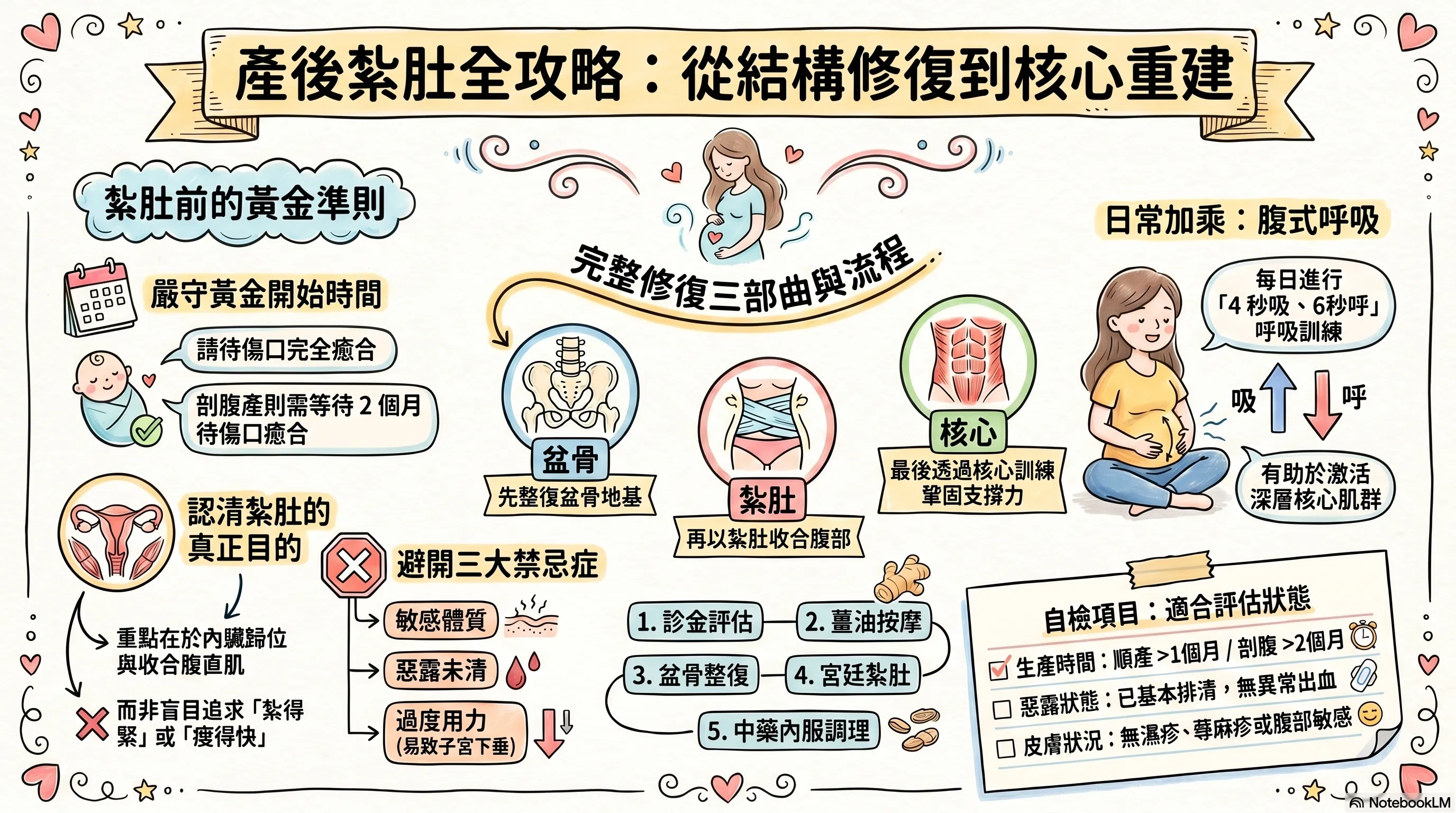 To help you grasp the content quickly, the cover image is generated with NotebookLM. Some Chinese characters may not render correctly — thank you for understanding.
Just delivered your baby and already thinking about belly binding? Pause for a moment — have you done your research?
Belly binding is not simply "the tighter the faster you slim down". Done at the wrong time, with the wrong technique, or on the wrong body type, it can lead to long-term issues such as uterine prolapse, urinary incontinence and chronic back pain.
This guide consolidates the clinical observations of Dr To at Aspira TCM Clinic. We'll walk through the golden timeline, three core contraindications, our full five-step recovery programme, and how to combine belly binding with pelvic realignment and core rebuilding into one coherent postpartum recovery plan. A pre-binding self-check checklist is provided at the end so you can self-assess before booking.
Why Do Mothers Need Belly Binding? What Does It Actually Do?
During pregnancy the rectus abdominis is stretched, the pelvis widens, and internal organs shift. These are natural adaptations — but they do not automatically "snap back" after delivery.
The real purpose of belly binding is not weight loss, but helping the body return to its pre-pregnancy structural position. Specifically:
- Closing diastasis recti: Many mothers develop a 2- to 5-finger gap in the midline of the abdomen. Manual correction combined with binding helps the abdominal wall knit back together.
- Stabilising the pelvis and repositioning organs: An unsupported, widened pelvis can lead to anterior tilt, back pain and a visibly wider hip line.
- Supporting lochia discharge and uterine involution: Gentle external support, combined with TCM herbal support, assists the uterus in returning to its original size.
- Rebuilding waistline and reducing postural pain: Restored core support eases the daily strain of carrying the baby and breastfeeding.
In short, belly binding is one component of postpartum recovery, not a standalone cosmetic treatment. It must be combined with correct timing, professional technique and internal conditioning to be safe and effective.
3 Contraindications You Must Understand Before Binding
Dr To regularly sees mothers who rush the process and unintentionally delay their own recovery. The three contraindications below should always be checked first.
1. Sensitive Skin or Skin Conditions
If your skin reddens easily, or you have a history of eczema, urticaria or atopic dermatitis, belly binding may not be suitable for you.
Why: The binding cloth sits tightly against the skin for hours. Combined with postpartum perspiration, sensitive skin can develop rashes, itching or even abrasions, forcing you to pause treatment — which in turn delays overall recovery.
What to do: Get assessed by a TCM practitioner first. Skin issues can often be addressed before binding begins, and breathable specialist fabrics or shorter binding sessions can be arranged.
2. Starting Too Early
A simple rule: Caesarean mothers wait two months; vaginal-birth mothers wait one month.
The body is still actively repairing in the early weeks — the uterus is contracting, lochia is discharging, and Caesarean wounds have not fully healed. Binding over an unhealed foundation adds pressure to tissues that are still being rebuilt.
Common risks of starting too early:
- Internal traction on the Caesarean wound, delaying healing
- Restricted lochia flow, increasing infection risk
- Elevated abdominal pressure, potentially aggravating haemorrhoids
- Further depletion of qi and blood in an already weakened body
Belly binding is a recovery tool, not a race against time. Waiting an extra one or two months almost always produces better results.
3. Excessive Tightness
Many mothers worry that belly binding itself causes uterine prolapse or urinary incontinence. In reality, these outcomes are not caused by binding per se, but by poor technique, over-tightening, or self-applying off-the-shelf belly belts without supervision.
Consequences of excessive tightness:
- Persistently elevated intra-abdominal pressure pushes pelvic organs downwards — leading to prolapse or incontinence
- Compression of the stomach and diaphragm causes bloating, acid reflux and shortness of breath
- Impaired venous return triggers leg swelling and numbness
- Weakened pelvic floor musculature compromises long-term core stability
Good belly binding is individualised, not maximally tight. Tension should be adjusted by a trained practitioner, in combination with internal conditioning and core rebuilding exercises.
The Postpartum Belly Binding Timeline
The table below is a general reference from Dr To. Your own start date depends on wound healing, lochia status and overall energy.
| Postpartum Period | Vaginal Birth | Caesarean Birth | Key Focus |
|---|---|---|---|
| Weeks 0–2 | Bed rest; side-lying feeding | Bed rest; wound care | No binding; gentle diaphragmatic breathing |
| Weeks 2–4 | Replenish qi and blood | Wound care; no vigorous movement | TCM conditioning; assess suitability |
| Weeks 4–6 | Book binding assessment | Continue wound stabilisation | Vaginal-birth mothers can begin first session |
| Weeks 6–8 | Enter full binding programme | Book binding assessment | Combine with pelvic realignment |
| Week 8 onwards | Binding + core rebuilding | Enter full binding programme | Add deep core training; resume daily activity |
Important: Side-lying is the preferred resting position throughout early postpartum — it reduces spinal load and avoids organ compression.
What Defines Good Belly Binding? 5 Standards
Effective, safe belly binding should meet these five standards:
- Professional assessment first — diastasis recti, pelvic alignment, lochia and constitution are checked before binding.
- Authentic technique and materials — Aspira TCM uses a Traditional Double-Layer Belly Binding technique, with breathable cotton wraps adjusted layer by layer to suit the body's contour and avoid excessive single-point pressure.
- Adjustable tension — pressure is adjusted session by session; you must be able to breathe, eat and breastfeed normally.
- Paired with internal conditioning — binding is combined with herbal regulation of qi and blood, pelvic work and core training for simultaneous internal and external recovery.
- Defined cycle with assessment points — a full programme is typically 10 sessions, with progress checks on diastasis recti throughout.
Use these five points as a checklist when comparing clinics or binding practitioners.
The Aspira TCM Postpartum Recovery Programme: 5 Steps
At Aspira, belly binding is part of a complete recovery system. Dr To will combine the five steps below according to your individual condition.
Step 1 — Consultation & Assessment
A registered practitioner performs the four diagnostic methods (observing, listening, questioning, palpation) to confirm:
- Constitutional pattern (qi-blood deficiency, liver stagnation, spleen deficiency with damp, etc.)
- Extent of diastasis recti (measured in finger-widths)
- Pelvic tilt and asymmetry
- Lochia, sleep and breastfeeding status
Binding without assessment is like operating blind. This step is the foundation of everything that follows.
Step 2 — Classical Rectus Abdominis Repair Technique
Warm ginger oil is applied to the abdomen and worked in by hand. Ginger oil is prized in TCM for warming the meridians, dispelling cold and invigorating blood circulation. Combined with acupressure, gliding and kneading techniques, it helps the stretched rectus abdominis realign, restores circulation and elasticity in the abdominal wall, and supports lochia discharge and gastrointestinal movement. Performed before binding, it "loosens and warms" abdominal tissue so that the subsequent binding step closes the abdomen more stably.
Step 3 — Deep Pelvic Realignment
Left untreated, pregnancy-related pelvic widening contributes to lifelong back pain, wider hip appearance and spinal compensation. Deep manual techniques are used to realign the ilium, pubic symphysis and sacroiliac joints.
Step 4 — Traditional Double-Layer Belly Binding
Using specialist long cotton wraps, our practitioners apply a traditional double-layer binding method from lower to upper abdomen to support abdominal wall closure and rebuild waist and core support. Duration and tension are adjusted each session according to that day's condition.
Step 5 — Herbal Conditioning / Warming the Womb
Practitioners prescribe according to constitution:
- Qi-and-blood tonifying — for fatigue, low milk supply, easy tiredness
- Blood-moving and stasis-clearing — for retained lochia, painful menses, lower abdominal discomfort
- Womb-warming and menses-regulating — for cold uterus, cold extremities, delayed cycles
Internal herbal support combined with external binding enables simultaneous internal and external recovery.
Programme Packages & Pricing
Aspira currently offers three postpartum binding programmes, each running for 10 sessions. The right package is recommended after Dr To's initial assessment.
| Package | Includes | 10-Session Price | Best For |
|---|---|---|---|
| Essential | Consultation + Classical Rectus Abdominis Repair Technique + Traditional Double-Layer Belly Binding | HK$9,680 | General constitution; focused on abdominal wall and waistline |
| Signature (No.1) | Consultation + Classical Rectus Abdominis Repair Technique + deep pelvic realignment + Traditional Double-Layer Belly Binding + herbal conditioning | HK$9,888 | Mothers needing combined internal and external care; stable uterus-pelvis balance (our most popular option) |
| Premium | Consultation + Classical Rectus Abdominis Repair Technique + deep pelvic realignment + Traditional Double-Layer Belly Binding + herbal conditioning + womb-warming herbal therapy | HK$12,880 | Mothers with a cold constitution, cold extremities, or who prefer gentle, thorough conditioning |
Our commitment: Pricing is clear upfront. We do not add "premium herb" or "enhanced technique" surcharges. If you're still deciding, a single consultation can help Dr To confirm whether belly binding is right for you before committing to a full programme.
Binding × Pelvic Realignment × Core Rebuilding: A Complete Three-Part Recovery
Belly binding alone is only the middle step. The full recovery flow is:
Pelvic realignment (foundation) → Belly binding (outer wall) → Core rebuilding (reinforcement)
| Stage | Goal | Main Tools | Timing |
|---|---|---|---|
| ① Pelvic realignment | Return the widened pelvis to its neutral position and stabilise the spinal base | Manual realignment, posture correction | 1 month (vaginal) / 2 months (Caesarean) |
| ② Belly binding | Close diastasis recti, reshape the waistline, and improve structural support | Traditional Double-Layer Belly Binding, Classical Rectus Abdominis Repair Technique | 1 month (vaginal) / 2 months (Caesarean) |
| ③ Core rebuilding | Restore deep core and pelvic floor to prevent prolapse and incontinence | Diaphragmatic breathing, transverse abdominis activation, pelvic floor training | Alongside mid-programme binding |
These three stages are complementary, not alternatives. Without pelvic realignment, binding builds a wall on a crooked foundation. Without core rebuilding, muscles remain weak and the abdomen loosens again as soon as the wraps come off.
Our Signature and Premium packages already cover the first two stages. For core rebuilding, Dr To provides guided home exercises and, where appropriate, refers patients to a registered physiotherapist for collaborative follow-up.
Daily Habits That Amplify Results
Day-to-day habits during your binding programme have a direct impact on outcomes. Pay particular attention to:
- Breathing training — Twice daily, 5 minutes of "4-second inhale, 6-second exhale" diaphragmatic breathing to activate the transverse abdominis.
- Avoid early heavy training — No crunches or loaded squats during the programme; they sharply raise intra-abdominal pressure.
- Correct baby-carrying posture — Hold the baby close to your body, use your hips for support, and avoid long periods on a single side.
- Nutrition — Prioritise protein, iron and vitamin C to support tissue repair; avoid raw, cold and spicy foods.
- Sleep posture — Primarily side-lying with a pillow between the knees to reduce pelvic torsion.
- After binding — Eat smaller, more frequent meals to avoid sudden spikes in abdominal pressure.
Pre-Binding Self-Check Checklist
Before you book, run through this checklist. If all 7 items apply to you, you are in a suitable state to proceed to a binding assessment. If any item is unmet, address that item first.
- At least 1 month since vaginal delivery / 2 months since Caesarean
- Lochia has largely cleared, with no abnormal bleeding or ongoing abdominal pain
- Caesarean wound is fully healed — no redness, no discharge, no tenderness on pressure
- No active eczema, urticaria or abdominal skin sensitivity
- Eating, sleeping and breastfeeding are stable; energy is sufficient for a clinic visit
- No untreated postnatal conditions (severe anaemia, puerperal infection, poor uterine involution)
- Willing to combine binding with herbal conditioning and core training — not just "wrap it tight"
If 2 or more items are unmet: Don't rush. Book an assessment first so Dr To can decide whether you need a period of conditioning or whether your wait can be safely shortened. Forcing the process only prolongs recovery.
Want to Know If Belly Binding Is Right for You? Start with an Assessment
Every mother's body, constitution and delivery experience is different. Whether belly binding suits you, which package fits best, and when to begin — these questions can only be answered by a registered TCM practitioner during an in-person assessment.
If you are considering belly binding, or if you delivered some time ago and still feel loose abdominal muscles or persistent back pain, you are welcome to book a postpartum recovery assessment at Aspira TCM, where Dr To will design a plan tailored to you.
Book a Postpartum Recovery Assessment
- WhatsApp: Book here
- Phone: 2110 9337
- Address: Unit 2706, Saxon Tower, 7 Cheung Shun Street, Lai Chi Kok, Kowloon
FAQ — Belly Binding
Q1: I haven't given birth, I just have a belly. Can I still do belly binding?
Belly binding is designed for postpartum recovery, leveraging the body's natural repair window. For general weight or belly concerns unrelated to pregnancy, a combined approach of nutrition, exercise and TCM differential diagnosis is more effective. Binding alone offers limited benefit in that context.
Q2: My Caesarean wound still hurts. Can I start binding earlier?
No. Caesarean mothers should wait at least 2 months, with no pain or redness around the wound, and internal healing confirmed by the obstetrician. Early binding does not accelerate recovery — it risks internal traction on the wound and prolonged healing.
Q3: Can I breastfeed during the binding programme?
Yes. Our Traditional Double-Layer Belly Binding technique does not compress the chest and does not impair breast circulation. If your package includes herbal conditioning, the practitioner will tailor the prescription to protect your milk supply.
Q4: Is 10 sessions guaranteed to work?
Outcomes depend on multiple factors — initial diastasis, age, number of pregnancies, daily posture and exercise habits. Dr To reviews progress during the programme and, if recovery is slow, recommends additional core work or an extended programme. We do not promise specific numerical reductions, because every mother's body is different.
Q5: Is binding still worth it for second- or third-time mothers?
Yes. With each pregnancy, diastasis recti and pelvic changes tend to accumulate. Without proper recovery, the likelihood of back pain and urinary incontinence increases with age. Older age is not a contraindication — what matters is your current constitution and structural status.
Q6: How is belly binding different from a postpartum corset or belly band?
Off-the-shelf belly bands typically apply uniform pressure across the abdomen and serve as daily-wear support. Traditional Double-Layer Belly Binding is applied by a trained practitioner, layer by layer and adjusted to your body, with graded pressure distribution and internal conditioning support, making it a clinical programme rather than a simple wearable product.
Disclaimer: Every mother's constitution, delivery experience and recovery status differ, and belly binding outcomes vary accordingly. The above content is for reference only; please consult a registered TCM practitioner for a treatment plan tailored to your specific situation. Programme details and pricing are subject to the clinic's latest announcements. If you experience abnormal wound changes, persistent bleeding or any discomfort, stop binding immediately and seek medical attention.
Disclaimer: This article is for health education and reference purposes only and does not constitute medical advice, diagnosis, or treatment. Each patient's condition is unique and treatment outcomes vary. Please consult a registered TCM practitioner or qualified healthcare professional for health concerns.
Further Reading
Hand-picked related articles and real cases to read next.
How Much Does TCM Treatment Cost in Hong Kong? 2026 Pricing Guide
TCM treatment costs in Hong Kong typically range from HK$120 to HK$2,000 depending on the type of treatment and condition. This guide covers pricing for herbal medicine, acupuncture, bone-setting, thread embedding, and more — plus the five key factors that affect your total cost.
How to Choose a Good TCM Doctor? 5 Questions You Must Ask
Choosing the right TCM doctor shouldn't be a gamble. This guide covers 5 essential questions to ask before your first visit — from verifying credentials to checking fee transparency — so you can find a trustworthy practitioner who truly fits your needs.
Want to learn more? WhatsApp us for a free consultation
Book via WhatsAppExplore our full range of treatments: Traditional TCM Services
Related Articles
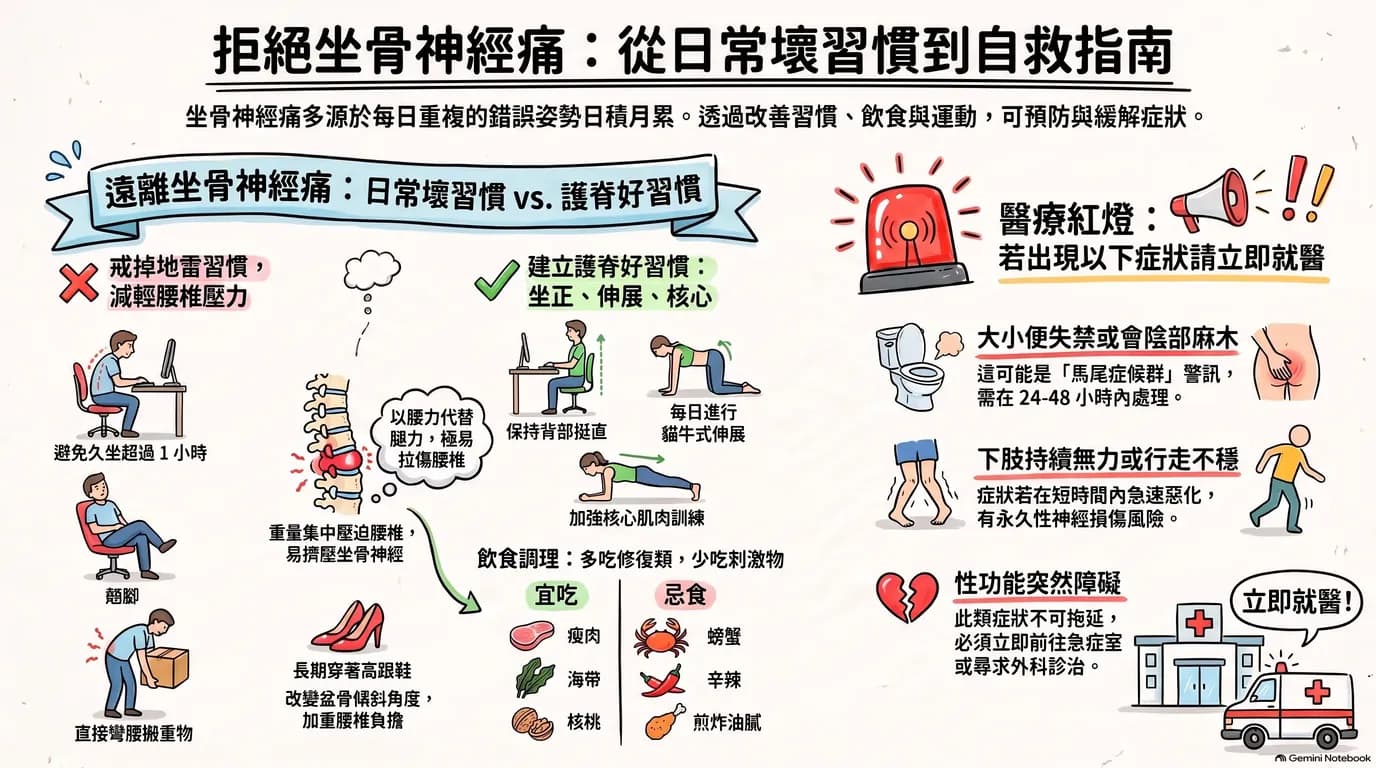
Sciatica Prevention: Bad Habits, Diet and Daily Care Tips
Sciatica isn't only about treatment — your daily habits and diet play a big role too. In this article, Dr Wong explains which everyday habits increase your risk of sciatica, which foods may help ease it, and simple daily habits that reduce the chance of it coming back.
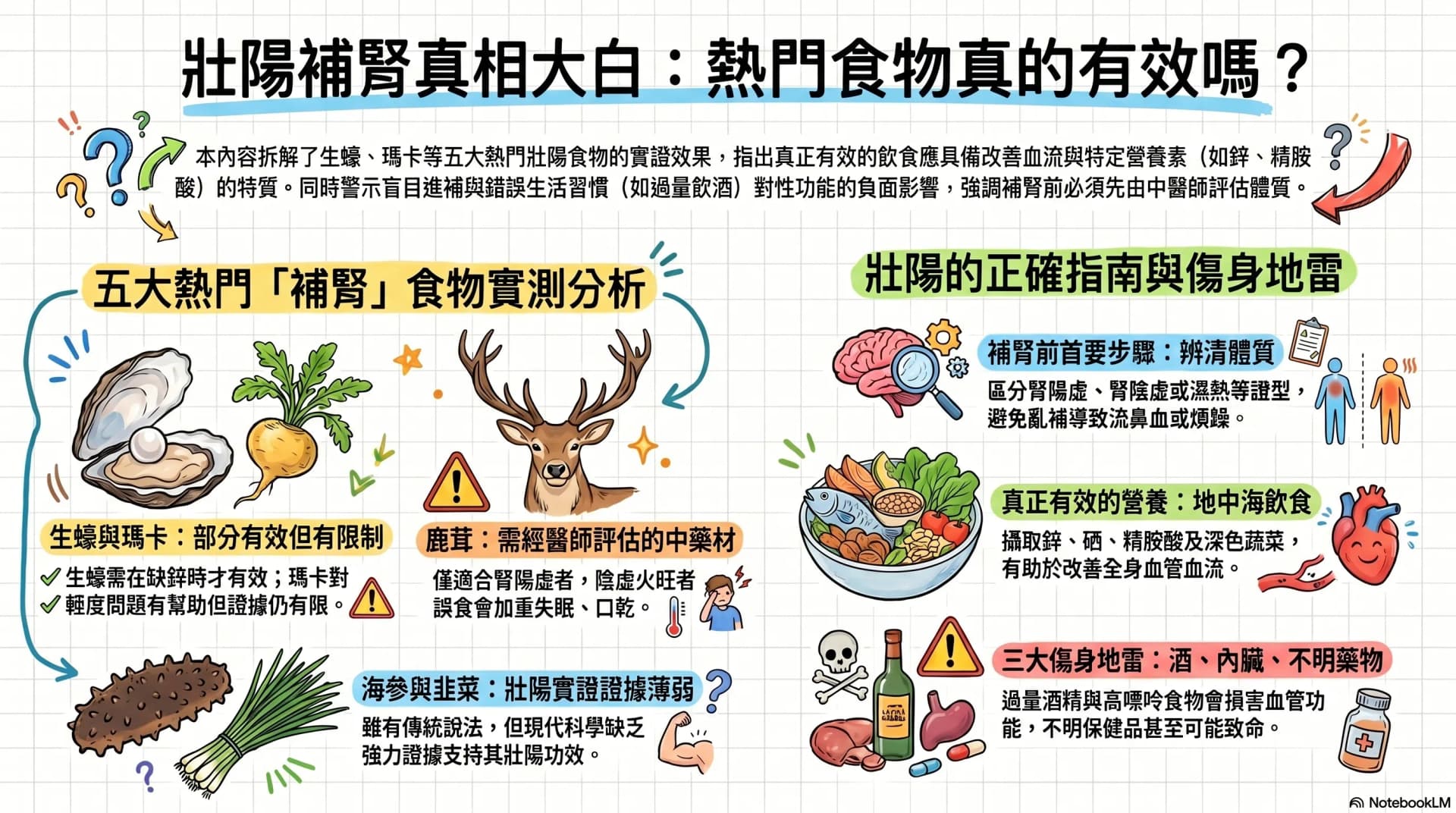
Do Oysters, Maca and Deer Antler Boost Male Vitality? 5 Myths
Do aphrodisiac foods actually work? This article opens with a rating table (effective / partly effective / effective within a TCM framework / weak evidence / no strong evidence), reviews the Chinese and Western medical evidence behind oysters, maca, deer antler, sea cucumber and Chinese chives, distils the 3 shared traits of foods that genuinely support male sexual function, and flags 3 commonly eaten items that can actually harm performance.
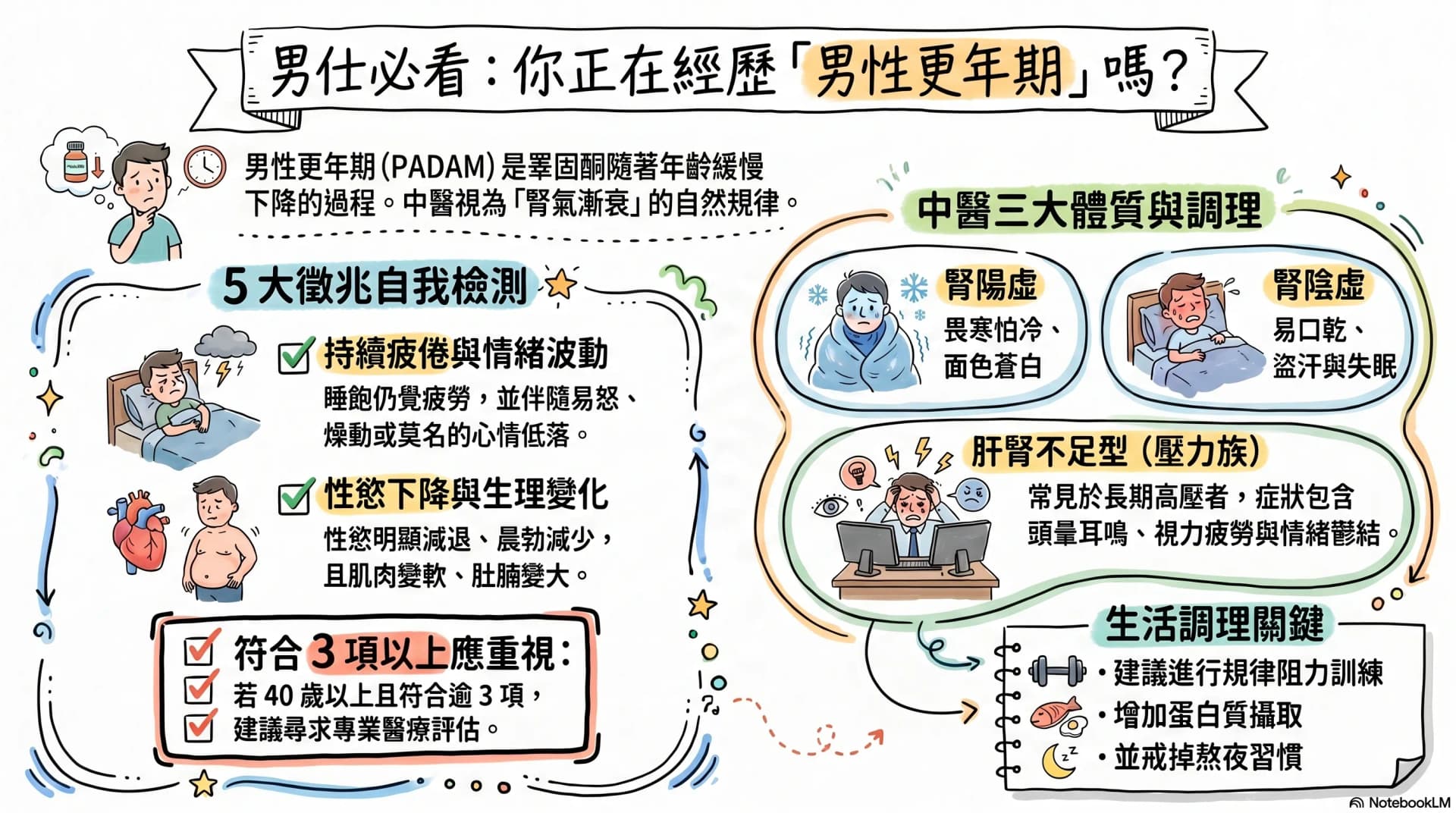
Male Menopause Through the TCM Lens: 5 Signs in Men Over 40
Unexplained fatigue, irritability, lower libido, poorer sleep and a growing belly after 40 are not just ageing or work stress — they may be male menopause. This article begins with a five-sign self-check, sets out three TCM patterns (kidney-yang deficiency, kidney-yin deficiency, liver-and-kidney insufficiency) with matching improvements, and compares the two treatment routes — testosterone replacement therapy versus TCM constitutional care.