Enlarged Prostate: Are Nocturia and a Weak Stream Warning Signs?
After age 50, urinary frequency, nocturia, a weaker stream and having to urinate in stages may not simply be ageing. This article opens with a 7-symptom self-check, then sets out warning signs that warrant seeing a Western doctor immediately, four TCM constitution patterns, and four daily care directions any man can start with — helping you or your father decide the next step.
Medical review: Dr. Tai Wai Ho, Samson,Registered Chinese Medicine Practitioner #008702
1-Minute Quick Answer
After 50, nocturia, frequency and a weak urinary stream are not always ageing — they can also stem from overactive bladder or diabetes. This guide (reviewed by Dr Tai, CMCHK 008702) opens with a 7-symptom self-check, flags warning signs that need urgent Western care, and covers 4 TCM patterns plus 4 daily care directions.
What Are the Symptoms of an Enlarged Prostate? Are Nocturia, Frequency and a Weak Stream Warning Signs?
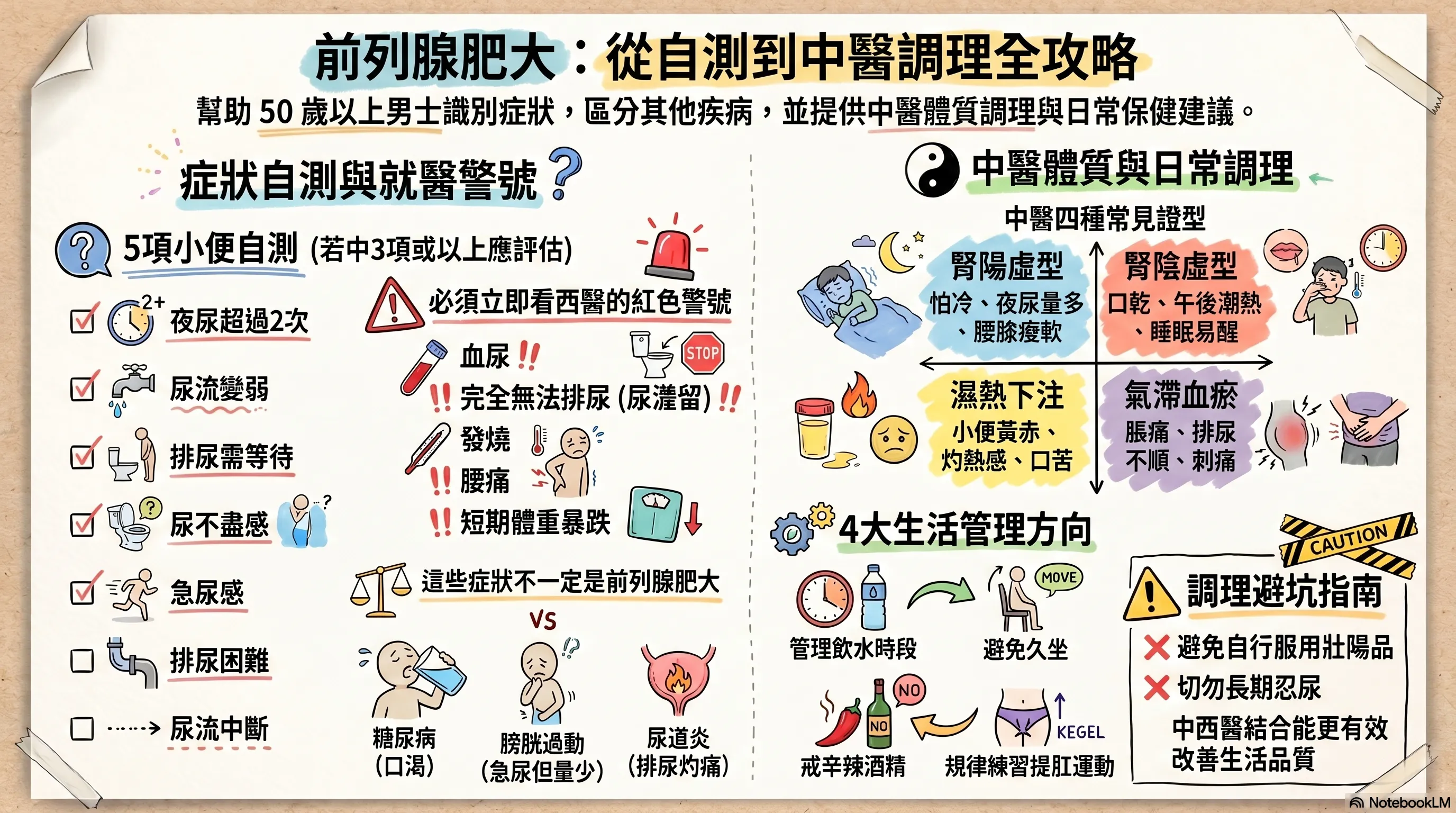 For quick reference, this image was generated by NotebookLM. Some Chinese characters may not render perfectly; we appreciate your understanding.
"I thought getting up once or twice at night to use the bathroom was just part of getting older — until urination became slow and I had to wait a long time before anything came out. That was when I realised it might be more than ageing."
Benign prostatic hyperplasia (BPH) is common in men over 50, but the same symptoms — urinary frequency, nocturia and a weak urinary stream — can also stem from overactive bladder, diabetes or a urinary tract infection. Symptoms alone are not enough to draw a conclusion.
The principle is straightforward: if you get up more than twice a night to urinate, your stream has clearly weakened, or you need to wait before urine starts to flow, and these have continued for some time, it is worth a proper assessment. Blood in the urine, complete inability to urinate, or symptoms with fever or back pain are warning signs and call for immediate medical attention.
This article walks through a 7-symptom self-check, the warning signs that warrant seeing a Western doctor immediately, conditions that mimic BPH, how TCM differentiates by constitution, and four daily care directions that suit all patterns.
A Self-Check for Your Urinary Symptoms
When assessing prostate issues, a TCM practitioner will first ask about the following seven points. If you (or your father) have noticed three or more of these in the past three months, a proper assessment is warranted:
- Getting up more than twice a night to urinate
- A weaker stream, sometimes dribbling
- Having to wait before urine starts to flow
- Feeling not fully empty, with the urge returning soon after
- Needing two or three goes to finish urinating
- Urgency, yet the stream slows once at the toilet
- The first urination of the morning is especially laboured
These directions correspond to the internationally used IPSS (International Prostate Symptom Score). The Hong Kong Urological Association advises men to watch for these symptoms and have a family doctor or urologist perform a formal assessment, including IPSS, uroflowmetry, post-void residual volume and PSA screening.
These Symptoms Are Not Always BPH
Many men assume "nocturia equals enlarged prostate", but early-stage diabetes, sleep problems, diuretics and even drinking habits can also increase night-time urination.
The same lower urinary tract symptoms can arise from various causes, and a differential is needed:
| Possible cause | Key features |
|---|---|
| Benign prostatic hyperplasia | Gradual onset after age 50; most noticeable in the morning and at night |
| Overactive bladder | Strong urgency but small volume each time |
| Urethritis / prostatitis | Burning on urination, perineal discomfort, sometimes fever |
| Early-stage diabetes | Accompanied by thirst, weight loss, vision changes |
| Neurological issues | Often accompanied by other limb weakness or sensory changes |
A note on TCM terminology: classical TCM texts refer to symptoms like BPH as "long bi" or "jing long", meaning a thin, weak and obstructed urinary stream that is difficult to expel. Modern TCM generally accepts the Western diagnosis first, then works on constitution-based pattern differentiation.
Warning Signs That Warrant Seeing a Western Doctor Immediately
TCM can support constitution and symptom care, but the following are medical warning signs and call for immediate Western or emergency care:
- Blood in the urine or tea-coloured urine
- Complete inability to urinate with lower abdominal distension and pain (acute urinary retention)
- Accompanying fever, back pain or chills
- Marked weight loss in a short period
- Severe perineal pain or radiating groin pain with urination
Men with a raised PSA, or aged 50 or above, should also be assessed by a urologist as to whether further work-up is needed to exclude prostate cancer.
What Is Benign Prostatic Hyperplasia?
The prostate is a male reproductive organ that sits at the outlet of the bladder and surrounds the urethra. With age, prostate tissue gradually enlarges and compresses the urethra, narrowing the stream and impairing urination. In TCM terms, this is understood through the saying "by the time a man passes fifty, his kidney qi is halved" — meaning that with age, the kidneys' role in qi transformation and containment in the lower burner naturally declines, and combined with years of diet, lifestyle and emotional factors, different pattern presentations emerge.
Can BPH Turn into Cancer?
Benign prostatic hyperplasia (BPH) is not the same as prostate cancer, and it does not directly "turn into cancer" — the two arise from different cells and have different mechanisms. However, because both are common in men over 50 and the symptoms can overlap (nocturia, frequency, slow stream), once symptoms appear a urologist still needs to make an integrated judgement using PSA, digital rectal examination and ultrasound. Benign or malignant cannot be decided from symptoms alone.
Earlier urology or specialist work-up is especially warranted in the following situations:
- A raised PSA, or PSA out of step with age-appropriate reference values
- A first-degree relative (father or brother) with a history of prostate cancer
- Rapid worsening of symptoms over a short period (for example, mild to severe within a few weeks)
- Accompanying unusual features such as marked weight loss, bone pain or blood in the urine
To be clear: BPH and prostate cancer are two distinct conditions, but distinguishing between them requires medical investigation — TCM pattern differentiation alone is not enough. The TCM role is to support constitution-based care once BPH has been confirmed; it is not used to exclude cancer.
The 4 TCM Constitution Patterns in BPH
In clinical practice, Dr Tai Wai-ho uses the combination of symptoms, tongue and pulse to broadly classify BPH patients into the following four patterns. Each has a distinct day-to-day picture:
| Pattern | Day-to-day presentation | Treatment direction |
|---|---|---|
| Kidney-yang deficiency | Cold intolerance, copious clear nocturia, fatigue, sore lower back and knees | Warm the kidneys and support yang (boost yang qi, ease cold in the lower burner) |
| Kidney-yin deficiency | Dry mouth, afternoon tidal heat, scant yellow urine, light and easily disturbed sleep | Nourish kidneys and replenish yin (moisten yin fluids, calm deficiency heat) |
| Damp-heat in the lower burner | Yellow-red urine with a burning sensation, bitter taste, damp perineum | Clear and drain damp-heat (remove damp-heat from the lower burner) |
| Qi stagnation with blood stasis | Lower abdominal distension and discomfort, perineal discomfort, nocturia with distending pain, dusky tongue | Move qi and invigorate blood (open the flow of qi and blood, resolve stasis) |
In practice, a person may show a mix of two or three patterns, and the practitioner will treat the main and secondary patterns in order. Herbal formulas are individualised pattern-based prescriptions and should not be self-matched from a list.
4 Daily Care Directions That Suit All Patterns
Whichever pattern fits, the following four directions are relatively safe steps you can start with at home:
1. Manage the timing of fluid intake
The aim is not to drink less, but to adjust when you drink. During the day (from morning to 5 pm), maintain a normal intake of 1,500-2,000 ml; after 7 pm, reduce fluids and avoid diuretic drinks such as coffee, tea and alcohol. This can meaningfully reduce night-time urination.
2. Get up and walk 3 minutes every hour if you sit for work
Prolonged sitting congests the perineum and adds pressure on the prostate. Drivers, IT professionals, accountants and other men in seated occupations are advised to get up every hour for a 3-minute walk and to stretch the lower back, avoiding sitting for more than two consecutive hours.
3. Cut spicy foods and limit alcohol (especially beer)
Spicy food and alcohol can irritate and congest the prostate; beer contains both a large volume of fluid and alcohol, easily worsening urgency and increasing nocturia. Avoid large quantities of beer, especially within four hours of bedtime.
4. Pelvic floor (Kegel) exercises
A 2024 randomised controlled trial in the World Journal of Urology of 158 men with BPH and concurrent overactive bladder showed that 12 weeks of pelvic floor muscle training combined with urgency-suppression techniques, added to standard Western treatment, produced clearer improvements in overactive bladder symptoms and quality of life than medication alone.
How to do it: mimic the action of "holding in urine", tightening the muscles around the anus for 5 seconds, then relaxing for 5 seconds. Do 10 reps per set, 3 sets a day. You can do this on the bus or while watching television — no special setting required.
What to avoid
- Taking so-called kidney-tonifying or virility products on your own: in a damp-heat pattern, self-supplementing (especially with warming herbs such as epimedium or deer antler) can worsen symptoms.
- Holding urine for long periods: chronic overdistension of the bladder weakens its muscle.
- Assuming nocturia is normal ageing and ignoring it entirely: severe cases can progress to acute urinary retention and affect kidney function — early action beats delay.
When TCM Assessment Is Worth Adding
The following situations are especially suited to integrated Western and TCM care:
- Already diagnosed with BPH by a Western doctor, but troubled by medication side effects (such as postural hypotension or sexual function)
- Wanting to slow progression and improve overall constitution
- Mild to moderate symptoms not yet at the surgical stage
- Multiple concurrent complaints such as nocturia, lower back soreness and fatigue
A 2024 systematic review and network meta-analysis in Frontiers in Pharmacology indicated that commonly used Chinese poly-herbal formulas combined with alpha-blockers or 5-alpha reductase inhibitors showed better effects on IPSS, maximum urinary flow rate and quality of life than Western medication alone, with acceptable safety. However, herbal formulas are individualised prescriptions and should not be self-purchased and self-taken.
How Aspira TCM Assesses Prostate Issues
When seeing a BPH patient, Dr Tai Wai-ho considers the following to form an overall picture:
- Frequency and time-course of the 7 self-check symptoms
- Existing Western investigations (PSA, ultrasound, uroflowmetry, IPSS)
- Type and duration of current Western medications
- Diet, sleep, hours of seated work, and extent to which nocturia disrupts sleep
- Tongue, pulse and other whole-body constitutional features
After assessment, he explains clearly which pattern is dominant and which is secondary, what TCM can help with, and which situations still need Western management as the lead. If no Western work-up has been done, he will also recommend booking a urology consultation.
FAQ
Q1: Can I see a TCM practitioner while taking Western medication?
Yes. A TCM practitioner will avoid herbs that conflict with your current Western drugs and use constitution-based care to help reduce side effects. All prescriptions must be decided by a registered Chinese medicine practitioner based on your individual condition; do not combine on your own.
Q2: Can TCM help me avoid surgery?
It depends on the severity. For mild to moderate BPH without serious obstructive symptoms, TCM combined with lifestyle change may slow progression and ease symptoms. However, when there is already acute urinary retention, significant kidney impairment or bladder stones, urology and surgery should take the lead.
Q3: Do pelvic floor exercises really work?
There is supporting evidence. A 2024 international urology study showed that 12 weeks of pelvic floor training with urgency-suppression improved symptoms in men with BPH and concurrent overactive bladder. Consistency is key — clear results usually take about three months.
Q4: Could drinking too little water harm the kidneys?
Yes. "Reducing fluid" here refers to timing, not total daily intake. During the day you should still drink 1,500-2,000 ml to avoid dehydration, which concentrates urine and raises the risk of stones. The aim of limiting fluids after 7 pm is specifically to reduce nocturia.
Q5: Does a raised PSA mean prostate cancer?
Not necessarily. PSA can rise with BPH, prostatitis, recent sexual activity, cycling, or a recent urological examination. A urologist must combine other investigations to make an overall judgement.
Q6: If my father has BPH, will I definitely get it?
Family history is one risk factor for BPH, but it is not decisive. Lifestyle (exercise, weight management, diet) has a clear influence on whether and how severely BPH develops later in life.
Q7: Will an enlarged prostate turn into prostate cancer?
Benign prostatic hyperplasia (BPH) is not the same as prostate cancer, and it does not directly "turn into cancer". However, both are common in older men and the symptoms can overlap — nocturia, frequency, a slow stream and so on — so a urologist still needs to make a judgement using PSA, digital rectal examination and ultrasound. If PSA is raised, there is a family history of prostate cancer, or symptoms have worsened rapidly in a short time, earlier investigation is all the more important.
Many men put it off out of embarrassment, but prostate issues are usually easier to control the earlier they are addressed. If nocturia and frequency are already affecting your sleep and daily life, it is already worth getting assessed.
Medical review: Dr Tai Wai-ho | Registered Chinese Medicine Practitioner (Reg. No.: 008702) Aspira TCM Clinic
Sleep and Quality of Life Affected? Book a Consultation
If nocturia, frequency or a weak stream are already affecting your sleep and daily life, you are welcome to book a consultation with Dr Tai.
How to book:
- WhatsApp: Book here
- Phone: 2110 9337
- Address: Unit 2706, Saxon Tower, 7 Cheung Shun Street, Lai Chi Kok
Disclaimer: This article is for general health education only and does not replace individual consultation, examination, medication or treatment advice. If you have a related condition, persistent symptoms, or are on medication, follow your doctor's instructions for follow-up and monitoring; any change to medication should first be discussed with your treating doctor.
References:
- Hospital Authority Smart Patient: Benign Prostatic Hyperplasia https://www.smartpatient.ha.org.hk/smart-patient-web/disease-management/disease-information/disease/BenignProstaticHyperplasia
- Department of Health, Centre for Health Protection: Common Diseases in Men — Benign Prostatic Hyperplasia https://www.chp.gov.hk/tc/static/80028.html
- Hong Kong Urological Association: Benign Prostatic Hyperplasia https://hkua.org/%E8%89%AF%E6%80%A7%E5%89%8D%E5%88%97%E8%85%BA%E5%A2%9E%E7%94%9F/
- American Urological Association: Management of LUTS Attributed to BPH: Guideline Amendment 2023 (Journal of Urology) https://www.auajournals.org/doi/10.1097/JU.0000000000003698
- Frontiers in Pharmacology 2024: Comparative efficacy of oral poly-herbal TCM formulations combined with western medicine in BPH management https://pmc.ncbi.nlm.nih.gov/articles/PMC11187581/
- World Journal of Urology 2024: The effect of pelvic floor muscle training in men with BPH and overactive bladder https://link.springer.com/article/10.1007/s00345-024-04974-7
Disclaimer: This article is for health education and reference purposes only and does not constitute medical advice, diagnosis, or treatment. Each patient's condition is unique and treatment outcomes vary. Please consult a registered TCM practitioner or qualified healthcare professional for health concerns.
Further Reading
Hand-picked related articles and real cases to read next.
Want to learn more? WhatsApp us for a free consultation
Book via WhatsAppExplore our full range of treatments: Traditional TCM Services
Related Articles
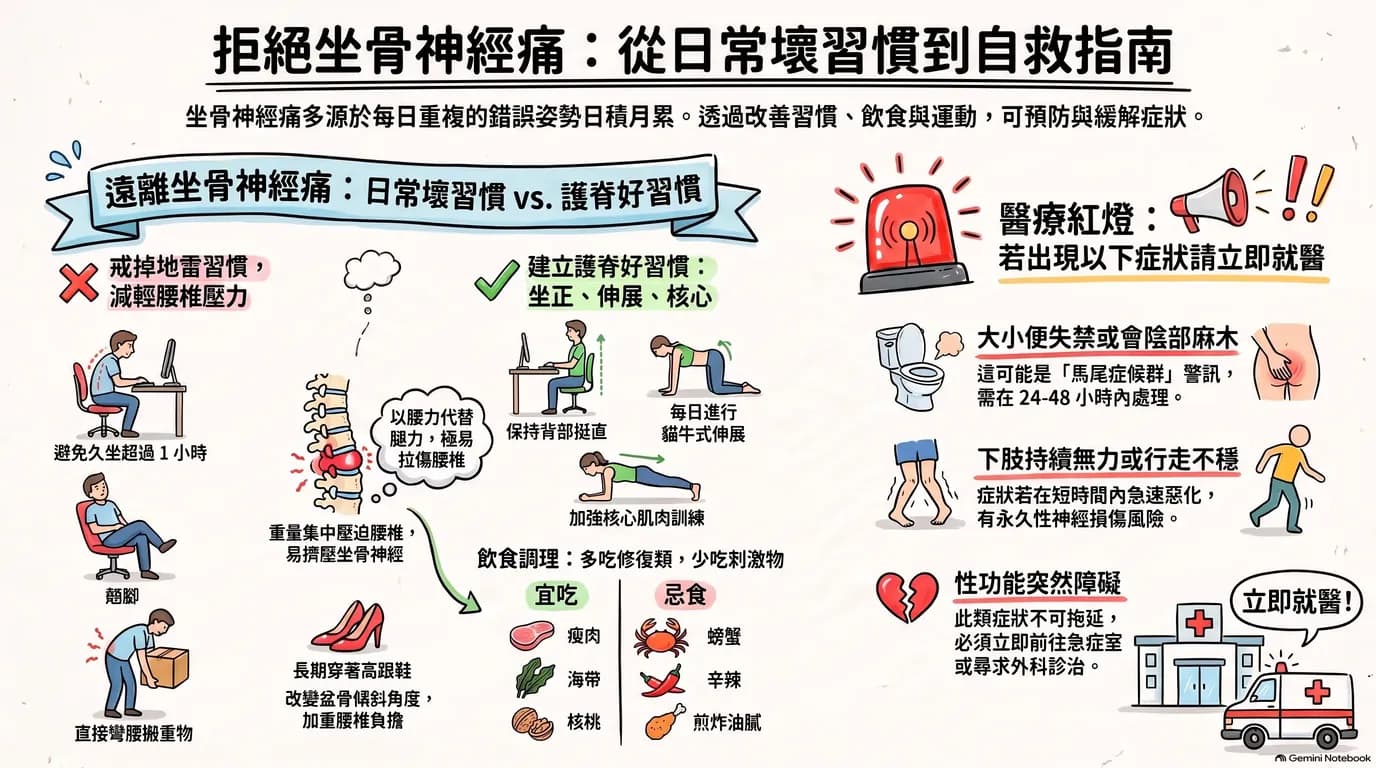
Sciatica Prevention: Bad Habits, Diet and Daily Care Tips
Sciatica isn't only about treatment — your daily habits and diet play a big role too. In this article, Dr Wong explains which everyday habits increase your risk of sciatica, which foods may help ease it, and simple daily habits that reduce the chance of it coming back.
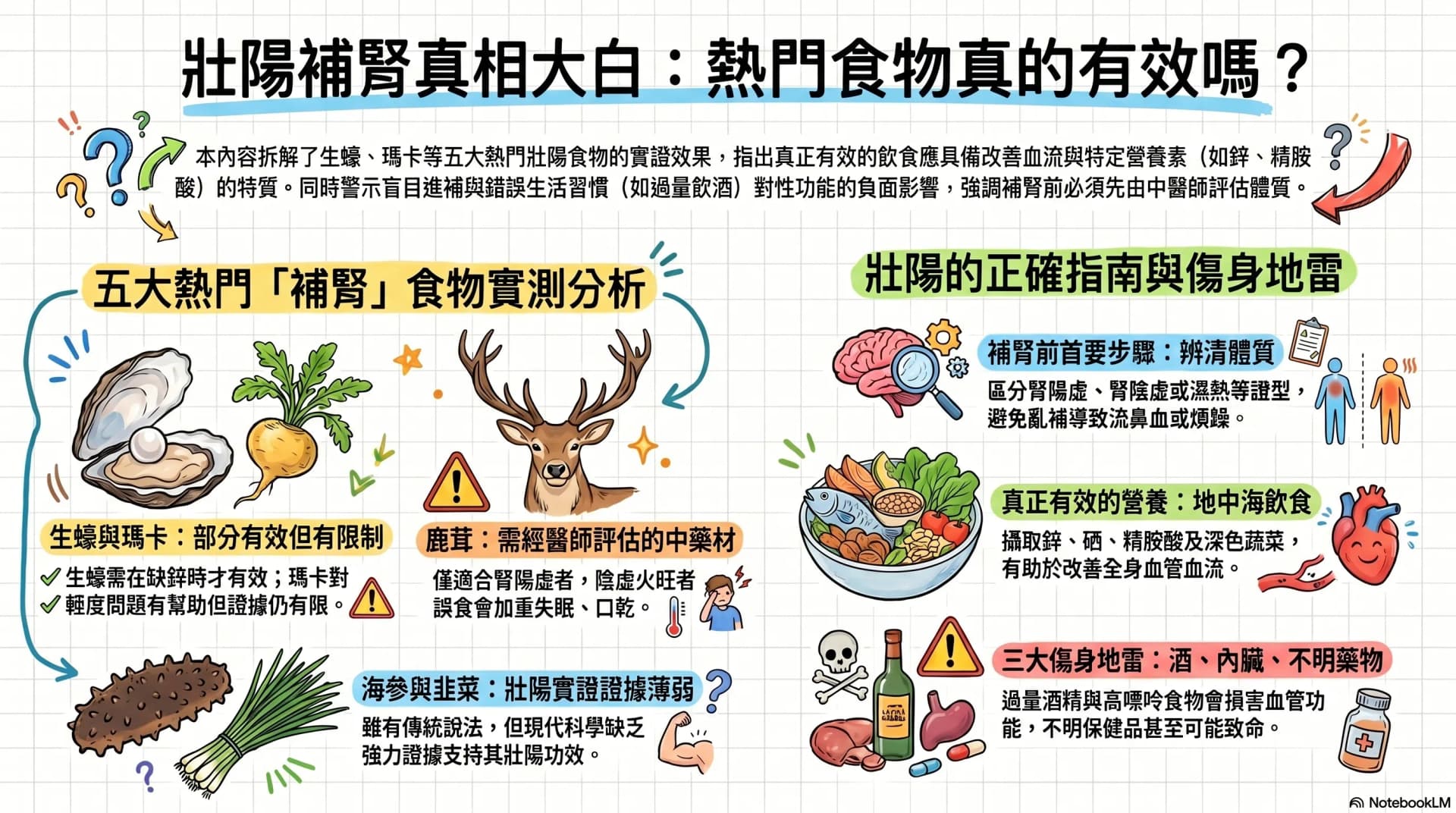
Do Oysters, Maca and Deer Antler Boost Male Vitality? 5 Myths
Do aphrodisiac foods actually work? This article opens with a rating table (effective / partly effective / effective within a TCM framework / weak evidence / no strong evidence), reviews the Chinese and Western medical evidence behind oysters, maca, deer antler, sea cucumber and Chinese chives, distils the 3 shared traits of foods that genuinely support male sexual function, and flags 3 commonly eaten items that can actually harm performance.
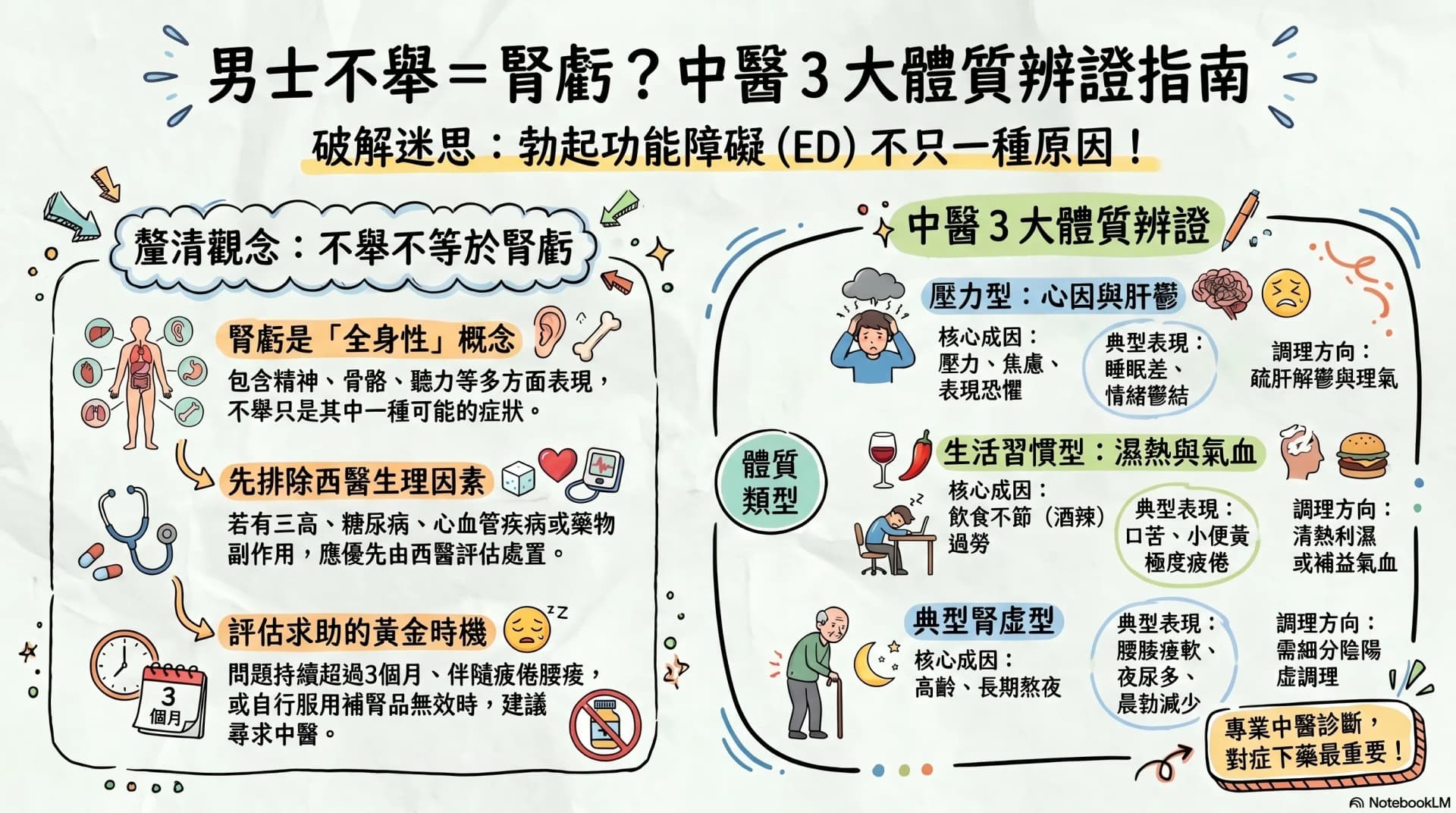
Is Erectile Dysfunction Always Kidney Deficiency? 5 TCM Patterns
Many men reach for kidney-tonic pills the moment they notice an erection problem, but TCM actually divides erectile dysfunction (ED) into 5 distinct patterns. This article starts with a symptom comparison table to help you tell true kidney deficiency from ED that may not involve kidney deficiency, then breaks down the psychogenic, liver-qi stagnation, damp-heat in the lower burner, qi-and-blood deficiency, and kidney deficiency patterns along with how each should be approached. It also flags reversible causes such as the three highs, diabetes and drug side effects that should be ruled out first, so you do not make things worse with the wrong tonic.