Male Menopause Through the TCM Lens: 5 Signs in Men Over 40
Unexplained fatigue, irritability, lower libido, poorer sleep and a growing belly after 40 are not just ageing or work stress — they may be male menopause. This article begins with a five-sign self-check, sets out three TCM patterns (kidney-yang deficiency, kidney-yin deficiency, liver-and-kidney insufficiency) with matching improvements, and compares the two treatment routes — testosterone replacement therapy versus TCM constitutional care.
Medical review: Dr. Tai Wai Ho, Samson,Registered Chinese Medicine Practitioner #008702
1-Minute Quick Answer
Men go through a menopause too: testosterone declines year by year after 40, bringing fatigue, lower libido, irritability, poorer sleep and a growing belly. This guide (reviewed by Dr Tai, CMCHK 008702) opens with a 5-sign self-check, urges ruling out depression, thyroid problems, diabetes and sleep apnoea first, covers 3 TCM patterns, and compares testosterone therapy with TCM care.
Male Menopause Through the TCM Lens: 5 Signs in Men Over 40
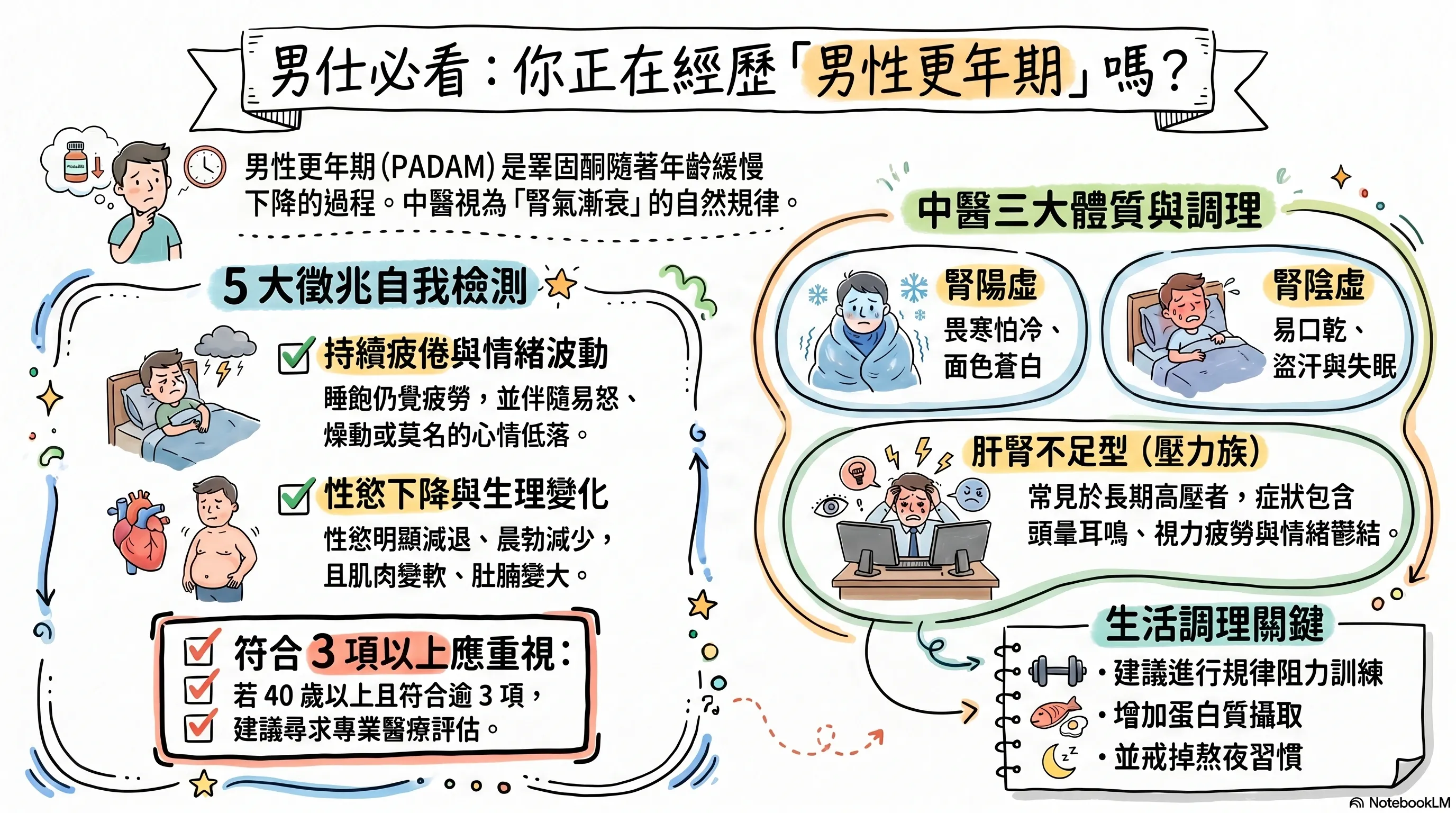 For quick reference, this image was generated by NotebookLM. Some Chinese characters may not render perfectly; we appreciate your understanding.
"I thought I was just too tired, too busy, too stressed — until I noticed that even sleeping in well over the weekend was not restoring my energy. That is when I realised it might not just be work." This is a familiar complaint among men over 40.
Men do go through a kind of menopause. According to Hong Kong's Department of Health Centre for Health Protection, male hormone levels fall by roughly 10% per decade after age 30, and after 40 some men develop symptoms similar to female menopause. Mayo Clinic also notes that testosterone falls on average by about 1% per year after 40, with roughly 10 to 25 percent of older men in the low range. The more precise medical name is "late-onset hypogonadism", also known as partial androgen deficiency in the ageing male (PADAM).
This article helps you sort out four things: whether what you are feeling fits male menopause, which other conditions to rule out first, the three TCM constitutional patterns, and how to choose between the two treatment routes — testosterone replacement therapy and TCM care. By the end, you should have a clearer view of the next step.
A Self-Check: Do You Have These 5 Signs?
Score yourself based on the past three months as a whole. How many of these five apply?
- Persistent, unexplained fatigue — tired even after enough sleep; particularly low energy in the afternoon
- A clear drop in libido and fewer morning erections — compared with half a year to a year ago
- Irritability, edginess and unexplained low mood — overreacting to small things, low spirits with no clear cause
- Poorer sleep — trouble falling asleep, easy waking, early waking (waking between 3 and 5 a.m. and unable to fall back asleep)
- Lower stamina, a growing belly, softer muscles — the same exercise no longer yields the same results
What the score suggests:
- 1 to 2 items — likely general life stress; adjust routine and exercise first and observe for one to two months
- 3 or more items, aged 40 or above — worth a serious look at male menopause; an overall assessment is suggested
- Alongside clearly depressed mood or thoughts of suicide — seek a psychiatrist or psychologist immediately
Do Men Really Have a "Menopause"?
Male menopause differs from female menopause. In women, it is a clear transition — periods stop and ovarian function falls sharply over a defined window. In men, testosterone declines gradually, so there is no single "moment it begins".
In TCM terms, this maps onto the natural pattern of "the kidney qi gradually declining". The classic Huangdi Neijing already described it in stages: "at eight, a man's kidney qi is solid ... at five times eight (40), kidney qi declines, hair falls and teeth dry ... at seven times eight (56), liver qi declines". In other words, Western and Chinese medicine actually observe the same picture of midlife functional decline in men — they simply describe it in different language.
Brushing the signs off as "I am just too tired, too busy" can let early, manageable discomfort grow into something that meaningfully disrupts life.
Rule These Out Before Concluding It Is Male Menopause
Several conditions look like male menopause in their early phase and need to be ruled out first:
| Condition to rule out | Why it matters |
|---|---|
| Depression | Persistent low mood, fatigue and poor sleep are core depressive complaints |
| Thyroid problems | Hypothyroidism (fatigue, weight gain, cold intolerance) and hyperthyroidism (rapid pulse, irritability, weight loss) both overlap |
| Early diabetes | Fatigue and low libido can be early signs of diabetes |
| Latent chronic illness (cardiovascular, liver, kidney) | Systemic discomfort can come from other chronic conditions |
| Sleep apnoea | Heavy sleep that still leaves you tired, snoring, partner-observed pauses in breathing |
When to Check Testosterone Through a Blood Test
If the above have all been excluded but the five signs persist beyond three months and disrupt daily life, see a family doctor or endocrinologist for the following:
- An early-morning (8 to 11 a.m.) fasting blood total testosterone (a second confirmatory measurement is recommended)
- Related hormones such as SHBG, LH and FSH
- A basic check (blood pressure, blood sugar, lipids, liver and kidney function, PSA)
The Endocrine Society guideline is explicit: to start testosterone replacement therapy (TRT), two criteria must both be met — "clear clinical symptoms" plus "two confirmatory early-morning fasting low total testosterone measurements". Neither alone is enough.
Three TCM Constitutional Patterns in Male Menopause
In clinic, Dr Tai judges which pattern predominates from the symptom cluster, the tongue and the pulse.
1. Kidney-yang Deficiency
Lifestyle picture: a cold-leaning constitution, low activity, marked cold-intolerance in recent years.
Typical features: cold-aversion, cold hands and feet, frequent night urination, markedly low libido, fatigue, a pale complexion.
Direction of care: warm and tonify kidney yang (boost yang qi, ease lower-burner cold-deficiency).
2. Kidney-yin Deficiency
Lifestyle picture: long-term late nights, frequent social drinking, marked dry mouth and irritability in recent years.
Typical features: dry mouth, afternoon hot flushes, night sweats, easy irritability, insomnia (especially early-morning waking), aching lower back and knees.
Direction of care: nourish kidney yin (moisten body fluids, calm deficiency-fire).
3. Liver-and-Kidney Insufficiency
Lifestyle picture: years of high-pressure work, long-term emotional suppression, a recent sense of "the spark gone".
Typical features: a mix of yin- and yang-deficient symptoms, suppressed mood, dizziness, tinnitus, eye strain, lower libido alongside low mood.
Direction of care: tonify the liver and kidney (balance liver qi and kidney essence).
A note on TCM terms: the "kidney" in TCM is a broad functional system tied to reproduction, growth and development, the bones and hearing — it is not the kidney organ of Western urology.
Matching Improvements for Each of the 5 Signs
Whichever pattern predominates, the following are worth starting:
For "unexplained fatigue"
- Regular resistance training. A 2022 systematic review and meta-analysis in Sports Medicine Open found that, for insufficiently active men, regular resistance training (weighted squats, pull-ups, dumbbell work) significantly raises resting testosterone levels
- 7 to 8 hours of sleep. A 2011 JAMA study showed that one week of restricting sleep to five hours a night lowered daytime testosterone by 10 to 15% in healthy young men — equivalent to ageing 10 to 15 years
- At least twice-weekly resistance training, 30 to 45 minutes per session
For "lower libido"
- Stress reduction, partner communication, and avoiding long-term replacement of real intimacy with screen-based stimulation
- TCM tonifying must follow the pattern (warm tonification for kidney yang; nourishment for kidney yin)
For "irritability"
- Cut alcohol and night shifts
- Add a mindfulness practice or regular exercise
- If life is consistently affected, seek counselling
For "poorer sleep"
- Keep a fixed bedtime; avoid swinging it around
- Cut screen time in the two hours before bed
- Avoid caffeine after 2 p.m.
- Rule out sleep apnoea (especially with snoring or partner-observed breathing pauses)
For "a growing belly and softer muscles"
- Cut refined carbohydrates and sugary drinks
- Increase protein intake (at least one palm-sized portion per meal)
- Combine resistance training with moderate cardio (2 resistance sessions and 3 cardio sessions per week)
- Measure your waist (a waist of 90 cm or more in men counts as central obesity, and has a two-way relationship with falling testosterone)
What to Avoid
- Self-prescribed "kidney-tonifying / virility" products. They can worsen some patterns; some "potency supplements" have been found to contain undeclared Western drug ingredients
- Self-purchased testosterone supplements. TRT used without blood tests and professional judgement can raise red-cell count, affect the prostate and increase cardiovascular events
- Over-relying on supplements while neglecting lifestyle. Sleep, exercise and stress management are the foundation; supplements are at best adjuncts
TRT vs TCM Care: How to Choose Between the Two Routes
| Item | Western TRT | TCM constitutional care |
|---|---|---|
| Suited to | Two blood tests confirming low testosterone + clear clinical symptoms | Lab values not yet pathological but moderate symptoms; wanting constitutional improvement |
| Form | Injections, topical gels, patches | Personalised herbal prescription, acupuncture, lifestyle advice |
| Time to effect | Usually 1 to 3 months | Generally 3 to 6 months before clear improvement |
| Main side-effects | Raised red-cell count, prostate risks, mandatory cardiovascular monitoring | Indiscriminate tonifying can worsen symptoms |
| Monitoring | First year, every 3 to 6 months; thereafter yearly checks of haematocrit (HCT) and PSA | Regular follow-up, adjusted as the constitution shifts |
| Contraindications | Short-term family planning; breast or prostate cancer; uncontrolled heart failure; MI or stroke in the past 6 months; HCT > 50%; severe lower-urinary-tract symptoms | During acute external illness; before the pattern is clearly identified — do not tonify blindly |
Can the Two Be Combined?
Yes, but it must be a professional judgement. If you have already started TRT, tell your TCM practitioner clearly so they can choose herbs that do not conflict with the hormone therapy. If you have not started TRT, TCM can serve as an everyday constitutional option alongside lifestyle adjustments.
How Aspira TCM Clinic Assesses Male Menopause
When Dr Tai sees a man with suspected male menopause, the assessment draws on:
- When the five signs began, how often they occur, and how much they affect daily life
- Existing test results (testosterone, thyroid, blood sugar, lipids, PSA)
- Current Western medications and supplements
- Diet, routine, exercise, stress and partner relationship
- Tongue, pulse and other constitutional signs
After the assessment, Dr Tai will explain clearly which pattern predominates, whether a blood test is needed, what TCM can help with, and when TRT consultation should be considered. Herbal prescriptions are individualised — "the same formula for everyone" is not how this works.
FAQ
Q1: From what age should men pay attention to male menopause?
Generally from 40 onwards. The Centre for Health Protection notes a roughly 10% per decade fall in male hormone after 30, with symptoms becoming clearer after 40. Individual variation is large, tied to genetics, lifestyle and chronic illness.
Q2: Is a blood test essential to diagnose it?
A formal diagnosis of low testosterone requires blood tests (two confirmatory early-morning fasting measurements). But TCM can assess and condition the constitution on the basis of symptoms without waiting for testosterone to fall significantly.
Q3: How long does TCM care take?
Generally three to six months before clear improvement. Prescriptions are individualised, with lifestyle advice as part of the plan.
Q4: How can a partner help?
Understand that male menopause is not "an excuse" or "a midlife escape" — it is a real physiological change. Reducing emotional confrontation, tackling life stress together, and adjusting routine and exercise as a couple all help.
Q5: Can supplements replace a practitioner's assessment?
No. "Tonifying the kidney" requires telling yin deficiency from yang deficiency first — going the wrong way can worsen things. Be cautious about anything advertised as "guaranteed effect in X days".
Q6: How do I tell male menopause from depression?
Their symptoms overlap (fatigue, low mood, poor sleep), but depression typically carries more sustained low mood, loss of interest and a low view of oneself; in severe cases, thoughts of suicide. If these are present, prioritise a psychiatrist or psychologist.
Medical review: Dr Tai Wai-ho | Registered Chinese Medicine Practitioner (Reg. No.: 008702) Aspira TCM Clinic
Experiencing a Similar Issue? Book a Consultation
If you are over 40, noticing the signs above, and would like an assessment that takes both constitution and lifestyle into account, you are welcome to book a consultation with Dr Tai.
How to book:
- WhatsApp: Book here
- Phone: 2110 9337
- Address: Unit 2706, Saxon Tower, 7 Cheung Shun Street, Lai Chi Kok
Disclaimer: This article is for general health education only and does not replace individual diagnosis, examination, medication or treatment advice. If you have a related condition, persistent symptoms or are on medication, follow your prescribing doctor's instructions for review and monitoring; any medication change should first be discussed with the prescribing doctor.
References:
- Hong Kong Department of Health, Centre for Health Protection: Common Diseases in Men — Male Menopause https://www.chp.gov.hk/tc/static/80026.html
- Mayo Clinic: Male menopause: Myth or reality? https://www.mayoclinic.org/healthy-lifestyle/mens-health/in-depth/male-menopause/art-20048056
- Endocrine Society: Testosterone Therapy in Men With Hypogonadism: Clinical Practice Guideline (JCEM 2018) https://academic.oup.com/jcem/article/103/5/1715/4939465
- Management of Adverse Effects in Testosterone Replacement Therapy (PMC 2025) https://pmc.ncbi.nlm.nih.gov/articles/PMC12052019/
- Leproult R, Van Cauter E. Sleep restriction and testosterone concentrations in young healthy males (PMC) https://pmc.ncbi.nlm.nih.gov/articles/PMC6917985/
- D Andrea S et al. Effects of Exercise Training on Resting Testosterone in Insufficiently Active Men: Systematic Review & Meta-Analysis, Sports Medicine Open 2022 https://pubmed.ncbi.nlm.nih.gov/35134000/
Disclaimer: This article is for health education and reference purposes only and does not constitute medical advice, diagnosis, or treatment. Each patient's condition is unique and treatment outcomes vary. Please consult a registered TCM practitioner or qualified healthcare professional for health concerns.
Further Reading
Hand-picked related articles and real cases to read next.
Want to learn more? WhatsApp us for a free consultation
Book via WhatsAppExplore our full range of treatments: Traditional TCM Services
Related Articles
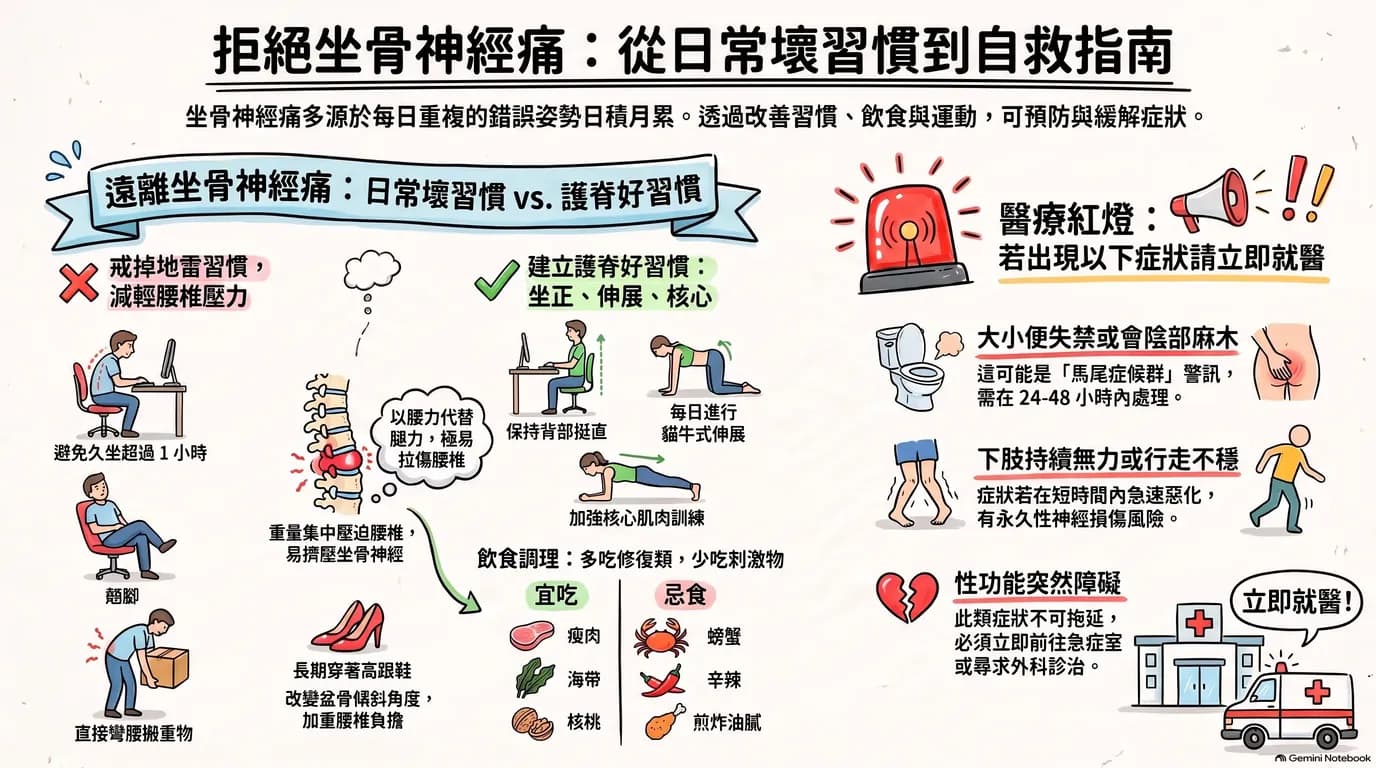
Sciatica Prevention: Bad Habits, Diet and Daily Care Tips
Sciatica isn't only about treatment — your daily habits and diet play a big role too. In this article, Dr Wong explains which everyday habits increase your risk of sciatica, which foods may help ease it, and simple daily habits that reduce the chance of it coming back.
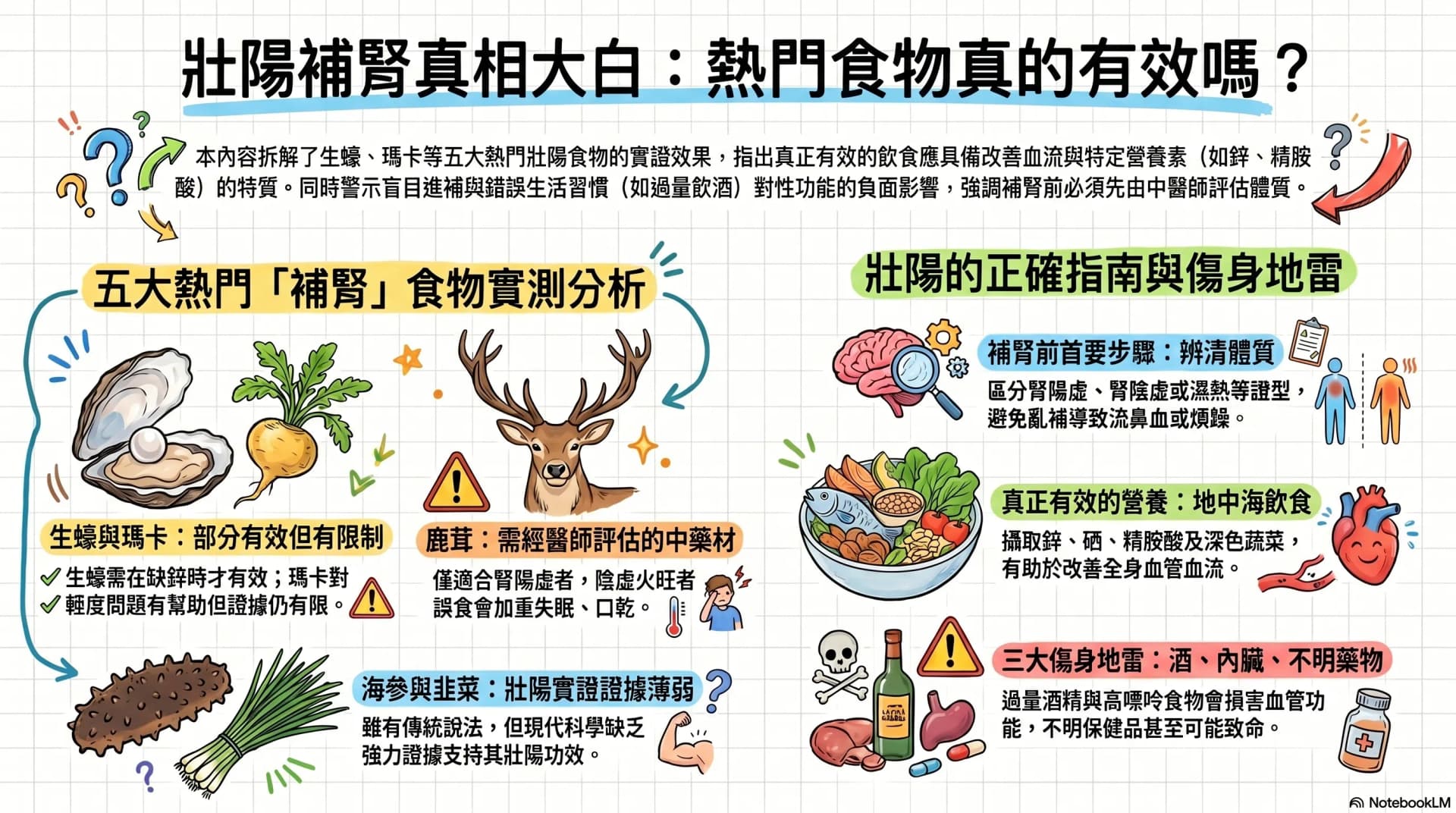
Do Oysters, Maca and Deer Antler Boost Male Vitality? 5 Myths
Do aphrodisiac foods actually work? This article opens with a rating table (effective / partly effective / effective within a TCM framework / weak evidence / no strong evidence), reviews the Chinese and Western medical evidence behind oysters, maca, deer antler, sea cucumber and Chinese chives, distils the 3 shared traits of foods that genuinely support male sexual function, and flags 3 commonly eaten items that can actually harm performance.
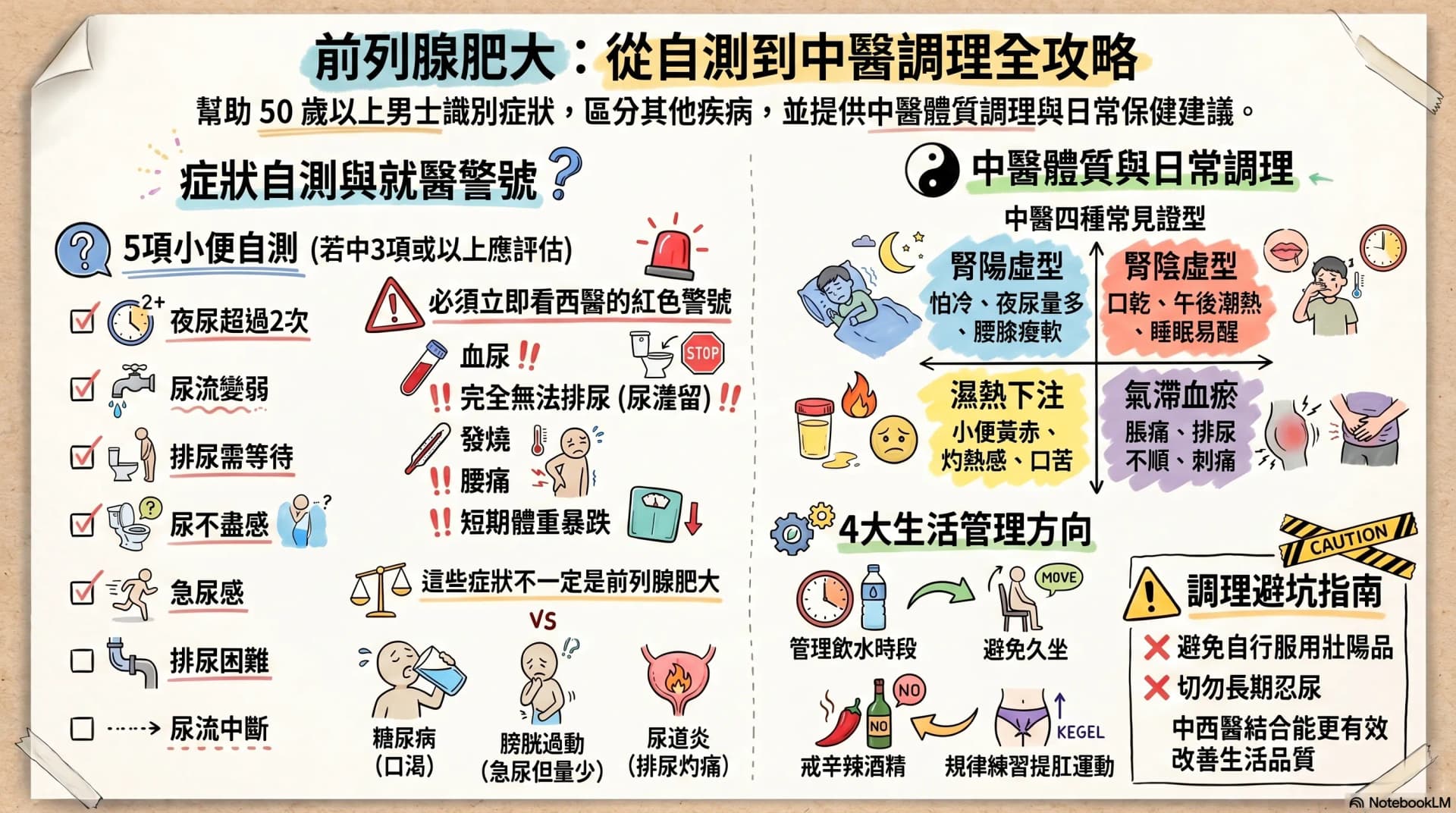
Enlarged Prostate: Are Nocturia and a Weak Stream Warning Signs?
After age 50, urinary frequency, nocturia, a weaker stream and having to urinate in stages may not simply be ageing. This article opens with a 7-symptom self-check, then sets out warning signs that warrant seeing a Western doctor immediately, four TCM constitution patterns, and four daily care directions any man can start with — helping you or your father decide the next step.