Do Oysters, Maca and Deer Antler Boost Male Vitality? 5 Myths
Do aphrodisiac foods actually work? This article opens with a rating table (effective / partly effective / effective within a TCM framework / weak evidence / no strong evidence), reviews the Chinese and Western medical evidence behind oysters, maca, deer antler, sea cucumber and Chinese chives, distils the 3 shared traits of foods that genuinely support male sexual function, and flags 3 commonly eaten items that can actually harm performance.
Medical review: Dr. Tai Wai Ho, Samson,Registered Chinese Medicine Practitioner #008702
1-Minute Quick Answer
Do oysters, maca and deer antler really boost male vitality? This guide rates each: oysters help only if you are zinc-deficient, maca is partly effective on limited evidence, deer antler is a medicinal herb suited only to kidney-yang deficiency and not for self-use, while sea cucumber and chives lack strong modern evidence. Reviewed by Dr Tai, CMCHK 008702.
Do Oysters, Maca and Deer Antler Really Boost Male Vitality? A TCM Breakdown of 5 Aphrodisiac Food Myths
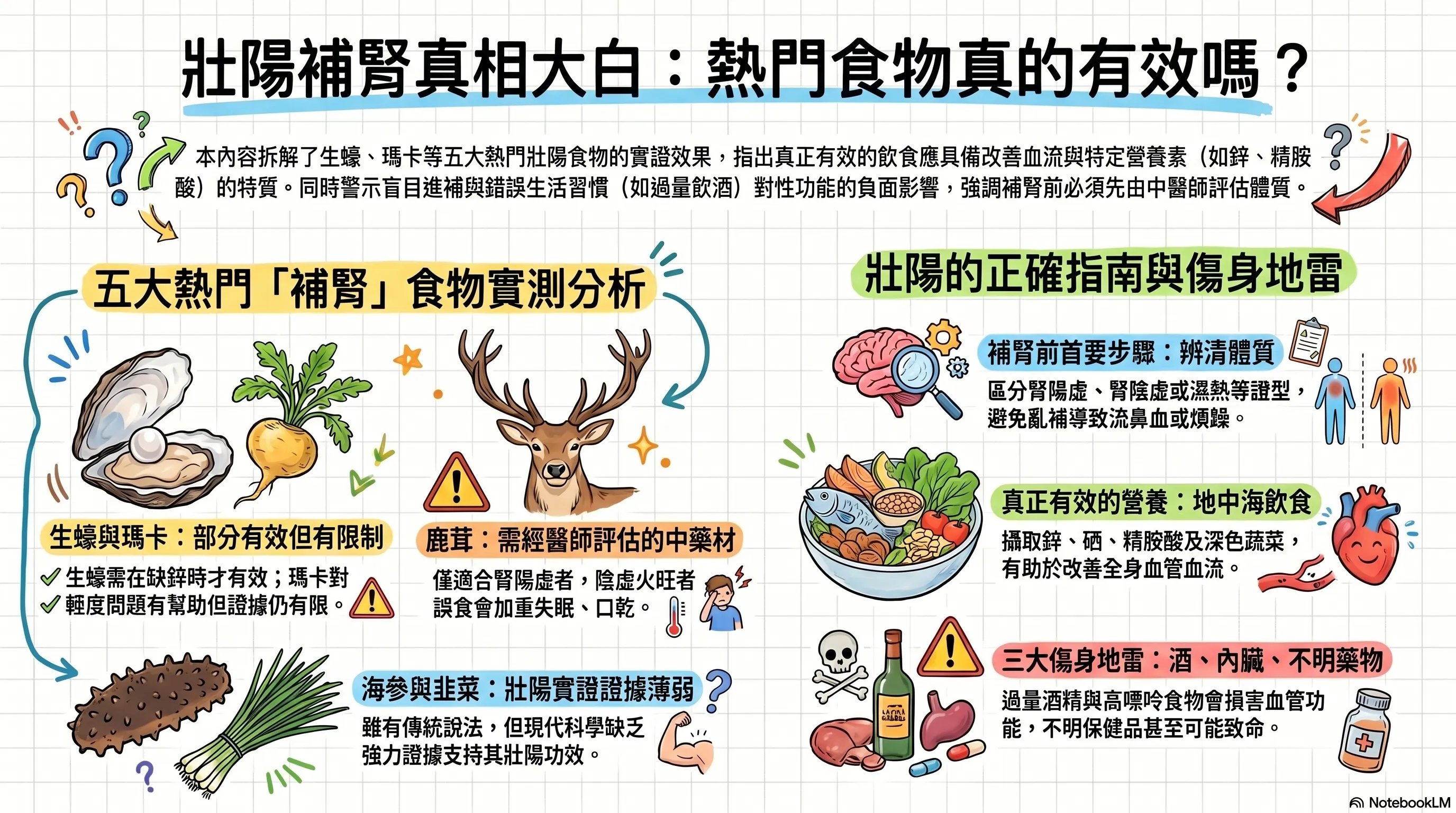 For quick reference, this image was generated by NotebookLM. Some Chinese characters may not render perfectly; we appreciate your understanding.
"What should I eat to boost my libido?" is one of the most quietly searched questions among men, and also one many partners look up on their behalf.
Folk wisdom says "oysters strengthen the kidneys", "maca boosts virility", and "deer antler is a great tonic" — but how much of this is backed by evidence, and how much is just word of mouth? In reality, some foods do have clinical research supporting a positive link with sexual function, some claims are passed down without basis, and a few items, when eaten regularly in excess, can actually harm sexual function.
This article will help you sort out four things: which tier each of the 5 common aphrodisiac foods belongs to (effective / partly effective / effective within a TCM framework / weak evidence / no strong evidence), what genuinely effective aphrodisiac foods have in common (so you can choose on your own later), 3 commonly eaten items that can actually harm performance, and when from a TCM viewpoint you should be assessed before taking tonics.
Do Aphrodisiac Foods Work? The Short Answer
Here is the overall rating table:
| Food | Rating | Bottom line |
|---|---|---|
| Oysters | Effective (provided you are zinc-deficient) | Very high in zinc, which has evidence-backed links to sperm quality |
| Maca | Partly effective | Small RCTs suggest a positive effect on libido and mild erection problems, but evidence is limited |
| Deer antler | Effective within a TCM framework, but it is a herbal medicine | Strong tonic for kidney-yang; only suitable for kidney-yang deficiency, contraindicated in yin deficiency with heat, must not be self-prescribed |
| Sea cucumber | Weak evidence | High in protein, but limited evidence for sexual function |
| Chinese chives | No strong modern evidence | Classified in TCM dietary tradition as "warming the kidney and assisting yang", but no robust clinical trials |
Each is examined in detail below.
A Closer Look at Each of the 5 Foods
1. Oysters (effective, but only if you are zinc-deficient)
Zinc content: According to the US National Institutes of Health Office of Dietary Supplements (NIH ODS), 100 g of cooked oysters contains roughly 61 to 91 mg of zinc (depending on cooking method and species), making them one of the most zinc-rich foods available.
Evidence linking zinc and sperm quality: Studies show that seminal plasma zinc concentration averages around 14.08 mg/100 ml in fertile men, compared with about 10.32 mg/100 ml in infertile men. Zinc supplementation has been shown to improve semen volume, progressive sperm motility and the proportion of normal-form sperm.
TCM properties: Salty in flavour, cool in nature; enters the liver and kidney channels. Traditionally used to nourish yin, replenish blood and support the liver.
Risks of overconsumption:
- High in purines, so excessive intake can trigger gout attacks
- The recommended daily zinc intake for men is 11 mg, with an upper limit of 40 mg — a single medium oyster already far exceeds daily needs, so there is no need to eat large amounts
- Cool in nature, so people with a damp-heat constitution may feel worse
Bottom line: If your zinc intake is genuinely low, oysters can have an evidence-supported positive effect. For those who are not deficient, large quantities offer no extra benefit and may cause gout flares or digestive upset.
2. Maca (partly effective, limited evidence)
Modern research: A 2010 systematic review published in BMC Complementary and Alternative Medicine included 4 RCTs — 2 showed a positive effect on sexual function in healthy adult men and on libido in postmenopausal women, 1 found no benefit in athletes, and 1 showed a significant improvement in men with erectile dysfunction (assessed by IIEF-5). The authors concluded that the evidence remains limited and that sample sizes and study quality need to improve.
TCM properties: A plant native to South America, not recorded in classical Chinese medical texts; modern TCM practitioners generally classify it as a warming, tonifying food.
Risks of overconsumption:
- May affect hormone levels
- Not advised for people with hormone-sensitive conditions (such as thyroid disorders, hormone-sensitive tumours, or those undergoing hormone therapy)
- Daily intake is generally not advised to exceed 3 g, and continuous use should generally not exceed 4 months
Bottom line: Maca is a "partly effective with limited evidence" supplement, not a miracle food. If you want to try it, consult a doctor first to confirm whether it suits your situation.
3. Deer antler (a herbal medicine, not for self-administration)
TCM properties: Sweet and salty in flavour, warm in nature; enters the liver and kidney channels. Tonifies kidney-yang, replenishes essence and blood, and strengthens the sinews and bones.
Suitable for: People with kidney-yang deficiency and depleted essence and blood, presenting with cold intolerance, copious clear nocturia and reduced sexual function of a yang-deficient pattern.
Contraindicated for (based on consensus in Chinese herbal medicine textbooks):
- People with yin deficiency and heat (dry mouth, tidal heat, irritability, acne) — may worsen dry mouth, nosebleeds and insomnia
- Those with uncontrolled hypertension
- During acute external pathogen infections (colds, flu, fever)
- Those with hyperactive liver-yang or "five-centre heat" (warm palms, soles and chest)
Risks of overconsumption: Self-tonifying without regard to constitution can cause dry mouth, nosebleeds, restlessness, insomnia and head distension.
Bottom line: Deer antler is a herbal medicine, not a food ingredient, and must not be self-prescribed. If you suspect you have kidney-yang deficiency and might benefit from tonification, a registered Chinese medicine practitioner should determine the dose and accompanying herbs based on your constitution.
4. Sea cucumber (good protein, weak evidence for sexual function)
Nutrition: Sea cucumber is high in protein, low in fat, and contains a variety of trace elements.
TCM properties: Sweet and salty in flavour, warm in nature; tonifies the kidneys and essence, nourishes blood and moistens dryness.
Evidence for sexual function: Modern clinical research is sparse; the "aphrodisiac" reputation mostly comes from the kidney-tonifying angle of TCM dietary tradition.
Risks of overconsumption: Cholesterol levels are relatively high among seafood, and people with gout should also watch the purine content; excessive intake can cause digestive upset.
Bottom line: It is a quality protein source with a kidney-tonifying role in traditional Chinese dietary therapy, but evidence specifically for boosting sexual function is weak. Eating it in moderation is fine, but it should not be relied on as the main approach to declining sexual function.
5. Chinese chives (the folk "virility herb", no strong modern evidence)
TCM properties: Pungent and sweet in flavour, warm in nature; enters the liver and kidney channels. Warms the kidney and assists yang, moves qi and blood.
Modern research: Direct RCTs on Chinese chives (Allium tuberosum) and sexual function are essentially absent; existing studies on related Allium species (such as garlic) mostly focus on animal models of sperm protection.
Risks of overconsumption:
- Warming in nature, so people with yin deficiency and heat, dry mouth or irritability may feel worse
- Excessive intake can cause digestive upset
Bottom line: The folk "virility herb" label comes mainly from TCM dietary classification by flavour and nature, not from modern clinical evidence. For those with a yang-deficient constitution, moderate culinary use is acceptable, but it should not be the main strategy for improving sexual function.
What Do Genuinely Effective Aphrodisiac Foods Have in Common?
Looking at the 5 foods above together with other evidence-supported items (deep-sea fish, nuts, dark leafy greens, tomatoes, and so on), the foods that genuinely have a sustained positive effect on sexual function tend to share these 3 traits:
1. They Contain Micronutrients Related to Sperm Production or Vascular Function
For example:
- Zinc (oysters, red meat, nuts, legumes) — involved in testosterone synthesis and sperm production
- Selenium (Brazil nuts, seafood, whole grains) — antioxidant, protects sperm DNA
- L-arginine (nuts, lean meat, legumes) — a precursor of nitric oxide synthesis in the body, linked to vascular dilation
2. They Improve Blood Flow
An erection is essentially a "blood inflow plus maintenance" process. Foods that have a positive effect on vascular endothelial function indirectly support erectile performance:
- Tomatoes (containing lycopene)
- Dark leafy greens (containing nitrates, which the body can convert into nitric oxide)
- Deep-sea fish (containing omega-3)
3. They Are Part of an Overall Cardiovascular-Healthy Diet
Sexual function is closely linked to cardiovascular health. The Mediterranean diet (rich in vegetables and fruit, olive oil, nuts, fish, with less red meat and refined starch) has multiple studies supporting a positive effect on erectile function.
In other words: male sexual vitality does not depend on a single miracle food but on a consistent overall dietary pattern.
3 Things People Think Are Aphrodisiacs but Can Actually Harm You
1. Excessive Alcohol
Drinking in the short term may reduce anxiety and seem to prolong endurance, but long-term excessive alcohol intake has clear negative effects on sexual function:
- Suppresses the hypothalamic-pituitary-gonadal axis, lowering plasma testosterone
- Damages vascular endothelial function and impairs erectile blood flow
- Shows a J-shaped dose-response relationship with erectile dysfunction (occasional small amounts have no significant impact, while excessive intake clearly raises risk)
Beer, spirits and red wine all carry corresponding risks — "red wine is good for the heart" does not translate into being good for sexual function.
2. Excess Animal Organs and High-Purine Seafood
Animal organs (pork liver, chicken liver, kidneys) and certain seafood (shrimp, crab, shellfish) are high in purines; long-term excessive intake pushes up uric acid levels and triggers gout.
Studies show that men with a first-time diagnosis of gout have about a 31% higher risk of developing ED compared with controls; the mechanism involves uric acid causing vascular endothelial dysfunction, oxidative stress and chronic inflammation. In other words, "eating kidneys to boost virility" may indirectly harm sexual function.
3. Unverified "Male-Enhancement" Supplements
Hong Kong's Department of Health has repeatedly issued warnings in recent years that some products marketed as "natural male enhancement" have been found to contain undeclared sildenafil or tadalafil:
- In 2019, "Blue M" was identified as containing sildenafil
- In 2022, "HE ABSOLUTE KING" was identified as containing tadalafil
Side effects of these medications include low blood pressure, headache, vomiting, dizziness and temporary blurred vision; taken together with cardiac drugs such as nitroglycerin, they can lower blood pressure to dangerous levels and may be fatal for people with cardiovascular disease.
Rule of thumb: Supplements claiming "100% natural", "instant effect" or "potent enhancement", especially those sold through online platforms or non-registered pharmacies, should be treated with caution.
What to Do Before Taking Kidney Tonics in TCM
"Before tonifying, find out whether you actually need to be tonified."
In TCM, "tonifying the kidneys" is not a single concept. You first need to identify whether you have:
- Kidney-yang deficiency (cold intolerance, frequent nocturia, low libido, low energy)
- Kidney-yin deficiency (dry mouth, tidal heat, night sweats, restlessness with early waking)
- A mixed constitution dominated by liver-qi stagnation, damp-heat or dual deficiency of qi and blood, with kidney deficiency being only secondary
Taking tonics without identifying the pattern is at best ineffective and at worst aggravates existing problems. For example, someone with a damp-heat constitution taking warming tonics like deer antler may develop dry mouth, nosebleeds, irritability and insomnia.
How Aspira TCM Assesses a Man's Constitution
When Dr Tai Wai-ho works with men who hope to use dietary therapy for tonification, he reviews the following:
- Current eating habits and supplements being taken
- Sexual function, mood, sleep, body temperature, bowel and bladder patterns, and other constitutional signs
- Existing conditions (especially gout, hypertension, hyperlipidaemia, diabetes, cardiovascular disease, and liver or kidney function)
- Tongue signs, pulse and other systemic constitutional features
After the assessment, he explains clearly which constitutional pattern applies, whether dietary tonification is suitable, what to support, and what to avoid — so that "trying to boost vitality but ending up feeling worse" does not happen.
FAQ
Q1: How many oysters per week is enough?
For everyday zinc support, 2 to 4 per week is enough. There is no need to eat large amounts for "virility" — exceeding the upper intake level can cause zinc toxicity (interfering with copper and iron absorption) or trigger gout attacks.
Q2: Do maca capsules really work?
Evidence is limited. Some small RCTs suggest a positive effect on libido and mild erection problems, but results are not guaranteed. If you want to try them, consult a doctor first, choose a reputable brand, and check whether you have any hormone-related conditions.
Q3: Can I cook deer-antler soup at home?
Not advised. Deer antler is a herbal medicine and must be used according to constitutional pattern. It is not suitable for those with yin deficiency and heat, uncontrolled hypertension, or during acute external pathogen infections. If you wish to try it, let a registered Chinese medicine practitioner determine the constitution and dose.
Q4: Are kidney-tonifying foods suitable for both men and women?
Some foods (such as oysters, deep-sea fish and nuts) are nutritionally beneficial for both sexes. However, herbal kidney tonics depend on individual constitution — "tonifying the kidneys" is not automatically suitable for everyone.
Q5: Can aphrodisiac foods replace Western medications?
No. Men diagnosed with erectile dysfunction and prescribed medication should take their medication as directed by their doctor. Dietary therapy plays a supporting role, not a therapeutic intervention.
Q6: Can I trust online ads promising "instant male enhancement"?
Treat them with caution. Hong Kong's Department of Health has repeatedly warned that some products marketed as "natural male enhancement" have been found to contain undeclared Western drug ingredients, which can be dangerous when taken with cardiac medication. Any product claiming "instant" or "guaranteed" effect should be checked for ingredients and registration status.
Medical review: Dr Tai Wai-ho | Registered Chinese Medicine Practitioner (Reg. No.: 008702) Aspira TCM Clinic
Want a Constitutional Assessment? Book a Consultation
If you would like a constitution-based evaluation to see whether dietary tonification suits you — so that trying to boost vitality does not end up making things worse — you are welcome to book a consultation with Dr Tai.
How to book:
- WhatsApp: Book here
- Phone: 2110 9337
- Address: Unit 2706, Saxon Tower, 7 Cheung Shun Street, Lai Chi Kok
Disclaimer: This article is for health education only and does not replace individual consultation, examination, medication or treatment advice. If you have a relevant condition, persistent symptoms or are currently on medication, please follow your doctor's instructions for follow-up and monitoring; any medication adjustment should be discussed with your treating doctor first.
References:
- NIH Office of Dietary Supplements: Zinc Fact Sheet for Health Professionals https://ods.od.nih.gov/factsheets/Zinc-HealthProfessional/
- Fallah A et al. Zinc Is an Essential Element for Male Fertility (PMC) https://pmc.ncbi.nlm.nih.gov/articles/PMC6010824/
- Shin BC et al. Maca for improving sexual function: a systematic review, BMC Complementary and Alternative Medicine 2010 https://pmc.ncbi.nlm.nih.gov/articles/PMC2928177/
- US FDA: Public Notifications on Tainted Sexual Enhancement Products https://www.fda.gov/drugs/medication-health-fraud/medications-marketed-sexual-enhancement
- HKSAR Government Press Release: Public urged not to buy or consume male-enhancement products containing undeclared controlled ingredients (2022) https://www.info.gov.hk/gia/general/202209/28/P2022092800548.htm
- Cheng KK et al. Association between Gout and Erectile Dysfunction: A Systematic Review and Meta-Analysis (PMC) https://pmc.ncbi.nlm.nih.gov/articles/PMC5201298/
- Li S et al. Alcohol intake and risk of erectile dysfunction: a dose-response meta-analysis https://pubmed.ncbi.nlm.nih.gov/30232467/
Disclaimer: This article is for health education and reference purposes only and does not constitute medical advice, diagnosis, or treatment. Each patient's condition is unique and treatment outcomes vary. Please consult a registered TCM practitioner or qualified healthcare professional for health concerns.
Further Reading
Hand-picked related articles and real cases to read next.
Want to learn more? WhatsApp us for a free consultation
Book via WhatsAppExplore our full range of treatments: Traditional TCM Services
Related Articles
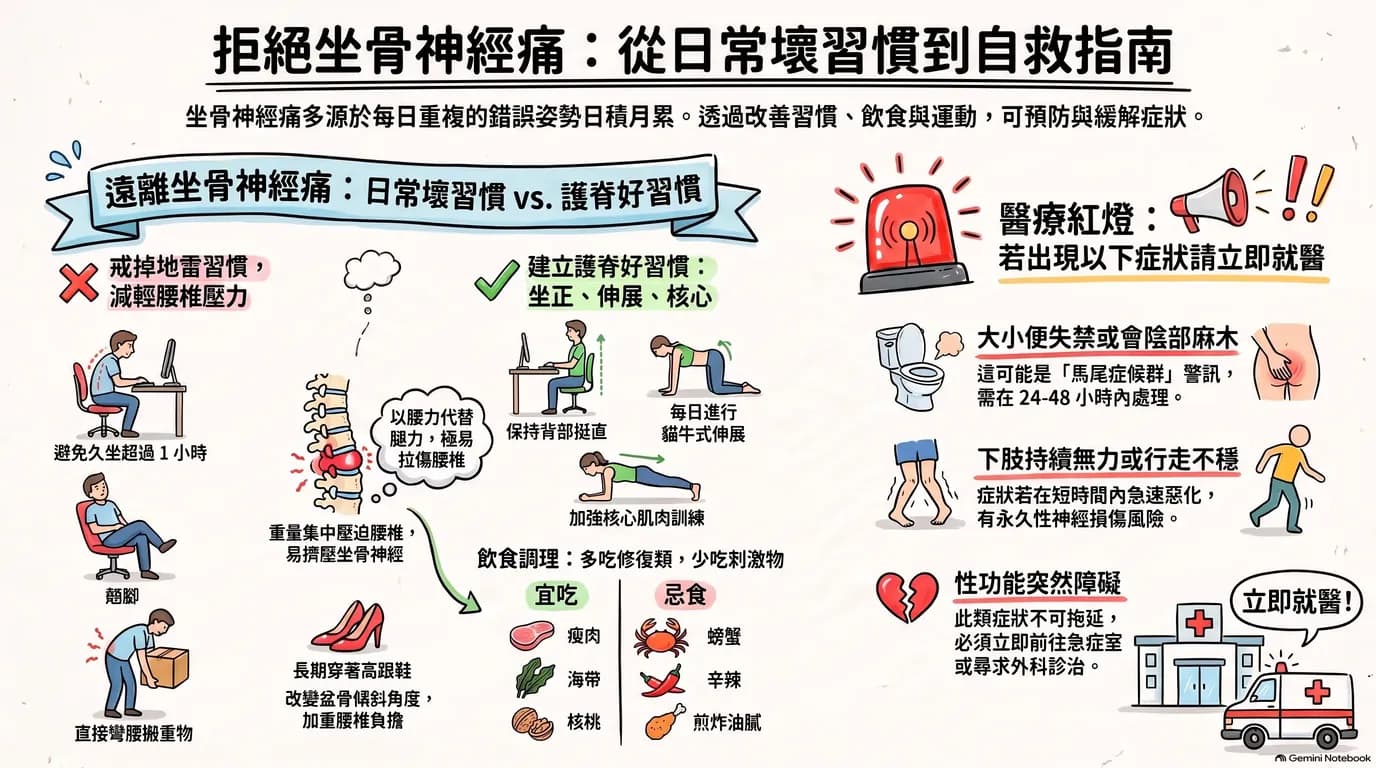
Sciatica Prevention: Bad Habits, Diet and Daily Care Tips
Sciatica isn't only about treatment — your daily habits and diet play a big role too. In this article, Dr Wong explains which everyday habits increase your risk of sciatica, which foods may help ease it, and simple daily habits that reduce the chance of it coming back.
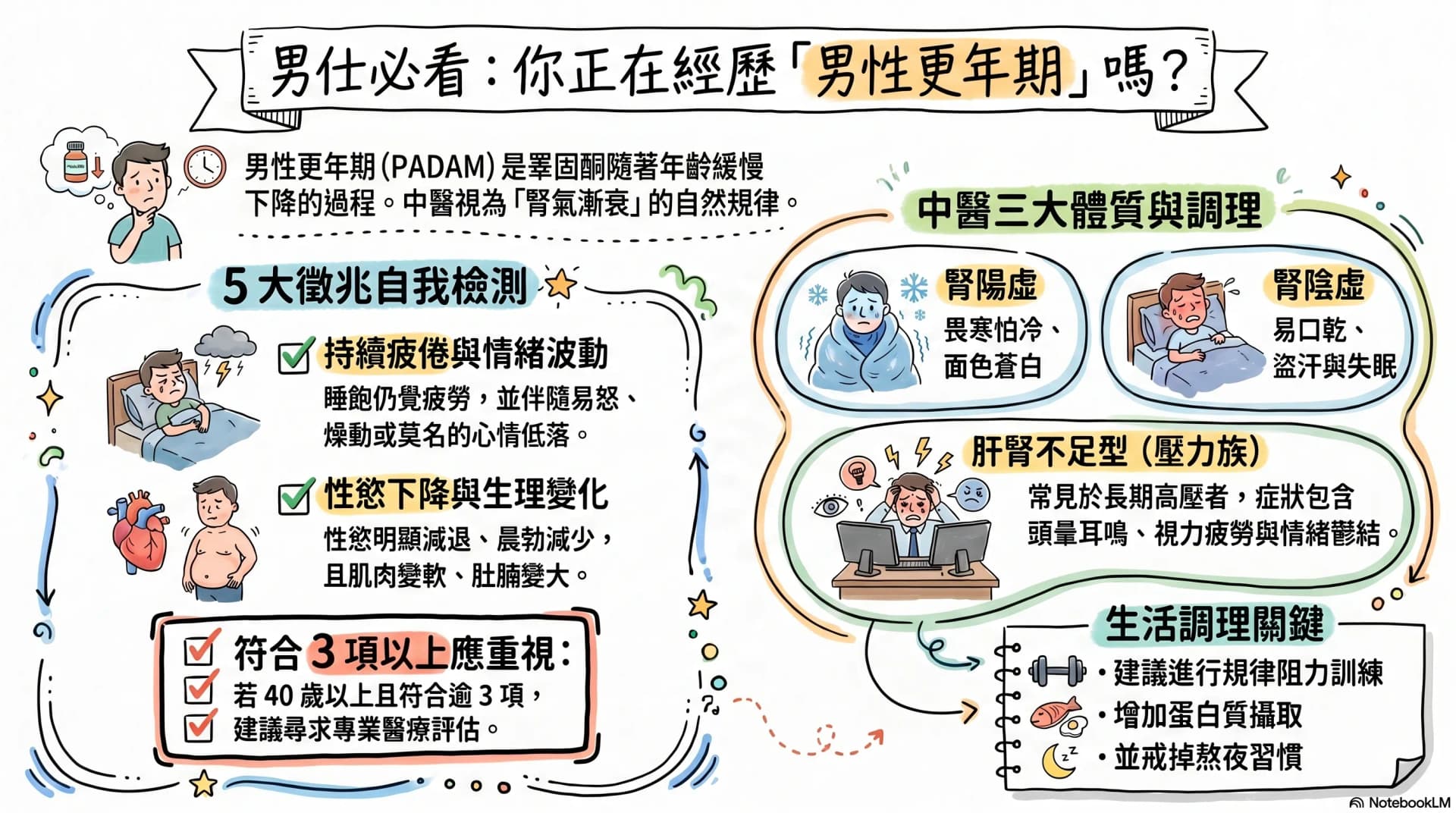
Male Menopause Through the TCM Lens: 5 Signs in Men Over 40
Unexplained fatigue, irritability, lower libido, poorer sleep and a growing belly after 40 are not just ageing or work stress — they may be male menopause. This article begins with a five-sign self-check, sets out three TCM patterns (kidney-yang deficiency, kidney-yin deficiency, liver-and-kidney insufficiency) with matching improvements, and compares the two treatment routes — testosterone replacement therapy versus TCM constitutional care.
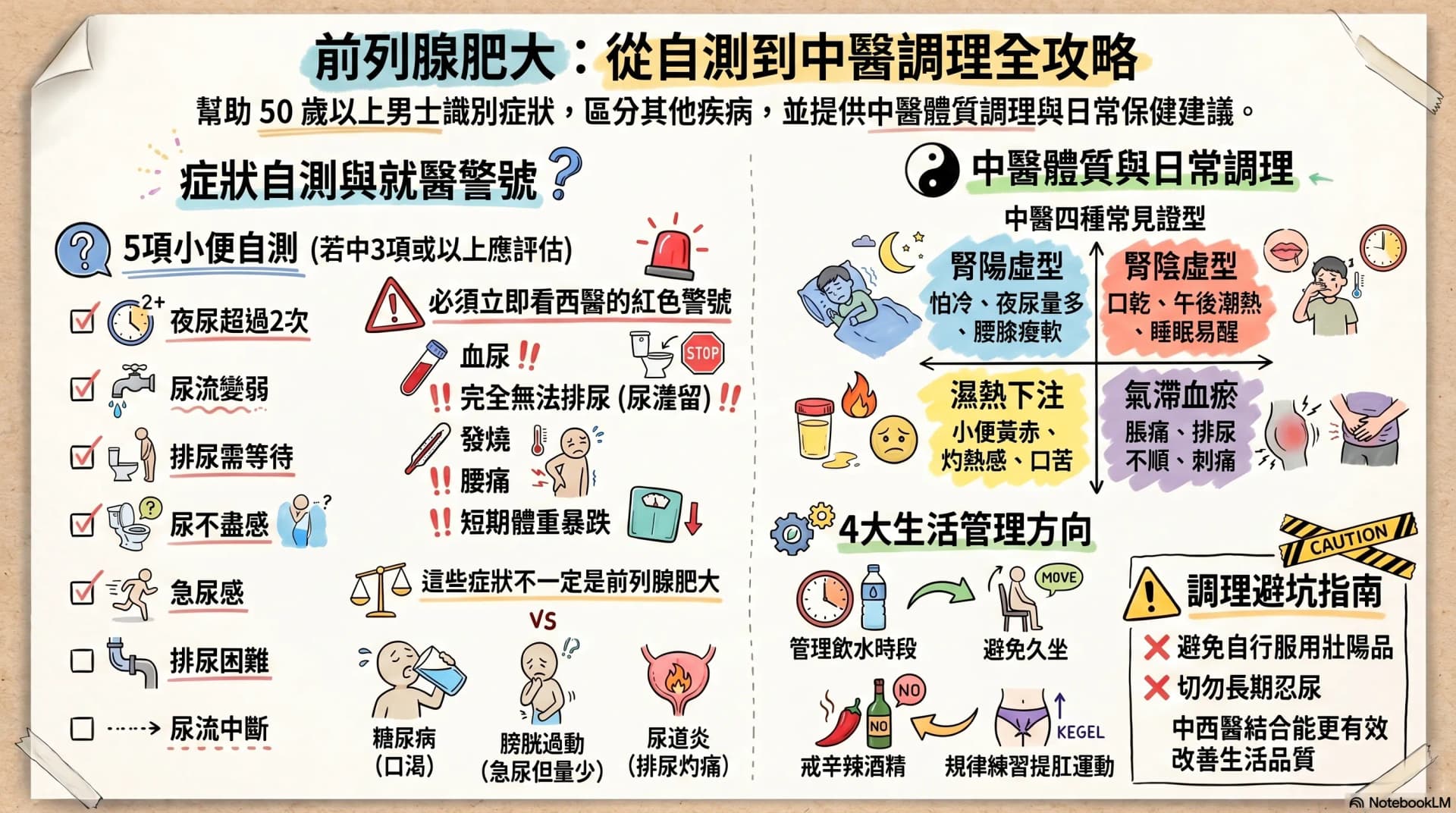
Enlarged Prostate: Are Nocturia and a Weak Stream Warning Signs?
After age 50, urinary frequency, nocturia, a weaker stream and having to urinate in stages may not simply be ageing. This article opens with a 7-symptom self-check, then sets out warning signs that warrant seeing a Western doctor immediately, four TCM constitution patterns, and four daily care directions any man can start with — helping you or your father decide the next step.