Hot Flushes, Night Sweats, Insomnia and Mood Swings: Are You Entering Menopause?
Hot flushes, night sweats, insomnia, mood swings, irregular periods — is this menopause? This article offers a 30-second self-check, explains what menopause is, which situations warrant medical assessment, and reviews the options: hormone replacement, lifestyle measures and Chinese medicine.
Medical review: Dr. Chan Wing Kiu, Joanne,Registered Chinese Medicine Practitioner #009463
1-Minute Quick Answer
Hot flushes, night sweats, insomnia, mood swings and cycle changes are common signs around menopause, related to falling oestrogen. Seek care if there is any bleeding after menopause or serious mood distress. Options include hormone replacement, lifestyle measures and Chinese medicine (reviewed by Dr Chan Wing Kiu, CMCHK 009463).
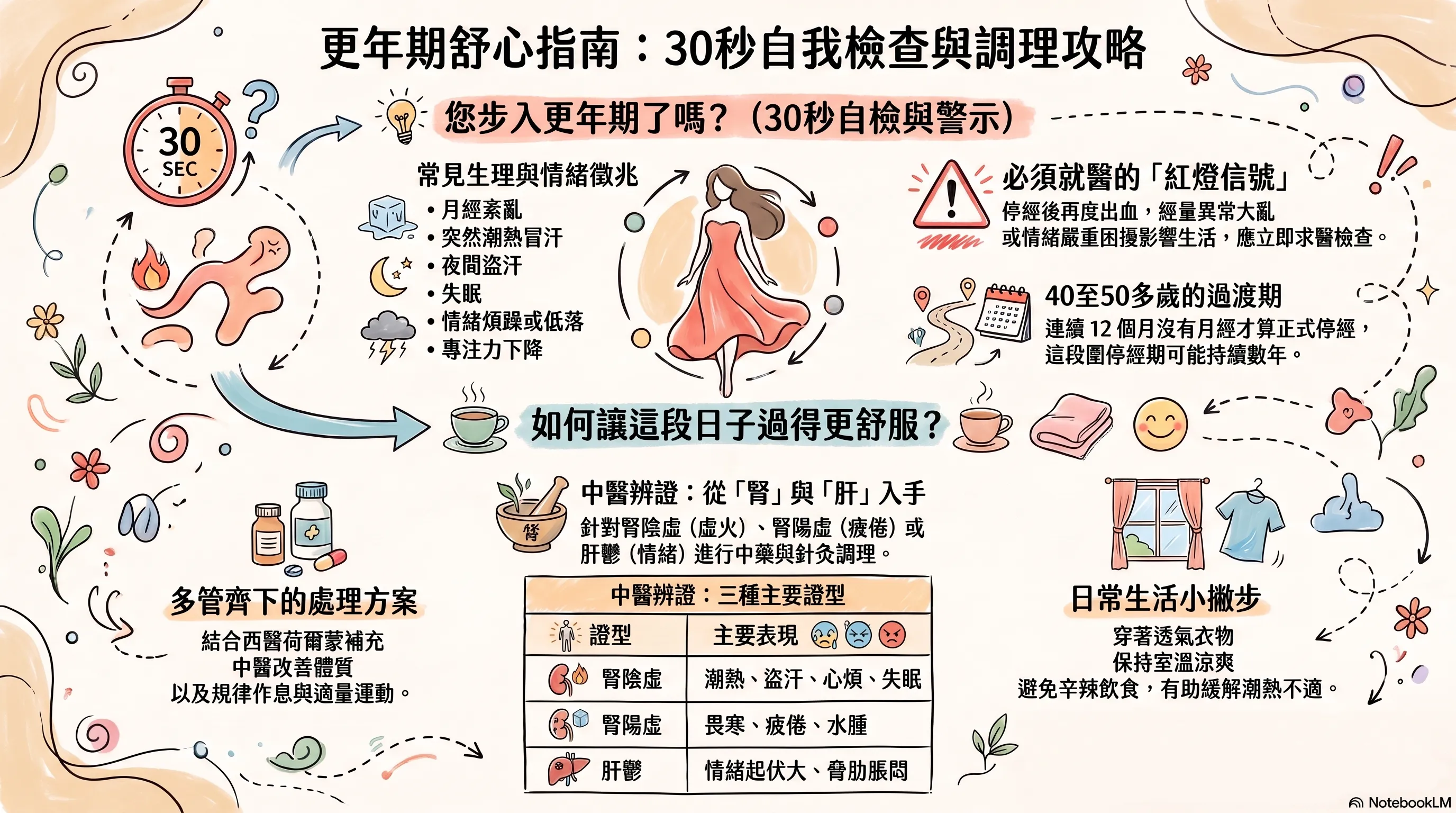 To help readers quickly grasp the content, this image was generated by NotebookLM. Some Chinese characters may not render correctly.
Important
If vaginal bleeding occurs after your periods have stopped for some time, or if low mood persists and distress is severe, seek medical help early. Do not face it alone.
It is not a warm day, yet a wave of heat rushes up your chest to your face and you flush and sweat. You sleep badly, waking in the night drenched. Your moods swing more than they used to. And your periods have begun to lose their rhythm. Somewhere in her forties or fifties, most women go through some version of this.
Many assume menopause is something to be endured until it passes, and quietly put up with hot flushes, insomnia and mood changes. In fact this transition can last several years, and its severity varies greatly. Rather than simply enduring it, it helps to understand your own situation and to know what can make these years more comfortable.
This article starts with a simple self-check to see whether you may be entering menopause, then explains what menopause is, which situations warrant medical assessment, an overview of the common options (hormone replacement, lifestyle measures, Chinese medicine), and how Chinese medicine can help. By the end, you should have a clearer idea of what to do next.
A 30-Second Self-Check: Are You Entering Menopause?
If you are in your forties or fifties and have several of the following, you may be in, or approaching, the menopausal transition:
- ☐ Menstrual cycles becoming irregular (longer, shorter, with variable flow)
- ☐ Hot flushes: a sudden wave of heat rising from the chest to the face and neck, with flushing
- ☐ Night sweats: sweating at night, sometimes soaking nightclothes and disturbing sleep
- ☐ Insomnia: difficulty falling asleep, waking easily, or waking early
- ☐ Mood swings: irritability, anxiety or low mood
- ☐ Vaginal dryness, or discomfort during intercourse
- ☐ Concentration or memory that seems not what it was
- ☐ Fatigue, palpitations, aching joints
The above is for preliminary reference only, not a diagnosis; the severity and combination of symptoms vary from person to person.
What Is Menopause?
From a Western medical perspective, menopause is the stage in which a woman passes from her reproductive years to around the time her periods stop, usually in her forties to fifties. As ovarian function declines and oestrogen falls, the body needs time to adapt, giving rise to hot flushes, night sweats, insomnia, mood changes and irregular periods. This perimenopausal period can last several years; when twelve consecutive months have passed without a period, menopause has occurred.
From a Chinese medicine perspective, at this stage kidney-qi gradually declines and the tian-gui is nearing exhaustion, so kidney yin and yang lose their balance; emotion and stress add liver-qi stagnation, and a range of symptoms follows. Those with yin deficiency and rising deficiency-heat tend to have hot flushes, night sweats, restlessness and insomnia; those inclined to yang deficiency may feel cold, tired and puffy; those with liver-qi stagnation have greater mood swings. In short: kidney deficiency at root, yin and yang out of balance, with liver-qi stagnation alongside.
When Should You See a Doctor First?
Most symptoms of menopause are part of a normal transition, but the following warrant medical assessment and should not be dismissed as "just menopause":
- vaginal bleeding after periods have stopped for some time;
- unusually heavy flow, greatly disordered cycles, or irregular bleeding;
- persistent low mood, severe insomnia, or strong anxiety or hopelessness affecting daily life;
- severe hot flushes or palpitations markedly affecting daily life;
- concern about osteoporosis or cardiovascular health, and a wish for early assessment.
Of these, bleeding after menopause deserves particular attention and should be investigated promptly. And while mood swings are common in menopause, if low mood persists or the distress is severe, please seek medical help early, or confide in someone you trust and in professionals. Do not face it alone.
What Are the Options?
There is more than one path through menopause. The choice depends on the severity of symptoms and your own circumstances, and is best discussed with a doctor:
- Hormone replacement therapy: prescribed after assessment by a Western doctor, it can effectively ease hot flushes, night sweats and other symptoms. Whether it suits you, and what considerations apply, must be judged by a doctor according to your individual situation.
- Lifestyle measures: regular routines, a balanced diet, moderate exercise and stress management all aid adaptation. Those prone to hot flushes may find it helps to wear breathable clothing, keep rooms cool, and avoid triggers such as spicy or very hot food and drink.
- Chinese medicine: working through the kidney and liver, with care based on pattern differentiation, to ease hot flushes, insomnia and mood symptoms and improve the constitution.
These approaches are not mutually exclusive and may be combined. Which to choose is best decided in discussion with a doctor.
How Can Chinese Medicine Help?
In treating menopause, Chinese medicine works through pattern differentiation — distinguishing kidney-yin deficiency (deficiency-heat, hot flushes, night sweats, restlessness and insomnia) from kidney-yang deficiency (aversion to cold, fatigue, puffiness), or liver-qi stagnation (mood swings, distension in the flanks), or deficiency of both yin and yang with liver-qi stagnation — then providing care accordingly.
At Aspira TCM, Dr Chan Wing Kiu manages menopause with a combination of oral Chinese herbal medicine and acupuncture: herbs according to the pattern — enriching kidney-yin and clearing deficiency-heat, warming and tonifying kidney-yang, or soothing the liver and relieving stagnation — to help the body through the transition steadily; acupuncture to help ease hot flushes and improve sleep and mood. The aim is to ease symptoms and improve the constitution. If insomnia is a particular concern, see also TCM Treatment for Insomnia.
It should be made clear that Chinese medicine here is supportive — easing symptoms and improving the constitution. It is not opposed to Western medicine and can be used alongside it. Chinese medicine does not guarantee a cure, and results vary from person to person. Those receiving hormone replacement or other treatment should not stop medication on their own; any change should first be discussed with a doctor. If any of the situations above apply — particularly bleeding after menopause — seek medical assessment first.
These Years Can Be Lived More Comfortably
Menopause is a natural stage every woman passes through. Symptoms may be mild or troublesome, but that does not mean simply enduring them in silence. Understand your own situation, choose the approach that suits you, and these years can be lived with greater ease.
If you would like to know whether your menopausal symptoms are suitable for Chinese medicine care, you are welcome to enquire with Aspira TCM via WhatsApp (WhatsApp: 9679 2293 / wa.me/85296792293); a practitioner can then assess and advise. If you have bleeding after menopause, or severe emotional distress, please seek medical care first.
Medical disclaimer: This article is for health education only and does not constitute personalised medical advice. Each woman's constitution and condition differ, so treatment plans and outcomes vary. Chinese medicine can provide supportive care and ease symptoms but cannot replace necessary Western examination, and does not guarantee a cure; those on hormone replacement therapy must not stop medication on their own. If you have bleeding after menopause, unusually heavy flow, persistent low mood or severe insomnia, please seek prompt care from a qualified healthcare professional.
Disclaimer: This article is for health education and reference purposes only and does not constitute medical advice, diagnosis, or treatment. Each patient's condition is unique and treatment outcomes vary. Please consult a registered TCM practitioner or qualified healthcare professional for health concerns.
Further Reading
Hand-picked related articles and real cases to read next.
Want to learn more? WhatsApp us for a free consultation
Book via WhatsAppExplore our full range of treatments: Traditional TCM Services
Related Articles
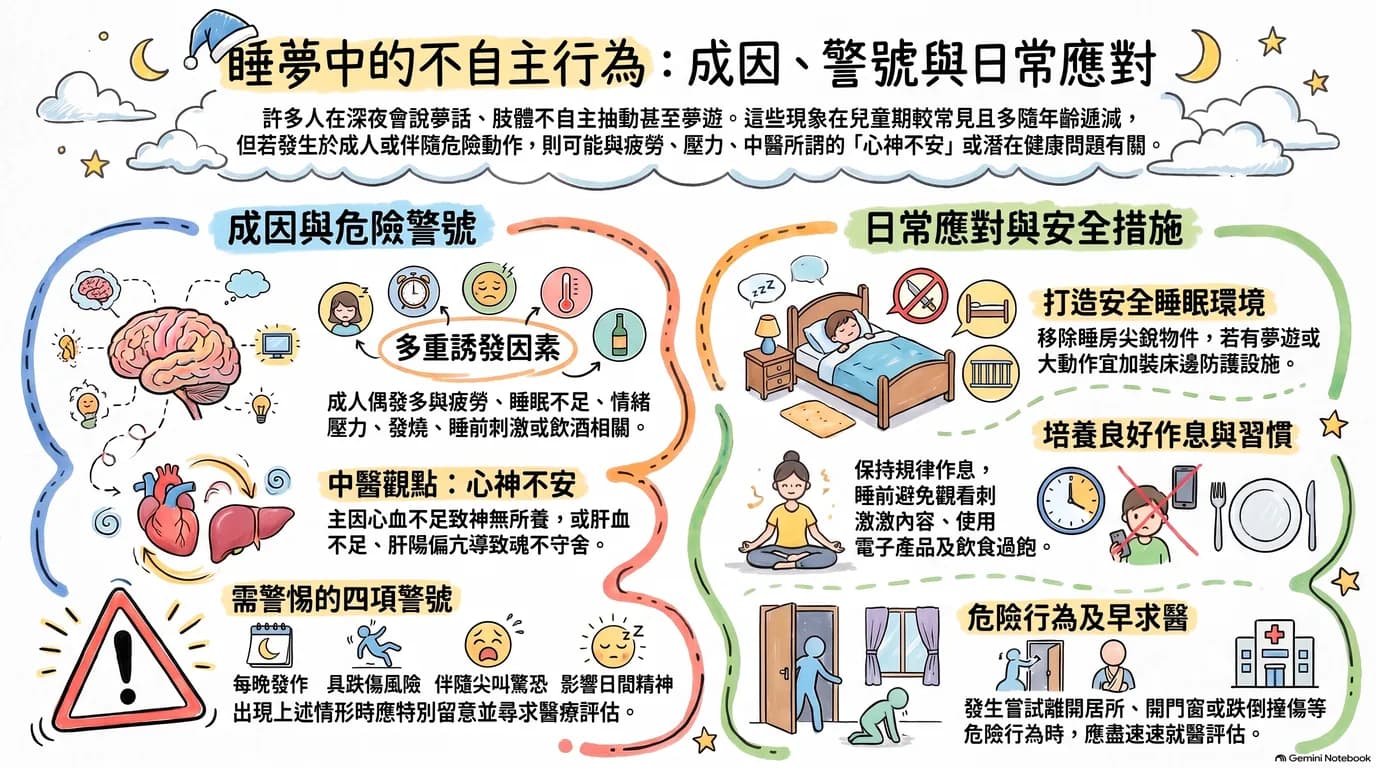
Sleep Talking, Limb Movements and Sleepwalking: What's Behind Them?
Many parents and partners have noticed a family member talking in their sleep, moving their limbs, or even sleepwalking. This article explains who this is most common in, how TCM understands it, and when it's time to see a doctor.
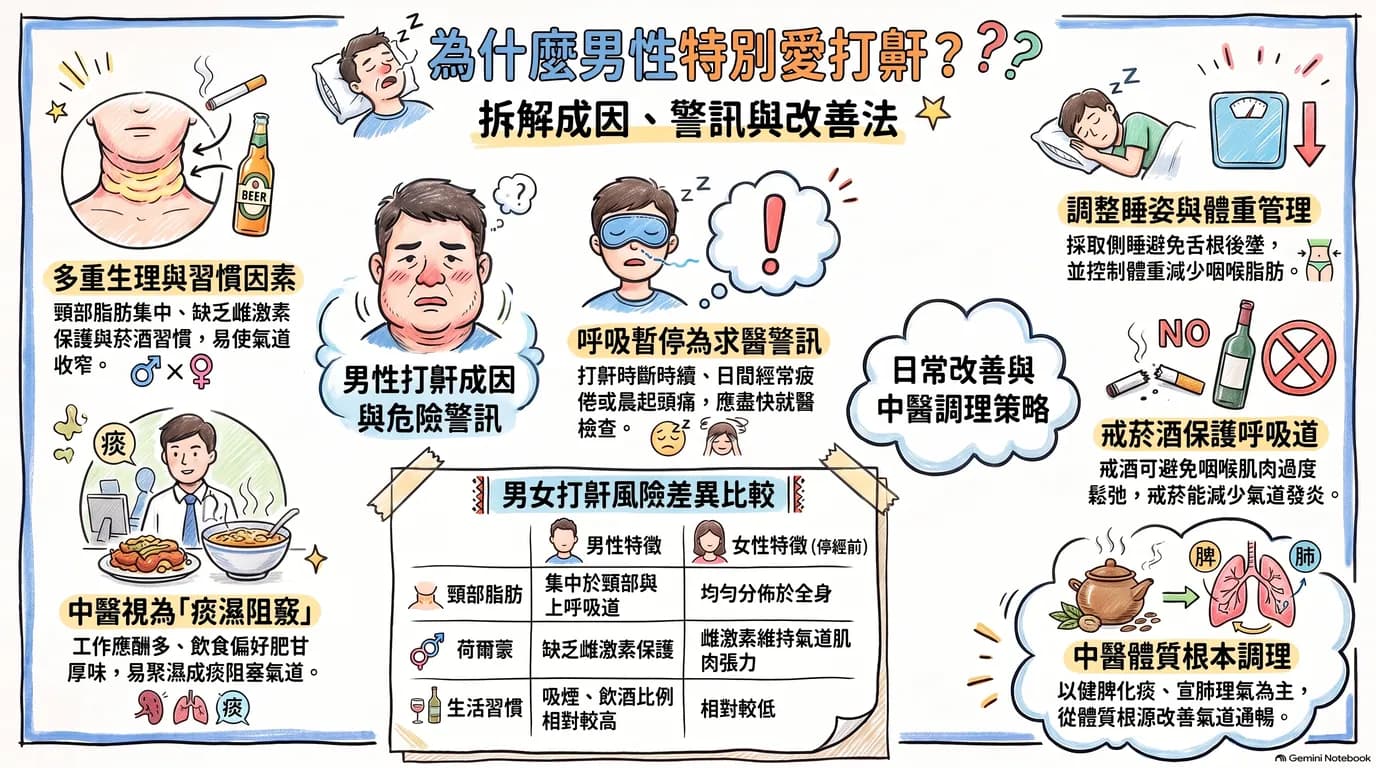
Why Do Men Snore More Than Women? Causes and Warning Signs
Snoring is far more common in men than women, and the reasons go beyond habit — physiology, hormones and lifestyle all play a part. This article explains why men snore more, which signs suggest a more serious problem, and how to ease snoring day to day.
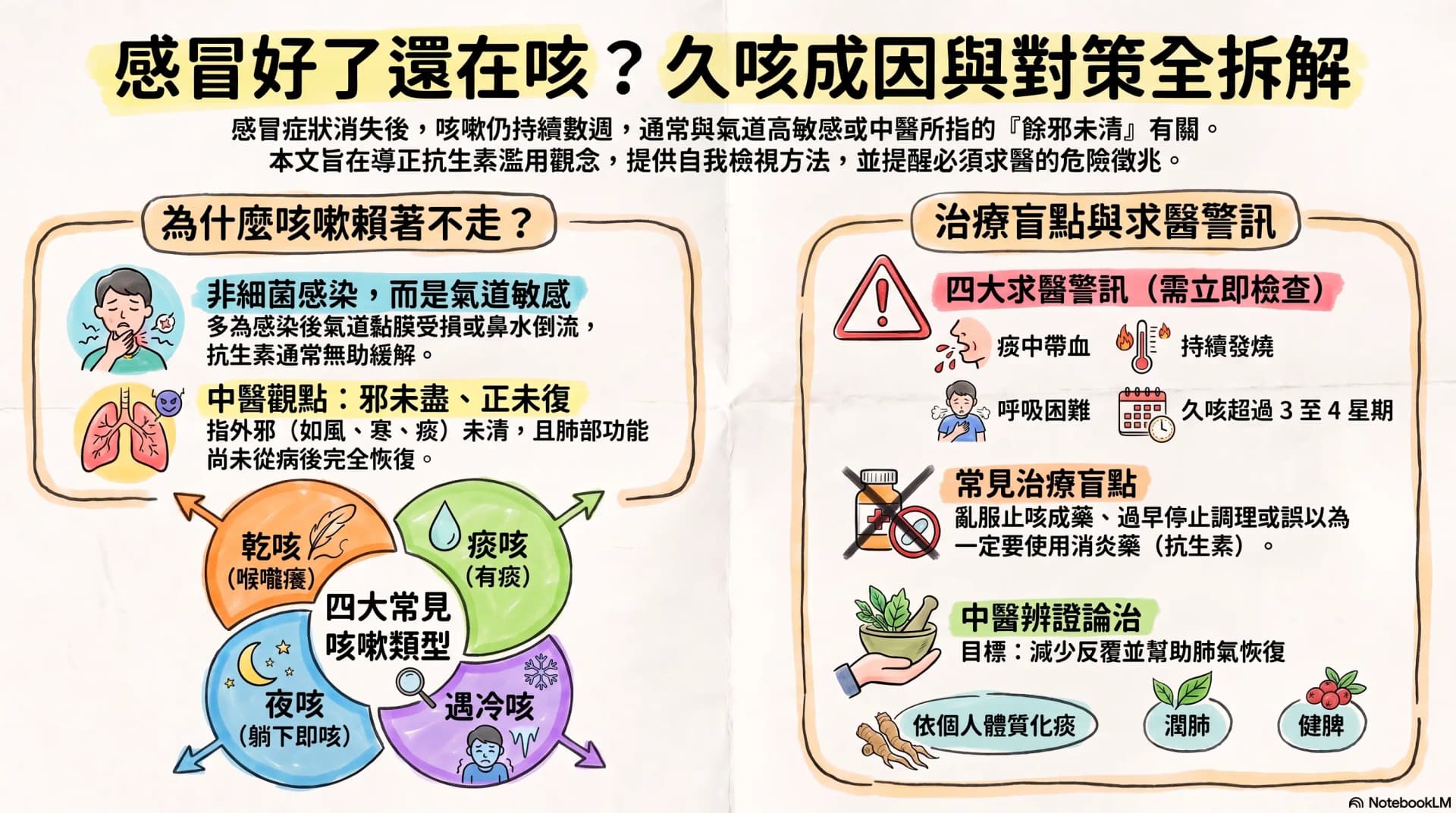
The Cold Has Gone but the Cough Will Not Clear: Causes of a Lingering Post-Cold Cough and How TCM Can Help
The cold is gone, but the cough drags on for weeks. This article breaks down the common types and causes of a lingering post-cold cough, the situations that warrant medical attention, the treatment blind spots, and how Chinese medicine can help through pattern differentiation.