TCM Embedding vs Injections vs Aesthetics vs Liposuction
With so many weight-loss options on the market, which is right for you — TCM embedding, weight-loss injections, fat-freezing, or liposuction? Dr Au compares all four mainstream approaches across mechanism, speed of results, side effects, price range, rebound rate, and suitability — helping you avoid the pitfalls of "stop the drug, gain it back" and "treat the symptom, not the root."
Medical review: Dr. Au Kwok Po, Arthur,Registered Chinese Medicine Practitioner #009884
1-Minute Quick Answer
TCM embedding, weight-loss injections, fat-freezing, or liposuction — which suits you? Dr Au (CMCHK 009884) at Aspira TCM Lai Chi Kok compares all four mainstream approaches across mechanism, side effects, price, rebound rate, and suitability so you can avoid the 'stop the drug, gain it back' trap.
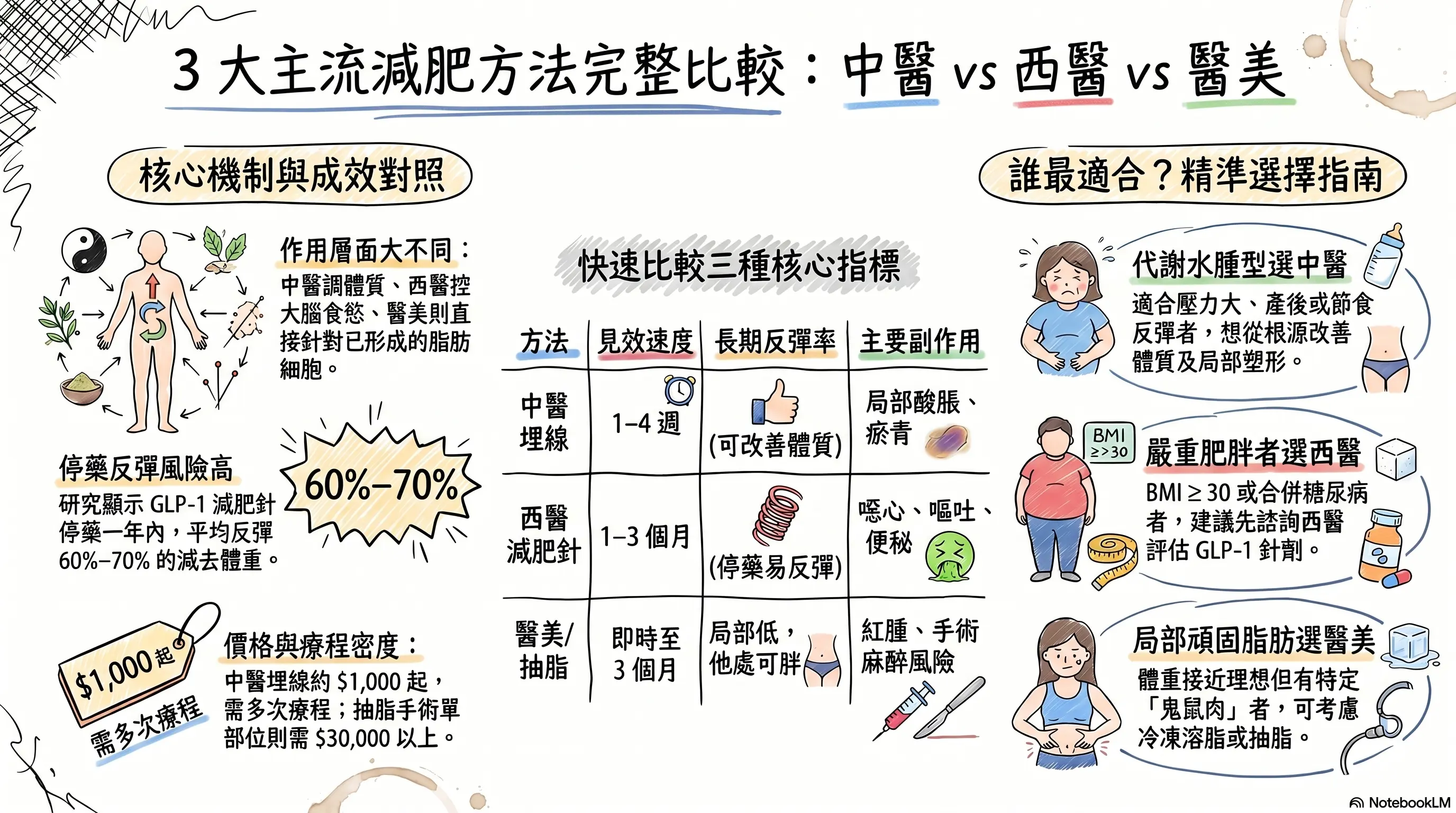 To help readers quickly grasp the content, this image was generated by NotebookLM. Some Chinese characters may not render correctly.
"My friend lost 30 lbs in six months on weight-loss injections; my colleague tried fat-freezing; someone else recommended TCM embedding — which one should I choose?"
The Hong Kong weight-loss market has never offered more options. From TCM embedding, acupuncture, and herbal medicine, to GLP-1 class injections (Saxenda, Ozempic, Wegovy, Mounjaro), to medical-aesthetic technologies such as cryolipolysis, HIFU, laser lipolysis and fat-dissolving injections, and on to surgical liposuction — each approach has its advocates, its real benefits, and its real risks.
This article will not tell you that "TCM is always better" or that "Western medicine is always faster." Instead, written from the perspective of a Registered Chinese Medicine Practitioner, we compare four mainstream approaches across mechanism, speed of results, side effects, price range, rebound rate, and suitability — so you can judge for yourself which fits your body, your budget, and your stage of life.
How the Four Approaches Actually Work
Before choosing, you need to understand what each method is doing to your body.
| Method | Core Mechanism | Primary Site of Action |
|---|---|---|
| TCM Embedding | Absorbable PDO threads implanted at acupoints provide sustained stimulation (long-acting acupuncture) | Endocrine regulation, appetite, metabolism, local sculpting |
| Weight-Loss Injections (GLP-1) | Mimic the gut hormone GLP-1, slowing gastric emptying, suppressing appetite, regulating blood sugar | Brain appetite centre, gastrointestinal tract, insulin |
| Medical Aesthetics (Cryolipolysis / HIFU / Laser / Fat-dissolving injections) | Physically damage local fat cells, which are then cleared by the body's metabolism | Local subcutaneous fat cells only |
| Liposuction | Surgically removes subcutaneous fat tissue | Local subcutaneous fat only |
In short:
- TCM embedding acts on the body's regulatory systems (endocrine, metabolism, appetite)
- Weight-loss injections act on the brain–gut appetite circuit
- Medical aesthetics and liposuction act on the local fat cells already present
This distinction matters — because it determines rebound rates and systemic impact.
Comparison Table (1): Mechanism, Speed, Side Effects, Price Range
| Dimension | TCM Embedding | GLP-1 Injections | Medical Aesthetics | Liposuction |
|---|---|---|---|---|
| Speed of results | Visible weight change in 1–4 weeks; first-session response is common | Significant weight loss over 1–3 months | Local fat reduction visible 1–3 months after treatment | Immediate volumetric reduction post-op |
| Site of action | Whole-body metabolism + local sculpting | Whole-body appetite & blood sugar | Local only — no whole-body effect | Local only — no whole-body effect |
| Course length | 4–10 sessions (every 7–10 days) | Weekly or daily injections, typically 6+ months | 1–4 sessions per body area, depending on technology | Usually a single procedure |
| Common side effects | Localised soreness, mild bruising, very rare allergy (~0.05%) | Nausea, vomiting, constipation, diarrhoea; rare pancreatitis or gallstones; high rebound on discontinuation | Redness, bruising, transient numbness; very rare paradoxical hyperplasia after cryolipolysis | Infection, bleeding, bruising, contour irregularities, anaesthesia risks |
| Recovery time | Immediate; can shower 4–5 hours later | Resume normal activity same day | Immediate; some areas require compression garments | 1–2 weeks downtime |
| Approximate Hong Kong price range (per course or area) | Single area approx HK$1,000–HK$1,500; whole-body packages HK$1,600–HK$4,500+ | Approx HK$3,000–HK$10,000+ per month, ongoing | HK$3,000–HK$10,000 per area per session; multi-area multi-session can exceed HK$30,000 | HK$30,000–HK$80,000+ per area |
| Result sustainability after stopping | Yes (when paired with diet and herbal regulation for "constitutional weight loss") | Most studies show 60–70% weight regain within one year of discontinuation | Destroyed fat cells do not return, but new fat can accumulate elsewhere | Removed fat does not return, but new fat can accumulate elsewhere |
Note on price ranges: these are general market observations, not the rates of any particular clinic. Actual fees vary by brand, institution, materials, thread count, and dose — please obtain a formal quote directly from the relevant provider.
Comparison Table (2): Who Each Approach Suits
| Method | Best Suited For | Should Avoid |
|---|---|---|
| TCM Embedding | Stress / post-partum / water-retention / repeat-dieter / big-appetite / sedentary types; those wanting to address constitution; those preferring not to take long-term medication; mild to moderate BMI | Pregnancy / breastfeeding; diabetes, coagulation disorders; active fever or infection; PDO allergy |
| Weight-Loss Injections | Higher BMI (commonly ≥27 with comorbidities such as diabetes or cardiovascular disease); difficulty controlling appetite; willing to attend long-term medical follow-up | Personal or family history of medullary thyroid carcinoma or MEN; pancreatitis history; severe gastrointestinal disease; pregnancy / breastfeeding |
| Medical Aesthetics | Near goal weight but with stubborn local fat; preference to avoid surgery or whole-body intervention | Significant overall obesity (treats symptom, not cause); cold sensitivity; active skin inflammation |
| Liposuction | Extremely stubborn local fat with other approaches exhausted; willing to accept surgical risk and recovery | Coagulation disorders; serious chronic illness; anaesthesia contraindications; very poor skin elasticity |
A TCM Perspective: Why Weight-Loss Injections "Work Short-Term but Rebound After Stopping"
Over the past two years, GLP-1 weight-loss injections (Saxenda, Ozempic, Wegovy, Mounjaro) have become a global topic. They are genuinely effective — for patients with high BMI, particularly those with diabetes or cardiovascular comorbidities, the documented weight loss (10–20%) is substantial and well-evidenced in major trials.
That said, two clinical issues deserve frank acknowledgement:
First, the rebound rate after discontinuation is high. Multiple studies (including in JAMA and The Lancet) report that within roughly one year of stopping GLP-1 medication, patients regain 60–70% of the weight they had lost. The reason is straightforward: the medication does not change the body's "set-point." It artificially suppresses appetite and slows gastric emptying — and once that external pressure is removed, the body returns toward baseline.
Second, side effects are real. Nausea, vomiting, constipation, and diarrhoea are common; some patients require dose reduction or discontinuation. Rarer but more serious risks include pancreatitis, gallstones, and uncommon thyroid concerns. Long-term safety data continues to accumulate.
From a TCM perspective, this neatly illustrates the principle that "if the constitution does not change, the weight loss is only superficial." TCM embedding does not aim to "force you to eat less" — paired with herbal medicine, dietary guidance, and exercise, it gradually adjusts metabolism, digestion, and endocrine balance, dismantling the body's "energy-conservation mode" so it no longer needs to store as much fat.
This is not to say weight-loss injections are inappropriate. For patients with high BMI and comorbidities, GLP-1 is genuinely a tool that may save lives. The key is to know clearly what you are choosing.
A TCM Perspective: Why Medical Aesthetics and Liposuction "Treat the Symptom, Not the Cause"
Cryolipolysis, HIFU, laser lipolysis, fat-dissolving injections, liposuction — what these have in common is that they directly damage or remove existing fat cells.
From a body-contouring perspective, these approaches do work: the fat cells that are destroyed or removed do not simply "come back." But that also creates two core limitations:
- They do not address why you gained weight in the first place. If the root issue is stress-related stagnation, post-partum deficiency, water-retention, or a low-metabolism constitution, removing abdominal fat does not reset endocrine or metabolic patterns — fat may continue to accumulate elsewhere.
- Reducing fat cells is not the same as becoming healthily slimmer. Hidden obesity, post-partum metabolic slowdown, and chronic fatigue all reflect deeper body-system imbalance, which medical aesthetics alone cannot correct.
In TCM, obesity is never viewed simply as "too much fat." Two people can both weigh 60 kg, yet one may have strong qi, robust circulation, and good metabolism, while the other is fatigued, damp-retentive, and metabolically sluggish. That is why TCM weight management aims for "constitutional slimming" — not just a lower number on the scale, but improvements in metabolism, circulation, digestion, and sleep as a whole.
This is also why Aspira TCM's signature packages include both herbal medicine and nutrition consultation. Embedding is just one part of the process; lasting change requires constitution-level adjustment alongside lifestyle support.
The 3 Most Common Misunderstandings About TCM Embedding
Misunderstanding 1: "Embedding can replace exercise and diet control"
No. Embedding lowers the barrier — it may help you eat a little less, keep metabolism a little higher, and mobilise stubborn fat more easily. But if your diet remains high in sugar and fat, and your routine remains chaotic, results will be much weaker and rebound more likely. Clinically, patients who combine embedding with three sessions of moderate exercise per week and dietary control often progress about twice as fast as those relying on embedding alone.
Misunderstanding 2: "More needles are always better"
Not true. Needle count should be decided by the doctor based on constitution, body area, and treatment goals — more is not automatically better. Aspira TCM uses an "unlimited needle count" policy so that the doctor can treat flexibly according to actual need, not because "the more the better." In fact, excessive needle count may simply increase soreness and prolong recovery.
Misunderstanding 3: "One session should already be enough to show results"
Some patients do notice changes after the first session, but that is not the norm. The first session often uses fewer threads so the body can adapt. Adjustments are made from the second session onward according to response. Effects accumulate, and a fair assessment should usually be made after 4–6 sessions in a basic course.
Our Practical Recommendation: Which Situation Fits Which Method?
Below is a practical framework for Hong Kong patients — not an absolute rule, but a useful starting point for discussion with a doctor:
Scenario A: Normal BMI (18.5–22.9), but stubborn local fat
Recommendation: TCM embedding + herbal medicine + dietary adjustment Why: the issue is not whole-body obesity, but local resistant fat plus constitutional imbalance. Embedding can target local contouring while herbal medicine addresses root causes. Medical aesthetics may be used as an adjunct, but with a clear understanding of its "treat the symptom, not the cause" limitation.
Scenario B: BMI 25–29.9, without major chronic illness
Recommendation: TCM embedding + herbal medicine (signature or premium package) + exercise + nutrition consultation Why: in this BMI range, many patients can still achieve meaningful change through metabolic adjustment and appetite regulation, without necessarily relying on long-term medication. If a six-month TCM course does not achieve the goal, GLP-1 may then be considered as the next step.
Scenario C: BMI ≥ 30, or obesity with diabetes / cardiovascular disease
Recommendation: first consult a Western doctor to evaluate GLP-1 and structured lifestyle intervention, while using TCM to support constitution Why: in higher-BMI patients with comorbidities, GLP-1 has proven cardiovascular benefit at a scale TCM alone cannot match quickly. TCM's role is supportive: reducing side effects such as excessive appetite suppression, constipation, and fatigue, while improving the overall metabolic environment.
Scenario D: Target weight reached, but local looseness or ageing remains
Recommendation: medical aesthetics / tightening + TCM embedding for muscle tone and skin quality Why: loose skin after weight loss is common. Medical aesthetics can help with structural tightening and local contouring, while TCM embedding may also improve local muscle tone, helping reduce fat while supporting skin firmness.
TCM and Western Medicine Are Not Opposed
The final point is this: these four approaches are not mutually exclusive.
In practice, some patients first use GLP-1 to reach a target weight within six months, then combine TCM embedding and herbal medicine to stabilise constitution and reduce rebound risk, and finally use medical aesthetics to address local looseness. That can be a very reasonable and complete weight-management journey.
The key is to understand what each method can and cannot do, and to choose tools that match your current stage rather than idealising or demonising any single option.
If you are still at the comparison stage, you are welcome to book a consultation with Dr Au at Aspira TCM. Even if our assessment ultimately suggests you should see a Western doctor first to address BMI and comorbidities, we will tell you so directly. Truly serving the patient matters more than securing a single course of treatment.
— Dr Au Kwok Po, Arthur | Registered Chinese Medicine Practitioner (Certified Nutritionist)
Registration No.: 009884
Aspira TCM Clinic | TCM Weight Management, Chinese Medicine Nutrition, Dermatology
Want to know which method fits you best? Consultation welcome
Booking:
- WhatsApp: Book here
- Tel: 2110 9337
- Address: Room 2706, Saxon Tower, 7 Cheung Shun Street, Lai Chi Kok
Disclaimer: This comparison reflects general clinical observations and publicly available research data. Individual results vary. The price ranges quoted are broad market observations only and do not represent the official fees of any specific clinic or institution. For GLP-1 medication, medical-aesthetic procedures, or surgery, please consult the relevant registered doctor or qualified provider regarding indications, contraindications, risks and costs. TCM embedding should likewise be assessed in person by a Registered Chinese Medicine Practitioner. This article does not constitute a prescription recommendation, and readers should not self-initiate any prescription medication.
Disclaimer: This article is for health education and reference purposes only and does not constitute medical advice, diagnosis, or treatment. Each patient's condition is unique and treatment outcomes vary. Please consult a registered TCM practitioner or qualified healthcare professional for health concerns.
Further Reading
Hand-picked related articles and real cases to read next.
TCM Acupoint Embedding for Weight Loss: Complete Guide + FAQ
TCM acupoint catgut embedding has become a popular weight-loss option in Hong Kong, but online information varies widely. Drawing on clinical experience, Dr Au explains the mechanism, compares thread materials, identifies six common "hard-to-slim" body types, walks through the treatment procedure, and answers 11 frequently asked questions — helping you decide whether the treatment is right for you.
Acupoint Embedding in Hong Kong: 2026 Pricing & Clinic Guide
Hong Kong acupoint embedding fees range from a few hundred to over three thousand dollars per session — but why? This guide breaks down 2026 market price ranges, six factors driving the fee differences, seven questions to ask before booking, four red-flag warnings, and a transparent line-by-line look at Aspira TCM's three packages — to help you choose what genuinely suits you.
TCM vs Western Medicine: 6 Common Conditions Compared
Is TCM or Western medicine better? The honest answer: it depends on your condition and needs. This article fairly compares both approaches across six common conditions — cough, eczema, pain, insomnia, digestive issues, and menstrual irregularities — to help you make the right choice.
Want to learn more? WhatsApp us for a free consultation
Book via WhatsAppExplore our full range of treatments: Traditional TCM Services
Related Articles
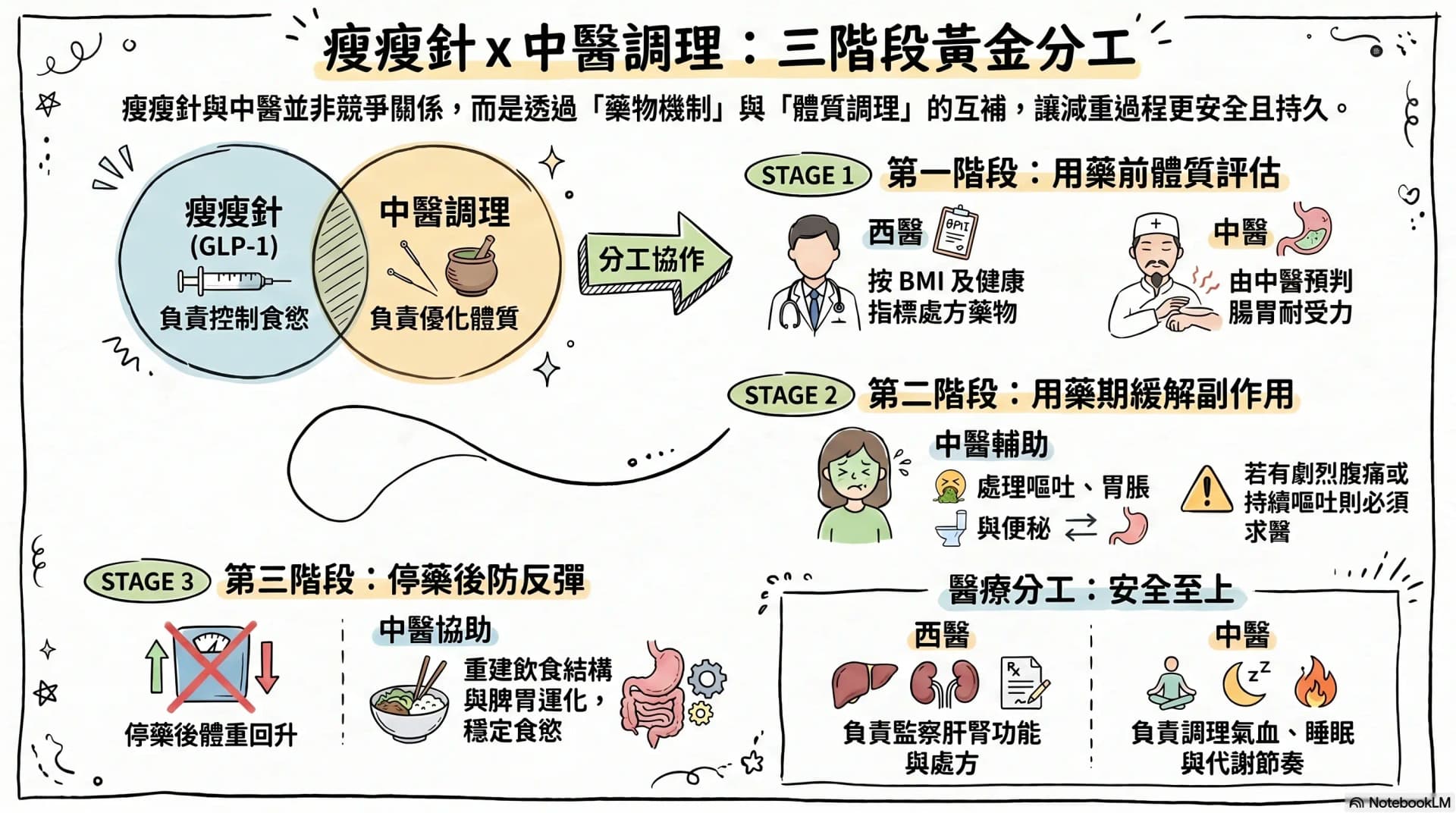
Can I See a TCM Practitioner While on a GLP-1 Injection?
GLP-1 weight-loss injections are now a major talking point in Hong Kong. This article compares the roles of prescribed GLP-1 medication and TCM care across three phases — before treatment, during treatment and after stopping — covering medical monitoring, side-effect relief and post-discontinuation rebound, and identifying scenarios that should not be managed by TCM alone.
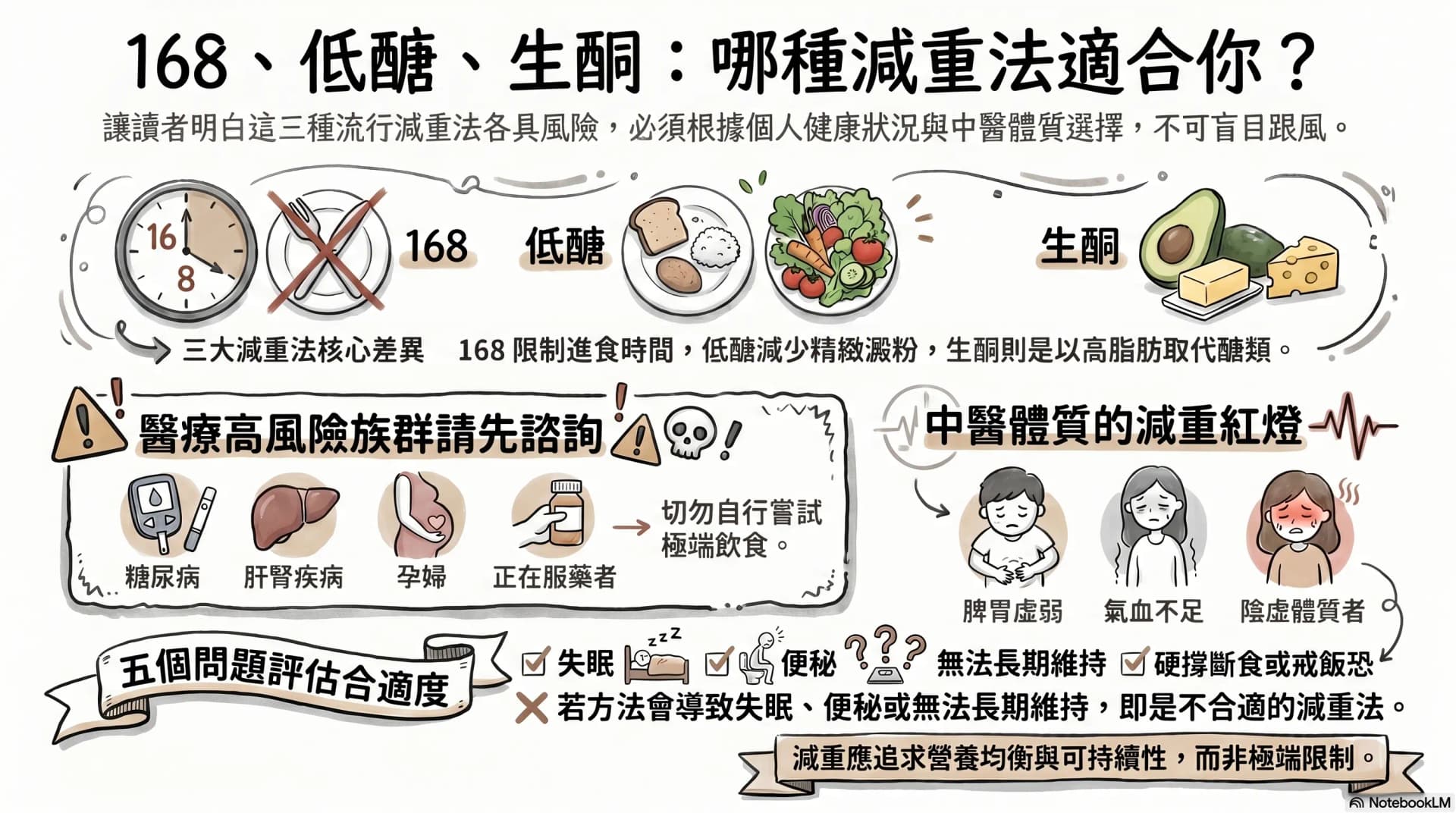
168 Fasting vs Low-Carb vs Keto: A TCM Guide to the Differences
168 fasting, low-carb diets, and keto are all popular weight-loss approaches, but they restrict different things — and their effects on digestion, sleep, blood glucose, bowels, menstruation, and mood differ accordingly. This article compares the three, explains which TCM constitutions need extra caution, and flags situations that warrant prior assessment by a Western doctor or registered dietitian.
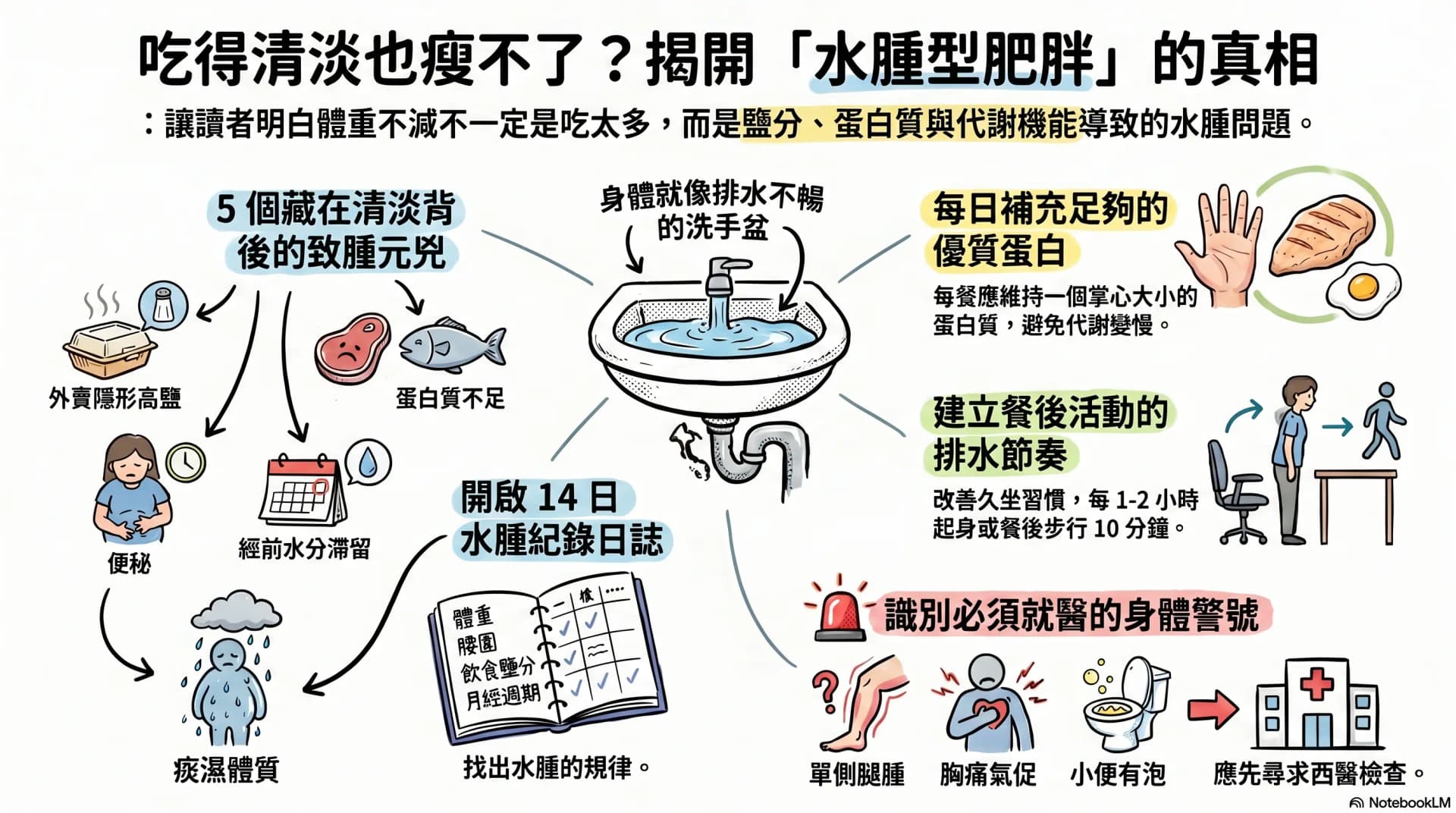
Eating Light but Not Losing Weight? A TCM Edema-Type Case Study
Eating light yet the scale will not budge — only the puffiness in the face, ankles and waistline persists? This case study follows Ya-lin (pseudonym), a 38-year-old office worker, through six months and explains how "eating clean but still not losing weight" often comes from a stack of small issues: salt, low protein, constipation, premenstrual fluid retention, phlegm-damp constitution, or internal disease. It also lists scenarios that warrant seeing a Western doctor first.