Is Erectile Dysfunction Always Kidney Deficiency? 5 TCM Patterns
Many men reach for kidney-tonic pills the moment they notice an erection problem, but TCM actually divides erectile dysfunction (ED) into 5 distinct patterns. This article starts with a symptom comparison table to help you tell true kidney deficiency from ED that may not involve kidney deficiency, then breaks down the psychogenic, liver-qi stagnation, damp-heat in the lower burner, qi-and-blood deficiency, and kidney deficiency patterns along with how each should be approached. It also flags reversible causes such as the three highs, diabetes and drug side effects that should be ruled out first, so you do not make things worse with the wrong tonic.
Medical review: Dr. Tai Wai Ho, Samson,Registered Chinese Medicine Practitioner #008702
1-Minute Quick Answer
Erectile dysfunction is not always kidney deficiency — it is just one of 5 TCM patterns, and the wrong tonic can backfire. This guide (reviewed by Dr Tai, CMCHK 008702) helps tell true kidney deficiency apart and urges ruling out the three highs, diabetes, cardiovascular disease and drug side effects first — ED can precede heart disease by 2 to 5 years.
Is Erectile Dysfunction Always Kidney Deficiency? A TCM Breakdown of 5 Male Patterns
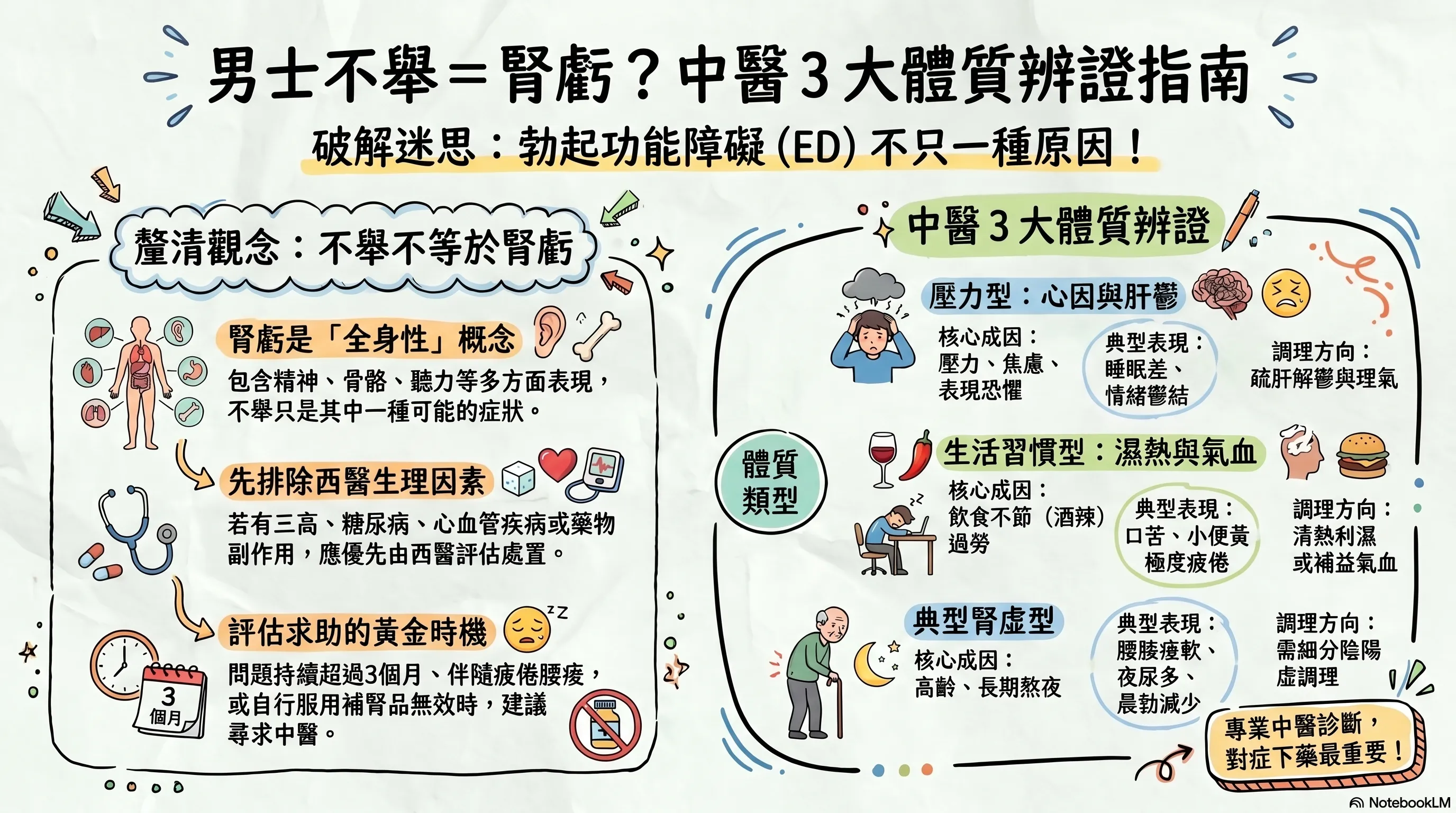 For quick reference, this image was generated by NotebookLM. Some Chinese characters may not render perfectly; we appreciate your understanding.
"I thought it was kidney deficiency, so I took deer antler supplements for a month and still nothing changed." This is a common misconception among men in Hong Kong.
In reality, what TCM calls "kidney deficiency" (腎虧 / 腎虛) is only one of several patterns that can underlie reduced erectile function — not every case of erectile dysfunction (ED) can be solved by tonifying the kidney. A 2024 questionnaire study from the Department of Surgery at the University of Hong Kong, published in the World Journal of Urology, surveyed 616 men in Hong Kong aged 18 to 81 and found the prevalence of erectile dysfunction reached 51.8%. Among them, 53.2% misunderstood what ED actually is, and only 54% knew that ED is in fact treatable.
This article will help you sort out three things: whether what you are experiencing is best described as ED or as kidney deficiency (these are not quite the same thing), when reversible Western medical causes should be ruled out first, and what each of the 5 TCM body patterns looks like in practice. By the end, you should be in a better position to judge what to do next.
Is Erectile Dysfunction the Same as Kidney Deficiency? Not Quite
In TCM, kidney deficiency (腎虧 / 腎虛) is a whole-body constitutional concept, and it is completely different from what Western medicine calls kidney disease. Kidney deficiency can show up in many ways — affecting mental energy, the bones, hearing, reproduction and more — not just sexual function. By the same token, reduced sexual function has many possible causes, and not all of them are kidney deficiency.
The table below can help you check yourself:
| Symptom | Common in ED | Common in kidney deficiency |
|---|---|---|
| Difficulty getting or maintaining an erection | Yes | Possibly |
| Marked reduction in morning erections | Yes | Yes |
| Reduced libido | Possibly | Yes |
| Soreness in the lower back and knees | Uncommon | Yes |
| Increased nocturnal urination | Uncommon | Yes |
| Easy fatigue, cold sensitivity or hot flushes | Uncommon | Yes |
| Memory decline, dizziness or tinnitus | Uncommon | Yes |
| Only happens in specific situations (high stress, new relationship) | Yes | No |
How to match the pattern:
- Mostly left-column features (erection difficulty, fewer morning erections) with few from the right column — likely ED but not necessarily kidney deficiency
- Several items from both columns at the same time — likely an ED case with kidney deficiency
- Mostly right-column features with only mild left-column issues — possibly kidney deficiency that has not yet affected sexual function
A note on TCM terms: "kidney deficiency" (腎虧) is the colloquial term for kidney xu (腎虛), meaning that the function and essence of the kidney are insufficient. The "kidney" in TCM covers reproduction, growth and development, the bones and hearing among other systems, and is not the same concept as the kidney organ in the Western urinary system.
Rule Out These Causes Before Turning to TCM
Reduced erectile function reflects how multiple body systems are working together. Some causes are reversible medical issues that need to be addressed first:
| Situation | Why it has to be handled first |
|---|---|
| The "three highs" (high blood sugar, blood pressure, blood lipids) | Vascular endothelial damage directly affects erection |
| Diabetes | Men with diabetes have roughly 3.5 times the risk of ED compared with non-diabetic men |
| Cardiovascular disease | ED can appear 2 to 5 years before clinical heart disease — an important warning sign |
| Taking antihypertensives, antidepressants (SSRIs) or sedatives | Some of these can cause drug-related ED and require a discussion with the prescribing doctor |
| Sudden complete loss of erection | An acute organic issue that needs urgent assessment |
The Princeton IV consensus (2023), issued jointly by international sexual medicine bodies, specifically stresses that ED can appear 2 to 5 years before the clinical onset of heart disease and serves as an early warning sign of silent coronary artery disease — atherosclerotic endothelial dysfunction first affects the small blood vessels of the penis, so ED can predict cardiovascular events in the next 3 to 5 years.
When You Can Consider TCM Assessment First
If the situations above have already been ruled out by your doctor, or your check-up results are normal but symptoms persist, that is a suitable time to consider a TCM constitutional assessment.
The 5 TCM Patterns Behind ED
In clinic, Dr Tai Wai-ho identifies the dominant pattern based on the combination of symptoms together with tongue and pulse signs. One important point: the psychogenic pattern and the liver-qi stagnation pattern overlap considerably within TCM categorisation (both relate to emotional state), and in practice many cases involve both rather than a single pattern.
1. Psychogenic pattern
Typical context: Linked to stress, anxiety and performance fear. There is no problem when relaxed, but erection difficulty appears in specific situations (a new partner, high-stakes performance pressure).
Typical features: A sharp difference between work and holiday periods, a fast heart rate, and a tendency to feel tense.
Treatment direction: Soothing the liver and relieving stagnation (smoothing liver qi and easing emotional tension).
2. Liver-qi stagnation pattern
Typical context: Long-term high work pressure, suppressed emotions, easy irritability.
Typical features: Quick temper, a feeling of fullness in the chest and flanks, frequent sighing, light sleep.
Treatment direction: Soothing the liver and regulating qi (smoothing qi movement and easing emotional flow).
3. Damp-heat in the lower burner pattern
Typical context: Younger to middle-aged men with regular drinking and a taste for spicy foods.
Typical features: Bitter taste in the mouth, dark yellow urine, dampness around the perineum, a yellow greasy tongue coating.
Treatment direction: Clearing heat and draining dampness (removing damp-heat from the lower burner). This pattern is the most easily worsened by self-administered kidney tonics — they will noticeably aggravate symptoms.
4. Qi-and-blood deficiency pattern
Typical context: Recovering from a serious illness, long-term overwork, sleep deprivation, night-shift workers.
Typical features: Pale complexion, easy fatigue, dizziness, palpitations, shortness of breath after activity.
Treatment direction: Tonifying qi and blood (replenishing what is depleted).
5. Kidney deficiency pattern
Typical context: Older age, prolonged excessive sexual activity, years of late nights that have drained the kidney.
Typical features: Sore lower back and knees, frequent nocturnal urination, fewer morning erections, declining hearing, poor memory.
Sub-patterns:
- Kidney-yang deficiency: Cold intolerance, cold hands and feet, copious clear nocturnal urine, mental fatigue
- Kidney-yin deficiency: Dry mouth, hot flushes, night sweats, irritable insomnia
Treatment direction: Warming and tonifying kidney yang for the yang-deficient sub-pattern, nourishing kidney yin for the yin-deficient sub-pattern. The biggest mistake is taking tonics without first distinguishing yin from yang.
Treatment Directions for the 5 Patterns
| Pattern | What to do | What to avoid |
|---|---|---|
| Psychogenic | Reduce stress, communicate with your partner, consider counselling if needed | No need for kidney tonics; excessive consumption of stimulating media will make it worse |
| Liver-qi stagnation | Keep a regular routine, avoid prolonged high pressure | Excessive drinking, late nights |
| Damp-heat | Stop alcohol, spicy and deep-fried foods | Self-administered kidney-tonic pills (they will worsen symptoms) |
| Qi-and-blood deficiency | Adequate rest, nourishing diet, avoid overwork | Excessive dieting, chronic late nights |
| Kidney deficiency | Tonify in moderation, but only after distinguishing yin from yang | Indiscriminate tonics; prolonged excessive sexual activity |
Things Everyone Should Avoid
- Self-administering so-called "potency pills" or "kidney-tonic pills" — over the past few years, the Hong Kong Department of Health has repeatedly warned that some products marketed as "natural male enhancement" have been found to contain undeclared sildenafil or tadalafil. Taking these alongside nitrate-based heart medications can cause dangerous drops in blood pressure
- Excessive alcohol — long-term heavy drinking suppresses the hypothalamic-pituitary-gonadal axis, lowering testosterone and damaging the vascular endothelium
- Chronic sleep deprivation — directly impairs testosterone levels and erectile performance
When You Should Have a TCM Constitutional Assessment
The following situations are especially suitable for considering a TCM assessment:
- Erection problems lasting more than 3 months despite normal Western medical investigations
- Concurrent constitutional features such as fatigue, lower-back soreness, nocturnal urination or irritability
- Taking kidney-tonic supplements for more than a month without improvement
- Wishing to avoid long-term reliance on PDE5 inhibitors (the so-called "little blue pill")
- Planning for conception and wanting overall constitution to be in good shape
How Aspira TCM Assesses Erectile Problems
When Dr Tai Wai-ho sees patients with reduced erectile function, the assessment draws on:
- Duration, frequency and situation-dependence of the problem
- State of morning erections, libido, and the partner relationship
- Existing conditions (the three highs, diabetes, cardiovascular disease) and Western medications in use
- Diet, sleep schedule, stress and exercise habits
- Tongue and pulse signs and other whole-body constitutional features
After the assessment, the dominant pattern is clearly explained, along with whether reversible Western medical causes should be ruled out first. TCM prescriptions are individualised by constitution — there is no one-size-fits-all formula.
FAQ
Q1: Does ED always require medication?
Not necessarily. For psychogenic or liver-qi stagnation patterns, behavioural adjustments and emotional management can matter more than drugs. For organic causes (the three highs, diabetes and similar), the underlying problem has to be addressed first. The recommendation is to start with a full assessment, then decide on a treatment plan.
Q2: Are more expensive kidney tonics always better?
No. The first task is to distinguish kidney-yang deficiency from kidney-yin deficiency — tonifying in the wrong direction will only worsen the discomfort. For example, someone with a damp-heat constitution who takes deer-antler-type warming tonics may develop dry mouth, nosebleeds, irritability and more acne.
Q3: Is the claim that TCM works in a month true or false?
It depends on the pattern and the cause. A psychogenic case may improve relatively quickly once lifestyle is adjusted, while a kidney deficiency pattern usually needs more than 3 months for clear improvement. Any plan that promises "guaranteed results in a few days" should be viewed with caution.
Q4: How can a partner help?
The psychogenic pattern is most influenced by a partner's attitude. Shifting attention away from "performance", reducing judgemental commentary, creating a relaxed environment and tackling shared sources of stress all help. Couples counselling can be considered if needed.
Q5: How strong is the link between ED and heart disease?
Strong. The Princeton IV consensus from international sexual medicine bodies notes that ED can appear 2 to 5 years before clinical heart disease and is an early warning sign of silent coronary artery disease. Men with new-onset ED should also have a cardiovascular risk assessment (blood pressure, blood sugar, blood lipids, weight).
Q6: Can taking kidney-tonic supplements clash with Western medications?
It can. Some Chinese herbal ingredients interact with antihypertensives, blood thinners and glucose-lowering drugs. If you are on Western medications, you must inform your TCM practitioner clearly so that a registered Chinese medicine practitioner can decide whether a safe combination is possible.
Medical review: Dr Tai Wai-ho | Registered Chinese Medicine Practitioner (Reg. No.: 008702) Aspira TCM Clinic
Want to Identify Your Pattern? Book a Consultation
If you would like to clarify which pattern best fits your situation and avoid making things worse with the wrong tonic, you are welcome to book a consultation with Dr Tai.
How to book:
- WhatsApp: Book here
- Phone: 2110 9337
- Address: Unit 2706, Saxon Tower, 7 Cheung Shun Street, Lai Chi Kok
Disclaimer: This article is for health education only and does not replace individual diagnosis, examinations, medication or treatment advice. If you have an existing condition, persistent symptoms or are on medication, please follow your doctor's instructions for follow-up and monitoring; any medication adjustment should first be discussed with your prescribing doctor.
References:
- Centre for Health Protection, Department of Health (HK): Common Male Diseases — Erectile Dysfunction https://www.chp.gov.hk/tc/static/80044.html
- HKU / Queen Mary Hospital, World Journal of Urology 2025: Patients understanding and perception of erectile dysfunction: Hong Kong versus Europe https://pubmed.ncbi.nlm.nih.gov/40320446/
- Sexual Medicine Society of North America: Princeton IV Consensus on Erectile Dysfunction and Heart Health https://www.smsna.org/patients/news/expert-guidelines-on-erectile-dysfunction-and-heart-health-insights-from-the-princeton-iv-consensus
- Frontiers in Endocrinology 2024: Risk factors for erectile dysfunction in diabetes mellitus: a systematic review and meta-analysis https://www.frontiersin.org/journals/endocrinology/articles/10.3389/fendo.2024.1368079/full
- European Association of Urology: Guidelines on Sexual and Reproductive Health — Management of Erectile Dysfunction https://uroweb.org/guidelines/sexual-and-reproductive-health/chapter/management-of-erectile-dysfunction
- HKSAR Government Press Release: Public urged not to buy or consume potency products containing undeclared controlled ingredients (2022) https://www.info.gov.hk/gia/general/202209/28/P2022092800548.htm
Disclaimer: This article is for health education and reference purposes only and does not constitute medical advice, diagnosis, or treatment. Each patient's condition is unique and treatment outcomes vary. Please consult a registered TCM practitioner or qualified healthcare professional for health concerns.
Further Reading
Hand-picked related articles and real cases to read next.
Want to learn more? WhatsApp us for a free consultation
Book via WhatsAppExplore our full range of treatments: Traditional TCM Services
Related Articles
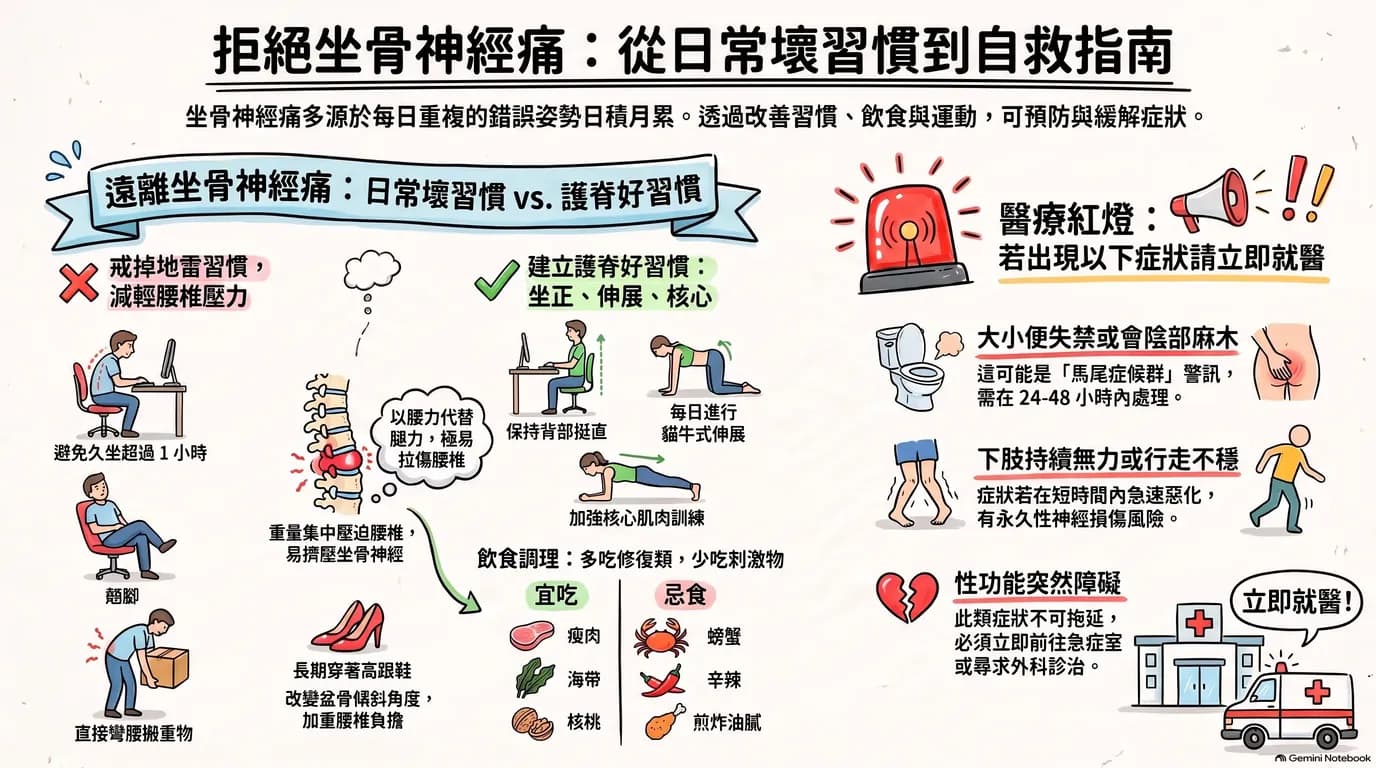
Sciatica Prevention: Bad Habits, Diet and Daily Care Tips
Sciatica isn't only about treatment — your daily habits and diet play a big role too. In this article, Dr Wong explains which everyday habits increase your risk of sciatica, which foods may help ease it, and simple daily habits that reduce the chance of it coming back.
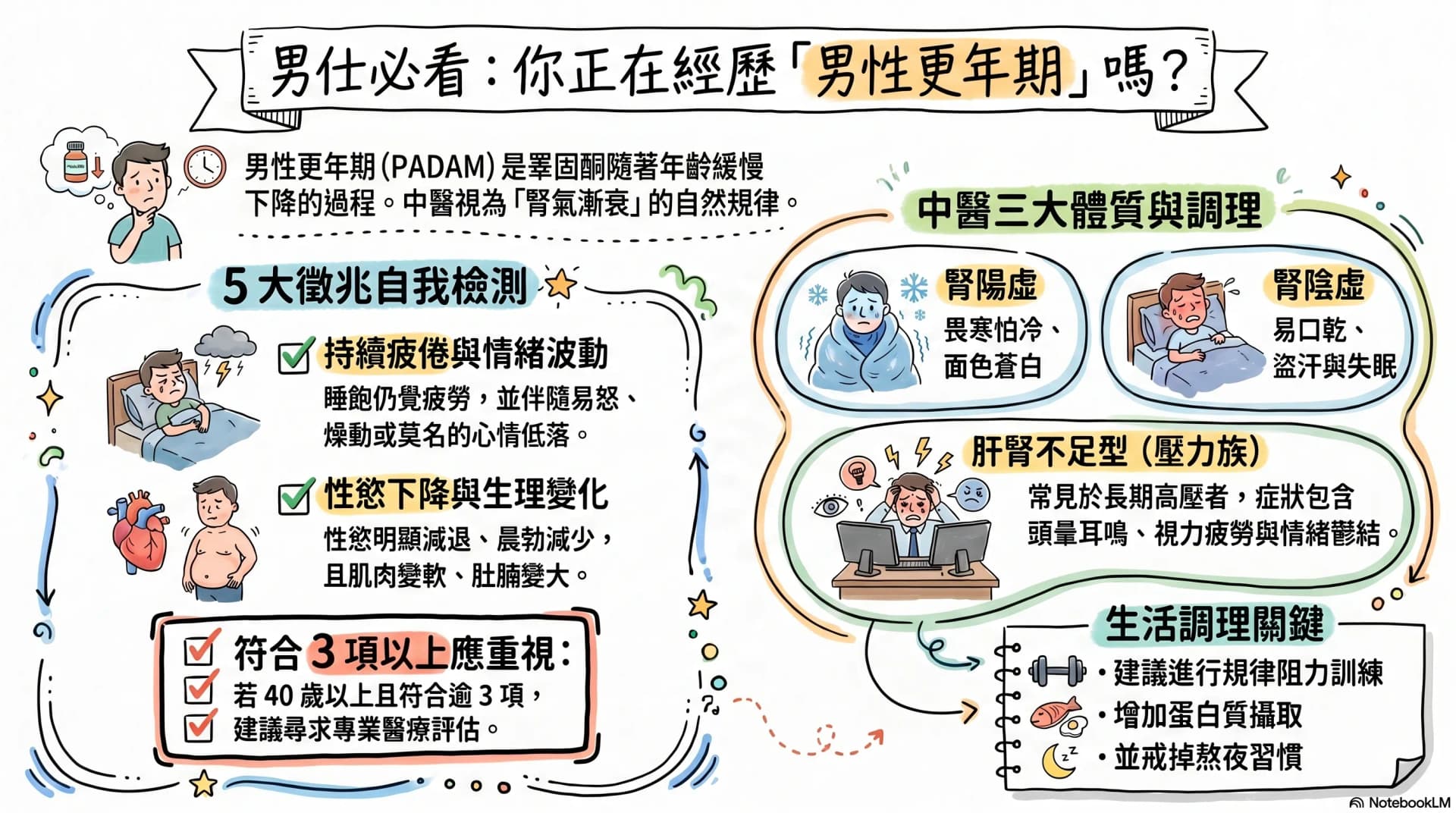
Male Menopause Through the TCM Lens: 5 Signs in Men Over 40
Unexplained fatigue, irritability, lower libido, poorer sleep and a growing belly after 40 are not just ageing or work stress — they may be male menopause. This article begins with a five-sign self-check, sets out three TCM patterns (kidney-yang deficiency, kidney-yin deficiency, liver-and-kidney insufficiency) with matching improvements, and compares the two treatment routes — testosterone replacement therapy versus TCM constitutional care.
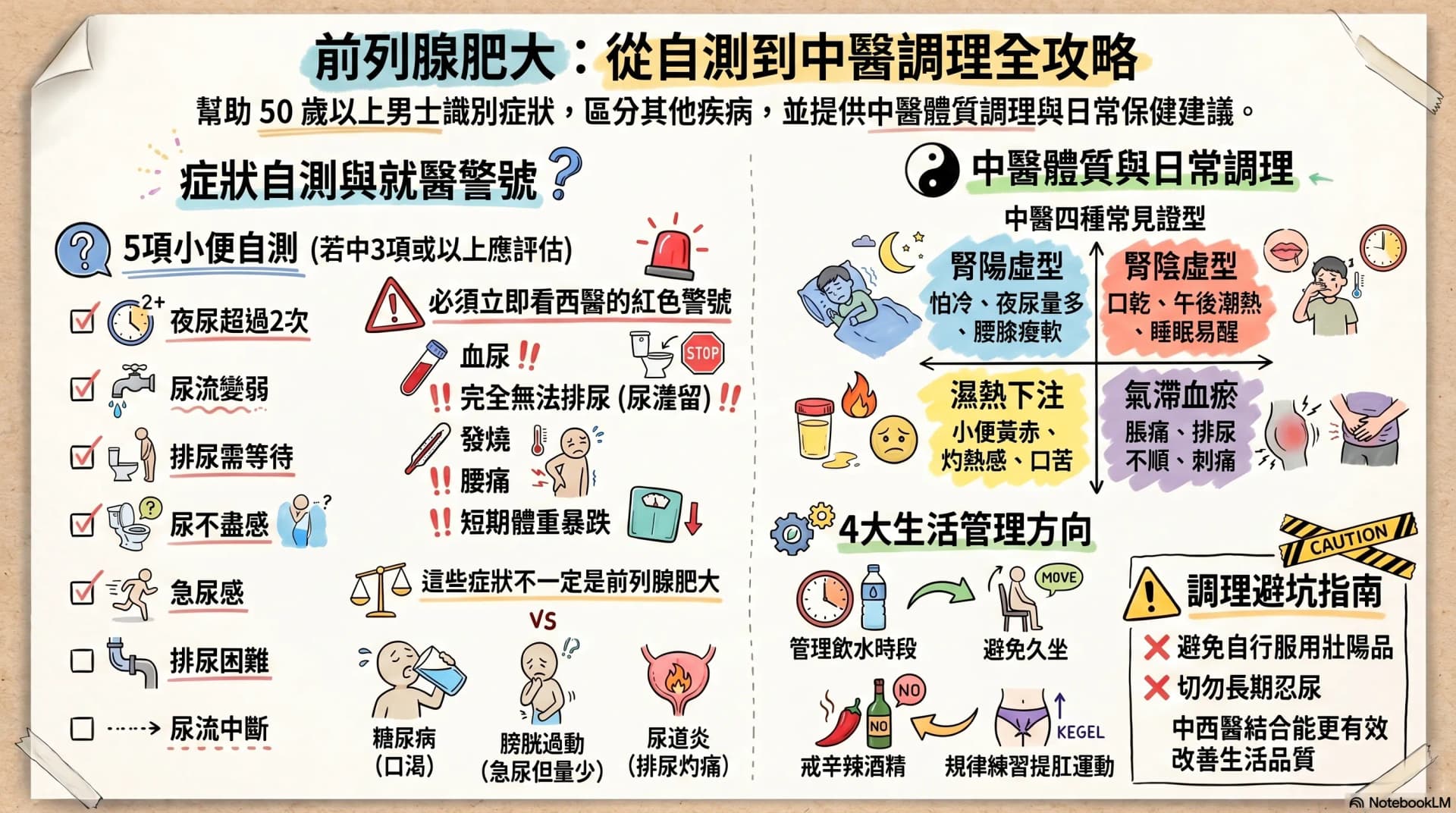
Enlarged Prostate: Are Nocturia and a Weak Stream Warning Signs?
After age 50, urinary frequency, nocturia, a weaker stream and having to urinate in stages may not simply be ageing. This article opens with a 7-symptom self-check, then sets out warning signs that warrant seeing a Western doctor immediately, four TCM constitution patterns, and four daily care directions any man can start with — helping you or your father decide the next step.