Premature Ejaculation Is Not Poor Performance: 4 TCM Patterns
Many men who feel they "do not last long enough" worry their sexual performance is poor, but premature ejaculation and sexual performance are two separate things. This article uses the ISSM medical definition plus a 4-item self-check to help you tell whether you have true PE, breaks down 4 TCM constitutional patterns (psychogenic, kidney deficiency, liver-qi stagnation, damp-heat in the lower burner), and outlines 5 evidence-based ways to improve control and lasting time — including behavioural training, pelvic floor exercises, lifestyle adjustments and personalised TCM care.
Medical review: Dr. Tai Wai Ho, Samson,Registered Chinese Medicine Practitioner #008702
1-Minute Quick Answer
Premature ejaculation is not the same as poor sexual performance — it is about ejaculatory control, separate from erection firmness and libido. This guide (reviewed by Dr Tai, CMCHK 008702) uses the ISSM definition and a 4-item self-check to tell true PE apart, breaks down 4 TCM patterns, and offers 5 evidence-based ways to improve control.
Premature Ejaculation Is Not the Same as Poor Sexual Performance: A TCM Breakdown of 4 Constitutions and Improvement Strategies
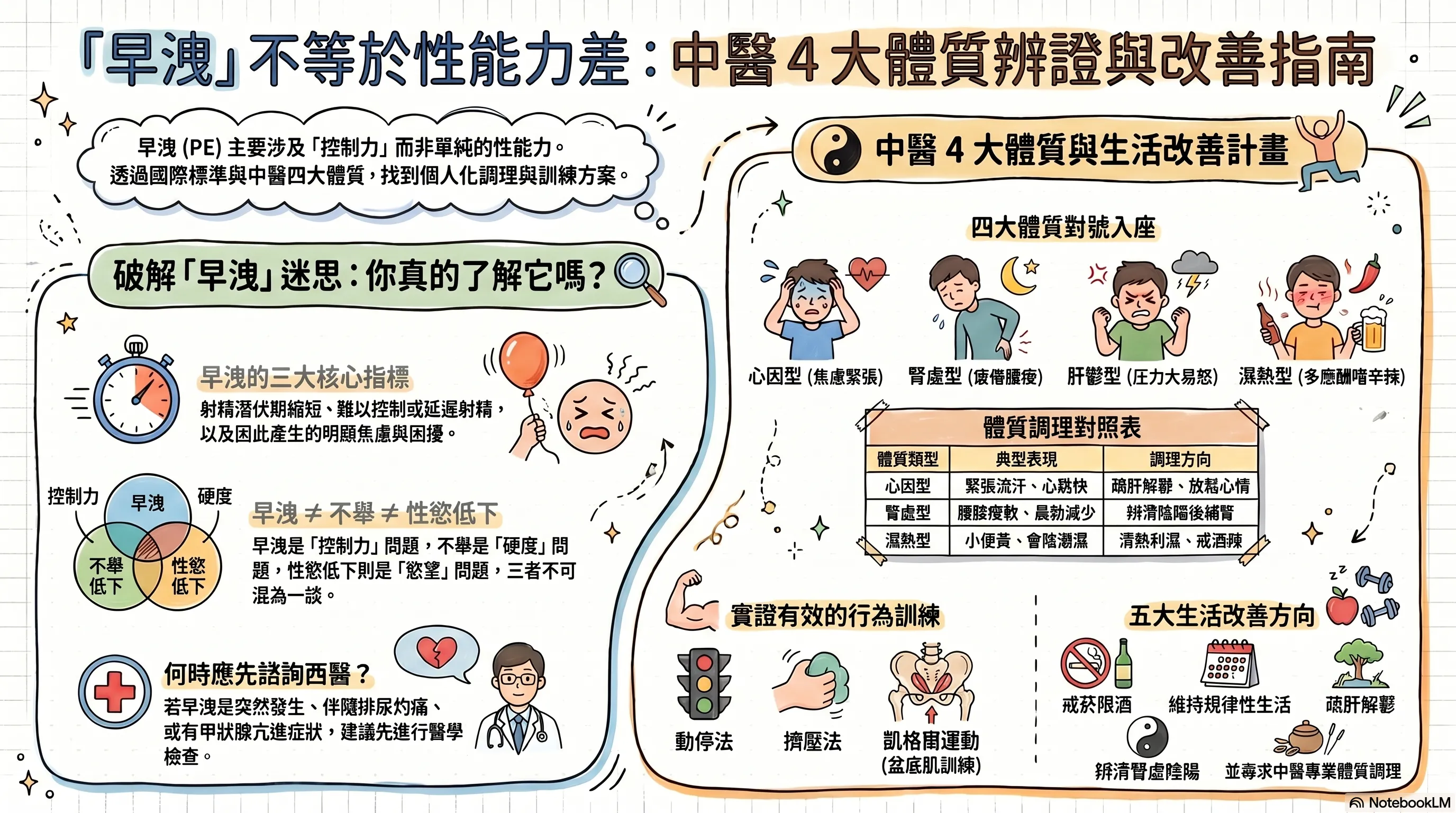 For quick reference, this image was generated by NotebookLM. Some Chinese characters may not render perfectly; we appreciate your understanding.
"You and your partner have tried many times, but every encounter ends too quickly — and you start to wonder whether your sexual performance is the problem." This is a question many men aged 25 to 45 quietly search for online.
In reality, premature ejaculation (PE) is not the same as poor sexual performance. The International Society for Sexual Medicine (ISSM) classifies PE as lifelong (present from the very first sexual experience) or acquired (previously normal, recently shorter), and uses intravaginal ejaculatory latency time (IELT) as the main objective marker. Under the strict ISSM definition, the prevalence is about 1 to 3 per cent; based on self-report, it can reach 20 to 30 per cent. In other words, far more men feel they "do not last long enough" than actually meet the clinical definition of PE.
This article will help you distinguish four things: whether you genuinely have PE, whether it is lifelong or acquired, how TCM divides PE into 4 constitutional patterns, and which evidence-based methods can improve control and lasting time. By the end, you will be in a better position to identify your own situation and decide what to do next.
Do You Really Have PE? Start with This Self-Check
The ISSM medical definition of PE includes three core elements, all of which must be present:
- A markedly shortened ejaculatory latency (IELT under 1 minute is severe; under 3 minutes is mild)
- Inability to control or delay ejaculation
- Personal distress, anxiety or avoidance of sexual intimacy
If it is only the occasional "a bit too quick", you generally retain control, and there is no significant distress, you may not meet the clinical definition of PE.
A 4-Item Self-Check
Assess your overall situation over the past six months:
- Most of the time, can you last beyond 3 minutes?
- During sex, can you actively control when ejaculation occurs?
- Does the encounter end too soon on most occasions?
- Does this happen with every partner and every situation?
How to interpret your answers:
- Items 1 and 2 "yes", items 3 and 4 "no" — likely occasional rather than true PE
- Items 1 and 2 "no", item 3 "yes", item 4 "yes" (always been this way) — suggestive of lifelong PE
- Items 1 and 2 "no", item 3 "yes", item 4 "no" (only recently worse) — suggestive of acquired PE
Acquired PE is worth investigating for physical causes — for example erectile dysfunction, chronic prostatitis, hyperthyroidism or medication side-effects.
PE Is Not the Same as Poor Sexual Performance — Distinguish These 3 Things
In Hong Kong, these three concepts are often lumped together, but medically they are three separate issues:
| Area | What the problem really is |
|---|---|
| Premature ejaculation | A control issue — can you actively delay the timing of ejaculation? |
| Erectile dysfunction (ED) | A hardness issue — can you achieve and maintain a firm enough erection? |
| Low sexual desire | A desire issue — is your interest in sex still there? |
A man with PE may have good erections, normal libido and otherwise stable sexual function — the issue is purely the timing of ejaculation. This is why "PE does not equal poor sexual performance" — the focus should be on control, not on "tonifying the kidneys".
When to See a Western Doctor First
The following situations call for a Western medical assessment before starting TCM care:
- A sudden change from normal to early ejaculation, accompanied by erection problems
- Burning on urination or perineal discomfort (possible urinary infection or prostatitis)
- Recently started new medication (some blood pressure drugs and SSRIs can affect ejaculation)
- Co-occurring features of hyperthyroidism (fast heartbeat, sudden weight loss, hand tremor)
- Severe emotional distress or signs of depression
TCM Sees PE as 4 Main Constitutional Patterns
In clinic, Dr Tai Wai-ho identifies the dominant pattern by combining symptoms, tongue findings and pulse.
1. Psychogenic pattern (most common in lifelong PE and younger patients)
Life context: anxiety, tension, early days of a new relationship, very high self-expectations.
Typical features: fast heartbeat and sweating during sex; easily irritable and tense at work. In TCM terms, this falls within liver-qi stagnation.
Treatment direction: soothe the liver and relieve constraint (smooth the flow of liver qi and ease emotional tension).
2. Kidney deficiency pattern (more common with age or frequent sexual activity)
Life context: excessive sexual activity, long-term late nights damaging the kidneys.
Typical features: fatigue, soreness in the lower back and knees, fewer morning erections, increased night-time urination.
Sub-patterns:
- Kidney-yang deficiency: cold intolerance, cold hands and feet, marked fatigue after sex
- Kidney-yin deficiency: dry mouth, tidal heat sensations, night sweats, restless sleep
Treatment direction: warm and tonify kidney yang for yang deficiency; nourish kidney yin for yin deficiency.
3. Liver-qi stagnation pattern (common in high-pressure professionals)
Life context: long-term work stress, tense emotions, easily irritable.
Typical features: distension in the chest and flanks, frequent sighing, light sleep, short temper.
Treatment direction: soothe the liver and regulate qi (smooth qi flow and calm emotions).
4. Damp-heat in the lower burner pattern (common in heavy drinkers and those who favour spicy food)
Life context: frequent social drinking, fried and spicy food.
Typical features: bitter taste in the mouth, dark-yellow urine, perineal dampness, yellow greasy tongue coating.
Treatment direction: clear heat and drain damp from the lower burner.
5 Directions to Improve Sexual Performance and Lasting Time
1. Behavioural training: start-stop and squeeze techniques
ISSM and the American Urological Association (AUA) recommend these as first-line non-drug approaches:
- Start-stop: when you feel ejaculation approaching, pause all stimulation for about 30 seconds to 1 minute; resume once the urge subsides. Cycle through 3 to 4 times per encounter.
- Squeeze: when ejaculation feels near, your partner (or you) gently squeezes the junction of the glans and coronal sulcus with thumb, index and middle fingers for 10 to 20 seconds until the urge fades, then continues.
A 2015 systematic review by Cooper and colleagues in Sexual Medicine reported that behavioural therapy combined with pharmacological or psychological interventions improved IELT by up to 8 times compared with waiting-list controls alone.
2. Pelvic floor muscle training (Kegel exercises)
In a 2014 study by Italian researchers published in Therapeutic Advances in Urology, 40 men with lifelong PE underwent 12 weeks of pelvic floor rehabilitation; mean IELT rose from 39.8 seconds to 146.2 seconds, and 55 per cent of patients saw symptomatic improvement.
How to do it: imitate the action of "holding in urine", contracting the muscles of the anus and perineum for 5 seconds and relaxing for 5 seconds; 10 repetitions per set, 3 sets per day. You can do this on the bus or while watching television.
3. Quit smoking, limit alcohol, cut down caffeine
- Alcohol: in the short term it can lower anxiety and seem to prolong intercourse, but long-term it suppresses testosterone and damages the vascular endothelium, ultimately worsening both erection and ejaculatory control.
- Smoking: harms endothelial function and is directly linked to ED.
- Excess caffeine: stimulates the sympathetic nervous system, which can heighten tension during sex and bring ejaculation forward.
4. Regular sexual activity rather than long-term abstinence
Prolonged abstinence tends to worsen control. A regular sex life (including masturbation) helps maintain both physical and mental familiarity with sexual response and self-regulation.
5. From a TCM angle: personalised care for each constitution
| Constitution | Direction of care |
|---|---|
| Psychogenic | Soothe the liver and relieve constraint plus relaxation training; kidney tonics are not needed |
| Kidney deficiency | Distinguish yin from yang before warming or nourishing; do not self-tonify blindly |
| Liver-qi stagnation | Soothe the liver and regulate qi plus a stable daily rhythm |
| Damp-heat | Clear heat and drain damp; avoid alcohol and spicy food; self-tonifying will aggravate |
Approaches to Avoid
- Self-purchased anaesthetic delay sprays: while AUA guidelines list topical anaesthetics as one first-line option, professional prescribing differs greatly from random over-the-counter use. Long-term use can numb your partner and worsen psychogenic PE.
- Using alcohol as "courage": it may feel like prolongation in the short term, but long-term it harms vascular and endocrine function.
- Dubious "potency + delay" supplements: the Hong Kong Department of Health has issued repeated warnings in recent years that some male-enhancement products contain undeclared sildenafil or tadalafil, which can cause a dangerous blood pressure drop when taken with heart medications.
- Wearing two condoms to "reduce sensitivity": apart from increasing breakage risk, there is no evidence that this prolongs IELT.
When to Consider a TCM Constitutional Assessment
A TCM assessment is particularly suitable when:
- You have done behavioural training for a month with no clear improvement
- You also have constitutional features such as fatigue, night-time urination or irritability
- You want to avoid long-term reliance on Western medication (such as SSRIs)
- You want to improve overall sexual function rather than treat a single symptom
How Aspira TCM Assesses Male PE
When Dr Tai Wai-ho sees a patient with PE, he reviews:
- Whether the PE is lifelong or acquired, and how long it has been present
- Estimated IELT range, and whether erection problems are also involved
- Your partner's response, and whether there is significant personal distress
- Diet, sleep, stress and exercise habits
- Existing medical conditions and current Western medications
- Tongue, pulse and other whole-body constitutional features
After this assessment, he will explain clearly which TCM pattern is dominant and whether a urology or psychiatric referral is needed first. TCM prescriptions are individualised by constitution and combined with behavioural and pelvic floor training as part of an overall plan.
FAQ
Q1: Does wearing two condoms help me last longer?
There is no evidence that this prolongs IELT. It increases the risk of breakage, makes sex feel unnatural, and in turn worsens psychogenic PE.
Q2: Do delay sprays work?
Sprays containing topical anaesthetics (lidocaine or prilocaine) are listed in AUA guidelines as one first-line option, but should be used under medical supervision. Self-purchasing dubious delay sprays risks numbing your partner and causing skin allergies; this is not recommended.
Q3: Will PE resolve on its own?
If acquired PE has an identifiable cause (such as stress, anxiety about a new relationship, or a recently started medication) that can be addressed, it may improve on its own. Lifelong PE typically requires active intervention — behavioural training, pelvic floor exercises, medication or TCM care.
Q4: Can medication cure PE completely?
SSRIs can prolong IELT, but the benefit is "while you take it" rather than a cure. Once the medication stops, the effect usually fades. Combining behavioural training, pelvic floor exercises and lifestyle adjustments gives a more stable overall outcome.
Q5: Is PE related to the prostate?
Acquired PE may sometimes be linked to chronic prostatitis. If you also have urinary discomfort, perineal pain or urinary frequency, see a urologist first to rule out prostatitis.
Q6: How long does a TCM course of care usually take?
It depends on constitution and cause. The psychogenic pattern may show improvement in 4 to 8 weeks; the kidney deficiency pattern generally needs more than 3 months. Combined with behavioural and pelvic floor training, results are typically more stable than medication alone.
Medical review: Dr Tai Wai-ho | Registered Chinese Medicine Practitioner (Reg. No.: 008702) Aspira TCM Clinic
Want a Combined Plan? Book a Consultation
If you would like an integrated plan combining behavioural training, pelvic floor exercises and constitutional care, you are welcome to book a consultation with Dr Tai.
How to book:
- WhatsApp: Book here
- Phone: 2110 9337
- Address: Unit 2706, Saxon Tower, 7 Cheung Shun Street, Lai Chi Kok
Disclaimer: This article is for health-education reference only and cannot replace individual consultation, examination, medication or treatment advice. If you have a related medical condition, persistent symptoms or are currently taking medication, please follow your doctor's instructions for follow-up and monitoring; any medication change should be discussed with your treating doctor first.
References:
- The Family Planning Association of Hong Kong: Common Male Sexual Health Problems — Premature Ejaculation https://www.famplan.org.hk/zh/health-info/common-male-sexual-health-problems/premature-ejaculation
- International Society for Sexual Medicine: An Evidence-Based Unified Definition of Lifelong and Acquired Premature Ejaculation https://pmc.ncbi.nlm.nih.gov/articles/PMC4184676/
- American Urological Association / SMSNA: Disorders of Ejaculation Guideline https://www.auanet.org/guidelines-and-quality/guidelines/disorders-of-ejaculation
- Cooper K et al. Behavioral Therapies for Management of Premature Ejaculation: A Systematic Review, Sexual Medicine 2015 https://onlinelibrary.wiley.com/doi/full/10.1002/sm2.65
- Pastore AL et al. Pelvic floor muscle rehabilitation for patients with lifelong premature ejaculation, Therapeutic Advances in Urology https://pmc.ncbi.nlm.nih.gov/articles/PMC4003840/
- Hong Kong SAR Government press release: Public urged not to purchase or consume male-enhancement products containing undeclared controlled ingredients (2022) https://www.info.gov.hk/gia/general/202209/28/P2022092800548.htm
Disclaimer: This article is for health education and reference purposes only and does not constitute medical advice, diagnosis, or treatment. Each patient's condition is unique and treatment outcomes vary. Please consult a registered TCM practitioner or qualified healthcare professional for health concerns.
Further Reading
Hand-picked related articles and real cases to read next.
Want to learn more? WhatsApp us for a free consultation
Book via WhatsAppExplore our full range of treatments: Traditional TCM Services
Related Articles
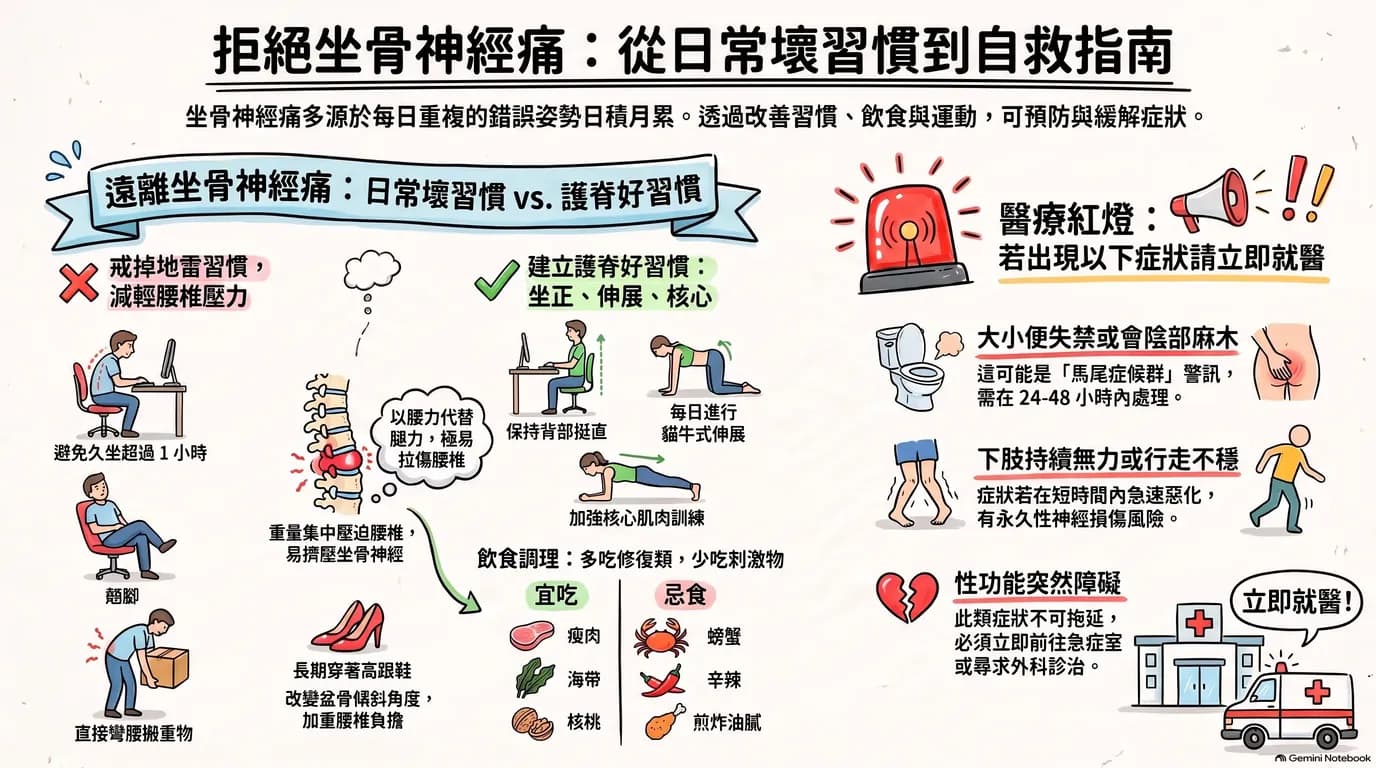
Sciatica Prevention: Bad Habits, Diet and Daily Care Tips
Sciatica isn't only about treatment — your daily habits and diet play a big role too. In this article, Dr Wong explains which everyday habits increase your risk of sciatica, which foods may help ease it, and simple daily habits that reduce the chance of it coming back.
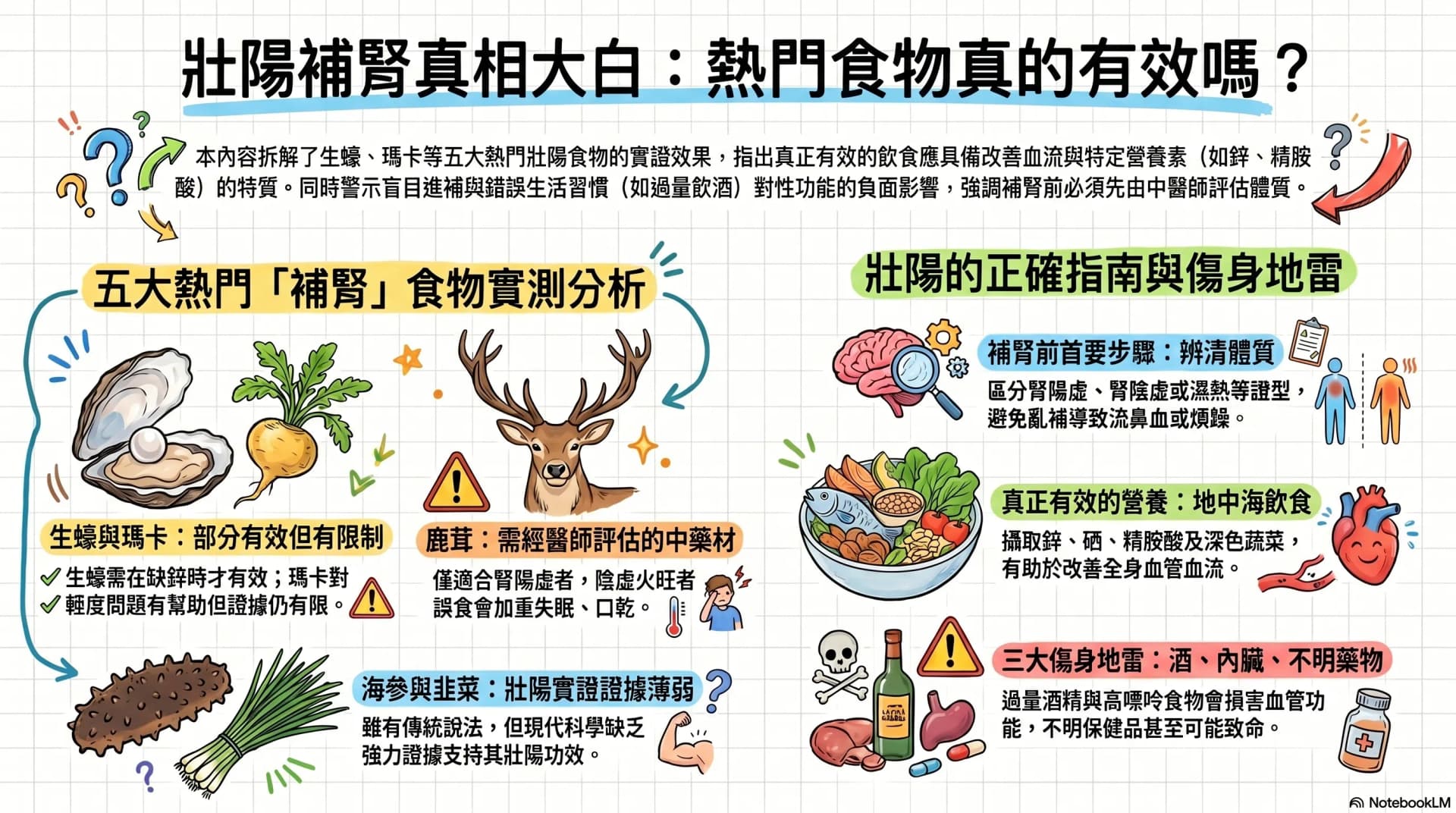
Do Oysters, Maca and Deer Antler Boost Male Vitality? 5 Myths
Do aphrodisiac foods actually work? This article opens with a rating table (effective / partly effective / effective within a TCM framework / weak evidence / no strong evidence), reviews the Chinese and Western medical evidence behind oysters, maca, deer antler, sea cucumber and Chinese chives, distils the 3 shared traits of foods that genuinely support male sexual function, and flags 3 commonly eaten items that can actually harm performance.
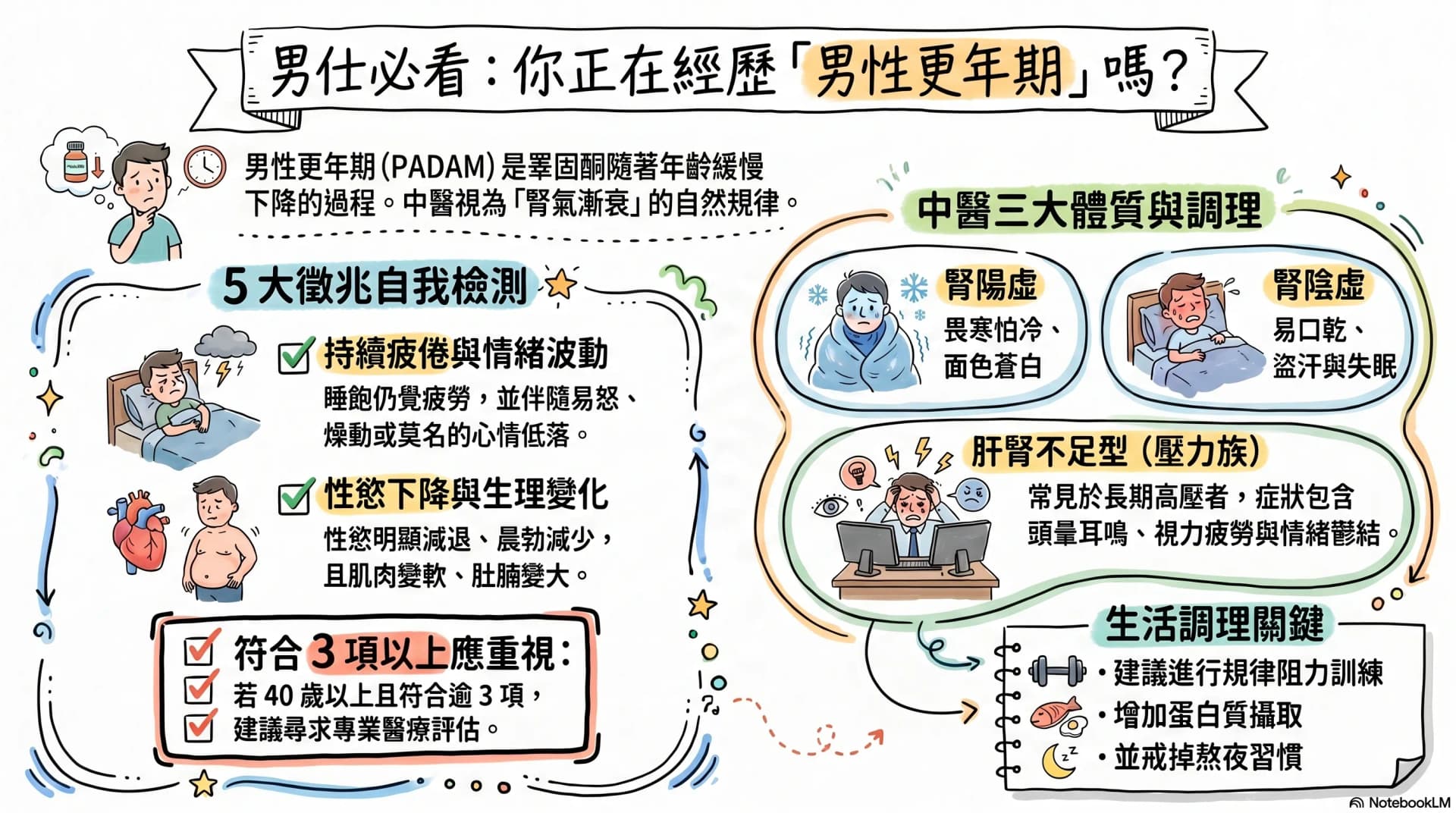
Male Menopause Through the TCM Lens: 5 Signs in Men Over 40
Unexplained fatigue, irritability, lower libido, poorer sleep and a growing belly after 40 are not just ageing or work stress — they may be male menopause. This article begins with a five-sign self-check, sets out three TCM patterns (kidney-yang deficiency, kidney-yin deficiency, liver-and-kidney insufficiency) with matching improvements, and compares the two treatment routes — testosterone replacement therapy versus TCM constitutional care.