Is My Child Growing Tall Enough? A TCM View of Growth and "Zhuan Gu"
When a child looks shorter than their peers, or grows only a little each year, parents naturally wonder about "bone transformation". This article first explains what normal growth is (the growth curve) and when to see a paediatric endocrinologist, then covers the key drivers of height (genetics, nutrition, sleep, exercise), and how TCM — through "the kidney governs the bones" and "the spleen and stomach are the foundation of later life" — conditions the spleen, stomach and kidney according to the stage of development. The point is to create good conditions for a child to grow, not to "force height", and no centimetre figure is promised.
Medical review: Dr. To Ching, Jenny,Registered Chinese Medicine Practitioner #009330
1-Minute Quick Answer
Worry less about how your child compares to one classmate and more about whether they grow steadily along their own curve. If the percentile drops or growth stalls, see a paediatric endocrinologist first. TCM helps with spleen-and-stomach absorption, sleep and the kidney foundation that support growth — it cannot promise extra centimetres.
Worried Your Child Is Not Growing Tall? A TCM View of Children's Growth and "Bone Transformation"
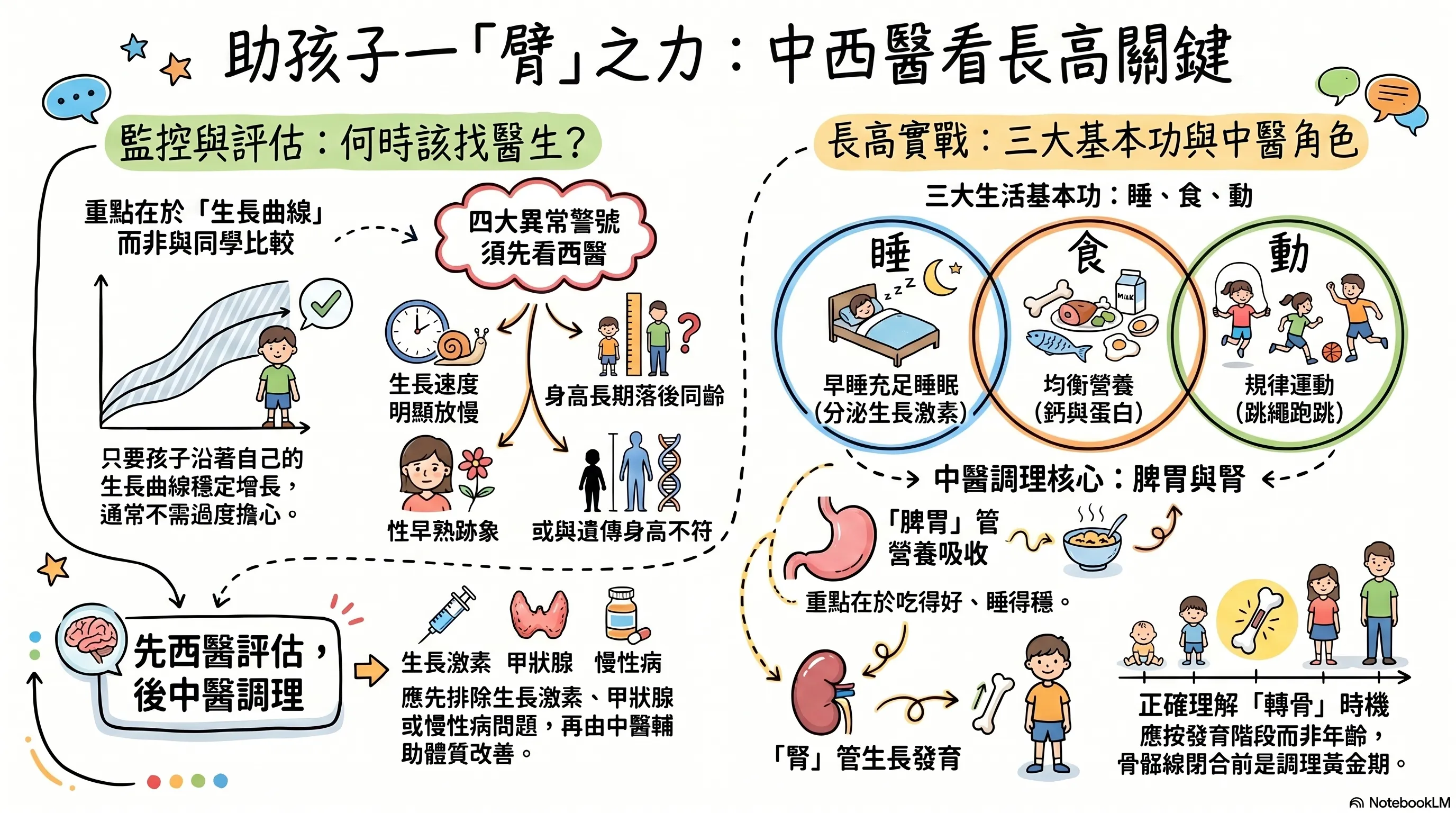 For quick reference, this image was generated by NotebookLM. Some Chinese characters may not render perfectly; we appreciate your understanding.
"How can I help my child grow a bit taller?" "Is my child too short?" Almost every parent has wondered about these. Seeing a child always at the front of the line, a head shorter than their classmates, or gaining only a little height across a whole year — that worry is very real.
What parents most want to know is really two things: how short does a child have to be before it counts as "abnormal" and a doctor is needed — and what can a parent actually do to help? Here are the conclusions up front.
What counts as "abnormal"? The point is not "how many centimetres shorter than a particular classmate", but whether the child grows steadily along their own growth curve. A child who has always sat at a shorter percentile but gains height steadily every year usually need not cause undue worry; what genuinely warrants attention is growth slowing markedly, the height percentile dropping, or signs of precocious puberty — those are the situations that should be assessed first by a paediatrician or paediatric endocrinologist.
What can parents do? The most substantial help is not a "tonic" but three basics: letting the child sleep early and enough (growth hormone is released mainly during deep sleep at night), a balanced diet with enough protein and calcium, and regular exercise. Getting these three right often matters more than any tonic.
This article works through both questions in turn, then explains how TCM views children's growth and development, what "bone transformation" actually means, and the directions in which TCM can help once a Western assessment is done.
Note: This article is general health education. If a child's height clearly lags behind their peers, or growth slows markedly or stalls, a paediatrician or paediatric endocrinologist should assess first, to check for issues such as growth hormone, the thyroid, nutrient absorption or chronic illness. TCM care cannot replace that assessment.
First, What Is "Normal Growth"?
The most common parental worry is "my child is shorter than a particular classmate". But comparison with one classmate is not enough to judge by. Every child has their own pace of growth, and what matters is the growth curve.
A child health centre or doctor uses a growth chart to track a child's height and weight as a percentile among children of the same age. Whether a child grows steadily along their own curve is more meaningful than "how many centimetres short at one moment" — a child who has always sat at a shorter percentile but grows steadily, and a child whose percentile is clearly dropping, are two entirely different situations.
The following should be assessed by a paediatrician or paediatric endocrinologist first, rather than left to conditioning:
- Height clearly lagging behind peers over the long term
- A marked slowing of growth, or barely any height gain over a period
- Height clearly out of keeping with the parents' inherited height
- Signs of precocious puberty (for example early breast development in girls, an early voice change in boys)
- A growth problem accompanied by fatigue, abnormal weight or other chronic symptoms
These need a Western workup to rule out treatable medical causes. Only once this step is done does conditioning come into the picture.
Key Drivers of Height: A Western-TCM Consensus
Whether in Western medicine or TCM, the following factors are recognised as shaping a child's eventual height:
- Genetics: a child's final height is largely set by what they inherit from their parents — this is the foundation.
- Nutrition: a balanced diet, enough protein and calcium, no fussy eating, and not filling up on snacks and sugary drinks.
- Sleep: growth hormone is released mainly during deep sleep at night, so an early bedtime and enough sleep matter greatly.
- Exercise: moderate exercise such as skipping or ball games helps the bones and overall development.
- Emotional wellbeing: long-term stress and emotional difficulty can also affect growth.
Getting the basics of sleep, nutrition and exercise right is often far more substantial and important than any "tonic".
How TCM Views Children's Growth
TCM views a child's growth largely around two organs: the kidney and the spleen and stomach.
"The kidney governs the bones" and "the kidney governs growth and development" — TCM regards the kidney as closely tied to bone growth and overall development. "The spleen and stomach are the foundation of later life" — the nutrition a child eats must be transformed and absorbed by the spleen and stomach to become what the body needs; when spleen-and-stomach function is weak, a child often "eats but absorbs poorly", with a poor appetite, easy fatigue and a sallow complexion.
So in TCM, looking at a child's growth is not simply about "tonifying" — it is about whether the child's spleen and stomach absorb well and whether the kidney's developmental foundation is sufficient, and then conditioning accordingly.
What Is "Bone Transformation", and When?
"Bone transformation" (zhuan gu) is a common folk term, generally referring to the period around puberty — when a child enters a phase of rapid growth — and to making the most of that window to condition the constitution. Several points need to be clear:
- It is not "the earlier and the more, the better". Tonifying too early or too heavily is not necessarily beneficial and can even be counterproductive.
- Not every child needs it. A child growing normally and steadily along their own curve may not need special conditioning.
- It is not "take it and grow by so much". The real growth window is set by the stage of development; once the growth plates close, height no longer increases.
- Timing should follow the child's actual stage of development, assessed by a registered TCM practitioner — not applied mechanically by age.
In other words, TCM "bone transformation" care is, in substance, conditioning the spleen, stomach and kidney according to the child's developmental stage and improving absorption and sleep, to create better conditions for the child's own growth — not to "force height", and certainly not to promise "how much they will grow".
What TCM Can Do
Once a Western workup has excluded pathological causes and the child falls within a general growth range, the directions of TCM care are mainly:
- Strengthening the spleen: improving absorption and appetite so the nutrition a child eats is genuinely put to use.
- Tonifying the kidney: supporting the foundation of growth and development, in step with the developmental stage.
- Improving sleep: helping a child sleep soundly and enough, which favours night-time growth.
In short, TCM helps with "eating well, sleeping well, absorbing well". The methods include Chinese herbs (with doses adjusted to the child's age and developmental stage), paediatric tui-na and acupoint care. The exact formulas are decided by a registered TCM practitioner; this article does not list formula names or doses.
To be candid: height is led by genetics and the stage of development, and TCM care cannot guarantee a number of centimetres gained, nor can it replace a balanced diet, enough sleep and exercise. What it can do is help condition those conditions when a child's spleen-and-stomach absorption is weaker or sleep is poorer.
What Parents Can Do
- An early bedtime and enough sleep: a fixed bedtime and adequate sleep hours are the most substantial help for growth.
- A balanced diet: enough protein and calcium, no fussy eating; fewer snacks and sugary drinks.
- Regular exercise: skipping, ball games and running-and-jumping activities help bone development.
- Reduce stress: give a child enough rest and emotional space.
- Track height regularly: measure and record every few months, watching whether the child grows steadily along their own curve; if growth slows markedly, seek care early.
When to See a Western Doctor First
As set out at the start, the following should be assessed by a paediatrician or paediatric endocrinologist first:
- Height clearly lagging behind peers over the long term
- A marked slowing of growth, or a stall
- Height clearly out of keeping with the parents' inherited height
- Signs of precocious puberty
- A growth problem accompanied by fatigue, abnormal weight or other chronic symptoms
These need a Western workup and diagnosis; TCM can then support conditioning from the spleen-stomach and kidney angle once the Western assessment is done.
How Aspira TCM Clinic Helps
When Dr To sees an enquiry about a child's growth and development, the first visit generally involves:
- Understanding the child's growth record, diet, sleep, exercise and developmental stage, and whether a Western assessment has been done
- Using tongue, pulse and the four examinations to gauge spleen-and-stomach absorption and the constitution
- Setting an herbal and/or paediatric tui-na plan according to the child's age and developmental stage
- Going through key lifestyle points on sleep, diet and exercise
- If a child's growth looks clearly abnormal, advising a paediatric or paediatric-endocrinology assessment first
Dr To does not market this care with "guaranteed height" claims; the role of TCM is to help a child eat well, sleep well and absorb well, creating better conditions for their own growth.
FAQ
Q1: My child is shorter than classmates — is something wrong?
Not necessarily. Every child has their own pace; what matters is the growth curve — whether they grow steadily along their own percentile is more meaningful than "shorter than a particular classmate". Only if the height percentile clearly drops, or growth slows markedly, is a doctor needed first.
Q2: Is "bone transformation" better done as early as possible?
No. Tonifying too early or too heavily is not necessarily beneficial. The timing of "bone transformation" should follow a child's actual developmental stage, assessed by a registered TCM practitioner — not applied mechanically by age, and not "the more the better".
Q3: How many centimetres can TCM care add to my child's height?
No such figure can be given. Height is led mainly by genetics and the stage of development, and TCM care cannot guarantee an amount gained. What it can do is improve spleen-and-stomach absorption and sleep, creating better conditions for the child's own growth. Any "guaranteed extra inches" claim should be treated with caution.
Q4: Can a child still grow taller with TCM after puberty?
Once the growth plates close, height no longer increases — this is a physiological limit. That is why growth conditioning is about making the most of the developmental stage; past the growth window, the goal of conditioning is no longer height.
Q5: Before seeing a TCM practitioner, what should parents do first?
Get the three basics right — an early and adequate sleep, a balanced diet and regular exercise — and track the child's growth regularly. These often matter more than any tonic; and if growth is clearly abnormal, see a Western doctor first.
— Dr To Ching | Registered Chinese Medicine Practitioner (Gynaecology, TCM Aesthetics, Thread-Embedding Weight Loss, Postpartum Belly Binding) Aspira TCM Clinic
Concerned About Your Child's Growth? Book a Consultation
If you are thinking about your child's growth and development and want to start with the spleen, stomach and constitution, you are welcome to book a consultation with Dr To.
How to book:
- WhatsApp: Book here
- Phone: 2110 9337
- Address: Unit 2706, Saxon Tower, 7 Cheung Shun Street, Lai Chi Kok
Disclaimer: This article is for general health education only and does not replace individual diagnosis, examination, medication or treatment advice. A child's height is led by genetics and the stage of development; TCM care cannot guarantee added height and cannot replace a balanced diet, enough sleep and exercise. If a child's growth clearly lags, slows or stalls, or signs of precocious puberty appear, please have a paediatrician or paediatric endocrinologist assess first.
Disclaimer: This article is for health education and reference purposes only and does not constitute medical advice, diagnosis, or treatment. Each patient's condition is unique and treatment outcomes vary. Please consult a registered TCM practitioner or qualified healthcare professional for health concerns.
Further Reading
Hand-picked related articles and real cases to read next.
Want to learn more? WhatsApp us for a free consultation
Book via WhatsAppExplore our full range of treatments: Traditional TCM Services
Related Articles
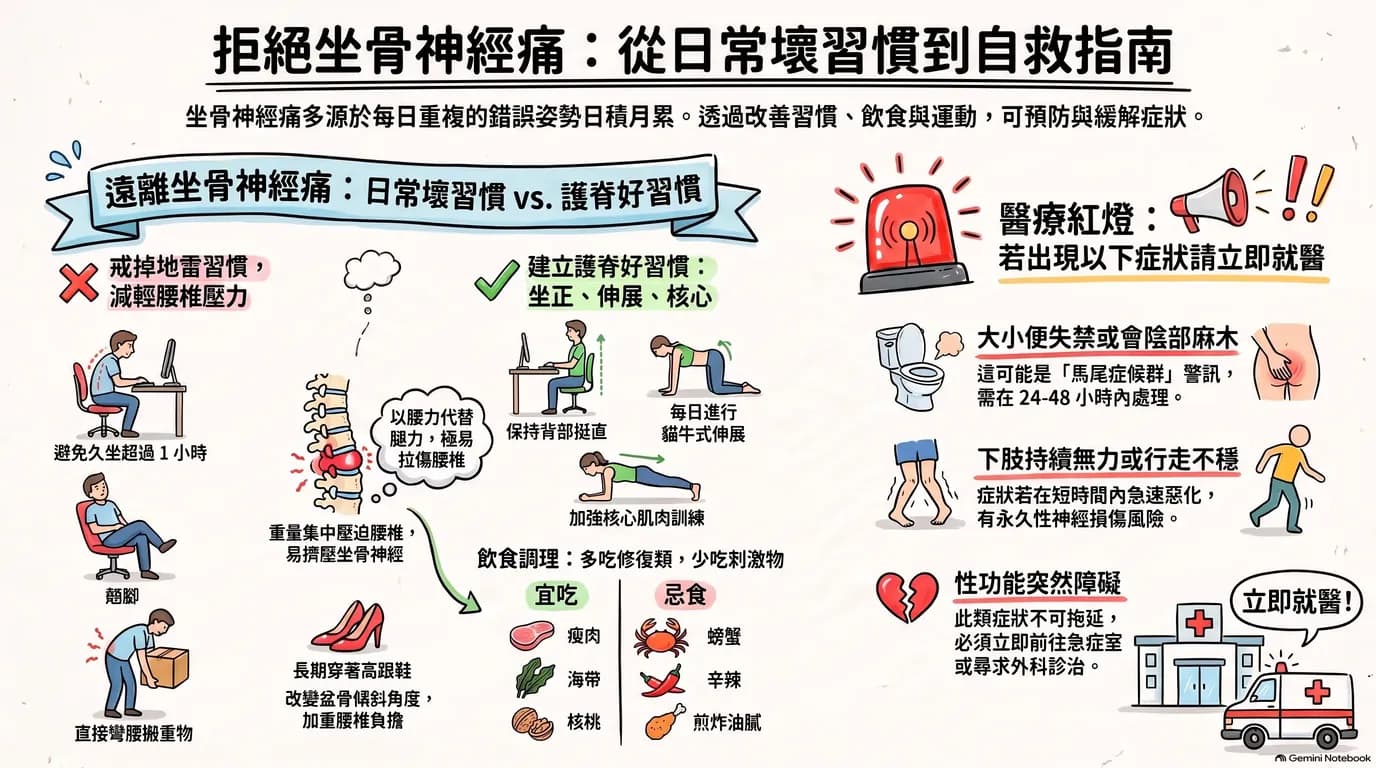
Sciatica Prevention: Bad Habits, Diet and Daily Care Tips
Sciatica isn't only about treatment — your daily habits and diet play a big role too. In this article, Dr Wong explains which everyday habits increase your risk of sciatica, which foods may help ease it, and simple daily habits that reduce the chance of it coming back.
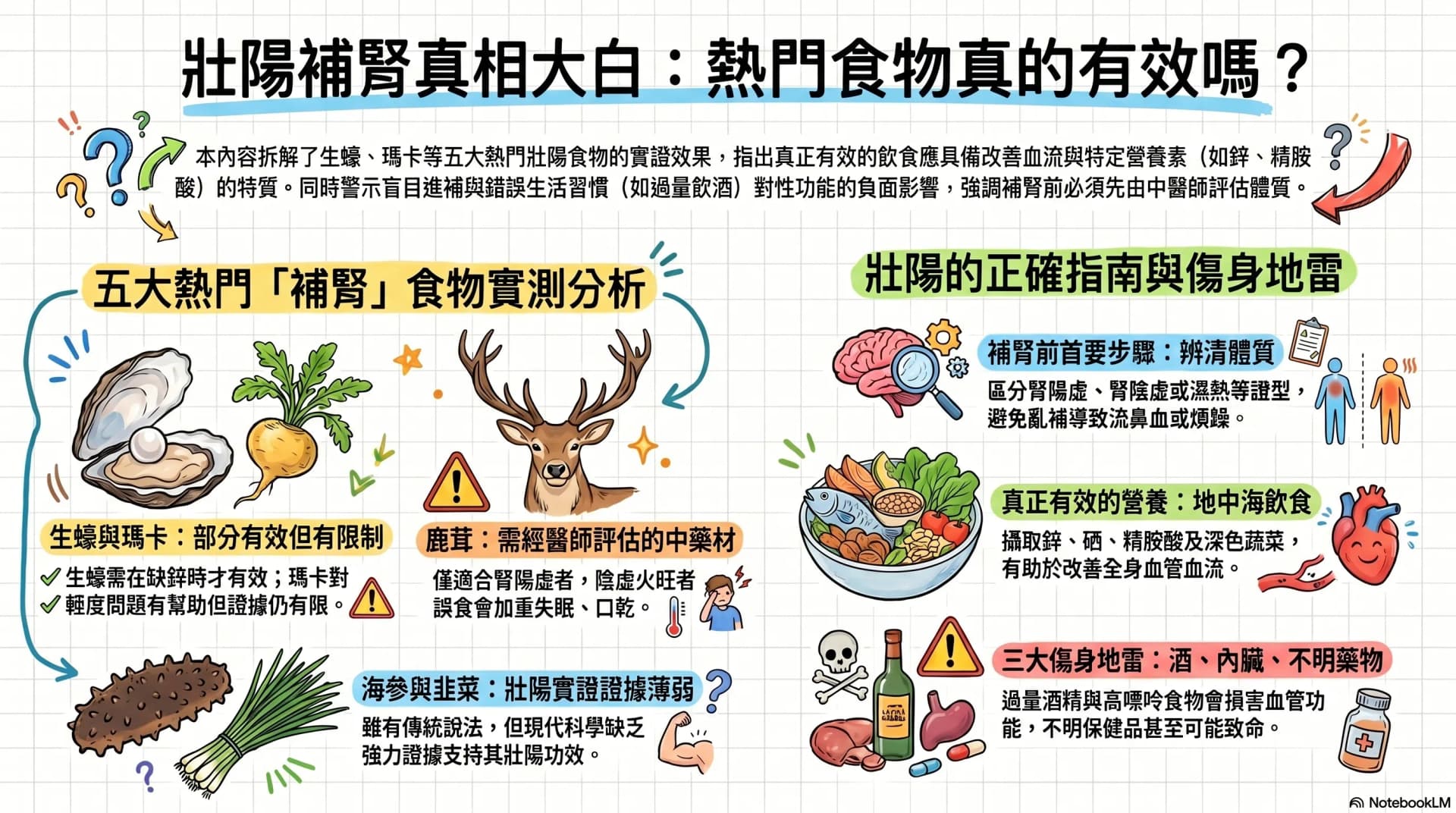
Do Oysters, Maca and Deer Antler Boost Male Vitality? 5 Myths
Do aphrodisiac foods actually work? This article opens with a rating table (effective / partly effective / effective within a TCM framework / weak evidence / no strong evidence), reviews the Chinese and Western medical evidence behind oysters, maca, deer antler, sea cucumber and Chinese chives, distils the 3 shared traits of foods that genuinely support male sexual function, and flags 3 commonly eaten items that can actually harm performance.
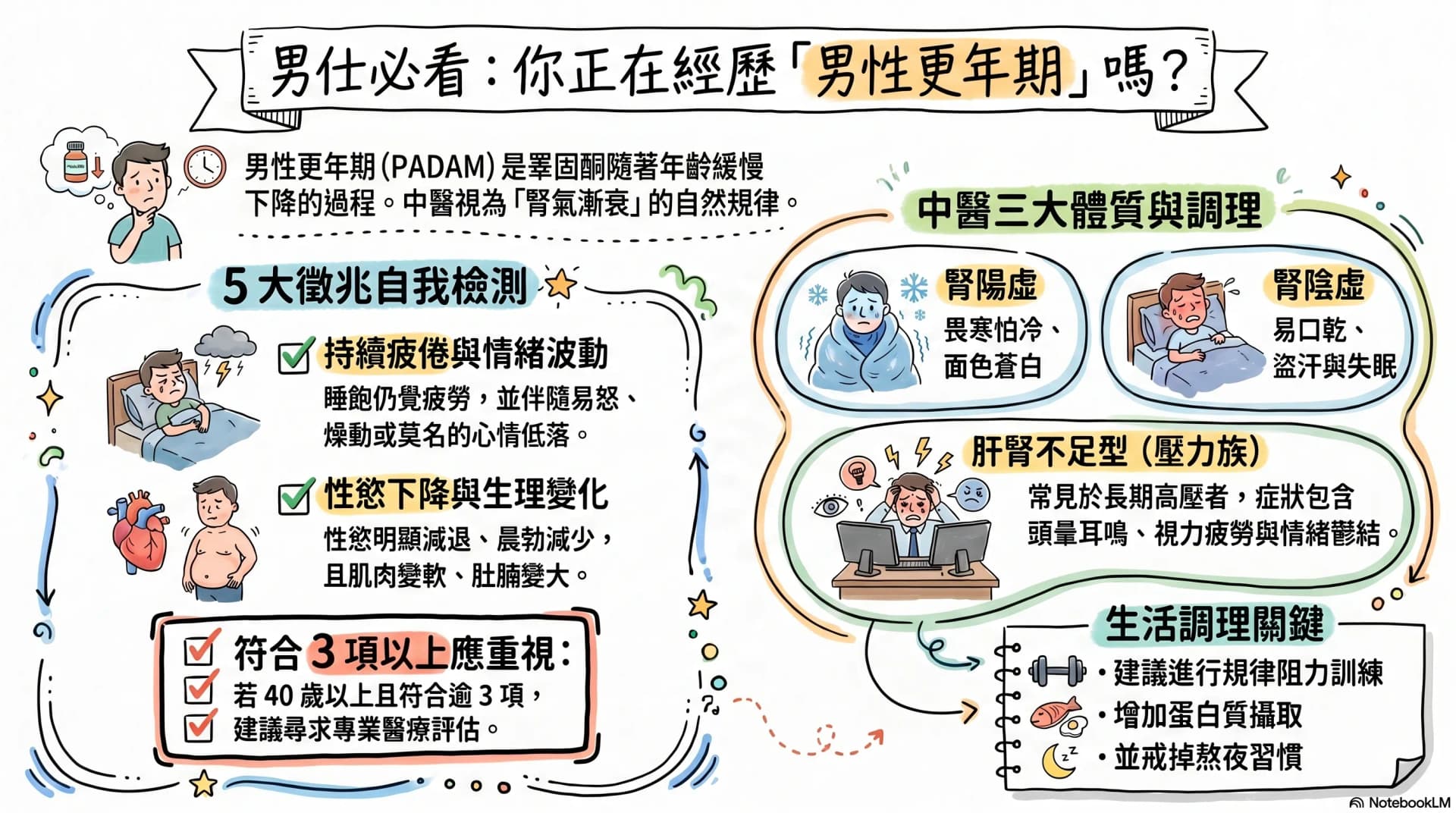
Male Menopause Through the TCM Lens: 5 Signs in Men Over 40
Unexplained fatigue, irritability, lower libido, poorer sleep and a growing belly after 40 are not just ageing or work stress — they may be male menopause. This article begins with a five-sign self-check, sets out three TCM patterns (kidney-yang deficiency, kidney-yin deficiency, liver-and-kidney insufficiency) with matching improvements, and compares the two treatment routes — testosterone replacement therapy versus TCM constitutional care.