How to Choose Cosmetic Acupuncture That Is Effective and Safe: A 2026 Hong Kong Guide to Pricing, Needles and Clinic Choice
Hong Kong cosmetic acupuncture fees range from a few hundred to over three thousand dollars per session — but why? This guide breaks down 2026 market price ranges, six factors driving the fee differences, seven questions to ask before booking, four warning signs, and a transparent line-by-line look at Aspira TCM's packages — to help you choose what genuinely suits you.
1-Minute Quick Answer
In Hong Kong, cosmetic acupuncture runs from about HK$300 to over HK$3,500 per session — driven mainly by practitioner qualifications (it must be performed by a registered TCM practitioner), needle specifications, needle-count policy, post-treatment add-ons, location and after-care. This guide covers 2026 price ranges, seven questions to ask before booking, four warning signs, and a transparent breakdown of Aspira TCM's three packages.
How to Choose Cosmetic Acupuncture That Is Effective and Safe: A 2026 Hong Kong Guide to Pricing, Needles and Clinic Choice
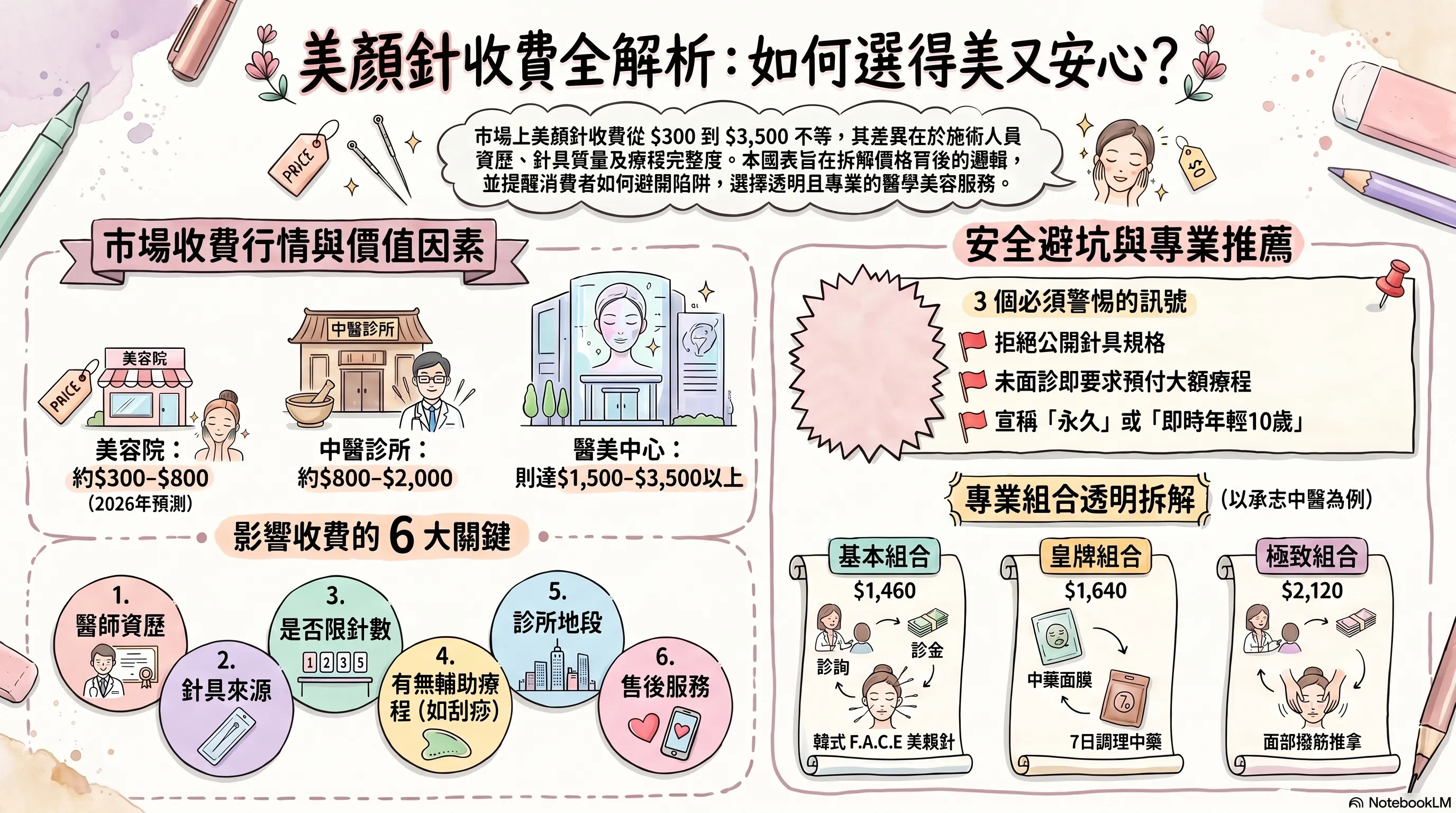 To help readers quickly grasp the content, this image was generated by NotebookLM. Some Chinese characters may not render correctly.
"How can the same 'cosmetic acupuncture' treatment cost HK$300 at one place and HK$3,500 at another?"
This is the question patients ask most often when first researching the treatment. The price range is not an illusion — providers in Hong Kong offering "cosmetic acupuncture" range from registered TCM clinics, to beauty chain centres, to beauty parlours, medical-aesthetic centres, and even some spas. The qualifications of the practitioner, the specifications of the needles, the contents of the treatment package, and the safety protocols all vary substantially.
Rather than listing the rates of specific institutions (which would be unfair and quickly outdated), this guide covers:
- The pricing landscape in Hong Kong and the logic behind it
- Six factors that drive fee differences
- Seven questions to ask before booking
- Four warning signs that warrant a second thought
- A transparent breakdown of Aspira TCM's packages
By the end, you should be able to compare clinics with greater confidence and make a choice that genuinely suits you.
Hong Kong's Cosmetic Acupuncture Pricing Landscape
The price ranges below reflect general 2026 market observations, not the official rates of any specific provider. Always confirm current pricing directly with the clinic concerned.
To clarify upfront: cosmetic acupuncture (also known as facial rejuvenation acupuncture) uses ultra-fine needles (typically 0.10mm–0.16mm) to stimulate facial acupoints and the subcutaneous layer, with the aim of promoting collagen production, improving facial circulation, and softening nasolabial lines and under-eye bags. Cosmetic acupuncture is a TCM medical procedure and must be performed by a Registered Chinese Medicine Practitioner. Treatment performed by "beauty therapists" falls outside their scope of practice.
1. Per-Session Pricing (by Provider Type)
| Provider Type | Per-Session Range | Includes Practitioner Consultation | Needle Disclosure |
|---|---|---|---|
| Small beauty parlours / spas | HK$300 – HK$800 | No, or operated by "beauty therapists" | Often unclear |
| Beauty chain centres | HK$600 – HK$1,500 | Sometimes includes a registered practitioner | Varies; ask to verify |
| Registered TCM clinics (incl. Aspira TCM) | HK$800 – HK$2,000 (with consultation) | Yes — performed by Registered TCM Practitioner | Japanese single-use ultra-fine needles (0.10–0.14mm) typical |
| Large medical-aesthetic centres | HK$1,500 – HK$3,500+ | Sometimes includes a Western doctor; TCM consultation may be separate | Varies |
2. Full Course (10–12 Sessions)
Multiplying per-session fees by 10 to 12 sessions (typically 1–2 sessions per week), a complete course generally lands between HK$5,000 and HK$30,000+, depending on provider, needle specifications, and whether parallel herbal regulation of constitution is included.
Why the Price Range Is So Wide: Six Key Factors
Factor 1: Practitioner Qualifications
The single largest source of price variation. Cosmetic acupuncture is an invasive medical procedure and, under Hong Kong's TCM regulations, must be performed by a Registered Chinese Medicine Practitioner. If a provider cannot offer the practitioner's registration number, treat that as a warning sign.
| Practitioner | Typical Market Position |
|---|---|
| Beauty therapist (no medical qualification) | Lower fees (outside scope of practice, higher risk) |
| Registered Chinese Medicine Practitioner | Mid to higher |
| Registered TCM Practitioner with dermatology or cosmetic-acupuncture experience | Mid to high |
Factor 2: Needle Specifications and Source
The needles used in cosmetic acupuncture differ from standard acupuncture needles — they must be ultra-fine (0.10mm–0.16mm) to minimise bruising and discomfort. Common options include Japanese imported single-use sterile ultra-fine needles (such as SEIRIN or DongBang), while some providers substitute standard acupuncture needles. Needle source, gauge, and whether they are single-use all directly affect safety and recovery time, and pricing reflects this.
Factor 3: Whether Needle Count Is Capped
Some providers charge per needle (e.g. HK$30–HK$80 each). The "starting price" looks low, but the final bill can exceed clinics with all-inclusive policies. Others offer "fixed needle count per area" or "full-face unlimited" policies. The pricing logic differs significantly — always compare the all-in cost per session.
Factor 4: Whether Facial Gua Sha, Post-Treatment Masks, or Other Add-Ons Are Included
Cosmetic acupuncture treatment alone is one component. More complete packages may include facial gua sha, soothing masks, or LED light therapy after the needling to ease minor post-treatment redness and support absorption. These add-ons are a significant source of price variation and also affect the overall patient experience.
Factor 5: Clinic Size, Location, and Equipment
Clinics in Central or Causeway Bay carry higher rents, which inevitably reflect in fees. Locations like Lai Chi Kok or Kwun Tong — slightly off-core but well connected — tend to offer more accessible pricing. Location is not equivalent to quality. Practitioner qualifications and treatment content should be the primary criteria.
Factor 6: After-Care and Management of Bruising or Allergic Reactions
Reputable TCM clinics have clear protocols for handling rare bruising, needle-site reactions, allergic responses, and post-treatment follow-up. Some clinics will commit to providing follow-up care at no extra charge if the issue is caused by the treatment itself. These "invisible costs" represent real protections for patients.
7 Questions to Ask Before Booking
Whichever clinic you ultimately choose, asking the seven questions below before booking is highly recommended. If a provider cannot or will not answer clearly, that itself is a signal worth noting.
Question 1: Is the Practitioner a Registered TCM Practitioner in Hong Kong? Can They Provide Their Registration Number?
Why ask: The Chinese Medicine Council of Hong Kong's registration directory is publicly searchable at cmchk.org.hk. Registered practitioners have completed accredited TCM training and clinical practice, and are subject to professional standards.
An ideal answer: The clinic should readily provide the practitioner's name and registration number, and welcome verification.
Question 2: What Needles Are Used? Where Are They Manufactured? Are They Single-Use and Sterile?
Why ask: The brand, gauge, and single-use status of the needles directly affect safety, comfort, and recovery. Reusing needles carries serious infection risk and must be avoided entirely.
An ideal answer: A clear statement of the needle brand (e.g. Japanese SEIRIN), gauge (e.g. 0.12mm), country of manufacture, and confirmation of single-use sterile packaging discarded after use.
Question 3: How Many Needles Are Used per Session? Are Additional Needles Charged Separately?
Why ask: This directly affects the actual cost. If each needle is billed individually, the practitioner's professional judgement may be subtly influenced by "needle economy" considerations.
An ideal answer: A clearly stated policy such as "unlimited needles for full-face," "fixed count per acupoint," or "additional area +HK$X" — with no hidden charges.
Question 4: Are Consultation and Herbal Medicine (Where Indicated) Included?
Why ask: From a TCM perspective, skin condition is closely linked to internal constitution (qi and blood, spleen and stomach, liver qi stagnation). Needling alone, without addressing constitution, often produces only short-lived results. More comprehensive plans pair acupuncture with oral herbal medicine.
An ideal answer: A clear breakdown of what each package includes (e.g. "facial consultation," "herbal medicine where indicated"), and which elements are essential versus optional.
Question 5: How Many Sessions Are Recommended? How Will Progress Be Assessed?
Why ask: A reasonable cosmetic acupuncture course is typically 10–12 sessions, at 1–2 sessions per week. If a clinic pushes you toward a "one trial visit" verdict, or conversely insists you prepay for 30+ sessions, both warrant a second look.
An ideal answer: A realistic course range, the rationale for follow-up intervals, and the metrics used to track progress (facial photographs, skin condition measurements, wrinkle depth).
Question 6: How Are Bruising or Needle-Site Allergic Reactions Handled? Is There an Additional Charge?
Why ask: Although cosmetic acupuncture has a strong safety record, ultra-fine needle insertion can occasionally cause minor bruising, redness at the needle site, or, very rarely, allergic reactions. Patients want clarity on responsibility and process.
An ideal answer: A clear escalation protocol, and clarity on whether follow-up care for a treatment-related reaction is covered within the existing course.
Question 7: What Is the Cancellation and Rescheduling Policy?
Why ask: Some providers collect a deposit or holding fee. Unclear terms can lead to disputes when plans change.
An ideal answer: Clear written terms covering deposit amount, notice period for rescheduling, and refund conditions.
Four Warning Signs to Watch For
If you encounter any of the following, pause and reconsider before proceeding:
Warning Sign 1: Large Prepayments Demanded Before Any Consultation
Why concerning: Cosmetic acupuncture is a TCM medical procedure that requires a consultation by a Registered Chinese Medicine Practitioner to assess constitution, contraindications (such as pregnancy, acute facial inflammation, severe coagulation disorders, or implanted cardiac pacemakers), appropriate needle count, and course length. Charging before consultation skips the most important safety step.
Warning Sign 2: Refusal to Disclose Needle Specifications or Practitioner Registration
Why concerning: Safe medical care depends on transparency. If the clinic cannot disclose the needle brand, single-use status, or whether the practitioner is registered, the patient is essentially undergoing a medical procedure blindly.
Warning Sign 3: Claims of "Instantly Look 10 Years Younger," "Guaranteed Results," or "Permanent Effect"
Why concerning: No qualified Registered TCM Practitioner makes absolute promises like these. Cosmetic acupuncture outcomes depend on age, skin condition, constitution, and lifestyle, and effects accumulate gradually. Any "guarantee"-style or "instantly N years younger" marketing has already crossed a professional line.
Warning Sign 4: Aggressive Up-Selling of Long Courses Before Any Consultation
Why concerning: For example, on first contact pushing a "30-session package + premium herbal supplements + multiple add-ons" bundle; or repeatedly adding unrelated services at follow-up visits. Reputable clinics recommend treatment based on consultation findings and observed skin progress, not on bundle-driven sales.
Aspira TCM's Packages: A Transparent Breakdown
Our positioning is straightforward: clear, transparent, consultation first. The following outlines the structure of our cosmetic acupuncture packages:
| Package | Price | Includes | Best For |
|---|---|---|---|
| Basic Package "Introductory — Refresh Your Complexion" | HK$1,460 | Consultation + TCM cosmetic acupuncture (facial + body points) + Korean F.A.C.E acupuncture | First-time patients wanting a single-session trial to improve complexion and circulation |
| Flagship Package "Nourish Blood, Revive Skin" (most popular) | HK$1,640 (orig. HK$2,240) | Consultation + TCM cosmetic acupuncture (facial + body points) + Korean F.A.C.E acupuncture + bespoke TCM herbal facial mask + 7-day herbal regulation | The most popular choice — for patients wanting nourishment from within and skin vitality, all in one package |
| Premium Package "Whole-Person Care, Inside-Out Renewal" | HK$2,120 (orig. HK$2,620) | Consultation + TCM cosmetic acupuncture (facial + body points) + Korean F.A.C.E acupuncture + bespoke TCM herbal facial mask + 7-day herbal regulation + facial gua-sha and meridian massage | For patients seeking comprehensive care including facial meridian massage |
Note: Prices above are current rates (the Flagship and Premium packages reflect promotional pricing against the listed original prices). Please refer to Aspira TCM's latest published schedule for the most up-to-date pricing; for add-ons such as combining cosmetic acupuncture with embedding or acupuncture, enquire with the clinic.
Why We Insist on "Consultation First"
Patients new to cosmetic acupuncture often ask: "Can I just book the treatment directly?"
We require an initial consultation for three reasons:
- To screen for contraindications — pregnancy, acute facial inflammation, severe coagulation disorders, ongoing anticoagulant therapy, and implanted cardiac pacemakers are all unsuitable for cosmetic acupuncture. Treating without consultation makes safety risks difficult to control
- To assess both skin condition and internal constitution — cosmetic acupuncture outcomes correlate closely with constitutional patterns (qi and blood, spleen and stomach, liver qi stagnation). Consultation also determines whether parallel herbal therapy is indicated
- To set realistic expectations — cosmetic acupuncture produces gradual, cumulative results, not "one-and-done" effects. During consultation, the practitioner explains a realistic timeline so patients are not disappointed later
That said, "longer course is better" is never the goal. Our practitioners recommend session counts based on real need; overly intensive treatment does not accelerate results — it can over-burden the skin.
Our Commitments
Aspira TCM Clinic is located in Lai Chi Kok and is staffed by a team of five Registered Chinese Medicine Practitioners and one Registered Physiotherapist. For cosmetic acupuncture specifically, we commit to:
- All consultations and treatments performed by a Registered TCM Practitioner (registration number provided on request; verifiable at cmchk.org.hk)
- Use of Japanese imported single-use ultra-fine needles, with origin and gauge specifications disclosed
- In-person assessment first, suitability and course recommended after — no hard-sell bundles
- If cosmetic acupuncture is not right for you — for example due to pregnancy, acute facial inflammation, or severe coagulation issues — we will say so directly and suggest alternatives
- Clear, transparent pricing with no hidden fees; cancellation and rescheduling terms confirmed in writing
Our guiding philosophy is "The healer gives their all; the physician follows their conscience." For treatments that touch on appearance and self-image, honesty and professionalism matter more than closing a sale.
Want to Know If Cosmetic Acupuncture Suits You? Book a Consultation
If you are comparing clinics and want a face-to-face assessment first, you are welcome to book. Even if our assessment concludes that cosmetic acupuncture is not the right approach for you, we will tell you so.
How to book:
- WhatsApp: Book here
- Phone: 2110 9337
- Address: Unit 2706, 27/F, Saxon Tower, 7 Cheung Shun Street, Lai Chi Kok
Disclaimer: The price ranges in this article reflect general 2026 market observations in Hong Kong and are not the formal rates of any single provider; Aspira TCM's pricing follows the clinic's most recent published schedule. Every patient's constitution, skin condition, and circumstances differ, and treatment outcomes vary accordingly. This content is provided for health education and clinic-selection guidance only and does not constitute medical diagnosis or treatment advice. Please consult a Registered Chinese Medicine Practitioner before deciding on any treatment.
Disclaimer: This article is for health education and reference purposes only and does not constitute medical advice, diagnosis, or treatment. Each patient's condition is unique and treatment outcomes vary. Please consult a registered TCM practitioner or qualified healthcare professional for health concerns.
Further Reading
Hand-picked related articles and real cases to read next.
TCM Acupoint Embedding for Weight Loss: Complete Guide + FAQ
TCM acupoint catgut embedding has become a popular weight-loss option in Hong Kong, but online information varies widely. Drawing on clinical experience, Dr Au explains the mechanism, compares thread materials, identifies six common "hard-to-slim" body types, walks through the treatment procedure, and answers 11 frequently asked questions — helping you decide whether the treatment is right for you.
How Much Does TCM Treatment Cost in Hong Kong? 2026 Pricing Guide
TCM treatment costs in Hong Kong typically range from HK$120 to HK$2,000 depending on the type of treatment and condition. This guide covers pricing for herbal medicine, acupuncture, bone-setting, thread embedding, and more — plus the five key factors that affect your total cost.
Want to learn more? WhatsApp us for a free consultation
Book via WhatsAppExplore our full range of treatments: Traditional TCM Services
Related Articles
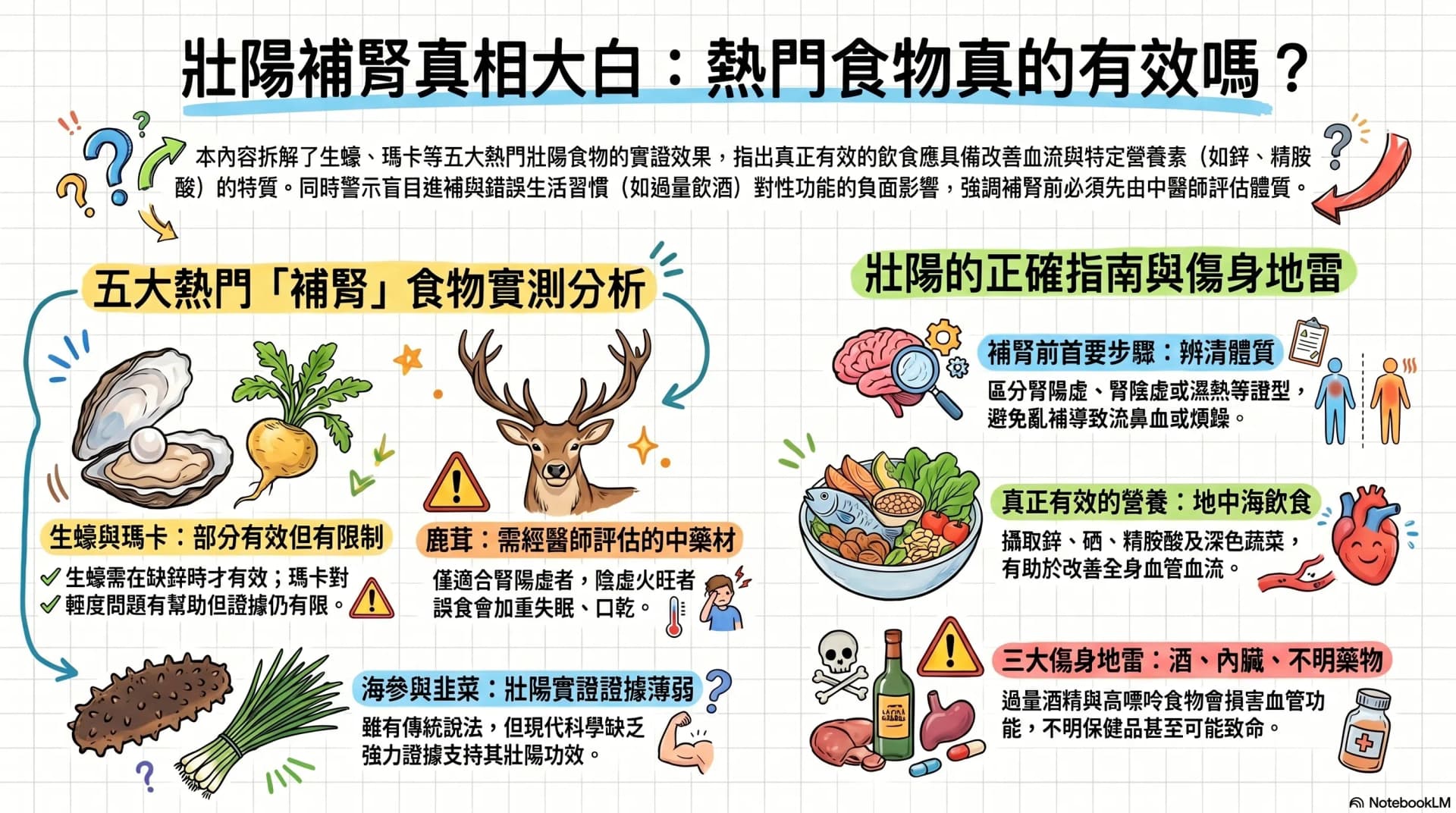
Do Oysters, Maca and Deer Antler Boost Male Vitality? 5 Myths
Do aphrodisiac foods actually work? This article opens with a rating table (effective / partly effective / effective within a TCM framework / weak evidence / no strong evidence), reviews the Chinese and Western medical evidence behind oysters, maca, deer antler, sea cucumber and Chinese chives, distils the 3 shared traits of foods that genuinely support male sexual function, and flags 3 commonly eaten items that can actually harm performance.
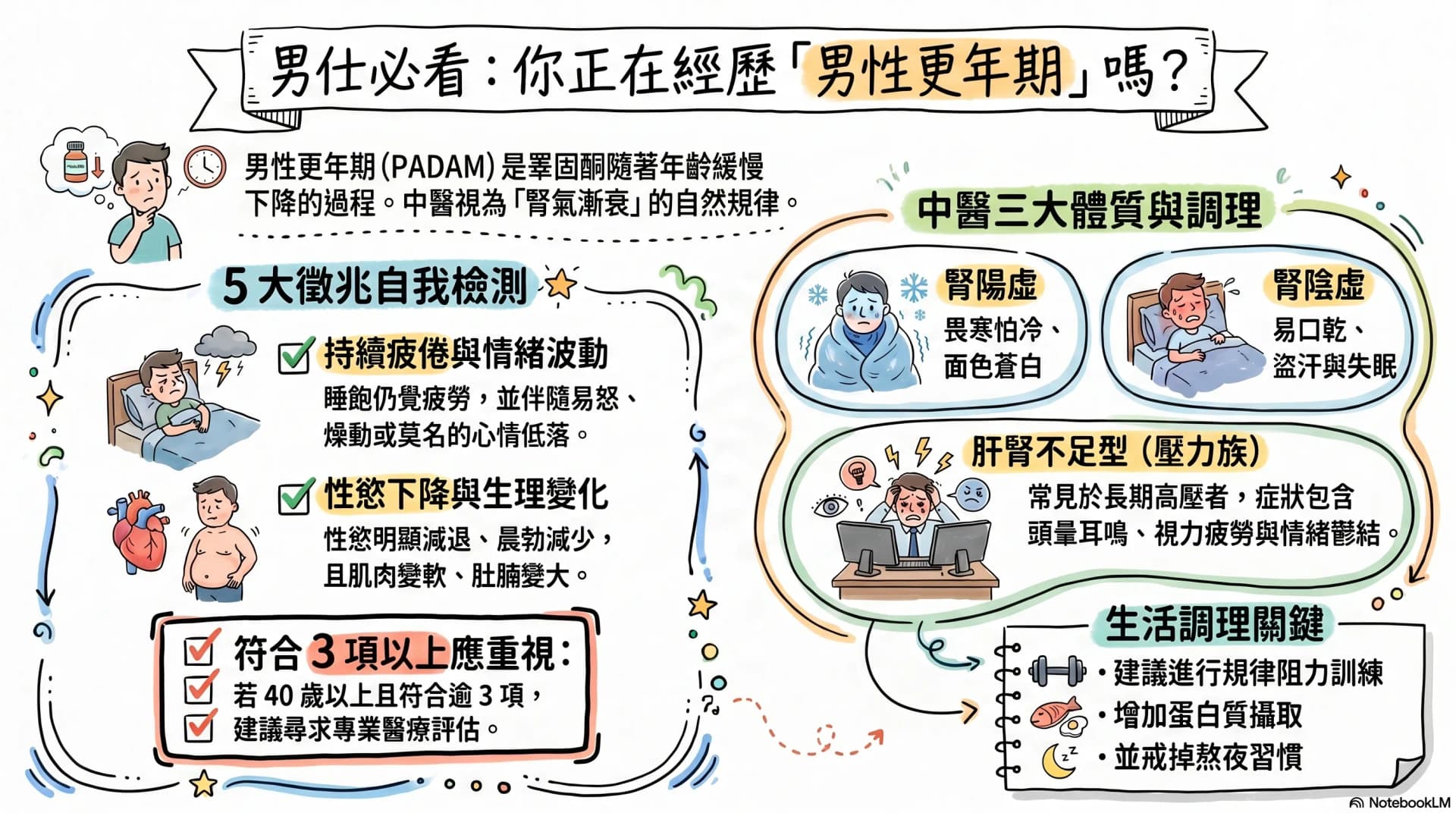
Male Menopause Through the TCM Lens: 5 Signs in Men Over 40
Unexplained fatigue, irritability, lower libido, poorer sleep and a growing belly after 40 are not just ageing or work stress — they may be male menopause. This article begins with a five-sign self-check, sets out three TCM patterns (kidney-yang deficiency, kidney-yin deficiency, liver-and-kidney insufficiency) with matching improvements, and compares the two treatment routes — testosterone replacement therapy versus TCM constitutional care.
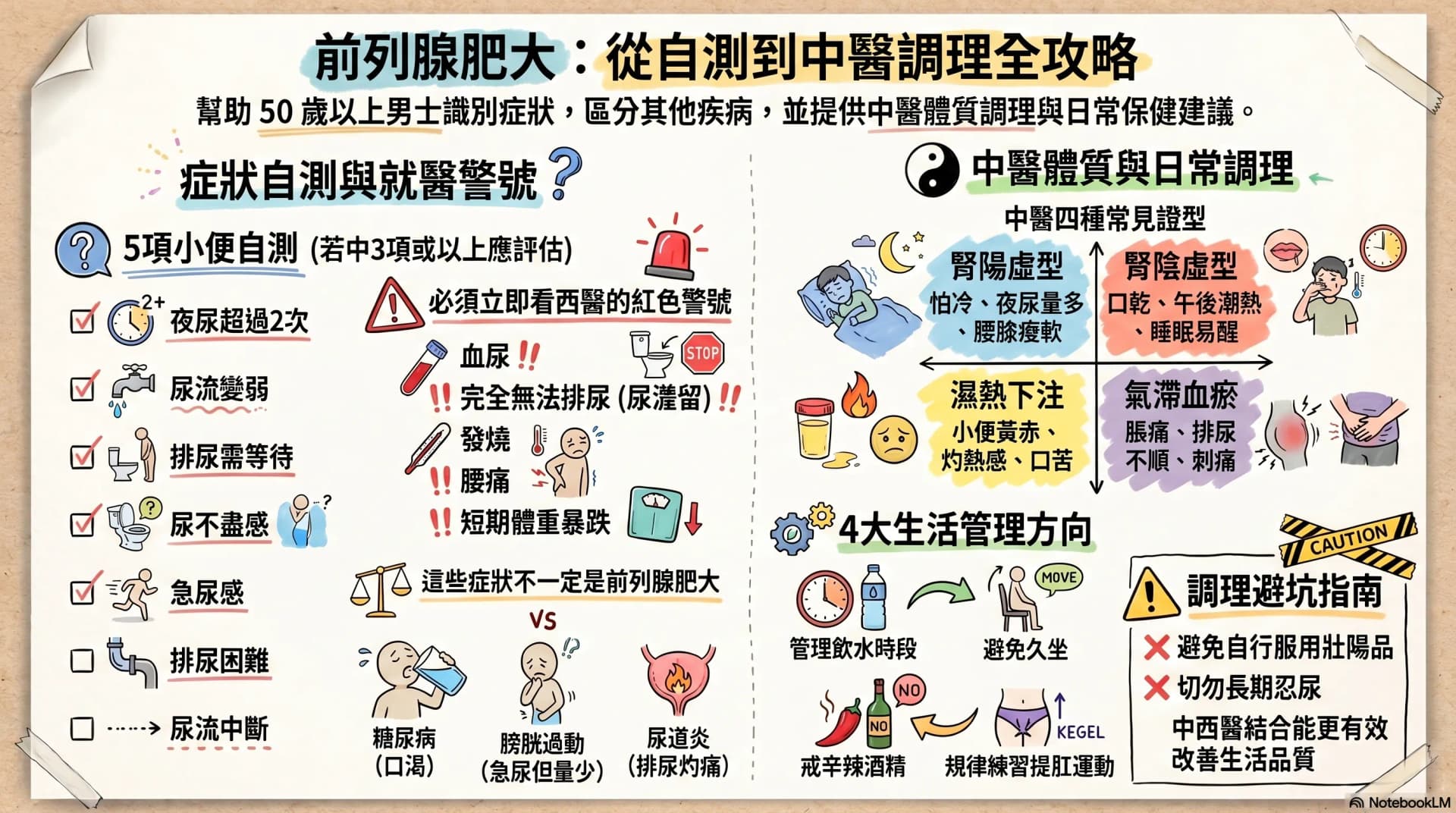
Enlarged Prostate: Are Nocturia and a Weak Stream Warning Signs?
After age 50, urinary frequency, nocturia, a weaker stream and having to urinate in stages may not simply be ageing. This article opens with a 7-symptom self-check, then sets out warning signs that warrant seeing a Western doctor immediately, four TCM constitution patterns, and four daily care directions any man can start with — helping you or your father decide the next step.