Eye Bags and Dark Circles That Eye Cream Cannot Fix: 4 TCM Patterns and How Cosmetic Acupuncture Can Help
Daily eye cream and eye masks, but the dark circles and eye bags only deepen — is it 'just age', or is the body sending a signal? Dark circles and eye bags can stem from qi-blood deficiency, liver-qi stagnation with insomnia, spleen deficiency with water retention, or kidney deficiency with blood stasis — and they may also reflect structural fat, chronic disease, or allergy. Dr To breaks down four TCM patterns, a self-check guide, five red-flag signals warranting medical investigation, and the cosmetic acupuncture directions that correspond to each pattern.
Medical review: Dr. To Ching, Jenny,Registered Chinese Medicine Practitioner #009330
1-Minute Quick Answer
Expensive eye creams often fail because dark circles and eye bags start below the skin. TCM commonly sees four patterns — qi-blood deficiency, liver-qi stagnation with insomnia, spleen-deficiency water retention, and kidney-deficiency blood stasis. Cosmetic acupuncture improves eye-area circulation but cannot remove fat-type bags or fill tear troughs. Includes a self-check table, five red flags, and prevention tips (reviewed by Dr To, CMCHK 009330).
Eye Bags and Dark Circles That Eye Cream Cannot Fix: 4 TCM Patterns and How Cosmetic Acupuncture Can Help
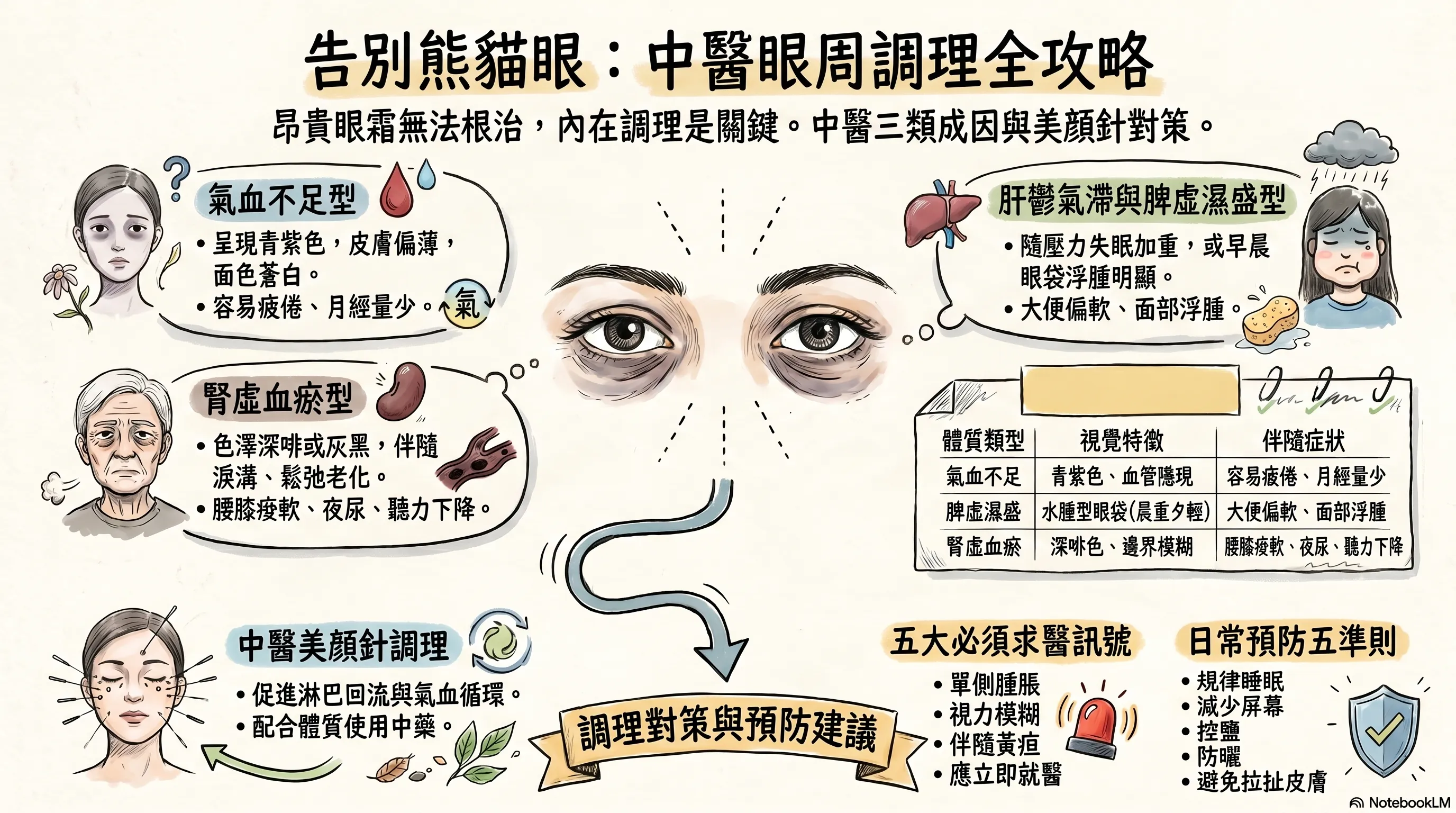 For quick reference, this image was generated by NotebookLM. Some Chinese characters may not render perfectly; we appreciate your understanding.
A thousand-dollar eye cream every night, eye masks every week — yet the under-eye area only grows darker and puffier?
The causes of dark circles and eye bags often lie below the surface. Qi-blood deficiency, chronic insomnia with liver-qi stagnation, spleen deficiency with water retention, and kidney deficiency with blood stasis — these internal TCM patterns, combined with structural fat, allergies, chronic disease, and UV damage, mean even the most expensive topical product struggles to deliver visible change.
This article breaks down the four common TCM patterns, a self-check guide, five red-flag signals warranting medical investigation, and the cosmetic acupuncture directions that match each pattern.
Four Common TCM Patterns
1. Qi-Blood Deficiency (Thin Skin, Bluish-Purple Shadows)
Common presentation: Bluish or purplish dark circles; visibly thin skin; faint underlying vessels showing through; pale complexion; easy fatigue; light menstrual flow; dizziness.
Common backgrounds: Long-term restrictive dieting, post-partum recovery deficit, chronic illness, persistent late nights.
TCM perspective: Insufficient qi and blood fail to nourish the face; the thin eye-area skin reveals the colour of the underlying vessels. This pattern is often misread as "I was born with dark circles" — when in fact it reflects whole-body qi-blood status showing through the thinnest skin on the face.
2. Liver-Qi Stagnation (Stress-Driven, with Insomnia)
Common presentation: Dark circles fluctuate with stress, markedly worse after consecutive late nights; mild puffiness; light, dream-disturbed sleep, easy waking, premenstrual breast tenderness, irritability.
Common backgrounds: High-pressure work, chronic insomnia, suppressed emotion, prolonged screen use.
TCM perspective: The liver governs the smooth flow of qi; chronic stagnation impedes circulation. With persistent insomnia and excessive eye-strain, qi and blood flow around the eyes is restricted, pigment deepens and lymphatic drainage slows. This pattern is the most sleep-sensitive — a single good night noticeably lightens the circles.
3. Spleen Deficiency with Damp Accumulation (Morning-Worse Puffy Eye Bags)
Common presentation: Eye bags clearly larger upon waking, partly subsiding by afternoon; puffy water-retention feel on palpation; facial puffiness, thick greasy tongue coating, soft stools, fatigue, sticky mouth.
Common backgrounds: Late-night fluid loading, salty diet, low activity, prolonged sitting, pre-diabetes.
TCM perspective: The spleen governs fluid transformation; spleen deficiency leaves fluid stagnant in the upper body, settling in the thin eye-area skin. This is most easily mistaken for fat-type eye bags — the distinguishing feature is whether they change through the day. Water-retention eye bags are worse in the morning and ease later; fat-type eye bags stay constant throughout the day.
4. Kidney Deficiency with Blood Stasis (Ageing, Structural Pigmentation)
Common presentation: Deep brown or greyish-black circles with blurred edges, structural pigmentation, accompanying tear trough, skin laxity, premature greying, lumbar and knee soreness, nocturia, hearing loss.
Common backgrounds: Aged 40+, chronic illness, chronic sleep deprivation, overexertion, approaching menopause.
TCM perspective: The kidney stores essence and governs marrow; kidney deficiency depletes essence and blood, slowing eye-area circulation, with long-standing pigment plus structural ageing. This pattern responds least to topical products alone — it requires constitutional regulation combined with structural intervention (medical aesthetics or surgery).
Self-Check Table
| Your situation | Likely pattern | Common accompanying signs |
|---|---|---|
| Bluish-purple, thin skin, pale face | Qi-blood deficiency | Light periods, easy fatigue, dizziness |
| Worsens with stress / poor sleep | Liver-qi stagnation | Light sleep, irritability, premenstrual tenderness |
| Worse in the morning, eases by afternoon | Spleen deficiency, damp accumulation | Facial puffiness, thick tongue coating, soft stools |
| Deep brown / grey-black, structural, with tear trough | Kidney deficiency, blood stasis | Lumbar and knee soreness, nocturia, premature greying |
Many patients are mixed — for example "qi-blood deficiency with liver-qi stagnation" (young office workers), "spleen deficiency with kidney deficiency" (middle-aged women), or "liver-qi stagnation with kidney deficiency" (perimenopause). A clinical assessment identifies the dominant and secondary patterns to set treatment priority.
How TCM Cosmetic Acupuncture Helps
For eye-area concerns, cosmetic acupuncture works through several angles:
1. Improving Eye-Area Qi-Blood Circulation
Needling Jingming (BL1), Zanzhu (BL2), Sizhukong (TE23), Tongziliao (GB1), Sibai (ST2), Taiyang (EX-HN5) and other periorbital points promotes local circulation. For qi-blood deficiency and liver-qi stagnation patterns, this is the most direct angle.
2. Promoting Lymphatic Drainage to Reduce Puffiness
Needling face and head points combined with manual technique reduces local lymphatic stagnation. Water-retention eye bags typically respond fastest to acupuncture — many patients notice "the eyelids feel less heavy" after the first session.
3. Pairing with Body Acupoints for Constitutional Care
Facial points alone are not enough — body points addressing the underlying constitution are essential:
- Qi-blood deficiency: add Zusanli (ST36), Sanyinjiao (SP6), Xuehai (SP10) — replenish qi and blood
- Liver-qi stagnation: add Taichong (LR3), Hegu (LI4), Neiguan (PC6) — soothe liver, calm spirit
- Spleen deficiency: add Yinlingquan (SP9), Fenglong (ST40) — strengthen spleen, resolve damp
- Kidney deficiency: add Shenshu (BL23), Taixi (KI3), Fuliu (KI7) — tonify kidney essence
This is exactly why Aspira TCM cosmetic acupuncture emphasises "whole-body care" — face-only needling is limited and difficult to sustain.
4. Pairing with Pattern-Based Herbs
Herbal medicine works from within: Si Wu Tang direction for qi-blood deficiency; Chai Hu Shu Gan San direction for liver-qi stagnation; Si Jun Zi Tang variations for spleen deficiency; Liu Wei Di Huang Wan direction for kidney deficiency (specific prescriptions are individualised by a registered TCM practitioner). Internal herbs combined with external needling produce more stable results than either alone.
Important note: TCM cosmetic acupuncture cannot remove structural fat in true fat-type eye bags, cannot fill significant tear troughs (volume loss), and cannot replace Western treatment for allergies. Its strongest effect is on eye-area qi-blood, lymphatic flow, and underlying constitution — bringing the "non-structural" components back to a better state.
When Cosmetic Acupuncture Is Not Enough
| Situation | Better-suited approach | Why acupuncture is limited |
|---|---|---|
| Structural fat-type eye bags (constant through the day) | Surgical lower-eyelid blepharoplasty | Acupuncture cannot remove deposited fat |
| Significant tear trough (volume loss) | Hyaluronic acid filler / autologous fat | Acupuncture cannot replace lost volume |
| Chronic allergic dark circles (allergic rhinitis-driven congestion) | Western treatment of allergy / rhinitis | The allergy must be addressed first |
| Sun-induced pigmentation | Dermatology-led laser treatment | Acupuncture cannot directly fade pigment |
| Cosmetic / friction-induced pigmentation | Stop the irritant, dermatology assessment | The trigger must be removed first |
Cosmetic acupuncture's best fit: integrated qi-blood, circulation, lymphatic, and constitutional care — non-structural and non-environmental eye-area concerns respond best.
Five Red-Flag Signals: When to See a Doctor First
The following situations should not be dismissed as "darker circles" or "bigger eye bags" — seek medical attention promptly:
- Sudden unilateral eyelid drooping or swelling — possible neurological, muscular, or orbital pathology
- Eye bags with sudden vision change, blurred vision, or double vision — possible ophthalmological or neurological emergency
- Severe periorbital pain, redness, or warmth — possible infection or cellulitis
- Dark circles with jaundice (yellow skin or sclera) — possible liver or biliary issues
- Rapid darkening of circles with weight loss, persistent fatigue, or lymphadenopathy — possible chronic or malignant disease
Possible underlying conditions: Allergic rhinitis, chronic liver disease, kidney disease, anaemia, thyroid dysfunction, autoimmune disease, orbital cellulitis, ophthalmological pathology.
Investigations: As clinically indicated — blood tests, liver and kidney function, thyroid function, allergy testing, ophthalmological examination if needed. TCM cannot substitute for these investigations — they must be performed by the appropriate specialist.
Six Daily Practices for Prevention
Whether or not cosmetic acupuncture is on the cards, these six practices help most people:
- Adequate, regular sleep — 7–8 hours per night, sleep before 11 pm; chronic late nights are dark circles' biggest enemy
- Reduce screen time — every 30 minutes of close work, look into the distance for 1 minute; prolonged near work aggravates liver-qi stagnation
- Limit fluids in the evening (especially after 9 pm) — reduces next-morning puffiness; stay well-hydrated during the day
- Less salt, more protein — high sodium worsens fluid retention; adequate protein nourishes blood
- Sun protection includes the eye area — UV is a major pigmentation driver; use UV-protective sunglasses
- Gentle eye-area massage — sweep inward to outward, with mild warmth (never hot); never tug or pull the eyelid
How Aspira TCM Approaches Dark Circles and Eye Bags
Dr To (TCM aesthetics specialist) combines detailed history (how long the issue has been present, morning-vs-evening change, accompanying symptoms, life context, screen and cosmetic habits), tongue diagnosis, pulse diagnosis, and facial examination (pigment distribution, structural vs water-retention, tear-trough depth, skin thickness) to identify the dominant pattern, then designs an integrated plan combining cosmetic acupuncture, body acupoints, and herbal medicine.
If the assessment indicates a structural fat-type eye bag, a significant tear trough, or allergy / chronic-disease-driven dark circles, the recommendation will be to address the structural or Western-medical layer first, with TCM cosmetic acupuncture as follow-up care. Aspira TCM does not market this as "instant fix" or "complete elimination of dark circles" — eye-area changes develop gradually, and so does relief.
If you are considering TCM care for dark circles or eye bags, bring a recent makeup-free photograph (in natural light), a list of current eye-area products, and a sleep log to the consultation.
Frequently Asked Questions
Q1: Can TCM cosmetic acupuncture "completely eliminate" dark circles?
No, it cannot completely eliminate them. Cosmetic acupuncture supports qi-blood, circulation, lymphatic flow, and underlying constitution — with stronger response in qi-blood deficiency, liver-qi stagnation, and water-retention patterns. Structural fat-type eye bags, deep pigmentation, and significant tear troughs are limited indications; medical aesthetics or dermatology may be required.
Q2: How long does it take to see results?
Water-retention eye bags usually respond fastest (visible after 1–2 sessions); qi-blood and liver-qi dark circles typically need 4–6 sessions for clear improvement; kidney-deficiency / structural pigmentation is the slowest, requiring 8–12 or more sessions alongside herbal medicine and lifestyle change. A full course is usually 3–6 months for stable results.
Q3: Is it painful? Will it leave puncture marks?
The needles are extremely fine — finer than standard acupuncture needles. Most patients describe a "slight prick". Puncture marks are minimal and rarely visible. The eye area's thin skin and rich vascular supply mean a slightly higher chance of bruising than other facial sites — the practitioner will choose safer points and avoid deep needling.
Q4: Do I need to stop my eye cream during the course?
No. Cosmetic acupuncture works on internal qi-blood and lymphatic flow; eye cream works on surface hydration, tightening, and antioxidants — different layers, used together. However, if your eye cream contains strong active ingredients (high-concentration retinol, acids) and you experience irritation or redness, pause for a few days for the skin to settle.
Q5: Are dark circles hereditary? If so, can anything help?
Yes — thin skin and pigmentation tendencies can be inherited, and "structurally inherited dark circles" are harder to eliminate completely. But TCM cosmetic acupuncture combined with constitutional care can improve overall qi-blood circulation and prevent further deepening. With sun protection, regular sleep, and avoiding late nights, deterioration can be meaningfully slowed.
— Dr To Ching | Registered Chinese Medicine Practitioner (Gynaecology, TCM Aesthetics, Postpartum Belly Binding, Paediatrics) Reg. No.: 009330 Aspira TCM Clinic
Recurring Dark Circles or Eye Bags? Book a Consultation
If your dark circles or eye bags have not improved after multiple eye creams and masks, please bring a makeup-free photograph in natural light, a list of current eye-area products, and a recent sleep / accompanying-symptoms log before booking a consultation with Dr To. For any of the red-flag signals above (sudden unilateral drooping, vision changes, severe eye-area pain, jaundice, rapid darkening with weight loss), please seek medical attention first.
How to book:
- WhatsApp: Book here
- Phone: 2110 9337
- Address: Unit 2706, 27/F, Saxon Tower, 7 Cheung Shun Street, Lai Chi Kok
References
- AAD (American Academy of Dermatology): Why are my eyes puffy? — https://www.aad.org/public/everyday-care/skin-care-secrets/face/eyes-puffy
- AAD: How to fade dark circles under your eyes — https://www.aad.org/public/everyday-care/skin-care-secrets/face/fade-dark-circles
- Mayo Clinic: Bags under eyes — https://www.mayoclinic.org/diseases-conditions/bags-under-eyes
- Mayo Clinic: Dark circles under eyes — https://www.mayoclinic.org/symptoms/dark-circles-under-eyes
Disclaimer: This article is for general health education only and does not replace individual diagnosis, dermatology / ophthalmology evaluation, or treatment. TCM cosmetic acupuncture supports eye-area qi-blood, lymphatic flow, and underlying constitution, but cannot remove structural fat-type eye bags, fill significant tear troughs, or replace Western treatment for allergies and chronic disease. For sudden unilateral eyelid drooping, vision changes, severe periorbital pain, jaundice, or rapid darkening with weight loss, seek medical attention immediately. Any decision about medical aesthetics or surgery should be made with the relevant specialist.
Disclaimer: This article is for health education and reference purposes only and does not constitute medical advice, diagnosis, or treatment. Each patient's condition is unique and treatment outcomes vary. Please consult a registered TCM practitioner or qualified healthcare professional for health concerns.
Further Reading
Hand-picked related articles and real cases to read next.
“Pillow Face” After Injectables? 4 Common Causes and How TCM Cosmetic Acupuncture May Help
If the face looks increasingly puffy, heavy or unnatural after injectables, it may not be simple swelling. It may be the “pillow face” look that follows repeated aesthetic injections. This article explains four common causes, when to return to your injector first, and where TCM cosmetic acupuncture may help.
Overthinking and Sleepless Nights — Ms Lee's TCM Journey to Restful Sleep
A female office worker in her 30s struggled with difficulty falling asleep, frequent dreaming, and waking easily due to chronic work stress and anxiety. After six sessions over four weeks combining herbal medicine and acupuncture prescribed by Dr To, her sleep quality improved significantly and she regained her energy and quality of life.
Postpartum Belly Binding Guide: Timing, Cautions & 5 Steps
Rushing into postpartum belly binding can cause uterine prolapse and urinary incontinence. This guide from Dr To covers the golden timeline, three key contraindications, a five-step recovery flow, and how to integrate belly binding, pelvic realignment and core rebuilding into one complete postpartum recovery plan.
Want to learn more? WhatsApp us for a free consultation
Book via WhatsAppExplore our full range of treatments: Traditional TCM Services
Related Articles
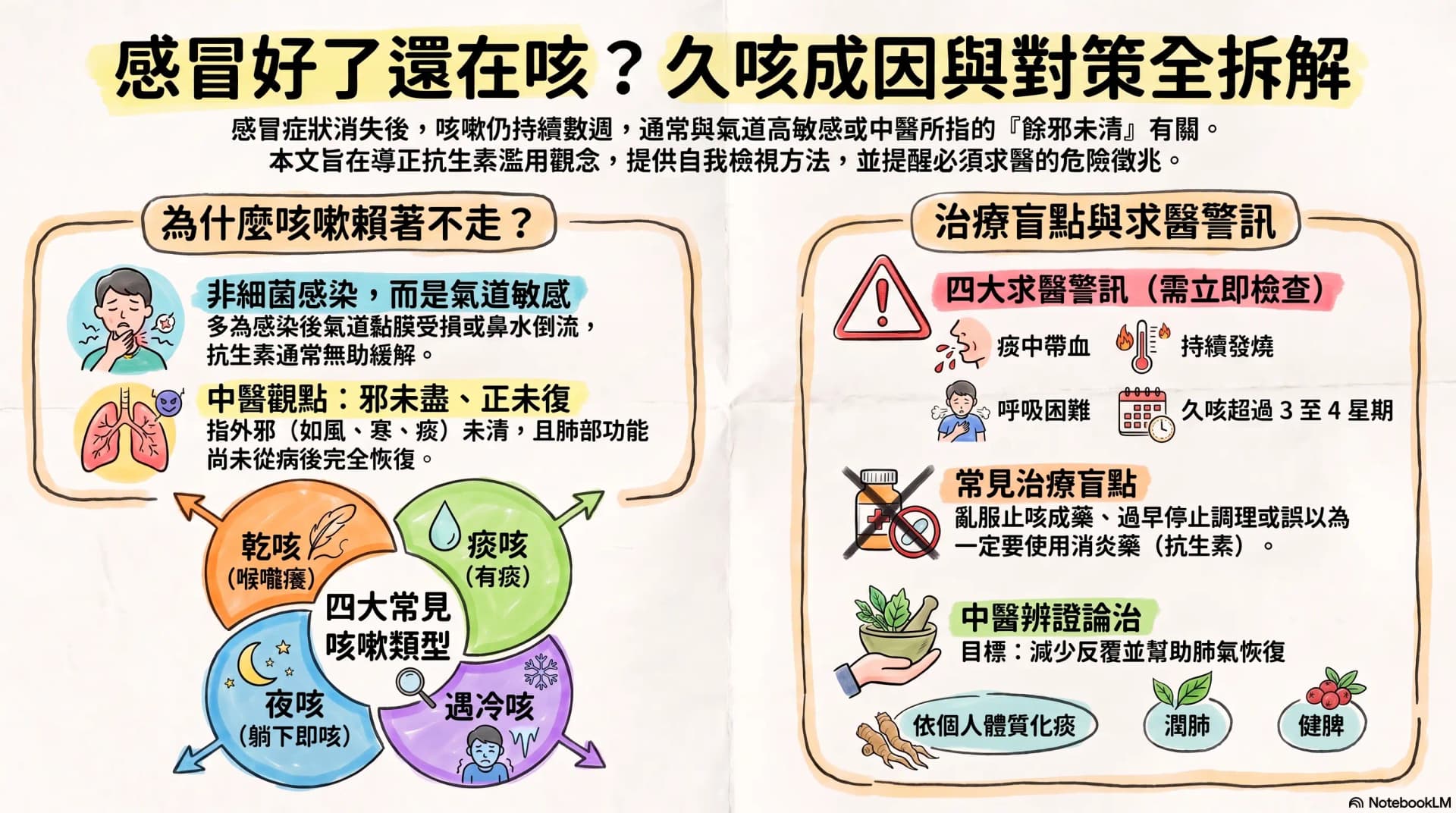
The Cold Has Gone but the Cough Will Not Clear: Causes of a Lingering Post-Cold Cough and How TCM Can Help
The cold is gone, but the cough drags on for weeks. This article breaks down the common types and causes of a lingering post-cold cough, the situations that warrant medical attention, the treatment blind spots, and how Chinese medicine can help through pattern differentiation.
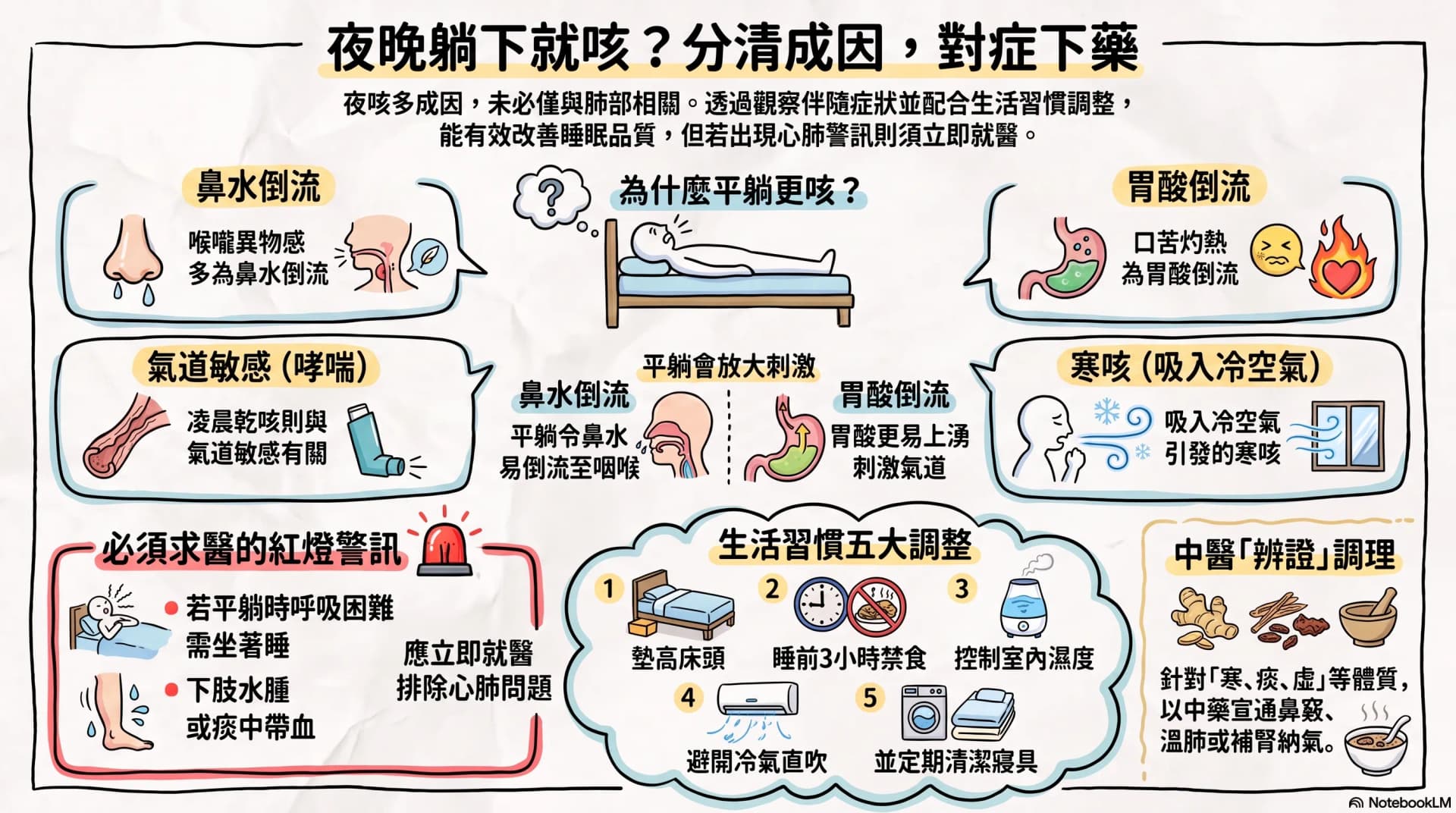
A Cough That Comes On When You Lie Down at Night: Common Causes and How TCM Can Help
Fine during the day, but coughing the moment you lie down, or waking at night? A night cough has more than one cause, and some have little to do with the lungs. Learn how to identify the type by accompanying symptoms, why lying flat makes it worse, when to seek medical care, and how Chinese medicine can help.
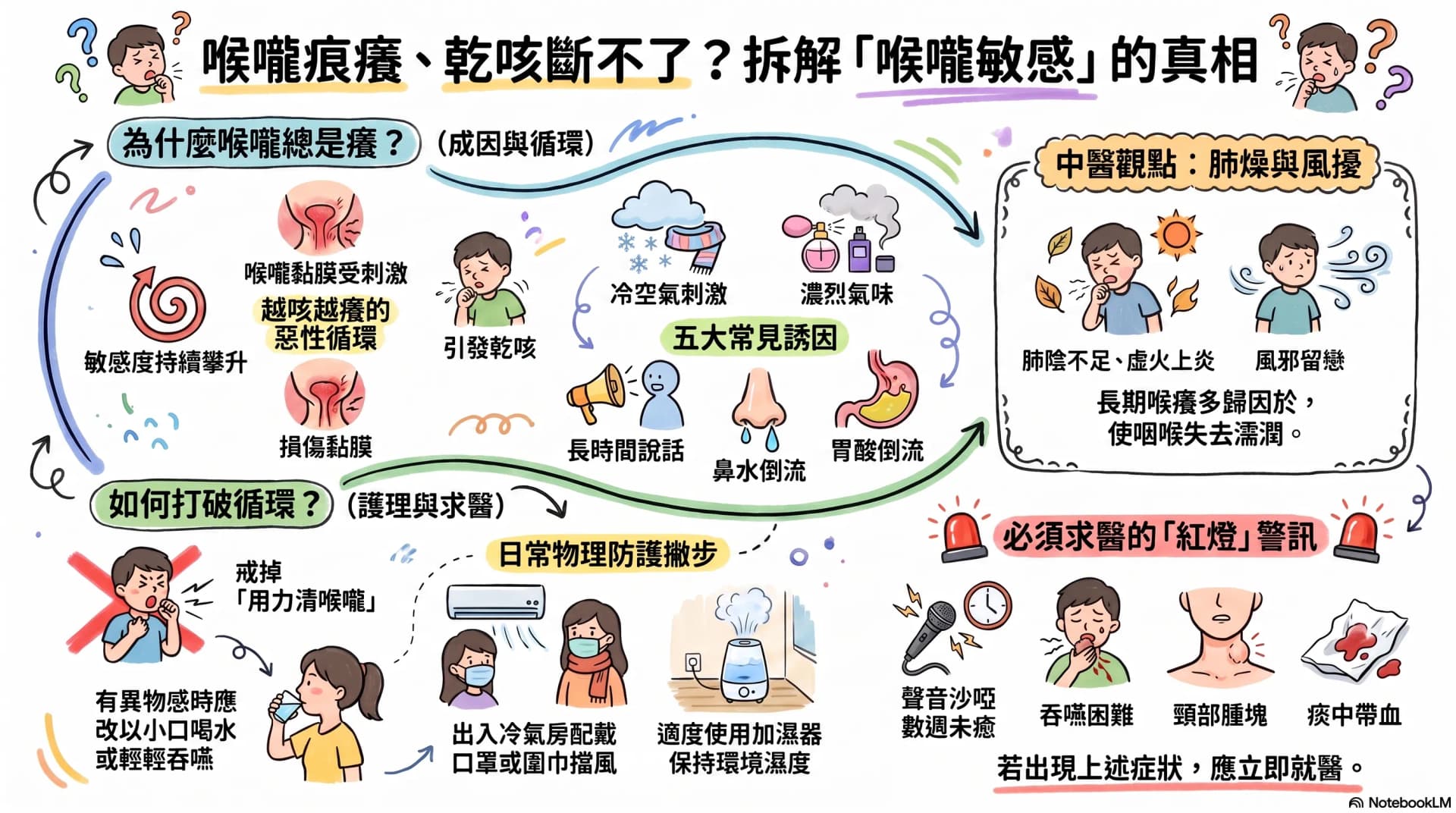
An Itchy Throat and a Cough Whenever You Speak: Throat Sensitivity and Sensitive Cough
A long-standing itchy throat with a dry cough triggered by talking, cold air or smells — not a cold, yet recurring for years. This article explains the causes of throat sensitivity and sensitive cough, how to distinguish its links with allergic rhinitis, acid reflux and voice overuse, when to see a doctor, and how Chinese medicine can help.