Frequent Night Urination in Older Adults: A TCM Guide
Is it normal for older adults to wake up once or twice at night to urinate? Frequent night urination may relate to drinking habits, infection, prostate or bladder problems, diabetes, medication, or even heart and kidney function. This article explains the common causes, warning signs that need medical attention, and how TCM assesses nocturia in older adults.
Medical review: Dr. Chan Wing Kiu, Joanne,Registered Chinese Medicine Practitioner #009463
1-Minute Quick Answer
Waking once a night to urinate may be fine, but two or more times every night, a sudden increase, urgency or pain, thirst, or leg swelling deserve attention. Nocturia isn't always kidney deficiency — fluid timing, infection, prostate, diabetes, and heart-kidney function matter, so testing sometimes comes first. Reviewed by Dr Chan, CMCHK 009463.
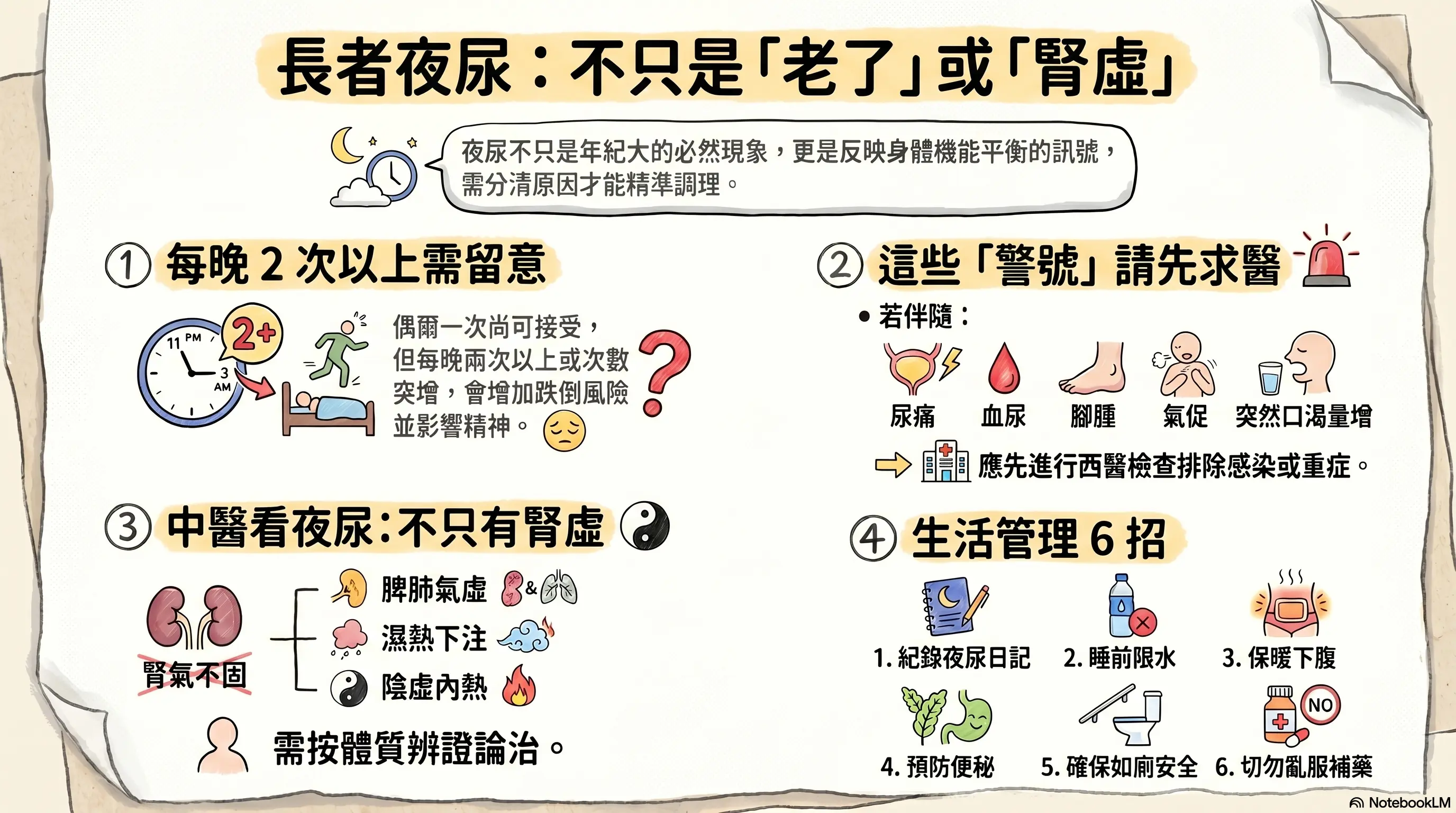 To help readers understand the topic quickly, this image was generated by NotebookLM. Some Chinese characters may not render correctly.
Many older adults in Hong Kong struggle with night urination. They may fall asleep, wake again not long after, walk to the toilet in the dark, and then struggle to return to sleep. What families worry about is not only “frequent urination,” but also falls, poorer sleep, and reduced daytime energy.
Waking once at night to urinate does not necessarily mean disease. But if it happens two or more times every night, increases suddenly, comes with urgency or pain, involves large urine volume, or is already affecting sleep and safety, it should not simply be dismissed as “part of getting old.”
This article explains which patterns of nocturia are more likely to relate to lifestyle, which situations may need blood sugar, urinary, heart, or kidney assessment first, and how TCM evaluates the issue through patterns involving kidney qi, spleen and lung qi, damp-heat, or yin deficiency.
Before Saying “Nocturia,” Clarify What Is Actually Increasing
When people say “frequent night urination,” they may be referring to several different patterns. Sorting this out before consultation makes the direction much clearer.
| What to observe | What it may suggest | What to do first |
|---|---|---|
| Number of times waking at night | Once, twice, or three times and above mean different things | Record 3–7 nights instead of relying only on memory |
| Amount passed each time | Small frequent voids and large-volume urination point in different directions | Note whether there is thirst or increased daytime urination too |
| Pain or urgency | May suggest infection, bladder irritation, or prostate-related issues | If there is pain, blood, or fever, seek medical care first |
| Leg swelling or breathlessness | May point to heart, kidney, or circulation issues | TCM alone is not sufficient |
| Recent medication changes | Some diuretics, blood-pressure medicines, or sleeping pills increase night-time toileting risk | Ask the doctor at follow-up; do not stop medication by yourself |
The key message: nocturia is not a diagnosis by itself, but a bodily signal that needs its cause clarified.
Common Causes Are Not Limited to “Kidney Deficiency”
Night urination in older adults is often simplified as “kidney deficiency,” but in reality it may involve many different factors.
| Common factor | Possible presentation | Main direction |
|---|---|---|
| Drinking too much at night, strong tea, or coffee | Waking soon after falling asleep | Adjust fluid timing and reduce evening diuretic drinks |
| Urinary tract infection | Painful urination, urgency, stronger urine odour, lower abdominal discomfort, fever | Western medical testing and treatment first |
| Prostate or bladder problem | Weak stream, incomplete emptying, hesitancy, frequent small voids | Family doctor or urology assessment |
| High blood sugar or diabetes | Thirst, frequent urination, more night urination, fatigue | Check blood sugar and HbA1c |
| Leg swelling or heart-kidney issues | Leg swelling by day, more urination after lying down at night | Western medical assessment first |
| Lighter sleep | The person may wake first, then decide to pass urine | Address sleep, pain, and emotional state too |
In TCM assessment, the question is not only whether the patient is “kidney deficient.” The first priority is to decide whether testing or referral is needed, then assess constitution and organ-system function.
How Does TCM Understand Nocturia in Older Adults?
In TCM terms, nocturia reflects imbalance in the functions of retaining urine, passing urine, and regulating body fluids. When kidney qi is weak, the body may have more difficulty holding urine at night. When spleen and lung function are weak, fluid metabolism may become disordered. If damp-heat or cold-weakness is present in the lower burner, urgency, frequency, or more night urination may also appear. In older adults, the pattern is often not one single cause but several overlapping issues.
| TCM pattern | Common presentation | Main treatment focus |
|---|---|---|
| Insecurity of kidney qi / kidney yang deficiency | Frequent night urination, clear long urine, low back and knee weakness, feeling cold, poor energy | Warm and support kidney yang, consolidate the lower burner, and maintain warmth |
| Spleen-lung qi deficiency | Fatigue, shortness of breath, spontaneous sweating, poor appetite, loose stool | Strengthen the spleen and qi, and improve fluid transformation |
| Damp-heat pouring downward | Urgency, painful urination, yellow urine, lower abdominal discomfort, bitter taste | Clear damp-heat, but only after infection has been excluded |
| Yin deficiency with internal heat | Night urination with dry mouth, irritability, light sleep, constipation | Nourish yin, clear heat, and improve sleep and fluid balance |
| Blood stasis or long-term frailty | Recurrent nocturia, pain conditions, numb limbs, darker tongue colour | Invigorate circulation or support deficiency, depending on history |
The aim of TCM regulation is to improve constitution, sleep, and urination patterns within a safe framework, not to replace necessary blood sugar, urine, prostate, or heart-kidney investigations.
When Should Western Medicine or Emergency Care Come First?
The following situations should not rely on TCM alone:
- Painful urination, marked urgency, fever, or back pain suggesting urinary infection or kidney infection
- Blood in the urine, tea-coloured urine, or a sudden major change in urine volume
- Sudden major increase in nocturia together with thirst, weight loss, or extreme fatigue
- Daytime leg swelling, night breathlessness, chest tightness, or inability to lie flat
- In men, a very weak stream, inability to pass urine, or lower abdominal distension
- Falls already occurring on the way to the toilet, or unsteady walking after sleeping pills or blood-pressure medication
- Sudden confusion, drowsiness, sharp appetite decline, or a rapid overall decline in condition
These situations may require urine testing, blood tests, heart-kidney evaluation, urology review, or emergency care. TCM may still support care later, but investigation should not be delayed.
Six Practical Steps Older Adults Can Start With
-
Record 3–7 nights of nocturia
Write down drinking time before bed, how many times you wake, approximate urine volume, whether there is urgency or pain, and how you feel the next day. -
Adjust fluid timing rather than drinking too little all day
Daytime hydration still matters. The main point is to avoid large amounts of fluids, strong tea, coffee, alcohol, or too much soup just before bed. -
Make the route to the toilet safer at night
Keep the path clear, use a night light, and wear non-slip footwear. For those with mobility issues, a bedside commode may be worth considering. -
Address constipation
Impacted stool or long-term constipation can affect urination. Fibre intake, activity, and bowel habits should also be reviewed. -
Keep warm, especially around the lower abdomen and legs
Some older adults notice stronger urinary urgency after getting cold. Air-conditioning should not blow directly onto the body at night. -
Do not self-prescribe “kidney tonics” or stop medication on your own
People with hypertension, diabetes, kidney disease, heart disease, or blood-thinning medication should not start tonic alcohols, patent medicines, or large herbal soups without proper advice.
How Does Aspira TCM Assess Nocturia in Older Adults?
At Aspira TCM, Dr Chan first reviews the number of night voids, urine volume and colour, pain, thirst, sleep, appetite, bowel habit, leg swelling, blood sugar and blood pressure, kidney function, prostate or gynaecological history, as well as current Western medicines and supplements.
If the condition is stable and suitable for TCM support, the pattern may be assessed as kidney qi insecurity, spleen-lung qi deficiency, damp-heat downward, yin deficiency with internal heat, or a mixed picture. Treatment may then involve herbs, acupuncture, acupressure support, and lifestyle advice. If infection, blood in urine, significant leg swelling with breathlessness, urinary retention, or blood sugar risk is suspected, Western medical testing will be recommended first.
If you or an older family member is waking multiple times each night to urinate, and sleep or safety is already affected, a TCM assessment can be a reasonable starting point. Bring along a current medication list, recent blood sugar or blood pressure records, and a short nocturia diary so that the doctor can judge whether TCM is appropriate or referral should come first.
FAQ — Nocturia in Older Adults
Q1: Is waking once a night to urinate normal in older adults?
One episode of night urination is not necessarily abnormal. The more important questions are whether the frequency is gradually increasing, whether it happens two or more times every night, whether sleep and daytime energy are affected, and whether there are red flags such as painful urination, blood in urine, thirst, swelling, or fall risk.
Q2: Does frequent night urination always mean “kidney deficiency”?
No. Nocturia may relate to fluid timing, lighter sleep, urinary infection, prostate issues, diabetes, medication, or heart and kidney function. TCM may still consider kidney qi, spleen-lung weakness, damp-heat, or yin deficiency, but proper testing is sometimes still necessary.
Q3: Should older adults stop drinking water at night completely?
No. Excessive self-restriction of fluids may increase the risk of constipation, dehydration, or urinary infection. A better approach is to spread fluids through the day and reduce large volumes or diuretic drinks close to bedtime.
Q4: What does a TCM doctor usually ask when assessing nocturia?
The doctor will usually ask about frequency, urine volume and colour, urgency or pain, sleep, thirst, sensitivity to cold, low back weakness, appetite, bowel habit, metabolic disease, swelling, medication use, and medical history, then combine this with tongue and pulse findings.
Q5: Can eligible older adults use Elderly Health Care Vouchers for nocturia-related TCM care?
Eligible older adults may check with the clinic about voucher arrangements. Whether TCM treatment is suitable still depends on symptoms, history, medication use, and whether Western medical assessment is needed first.
Related reading:
Disclaimer: This article is for health education only and does not replace individual consultation, testing, medication advice, or treatment planning. If the patient already has urinary disease, diabetes, heart or kidney disease, prostate disease, or is taking medication, follow medical advice and regular follow-up. Any medication adjustment should only be made after consulting the primary doctor.
Disclaimer: This article is for health education and reference purposes only and does not constitute medical advice, diagnosis, or treatment. Each patient's condition is unique and treatment outcomes vary. Please consult a registered TCM practitioner or qualified healthcare professional for health concerns.
Further Reading
Hand-picked related articles and real cases to read next.
Insomnia in Older Adults: Waking at Night, Dreaming, Early Waking
Does sleeping less in older age always mean insomnia? Waking easily at night, vivid dreaming, early waking, and waking tired may relate to nocturia, pain, mood, medication, sleep apnoea, or sleep habits. This article explains common causes, warning signs, and how TCM interprets insomnia patterns such as heart-spleen deficiency, disharmony between heart and kidney, and liver fire.
Early Signs of Diabetes: 6 Warning Signs, Tests & TCM Care
Diabetes does not always begin with dramatic symptoms. Many people notice tiredness after meals, more night urination, dry mouth, increasing abdominal fat, itchy skin, or slow wound healing before they are diagnosed. This article explains early warning signs of diabetes, who should be tested early, and how TCM may support people in the prediabetes stage.
Want to learn more? WhatsApp us for a free consultation
Book via WhatsAppExplore our full range of treatments: Traditional TCM Services
Related Articles
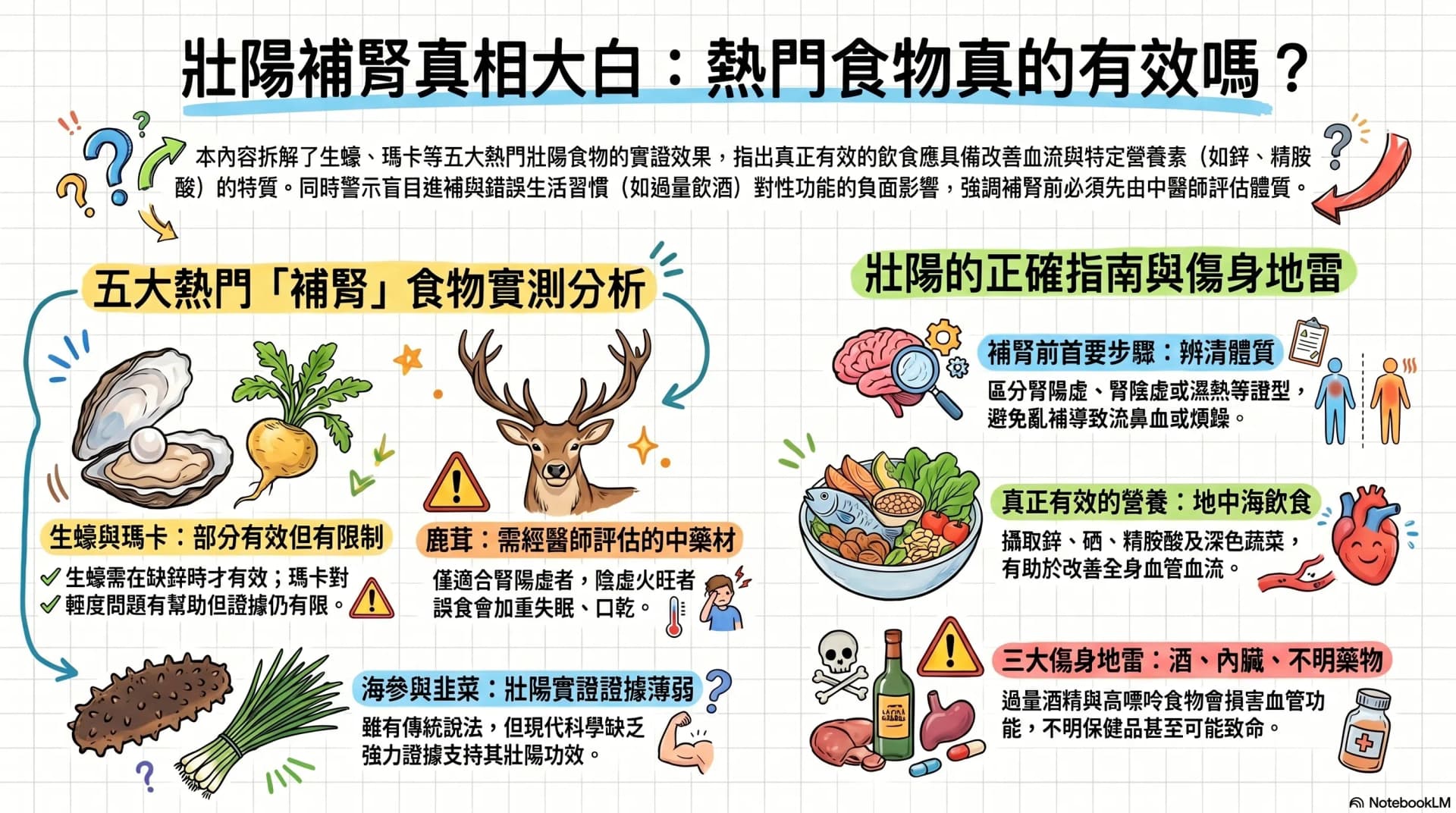
Do Oysters, Maca and Deer Antler Boost Male Vitality? 5 Myths
Do aphrodisiac foods actually work? This article opens with a rating table (effective / partly effective / effective within a TCM framework / weak evidence / no strong evidence), reviews the Chinese and Western medical evidence behind oysters, maca, deer antler, sea cucumber and Chinese chives, distils the 3 shared traits of foods that genuinely support male sexual function, and flags 3 commonly eaten items that can actually harm performance.
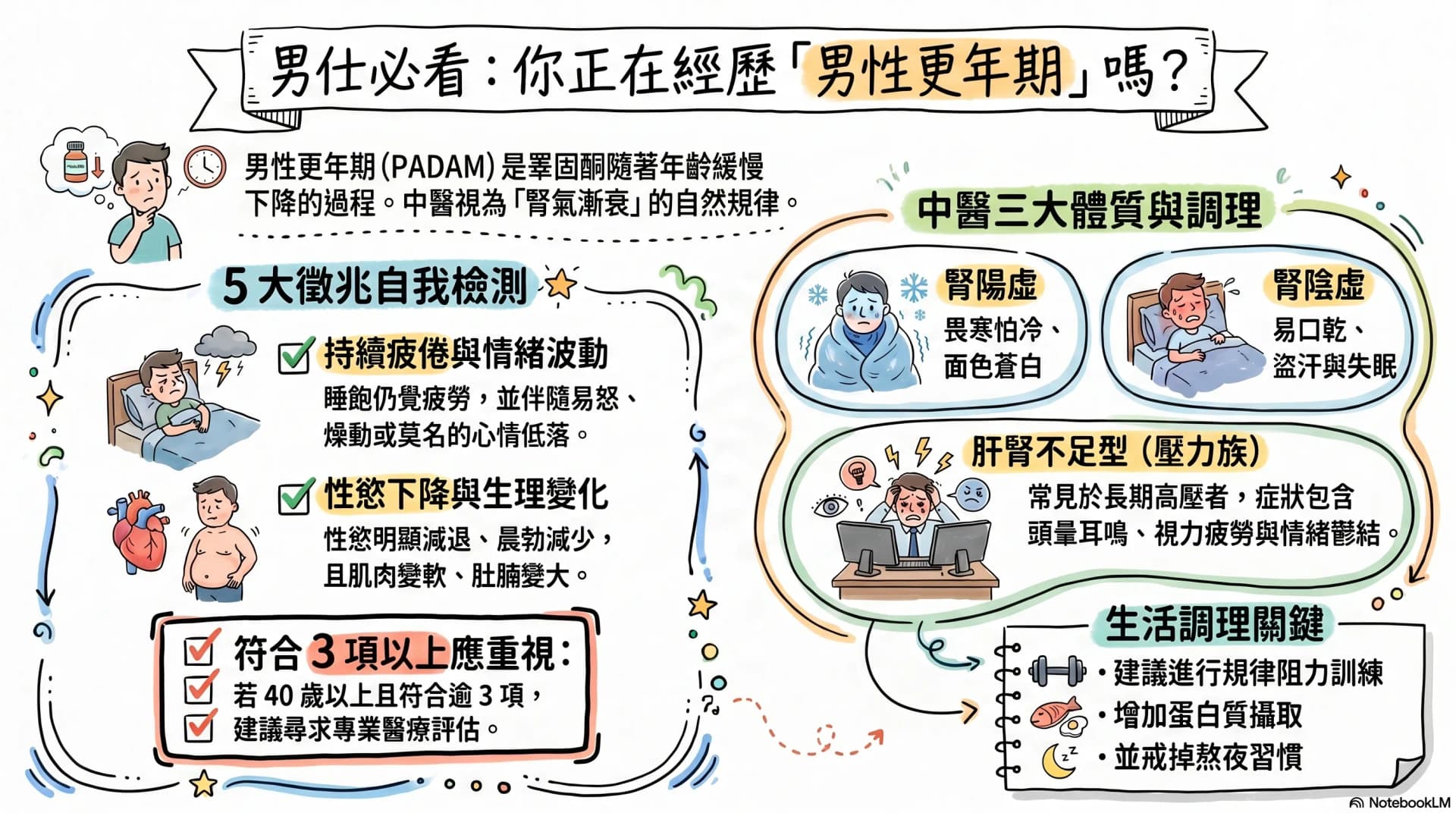
Male Menopause Through the TCM Lens: 5 Signs in Men Over 40
Unexplained fatigue, irritability, lower libido, poorer sleep and a growing belly after 40 are not just ageing or work stress — they may be male menopause. This article begins with a five-sign self-check, sets out three TCM patterns (kidney-yang deficiency, kidney-yin deficiency, liver-and-kidney insufficiency) with matching improvements, and compares the two treatment routes — testosterone replacement therapy versus TCM constitutional care.
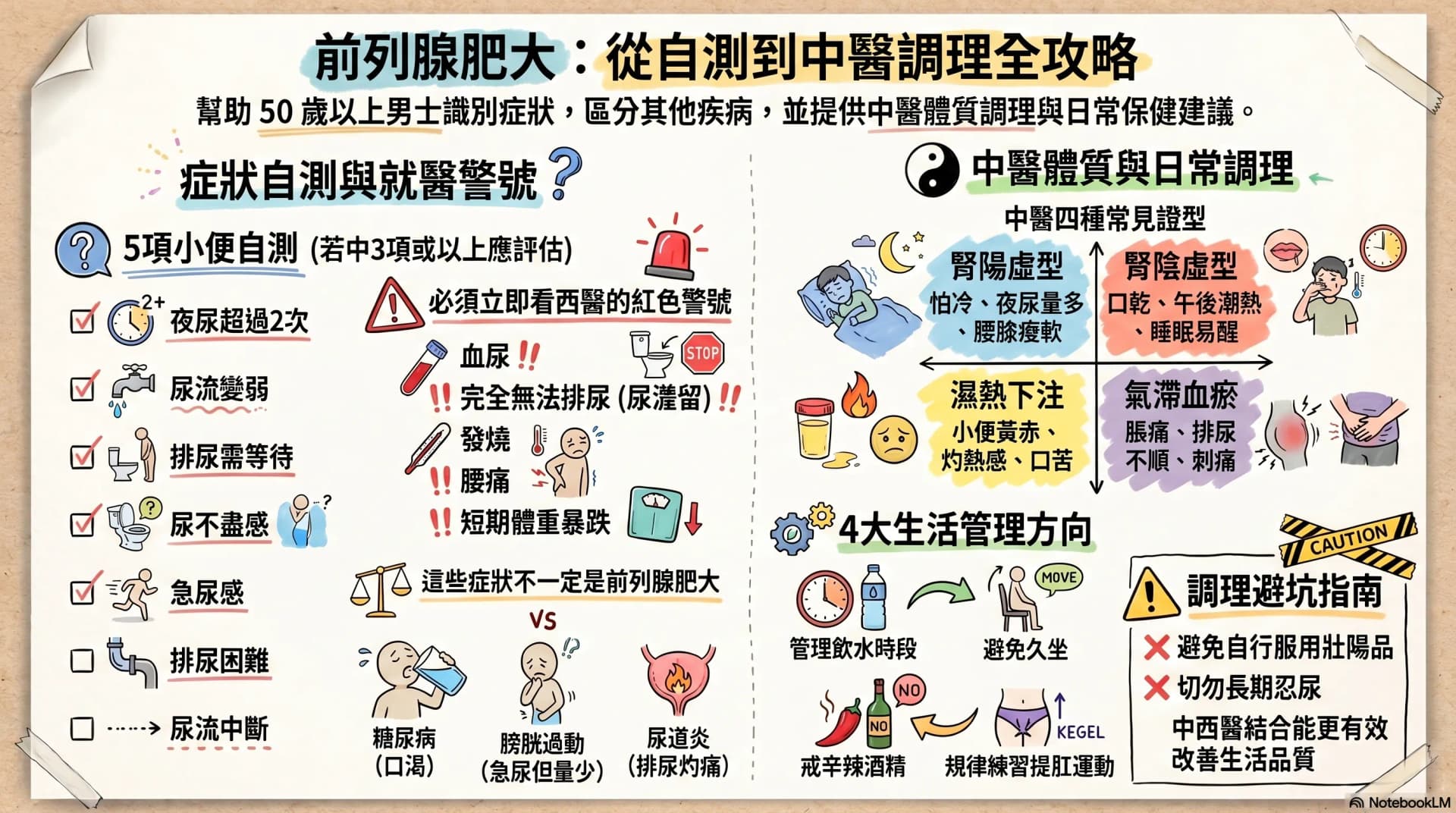
Enlarged Prostate: Are Nocturia and a Weak Stream Warning Signs?
After age 50, urinary frequency, nocturia, a weaker stream and having to urinate in stages may not simply be ageing. This article opens with a 7-symptom self-check, then sets out warning signs that warrant seeing a Western doctor immediately, four TCM constitution patterns, and four daily care directions any man can start with — helping you or your father decide the next step.