Recurrent Knee Pain in Older Adults: Is It Just Degeneration?
Recurrent knee pain in older adults is not always simple degeneration. Osteoarthritis, muscle weakness, cold-damp patterns, qi-blood deficiency, old injuries, and fall risk may all contribute. This article explains common causes, red-flag signs, TCM patterns, and practical ways to reduce recurrence.
Medical review: Dr. Wong Ka Fai,Registered Chinese Medicine Practitioner #009985
1-Minute Quick Answer
Recurrent knee pain in older adults isn't always just degeneration. Osteoarthritis is common, but muscle weakness, body-weight load, cold-damp patterns, qi-blood deficiency, and old injuries often overlap. Inability to bear weight after a fall, sudden red-hot swelling, joint deformity, or night pain need medical review first. Reviewed by Dr Wong, CMCHK 009985.
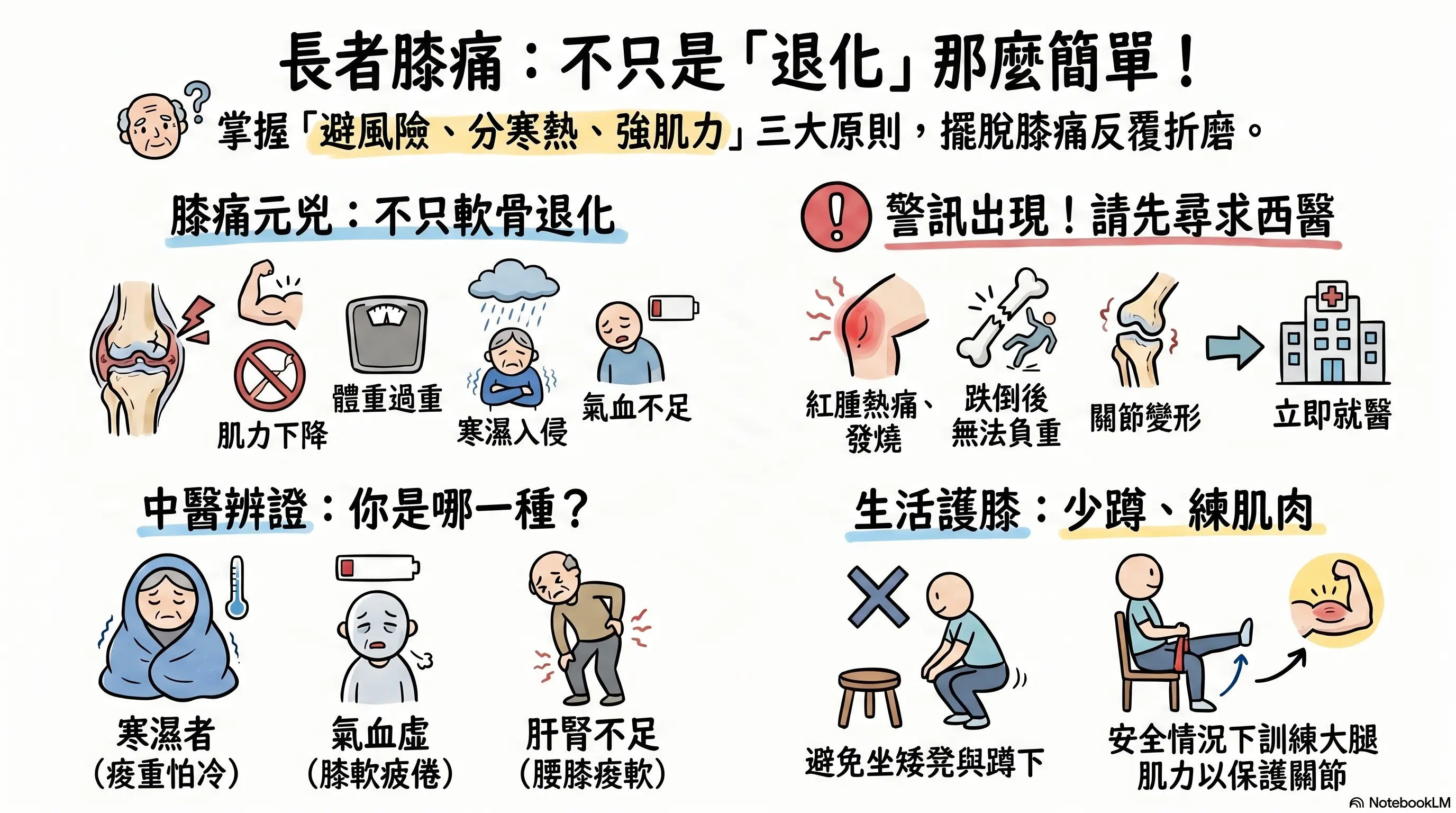 To help readers quickly grasp the content, the cover image was generated with NotebookLM. Some Chinese characters may not render correctly.
Recurrent knee pain in older adults rarely appears only once and then disappears. Some people feel more soreness and heaviness in damp weather. Others worsen after stairs, improve slightly with a few days of rest, then flare again. Families often wonder: is this just degeneration, should they keep applying pain patches, or is it time for investigation?
Osteoarthritis is certainly common, but repeated knee pain often reflects several factors at once: degeneration, reduced muscle strength, body-weight load, cold-damp patterns, qi-blood deficiency, old injuries, and reduced activity. If every flare is dismissed as “just ageing”, important risks such as falls or acute inflammation may be missed.
This article explains common causes of recurrent knee pain, which situations should be checked by Western medicine first, how TCM differentiates cold-damp, qi-blood, and liver-kidney patterns, and how daily habits may reduce recurrence.
Recurrent Knee Pain Is Not Always Simple Degeneration
Degenerative knee arthritis is commonly linked to long-term wear, thinning cartilage, weak muscles and tendons around the joint, excess body weight, and posture or movement habits. Typical features include pain after prolonged walking, pain on the stairs, stiffness after sitting, and difficulty squatting or standing up. Some people also experience intermittent swelling or deformity.
However, one older patient may have several contributing factors at the same time. Mild degeneration may lead to fear of movement, then loss of thigh strength. Once muscle strength falls, the knee has to bear more stress. Damp weather, cold air-conditioning, lifting, or repeated stairs can then make the pain reappear.
So the key question is not simply whether degeneration exists, but why the pain has returned this time, and whether it is still a stable chronic problem or something more urgent.
How Can Common Causes Be Distinguished?
| Possible cause | Common clues | Suggested direction |
|---|---|---|
| Osteoarthritic change | Pain after walking, stairs, or squatting, eased somewhat by rest | Assess severity, strength, and daily load |
| Muscle weakness | Soft knees, poor stair strength, unstable gait | Safe strengthening and fall prevention are needed |
| Cold-damp obstruction | Heaviness worsens with damp weather, air-conditioning, or colder days | TCM pattern-based care may help; avoid excessive self-heat treatment |
| Qi-blood deficiency | Fatigue after walking, weak knees, slow recovery, pale complexion | Review nutrition, sleep, and overall stamina |
| Old injury or tendon/meniscus strain | Recurrent pain after a twist, pain with specific movements | Ligaments, meniscus, or soft tissue may need evaluation |
| Acute inflammation or gout | Sudden red, hot, tender swelling | Seek medical care first; do not self-massage or use moxa aggressively |
| Lumbar or nerve-related issue | Knee pain with low-back pain, numbness, or radiating pain | Nerve compression should be considered |
If the pain appears in the same place and is triggered by the same activity each time, note it down. Pain location, movement limits, swelling, and any fall history are far more useful than simply saying “my knee hurts.”
When Should Western Medical or Emergency Assessment Come First?
Do not rely only on ointment, massage, hot compresses, or TCM care if any of the following is present:
- Severe knee pain after a fall or twist, with inability to bear weight
- Sudden red, hot swelling, especially with fever
- Obvious deformity, locking, inability to fully straighten or bend
- One-sided calf swelling, warmth, or pain
- Night pain, steadily worsening pain, or pain with unexplained weight loss
- Pain causing marked gait instability, near-falls, or actual falls
- Sudden deterioration while taking anticoagulants, regular painkillers, or multiple chronic medications
The safety priority in older adults is to rule out fracture, infection, acute gout, severe joint damage, or nerve problems first. Stable chronic pain is the stage at which TCM and lifestyle care can be discussed more meaningfully.
How Does TCM Understand Cold-Damp, Qi-Blood, and Recurrence?
TCM does not stop at the question of “degeneration or not.” The doctor asks how the pain behaves, how weather affects it, what happens after activity, whether the knee feels cold or hot, whether swelling is present, and how sleep, appetite, bowel habits, nocturia, chronic illness, and medication all fit together.
| TCM pattern | Common features | Treatment focus |
|---|---|---|
| Cold-damp obstruction | Aching heaviness, cold sensitivity, worse with damp weather or cold air | Warm the channels, dispel cold and damp, free the collaterals |
| Damp-heat obstruction | Red, hot, swollen pain, dry mouth, yellow greasy tongue coat | Acute infection or gout must first be excluded |
| Qi-blood deficiency | Weak knees, fatigue after walking, slow recovery | Tonify qi and nourish blood, alongside strength and nutrition work |
| Liver-kidney deficiency | Sore low back and knees, reduced leg strength, nocturia, tinnitus | Support liver-kidney function and strengthen sinews and bones |
| Blood stasis in the collaterals | Fixed stabbing pain, old injury, reduced movement | Invigorate blood and free the channels, with caution if anticoagulants are used |
Depending on the case, TCM may use herbs, acupuncture, moxibustion, manual therapy, topical treatment, and lifestyle advice. The aim is to reduce recurrence, improve muscle and tendon support, enhance function, and support quality of life, not to promise reversal of worn cartilage.
How Can Daily Life Reduce Recurrence?
-
Avoid prolonged squatting and low stools.
These positions increase knee load and commonly aggravate degenerative pain. -
Spread activity and rest through the day.
Do not suddenly climb many stairs or lift heavily in one session. Housework can be divided into smaller blocks. -
Keep body weight in a suitable range.
More body weight means more load through the knee. This matters even more when diabetes, hypertension, or high lipids are also present. -
Build safe leg-strength training.
Thigh strength protects the knee, but training must be tailored and progressive. If pain is marked or balance is poor, seek professional advice first. -
Pay attention to footwear and fall prevention.
Worn soles, slippery shoes, or poor fit may worsen both knee stress and fall risk. -
Do not rely indefinitely on painkillers alone.
Older adults are more vulnerable to medication side effects. Recurrent pain deserves a proper explanation, not just repeated suppression.
How Aspira TCM Evaluates Recurrent Knee Pain
At Aspira TCM, Dr Wong will first ask how long the pain has been present, whether there has been a fall or twisting injury, how stairs and walking are affected, whether redness and heat are present, whether low-back pain or leg numbness accompanies it, what medication is being taken, and whether X-rays or other tests have already been done.
If the condition is stable and appropriate for TCM care, treatment may be planned around cold-damp, qi-blood deficiency, liver-kidney deficiency, blood stasis, or muscle imbalance, with acupuncture, herbs, manual care, external treatment, and daily-life guidance. If fracture, acute inflammation, infection, gout, nerve compression, or severe degeneration is suspected, Western investigation or specialist care will be advised first.
If you or an older family member has recurrent knee pain, difficulty on stairs, unstable walking, or worsening pain with weather changes, it helps to record the pain site, trigger movements, fall history, medication use, and any previous test results before booking an assessment.
FAQ — Common Questions About Knee Pain in Older Adults
Q1: Does recurrent knee pain in older adults always mean degeneration?
No. Osteoarthritis is common, but recurrent pain may also relate to muscle weakness, cold-damp patterns, old injuries, gout, acute inflammation, lumbar nerve problems, or falls.
Q2: If damp weather makes knee pain worse, does that mean a cold-damp pattern?
Possibly, but it is still important to assess whether there is red-hot swelling, functional limitation, degeneration, or an old injury. Weather alone is not enough to make a diagnosis.
Q3: Can acupuncture be used for knee pain?
Stable knee pain without acute red-hot swelling or trauma red flags may be suitable for acupuncture after assessment. But if weight-bearing is impossible after a fall, the joint looks deformed, or fever is present, seek medical care first.
Q4: Should older adults with knee pain rest completely?
Load should be reduced during acute flares, but complete long-term inactivity weakens the muscles further and increases both pain and fall risk. The better approach is safe activity and strengthening based on the individual situation.
Q5: What should I prepare before seeing a TCM doctor?
Bring information about the pain site, aggravating and relieving factors, any fall or twisting injury, medication list, X-rays or other reports, and whether redness, heat, or gait instability has appeared recently.
Related reading:
Disclaimer: This article is for health education only and cannot replace personal consultation, imaging, medication, or treatment advice. Seek medical care promptly for sudden red-hot swelling, inability to bear weight after a fall, fever, joint deformity, one-sided calf swelling and pain, or steadily worsening pain. Any medication change should first be discussed with the treating doctor.
Disclaimer: This article is for health education and reference purposes only and does not constitute medical advice, diagnosis, or treatment. Each patient's condition is unique and treatment outcomes vary. Please consult a registered TCM practitioner or qualified healthcare professional for health concerns.
Further Reading
Hand-picked related articles and real cases to read next.
Sarcopenia & Muscle Loss: Warning Signs, Tests & Prevention
If you or an older family member has weaker limbs, poorer grip strength, slower walking, or more frequent falls, it may not be ageing alone. This guide explains common causes of sarcopenia, the risks it brings, how to screen for it, and how exercise, protein intake, and early assessment may help reduce muscle loss.
Low Back Pain: 6 Common Causes & TCM Treatment Approaches
Low back pain is not always simply “kidney deficiency” or muscle fatigue. It may also be related to muscle strain, disc herniation, degenerative lumbar disease, kidney stones, urinary tract infection, or pelvic inflammation. This article explains six common causes of low back pain from a TCM perspective and outlines key distinctions and treatment directions.
Want to learn more? WhatsApp us for a free consultation
Book via WhatsAppExplore our full range of treatments: Traditional TCM Services
Related Articles
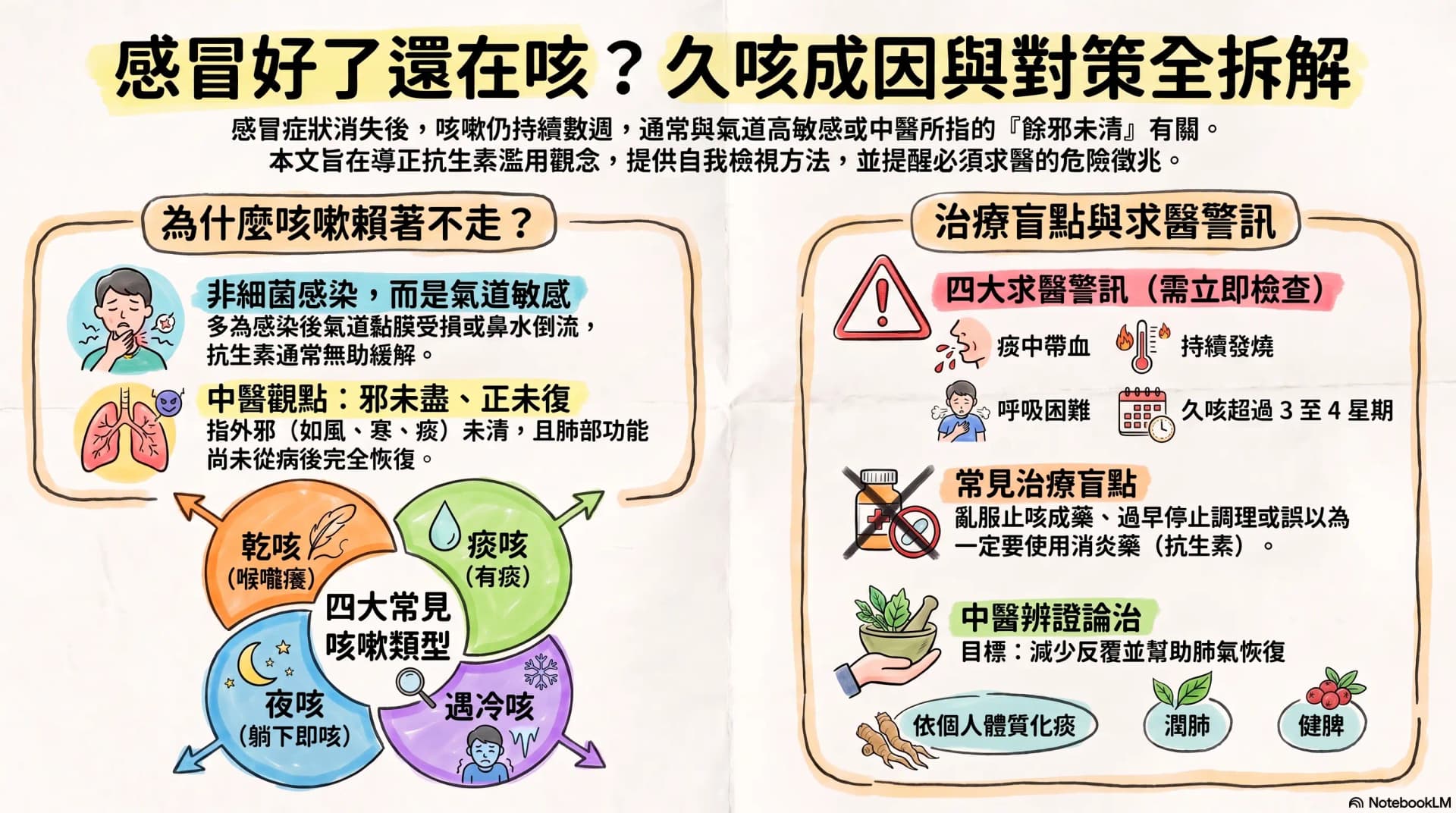
The Cold Has Gone but the Cough Will Not Clear: Causes of a Lingering Post-Cold Cough and How TCM Can Help
The cold is gone, but the cough drags on for weeks. This article breaks down the common types and causes of a lingering post-cold cough, the situations that warrant medical attention, the treatment blind spots, and how Chinese medicine can help through pattern differentiation.
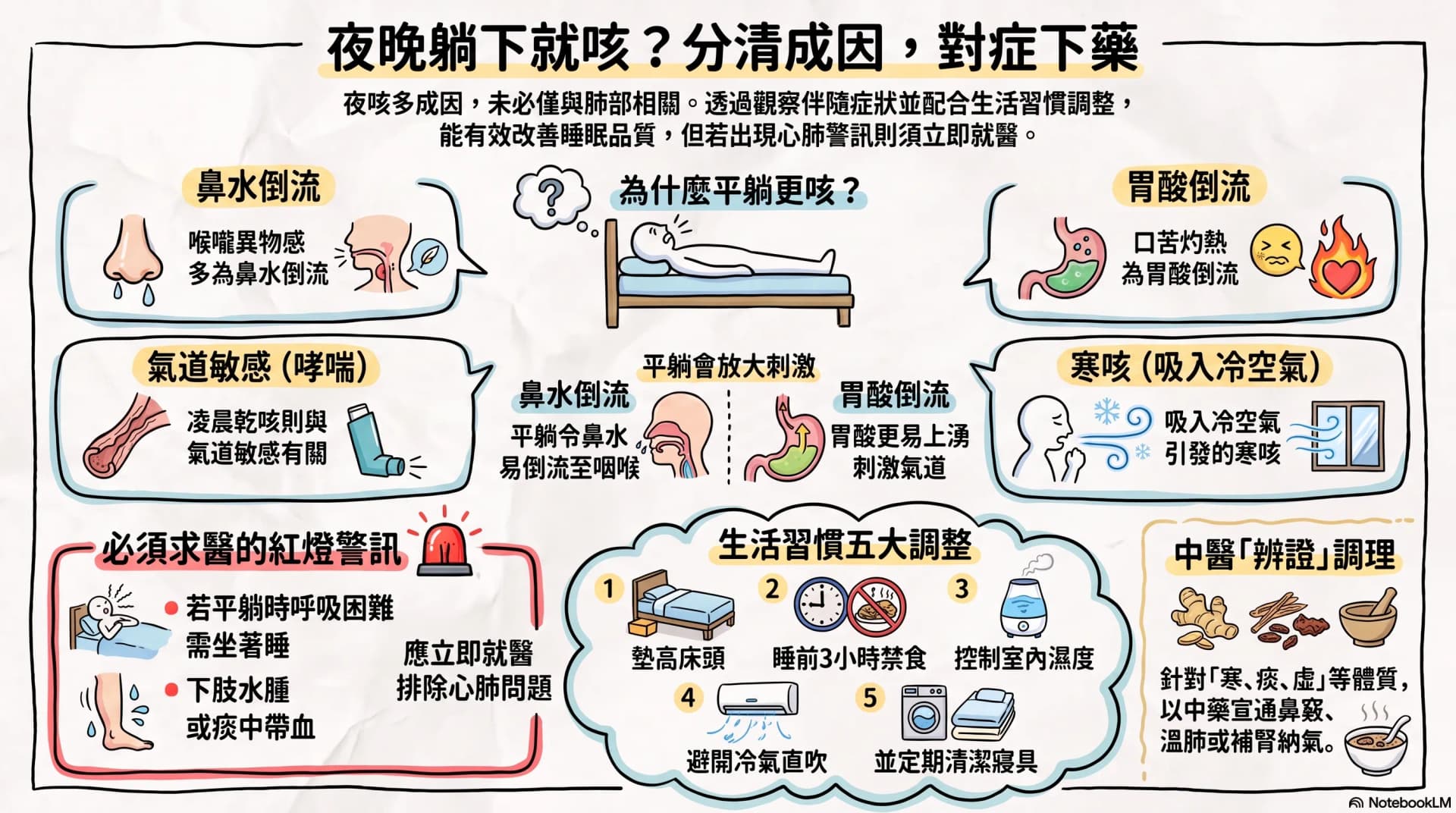
A Cough That Comes On When You Lie Down at Night: Common Causes and How TCM Can Help
Fine during the day, but coughing the moment you lie down, or waking at night? A night cough has more than one cause, and some have little to do with the lungs. Learn how to identify the type by accompanying symptoms, why lying flat makes it worse, when to seek medical care, and how Chinese medicine can help.
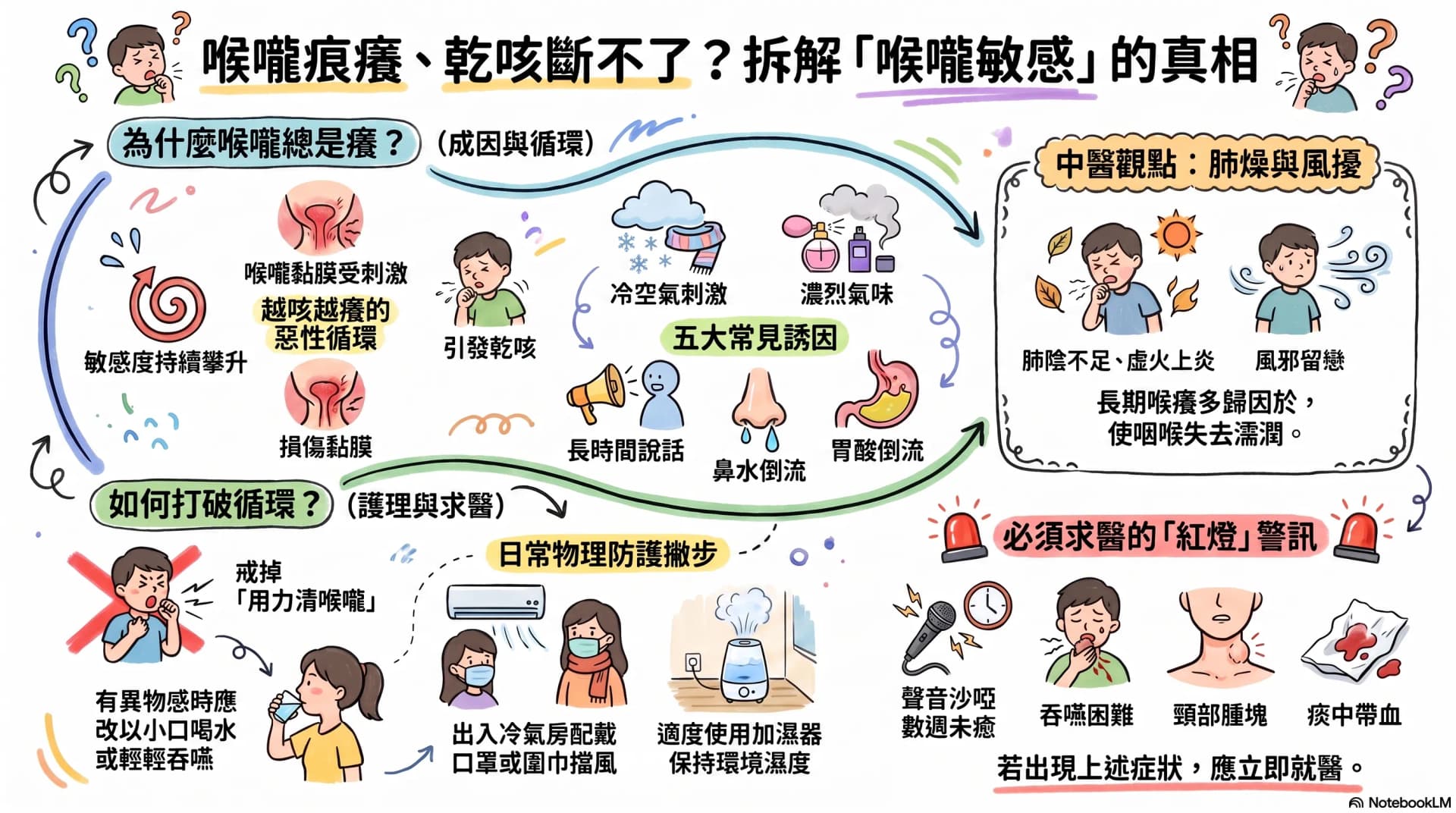
An Itchy Throat and a Cough Whenever You Speak: Throat Sensitivity and Sensitive Cough
A long-standing itchy throat with a dry cough triggered by talking, cold air or smells — not a cold, yet recurring for years. This article explains the causes of throat sensitivity and sensitive cough, how to distinguish its links with allergic rhinitis, acid reflux and voice overuse, when to see a doctor, and how Chinese medicine can help.