Do Men Have a “Period” Too? A TCM Look at Male Mood Swings, Fatigue and Hormonal Change — Plus 5 Ways to Find Relief
Do men have a period too? Men have no regular cycle like menstruation, so the “male period” is not a formal diagnosis — it describes the mood and energy swings driven by hormones, stress, sleep and lifestyle. This article covers the signs, the causes, how it differs from a woman’s period, how TCM assesses it, and five everyday ways — teas, foods and acupressure points — to find relief.
Medical review: Dr. Tai Wai Ho, Samson,Registered Chinese Medicine Practitioner #008702
1-Minute Quick Answer
The “male period” is not a formal diagnosis — it describes the mood and energy swings driven by testosterone, stress, sleep and lifestyle, bringing irritability, fatigue, poor focus and lower libido. TCM commonly sees four patterns and offers constitution-based care. This guide adds five everyday ways to find relief and the red flags for seeing a doctor early (reviewed by Dr Tai, CMCHK 008702).
Do Men Have a “Period” Too? A TCM Look at Male Mood Swings, Fatigue and Hormonal Change
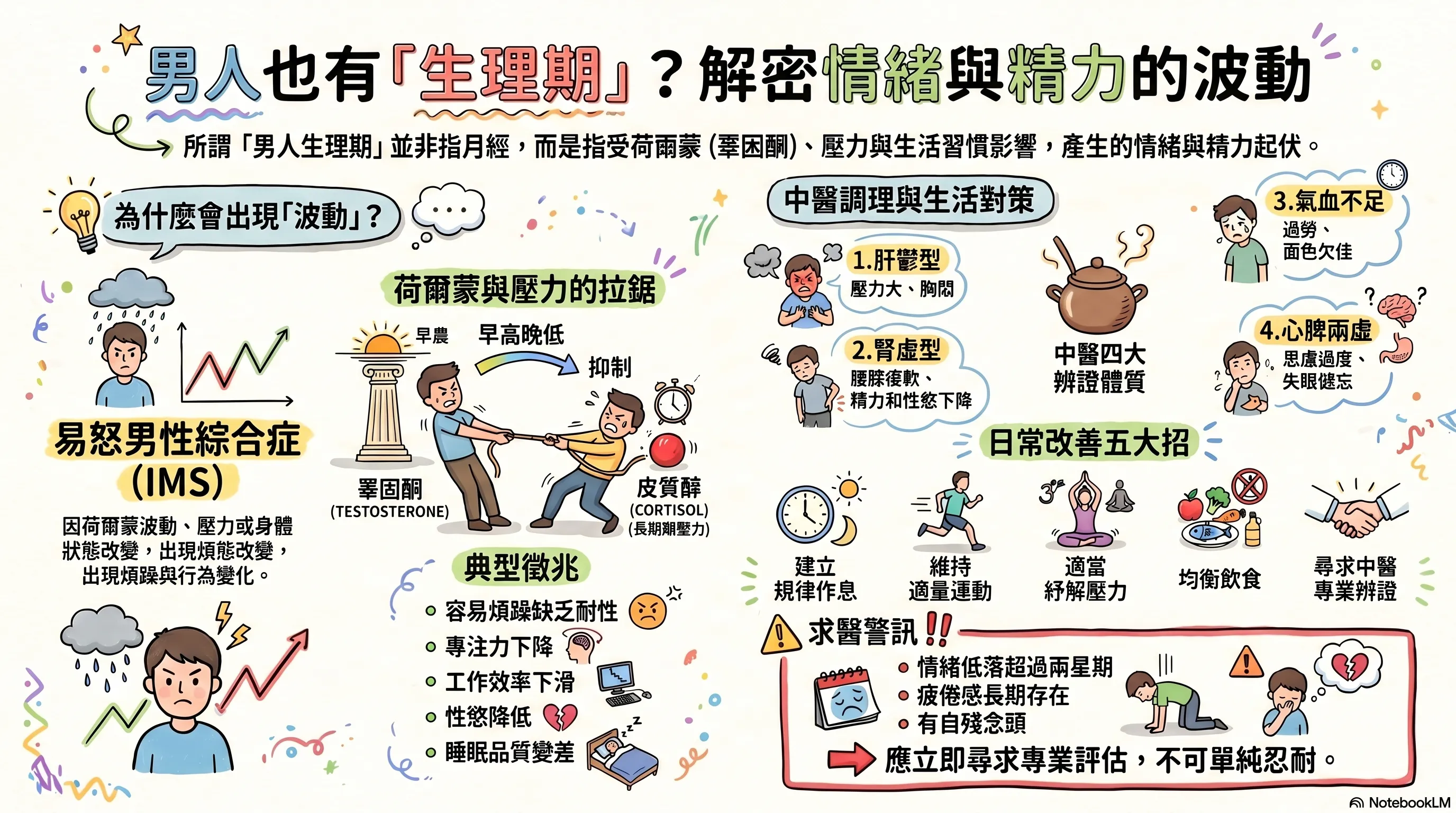 To help readers quickly grasp the content, this image was generated by NotebookLM. Some Chinese characters may not render correctly.
“Do men have a period too?” “Can a man’s mood swing because of hormones too?” These questions have become increasingly common in online searches in recent years.
Many men notice that during certain stretches they feel especially tired, irritable, or low, and lose interest in work, exercise, or their usual hobbies — which leads them to wonder whether a so-called “male period” really exists.
From a modern medical point of view, men do not have a regular physiological cycle the way women do with menstruation, so the “male period” is not a formal medical diagnosis. That said, a man’s hormone levels, sleep quality, stress, and lifestyle genuinely affect mood and energy, and these can fluctuate more noticeably during certain periods.
So the popular term “male period” is, more accurately, the ups and downs in mood and energy that come from changes in the body and hormones — rather than a true menstrual cycle.
What Do Male Mood and Energy Fluctuations Look Like?
When the body is under strain, some men may experience:
- Irritability or a lack of patience
- Low spirits and reduced concentration
- A drop in work efficiency
- Tiredness or slower recovery
- Poorer sleep quality
- Loss of motivation for activities they usually enjoy
- Lower libido than usual
- Becoming more sensitive to their surroundings
Some research refers to this as Irritable Male Syndrome (IMS), a term used to describe the emotional and behavioural changes men experience due to hormonal fluctuation, stress, or shifts in their physical state.
It is worth noting, however, that occasional mood swings are normal. If the symptoms persist and start to affect work, relationships, or quality of life, it is worth seeking professional assessment.
Why Do Men Experience Something Resembling a “Period”?
Testosterone naturally fluctuates
Testosterone is one of the key male hormones, closely tied to energy, mood, muscle mass, and sexual function. Generally, testosterone is higher in the morning and gradually falls through the afternoon and evening — which is partly why some men feel more energetic in the morning and more easily tired after dusk.
Stress affects hormonal balance
Under prolonged high pressure, the body secretes more of the stress hormone cortisol. When cortisol stays elevated for a long time, it can affect testosterone production, leading in turn to fatigue, poorer sleep quality, unstable mood, and low energy.
Lack of sleep affects recovery
Testosterone production is closely linked to deep sleep. Chronic late nights, shift work, or poor sleep quality can all disrupt hormonal balance, making fatigue, reduced concentration, and mood swings more likely.
Changes with age
Men’s testosterone levels generally begin a gradual decline after the age of thirty. With age, some men may notice lower energy, reduced muscle mass, poorer sleep, or changes in libido — these are also common features of the so-called male menopause (andropause).
The influence of lifestyle
Excess alcohol, lack of exercise, being overweight, a high-sugar diet, and an irregular routine can all increase the likelihood of fatigue and mood swings. Often the problem is not hormones alone, but the combined result of an overall lifestyle.
How Is the Male “Period” Different From a Woman’s Period?
Although both involve hormonal change, they are fundamentally different.
A woman’s menstrual cycle is regular, driven mainly by changes in oestrogen and progesterone, and accompanied by ovulation and menstruation. Men, by contrast, have no fixed monthly cycle; their mood and energy changes are influenced more by testosterone, stress, sleep, and lifestyle.
The table below sets out the differences at a glance:
| Comparison | Female period | Male “period” (nickname) |
|---|---|---|
| Regular cycle? | Yes, roughly every 28 days | No fixed monthly cycle; mainly a daily rhythm plus irregular fluctuation |
| Main hormones | Cyclical oestrogen and progesterone | Testosterone, shifting with time of day, stress and sleep |
| Predictability | Higher; can be tracked | Lower; often triggered by stress or routine |
| Bleeding | Yes, menstruation | None |
| Medical definition | Clearly defined | A popular term, not a formal diagnosis |
The “male period,” therefore, is not a true physiological cycle, but rather a popular term describing the ups and downs in a man’s physical state.
How Does TCM Understand Male Mood and Energy Fluctuations?
While TCM does not use the concept of hormones, it has a well-developed understanding of the relationship between the emotions, sleep, energy, and bodily function. In clinical practice, recurring fatigue, irritability, and low energy in men commonly relate to the following constitutional patterns.
Liver qi stagnation pattern
TCM holds that “the liver governs the free flow” and is closely tied to emotional regulation. When stress accumulates over time without a proper outlet, “liver qi stagnation” can arise. Common signs include:
- Irritability
- A tight chest
- Neck and shoulder tension
- Poor sleep
- Fluctuating mood
Kidney deficiency pattern
TCM holds that “the kidneys store essence,” linking them to reproductive function, vitality, and the ageing process. Common signs include:
- Tiredness
- A sore lower back and knees
- Reduced libido
- Low energy
- Slower recovery
Qi and blood deficiency pattern
An irregular routine, an unbalanced diet, or long-term overwork can all lead to qi and blood deficiency. Common signs include:
- Tiredness
- Dizziness
- Reduced concentration
- A dull complexion
- Lack of drive
Heart and spleen deficiency pattern
Long-term overthinking or excessive work stress can deplete the “heart and spleen.” Common signs include:
- Forgetfulness
- Mental fatigue
- Poor sleep quality
- Palpitations
- Difficulty concentrating
The focus of TCM care is not simply to improve one measurement, but to use pattern differentiation to identify the root cause behind the mood and energy fluctuations.
What Can You Improve in Daily Life? Five TCM Ways to Find Relief
Below are five everyday directions, including teas, foods, and acupressure points commonly used in TCM. A reminder: these are about easing symptoms and supporting your constitution, not treating a specific disease. If the situation persists, a practitioner should still assess you in person.
1. Build a regular routine Stable sleep times help maintain hormonal balance and are an important foundation for easing fatigue and mood swings. TCM likewise values sleeping before 11 pm to nourish “liver blood.”
2. Keep moderately active Regular exercise supports circulation, improves metabolism, and stabilises mood, while also lifting overall energy; in TCM terms it “moves qi and blood and raises yang.” Avoid training to total exhaustion, however, as that depletes qi.
3. Manage stress and soothe the liver Long-term stress takes a toll on body and mind, so exercise, hobbies, and time with friends and family all help. For liver qi stagnation, gentle herbal teas such as rose, dried tangerine peel (chenpi), or mint may help move qi (check with a practitioner first if you have a heat-prone constitution or plan to take them long-term). You can also press Taichong (LR3), in the depression between the first and second metatarsal bones on the top of the foot, to soothe the liver, and Neiguan (PC6), on the inner forearm just above the wrist crease, to ease the chest and calm the mind — a few minutes each.
4. Eat a balanced diet Cut back on excess alcohol, sugar, and greasy food, and lean towards natural, balanced meals. Foods that gently support kidney qi — such as black beans, walnuts, Chinese yam (huaishan), and chestnuts — may help, with the exact mix tailored to your constitution.
5. Seek professional TCM care If mood swings, fatigue, or sleep problems keep recurring, TCM can use pattern-based diagnosis together with herbal medicine and acupuncture to help regulate your constitution.
When Should You See a Doctor Sooner Rather Than Later?
If any of the following appear, it is best not to assume it is simply a “male period” and to seek assessment early:
- Low mood lasting more than two weeks
- Long-standing fatigue that affects daily life
- Sleep problems that keep worsening
- A clear drop in sexual function
- Sudden weight changes
- Persistent palpitations or other unexplained physical discomfort
- Thoughts of harming yourself or others
Finding the cause early is often more important than simply enduring it.
Frequently Asked Questions
Do men really have a period?
Men do not have a fixed physiological cycle like a woman’s menstruation, so there is no “period” in the true sense. The popular term “male period” mainly refers to the mood and energy fluctuations that arise under the influence of hormones, stress, and lifestyle.
How long does a “male period” last?
Men’s mood and energy fluctuations have no fixed duration and may last anywhere from a few days to a few weeks, depending on the individual’s stress levels, sleep quality, and physical condition.
What are the symptoms of declining testosterone?
Common signs include fatigue, low energy, reduced libido, loss of muscle mass, reduced concentration, and low mood.
Can TCM help with male mood swings?
TCM tailors its approach to each person’s constitution through pattern differentiation. Common directions include soothing the liver and regulating qi, tonifying the kidneys and boosting qi, improving sleep, and adjusting the overall constitution to help with mood and energy.
Are the male menopause and the “male period” the same thing?
No. The male menopause relates mainly to ageing and the gradual decline of testosterone, whereas the so-called male period refers broadly to short-term fluctuations in mood and energy.
Understanding Your Body Matters More Than Ignoring Its Signals
Mood and physical state have always been inseparable. When the body endures prolonged stress, lack of sleep, or constitutional imbalance, the emotions are often the first to send out a signal. For men and women alike, recognising your own bodily changes and adjusting in good time is an important part of staying well.
The monthly ups and downs women go through are often dismissed as “being emotional”; the irritability and fatigue men struggle to put into words are just as often brushed off as “overthinking” or “a midlife crisis.” A little more understanding and a little less blame can spare a great many pointless arguments — being considerate of the other person’s body is, in itself, a form of gentleness.
If you have lately been feeling tired, irritable, low, or short on energy, it is best to seek professional assessment early and find the underlying cause, rather than simply putting it down to stress or age.
── Dr Tai Wai-ho | Registered Chinese Medicine Practitioner (Reg. No. 008702)
Men’s Health and Constitutional Care in Lai Chi Kok
Aspira TCM Clinic is located in Lai Chi Kok, where Dr Tai regularly helps with:
- Fatigue and low energy in men
- Sleep problems
- Stress-related discomfort
- Men’s health (andrology) care
- Concerns relating to sexual function
- Constitutional regulation
If any of these resonate with you, you are welcome to book an in-person consultation for a detailed, constitution-based assessment.
How to book:
- 📍 Address: Unit 2706, Saxon Tower, 7 Cheung Shun Street, Lai Chi Kok
- 📞 Phone: 2110 9337
- 📱 WhatsApp: Book here (9679 2293)
Medical disclaimer: This article is for health education only and does not constitute personalised medical advice. Every person’s constitution and underlying causes differ, and treatment plans and outcomes vary accordingly. If symptoms persist or worsen, please seek prompt assessment from a qualified healthcare professional.
Disclaimer: This article is for health education and reference purposes only and does not constitute medical advice, diagnosis, or treatment. Each patient's condition is unique and treatment outcomes vary. Please consult a registered TCM practitioner or qualified healthcare professional for health concerns.
Further Reading
Hand-picked related articles and real cases to read next.
TCM vs Western Medicine: 6 Common Conditions Compared
Is TCM or Western medicine better? The honest answer: it depends on your condition and needs. This article fairly compares both approaches across six common conditions — cough, eczema, pain, insomnia, digestive issues, and menstrual irregularities — to help you make the right choice.
Insomnia: Sleeping Pills or TCM? An Honest Comparison
Sleeping pills offer immediate relief but carry dependency risks; TCM treats insomnia at the root but requires patience. This article honestly compares both approaches — benefits, risks, costs, and who each is best suited for — to help you find the right solution for your sleepless nights.
Want to learn more? WhatsApp us for a free consultation
Book via WhatsAppExplore our full range of treatments: Traditional TCM Services
Related Articles
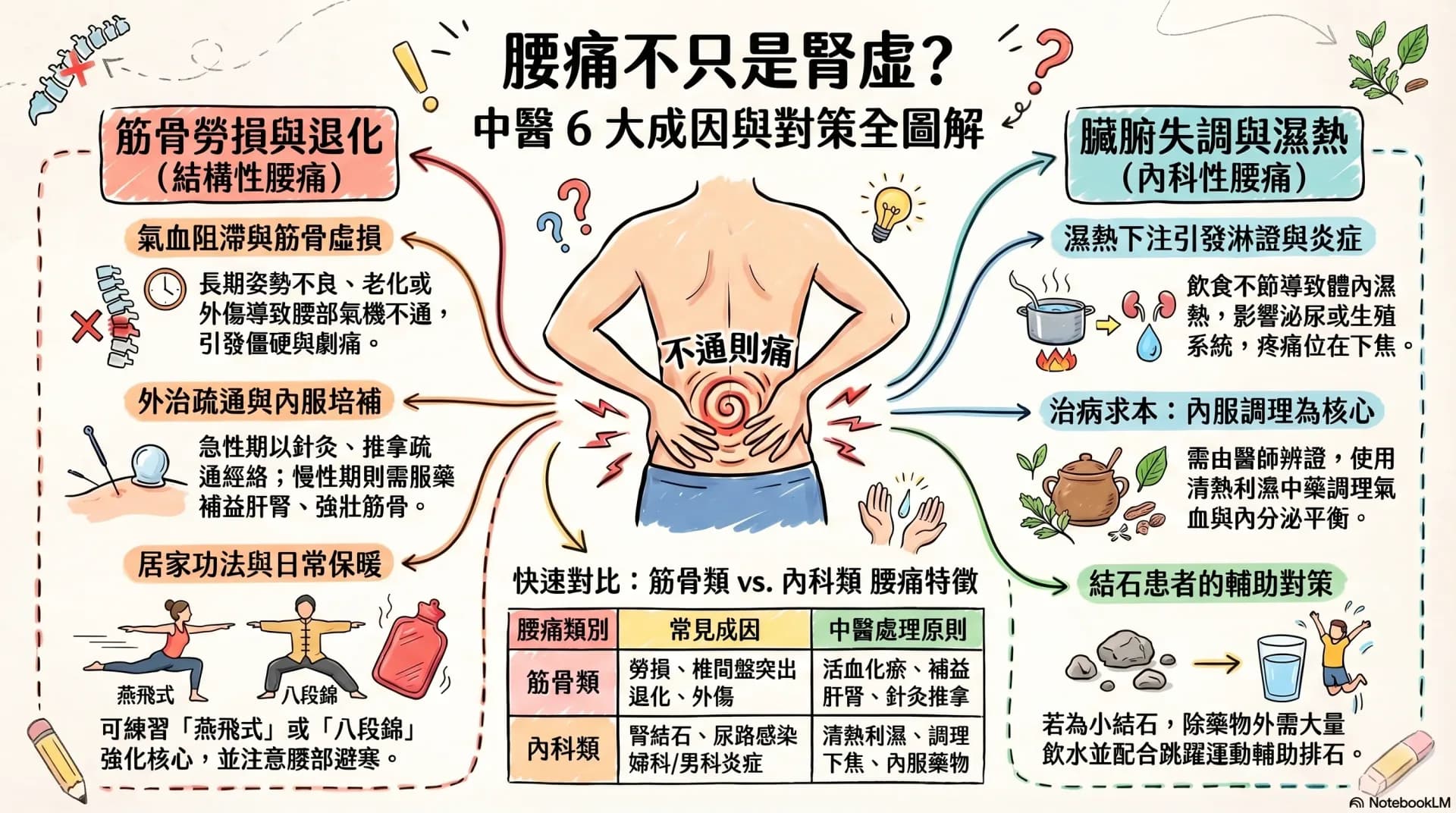
Low Back Pain: 6 Common Causes & TCM Treatment Approaches
Low back pain is not always simply “kidney deficiency” or muscle fatigue. It may also be related to muscle strain, disc herniation, degenerative lumbar disease, kidney stones, urinary tract infection, or pelvic inflammation. This article explains six common causes of low back pain from a TCM perspective and outlines key distinctions and treatment directions.
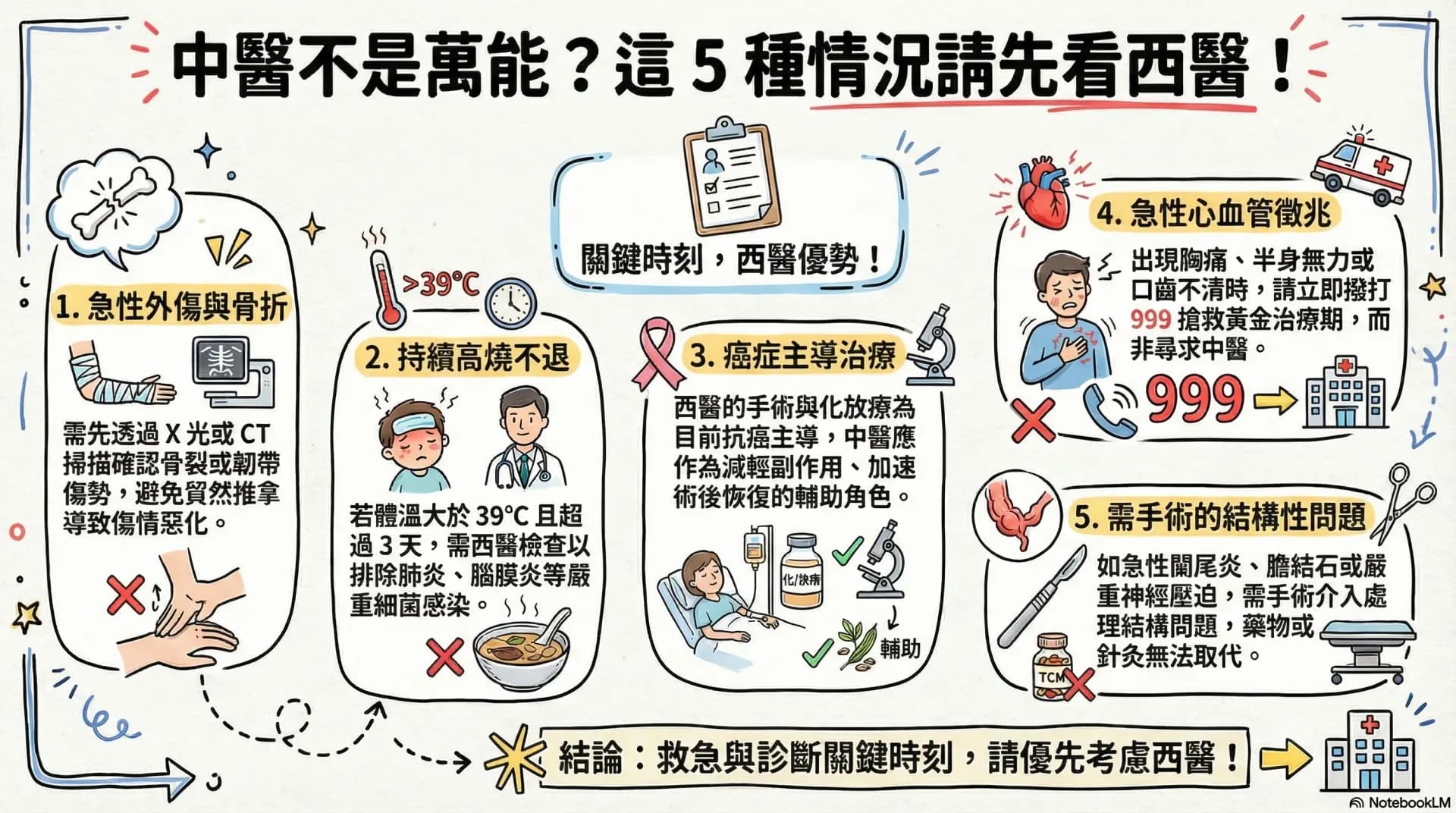
TCM Limitations: 5 Times to See a Western Doctor First
TCM has genuine strengths in chronic care and holistic wellness, but it is not the right first choice for every situation. This article honestly discusses 5 scenarios where Western medicine should come first, what TCM truly excels at, and how to make informed decisions between the two.
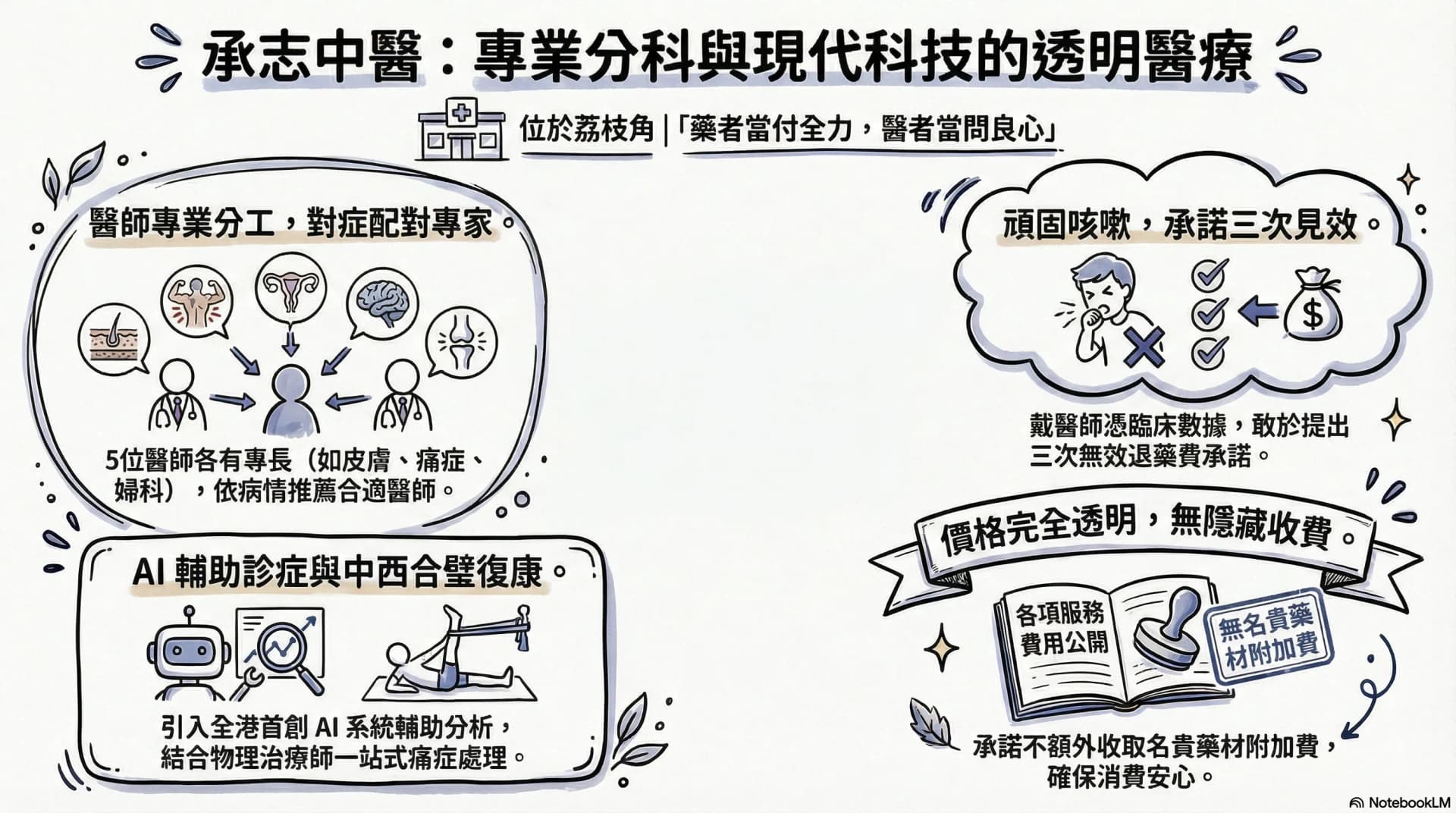
Is Aspira TCM Clinic Good? Doctors, Services & Real Reviews
Searching "Is Aspira TCM good?" means you're doing your homework — and we respect that. This article presents our doctor team, five clinic differentiators, real patient feedback, and our honest limitations, so you can decide if Aspira is right for you.