Why Is It Harder to Lose Weight After 30? TCM on 4 Signs of a Slowing Metabolism
Eating the same and exercising the same, yet weight loss stalls after 30 while the waistline creeps up? This guide explains common metabolic slowdown signals, the TCM constitutional patterns behind them, and when Western medical assessment should come first.
Medical review: Dr. To Ching, Jenny,Registered Chinese Medicine Practitioner #009330
1-Minute Quick Answer
After 30, basal metabolism drops and muscle mass declines, so the aggressive dieting and high-intensity workouts of your twenties tend to leave you more tired and stalled. Overlooked slowdown signs include morning puffiness, afternoon crashes, cold limbs and a waistline rising faster than weight. TCM commonly sees three patterns. Rapid weight change or neck swelling needs a thyroid and diabetes check first. Reviewed by Dr To Ching (CMCHK 009330).
Why Is It Harder to Lose Weight After 30? TCM on 4 Signs of a Slowing Metabolism
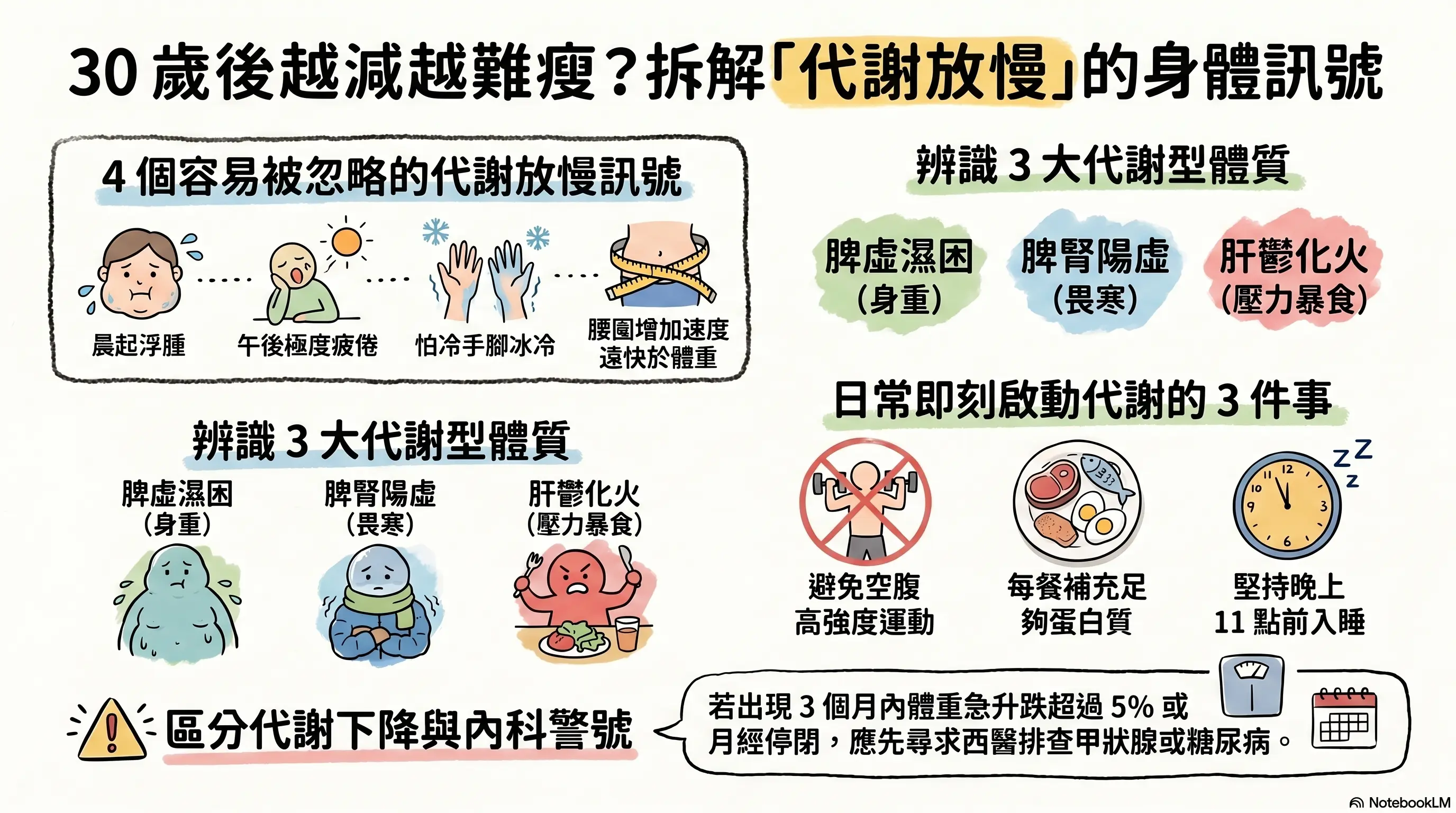 For quick reference, this image was generated by NotebookLM. Some Chinese characters may not render perfectly.
Medical review: Dr To Ching (CMCHK 009330 | Gynaecology, TCM aesthetics, thread-embedding weight loss, postpartum belly binding)
Many people notice the same pattern after 30: the food intake is similar, exercise has not changed much, yet weight loss becomes slower while the waistline quietly expands. This is not just about "getting older". It reflects changes in basal metabolism, muscle mass, sleep rhythm, stress and daily habits.
This article explains common signals of a slowing metabolism, the TCM constitutional patterns behind them, when medical checks should come first, and what you can start doing right away.
Important: If you have unexplained weight gain or loss, complete cessation of menstruation, obvious neck swelling, rapid heartbeat, or excessive thirst and urination, seek Western medical assessment first.
Why the same methods stop working after 30
Basal metabolic rate gradually falls with age, while muscle mass also tends to decline. If eating patterns, sedentary time, sleep quality and stress management do not change, small daily surpluses build up and often show first at the waist.
Another common issue is that people keep using the same aggressive methods that once worked in their twenties, such as extreme calorie restriction or over-reliance on high-intensity exercise. Short-term results may happen, but long-term fatigue, rebound appetite and plateaus are common.
Four commonly overlooked signs
1. Morning puffiness
Puffy eyelids, swollen fingers or a tighter ring in the morning may suggest impaired fluid metabolism. In TCM this often points to spleen deficiency with damp accumulation.
2. Afternoon crashes after lunch
If you routinely need coffee one or two hours after lunch, the spleen qi may not be adequately "lifting the clear". This can show up as poor daytime energy and weaker metabolic drive.
3. Feeling cold and having cold hands and feet
For some people this comes with delayed periods, night urination or low back weakness. TCM often interprets this as spleen-kidney yang deficiency.
4. Waist size increasing faster than body weight
This is one of the most useful warning signs. Even if weight changes only slightly, a clear increase in waist circumference suggests a shift in fat distribution toward the abdomen.
For Chinese adults, a waistline of 90 cm or above for men and 80 cm or above for women is already a warning sign for abdominal obesity and metabolic risk.
Three common TCM constitutions
| Constitution | Common features | Tongue | TCM direction |
|---|---|---|---|
| Spleen deficiency with dampness | Morning puffiness, afternoon fatigue, sticky stools, heaviness | Pale tongue, scalloped edges, thicker coating | Strengthen the spleen, transform damp |
| Spleen-kidney yang deficiency | Cold intolerance, cold limbs, night urination, low back weakness | Pale and puffy tongue | Warm and support spleen-kidney yang |
| Liver stagnation turning to heat | Stress eating, poor sleep, shoulder tension, dry or bitter mouth | Red tongue edges | Soothe the liver, clear heat |
Mixed patterns are very common in clinic. The goal is to identify why metabolism is slowing down, rather than treating every plateau as the same problem.
When Western medical checks should come first
- Weight gain or loss of more than 5% within three months
- No menstrual period for more than three months
- Neck swelling, tremor or palpitations
- Excessive thirst, frequent urination or marked fatigue
- Chest pain, breathlessness or leg swelling
These situations may point to thyroid disease, diabetes, anaemia or cardiovascular problems and should not be handled as a simple metabolism issue.
Three practical things to start with
- Avoid high-intensity exercise on an empty stomach.
- Keep a palm-sized serving of protein at every meal.
- Aim to sleep before 11 pm as often as possible.
How Aspira TCM Clinic evaluates this pattern
Dr To reviews weight and waist changes, sleep rhythm, diet structure, stress level, bowel habits, menstrual patterns, exercise type, tongue and pulse, and any ongoing medications or supplements. If the presentation suggests an internal medical issue, patients are advised to complete medical checks first.
FAQ
Can Chinese medicine directly raise metabolism?
Not in the simple sense of forcing up a number. TCM works by improving constitution, sleep rhythm, digestion and energy regulation, which may help the body use energy more efficiently.
Do I have to eat less and less after 30 to lose weight?
Usually no. Over-restriction can lead to muscle loss, fatigue and rebound appetite. A more sustainable plan is to improve structure: enough protein, more vegetables, and less sugary drinks and refined carbohydrates.
Can low menstrual flow be related to a slower metabolism?
Possibly. Long-term under-eating, low fat intake or qi-blood deficiency may affect both menstrual flow and metabolic function. Persistent changes should be assessed properly.
Can meal-replacement shakes replace proper meals long term?
They are better used as temporary convenience tools. Long-term use in place of meals can leave protein, fibre and micronutrient intake inadequate.
Disclaimer: This article is for health education and reference purposes only and does not constitute medical advice, diagnosis, or treatment. Each patient's condition is unique and treatment outcomes vary. Please consult a registered TCM practitioner or qualified healthcare professional for health concerns.
Further Reading
Hand-picked related articles and real cases to read next.
Eating Light but Not Losing Weight? A TCM Edema-Type Case Study
Eating light yet the scale will not budge — only the puffiness in the face, ankles and waistline persists? This case study follows Ya-lin (pseudonym), a 38-year-old office worker, through six months and explains how "eating clean but still not losing weight" often comes from a stack of small issues: salt, low protein, constipation, premenstrual fluid retention, phlegm-damp constitution, or internal disease. It also lists scenarios that warrant seeing a Western doctor first.
Does Black Coffee Help with Weight Loss? Timing and Side Effects
Black coffee may briefly raise metabolism and suppress appetite, but for those with acid reflux, palpitations, insomnia, chronic fatigue or premenstrual symptoms, it can do more harm than good. This article looks at the evidence and the TCM perspective, identifies five body types that should drink with care, and explains how to arrange timing and quantity sensibly.
Weight Unchanged but the Belly Keeps Growing? A TCM Turnaround Plan for Central Obesity in Office Workers
Weight has risen only 2 kg in six months, but the waist is 8 cm wider; the health-check report flags "elevated visceral fat" in red. This is a common frustration for women in their 30s working office jobs. This case study follows the typical consultation profile of "Ms Chan" (pseudonym) — explaining the TCM evaluation of sedentary central obesity, the spleen-damp-with-liver-stagnation pattern, the three-month phased plan, when to see a Western doctor first, and three things readers can start doing today.
Want to learn more? WhatsApp us for a free consultation
Book via WhatsAppExplore our full range of treatments: Traditional TCM Services
Related Articles
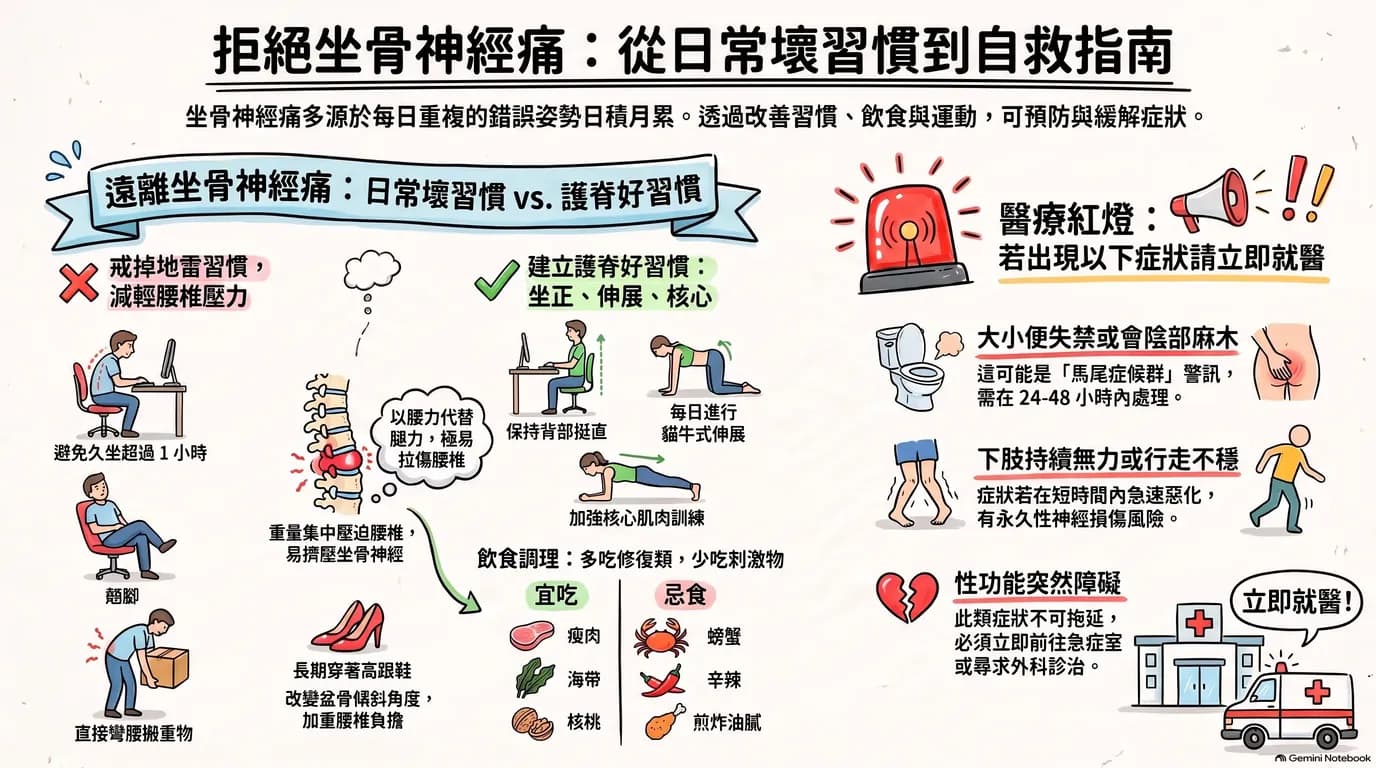
Sciatica Prevention: Bad Habits, Diet and Daily Care Tips
Sciatica isn't only about treatment — your daily habits and diet play a big role too. In this article, Dr Wong explains which everyday habits increase your risk of sciatica, which foods may help ease it, and simple daily habits that reduce the chance of it coming back.
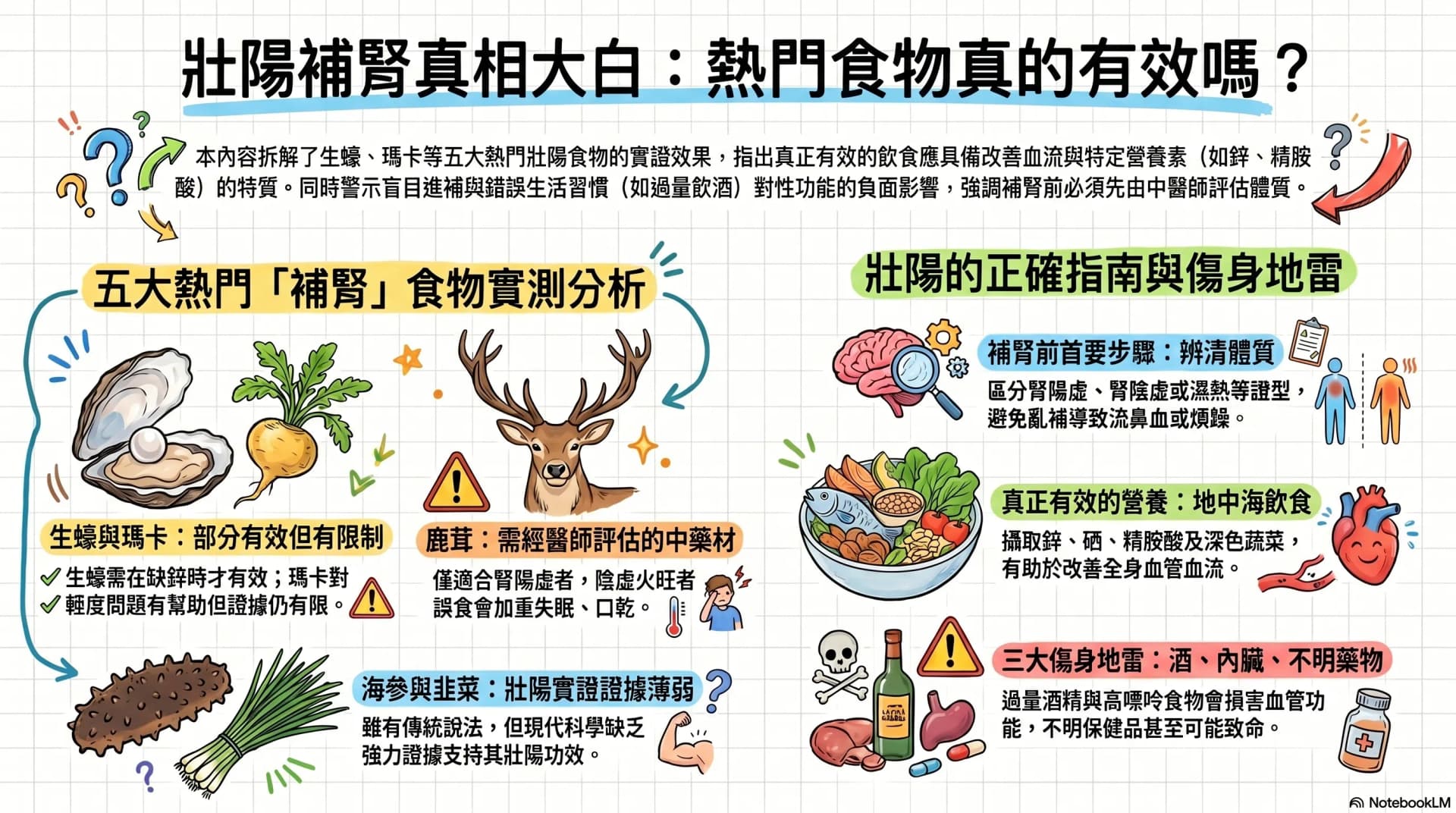
Do Oysters, Maca and Deer Antler Boost Male Vitality? 5 Myths
Do aphrodisiac foods actually work? This article opens with a rating table (effective / partly effective / effective within a TCM framework / weak evidence / no strong evidence), reviews the Chinese and Western medical evidence behind oysters, maca, deer antler, sea cucumber and Chinese chives, distils the 3 shared traits of foods that genuinely support male sexual function, and flags 3 commonly eaten items that can actually harm performance.
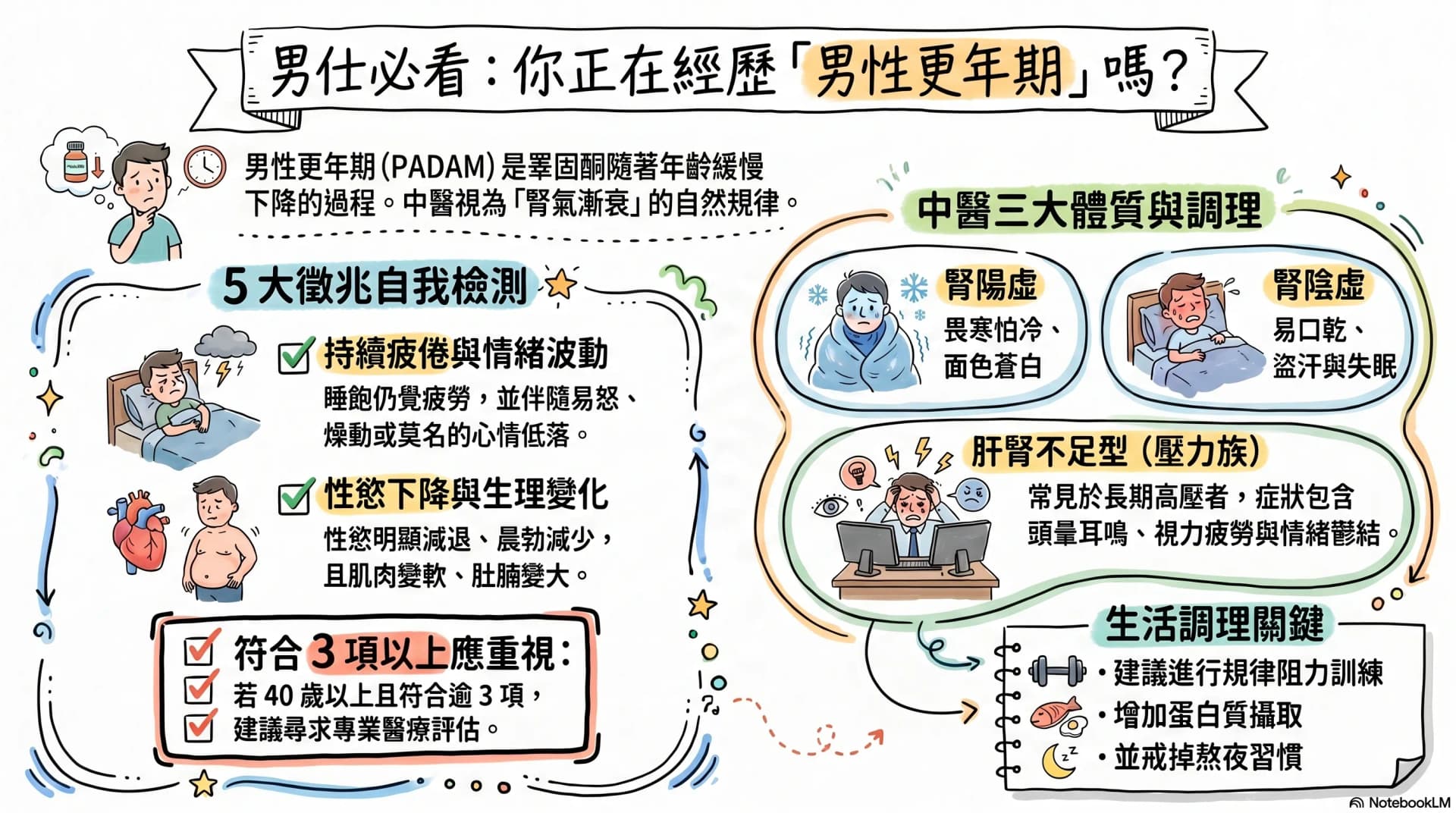
Male Menopause Through the TCM Lens: 5 Signs in Men Over 40
Unexplained fatigue, irritability, lower libido, poorer sleep and a growing belly after 40 are not just ageing or work stress — they may be male menopause. This article begins with a five-sign self-check, sets out three TCM patterns (kidney-yang deficiency, kidney-yin deficiency, liver-and-kidney insufficiency) with matching improvements, and compares the two treatment routes — testosterone replacement therapy versus TCM constitutional care.