Postpartum Lochia That Will Not Settle: Telling Normal From Abnormal, and When to Seek Care
Weeks after the birth and the lochia still has not settled. This article explains the normal course of lochia, how it differs from a period, which situations require immediate medical care, the common causes and misconceptions, and how Chinese medicine can help.
Medical review: Dr. To Ching, Jenny,Registered Chinese Medicine Practitioner #009330
1-Minute Quick Answer
Lochia turns from red to brown, then pale yellow or white, lessening and settling within weeks. Seek care immediately if it suddenly increases, turns bright red again, smells foul, or comes with fever or severe pain, which may indicate retained tissue or infection. TCM supports recovery but does not replace medical assessment (reviewed by Dr To Ching, CMCHK 009330).
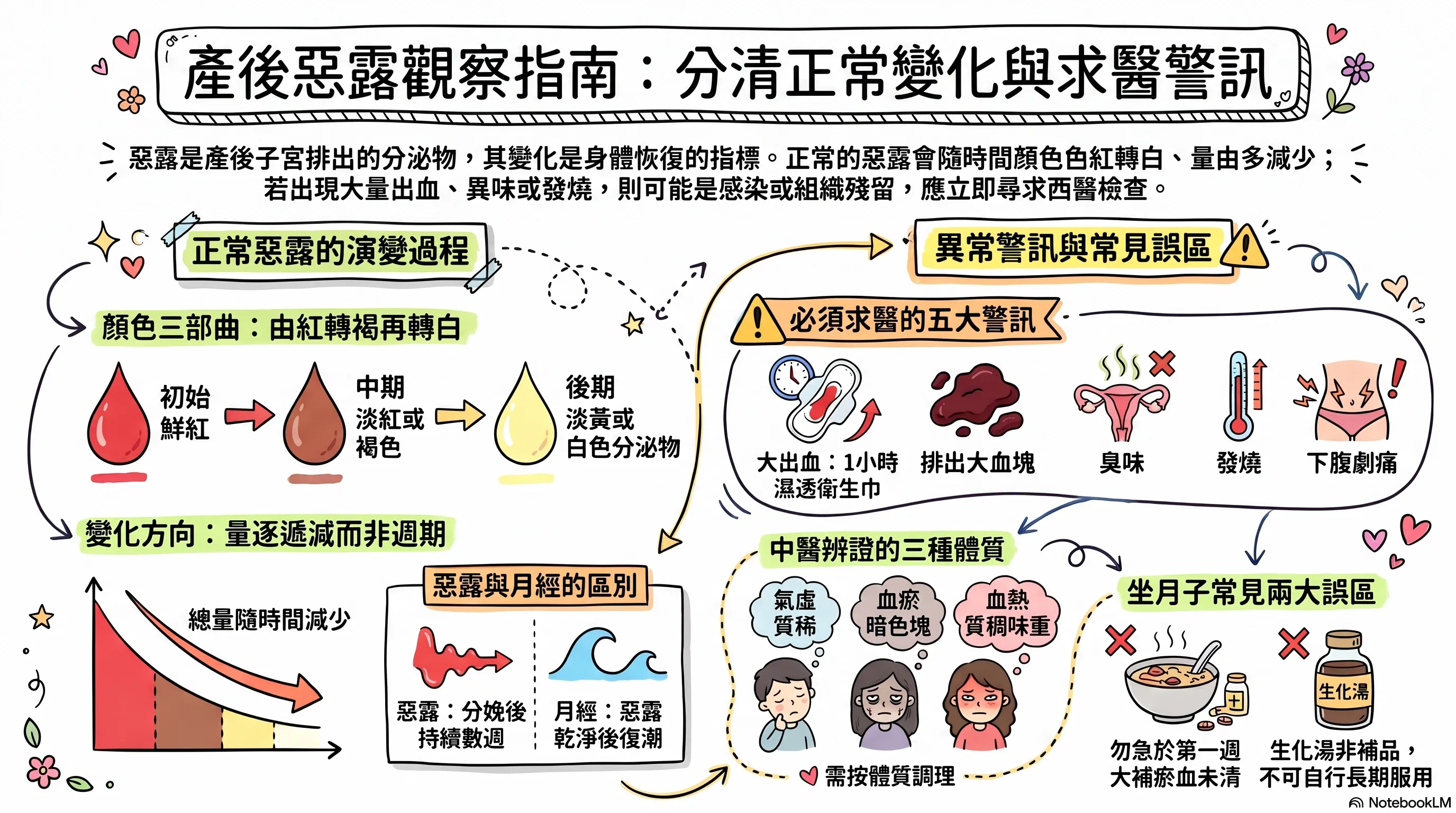 To help readers quickly grasp the content, this image was generated by NotebookLM. Some Chinese characters may not render correctly.
Important
Heavy bleeding within a short time, with dizziness or palpitations, is an emergency: seek immediate care or go to the accident and emergency department. If lochia that had faded turns bright red again, develops a foul smell, or comes with fever or severe lower abdominal pain, seek medical care promptly.
Weeks have passed since the birth, yet the lochia has not settled — red one day, brown the next, heavy then light, seeming to stop before returning two days later. Everyone has an opinion: drink something to "clear it out", or simply relax and give it time. Meanwhile you worry that your recovery is not going as it should, and fear that something is wrong with you.
In fact, lochia follows its own natural course. It need not be hurried along, nor should it simply be left indefinitely. What matters is knowing what is a normal change, and what is a sign to seek medical care.
This article first explains what normal lochia looks like and how it differs from a period, then lists the situations requiring immediate medical care, the common causes and misconceptions when lochia will not settle, and how Chinese medicine can help. By the end, you should have a clearer sense of whether your situation falls within the normal range, or warrants medical assessment.
First, What Normal Lochia Looks Like
Lochia is the discharge passed from the uterus after childbirth, containing blood, decidual tissue and secretions. It follows a broad course:
- Early (red lochia): bright red, heavier in volume, possibly with small clots.
- Middle (pale red or brown lochia): less blood, the colour fading to pale red or brown.
- Late (pale yellow or white lochia): mainly secretions, light in volume, turning pale yellow or almost white before gradually stopping.
Overall, lochia decreases in volume and fades in colour, and usually settles within a few weeks after delivery. Individual variation is considerable, however: vaginal or caesarean birth, whether you are breastfeeding, and how active you are after the birth can all affect how long it lasts. Rather than fixating on "how many days it should take", watch the direction of change — is it steadily fading and lessening, or repeatedly turning bright red and increasing again?
Circumstances differ from person to person. If you are unsure whether you fall within the normal range, consult a doctor or a registered Chinese medicine practitioner.
How Does Lochia Differ From a Period?
The moment that puzzles many mothers is when lochia has stopped for a while and then blood appears again — is the lochia returning, or has the period come back? Several points help distinguish them:
- When it appears: lochia begins immediately after delivery and lasts for weeks; a period usually returns some time after lochia has settled. For breastfeeding mothers, the return of periods is often later, and some see no period for months or longer, which is common.
- Pattern of change: lochia is a diminishing process — red to brown, then pale yellow or white — with steadily less volume; a period is a cyclical change within a single episode, with flow building from light to heavy and then tapering.
- Cyclical or not: periods return cyclically; lochia does not — it is a one-off process of postpartum recovery.
- Content: early lochia may contain decidual tissue, later becoming pale yellow or white discharge; menstrual blood is shed endometrium.
Take particular note: if lochia has faded or even stopped, and then bright red bleeding, heavy flow, or a foul smell appears, do not simply assume "the period is back". Especially if accompanied by fever or abdominal pain, seek medical care to find the cause rather than judging for yourself.
When Should You Seek Medical Care Immediately?
Seek medical care promptly if any of the following occur; some are emergencies requiring immediate attention:
- Heavy bleeding within a short time (for example, soaking a sanitary pad within an hour), or with dizziness, palpitations or pallor — this is an emergency; seek immediate care or go to the accident and emergency department;
- passing large clots;
- lochia that had faded turning bright red again, with markedly increased volume;
- lochia with an unusual or foul smell;
- accompanying fever, chills, or persistent severe lower abdominal pain, tender to the touch;
- lochia continuing for a very long time without settling.
These may be related to poor uterine involution, retained tissue, or infection (such as endometritis), and require examination and management by a doctor. Do not self-medicate or delay.
Common Causes When Lochia Will Not Settle
From a Western medical perspective, lochia that drags on is commonly related to:
- Poor uterine involution: the uterus does not contract well and fails to recover smoothly, so bleeding lingers.
- Retained placental or membrane tissue: tissue remaining in the uterus makes bleeding hard to stop.
- Infection: such as endometritis, usually with a foul smell, fever and abdominal pain.
From a Chinese medicine perspective, persistent postpartum lochia is usually related to three constitutional states:
- Qi-deficiency type: labour depletes qi and injures blood, and deficient qi fails to contain the blood. Lochia is heavy, pale and thin, with fatigue, shortness of breath and reluctance to speak.
- Blood-stasis type: static blood obstructs the uterus, and new blood cannot return to the vessels. Lochia is scant but persistent, dark with clots, with lower abdominal pain that resists pressure.
- Blood-heat type: heat disturbs the chong and ren vessels, driving blood recklessly. Lochia is heavy, bright or deep red, thick, sometimes with an odour, with a dry mouth and flushed face.
Different causes call for different directions of care. Of these, retained tissue and infection must be examined and managed by a Western doctor; Chinese medicine cannot take their place.
Common Misconceptions
Rushing to "tonify". Rushing into strong tonics after birth, before stasis has been cleared, may make lochia harder to clear. In the first week the principle is to clear before tonifying, and to build up in stages thereafter. For diet and daily arrangements during the confinement period, see Traditional Postpartum Confinement Myths: Bathing? Washing Hair? TCM Advice and Cautions.
Taking folk remedies on your own. Sheng Hua Tang is a herbal formula, not an ordinary tonic. It has constitutions and situations for which it suits, and others for which it does not; taken too long or at the wrong dose, it may instead prolong lochia. Whether it suits you and for how long should be judged by a registered Chinese medicine practitioner according to your constitution and current condition. Buying it and taking it long-term on your own is not advisable. Where there is heavy postpartum bleeding, wound infection, fever, or suspected retained tissue, seek medical care first rather than self-medicating.
Believing lochia "must be cleared out" for peace of mind. Lochia passes naturally and need not be forced; repeatedly straining to expel it is not necessarily beneficial.
Delaying medical care. A foul smell, fever, abdominal pain, or a return of bright red bleeding should not be left to resolve on their own — these are signs that examination is needed.
How Can Chinese Medicine Help?
In treating postpartum lochia that will not settle, Chinese medicine works through pattern differentiation — distinguishing deficient qi failing to contain blood, blood stasis obstructing, or blood-heat driving blood recklessly — then providing care accordingly.
At Aspira TCM, Dr To Ching approaches postpartum care primarily with oral Chinese herbal medicine: tonifying qi to contain blood where qi is deficient; invigorating blood and resolving stasis, with stanching, where there is stasis; clearing heat and cooling blood where there is blood-heat — while accounting for the depletion of qi and blood after childbirth, with prescribing that balances supporting the body's strength with resolving stasis. Acupuncture may be used depending on the situation.
It should be made clear that Chinese medicine here is supportive and does not replace necessary medical examination and management, nor does it guarantee a cure. If retained tissue or infection is suspected, or any of the situations listed above apply, seek medical care first. Do not stop prescribed medication on your own. The postpartum body is in a particular state; if you are breastfeeding, be sure to tell your practitioner before any medication is prescribed.
Lochia That Will Not Settle: Watch, or Seek Medical Care?
The course of lochia is, in a sense, a mirror of how your body is recovering. Rather than comparing yourself with others' experiences online, first work out whether your situation is a normal change, or one that warrants examination.
Postpartum concerns rarely come alone. If hair loss is also troubling you, see Is Postpartum Hair Loss Normal? TCM on Causes, Recovery Time and Care. One reminder: belly binding should begin only once wounds and lochia have settled, and should not be rushed.
If you would like to know whether your postpartum situation is suitable for Chinese medicine care, you are welcome to enquire with Aspira TCM via WhatsApp (WhatsApp: 9679 2293 / wa.me/85296792293); a practitioner can then assess and advise. If you have heavy bleeding, fever, a foul smell or severe pain, please seek medical care first.
Medical disclaimer: This article is for health education only and does not constitute personalised medical advice. Each mother's constitution and condition differ, so treatment plans and outcomes vary. Chinese medicine can support postpartum recovery and ease symptoms but cannot replace necessary Western examination and management, particularly where retained tissue or infection is suspected. If warning signs such as heavy bleeding within a short time, fever, foul-smelling lochia or severe lower abdominal pain occur, please seek prompt care from a qualified healthcare professional. If you are breastfeeding, tell your practitioner before any medication is prescribed.
Disclaimer: This article is for health education and reference purposes only and does not constitute medical advice, diagnosis, or treatment. Each patient's condition is unique and treatment outcomes vary. Please consult a registered TCM practitioner or qualified healthcare professional for health concerns.
Further Reading
Hand-picked related articles and real cases to read next.
Postpartum Confinement Myths: Bathing? Washing Hair? TCM Advice and What to Avoid
Traditional postpartum confinement rules were shaped by a very different living environment. This article unpacks six common myths (no bathing, no drinking water, avoiding all wind, "the more tonics the better"), gives phased diet and lifestyle guidance, and lists what TCM does ask mothers to genuinely avoid — and when to see a Western doctor first.
Postpartum Hair Loss: TCM Causes, Recovery Timeline and Care
Two to four months after giving birth, hair comes away by the handful when washing or combing, and many mothers worry about going bald. This article first explains the Western view — postpartum hair loss is usually a temporary telogen effluvium, and most people recover on their own within six months to a year — then uses the TCM ideas that "hair is the surplus of blood" and "the kidney manifests in the hair" to unpack the roles of postpartum qi-and-blood depletion, blood deficiency, kidney deficiency and liver stagnation, and lists when to see a Western doctor first.
Want to learn more? WhatsApp us for a free consultation
Book via WhatsAppExplore our full range of treatments: Traditional TCM Services
Related Articles
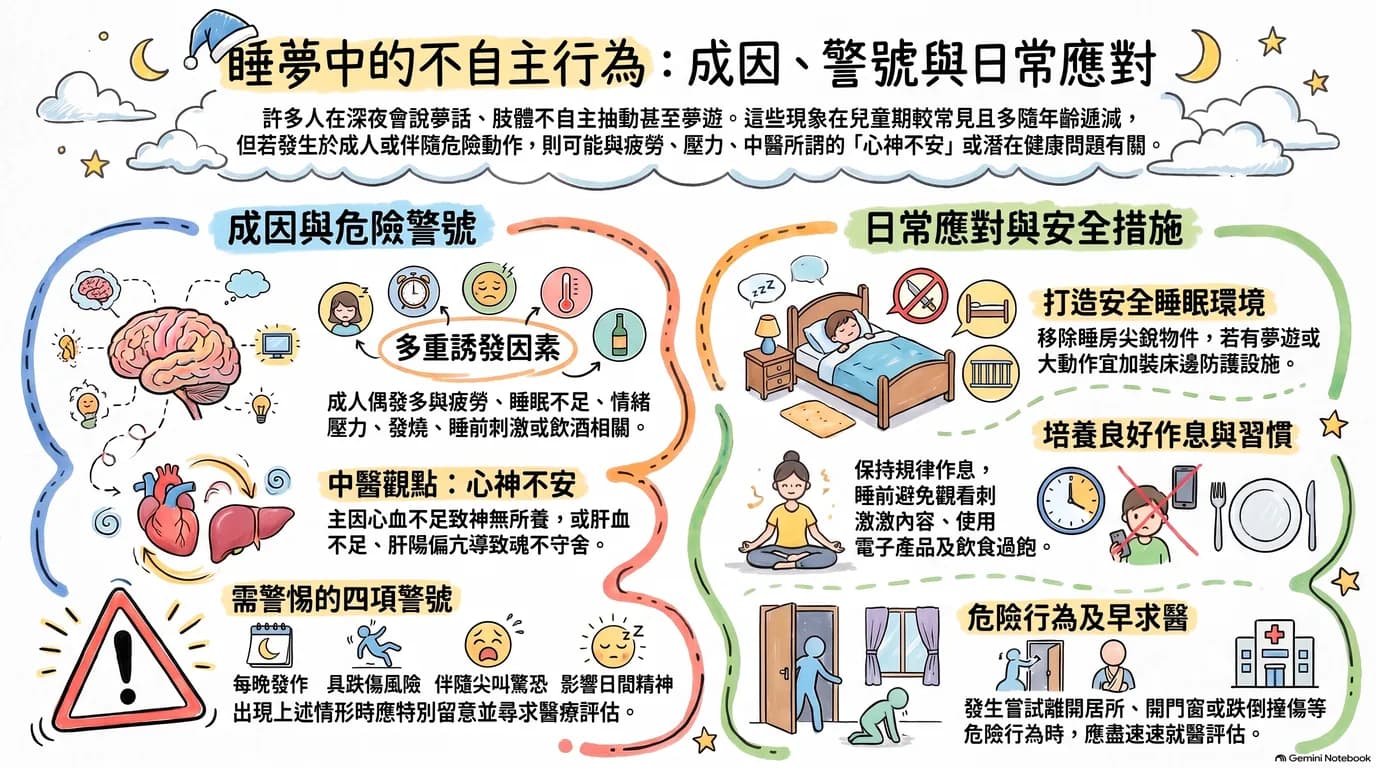
Sleep Talking, Limb Movements and Sleepwalking: What's Behind Them?
Many parents and partners have noticed a family member talking in their sleep, moving their limbs, or even sleepwalking. This article explains who this is most common in, how TCM understands it, and when it's time to see a doctor.
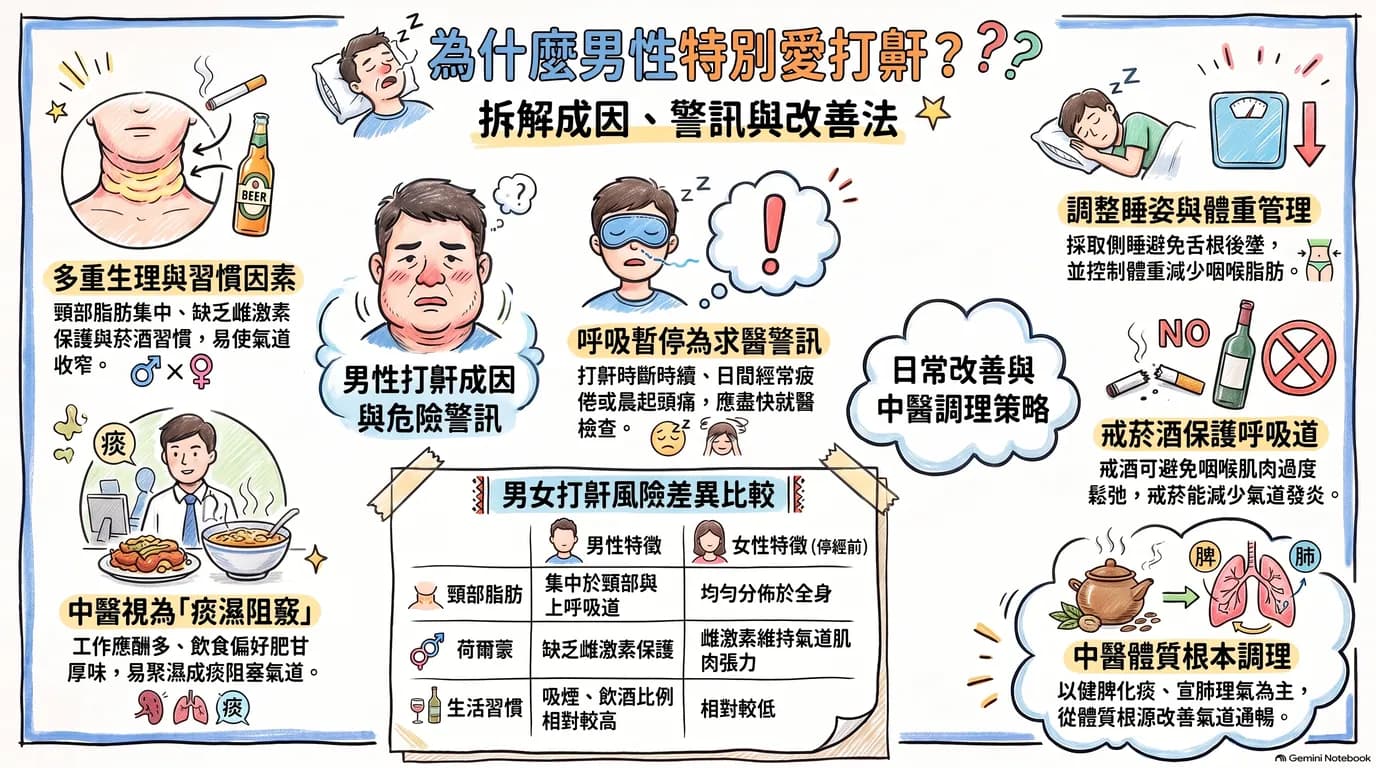
Why Do Men Snore More Than Women? Causes and Warning Signs
Snoring is far more common in men than women, and the reasons go beyond habit — physiology, hormones and lifestyle all play a part. This article explains why men snore more, which signs suggest a more serious problem, and how to ease snoring day to day.
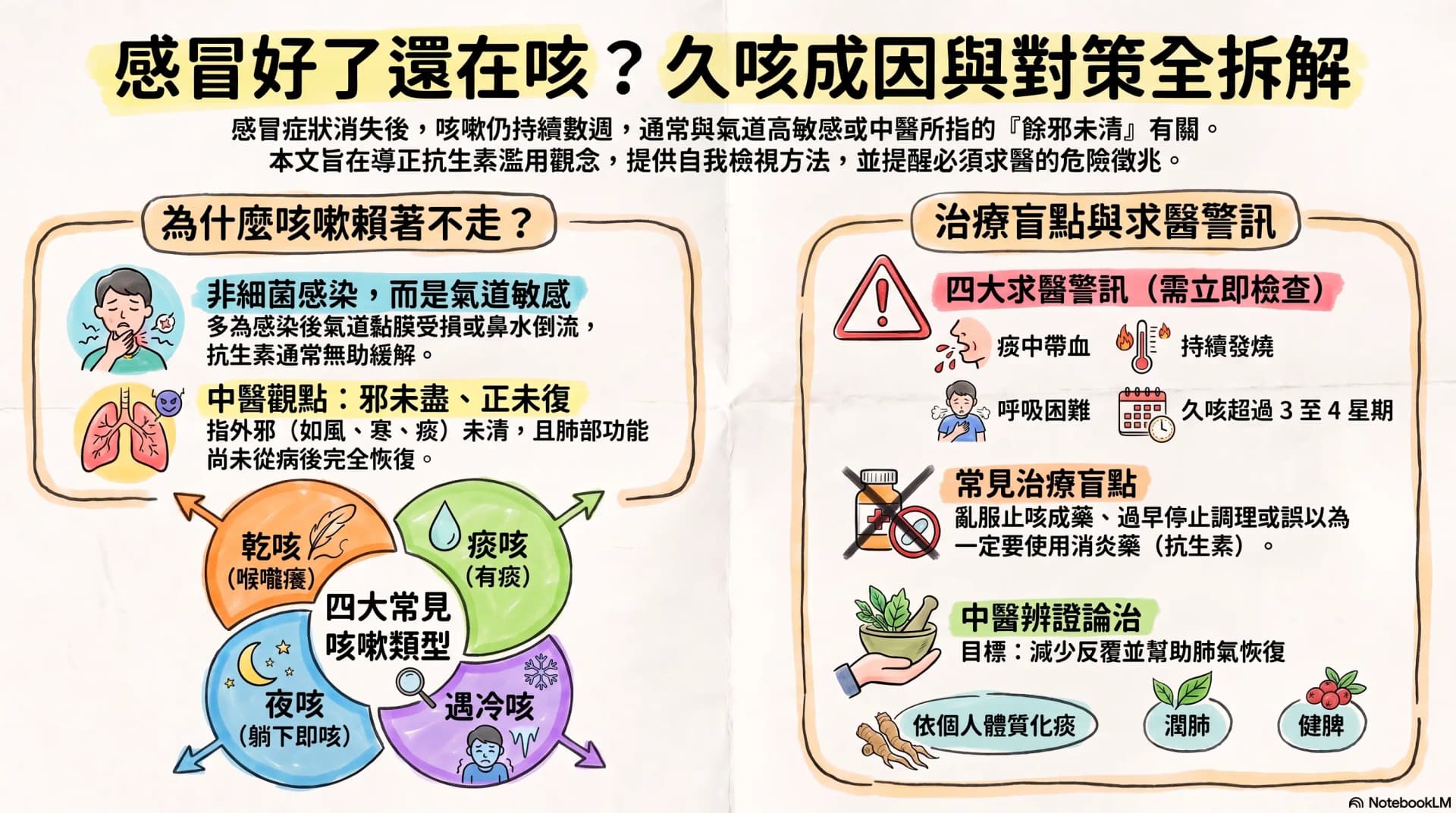
The Cold Has Gone but the Cough Will Not Clear: Causes of a Lingering Post-Cold Cough and How TCM Can Help
The cold is gone, but the cough drags on for weeks. This article breaks down the common types and causes of a lingering post-cold cough, the situations that warrant medical attention, the treatment blind spots, and how Chinese medicine can help through pattern differentiation.