Sciatica That Never Fully Settles and Keeps Coming Back? First Understand the Causes, Types and Common Treatment Pitfalls
Sciatica is a set of symptoms radiating along the sciatic nerve, not one disease. Causes vary — disc herniation, piriformis problems, lumbar degeneration — so treatment differs. Recurrence often comes from only masking pain, not identifying the type, or stopping early. TCM may combine acupuncture, cupping, bone-setting and herbs to ease symptoms; seek urgent care if bladder, bowel or leg strength is suddenly affected.
Medical review: Dr. Wong Ka Fai,Registered Chinese Medicine Practitioner #009985
1-Minute Quick Answer
Sciatica is a set of symptoms radiating along the sciatic nerve, not one disease. Causes vary — disc herniation, piriformis problems, lumbar degeneration — so treatment differs. Recurrence often comes from only masking pain, not identifying the type, or stopping early. TCM may combine acupuncture, cupping, bone-setting and herbs to ease symptoms; seek urgent care if bladder, bowel or leg strength is suddenly affected (reviewed by Dr Wong Ka Fai, CMCHK 009985).
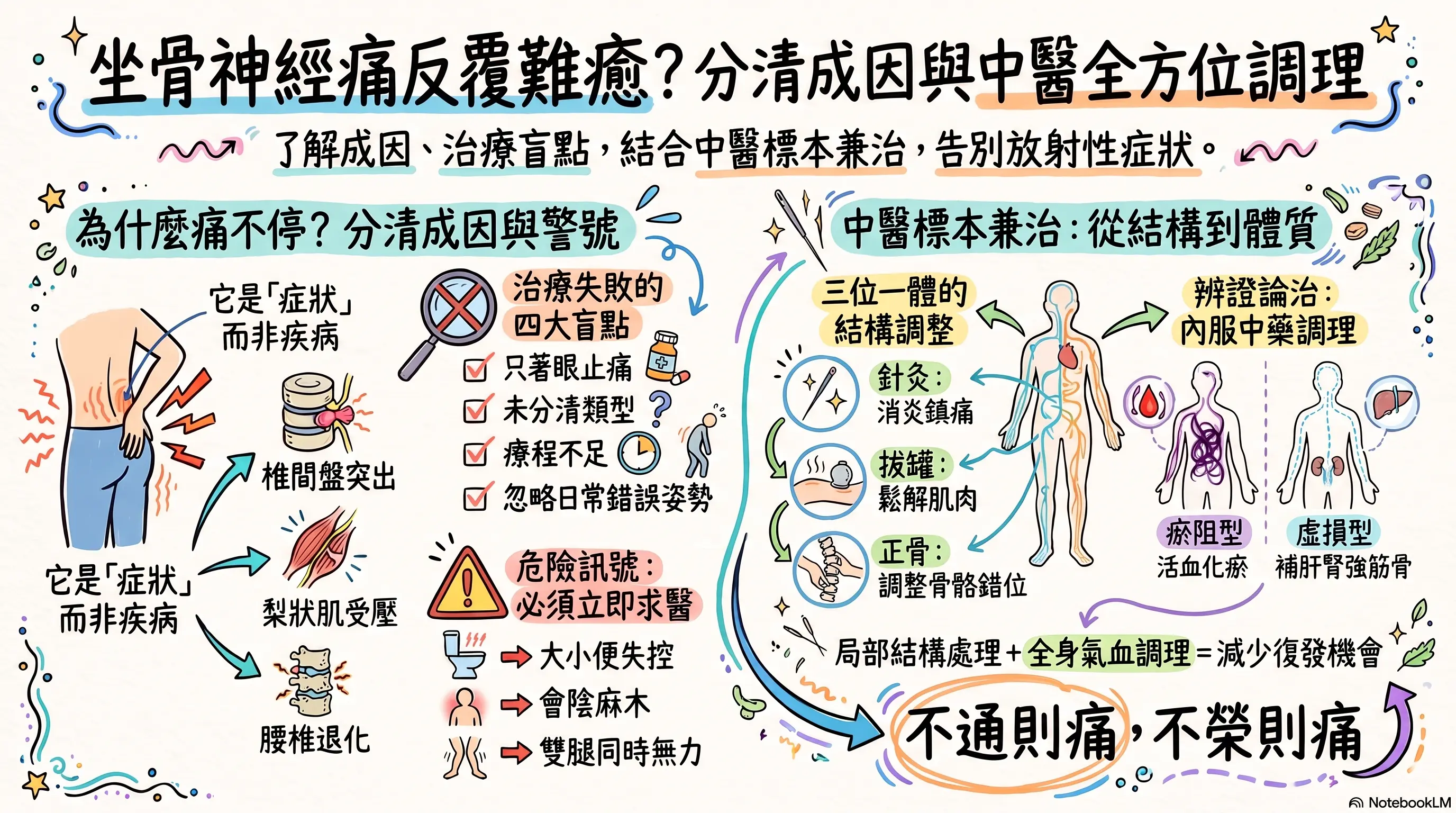 To help readers quickly grasp the content, this image was generated by NotebookLM. Some Chinese characters may not render correctly.
Important
If you experience a sudden loss of bladder or bowel control, numbness around the groin and buttock area, or weakness in both legs at once, this may indicate compression of the cauda equina — a medical emergency. Seek immediate care from a Western doctor or the accident and emergency department; do not wait for conservative treatment.
Pain radiating from the buttock down the back of the thigh and into the calf, especially noticeable when you stand up after sitting for a while, and sometimes triggered even by a cough or a sneeze. If this sounds familiar, it may well be sciatica.
Many people assume at first that it is simply back pain, when the structure actually affected is the sciatic nerve. It is worth being clear on one point: sciatica is not a single disease, but a set of symptoms. What really needs to be identified is why the nerve is being compressed. For some it is a herniated disc, for others lumbar degeneration, and for others still it is piriformis syndrome. If the true cause is never found and you rely only on painkillers or rest, the symptoms tend to keep coming back.
This article will help you quickly judge whether you may have sciatica, which situations call for immediate medical attention, why treatment so often fails to bring lasting relief, and how Chinese medicine may play a supporting role. By the end, you should have a clearer idea of which type you might fall under, and whether your next step should be further assessment or conservative care.
A 30-Second Self-Check: Could This Be Sciatica?
If you have recently experienced three or more of the following, professional assessment is advisable:
- ☐ Pain radiating from the lower back or buttock into the thigh, calf or even the foot
- ☐ Pain that worsens when sitting for long periods, bending, coughing or sneezing
- ☐ Pain mostly concentrated on one side
- ☐ Accompanying numbness, tingling or an electric-shock sensation
- ☐ Pain lasting more than two weeks, or recurring on and off
The above is for preliminary reference only and cannot replace a doctor's diagnosis.
First, Be Clear: Sciatica Is a "Symptom", Not a Disease
The sciatic nerve is the largest nerve in the body, running from the lower back through the buttock and down into the legs. When it is compressed or irritated at some point along its path, pain, numbness or weakness radiates along its course. In other words, "sciatica" describes this radiating symptom rather than a single disease. The real question is what is causing the nerve to be compressed, because different causes call for entirely different approaches. This is the starting point for understanding the condition.
Common causes and types include:
- Herniated disc compressing a nerve: the disc protrudes backwards or to the side and presses on a nerve root. This is one of the more common causes. Pain typically extends from the lower back to one side of the buttock and leg, and worsens with bending, prolonged sitting or exertion.
- Lumbar degeneration and bone spurs: with age, the lumbar joints and discs degenerate, or bone spurs form, narrowing the space through which the nerve passes. This is more common in older adults; onset is gradual, but it tends to recur over the long term.
- Piriformis syndrome: the sciatic nerve passes near the piriformis muscle deep in the buttock. If this muscle becomes overly tight or inflamed, it can also compress the nerve. This pain often centres on the buttock and is especially noticeable after prolonged sitting (for example, long periods of driving), and is easily mistaken for an ordinary back problem.
- Spondylolisthesis: one vertebra slips relative to the one below it, altering the space available for the nerve and potentially involving it.
- Spinal stenosis: the spinal canal that houses the nerve narrows. A fairly typical sign is soreness, numbness and weakness in the legs after walking a certain distance, relieved only by sitting down to rest.
- Other, less common causes: such as infection, tumour, or post-shingles nerve pain. These are uncommon, but if the pain is unusual in nature or accompanied by other systemic symptoms, it warrants caution and early medical attention.
The simple phrase "leg pain and numbness" already covers all of these very different situations. This also explains why, even under the same label of sciatica, a method that works for someone else may not work for you, because the underlying problem may not be the same. Sciatica is closely related to ordinary low back pain; if you would also like to understand the causes of low back pain, see Low Back Pain Is Not Just "Kidney Deficiency": A TCM Look at 6 Common Causes and Treatment Directions.
Three Common Myths About Sciatica
Myth 1: No more pain means it has healed. Pain relief does not mean the nerve compression has been resolved; if the true cause remains, symptoms often return.
Myth 2: All buttock pain is sciatica. Problems with the piriformis muscle, the hip joint or the sacroiliac joint can all cause similar buttock or leg pain, and examination is needed to tell them apart.
Myth 3: Constant stretching will always fix it. In some people with nerve compression, over-stretching may instead irritate the nerve and worsen symptoms; whether stretching is suitable should first be judged according to the cause.
What Happens If It Is Left Untreated?
Mild sciatica sometimes eases gradually with rest and time. But if the cause is not addressed and the problem is left for a long time, the following may occur:
- Progression from acute to chronic: repeated nerve irritation can make the pain stubborn and harder to treat.
- Loss of strength, and even muscle wasting: prolonged nerve compression can affect leg strength, leading to weakness when walking or a tendency to trip; in severe cases the relevant muscles gradually waste.
- Restricted movement: reducing activity because of pain leaves the joints and muscles stiffer over time, creating a vicious cycle.
- Effects on sleep and mood: night-time pain makes sleep difficult, and long-term sleep loss together with chronic pain can affect mood.
- Triggering pain elsewhere: to avoid the pain, the body unconsciously alters posture and gait, creating compensation. Over time, the lower back, hip, knee and even the neck and shoulders may develop problems in turn.
The following are warning signs; seek medical care immediately rather than waiting for conservative treatment. If sciatica is accompanied by a sudden loss of bladder or bowel control, numbness around the groin and buttock area, or weakness in both legs at once, this may indicate compression of the cauda equina (cauda equina syndrome). This is a medical emergency and requires immediate attention from a Western doctor or the accident and emergency department, to avoid irreversible nerve damage. Older adults who develop sudden severe pain after a fall, or who cannot stand or bear weight, should also seek care as soon as possible; for the causes of back pain in older adults and when to have it checked, see Is an Older Adult's Back Pain Osteoporosis, Lumbar Degeneration or Sciatica? Common Causes and When to Get Checked.
How Long Does It Usually Take to Improve?
Recovery time for sciatica depends largely on the cause, and there is no fixed timetable. The figures below are for rough reference only:
| Situation | Typical recovery time (for reference only) |
|---|---|
| Muscle or fascial tightness | A few weeks |
| Piriformis syndrome | About 1 to 3 months |
| Herniated disc | Several months to half a year |
| Lumbar degeneration, spinal stenosis | Often long-term management |
Actual recovery speed is affected by the severity of the condition, age, treatment method and lifestyle, and varies from person to person; a more accurate estimate requires assessment by a practitioner.
When Should You See a Western Doctor First?
Chinese and Western medicine are not opposed in the management of pain; rather, they can complement each other. With sciatica, the first step is often to determine whether the situation is structural or otherwise in need of immediate medical management. In the following cases, it is advisable to have a Western medical assessment or arrange imaging (such as X-ray or MRI) first:
- pain that keeps worsening, or has persisted for several weeks without improvement;
- onset after a clear injury, fall or impact;
- accompanying fever, or night pain that is especially severe and does not ease;
- a history of tumour or cancer, or unexplained weight loss;
- leg weakness, an enlarging area of numbness, or the changes in bladder or bowel function noted above.
Determining first whether there is a structural problem needing immediate attention, and then deciding on the direction of care, is the safer approach. If assessment shows ordinary nerve compression or a muscular or fascial problem, Chinese medicine can then provide supporting care on that basis.
Why Does It Keep Failing to Improve?
Sciatica that recurs and resists treatment is often not because the condition is especially serious, but because the treatment has blind spots. The following are the most common reasons:
First, focusing only on pain relief without addressing the underlying cause. Painkillers, medicated patches or injections can temporarily suppress pain, but do nothing to improve the compressed nerve or the misaligned structure; once the effect wears off, the pain tends to return.
Second, applying a single approach without distinguishing the type. Herniated disc, piriformis problems and lumbar degeneration each require different priorities; using the same method regardless naturally reduces the effect.
Third, an insufficient course of treatment, stopping as soon as symptoms ease. The nerve and soft tissues take time to recover; a reduction in pain does not mean the root cause has been properly addressed. Stopping too early lets the problem recur under the right triggers.
Fourth, ignoring posture, lifestyle and body-alignment factors. Prolonged sitting, poor posture and improper lifting all keep irritating an already-compressed nerve. Treating without improving these everyday triggers means the pain returns after each course.
Fifth, over-reliance on a single technique, without whole-body care. Targeting only the local painful spot, without regard to overall qi, blood and constitution, often treats only the surface. Reducing recurrence requires both local treatment and whole-body care.
Seeing these blind spots also points to the right direction: first distinguish the cause and type, give an adequate course of treatment, and attend to posture and constitution at the same time; only then is there a real chance of reducing recurrence.
How Can Chinese Medicine Help?
In Chinese medicine, there is a saying about pain: "obstruction leads to pain; lack of nourishment leads to pain." At root, pain falls into two broad types: an "obstruction pattern", where qi and blood do not move smoothly, and a "deficiency pattern", where qi and blood are inadequate. Managing sciatica begins precisely with pattern differentiation to determine which type applies, and then providing care accordingly.
At Aspira TCM, Dr Wong Ka Fai commonly combines the following methods to manage sciatica:
- Acupuncture: by stimulating relevant acupoints, it unblocks the channels, relaxes tight muscles, and helps ease the inflammatory response and pain arising from nerve compression.
- Cupping: helps release local tight muscles and fascia and improves local circulation of qi and blood.
- Bone-setting: where examination reveals a bony misalignment or joint dysfunction, bone-setting techniques are used to adjust the position of the lumbar spine and pelvis. In practice, acupuncture is often applied first to relax the surrounding muscles and reduce inflammation, followed by bone-setting to adjust the structure, the two working together.
- Oral Chinese herbal medicine: prescribed according to individual constitution and pattern, for example invigorating the blood and resolving stasis for an obstruction pattern, or tonifying the liver and kidney and strengthening the sinews and bones for a deficiency pattern, providing support at the level of overall constitution.
Before treatment, Dr Wong first takes a detailed history of the location and nature of the pain (distending, stabbing or aching), its duration and aggravating factors, and combines the four examinations with a physical examination to judge whether the problem is one of channel obstruction, qi and blood deficiency, or structure, before deciding on a direction. After treatment, advice on posture correction and daily stretching is also given, with follow-up to adjust as progress allows; where needed, referral to a physiotherapist for rehabilitation exercise can be arranged. For more on the Chinese medicine management of pain, see TCM Treatment for Pain.
It should be made clear that the role of Chinese medicine in sciatica is to provide supportive care, ease symptoms and improve the constitution, working alongside Western medicine rather than replacing necessary medical examination or emergency care. Chinese medicine care does not guarantee a cure, and results vary from person to person; patients should not stop Western medication or discontinue other treatment on their own, and any change should first be discussed with the treating doctor.
Next Step
Whether sciatica can improve depends not on "how long you endure it", but on whether the true cause is identified first. If your symptoms have recurred for some time, or keep coming back despite trying different methods, rather than continuing to guess, it is better to have a professional assessment to distinguish whether it is a herniated disc, lumbar degeneration, a piriformis problem or another cause, and then decide on the most suitable direction of treatment.
If you would like to know whether your situation is suitable for Chinese medicine care, you are welcome to enquire with Aspira TCM via WhatsApp (WhatsApp: 9679 2293 / wa.me/85296792293); a practitioner can then assess and advise on a suitable direction.
Medical disclaimer: This article is for health education only and does not constitute personalised medical advice. Sciatica has many possible causes, and each person's constitution and condition differ, so treatment plans and outcomes vary. Chinese medicine can provide supportive care and ease symptoms but cannot replace necessary Western examination or emergency care. If symptoms persist or worsen, or if warning signs such as loss of bladder or bowel control or leg weakness occur, please seek prompt care from a qualified healthcare professional.
Disclaimer: This article is for health education and reference purposes only and does not constitute medical advice, diagnosis, or treatment. Each patient's condition is unique and treatment outcomes vary. Please consult a registered TCM practitioner or qualified healthcare professional for health concerns.
Further Reading
Hand-picked related articles and real cases to read next.
Low Back Pain: 6 Common Causes & TCM Treatment Approaches
Low back pain is not always simply “kidney deficiency” or muscle fatigue. It may also be related to muscle strain, disc herniation, degenerative lumbar disease, kidney stones, urinary tract infection, or pelvic inflammation. This article explains six common causes of low back pain from a TCM perspective and outlines key distinctions and treatment directions.
Back Pain in Older Adults: Osteoporosis, Degeneration, or Sciatica?
Back pain in older adults may arise from muscular strain, lumbar degeneration, sciatica, osteoporotic fracture, falls, or other medical conditions. This article compares common causes, red-flag signs, when investigation is needed, and how TCM may help once urgent problems are excluded.
Want to learn more? WhatsApp us for a free consultation
Book via WhatsAppExplore our full range of treatments: Traditional TCM Services
Related Articles
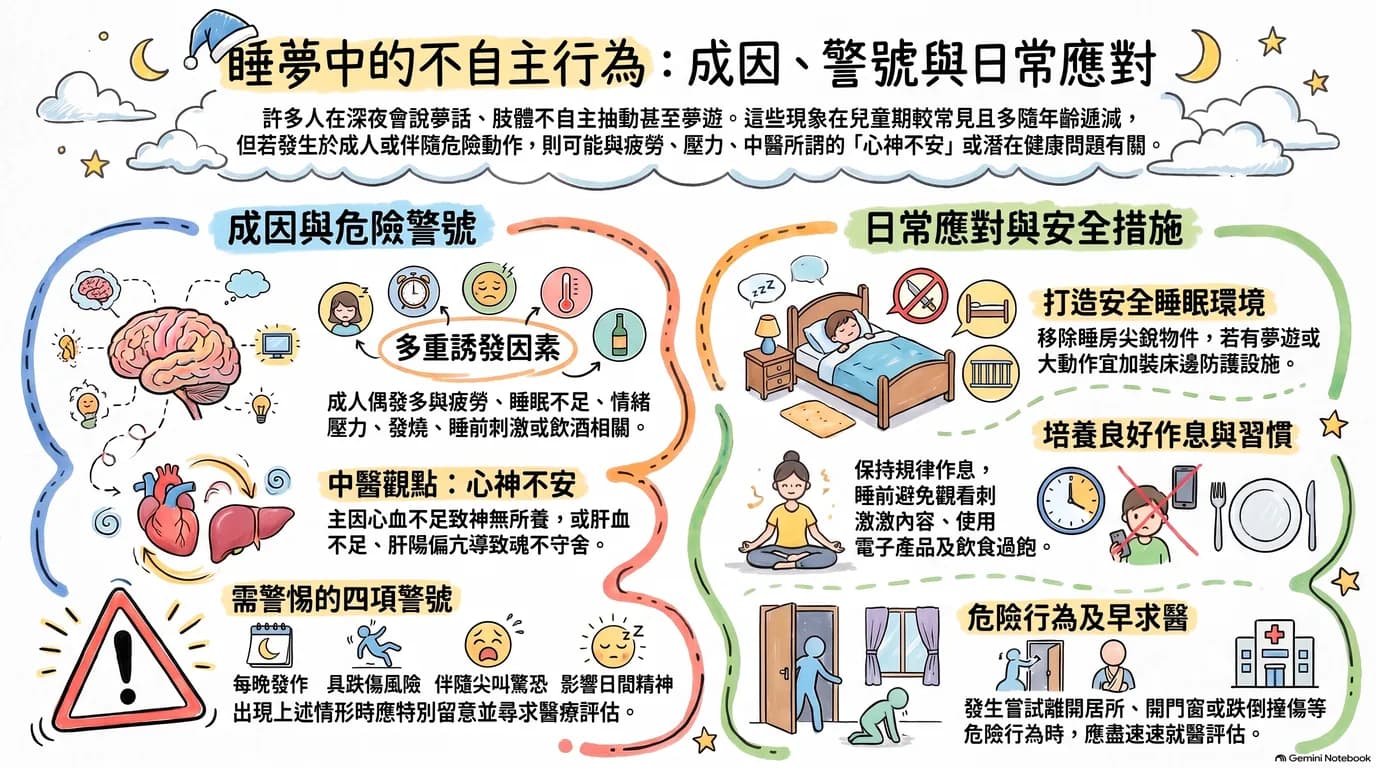
Sleep Talking, Limb Movements and Sleepwalking: What's Behind Them?
Many parents and partners have noticed a family member talking in their sleep, moving their limbs, or even sleepwalking. This article explains who this is most common in, how TCM understands it, and when it's time to see a doctor.
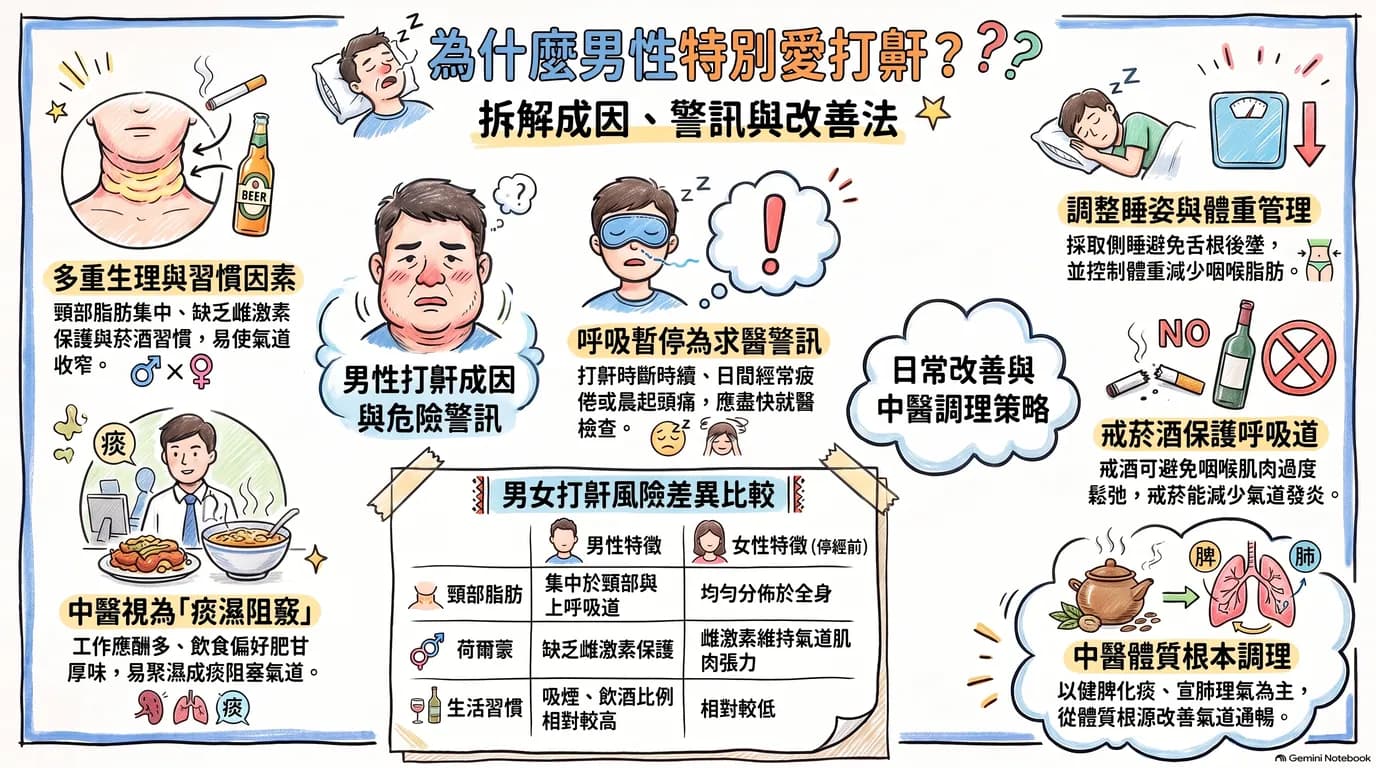
Why Do Men Snore More Than Women? Causes and Warning Signs
Snoring is far more common in men than women, and the reasons go beyond habit — physiology, hormones and lifestyle all play a part. This article explains why men snore more, which signs suggest a more serious problem, and how to ease snoring day to day.
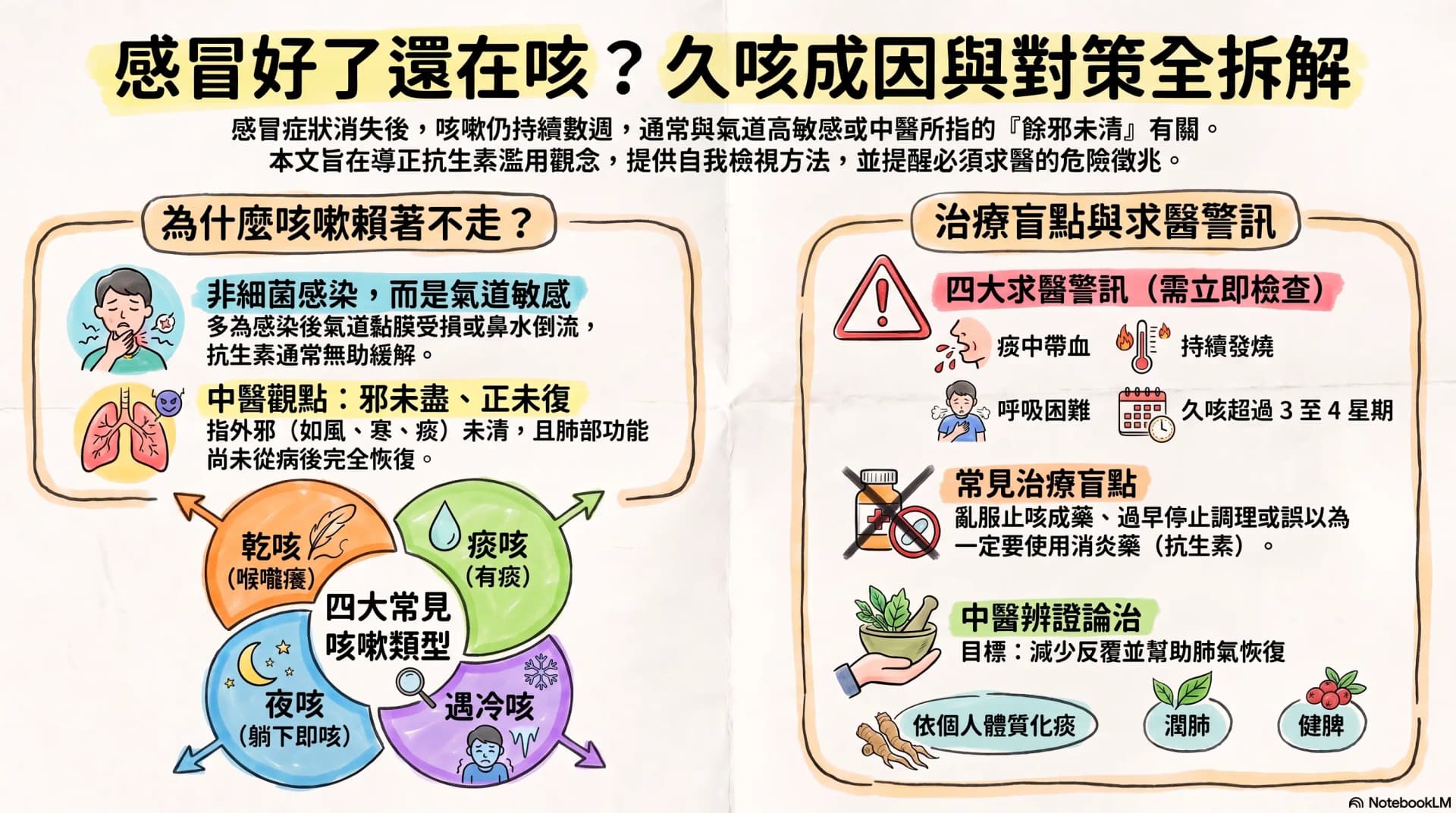
The Cold Has Gone but the Cough Will Not Clear: Causes of a Lingering Post-Cold Cough and How TCM Can Help
The cold is gone, but the cough drags on for weeks. This article breaks down the common types and causes of a lingering post-cold cough, the situations that warrant medical attention, the treatment blind spots, and how Chinese medicine can help through pattern differentiation.