Bloating, Fatigue, Insomnia After 168 Fasting? A TCM View
168 fasting does not suit everyone. Bloating, fatigue, cold intolerance, insomnia, dizziness, constipation, or appetite rebound after starting may signal that the eating window, nutrient distribution, digestion, or qi-blood state is not aligned. This article explains how TCM distinguishes digestive burden, qi-blood deficiency, phlegm-damp with qi stagnation, and yin deficiency with internal heat — and flags situations where pushing through is unwise.
Medical review: Dr. Au Kwok Po, Arthur,Registered Chinese Medicine Practitioner #009884
1-Minute Quick Answer
Bloating, reflux, fatigue, insomnia, or appetite rebound after 168 fasting isn't always "detoxing" — it may mean the eating window or nutrition doesn't fit your body. This guide (reviewed by Dr Au, CMCHK 009884) helps distinguish digestive burden, qi-blood deficiency, and yin deficiency with internal heat, flags who should be cautious, and offers gentler adjustments.
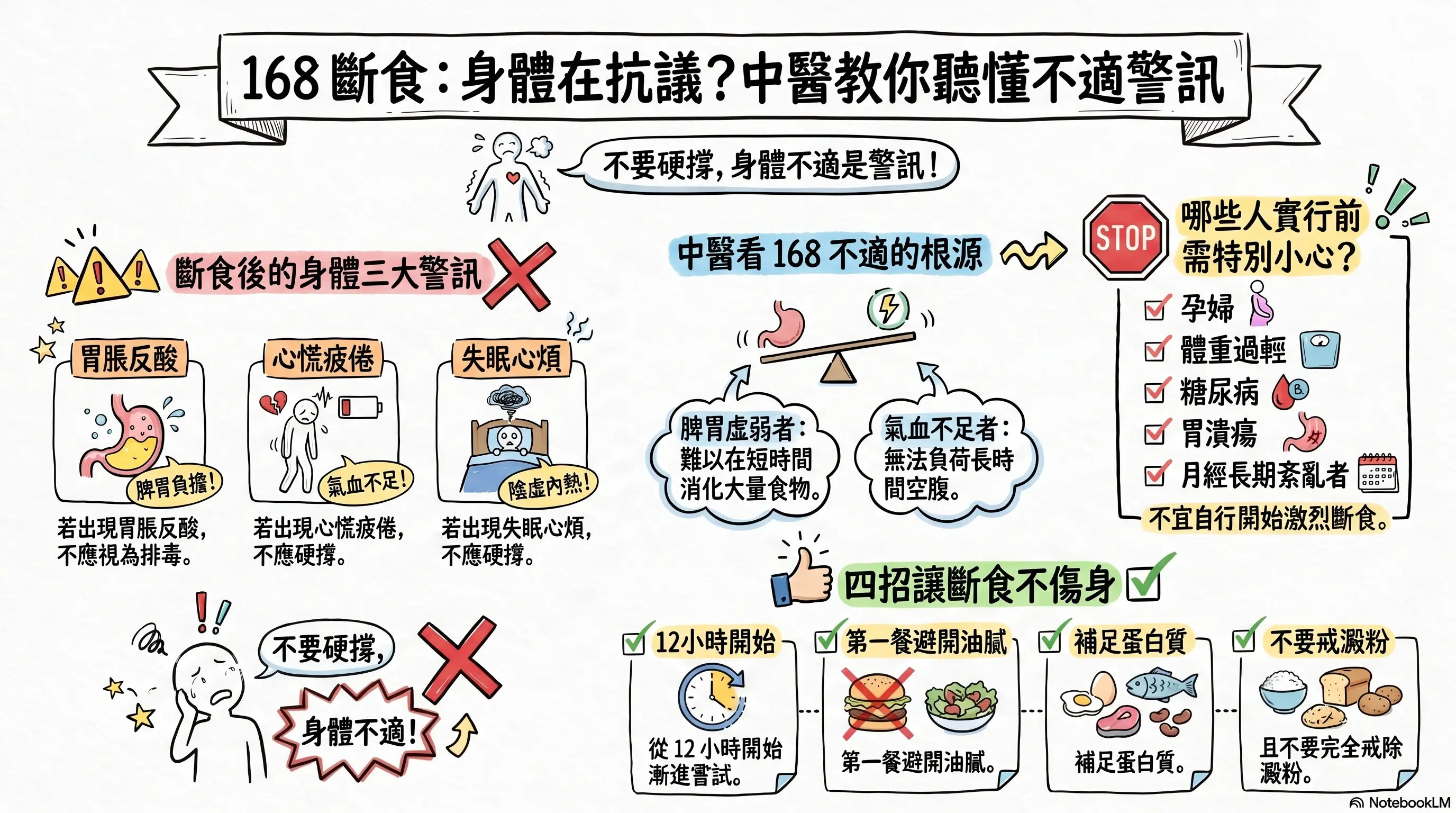 To help readers quickly grasp the content, this image was generated by NotebookLM. Some Chinese characters may not render correctly.
Many people start 168 fasting because the rules sound simple: 16 hours without eating, 8 hours within which to eat — no meticulous calorie counting required. But after a week or two, some develop bloating, acid reflux, or constipation; some become heavily fatigued during the day with cold extremities; others find it harder to sleep at night, or crave sugary and oily foods more strongly within the eating window.
These reactions do not necessarily mean 168 fasting is "wrong" — but neither should they be dismissed as "your body is detoxing" or "just push through and you will lose weight." Whether a weight-loss method suits you depends on whether it fits your digestion, work, sleep, menstrual cycle, blood glucose, and daily activity.
This article helps you distinguish what common 168-fasting side effects may signal, how TCM differentiates digestive burden, qi-blood deficiency, phlegm-damp with qi stagnation, and yin deficiency with internal heat — and when to pause or seek medical evaluation.
168 Is Not Just About Timing — It Is About Whether the Body Can Cope
Intermittent fasting restricts the eating window; some people naturally reduce total intake as a result. The catch: if the food eaten within those 8 hours is poor in quality, low in protein, or imbalanced in staples, and sleep is short, the body may not lose fat smoothly.
Common pitfalls:
| Practice | Possible Problem | Common Reaction |
|---|---|---|
| Skipping breakfast entirely, then a rushed lunch | Eating too quickly after a long fast | Bloating, acid reflux, post-meal exhaustion |
| Eating very little within the window | Insufficient total energy and protein | Dizziness, cold intolerance, fatigue, menstrual irregularity |
| Concentrating intake at night | Heavy digestive load before sleep | Bloating, light sleep, reflux |
| "Reward" sweets and fried food after fasting | Wide swings in calories and blood glucose | Stalled weight loss, dry mouth, constipation |
| Intense exercise on an empty stomach | Insufficient energy supply | Palpitations, hand tremor, weakness |
In short: 168 fasting is just a timing framework, not a guarantee of weight loss. What truly drives results is food quality, total intake, protein, activity, sleep, and individual constitution.
Bloating and Reflux: Possibly Excessive Digestive Burden
Some people are fine while fasting but bloat as soon as the eating window begins. This is common after lunches eaten too quickly, an overly oily first meal, coffee on an empty stomach, or dinners too close to bedtime.
Watch for:
- Feeling full after small portions
- Post-meal bloating, frequent burping or reflux
- Sluggish or sticky bowel movements
- Thick greasy tongue coating, sticky mouth feel
- Worse sleep after dinner
These do not always suit a 16-hour fasting window from the outset. With weak digestion to begin with, suddenly extending fasting and then condensing intake into a short window often makes the gut struggle further. A safer approach is to first regularise three meals, reduce late-night eating, and adjust dinner portion — and only later, if appropriate, gradually narrow the eating window.
Fatigue, Cold Intolerance, Dizziness: Distinguish Qi-Blood Deficiency from Under-Eating
Many notice early weight loss with 168, but progressively worse energy. If this is paired with cold intolerance, dizziness, palpitations, weakness, light periods, or low mood, the issue is likely more than a simple "adjustment phase."
TCM commonly differentiates:
| TCM Direction | Common Features | Adjustment Priority |
|---|---|---|
| Spleen-qi deficiency | Post-meal fatigue, bloating, reduced speech, easy shortness of breath, soft stools | Stabilise meal rhythm and digestion first |
| Qi-blood deficiency | Dizziness, pale complexion, palpitations, light periods, loose musculature | Restore protein and overall nutrition; do not cut further |
| Spleen-yang deficiency | Cold intolerance, cold hands and feet, soft stools, oedema | Avoid cold drinks, raw salads, and prolonged fasting |
| Phlegm-damp obstruction | Heaviness, thick tongue coating, abdominal fullness, sticky stools | Reduce sweet drinks and oily food; add post-meal activity |
If fatigue stems from poor sleep, work stress, anaemia, thyroid issues, blood-sugar swings, or medication, adjusting the fasting window alone may not be enough. Persistent or marked symptoms warrant proper investigation.
Insomnia and Restlessness: Not a Willpower Problem
Some patients feel more alert at night while fasting, or wake mid-sleep hungry, with rapid heartbeat, dry mouth, or agitation. Common reasons include too-light dinner, excessive carb restriction, late caffeine, high work stress, or daytime energy deficit keeping the body in a stressed state.
TCM differentiates:
- Yin deficiency with internal heat: dry mouth, restlessness, light sleep, constipation, night warmth
- Liver-qi stagnation transforming into fire: high stress, irritability, chest or rib-side fullness, difficulty falling asleep
- Heart-spleen dual deficiency: easy waking, vivid dreams, palpitations, forgetfulness, fatigue
- "When the stomach is unsettled, sleep is disturbed": overly heavy dinners, bloating, reflux, restless sleep
If 168 fasting persistently worsens sleep, weight-loss results are usually hard to maintain. Poor sleep affects appetite, mood, activity, and self-regulation; adjust the fasting window, dinner content, and caffeine timing rather than pushing through.
Who Should Be Especially Cautious with 168?
Self-trial of strict fasting is not recommended without first consulting a doctor, dietitian, or Registered TCM Practitioner if you are:
- Pregnant, breastfeeding, or trying to conceive
- An adolescent, elderly, or underweight
- Living with diabetes, hypoglycaemia, kidney disease, liver disease, gastric ulcer, or gallstones history
- Taking glucose-lowering medication, antihypertensives, anticoagulants, or multiple medications
- A history of bingeing, purging, extreme restriction, or anxiety around eating
- Long-term menstrual irregularity, amenorrhoea, anaemia, or severe fatigue
- Working shifts, with very irregular sleep, or undertaking frequent high-intensity exercise
Patients with diabetes or on regular medication especially should not adjust dose or timing on their own — fasting can affect blood glucose and medication windows.
Adjustments to Reduce Strain on the Digestive System
If symptoms are mild, try the following for 1–2 weeks:
- Start with 12- or 14-hour fasting — 16 hours is not mandatory at the outset; the body needs time to adapt
- Make the first meal neither too oily nor too rushed — protein, vegetables, and a moderate staple first; avoid coffee, milk tea, or fried food on an empty stomach
- Do not push dinner too late — eating windows ending after 9 pm produce more bloating and insomnia
- Ensure adequate protein — fish, eggs, tofu, chicken, lean meat, dairy, or legumes for satiety and muscle preservation
- Do not eliminate starches entirely — for those with heavy workloads, a tendency to dizziness, irregular periods, or poor sleep, extreme low-carb often does not suit
- Track responses — eating times, bloating, bowels, sleep, weight, waist, menstruation, and exercise performance
How TCM Evaluates Post-Fasting Symptoms
When evaluating 168-fasting side effects at Aspira TCM, Dr Au reviews your prior eating habits, fasting window, first-meal content, dinner timing, sleep, work stress, bowel and bladder function, menstrual history, weight and waist changes, alongside tongue and pulse findings.
If digestive burden dominates, bloating, constipation, or sticky stools are addressed first. If qi-blood deficiency dominates, nutrition and rest are rebuilt first. If phlegm-damp or liver-qi stagnation dominates, damp-resolving, qi-regulating, and stress-driven appetite adjustments are coordinated. The goal is not to keep everyone fasting — it is to determine whether this method suits your current physical state.
If 168 has left you with persistent bloating, fatigue, insomnia, or appetite rebound, track 7 days of meals, sleep, and symptoms before booking a TCM weight-management and digestive consultation. With marked glucose, gastric pain, palpitation, or menstrual abnormalities, Western investigations should also be coordinated.
FAQ — Common Questions After 168 Fasting
Q1: Is bloating after starting 168 fasting normal?
Mild hunger is normal early on, but persistent bloating, reflux, stomach pain, or marked post-meal discomfort suggests the gut is not coping. Adjust the first meal, dinner timing, and eating speed first. Marked stomach pain, black stools, or vomiting warrant prompt medical attention.
Q2: Does insomnia after fasting mean fat is being burned?
Not at all. Insomnia may relate to insufficient dinner, blood-glucose swings, stress, caffeine, or bloating. Persistent poor sleep makes weight loss harder; address sleep first.
Q3: Is 168 entirely unsuitable for weak digestion?
A short, gentle 12–14 hour fast may be feasible; a strict 16+ hour 168 is generally not. Begin with regular three meals, reducing late-night eating, and improving bloating and bowel function — then reassess.
Q4: Does 168 require skipping breakfast?
Not necessarily. The key is the overall eating window and life rhythm. Eating windows pushed too late can disturb digestion and sleep. Whether breakfast can be skipped depends on work, sleep, blood glucose, and gastric status.
Q5: Can TCM help me decide whether fasting suits me?
Yes. TCM evaluates your symptoms, tongue and pulse, medical history, medications, and lifestyle to assess whether your dominant pattern is spleen deficiency, phlegm-damp, qi stagnation, yin deficiency, or qi-blood deficiency, then decides whether fasting is appropriate, how to adjust diet, or whether Western investigation should come first.
— Dr Au Kwok Po, Arthur | Registered Chinese Medicine Practitioner (Certified Nutritionist) Reg. No.: 009884 Aspira TCM Clinic | TCM Weight Management, Nutrition, Influenza, Hair Loss
Persistent Discomfort After 168 Fasting? Book a Consultation
If 168 has left you with bloating, fatigue, insomnia, or appetite rebound, Dr Au can help. Track 7 days of meals, sleep, and symptoms before your visit so the practitioner can determine whether your body suits continued fasting or needs an adjusted direction.
How to book:
- WhatsApp: Book here
- Phone: 2110 9337
- Address: Unit 2706, 27/F, Saxon Tower, 7 Cheung Shun Street, Lai Chi Kok
References
- Harvard Health Publishing: Time to try intermittent fasting? — https://www.health.harvard.edu/diet-and-nutrition/time-to-try-intermittent-fasting
- NIDDK: Choosing a Safe & Successful Weight-loss Program — https://www.niddk.nih.gov/health-information/weight-management/choosing-a-safe-successful-weight-loss-program
- CDC: Steps for Losing Weight — https://www.cdc.gov/healthy-weight-growth/losing-weight/index.html
- Centre for Health Protection: Obesity — https://www.chp.gov.hk/tc/healthtopics/content/25/8802.html
Disclaimer: This article is for health education only. It does not replace individual consultation, nutritional assessment, examination, or treatment advice. Patients on glucose-lowering medication, antihypertensives, anticoagulants, or with diabetes, kidney disease, gastric ulcer, eating disorders, pregnancy, or breastfeeding should consult a healthcare professional before fasting; medication adjustment should be made under the prescribing doctor's guidance.
Disclaimer: This article is for health education and reference purposes only and does not constitute medical advice, diagnosis, or treatment. Each patient's condition is unique and treatment outcomes vary. Please consult a registered TCM practitioner or qualified healthcare professional for health concerns.
Further Reading
Hand-picked related articles and real cases to read next.
168 Fasting vs Low-Carb vs Keto: A TCM Guide to the Differences
168 fasting, low-carb diets, and keto are all popular weight-loss approaches, but they restrict different things — and their effects on digestion, sleep, blood glucose, bowels, menstruation, and mood differ accordingly. This article compares the three, explains which TCM constitutions need extra caution, and flags situations that warrant prior assessment by a Western doctor or registered dietitian.
Bigger Belly, Same Weight? TCM on Bloating, Constipation, and Fat
Stable weight but a more prominent belly does not always mean fat. Water retention, constipation, gastrointestinal bloating, posture, reduced muscle mass, and central obesity can all make the abdomen appear larger. This article uses TCM perspectives on digestion, phlegm-damp, qi stagnation, and constipation to help you distinguish situations and decide next steps.
Eating Little but Not Losing Weight? TCM on Weak Digestion
Skipping breakfast, eating only salad for lunch, and cutting rice at dinner may still leave weight unchanged — or even make you more tired, swollen, and stuck. This article explains why eating less does not always lead to better fat loss, and how TCM interprets weak digestion, dampness, deficiency, and the weight-loss plateau.
Weight-Loss Injections vs Acupuncture: Side Effects & TCM
Many people in Hong Kong are interested in GLP-1 weight-loss injections but worried about side effects, rebound, and prescription safety. This article explains the common risks of weight-loss injections, then explores obesity patterns in TCM, how acupuncture may support weight management, and who may be more suitable for a TCM weight-loss assessment first.
Want to learn more? WhatsApp us for a free consultation
Book via WhatsAppExplore our full range of treatments: Traditional TCM Services
Related Articles
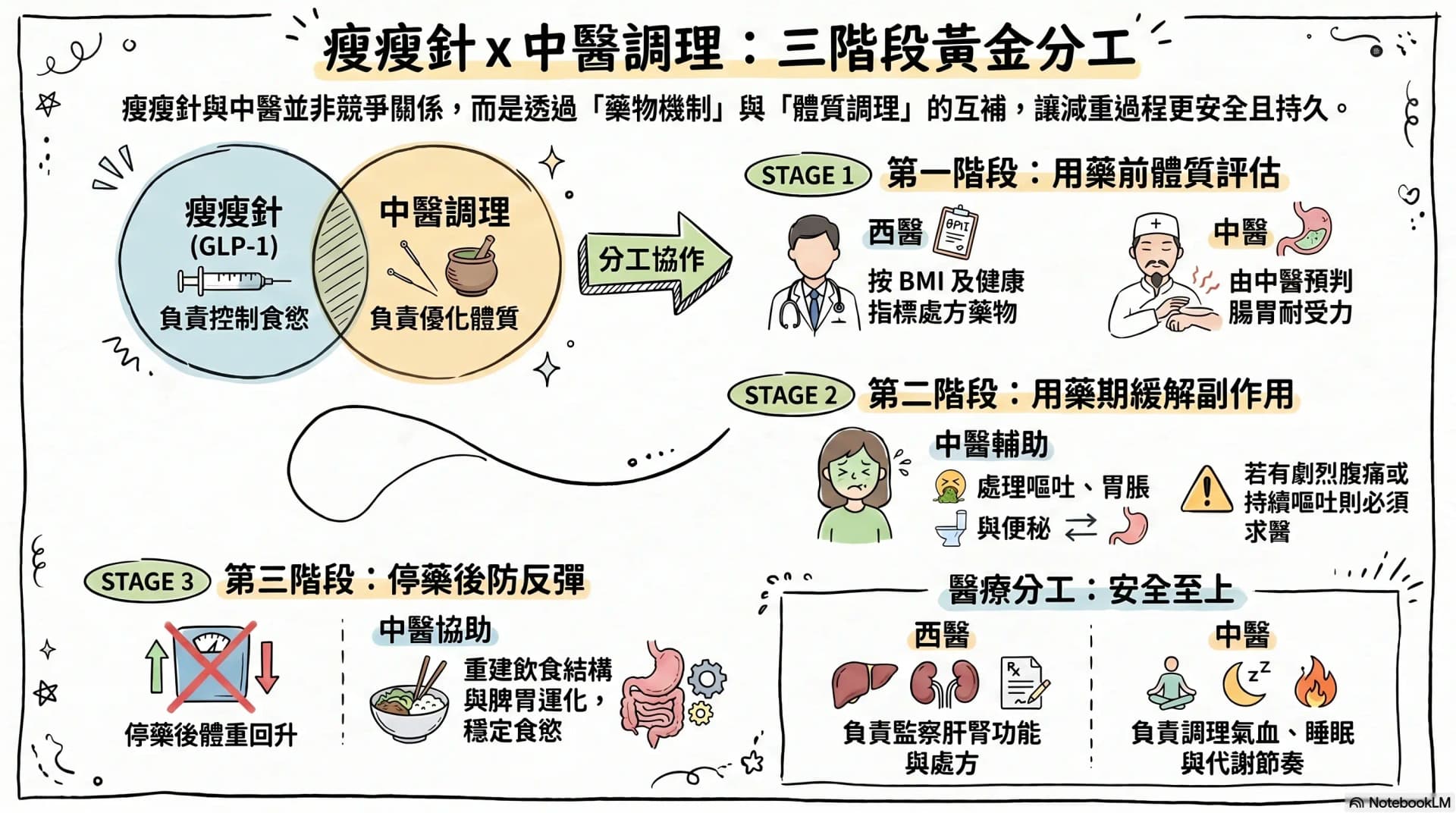
Can I See a TCM Practitioner While on a GLP-1 Injection?
GLP-1 weight-loss injections are now a major talking point in Hong Kong. This article compares the roles of prescribed GLP-1 medication and TCM care across three phases — before treatment, during treatment and after stopping — covering medical monitoring, side-effect relief and post-discontinuation rebound, and identifying scenarios that should not be managed by TCM alone.
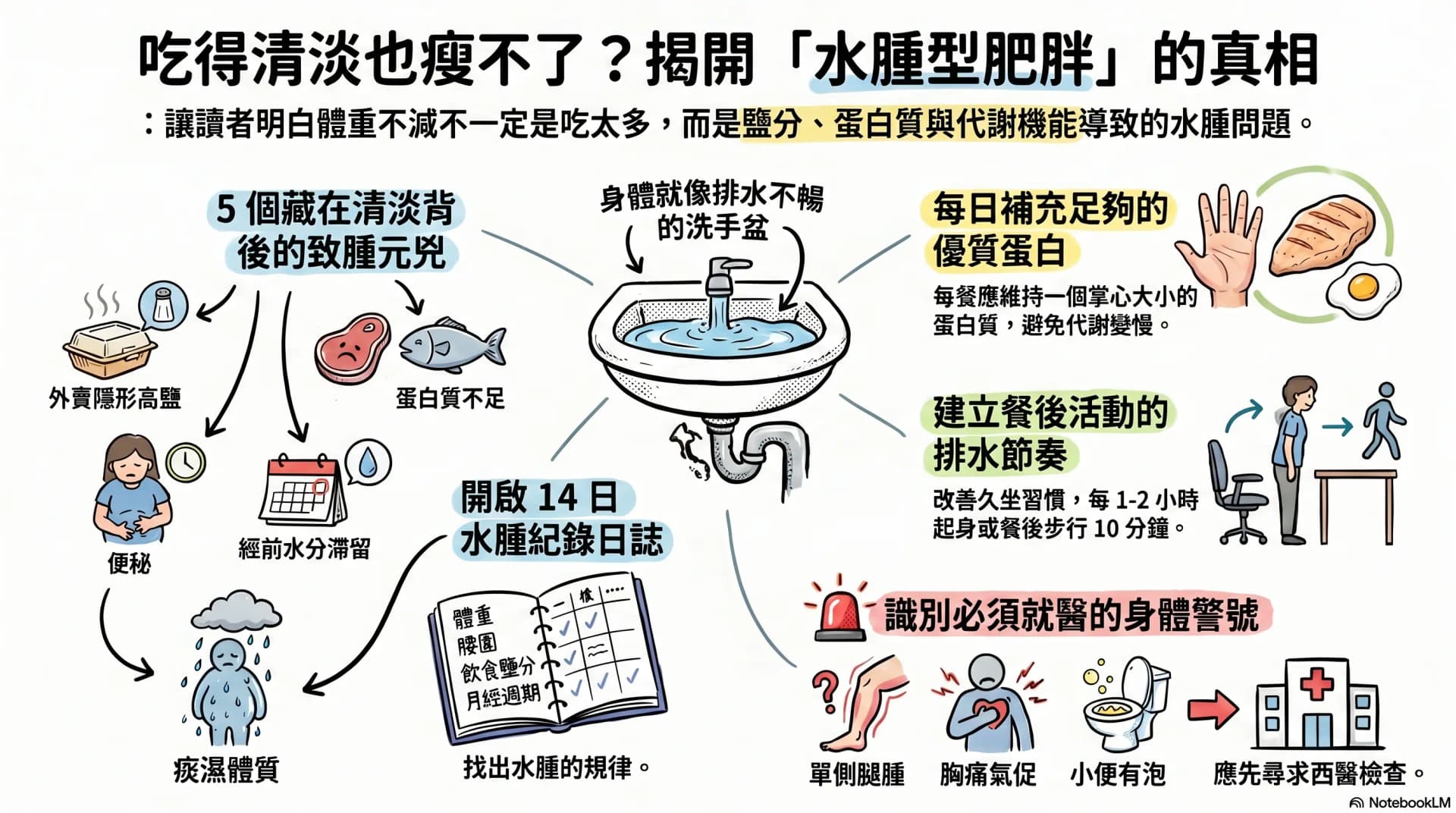
Eating Light but Not Losing Weight? A TCM Edema-Type Case Study
Eating light yet the scale will not budge — only the puffiness in the face, ankles and waistline persists? This case study follows Ya-lin (pseudonym), a 38-year-old office worker, through six months and explains how "eating clean but still not losing weight" often comes from a stack of small issues: salt, low protein, constipation, premenstrual fluid retention, phlegm-damp constitution, or internal disease. It also lists scenarios that warrant seeing a Western doctor first.
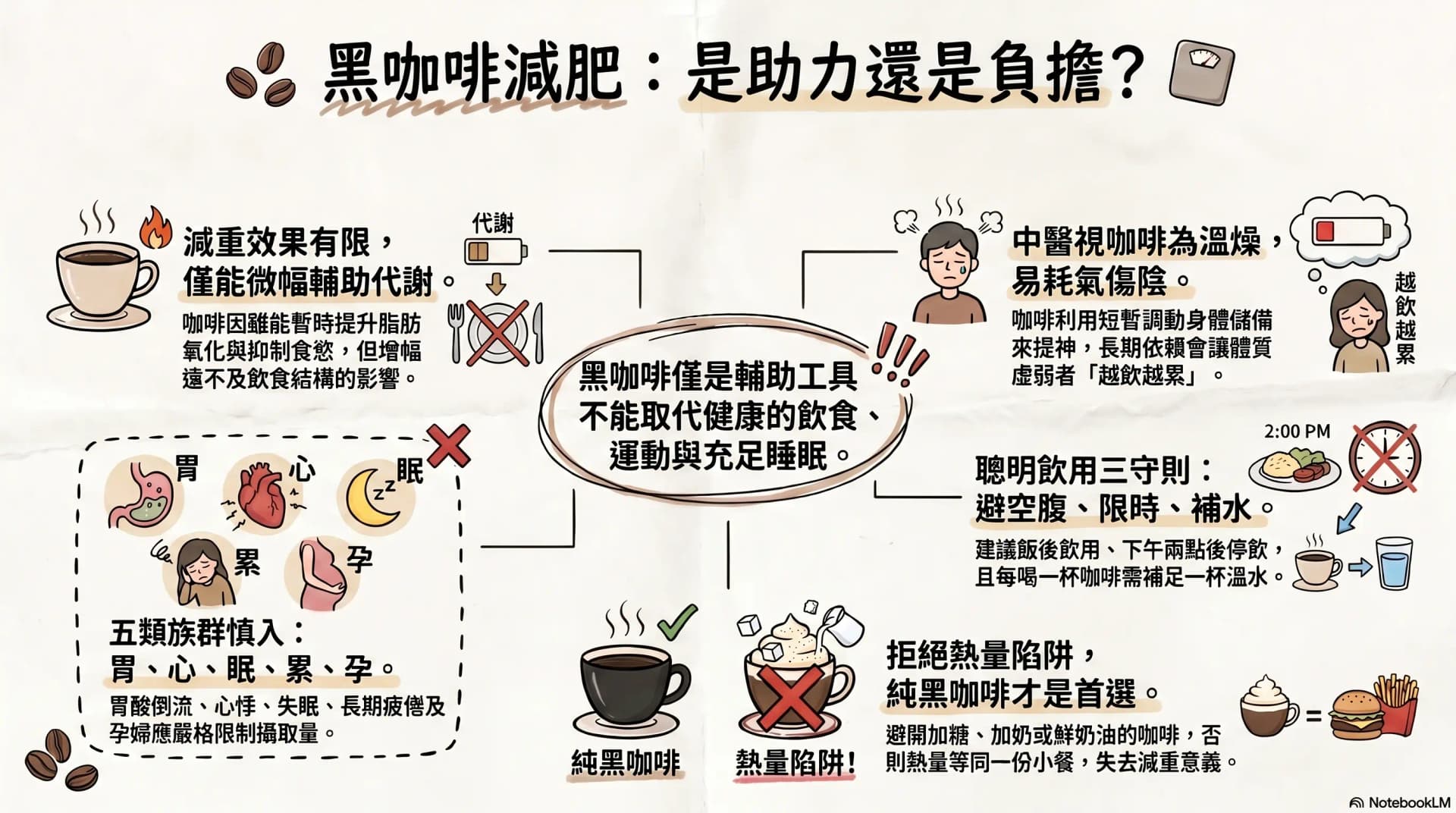
Does Black Coffee Help with Weight Loss? Timing and Side Effects
Black coffee may briefly raise metabolism and suppress appetite, but for those with acid reflux, palpitations, insomnia, chronic fatigue or premenstrual symptoms, it can do more harm than good. This article looks at the evidence and the TCM perspective, identifies five body types that should drink with care, and explains how to arrange timing and quantity sensibly.