Eczema in Children: How Long to Avoid Beef, Milk, Seafood?
Does a child with eczema need to avoid food? This article explains how long to avoid beef, milk and seafood, how TCM adjusts diet by pattern (damp-heat, weak spleen with dampness, blood deficiency with dryness), what medical research says, and why blind avoidance can leave a child short of nutrients.
Medical review: Dr. Tu Hsiang Ying, Sandy,Registered Chinese Medicine Practitioner #010445
1-Minute Quick Answer
A child with eczema does not always need to avoid foods. Cutting out milk, beef and seafood for long without a confirmed allergy can leave calcium and other nutrients short. TCM adjusts diet only during flares, by pattern, then adds foods back one at a time. Confirmed allergies must be avoided strictly.
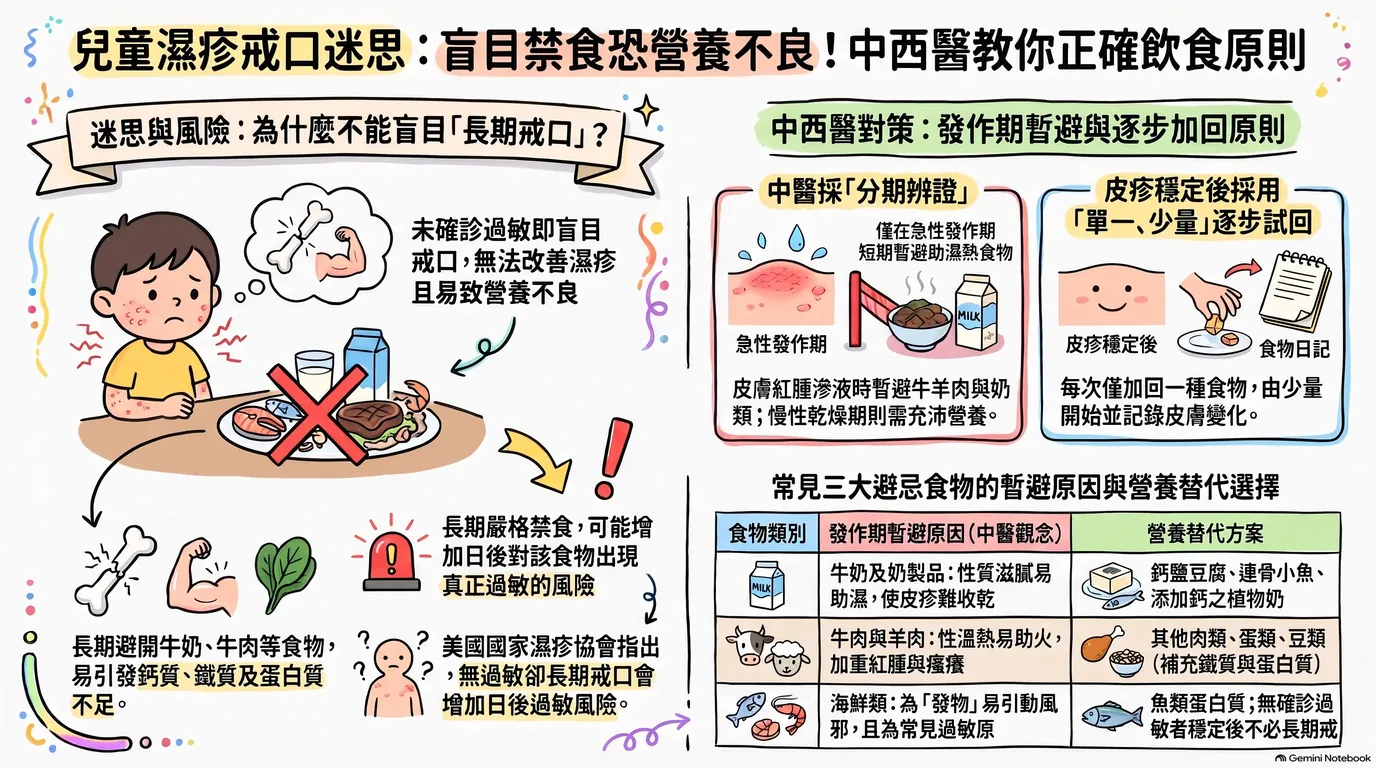 To help readers grasp the content quickly, the image was generated with NotebookLM. Some Chinese characters may not display correctly.
Does a child with eczema need to avoid food? Without a confirmed food allergy, there is no need to avoid foods for long or across the board. TCM also adjusts diet only during an eczema flare, by the child's pattern, and adds foods back once the rash settles. Blind avoidance can leave a child short of calcium, iron and protein.
Beef, milk and seafood are the three foods parents are most often told to cut out. This article explains why TCM suggests avoiding them during a flare, what medical research says, how long to avoid them, and how to do it sensibly.
Does a Child With Eczema Have to Avoid Foods?
Not necessarily. First, tell two kinds of avoidance apart:
- TCM avoidance for regulation: according to the child's constitution and rash, foods that tend to encourage dampness or heat are avoided for a while during a flare, to lighten the load on the skin. This is a temporary arrangement, and the foods can be added back step by step.
- A confirmed food allergy in Western medicine: allergy or food challenge tests have confirmed that a certain food triggers a reaction. These foods must be avoided strictly and never tried at home.
InformedHealth.org in Germany, reviewing several studies, concludes that in children without a confirmed food allergy, removing foods at random does not necessarily improve eczema. Avoidance is more likely to help children who are confirmed to be allergic to that food. Material published by the National Eczema Association in the United States adds that avoiding a food for a long time without a clear allergy may raise the risk of developing a true allergy to it later.
A paediatric dietetics leaflet from University Hospitals Birmingham NHS also states that a cow's milk free diet should only be followed on the advice of a doctor, allergy nurse or dietitian.
How Does TCM View Eczema in Children?
TCM does not treat all eczema alike. It first sorts it into patterns. Three are commonly used in Hong Kong and Taiwan, each with its own rash and stage:
| Pattern | The rash | Common accompanying signs | Dietary direction (adjusted after assessment) |
|---|---|---|---|
| Damp-heat | Sudden onset, red and burning skin, intense itching, obvious blisters and weeping, sometimes raw crusted patches | Bitter taste, dry mouth, irritability, dry or sticky stools, dark urine | Cut back on fried, spicy, sugary and warming foods such as beef and lamb during a flare |
| Weak spleen with heavy dampness | Longer course, keeps returning, redness and swelling fade but weeping continues, pale red or scaly skin | Poor appetite, bloating, tiredness, loose stools | Reduce raw, cold, sugary and cloying foods; keep meals light and easy to digest |
| Blood deficiency with dryness | Long-standing; dry, rough, thickened skin with darker pigmentation, severe itching, easily cracked | Dry mouth without wanting to drink, restless sleep, pale tongue | Focus on good nutrition and moisturising; avoid excessive food avoidance |
The three patterns also roughly match the stages of eczema: damp-heat is typical of the acute stage, weak spleen with dampness of the subacute or recovery stage, and blood deficiency with dryness of the chronic stage.
This matters for food avoidance. TCM considers short-term avoidance of foods that encourage dampness or heat only during an acute flare, when the skin is red, itchy and weeping. In the chronic stage, when the skin is dry and rough, TCM understands the child as leaning towards "blood deficiency" and needing nutritional support, so more avoidance would not suit.
Herbal medicine and medicinal recipes must also be prescribed by a practitioner according to the child's age and constitution. Parents should not brew herbal drinks for a child on their own.
Milk, Beef, Seafood: Why Does TCM Suggest Avoiding Them During a Flare?
| Food | Reason in TCM | Things to note |
|---|---|---|
| Milk and dairy | Rich and cloying in nature, they tend to encourage dampness and phlegm. When digestion cannot keep up, dampness lingers and the rash is slower to dry. | An important source of calcium, so replace it if cut out |
| Beef (lamb is similar) | Warming and heating, they tend to feed internal heat. In damp-heat eczema, with red, itchy, burning skin, the rash may flare after eating them. | A source of iron, which can be replaced by other meats and pulses |
| Seafood | TCM calls it a "trigger food" that can stir up "wind" and worsen itching. Seafood is also a common food allergen. | If swelling or wheezing has ever followed a meal, see a Western medicine doctor for an allergy assessment |
| Fruit (the cooling, raw kinds) | Damages the warming energy of the spleen and stomach and adds to dampness. Not all fruit needs avoiding. | See our article on fruit |
These reasons are traditional TCM understanding. They do not mean every child with eczema will flare after eating these foods. Whether to avoid them and for how long depends on the child's pattern and rash at the time.
What Does Western Medicine Research Say?
InformedHealth.org and the National Eczema Association reach the same conclusion: avoiding foods across the board without a confirmed allergy may not help, and can bring nutritional risks and a higher chance of a later allergy. So food avoidance should not be long or sweeping, and certainly not several categories at once without assessment.
Factors beyond food matter as well. See below, and our guide to eczema and food triggers.
How Long Should a Child With Eczema Avoid These Foods, and How Do You Add Them Back?
There is no fixed period. It is generally limited to the flare, while the rash is active. A safer approach:
- During a flare, avoid the foods above as your practitioner advises, only for as long as the rash is active.
- Once the skin settles, add back one food at a time, starting with a small amount.
- Keep a food diary: what was eaten, how much, and how the skin looked over the following days.
- If the rash clearly worsens after a food is added back, stop that food and talk to a practitioner. Do not cut out several foods again at once.
- For a food allergy confirmed by a Western medicine doctor, follow the doctor's instructions and avoid it strictly. It is not a "re-introduction test".
- For babies and toddlers with a suspected or confirmed milk allergy, reintroduction should be done under the guidance of a doctor or dietitian.
Can Blind Food Avoidance Leave a Child Short of Nutrients?
There is a risk. The "malnutrition" in the title means a child who avoids several kinds of food for a long time without replacing them, so that some nutrients fall short. It does not appear after a few meals.
- Dairy: the Birmingham NHS leaflet says a child avoiding milk may find it hard to get enough calcium from other foods, and it is very difficult to get enough vitamin D from diet alone.
- Beef: a source of iron and protein, which other meats, eggs and pulses must replace if it is dropped.
- Seafood: a source of fish protein. A child with no allergy does not need to avoid it long term.
When dairy is cut out, other foods can fill the gap:
- Protein: fish, meat, eggs, tofu, pulses
- Calcium: tofu set with calcium salts, small fish eaten with the bones, dark green vegetables
- Plant milks: choose calcium-enriched products. The UK hospital leaflet suggests at least 120 mg of calcium per 100 ml
Babies and toddlers should not be switched to plant milks in place of formula or breast milk on your own. Ask a paediatrician or dietitian first. A child who must avoid foods for a long time should have height and weight checked regularly and talk to a dietitian.
Beyond Food, What Else Triggers a Child's Eczema?
Food is only one piece. Sweat left on the skin, dry skin, house dust mites, very hot bath water, rough or non-breathable clothing and scratching can all make eczema return. Moisturising and avoiding these triggers matter as much as dietary changes.
Important If your child has any of the following, see a Western medicine doctor or go to the emergency department first:
- swelling of the lips or face, wheezing, repeated vomiting or widespread hives after eating a particular food
- pus or yellow crusts on the eczema, or a fever at the same time
- itching so bad that sleep is lost all night, affecting daily life
How Can TCM Support a Child With Eczema?
TCM support comes in three ways:
- Pattern assessment: looking at the colour of the rash, weeping, dryness and itch, together with the child's stools, appetite, sleep and tongue, to judge whether it leans towards damp-heat, weak spleen with dampness, or blood deficiency with dryness.
- Deciding what to avoid and for how long: with the same eczema, different patterns call for different foods and different lengths of avoidance. Assessment avoids a one-size-fits-all list and narrows avoidance to what is needed.
- Looking after digestion: a child's digestion is delicate, and diet, daily routine and bowel habits interact with the skin.
TCM care is supportive. Prescribed topical medicine and Western medical follow-up must still follow the doctor's instructions. To see how this clinic handled one child's eczema, read our eczema case record. Results vary from child to child.
Eczema Keeps Returning? Book a Pattern Assessment to Decide Which Foods to Avoid
Dr Tu Hsiang Ying focuses on children's digestion, sleep and physical development. She differentiates the pattern from the rash, stools, appetite and sleep, then talks through the dietary choices with parents. You can book a consultation with Dr Tu Hsiang Ying (registered Chinese medicine practitioner in Hong Kong, registration number 010445) through WhatsApp.
TCM treatment is supportive. It does not guarantee results and cannot replace diagnosis and treatment in Western medicine. If your child is using prescribed or topical medication, please do not stop it on your own.
References
- InformedHealth.org: Eczema: Can eliminating particular foods help? — https://www.informedhealth.org/eczema-can-eliminating-particular-foods-help.html
- National Eczema Association (US): A Look at the Food Elimination Diet Trend for Atopic Dermatitis — https://nationaleczema.org/?p=54879
- University Hospitals Birmingham NHS: Paediatric dietetics, cows' milk free diet for children (patient information leaflet) — https://www.uhb.nhs.uk/media/feldq2e5/pi-paediatric-dietitics-cows-milk-free-diet-for-children.pdf
- etnet Health: "Eczema itch relief: TCM and Western medicine on four folk-remedy myths; damp-heat, weak spleen and blood deficiency differ" (Chinese) — https://www.etnet.com.hk/www/tc/health/407059
Disclaimer: This article is for general health information only. It is not a diagnosis or medical advice and cannot replace a consultation with a registered practitioner. Every child's constitution and condition are different, and results vary. If your child is unwell, please consult a doctor promptly.
Disclaimer: This article is for health education and reference purposes only and does not constitute medical advice, diagnosis, or treatment. Each patient's condition is unique and treatment outcomes vary. Please consult a registered TCM practitioner or qualified healthcare professional for health concerns.
Further Reading
Hand-picked related articles and real cases to read next.
Eczema Diet Guide — TCM Tips on Triggers, Foods to Avoid & Daily Care
Recurring eczema is often closely linked to diet and lifestyle habits. This guide uses TCM pattern differentiation to explain the three common eczema patterns, foods to eat and avoid, healing soup recipes, and daily care tips to help you reduce eczema triggers at the root.
Breaking Free from Steroid Dependence — An Eczema Recovery Story
A woman in her 20s suffered from recurring eczema for five years with long-term steroid cream dependence. After approximately two months of internal and external herbal medicine treatment by the treating practitioner, she successfully broke free from steroid dependence and her skin returned to normal.
Children and Fruit: Before or After Meals? TCM Fruit Guide
Should children eat fruit before or after meals? This article sets out what dietitians and TCM say, the daily fruit portions advised by Hong Kong's Department of Health, and a cooling, neutral and warming fruit list, so parents can adjust by their child's stools, cough and appetite.
Want to learn more? WhatsApp us for a free consultation
Book via WhatsAppExplore our full range of treatments: TCM treatment for eczema
Related Articles
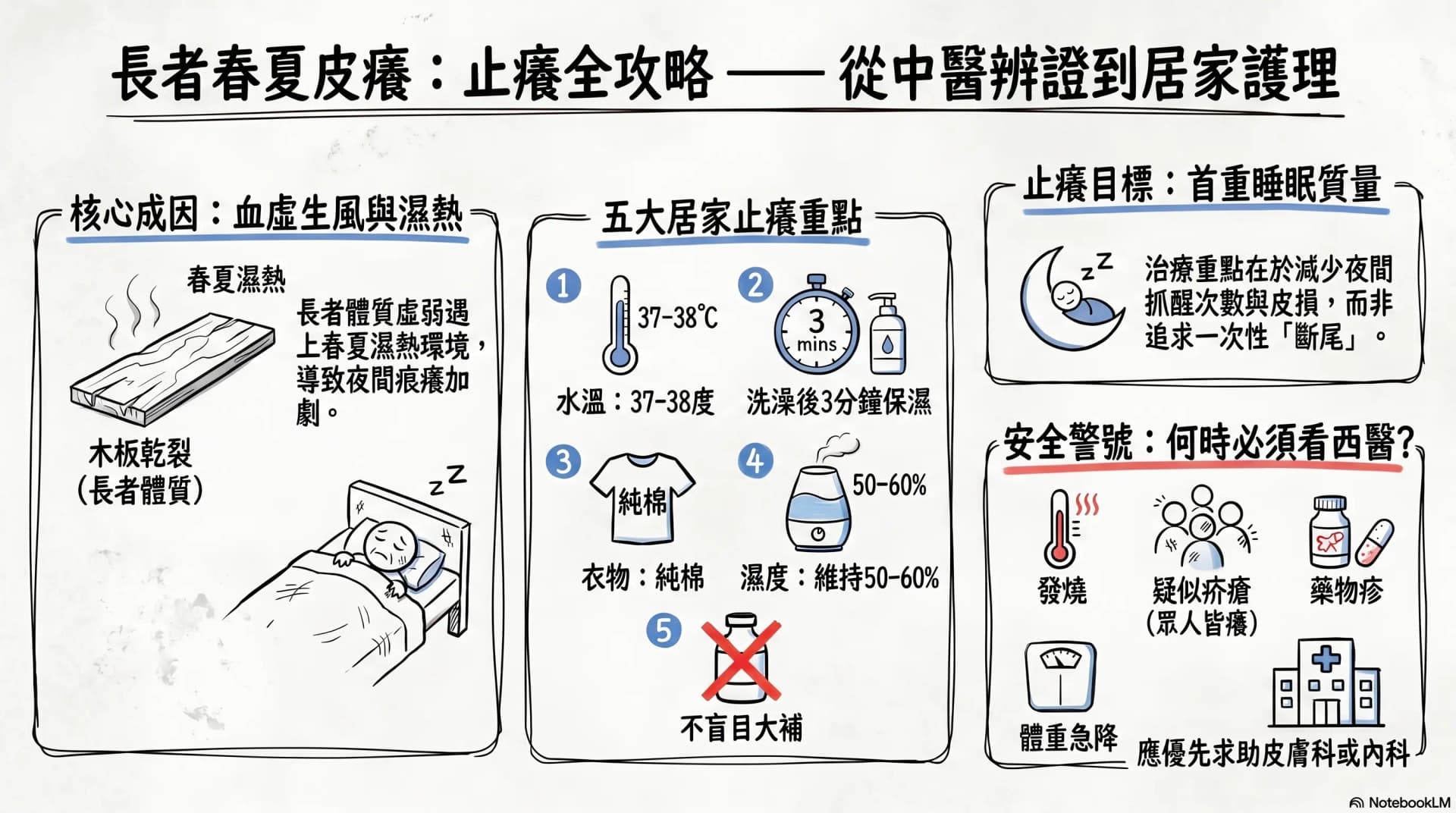
Night-Time Itchy Skin in Older Adults: A TCM Damp-Heat Case Study
When spring and summer arrive, many elderly people see their itchy skin flare up, particularly at night, and topical creams alone become less effective. Through the composite case of "Madam Chan", a 78-year-old, this article explains how TCM assesses elderly itch through the lens of damp-heat in the skin and blood-deficiency wind, walks through a phased approach to relief, and lists the warning signs (scabies, drug eruption, severe skin disease) that need a Western dermatology or internal-medicine assessment first.
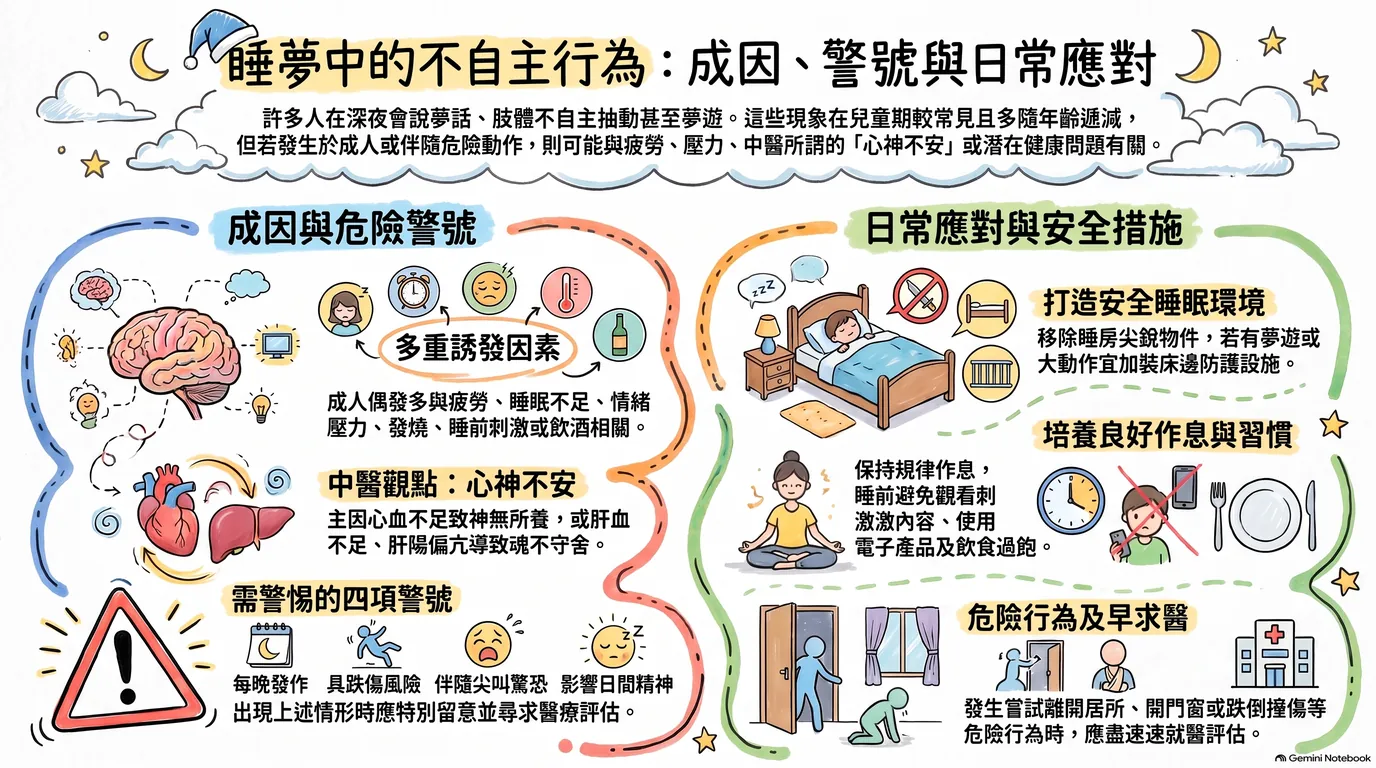
Sleep Talking, Limb Movements and Sleepwalking: What's Behind Them?
Many parents and partners have noticed a family member talking in their sleep, moving their limbs, or even sleepwalking. This article explains who this is most common in, how TCM understands it, and when it's time to see a doctor.
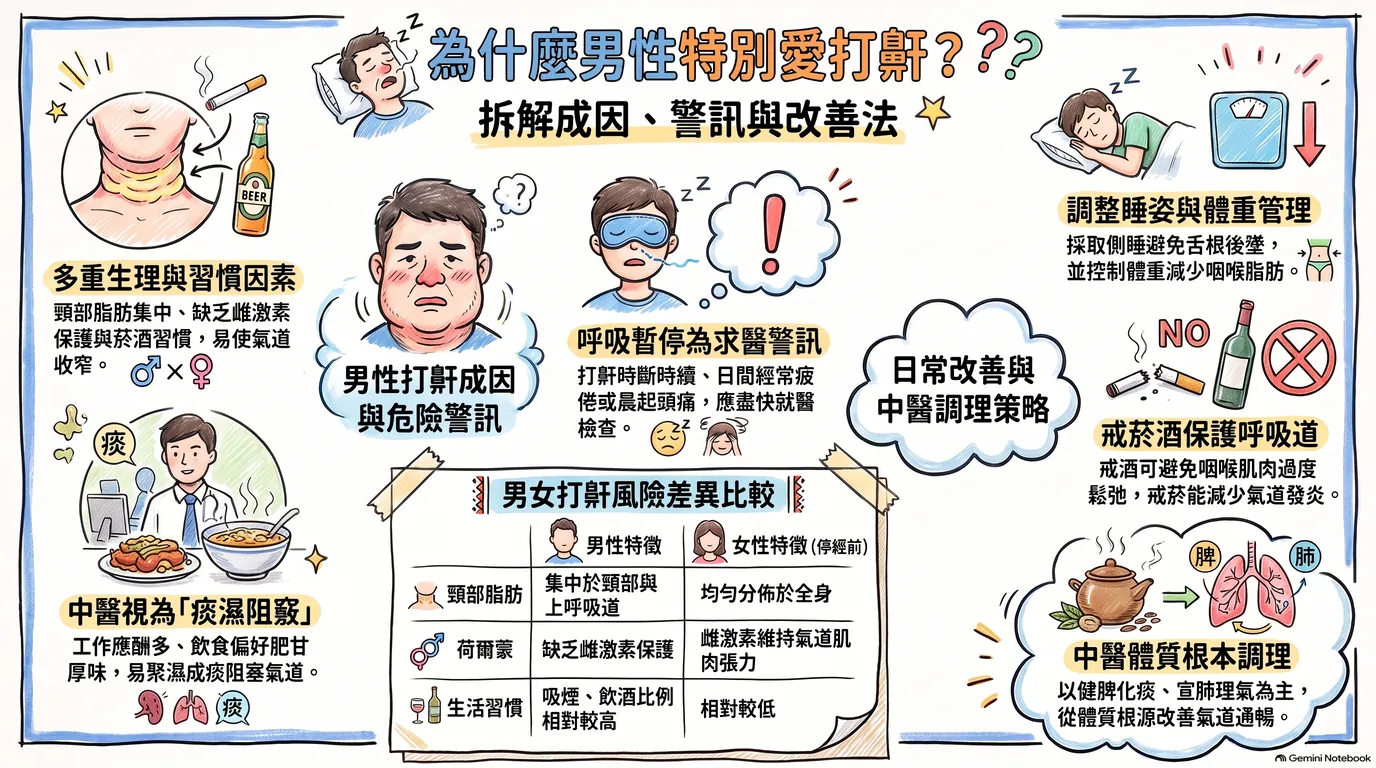
Why Do Men Snore More Than Women? Causes and Warning Signs
Snoring is far more common in men than women, and the reasons go beyond habit — physiology, hormones and lifestyle all play a part. This article explains why men snore more, which signs suggest a more serious problem, and how to ease snoring day to day.