
Why Do Men Snore More Than Women? Causes and Warning Signs
Snoring is far more common in men than women, and the reasons go beyond habit — physiology, hormones and lifestyle all play a part. This article explains why men snore more, which signs suggest a more serious problem, and how to ease snoring day to day.
Medical review: Dr. Tai Wai Ho, Samson,Registered Chinese Medicine Practitioner #008702
1-Minute Quick Answer
Men snore more often than women due to differences in neck fat distribution, hormones and lifestyle. If snoring comes with breathing pauses or daytime sleepiness, seek medical assessment rather than relying on lifestyle changes alone (reviewed by Dr Tai Wai Ho, CMCHK 008702).
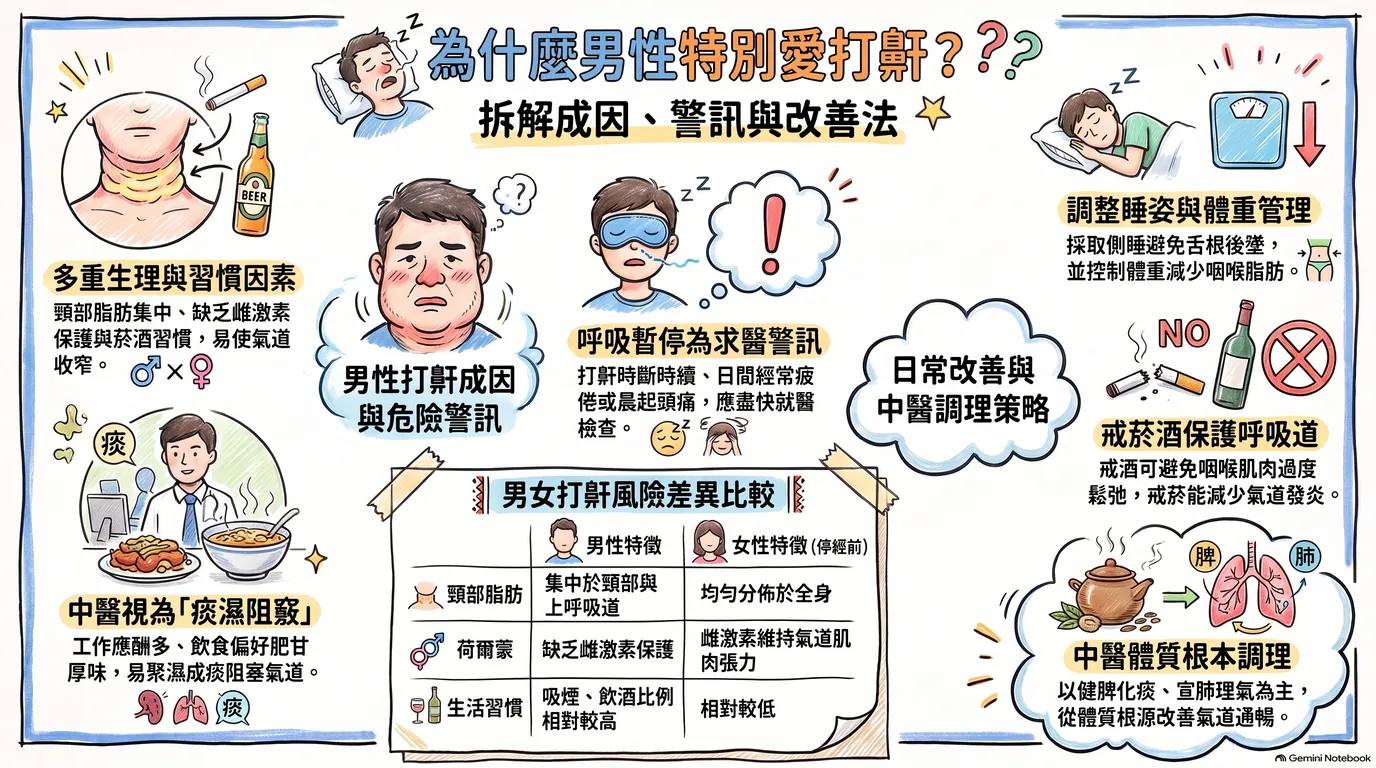 This image was generated using NotebookLM to help illustrate the article; some Chinese characters may not display correctly.
Important
If snoring starts and stops with brief pauses, a partner has witnessed or heard breathing pauses, or you often feel daytime sleepiness or wake with headaches, these are warning signs of sleep apnoea. Don't manage them with lifestyle changes alone — seek medical assessment promptly.
Many families share a similar experience: a partner or family member snores loudly during sleep, affecting everyone else's sleep quality in the process. Look closely, and this tends to be more common among men — a question that comes up often in clinic: is snoring a problem specific to men, or simply down to individual differences?
In fact, men are indeed more prone to snoring than women, for reasons involving physiology, hormones and lifestyle. This article explains why, what level of snoring warrants attention, and how to ease it day to day.
Why Do Men Snore More Than Women?
| Factor | Men | Women |
|---|---|---|
| Neck fat distribution | Tends to concentrate around the neck and upper airway | Tends to be distributed more evenly across the body |
| Hormonal protection | Lacks the airway-muscle protection associated with oestrogen | Oestrogen before menopause helps maintain upper airway muscle tone |
| Lifestyle habits | Relatively higher rates of smoking and drinking | Relatively lower rates |
As the table shows, men's neck fat distribution and hormonal profile both make the upper airway more prone to narrowing under pressure during sleep, and habits such as smoking and drinking add to this. Notably, snoring rates in women rise after menopause as oestrogen levels fall, which further supports the role hormones play.
From a TCM perspective, a phlegm-dampness constitution is also relatively more common in men, and combined with more frequent business meals and richer diets, this tends to generate phlegm-dampness that obstructs the airway — another reason snoring is more pronounced in men.
Common Causes of Snoring
- Nasal allergies or congestion: a persistently blocked nose forces mouth-breathing, which is more likely to produce snoring
- Excess weight or phlegm-dampness: extra fat around the neck and throat narrows the airway
- Alcohol: relaxes the throat muscles excessively, increasing the chance of airway obstruction
- Sleeping on your back: the base of the tongue is more likely to fall backward and block the airway
- Ageing: throat muscles gradually loosen with age, worsening snoring over time
- Enlarged tonsils: reduces the space in the upper airway
When Does Snoring Become a Problem?
Most mild snoring is a benign, physiological phenomenon. However, the following signs are worth paying attention to, as they may indicate something more serious, such as sleep apnoea:
- Snoring that starts and stops, with brief pauses in between
- A partner witnessing or hearing pauses in breathing
- Frequent daytime tiredness or sleepiness, even after a full night's sleep
- Morning headaches or a dry mouth
- Difficulty concentrating or a noticeable decline in memory
The TCM View of Snoring
In TCM, snoring is generally linked to phlegm-dampness obstructing the airway, alongside dysfunction of the lungs, spleen and kidneys. The spleen is considered the source of phlegm production — when its transportive function falters, dampness accumulates and condenses into phlegm, obstructing the airway. The lungs govern respiration, so impaired lung qi dispersal also contributes to laboured breathing. The kidneys govern the intake of qi, and as kidney qi gradually weakens with age, this is part of why snoring tends to worsen over time.
How Can You Improve Snoring Day to Day?
- Sleep on your side: reduces the chance of the tongue falling backward and blocking the airway
- Manage your weight: reduces fat build-up around the neck and throat
- Cut down on alcohol, especially before bed: reduces excessive relaxation of the throat muscles
- Quit smoking: reduces airway inflammation and swelling
- Keep the nasal passage clear: address nasal allergies or congestion promptly
- Consider TCM support: strengthening the spleen to resolve phlegm and dispersing lung qi can help address the underlying constitution
How Can Chinese Medicine Help?
Chinese medicine manages snoring through pattern differentiation — first identifying whether it stems from phlegm-dampness obstructing the airway, impaired lung qi dispersal, or weakening kidney qi, then providing care accordingly. At Aspira TCM, Dr Tai Wai Ho treats snoring mainly with herbal medicine, tailored by pattern to strengthen the spleen and resolve phlegm, disperse lung qi, or tonify the kidneys, aiming to address the underlying constitution and reduce both snoring and daytime tiredness.
It should be made clear that Chinese medicine here is supportive in nature, does not replace necessary medical examination, and cannot assess or rule out sleep apnoea. If you suspect your snoring is accompanied by warning signs of sleep apnoea, it's advisable to seek medical assessment early — a sleep study may be needed to confirm the severity and guide next steps.
Next Step
If snoring is affecting you or your household, you are welcome to enquire with Aspira TCM via WhatsApp (WhatsApp: 9679 2293 / wa.me/85296792293); a practitioner can then assess and advise on a suitable direction. If you suspect symptoms of sleep apnoea or similar warning signs, please seek medical attention promptly.
Disclaimer: This article is for health education and reference only and does not constitute personalised medical advice. Each patient's constitution and condition differ, and treatment outcomes vary. Chinese medicine can provide supportive care and ease symptoms but cannot replace necessary Western examination. If you suspect symptoms of sleep apnoea or similar warning signs, please seek medical attention promptly.
Disclaimer: This article is for health education and reference purposes only and does not constitute medical advice, diagnosis, or treatment. Each patient's condition is unique and treatment outcomes vary. Please consult a registered TCM practitioner or qualified healthcare professional for health concerns.
Further Reading
Hand-picked related articles and real cases to read next.
Sleep Talking, Limb Movements and Sleepwalking: What's Behind Them?
Many parents and partners have noticed a family member talking in their sleep, moving their limbs, or even sleepwalking. This article explains who this is most common in, how TCM understands it, and when it's time to see a doctor.
Insomnia: Sleeping Pills or TCM? An Honest Comparison
Sleeping pills offer immediate relief but carry dependency risks; TCM treats insomnia at the root but requires patience. This article honestly compares both approaches — benefits, risks, costs, and who each is best suited for — to help you find the right solution for your sleepless nights.
Heavier When Busy, Heavier When Off? A TCM Look at Stress-Induced Obesity and How to Approach It
You count calories, you exercise — yet you put on weight when work gets busy, and put on more during the holiday. The needle moves one or two kilos at a time, and the belly shows it most. This article looks at stress-induced obesity through a TCM lens — cortisol, liver-qi stagnation and spleen-deficiency damp — and outlines when to see a Western doctor first and where TCM care can begin.
Want to learn more? WhatsApp us for a free consultation
Book via WhatsAppExplore our full range of treatments: Traditional TCM Services
Related Articles

The Cold Has Gone but the Cough Will Not Clear: Causes of a Lingering Post-Cold Cough and How TCM Can Help
The cold is gone, but the cough drags on for weeks. This article breaks down the common types and causes of a lingering post-cold cough, the situations that warrant medical attention, the treatment blind spots, and how Chinese medicine can help through pattern differentiation.
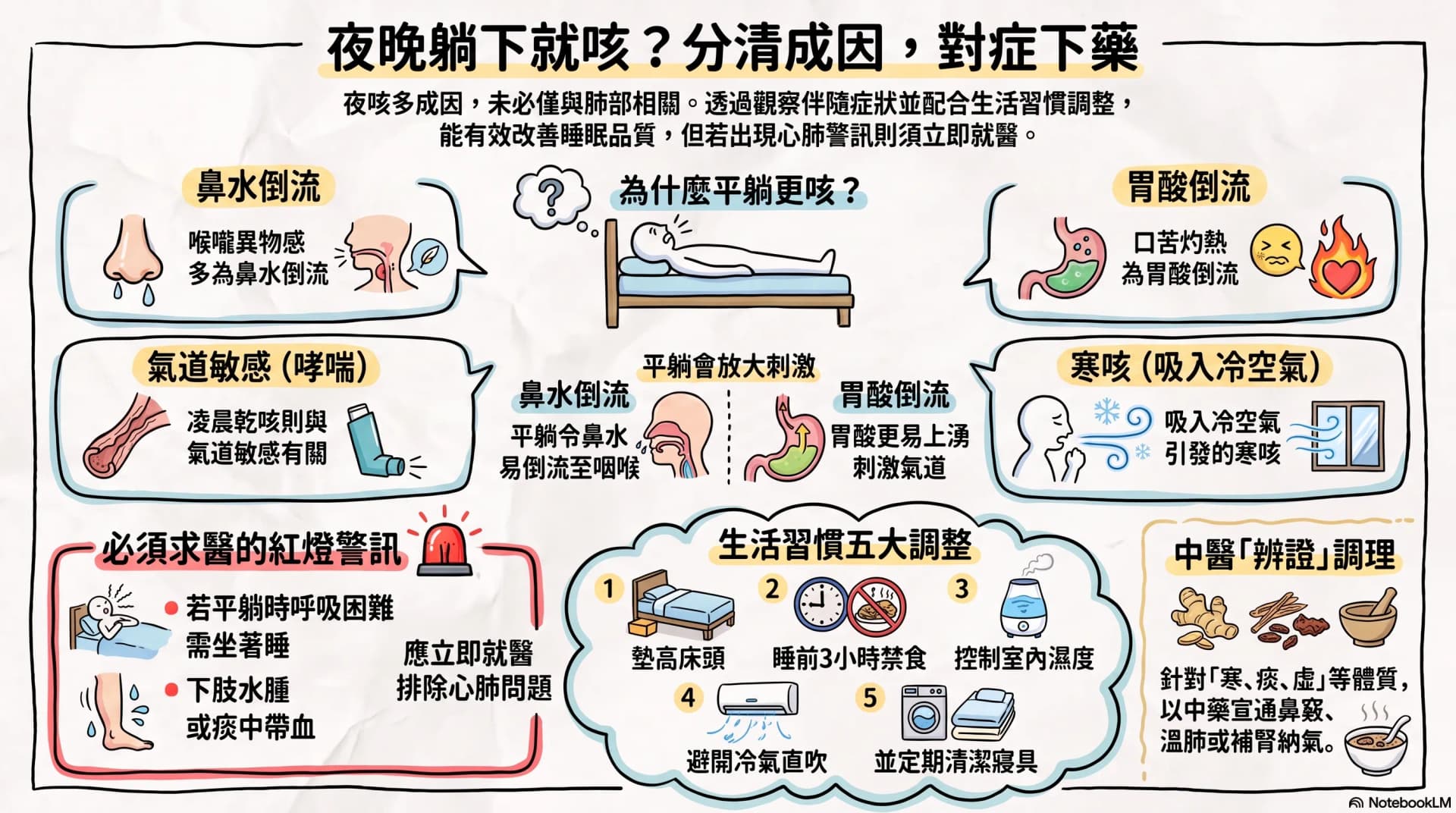
A Cough That Comes On When You Lie Down at Night: Common Causes and How TCM Can Help
Fine during the day, but coughing the moment you lie down, or waking at night? A night cough has more than one cause, and some have little to do with the lungs. Learn how to identify the type by accompanying symptoms, why lying flat makes it worse, when to seek medical care, and how Chinese medicine can help.
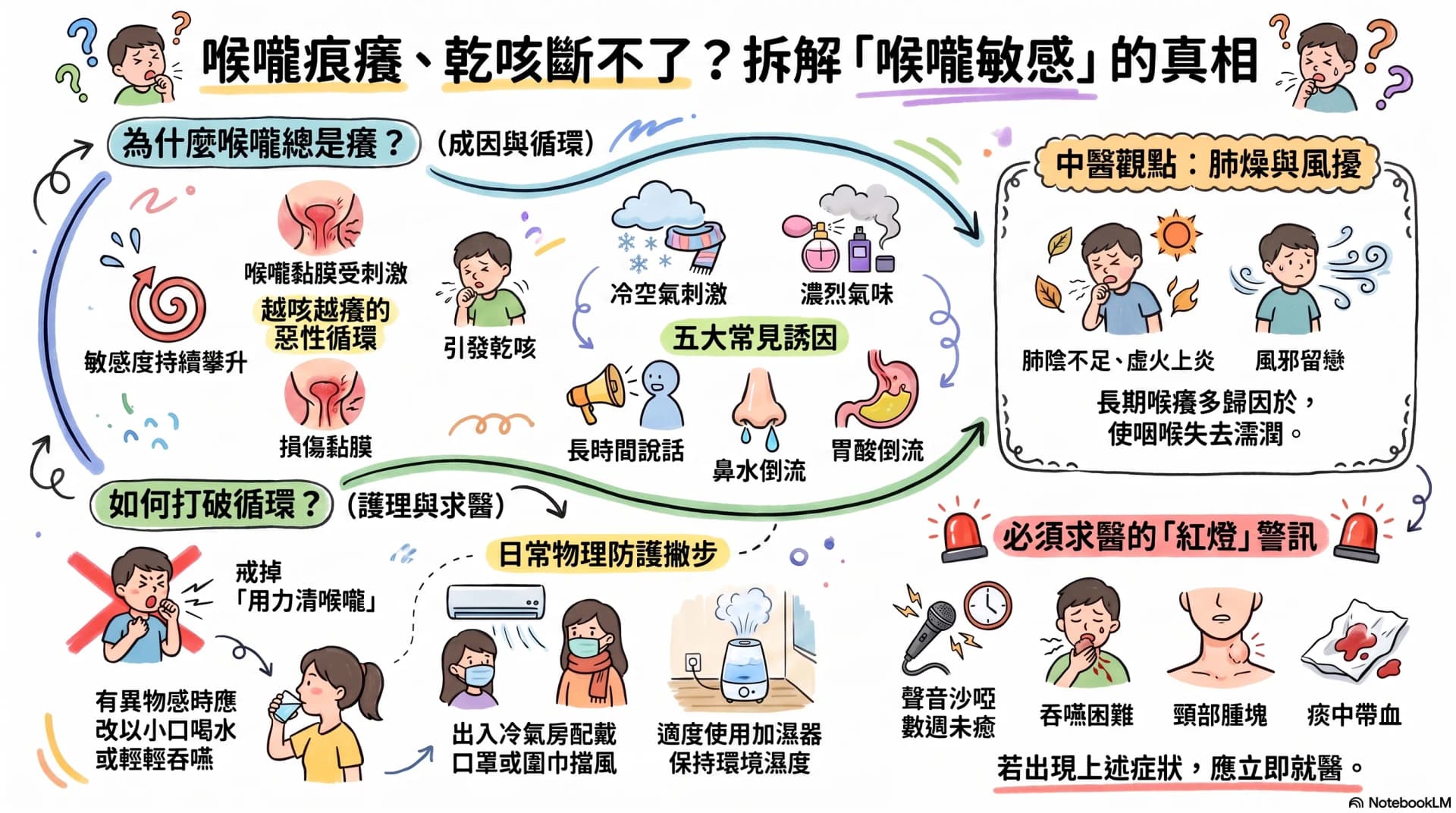
An Itchy Throat and a Cough Whenever You Speak: Throat Sensitivity and Sensitive Cough
A long-standing itchy throat with a dry cough triggered by talking, cold air or smells — not a cold, yet recurring for years. This article explains the causes of throat sensitivity and sensitive cough, how to distinguish its links with allergic rhinitis, acid reflux and voice overuse, when to see a doctor, and how Chinese medicine can help.