Children and Fruit: Before or After Meals? TCM Fruit Guide
Should children eat fruit before or after meals? This article sets out what dietitians and TCM say, the daily fruit portions advised by Hong Kong's Department of Health, and a cooling, neutral and warming fruit list, so parents can adjust by their child's stools, cough and appetite.
Medical review: Dr. Tu Hsiang Ying, Sandy,Registered Chinese Medicine Practitioner #010445
1-Minute Quick Answer
Children can eat fruit before or after meals, and dietitians say eating it matters more than when. TCM adjusts by digestion: weaker digestion suits fruit after meals at room temperature, while hard stools can take it before. Hong Kong's Department of Health advises at least two servings a day from age six.
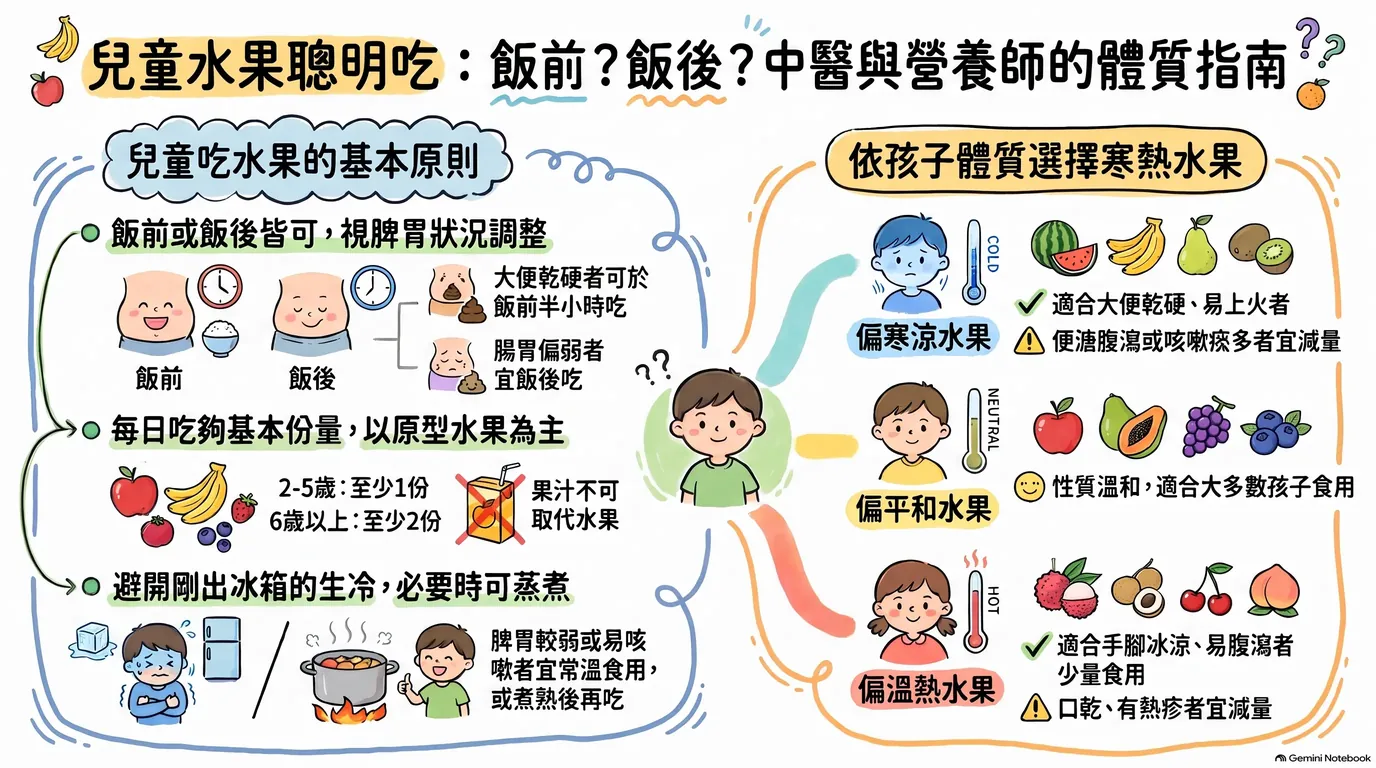 To help readers grasp the content quickly, the image was generated with NotebookLM. Some Chinese characters may not display correctly.
Should children eat fruit before or after meals? Either is fine, and no single time suits every child. Dietitians make the same point: eating fruit matters more than when you eat it.
TCM adds two questions: whether the child's digestion is strong or weak, and whether the fruit itself is cooling or warming in nature. The same bowl of watermelon can feel good to a child with hard stools and cause tummy ache in a child with loose ones.
This article answers before or after meals first, then how much to eat each day, and ends with a list of cooling, neutral and warming fruit. Parents can adjust by the child's stools, cough and appetite after eating.
Should Children Eat Fruit Before or After Meals?
The short answer: Either. If your child feels fine afterwards and still eats proper meals, the timing is suitable.
What Dietitians Say
- Jim Lau, registered dietitian (Sing Tao Headline, 2024): Half an hour to an hour before a meal suits fruit rich in soluble fibre, such as apples, which helps fullness and slows the absorption of sugar and fat. Half an hour to an hour after a meal suits fruit lower in fibre and richer in vitamins and minerals. His conclusion is that whether you eat fruit at all matters more than when you eat it.
- Dietitian Gao Minmin (TVBS, 2021): There is no universal best time, so plan around the individual. People with weaker digestion should avoid pineapple, kiwi fruit and lemon on an empty stomach, as they may stimulate stomach acid. Pineapple, papaya and kiwi fruit contain digestive enzymes, so eating them after a meal can help digestion. People with higher blood sugar are advised to eat low glycaemic index, high-fibre fruit between meals.
- Jef L'Ecuyer, registered dietitian in Canada (SOS Cuisine, 2015): The idea that fruit eaten after a meal "ferments in the stomach" is a myth. Stomach acid keeps bacteria from growing there in large numbers, and the order of eating makes little difference.
- Department of Health, Hong Kong (EatSmart@school material): Fruit suits both meals and snacks, for example at breakfast, at afternoon tea, or in place of dessert at lunch or dinner.
These are professional opinions from dietitians and a government body. They are not results from studies that compare fruit before and after meals.
How TCM Sees Timing
TCM looks at the child's spleen and stomach. A child's spleen is "often insufficient", so digestion is still developing. Most fruit is cooling in nature. On an empty stomach, TCM explains, that coolness acts more directly on the digestive system, so a child with weaker digestion is prone to tummy ache and loose stools. After a meal there is already food in the stomach, and the cooling effect is milder.
A child with strong digestion and drier stools is different. Fruit supplies water and dietary fibre, and eating it half an hour before a meal, or as an afternoon snack, can help the bowels move.
| Your child | Better timing | Why |
|---|---|---|
| Loose stools, cool hands and feet, small appetite | After meals, or a small amount between meals; room temperature, steamed or stewed if needed | With food in the stomach, the cooling effect is easier to tolerate |
| Hard, dry stools, dry mouth, bad breath | Half an hour before a meal or as an afternoon snack; choose ripe fruit | The water and fibre in fruit help the bowels move |
| Too full for proper meals after fruit | After meals or at afternoon tea | Fruit contains sugar and fills the stomach, taking the place of the meal |
| Tummy discomfort after pineapple, kiwi fruit or lemon | A small amount after meals, not on an empty stomach | Dietitian Gao Minmin notes these may stimulate stomach acid on an empty stomach |
| Raised blood sugar, or diabetes | Follow the doctor and dietitian | Low glycaemic index fruit between meals is a common suggestion, but individual plans are for healthcare professionals |
How Much Fruit Should Children Eat Each Day?
The Department of Health recommends:
- Ages 2 to 5: at least 1 serving a day
- Age 6 and above: at least 2 servings a day
One serving is roughly:
- 1 medium fruit, such as an orange or apple
- 2 small fruits, such as plums or kiwi fruit
- half a large fruit, such as a banana, grapefruit or dragon fruit
- half a bowl (about 250 to 300 ml) of cut or small fruit, such as watermelon or grapes
Juice cannot replace fruit. Juice has less fibre and much more sugar. About 180 ml (three-quarters of a glass) of pure juice counts as one serving, and drinking more still counts as one. The Department advises whole fruit as the main choice.
These amounts are a minimum, not a ceiling, and not every child can manage them. If your child gets loose stools or more phlegm at the recommended amount, spread the fruit over two or three sittings, serve it at room temperature, or steam or stew it first, rather than giving up fruit altogether. If the reaction continues after adjusting, ask a practitioner to assess it.
Children with a small appetite are more likely to let fruit take the place of a proper meal. For feeding children with a poor appetite, see our article on children with a poor appetite.
Why Is Fruit Not Right for Every Child?
Fruit is cooling, and raw. TCM regards most fruit as cooling or cold in nature. A child's digestion is delicate, so a lot of cold, raw food weakens the power to digest.
Weak digestion lets dampness build up. In TCM the spleen and stomach move fluids through the body. When they are weak, fluids stagnate as phlegm-dampness, and the child tends to have loose stools, poor appetite, more phlegm and a runny nose.
Sugar fills the stomach. Fruit contains sugar. Too much takes up appetite, so proper meals go uneaten and protein and other nutrients fall short.
So TCM does not tell children to give up fruit. It adjusts how much, which kinds and when, according to the child's constitution.
After Eating Fruit, Which Reactions Mean Eating Less or Stopping?
| After eating fruit | Common TCM interpretation | What to adjust |
|---|---|---|
| Stools become loose and more frequent | Cold, weak digestion that cannot tolerate raw, cold food | Reduce the amount, serve at room temperature, offer after meals |
| Cough, phlegm and runny nose worsen | Cold, raw food encourages phlegm-dampness | Cut back on cooling fruit for a few days and observe; for allergic rhinitis, see our article on children's allergic rhinitis |
| Tummy ache, cold hands and feet | Cold harming the spleen and stomach | Avoid fruit straight from the fridge |
| Hard, dry stools, dry mouth, bad breath | Dry intestines, shortage of body fluids | Add a moderate amount of ripe fruit; see our article on bowel movements and low-grade fever |
| Eczema weeping, red and itchy | Heavier dampness | See our article on eczema and food avoidance |
Important If your child has any of the following, see a Western medicine doctor first rather than just adjusting fruit:
- itching or swelling of the lips or mouth after fruit, or a rash, vomiting or wheezing
- long-lasting diarrhoea, no weight gain, or a marked drop in appetite
- blood in the stool, or persistent tummy pain
Which Fruit Is Cooling, Neutral or Warming for Children?
The table follows the classification given by TCM practitioner He Zhaoting in TVBS Health 2.0 (2023):
| Nature | Common fruit | Better suited to | Eat less if the child has |
|---|---|---|---|
| Cooling | Banana, watermelon, pear, orange, mango, strawberry, kiwi fruit, dragon fruit, cantaloupe | Hard stools, dry mouth, bad breath, easily "heaty" | Loose stools, cold hands and feet, cough with phlegm, clear runny nose |
| Neutral | Apple, papaya, grapes, blueberries, pineapple | Most children, with portions still controlled | Usually no special limit; take care with pineapple on an empty stomach |
| Warming | Longan, lychee, peach, cherries, durian, passion fruit | Cool hands and feet, easily loose stools, in small amounts | Dry mouth, hard stools, heat rash, easily "heaty" |
Three points about this list:
- Classical texts and practitioners classify fruit differently, and the same fruit varies by variety and ripeness. The practitioner's own assessment takes priority.
- The source article does not mention children. The table applies adult constitutional principles to children, so each child needs a practitioner's assessment.
- Traditionally, children with weaker digestion are given fruit steamed or stewed, such as steamed apple or pear soup, which softens its cooling nature.
In Practice: How to Serve Fruit
- Timing: Before or after meals both work. For weaker digestion, serve it after meals or as an afternoon snack, not on an empty stomach.
- Portion: Use the Department of Health amounts as a guide, and split them if your child cannot manage them at once. Do not hand over a whole bowl as a snack.
- Temperature: Serve at room temperature, not straight from the fridge.
- Form: Whole fruit, with little juice.
- Observation: After changing the type or amount, watch stools, cough and appetite for two or three days before deciding whether to continue.
Not Sure Which Fruit Suits Your Child? Book a Constitution Assessment
Dr Tu Hsiang Ying focuses on children's digestion, sleep and physical development. She assesses constitution from the child's stools, appetite, tongue and daily habits, then suggests a suitable direction for diet. You can book a consultation with Dr Tu Hsiang Ying (registered Chinese medicine practitioner in Hong Kong, registration number 010445) through WhatsApp.
TCM treatment is supportive. It does not guarantee results and cannot replace diagnosis and treatment in Western medicine. If your child is taking Western medicine, please do not stop it on your own.
References
- Department of Health, Hong Kong: Provide Children with Fruit Every Day to Improve Their Health (EatSmart@school material) — https://school.eatsmart.gov.hk/files/pdf/provide_children_with_fruit_everyday_to_improve_their_health_2024.pdf
- Sing Tao Headline: "Fruit before or after meals? Best times to eat 21 kinds of fruit" (31 March 2024, Chinese) — https://www.stheadline.com/health-care/3327329/
- TVBS Health 2.0: "Fruit before or after meals? A dietitian explains the best time to eat fruit" (5 July 2021, Chinese) — https://health.tvbs.com.tw/nutrition/328773
- SOS Cuisine: Avoiding fruit at mealtime: myth or reality? (6 November 2015) — https://www.soscuisine.com/blog/avoiding-fruit-mealtime-myth-reality/
- TVBS Health 2.0: "Eating the wrong fruit can harm you: a TCM practitioner on choosing fruit by constitution" (7 August 2023, Chinese) — https://health.tvbs.com.tw/nutrition/341161
Disclaimer: This article is for general health information only. It is not a diagnosis or medical advice and cannot replace a consultation with a registered practitioner. Every child's constitution and condition are different, and results vary. If your child is unwell, please consult a doctor promptly.
Disclaimer: This article is for health education and reference purposes only and does not constitute medical advice, diagnosis, or treatment. Each patient's condition is unique and treatment outcomes vary. Please consult a registered TCM practitioner or qualified healthcare professional for health concerns.
Further Reading
Hand-picked related articles and real cases to read next.
Kids Won't Eat? A TCM Perspective on the Causes and What Parents Can Do
Poor appetite in children is one of the most common parenting headaches. This article breaks down four common causes from a TCM perspective (spleen-stomach weakness, food retention, liver stagnation, post-viral effects), three things parents can start today, five common paediatric tuina techniques, three gentle food therapies, and the warning signs that warrant a paediatrician first.
Paediatric Allergic Rhinitis: A TCM Guide for Hong Kong Parents
A child who sneezes every morning with a blocked nose, rubs the nose and eyes, has dark under-eye shadows, sleeps poorly and struggles to concentrate at school — this is very likely allergic rhinitis. This article explains how to tell allergic rhinitis from a cold, how TCM works through lung, spleen and kidney insufficiency and a weak surface defence, treating the flare and the quiet phase differently, how the home dust-mite environment fits in, and when to see a Western doctor first.
Eczema in Children: How Long to Avoid Beef, Milk, Seafood?
Does a child with eczema need to avoid food? This article explains how long to avoid beef, milk and seafood, how TCM adjusts diet by pattern (damp-heat, weak spleen with dampness, blood deficiency with dryness), what medical research says, and why blind avoidance can leave a child short of nutrients.
Recurrent Low-Grade Fever in Children: Constipation and TCM
Why does a TCM practitioner ask about constipation when a child has a recurrent low-grade fever? This article first lists the warning signs that need a doctor, explains why infection must be ruled out first, then sets out how food stagnation is understood to cause fever, with home observation and care.
Want to learn more? WhatsApp us for a free consultation
Book via WhatsAppExplore our full range of treatments: Traditional TCM Services
Related Articles
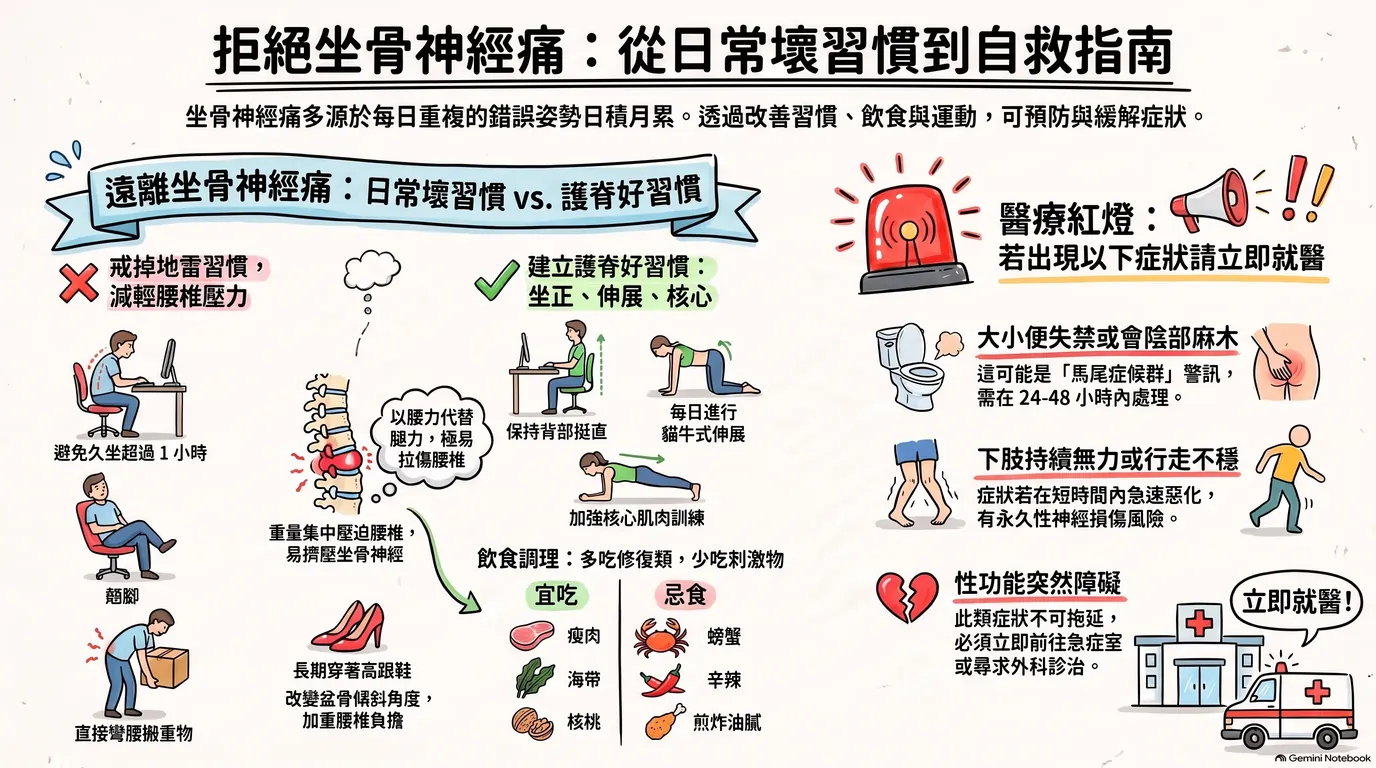
Sciatica Prevention: Bad Habits, Diet and Daily Care Tips
Sciatica isn't only about treatment — your daily habits and diet play a big role too. In this article, Dr Wong explains which everyday habits increase your risk of sciatica, which foods may help ease it, and simple daily habits that reduce the chance of it coming back.
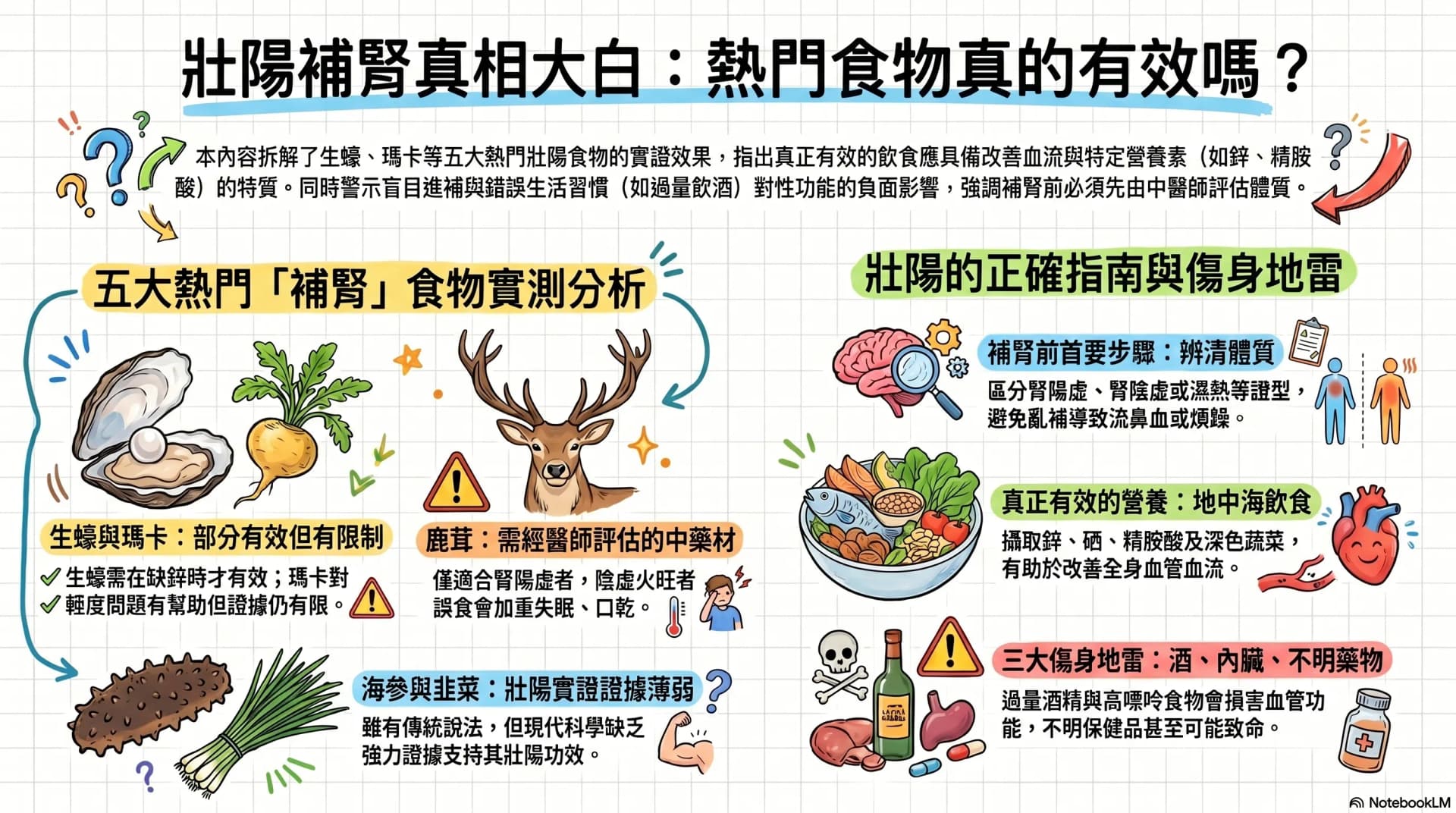
Do Oysters, Maca and Deer Antler Boost Male Vitality? 5 Myths
Do aphrodisiac foods actually work? This article opens with a rating table (effective / partly effective / effective within a TCM framework / weak evidence / no strong evidence), reviews the Chinese and Western medical evidence behind oysters, maca, deer antler, sea cucumber and Chinese chives, distils the 3 shared traits of foods that genuinely support male sexual function, and flags 3 commonly eaten items that can actually harm performance.
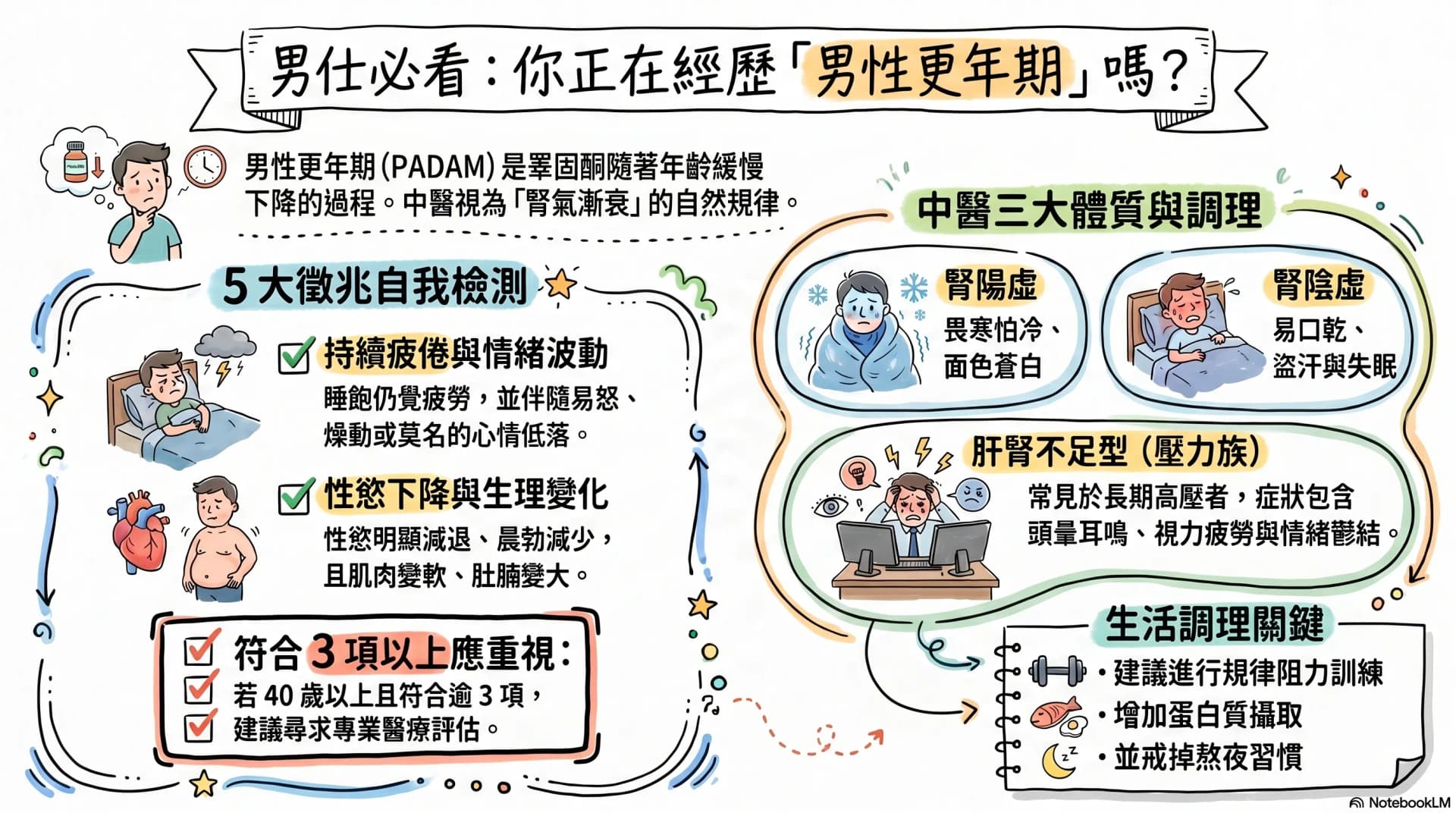
Male Menopause Through the TCM Lens: 5 Signs in Men Over 40
Unexplained fatigue, irritability, lower libido, poorer sleep and a growing belly after 40 are not just ageing or work stress — they may be male menopause. This article begins with a five-sign self-check, sets out three TCM patterns (kidney-yang deficiency, kidney-yin deficiency, liver-and-kidney insufficiency) with matching improvements, and compares the two treatment routes — testosterone replacement therapy versus TCM constitutional care.