
Sleep Talking, Limb Movements and Sleepwalking: What's Behind Them?
Many parents and partners have noticed a family member talking in their sleep, moving their limbs, or even sleepwalking. This article explains who this is most common in, how TCM understands it, and when it's time to see a doctor.
Medical review: Dr. To Ching, Jenny,Registered Chinese Medicine Practitioner #009330
1-Minute Quick Answer
Sleep talking, limb movement and sleepwalking are most common in children, while occasional episodes in adults are often linked to fatigue or stress. Seek medical assessment when episodes are frequent or involve large movements (reviewed by Dr To Ching, CMCHK 009330).
 This image was generated using NotebookLM to help illustrate the article; some Chinese characters may not display correctly.
Important
If episodes happen almost every night, involve large movements with a risk of falling or injury, dangerous sleepwalking behaviour such as attempting to open doors or windows or walk down stairs, or screaming with a visibly frightened expression, prioritise making the sleep environment safe and seek medical assessment early rather than simply observing and waiting.
Many parents have been woken late at night by a child talking in their sleep, or have noticed their child's arms and legs moving involuntarily. Partners often report something similar — the other person suddenly sitting up in bed, or even getting up and walking around while still asleep. These are all forms of what's broadly known as involuntary sleep behaviour, covering sleep talking, involuntary limb movement, and sleepwalking — and many parents and partners wonder: is this normal? Does it suggest something is wrong?
In fact, these behaviours are more common in children, though adults can experience them too, often linked to fatigue, emotional stress, fever and sleep quality. This article explains the common causes, how TCM understands them, the warning signs to watch for, and how to respond day to day.
Who Is Most Likely to Experience This?
A child's nervous system is still developing, which makes sleep talking, limb movement, and even sleepwalking more common — these tend to reduce naturally with age. Adults can experience occasional episodes too, usually linked to:
- Fatigue or insufficient sleep
- Fever or feeling unwell
- Significant emotional stress
- Stimulation before bed, such as watching something intense or exciting
- Alcohol, or a sudden change in routine
The TCM View
In TCM, involuntary behaviour during sleep is generally linked to unsettled shen (spirit), housed in the heart. The heart is said to house the shen — when heart blood is insufficient, the shen lacks nourishment and becomes restless during sleep. The liver houses the hun (ethereal soul) — when liver blood is deficient, or liver yang is overly excessive, the hun cannot settle properly, which can manifest as sleep talking, limb movement, or sleepwalking. Food stagnation and phlegm-heat disturbing the heart may also be contributing factors, and these patterns tend to be more common in people who are easily stressed or startled.
Should You Be Worried? What's Normal and What Needs Attention
Most occasional sleep talking, limb movement or sleepwalking is a benign, physiological occurrence, particularly in children, and tends to reduce naturally with age — there's usually no need for concern. However, the following signs are worth paying closer attention to:
- Episodes happening almost every night
- Large, forceful movements with a risk of falling or injury
- Dangerous behaviour during sleepwalking, such as attempting to open doors or windows, or walking down stairs
- Screaming or a visibly frightened expression
- Noticeable daytime tiredness or reduced concentration, affecting study or work
How to Respond Day to Day
- Keep a regular routine: fixed sleep and wake times, and avoid staying up late
- Avoid stimulation before bed: cut down on screen use and intense content before sleep
- Ease everyday stress: moderate exercise and talking things through during the day can help
- Keep meals light: avoid eating too much or having stimulating food before bed
- Make the sleep environment safe: if sleepwalking or large movements occur, remove sharp or easily knocked objects from the bedroom, and consider adding protective measures around the bed
How Can Chinese Medicine Help?
Chinese medicine manages involuntary sleep behaviour through pattern differentiation — first identifying whether it stems from insufficient heart blood with unsettled shen, deficient liver blood with excessive liver yang, or phlegm-heat disturbing the heart, then providing care accordingly. At Aspira TCM, Dr To Ching treats these presentations mainly with herbal medicine, tailored by pattern to nourish blood and calm the shen, settle liver yang, or clear phlegm-heat, aiming to ease symptoms and improve sleep quality.
It should be made clear that Chinese medicine here is supportive in nature and does not replace necessary medical examination. If these episodes occur frequently, affect daytime functioning, or involve dangerous behaviour — such as falling, getting injured, or attempting to leave the home while sleepwalking — it's advisable to seek medical assessment early to understand the underlying cause and arrange appropriate care.
Next Step
If you'd like to understand more about your own or a family member's sleep patterns, you are welcome to enquire with Aspira TCM via WhatsApp (WhatsApp: 9679 2293 / wa.me/85296792293); a practitioner can then assess and advise on a suitable direction. If episodes occur frequently or involve dangerous behaviour, please seek medical attention promptly.
Disclaimer: This article is for health education and reference only and does not constitute personalised medical advice. Each patient's constitution and condition differ, and treatment outcomes vary. Chinese medicine can provide supportive care and ease symptoms but cannot replace necessary Western examination. If episodes occur frequently or involve dangerous behaviour, please seek medical attention promptly.
Disclaimer: This article is for health education and reference purposes only and does not constitute medical advice, diagnosis, or treatment. Each patient's condition is unique and treatment outcomes vary. Please consult a registered TCM practitioner or qualified healthcare professional for health concerns.
Further Reading
Hand-picked related articles and real cases to read next.
Why Do Men Snore More Than Women? Causes and Warning Signs
Snoring is far more common in men than women, and the reasons go beyond habit — physiology, hormones and lifestyle all play a part. This article explains why men snore more, which signs suggest a more serious problem, and how to ease snoring day to day.
Overthinking and Sleepless Nights — Ms Lee's TCM Journey to Restful Sleep
A female office worker in her 30s struggled with difficulty falling asleep, frequent dreaming, and waking easily due to chronic work stress and anxiety. After six sessions over four weeks combining herbal medicine and acupuncture prescribed by Dr To, her sleep quality improved significantly and she regained her energy and quality of life.
Insomnia: Sleeping Pills or TCM? An Honest Comparison
Sleeping pills offer immediate relief but carry dependency risks; TCM treats insomnia at the root but requires patience. This article honestly compares both approaches — benefits, risks, costs, and who each is best suited for — to help you find the right solution for your sleepless nights.
Want to learn more? WhatsApp us for a free consultation
Book via WhatsAppExplore our full range of treatments: Traditional TCM Services
Related Articles

The Cold Has Gone but the Cough Will Not Clear: Causes of a Lingering Post-Cold Cough and How TCM Can Help
The cold is gone, but the cough drags on for weeks. This article breaks down the common types and causes of a lingering post-cold cough, the situations that warrant medical attention, the treatment blind spots, and how Chinese medicine can help through pattern differentiation.
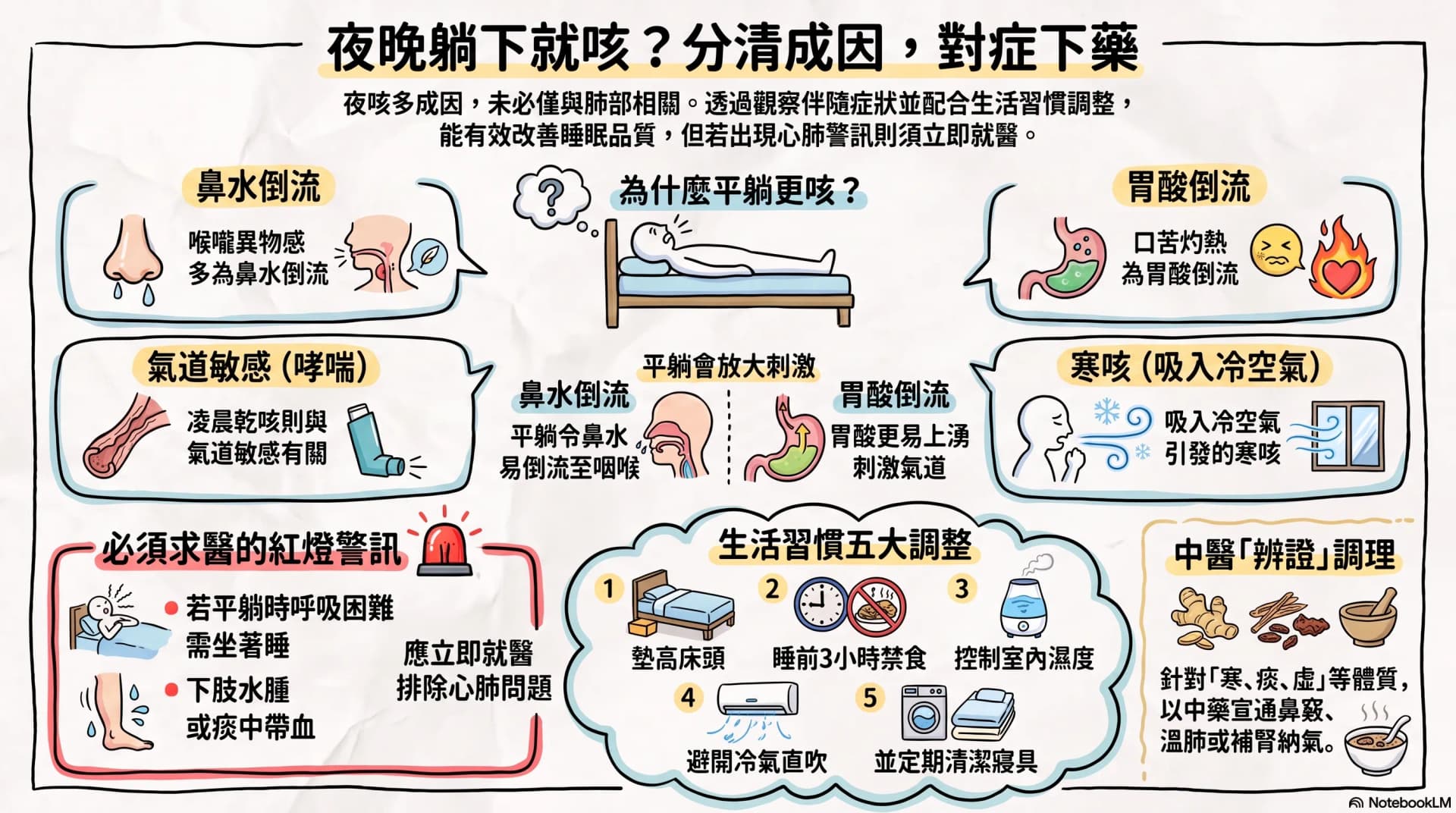
A Cough That Comes On When You Lie Down at Night: Common Causes and How TCM Can Help
Fine during the day, but coughing the moment you lie down, or waking at night? A night cough has more than one cause, and some have little to do with the lungs. Learn how to identify the type by accompanying symptoms, why lying flat makes it worse, when to seek medical care, and how Chinese medicine can help.
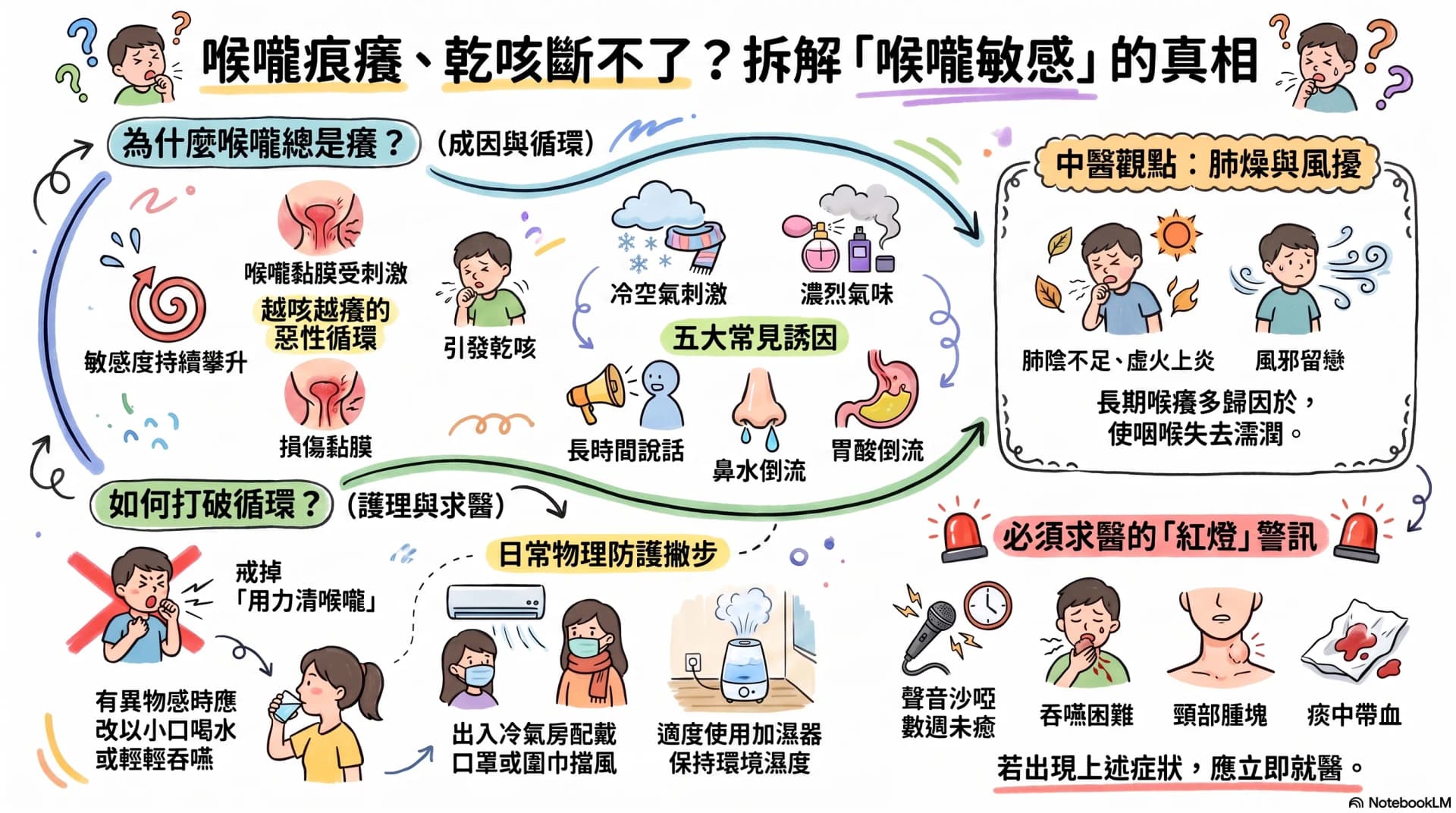
An Itchy Throat and a Cough Whenever You Speak: Throat Sensitivity and Sensitive Cough
A long-standing itchy throat with a dry cough triggered by talking, cold air or smells — not a cold, yet recurring for years. This article explains the causes of throat sensitivity and sensitive cough, how to distinguish its links with allergic rhinitis, acid reflux and voice overuse, when to see a doctor, and how Chinese medicine can help.