Plenty of Protein but No Muscle Gain? Could It Be Your Digestion?
Many people who exercise load up on protein to build muscle, only to find themselves bloated with loose stools before any gains show. Weak digestion does not mean no absorption, but the more you eat, the heavier the load. This article explains how protein becomes muscle, how much is enough, and how people with weaker digestion can adjust.
Medical review: Dr. Chan Wing Kiu, Joanne,Registered Chinese Medicine Practitioner #009463
1-Minute Quick Answer
For most people who exercise, 1.4–2.0 g of protein per kg of body weight a day is enough to build muscle. For those with weaker digestion, eating more only increases the digestive load and can cause bloating and loose stools. Spread protein across meals and choose easier-to-digest sources (reviewed by Dr Chan Wing Kiu, CMCHK 009463).
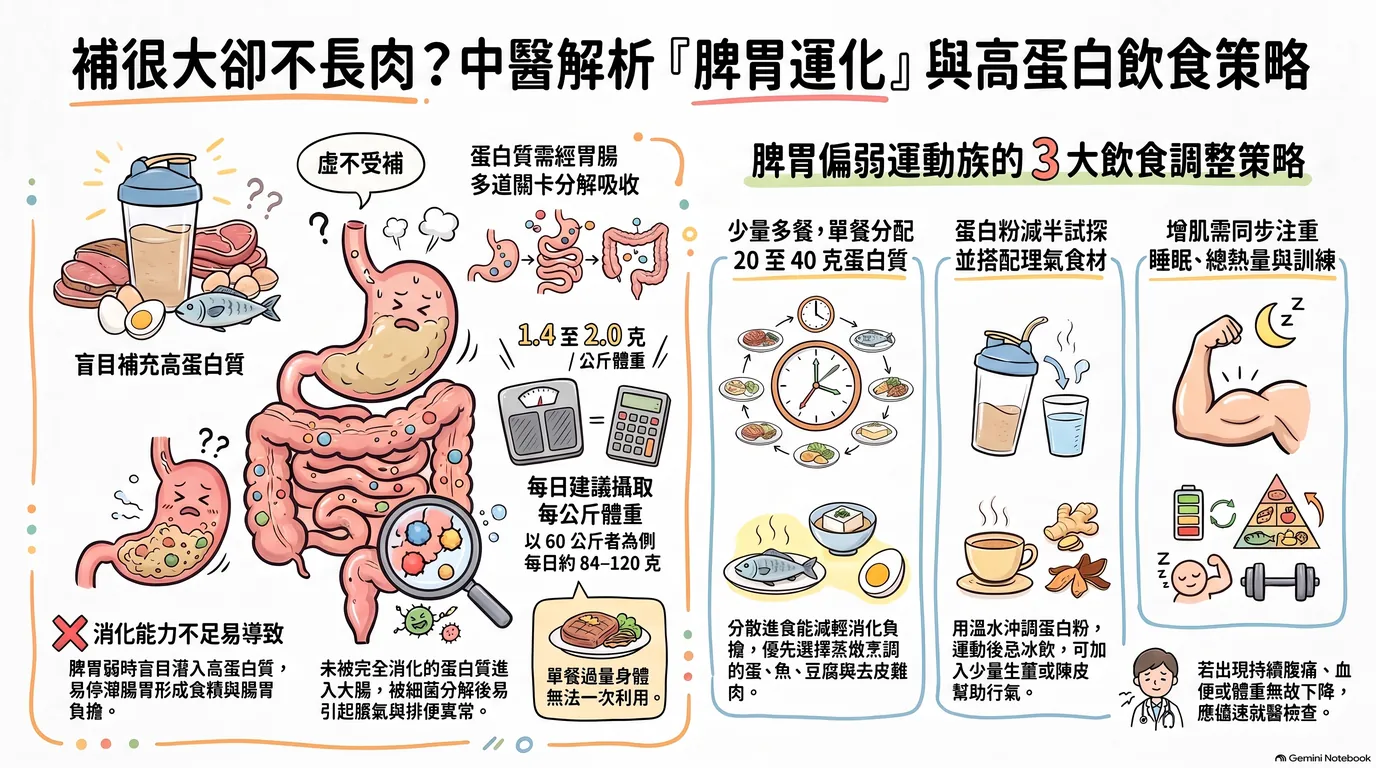 To help readers quickly grasp the content, this image was generated by NotebookLM. Some Chinese characters may not render correctly.
Important
If you have kidney or liver disease, speak to your doctor before starting a high-protein diet. If you experience persistent abdominal pain, blood in the stool, black stool, unexplained noticeable weight loss or persistent vomiting, don't treat it as ordinary indigestion — please seek medical care promptly.
To build muscle, many people who exercise rotate chicken breast, protein powder and protein drinks through the day, thinking "a little more protein means faster muscle". Instead of visible gains, their stomach is the first to complain: bloating and burping after a protein shake, loose stools, or a sticky, incomplete bowel movement.
Some say, "If your digestion is weak, no amount of protein will be absorbed." That is a little too absolute. People with weak digestion do not absorb nothing, but the more they eat, the heavier the digestive load and the lower the efficiency, and the extra can become a problem for the gut. This article explains how protein becomes muscle, how much is actually enough, and how people with weaker digestion can adjust.
How Does Protein Become Muscle?
The protein we eat cannot turn directly into muscle; it must first go through a series of digestive steps.
First, stomach acid loosens the protein's structure and pepsin cuts it into shorter fragments. In the small intestine, enzymes from the pancreas break these fragments down further into amino acids and short peptides. These small molecules are absorbed through the intestinal wall into the blood and carried to muscle and other tissues for repair and growth.
In other words, from "eaten" to "usable" there are several checkpoints — the stomach, pancreas and small intestine. If any step works poorly, not all of the protein may be used. What isn't digested carries on into the large intestine, where it is not only wasted but may be broken down by gut bacteria, causing bloating and changes in bowel habits.
Does More Protein Mean More Muscle?
Not necessarily. According to the International Society of Sports Nutrition position stand, 1.4–2.0 g of protein per kg of body weight per day is sufficient for most exercising people to build and maintain muscle. For a 60 kg person, that is roughly 84–120 g a day.
On distribution, the position stand suggests about 20–40 g of high-quality protein per meal, spread through the day roughly every three to four hours, rather than one very large serving. A big portion at once does not mean your body can use it all at once.
Do You Have to Take Protein Right After Exercise?
Many believe the half hour after training is a "golden window" and that a protein shake must be taken immediately. According to the same position stand, protein before or after exercise both help, and the exact timing depends on individual tolerance. If your appetite is poor after training, there is no need to force down a large drink; eating a proper meal a little later can top you up just as well.
Muscle growth also depends on more than protein — you need enough training, enough total energy and enough sleep. Focusing on protein alone while neglecting the rest has limited effect.
What Does TCM Say? "The Spleen Governs Transformation" and "The Spleen Governs the Muscles"
TCM says the spleen "governs transformation and transportation": the spleen and stomach digest food and turn it into qi, blood and nourishment, then distribute it around the body. TCM also says the spleen "governs the muscles", meaning that how full and strong the muscles are is closely tied to digestive function.
When digestion is strong, food converts smoothly into qi and blood, and muscles are nourished more easily. When digestion is weak, transformation falters; if you then pile on rich, heavy protein foods, they stagnate in the gut as "food stagnation", causing fullness, belching and sluggish bowels. Protein intake goes up, but little of it turns into qi and blood, so the muscle still doesn't grow well.
TCM also has the saying "deficiency cannot take tonics": someone with weak digestion may not tolerate even beneficial foods, and too much simply adds to the burden. A person with weak digestion who goes all-in on nutrition during a muscle-building phase is exactly this case. The same applies to swapping staples for weight loss — see Skipping White Rice to Lose Weight: Can Your Digestion Cope?.
Signs That Your Digestion Can't Keep Up
- Frequent bloating or burping after a protein shake or a high-protein meal: food lingers too long in the stomach, or undigested material produces gas in the large intestine. Some whey powders contain lactose, so people who are lactose intolerant may react in the same way.
- Loose stools, or sticky, sluggish bowel movements: in TCM, spleen deficiency with heavy dampness — transformation can't keep up and fluids stagnate.
- Fullness and poor appetite: the gut is working constantly and never gets time to rest.
- Easy fatigue and weakness: the spleen isn't turning food into qi and blood, so the body isn't getting enough.
- A thick, greasy tongue coating: a common TCM indicator of dampness and food stagnation.
- Training hard but muscle gains are poor: not necessarily too little protein — the problem may lie in digestion and absorption.
How Can People With Weak Digestion Adjust?
- Work out what you actually need. Based on your weight and training load, use the range of 1.4–2.0 g per kg a day as a guide rather than chasing more and more.
- Split it across several meals, about 20–40 g each. The gut then has less to handle each time.
- Choose easier-to-digest proteins. Eggs, fish, tofu and skinless chicken, cooked gently by steaming, stewing or in soup, are easier than fried or grilled meat.
- Start protein powder at half a serving. Mix it with warm water, drink slowly, watch how your stomach responds and increase gradually. If you're lactose intolerant, consider other types of protein powder.
- Avoid large iced drinks after exercise. Cold drinks slow the gut, and people with weak digestion are especially prone to feeling heavy and bloated.
- Add vegetables. The fibre helps bowel movements and eases the constipation a high-protein diet can bring.
- Chew slowly. Chewing is the first step of digestion — the finer you chew, the less work your gut has to do.
- Add dried tangerine peel or ginger in moderation. Both help move qi; add a little to soups or stews.
Who Should Pay Extra Attention?
- People who already bloat, burp or have loose stools often
- People who have just started training and suddenly increased protein sharply
- People who rely on protein powder or meal replacements instead of proper meals
- People who are lactose intolerant
- People with kidney or liver disease, who should speak to a doctor first
When Should You See a Doctor First?
Bloating and sluggish bowels often improve after adjusting your diet, but please seek medical care promptly if you have any of the following:
- Persistent abdominal pain
- Blood in the stool, black stool, or persistent vomiting
- Unexplained noticeable weight loss
- Bloating or abnormal bowel habits that haven't improved after two weeks or more
How Can Chinese Medicine Help?
Chinese medicine approaches this through pattern differentiation — first identifying whether it stems from spleen-qi deficiency, dampness obstructing the spleen, or food stagnation with qi stagnation, then providing care accordingly, such as strengthening the spleen and resolving dampness, or regulating qi to relieve stagnation, alongside adjustments to your diet.
It should be made clear that Chinese medicine here is supportive in nature and does not replace necessary medical examination. If your situation matches the warning signs above, please see a doctor first; if you suspect your digestive response is persistently abnormal, it's worth having a registered Chinese medicine practitioner assess your constitution before deciding on a direction.
Beyond Training and Supplements, Look After Your Digestion
If you're building muscle and keep struggling with bloating or loose stools, you are welcome to enquire with Aspira TCM via WhatsApp (WhatsApp: 9679 2293 / wa.me/85296792293); a practitioner can then assess and advise on a suitable direction. If you experience any of the warning signs above, please see a doctor first.
References
- International Society of Sports Nutrition: International Society of Sports Nutrition Position Stand: protein and exercise — https://pubmed.ncbi.nlm.nih.gov/28642676/
- Open Oregon Educational Resources: Nutrition Science and Everyday Application — Protein Digestion and Absorption — https://openoregon.pressbooks.pub/nutritionscience2e/chapter/6d-protein-digestion-absorption/
Disclaimer: This article is for health education and reference only and does not constitute personalised medical advice. Each person's constitution and condition differ, and treatment plans and outcomes vary. Chinese medicine can provide supportive care and ease symptoms but cannot replace necessary Western examination. If symptoms persist or worsen, or if the warning signs above occur, please seek prompt care from a qualified healthcare professional.
Disclaimer: This article is for health education and reference purposes only and does not constitute medical advice, diagnosis, or treatment. Each patient's condition is unique and treatment outcomes vary. Please consult a registered TCM practitioner or qualified healthcare professional for health concerns.
Further Reading
Hand-picked related articles and real cases to read next.
Skipping White Rice to Lose Weight: Can Your Digestion Cope?
Many people switch to sweet potato, taro, brown rice or oats to lose weight, only to find themselves bloated and burping within days. For the spleen and stomach, white rice is the gentlest staple, and the other common weight-loss staples fall short of it. This article explains why, and how people with weaker digestion can switch gradually and cook them properly.
Eating Little but Not Losing Weight? TCM on Weak Digestion
Skipping breakfast, eating only salad for lunch, and cutting rice at dinner may still leave weight unchanged — or even make you more tired, swollen, and stuck. This article explains why eating less does not always lead to better fat loss, and how TCM interprets weak digestion, dampness, deficiency, and the weight-loss plateau.
Sarcopenia & Muscle Loss: Warning Signs, Tests & Prevention
If you or an older family member has weaker limbs, poorer grip strength, slower walking, or more frequent falls, it may not be ageing alone. This guide explains common causes of sarcopenia, the risks it brings, how to screen for it, and how exercise, protein intake, and early assessment may help reduce muscle loss.
Want to learn more? WhatsApp us for a free consultation
Book via WhatsAppExplore our full range of treatments: Traditional TCM Services
Related Articles
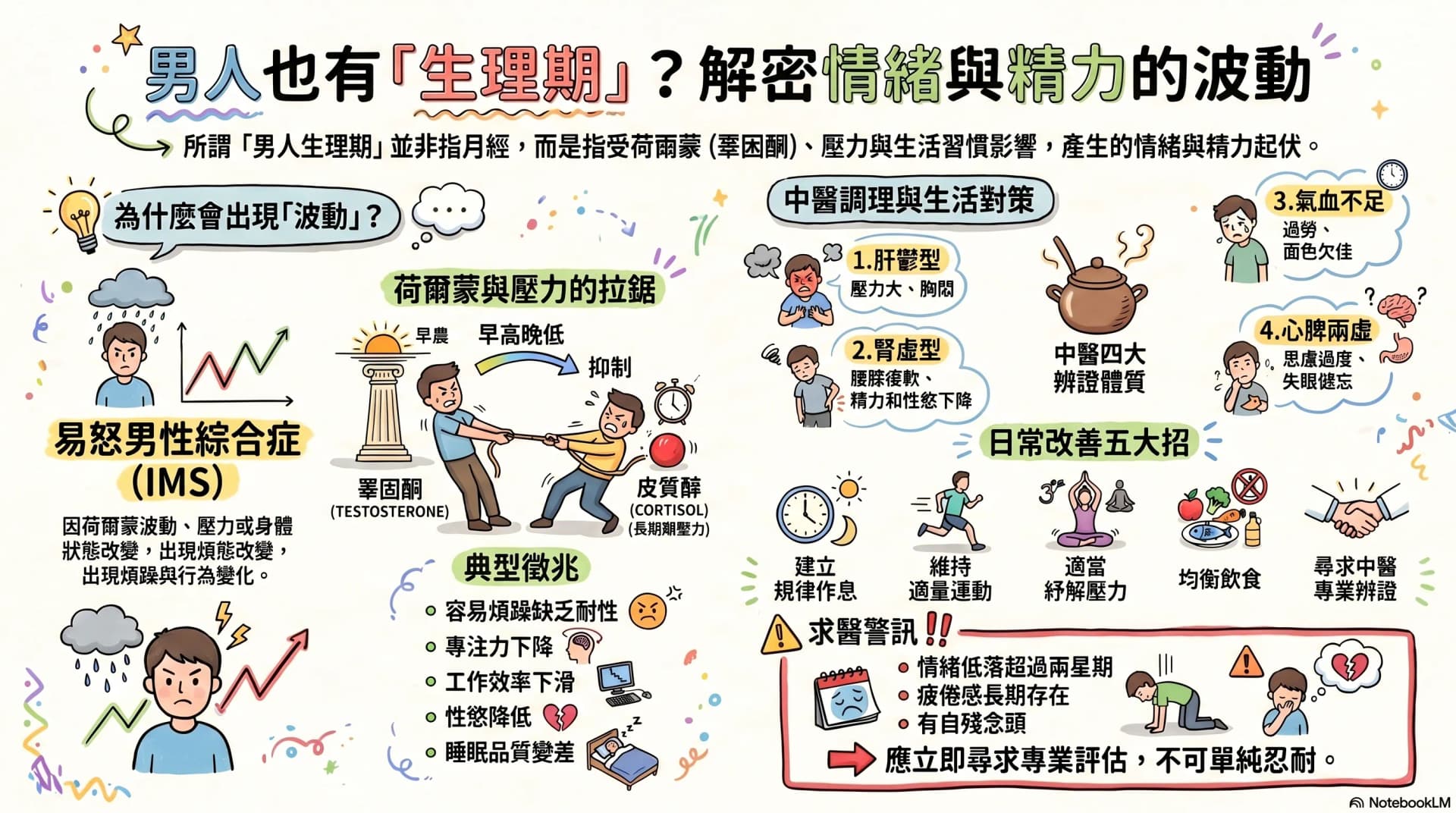
Do Men Have a “Period” Too? A TCM Look at Male Mood Swings, Fatigue and Hormonal Change — Plus 5 Ways to Find Relief
Do men have a period too? Men have no regular cycle like menstruation, so the “male period” is not a formal diagnosis — it describes the mood and energy swings driven by hormones, stress, sleep and lifestyle. This article covers the signs, the causes, how it differs from a woman’s period, how TCM assesses it, and five everyday ways — teas, foods and acupressure points — to find relief.
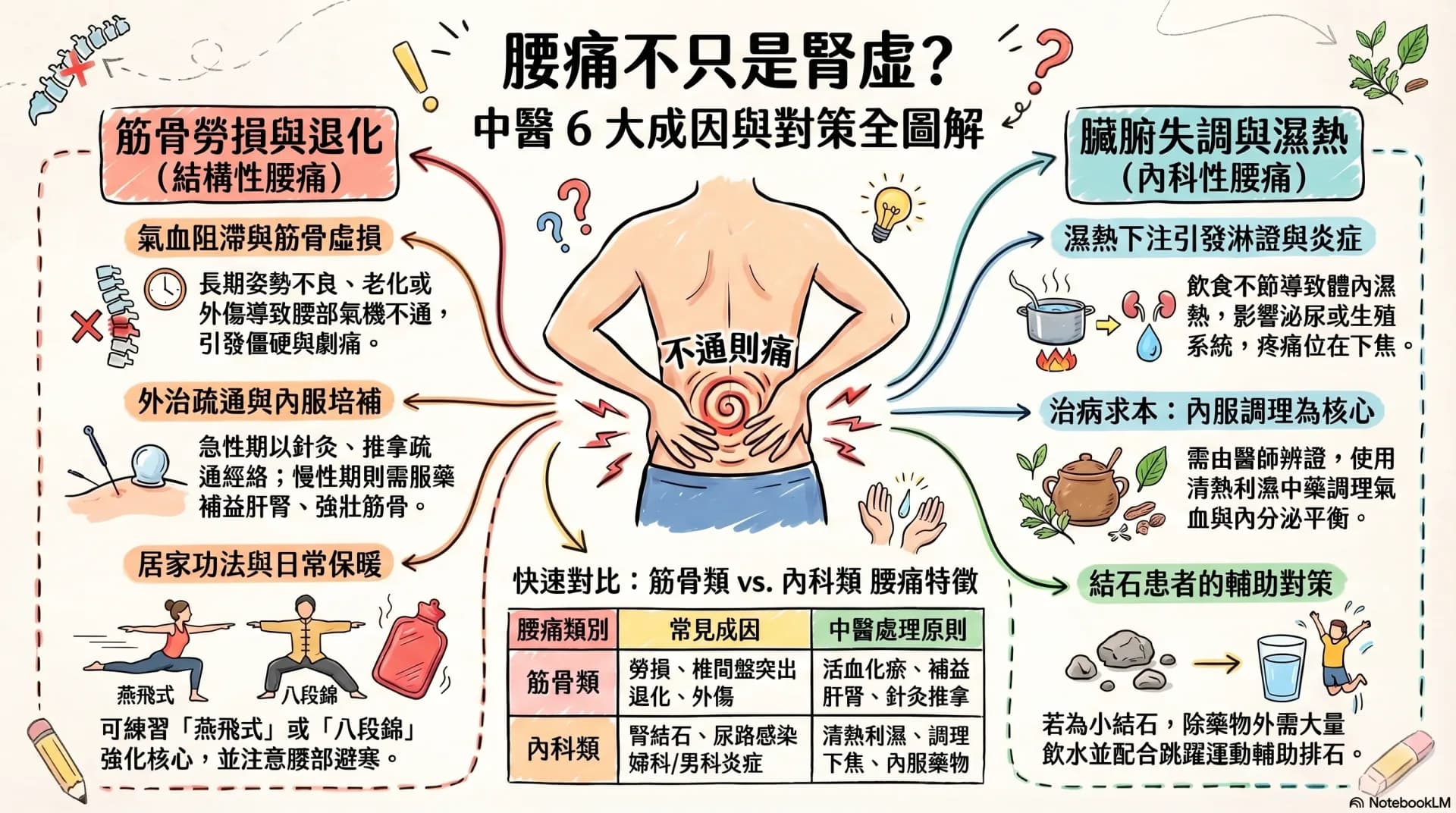
Low Back Pain: 6 Common Causes & TCM Treatment Approaches
Low back pain is not always simply “kidney deficiency” or muscle fatigue. It may also be related to muscle strain, disc herniation, degenerative lumbar disease, kidney stones, urinary tract infection, or pelvic inflammation. This article explains six common causes of low back pain from a TCM perspective and outlines key distinctions and treatment directions.
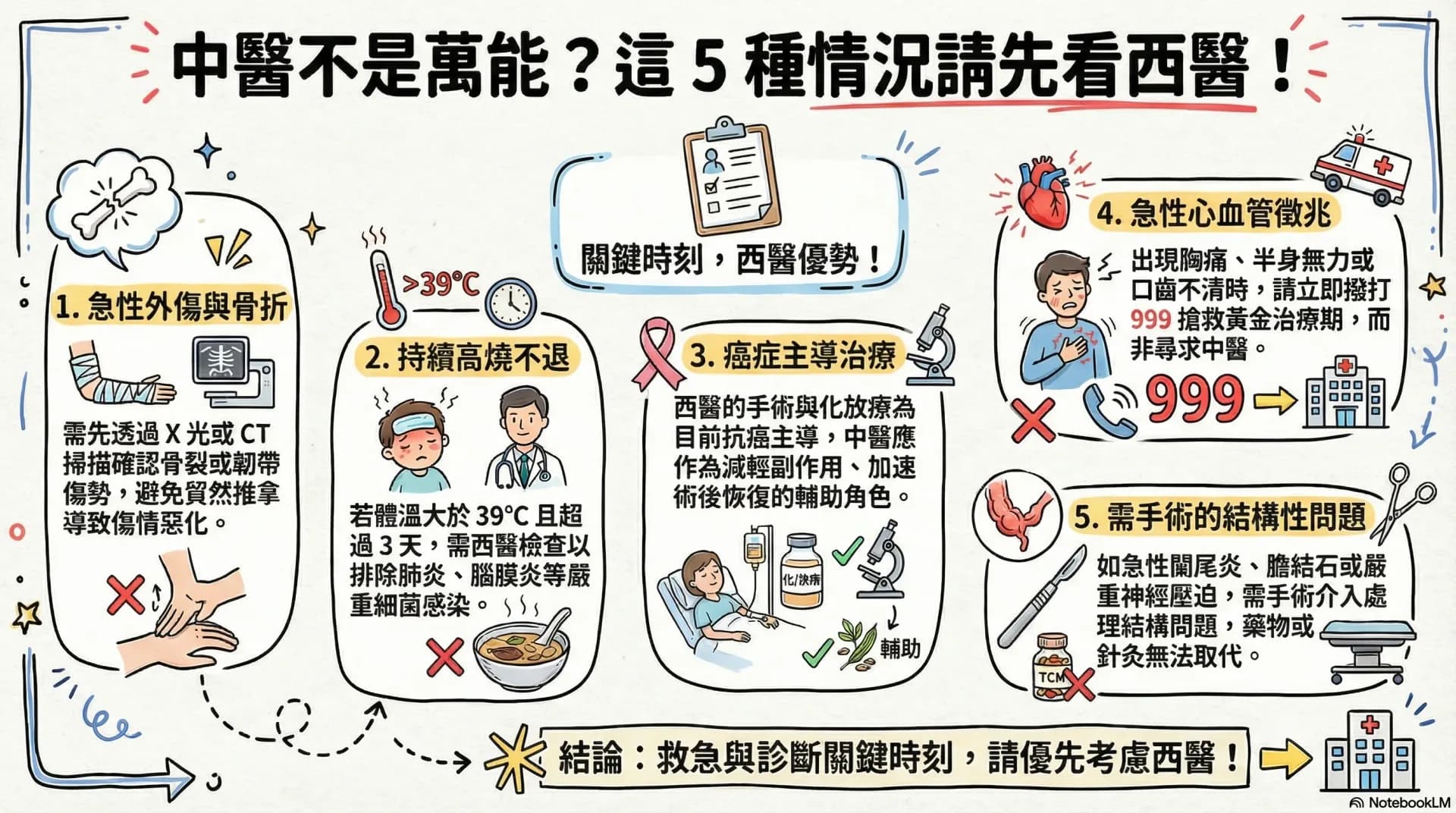
TCM Limitations: 5 Times to See a Western Doctor First
TCM has genuine strengths in chronic care and holistic wellness, but it is not the right first choice for every situation. This article honestly discusses 5 scenarios where Western medicine should come first, what TCM truly excels at, and how to make informed decisions between the two.