Scoliosis, Uneven Shoulders, Rounded Back in Children
What is the difference between scoliosis, uneven shoulders and a rounded back, and can they be fixed? This article compares the three in a table, explains why ages 10 to 12 need attention, a 30-second home check, when a full-spine X-ray is needed, and how a TCM posture assessment fits in.
Medical review: Dr. Tu Hsiang Ying, Sandy,Registered Chinese Medicine Practitioner #010445
1-Minute Quick Answer
Scoliosis, uneven shoulders and a rounded back are three different things. Postural rounding often improves with posture and exercise, uneven shoulders need scoliosis ruled out first, and mild scoliosis is usually just watched. Ages 10 to 12 are a growth spurt, and a doctor decides whether a full-spine X-ray is needed.
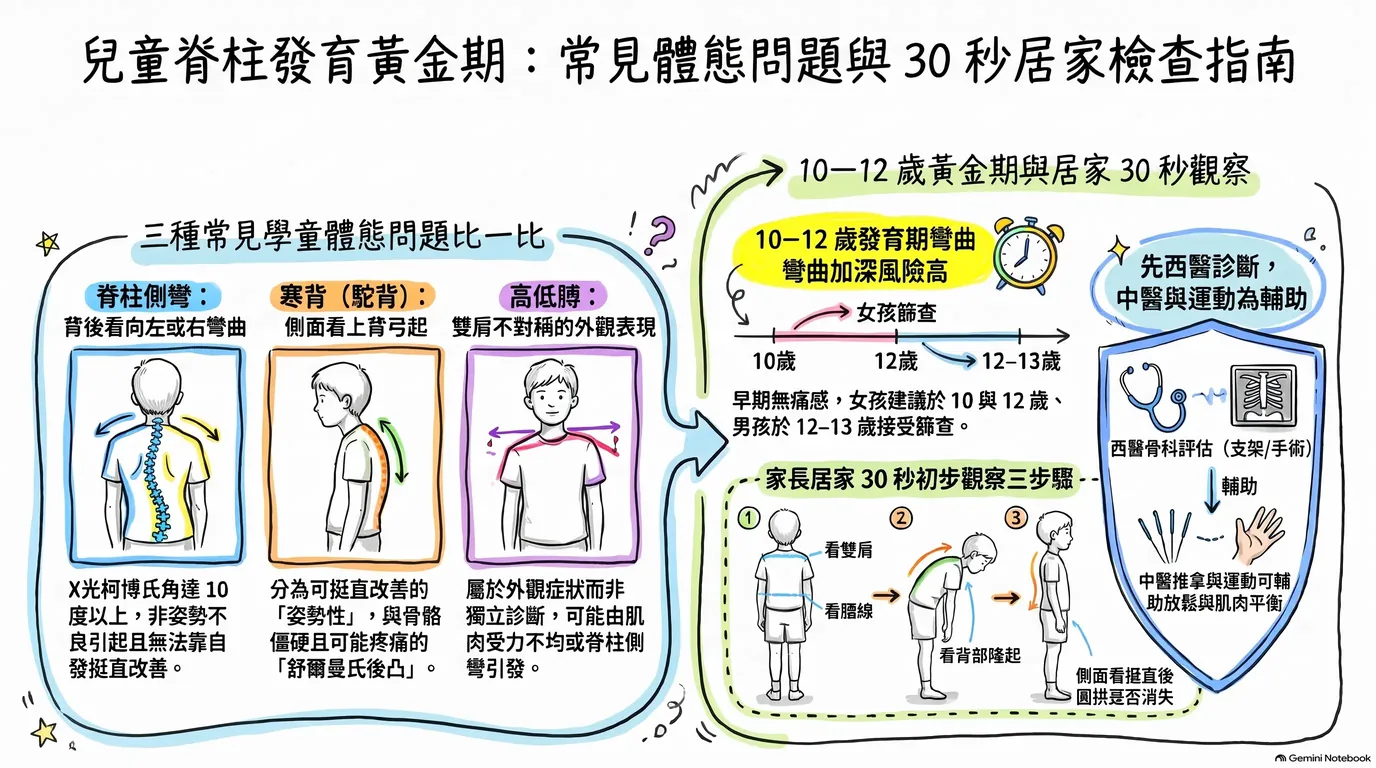 To help readers grasp the content quickly, the image was generated with NotebookLM. Some Chinese characters may not display correctly.
Can scoliosis, uneven shoulders or a rounded back be fixed? It depends which one it is. A postural rounded back often improves with posture and exercise. Uneven shoulders need a cause found first, including whether there is scoliosis. Mild scoliosis is usually just watched at regular intervals, and an orthopaedic doctor decides on a brace or surgery for larger curves.
Many parents only notice that their child's shoulders are uneven when changing into a school uniform. This article first compares the three, then explains why ages 10 to 12 deserve attention, what simple checks you can do at home, what a full-spine X-ray is, and how a TCM posture assessment can work alongside medical care.
What Is the Difference Between Scoliosis, Uneven Shoulders and a Rounded Back?
| Scoliosis | Uneven shoulders | Rounded back (kyphosis) | |
|---|---|---|---|
| What it is | The spine curves sideways when seen from behind. A curve of 10 degrees or more on X-ray (the Cobb angle) counts as scoliosis | One shoulder sits higher than the other. This is an appearance, not a diagnosis | The upper back curves backwards when seen from the side, known medically as kyphosis |
| Viewed from | Behind | Behind or in front | The side |
| Common causes | The usual type in teenagers is idiopathic: the exact cause is unknown, and heredity plays a part. Poor posture is not a cause | May be one sign of scoliosis, or may relate to uneven muscle load. Checking is needed to tell | Two kinds: postural rounding, and rigid Scheuermann's kyphosis |
| Can the child straighten it? | Not by deliberately standing up straight | Depends on the cause | Postural: yes. Scheuermann's: no |
| Pain | Often none early on | Usually none | Postural rarely hurts; Scheuermann's can be painful |
| More often seen in | Ages 10 to 17, most often found between 10 and 15; girls more often | Depends on the cause | Postural: girls more often. Scheuermann's: boys more often |
| Diagnosed by | A Western medicine doctor (family doctor, orthopaedic doctor) by examination and X-ray | The same, with scoliosis ruled out first | The same |
A few notes:
- Uneven shoulders are not the same as scoliosis. But in scoliosis it is common for one shoulder to sit higher, one shoulder blade to stick out, the waist to look uneven, or clothes to hang unevenly. So uneven shoulders call for scoliosis to be ruled out first.
- A rounded back comes in two kinds. Postural rounding is smooth and flexible, and a child can correct it by standing up straight. Scheuermann's kyphosis is rigid and cannot be straightened out. On X-ray, three or more neighbouring vertebrae look wedge-shaped, and it is mostly in the upper back.
- "寒背" is the everyday Hong Kong term. It means a stooped or rounded back, which doctors call kyphosis.
Ages 10 to 12: A Fast-Growth Stage to Watch
Ages 10 to 12 are when children grow quickly, and scoliosis also tends to appear in this period.
Material from the Scoliosis Research Society says adolescent idiopathic scoliosis mostly appears between the ages of 10 and 17, and is most often found in the rapid growth years from 10 to 15. While the spine is still growing, a curve is also more likely to deepen. About three in ten patients have a family history, and girls are affected more often than boys. The Society recommends screening girls at 10 and 12, and boys at 12 or 13.
In Hong Kong, according to a public reply from the Health Bureau, the Department of Health's Student Health Service currently offers an annual health check to students aged 10 to 14, including a check on skeletal growth, with referral to specialists where needed. Sing Tao Headline reported that 2,665 students were referred for specialist spinal assessment last school year. The Hong Kong Polytechnic University's Jockey Club Children's Spine Care Community Project treats Primary 4 to Secondary 3 as the higher-risk stage.
Why this age deserves attention:
- Scoliosis often causes no pain early on, and the child feels nothing wrong. By the time it can be seen with the naked eye, the curve may already be significant.
- The child is still growing, so a curve is more likely to deepen, and early detection leaves time to observe and act.
- Rounded backs and uneven shoulders also tend to take shape at this stage, when school bags are heavy and homework hours are long.
Growth in height is also happening at this stage. For what affects it, see our article on children who are not growing tall.
A 30-Second Check at Home
This is a first look by parents. It does not replace a doctor's examination.
From behind: With your child's top off and feet together, stand behind and look at whether:
- ☐ one shoulder sits higher than the other
- ☐ one shoulder blade sticks out more than the other
- ☐ the lines of the waist on either side look uneven
- ☐ the waistband of trousers or skirt keeps tilting to one side
Bending forward: Ask your child to bend forward with knees straight and arms hanging down, and look from behind:
- ☐ one side of the back is more raised than the other
This is called the forward-bend test, and doctors commonly use it when checking the spine.
From the side: Have your child stand naturally and look at whether the upper back is rounded. Then ask your child to lift the chest and stand tall, and see whether the rounding disappears.
- ☐ the rounding stays clear when standing tall, the back feels stiff, or your child often complains of back pain
If any box applies, see a Western medicine doctor for assessment.
Does My Child Need a Full-Spine X-Ray?
A full-spine X-ray, taken with the child standing, captures the whole spine from the front and from the side. The doctor measures the angle of the curve on the film, known as the Cobb angle.
The X-ray confirms whether there is a curve and how large it is, and tells postural rounding apart from rigid kyphosis. A kyphosis angle is generally considered abnormal above 50 degrees. It also helps the doctor judge how much growing the child has left, because whether a curve deepens depends on both the remaining growth and the size of the curve.
Not every child needs one. Whether to take an X-ray, and how often to review, is the doctor's decision based on the physical examination, the size of the curve and the stage of growth. X-rays involve radiation, so more frequent is not better, and parents need not ask for one when the child has no abnormal signs.
A more sensible order is: if a home or school check raises a concern, first see a family doctor or orthopaedic doctor for a physical examination, and let the doctor decide whether an X-ray is needed.
Can Scoliosis Be Fixed?
What "fixed" means depends on the size of the curve and how much growing the child has left. According to the Scoliosis Research Society patient handbook:
- A mild curve: in a child who is still growing, a curve below about 25 degrees can be watched at regular intervals.
- A moderate curve: in a growing child, from about 20 to 25 degrees up to 40 to 45 degrees, doctors consider a brace. Some smaller curves that keep progressing are also braced.
- A larger curve: surgery is considered when a curve keeps worsening with a lot of growth left, when bracing has failed, or when the curve is over about 45 to 50 degrees (chest) or 35 to 40 degrees (lower back).
The handbook adds that bracing and surgery are the only treatments shown to affect the curve. Scoliosis-specific exercises can be a supplement, but there is no evidence they can replace bracing. Chiropractic, yoga and similar approaches may help general fitness, but there is no scientific proof that they treat a progressing curve.
So TCM massage and exercise are supportive. They do not change the curve and cannot replace X-ray examination and orthopaedic follow-up.
Can a Rounded Back Be Improved?
Postural rounding can usually be improved. The American Academy of Orthopaedic Surgeons (AAOS) says postural rounding is smooth and flexible, a child can correct it by standing up straight, it rarely causes pain, and it does not usually keep getting worse. Treatment is mainly posture training and exercise, with regular monitoring.
Scheuermann's kyphosis needs a doctor. This kind is rigid, cannot be straightened by the child, and can be painful. It generally stops getting worse once growth ends. Treatment includes observation, physical therapy and painkillers, a brace for a growing child with a larger curve, and surgery generally only above about 70 to 75 degrees.
The two kinds are managed differently, so do not decide on your own. Ask a doctor to confirm first.
What Can I Do About Uneven Shoulders?
- Rule out scoliosis first. Do the forward-bend test, and if anything looks suspicious see a Western medicine doctor, who decides whether an X-ray is needed.
- If there is no scoliosis, look at muscles and habits. Carrying a bag on one shoulder for years, writing in a fixed posture, or tightness on one side can all unbalance the shoulders. A posture assessment with exercise can help.
- Use both straps on the school bag. The Scoliosis Research Society says heavy bags do not cause scoliosis but are linked to back pain. If your child has back pain, lighten the bag and use both straps.
For how posture relates to scoliosis, see our article on posture and the spine.
Does Sport Make Scoliosis Worse?
No. Material from the Scoliosis Research Society says sport does not cause scoliosis or deepen a curve, and a child with no back pain can take part in any sport. If back pain appears during exercise, stop and have a doctor assess it.
How Can a TCM Posture Assessment Support You?
Dr Tu Hsiang Ying pays attention to postural imbalance and scoliosis in teenagers, and places weight on physical assessment together with regular exercise. She looks at the child's standing posture, gait and muscle balance, and combines massage with exercise training, working on loosening tight muscle groups and strengthening weak ones to improve postural habits.
Scoliosis is diagnosed and treated by orthopaedic doctors in Western medicine. TCM assessment and exercise are supportive. They do not guarantee a change in the curve and cannot replace X-ray examination or Western medicine follow-up.
If Your Child's Posture Looks Off, See a Doctor First, Then Book a Posture Assessment
If the home check raises a concern, or your child often complains of back pain or stands noticeably crooked, see a Western medicine doctor first. Once the doctor has confirmed there is nothing needing special treatment, and you want to understand your child's muscle balance and daily posture, you can book an assessment with Dr Tu Hsiang Ying (registered Chinese medicine practitioner in Hong Kong, registration number 010445) through WhatsApp.
TCM treatment is supportive. It does not guarantee results and cannot replace diagnosis and treatment in Western medicine.
References
- Scoliosis Research Society: Adolescent Idiopathic Scoliosis — A Handbook for Patients — https://www.srs.org/Files/Patient-Brochures/Patient.Adolescent_Idiopathic_Scoliosis_Handbook_for_Patients.pdf
- American Academy of Orthopaedic Surgeons (AAOS) OrthoInfo: Kyphosis (Roundback) of the Spine — https://orthoinfo.org/en/diseases--conditions/kyphosis-roundback-of-the-spine/
- Sing Tao Headline: "School children's health | Health Bureau: 2,665 students referred for specialist spinal assessment last school year" (10 June 2026, Chinese) — https://www.stheadline.com/edu-news/3581776/學童健康醫衞局上學年2665學生-轉介專科跟進脊柱評估-較前一學年跌36
- The Hong Kong Polytechnic University: Jockey Club Children's Spine Care Community Project (Chinese) — https://www.polyu.edu.hk/bme/spinecare/hk/about-us/jockey-club-children-s-spine-care-community-project
Disclaimer: This article is for general health information only. It is not a diagnosis or medical advice and cannot replace a consultation with a registered practitioner. Every child's constitution and condition are different, and results vary. If your child is unwell, please consult a doctor promptly.
Disclaimer: This article is for health education and reference purposes only and does not constitute medical advice, diagnosis, or treatment. Each patient's condition is unique and treatment outcomes vary. Please consult a registered TCM practitioner or qualified healthcare professional for health concerns.
Further Reading
Hand-picked related articles and real cases to read next.
Poor Posture in Children: Scoliosis and Height Myths
Do crossed legs and homework on the stomach cause scoliosis, and does poor posture affect a child's height? This article clears up both worries using Scoliosis Research Society material, explains what long-term posture really affects, and covers good sitting, a 30-second wall check and a TCM posture assessment.
Is My Child Growing Tall Enough? A TCM View of Growth and "Zhuan Gu"
When a child looks shorter than their peers, or grows only a little each year, parents naturally wonder about "bone transformation". This article first explains what normal growth is (the growth curve) and when to see a paediatric endocrinologist, then covers the key drivers of height (genetics, nutrition, sleep, exercise), and how TCM — through "the kidney governs the bones" and "the spleen and stomach are the foundation of later life" — conditions the spleen, stomach and kidney according to the stage of development. The point is to create good conditions for a child to grow, not to "force height", and no centimetre figure is promised.
Want to learn more? WhatsApp us for a free consultation
Book via WhatsAppExplore our full range of treatments: Traditional TCM Services
Related Articles
Uneven Face: Side Sleeping, Chewing and Facial Acupuncture
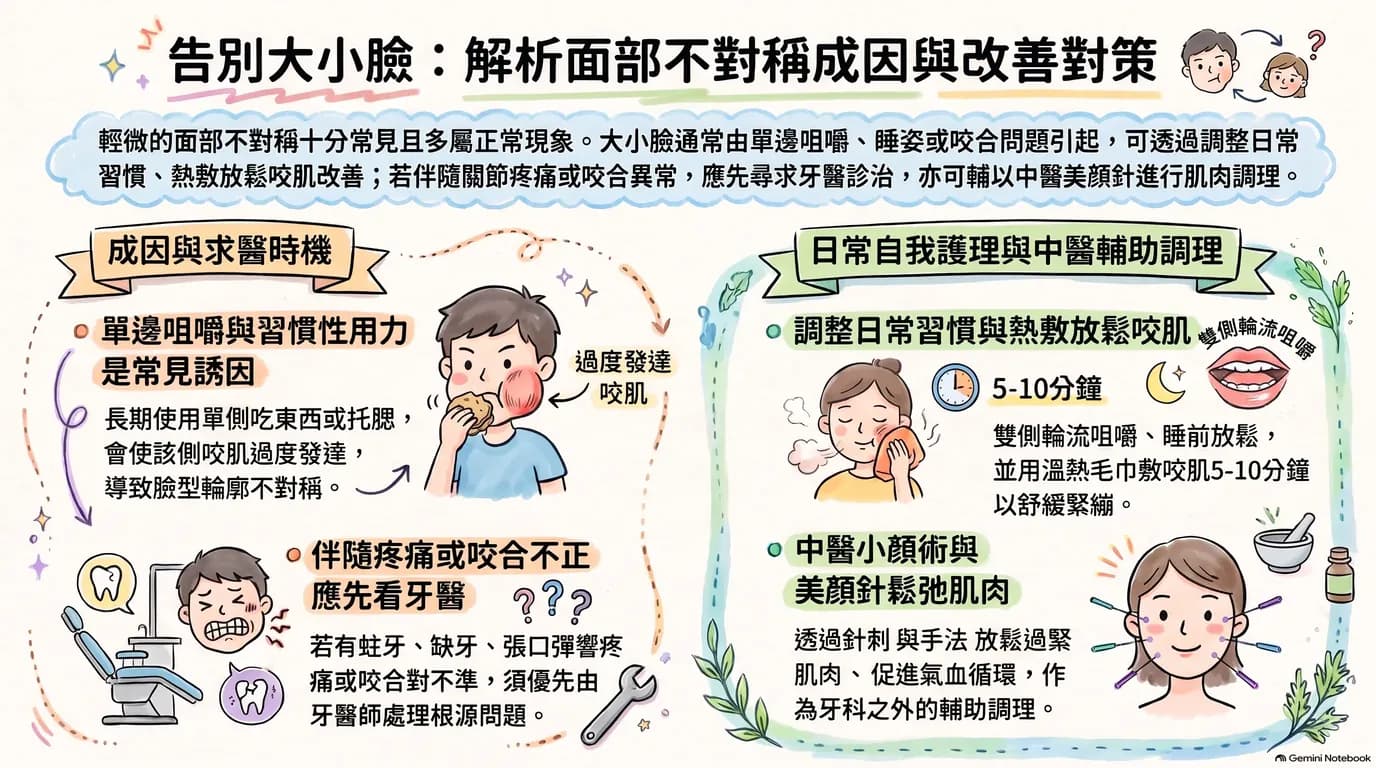
Is an uneven face caused by side sleeping and chewing on one side? This article explains the common causes, when to see a dentist or doctor first, what to adjust day to day, and how TCM facial massage and facial acupuncture can help with contour differences caused by muscle tension.
Hairy Crab Food Taboos: Is Crab With Persimmon Poisonous?
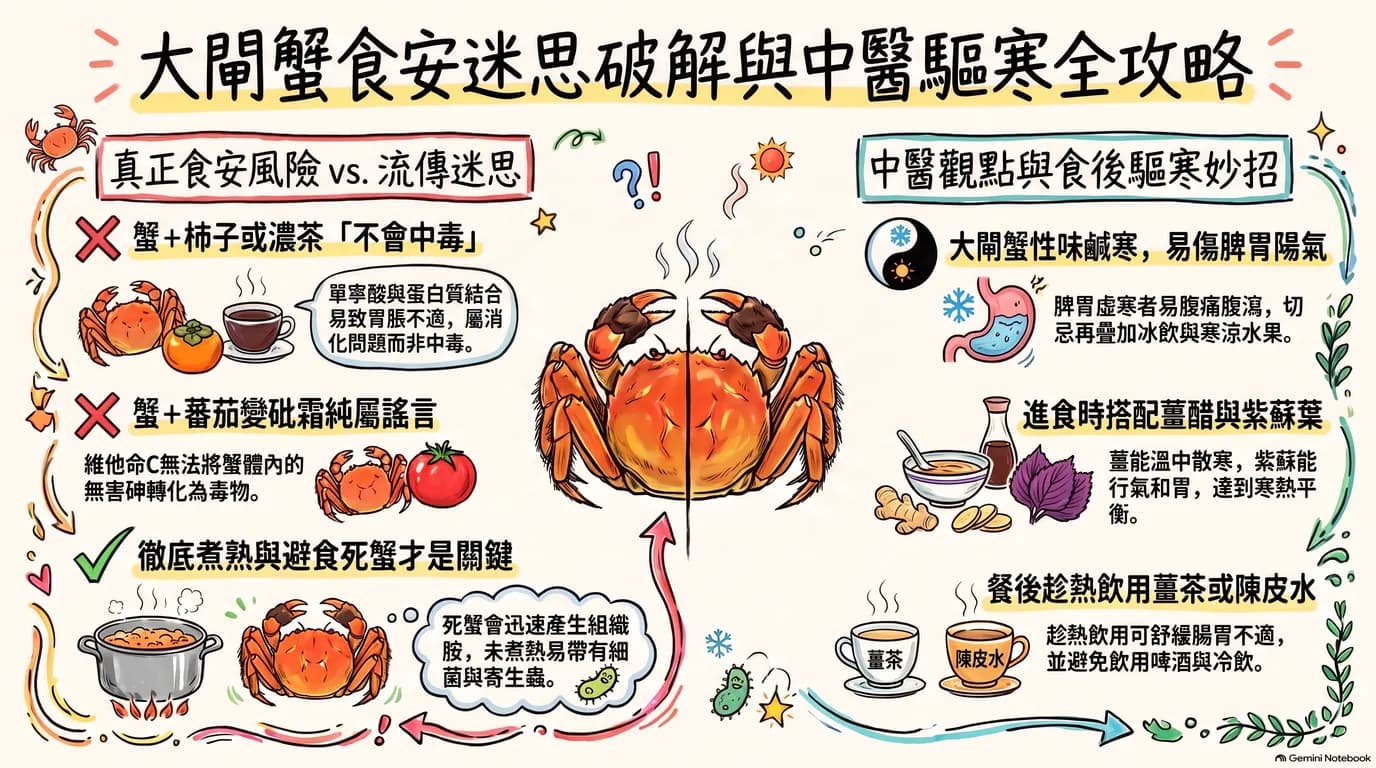
Hairy crab food taboos: what can't you eat with crab? This article checks the popular "incompatible foods" claims — persimmon, tomato, orange juice, alcohol, tea — explains the real food-safety risks and how to tell male from female crabs, and shows from a TCM perspective why crab is cooling and how to warm up afterwards.
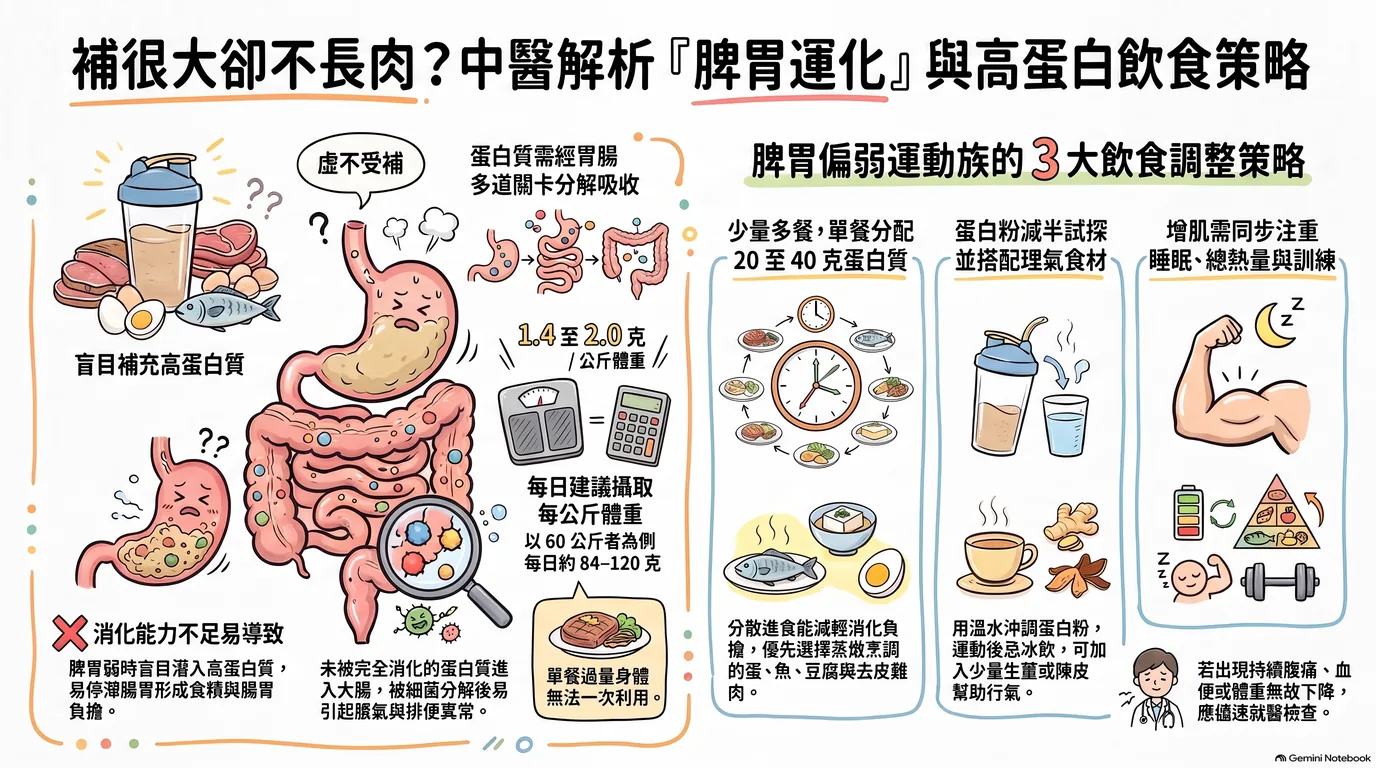
Plenty of Protein but No Muscle Gain? Could It Be Your Digestion?
Many people who exercise load up on protein to build muscle, only to find themselves bloated with loose stools before any gains show. Weak digestion does not mean no absorption, but the more you eat, the heavier the load. This article explains how protein becomes muscle, how much is enough, and how people with weaker digestion can adjust.