Cough in Older Adults: 6 Red Flags That Need Urgent Care
A cough in an older adult is often dismissed as a "weak airway", but it can also signal pneumonia, tuberculosis, lung cancer, heart failure, pulmonary embolism or an acute COPD exacerbation. This article begins with a high-risk background screen (smoking history, residence in care facilities, diabetes, immunosuppression, long-term steroids) and then sets out six red-flag situations that require urgent medical attention. It also covers the TCM directions for managing chronic cough — lung-spleen qi deficiency, phlegm-damp, yin deficiency, and cold versus heat patterns.
Medical review: Dr. Tai Wai Ho, Samson,Registered Chinese Medicine Practitioner #008702
1-Minute Quick Answer
A cough in an older adult is not always just "weak airways"; it can signal pneumonia, TB, lung cancer or heart failure. Coughing blood, persistent fever or breathlessness, weight loss, hoarseness beyond 3 weeks, chest pain or blue lips, or no improvement after 2 weeks need prompt care (reviewed by Dr Tai Wai Ho, CMCHK 008702).
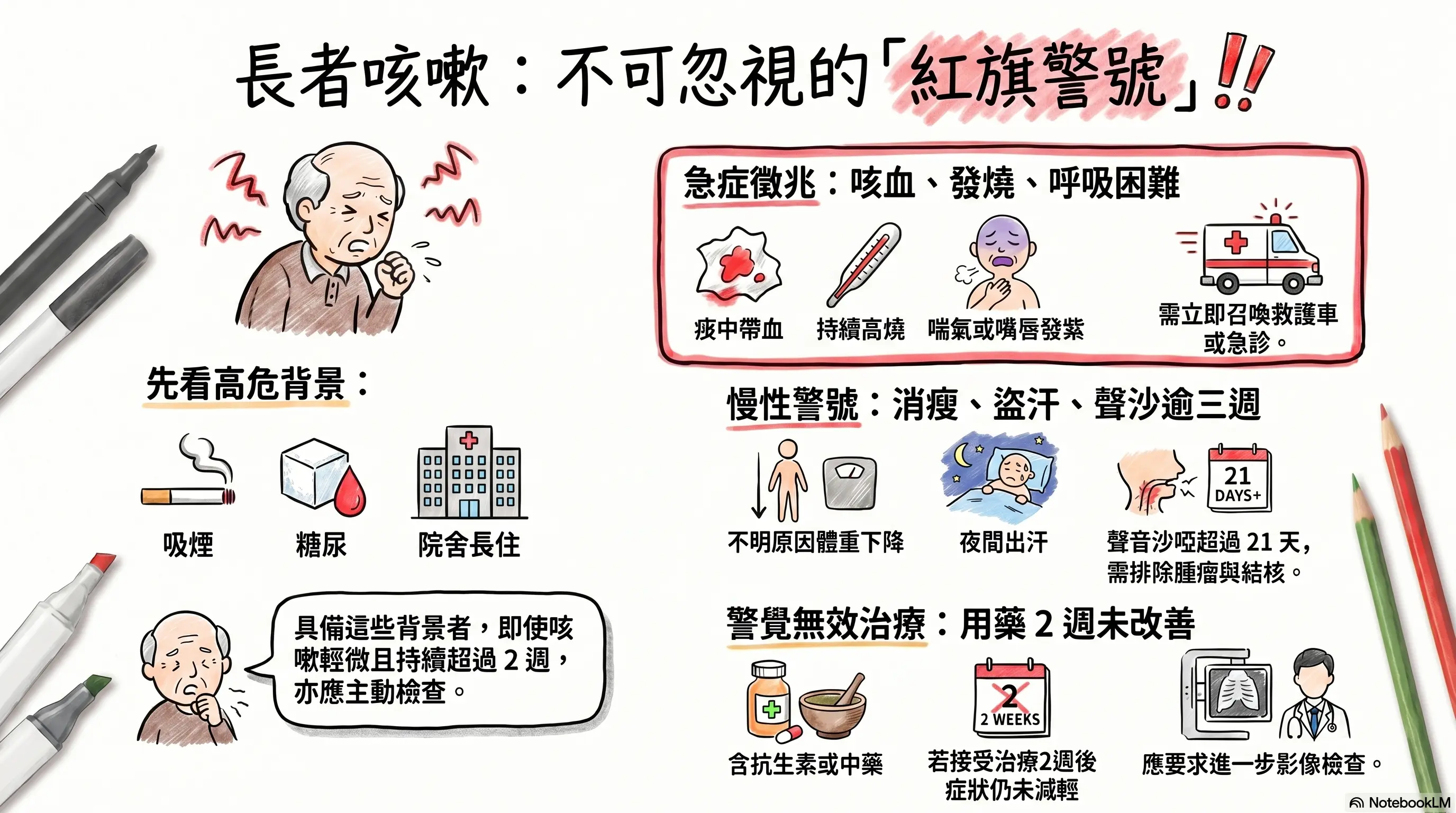 For quick reference, this image was generated by NotebookLM. Some Chinese characters may not render perfectly; we appreciate your understanding.
"Grandpa keeps coughing — the doctor said his airway is weak, but two months of cough syrup hasn't stopped it." "Grandma lives in a care home and has been coughing for a month with white sputum and no fever — should she see a doctor?" "Dad quit smoking five years ago and is coughing again — is it serious?" These are common Hong Kong family conversations.
A cough in an older adult differs from a cough in a younger adult in two important ways. First, the picture can worsen sharply with very few symptoms — an older patient's immune response is muted, and pneumonia or sepsis can develop without high fever or obvious breathlessness. Second, the range of serious underlying conditions is wider — tuberculosis, lung cancer, heart failure and COPD exacerbation are all possible. When red-flag warnings appear, they must be acted upon — even if the cough itself looks "ordinary".
This article will help older adults and their families recognise: who counts as "high-risk background" and should seek care early; the six red-flag situations requiring urgent care; the TCM directions for stable, long-term cough; and how Aspira TCM Clinic evaluates the patient once serious causes have been excluded.
Note: This article is general education for older adults and family carers. If an elderly family member already shows a red flag or is deteriorating acutely, seek medical care or emergency services immediately. Any change in inhaled therapy, antibiotics, blood thinners or cardiac medication must be discussed first with the prescribing doctor.
Start Here: High-Risk Background Screen
Not every elderly cough carries equal risk. Before the six-red-flags checklist, the family should screen for the following high-risk backgrounds — for these groups, even a mild-looking cough (white sputum, no fever) lasting more than 2 weeks already warrants a doctor's visit.
Long-term smoking history or second-hand smoke exposure
- Current smoker
- Quit less than 5 years ago
- Long-term cohabitant of a smoker, long-term passive smoke exposure
- Past occupational exposure to high dust or chemical fumes
In this group, cough may reflect chronic bronchitis, COPD or even early lung cancer; even a mild, recurrent cough should not be dismissed.
Tuberculosis high-risk groups (per Centre for Health Protection)
- Past close contact with a confirmed tuberculosis patient (household, room)
- Long-term residence in a care or nursing home (Hong Kong has had sporadic TB cases in such facilities)
- Diabetes (especially with poor glycaemic control)
- HIV-positive
- Long-term steroid or immunosuppressant use
- Silicosis, chronic kidney disease, on dialysis
- Severe malnutrition
- Returnees from TB-endemic regions (Southeast Asia, South Asia, parts of Africa)
The CHP clearly states that "anyone with symptoms resembling tuberculosis should seek medical attention promptly, especially if the cough has lasted more than one month." The typical features of pulmonary tuberculosis include low-grade fever, night sweats, fatigue, weight loss, persistent cough and blood-streaked sputum — and the low-grade fever and white sputum are easily dismissed as "ordinary airway problems".
Other high-risk backgrounds
- Adults aged 65 and over have muted immune responses; pneumonia can present without a high fever
- Unstable phases of cardiac, renal or diabetic disease
- Recent chemotherapy or immunotherapy
- Crowded living conditions (subdivided units, board-partitioned rooms)
Simple rule: in any of the above groups, a cough lasting more than 2 weeks warrants a doctor's visit; outside these groups, a cough lasting more than 3 weeks without improvement also warrants a visit. Do not wait for a red flag to act.
Red Flag 1 — Coughing Blood, or Blood in the Sputum
Regardless of bright or dark, streaks or a mouthful, fresh or old, any blood in the sputum is a red flag and warrants medical care within 24 hours.
Distinctions to make:
- True haemoptysis: blood from the lower airway, brought up with a cough
- Post-nasal drip with blood: blood from the nasal cavity descending into the throat, often seen on first spitting after waking; nasal blood streaks may be visible
- Gum or oral bleeding: present in saliva but not cough-brought
Whatever the source, older adults with any form of blood in the sputum should not self-judge — a doctor should examine the mouth and nose, arrange a chest X-ray and, if needed, bronchoscopy to find the source. Tuberculosis, lung cancer, pulmonary embolism and bronchiectasis must be excluded first.
Red Flag 2 — Persistent Fever, Chills, or Difficulty Breathing
Fever thresholds in older adults differ from those of younger adults — a temperature above 38°C, or 1.5°C above their usual baseline, is already an important signal. If accompanied by:
- Persistent fever beyond 3 days, antipyretics no longer effective
- Chills, shivering, cold skin with rising temperature
- Markedly faster breathing (normal 12–20 breaths/min; >24 is abnormal)
- Shortness of breath, needing to pause when speaking
- Chest tightness or pain on breathing
- Blue tinge to lips or fingernails
Any one of these warrants immediate medical care or an ambulance — do not "wait until tomorrow" at home. Common causes include pneumonia, acute bronchitis, sepsis and acute heart failure.
Red Flag 3 — Marked Weight Loss, Night Sweats
An older adult's weight should not fall in the absence of deliberate dieting. Unexplained loss of 5% or more of body weight within three months (for example, a 60 kg patient losing 3 kg) is a warning sign.
When combined with the following, tuberculosis and malignancy must be excluded first:
- Night sweats (waking to find clothing soaked, needing to change)
- Persistent fatigue, reduced appetite
- Low-grade persistent fever (37.5–38°C)
- Painless hard lumps in the supraclavicular, axillary or neck regions
- Blood-streaked sputum
This cluster matches the classic pulmonary tuberculosis presentation listed by the CHP; it can also signal lung cancer or lymphoma. Any one of these warrants a visit within a week.
Red Flag 4 — Hoarseness Lasting More Than 3 Weeks
Hoarseness, a deepened voice, easy vocal fatigue — if it persists beyond three weeks, an ENT review is needed.
Possible causes include:
- Laryngeal cancer (10× greater risk in smokers)
- Vocal cord nodules or polyps
- Recurrent laryngeal nerve compression (from a lung or mediastinal lesion)
- Chronic laryngitis, gastro-oesophageal reflux
For long-term smokers or heavy drinkers, persistent hoarseness over 3 weeks is an established threshold for ENT referral.
Red Flag 5 — Chest Pain, Blue Lips, More Inhaler Use
If the older adult already has COPD, asthma or heart disease, any of the following can mean acute deterioration:
- Chest pain, especially worse on deep inspiration
- Blue lips, tongue or fingernails
- Usual inhaler ("airway puffer") needing 2–3 times the usual frequency without effect
- Difficulty breathing lying flat — needing a higher pillow or to sit up to breathe
- New leg swelling, short-term weight gain (heart-failure warnings)
These pictures can mean acute COPD exacerbation, pulmonary embolism, heart failure or pneumothorax — emergency assessment is required.
Red Flag 6 — No Improvement After 2 Weeks of Antibiotics or Chinese Medicine
If the cough has been diagnosed with a cause and the patient is on treatment (antibiotics, cough syrup, Chinese medicine), and the cough has not clearly improved or is worsening after two weeks, return to the doctor for a re-evaluation:
- Is it the wrong diagnosis (e.g. presumed bronchitis is actually TB or cancer)?
- Is there antimicrobial resistance (multi-drug-resistant TB still occurs)?
- Are several causes overlapping (reflux, chronic sinusitis, heart failure together)?
- Are further investigations needed (X-ray, CT, lung function, sputum, bronchoscopy)?
"Let's give it two more weeks" is a dangerous strategy for older adults — it can miss the window for acute treatment.
A Long Cough Without Red Flags — A TCM View
Once serious causes have been excluded, the following TCM directions can support a recurrent or chronic cough. It must be emphasised that TCM treatment is built on the prior exclusion of serious causes by Western medicine, and the specific plan must be set by a registered TCM practitioner. This article lists treatment principles only — not fixed prescriptions.
Lung-spleen qi deficiency
Common picture: a soft cough, frequent colds, thin white sputum, post-meal fatigue, tooth marks on the tongue. Direction: tonify lung qi, strengthen spleen, transform phlegm.
Phlegm-damp obstructing the lung
Common picture: copious white sputum, worse cough in the morning, chest tightness, plump build, white greasy tongue coating. Direction: strengthen spleen, transform phlegm, dry damp, diffuse the lung.
Phlegm-heat in the lung
Common picture: yellow thick sputum, dry mouth and bitter taste, sore throat, constipation, red tongue with yellow coating. Direction: clear the lung, transform phlegm, descend the qi.
Lung yin deficiency
Common picture: dry cough with scanty or blood-tinged sputum, dry mouth and throat, afternoon hot flushes, red tongue with thin coating, night sweats. Direction: nourish yin and moisten the lung. Important: an older adult with long-standing yin-deficiency cough must first have tuberculosis excluded by Western workup.
Cold cough
Common picture: clear thin white sputum, worse with cold, cold intolerance, cold hands and feet. Direction: warm the lung and disperse cold.
In practice, older adults often present with several types layered together (such as lung-spleen qi deficiency + phlegm-damp, or lung yin deficiency + phlegm-heat). Identifying the dominant pattern and ensuring drug safety alongside Western medication is the core of the TCM evaluation.
Daily Steps That Help
Whether or not the patient has already seen a doctor, the following steps help:
- Take temperature twice daily (morning and evening); abnormal readings prompt earlier review
- Log cough frequency, sputum volume and colour; bring to follow-up visits
- Keep the room well ventilated; avoid cold air blowing directly on the head or chest
- Hydrate adequately (1.5–2 L per day unless restricted for cardiac or renal reasons)
- Vaccinations (influenza, pneumococcal, COVID-19, shingles per doctor's advice)
- Stop smoking and reduce second-hand smoke
- Avoid raw, cold, spicy or very oily food, which can worsen phlegm-damp or phlegm-heat patterns
- Rinse the mouth after each use of inhaled medication to reduce oral candidiasis
How Aspira TCM Clinic Evaluates Elderly Cough
Dr Tai will first learn the cough's duration (days, weeks, months), sputum colour and volume, when it occurs (morning, night, after meals, with cold, after exercise), associated symptoms (breathlessness, chest tightness, fever, nocturia, appetite, energy), the tongue-and-pulse picture, smoking and environmental exposures, any TB contact history, and current Western medications (inhalers, antihypertensives, blood thinners) and supplements.
If the situation is stable and suits TCM care, the direction is set along lung-spleen qi deficiency, phlegm-damp, phlegm-heat, lung yin deficiency or cold cough lines, considering Chinese herbs, acupuncture, external therapy and lifestyle advice. Dr Tai assesses cough by its duration, the character of the phlegm and day-night changes before deciding on a treatment direction — see the cough care page for details. If there is haemoptysis, persistent fever, marked weight loss, persistent hoarseness, chest pain or cyanosis, or if the patient has a high-risk background (smoking, care-home residence, diabetes, immunosuppression, long-term steroids, TB contact), a Western workup or urgent care comes first — do not delay.
If an older family member's cough is recurrent or they belong to a high-risk group, bring recent chest X-ray reports, sputum colour records, a medication list and notes on exposures, and book a TCM consultation.
To find out whether TCM care suits your family member’s situation, contact Aspira TCM on WhatsApp (9679 2293 / wa.me/85296792293), or read more about Dr Tai Wai Ho. If any of the warning signs above apply, please see a doctor first.
Disclaimer: This article is general health education only and does not replace individual diagnosis, examination, medication or treatment advice. If you have a relevant condition, ongoing symptoms or are on medication, follow your doctor's instructions for follow-up and monitoring; any medication adjustment must be discussed first with your prescribing doctor.
Disclaimer: This article is for health education and reference purposes only and does not constitute medical advice, diagnosis, or treatment. Each patient's condition is unique and treatment outcomes vary. Please consult a registered TCM practitioner or qualified healthcare professional for health concerns.
Further Reading
Hand-picked related articles and real cases to read next.
The Cold Has Gone but the Cough Will Not Clear: Causes of a Lingering Post-Cold Cough and How TCM Can Help
The cold is gone, but the cough drags on for weeks. This article breaks down the common types and causes of a lingering post-cold cough, the situations that warrant medical attention, the treatment blind spots, and how Chinese medicine can help through pattern differentiation.
A Cough That Comes On When You Lie Down at Night: Common Causes and How TCM Can Help
Fine during the day, but coughing the moment you lie down, or waking at night? A night cough has more than one cause, and some have little to do with the lungs. Learn how to identify the type by accompanying symptoms, why lying flat makes it worse, when to seek medical care, and how Chinese medicine can help.
Cough That Won't Go Away? 6 Home Remedies + When to See a Doctor
Coughing is one of the most common reasons for seeking medical attention in Hong Kong — but not every cough requires an immediate doctor visit. This article shares 6 home remedies from a TCM perspective and helps you identify the "red flag" signs that mean you should see a doctor promptly.
Want to learn more? WhatsApp us for a free consultation
Book via WhatsAppExplore our full range of treatments: Traditional TCM Services
Related Articles
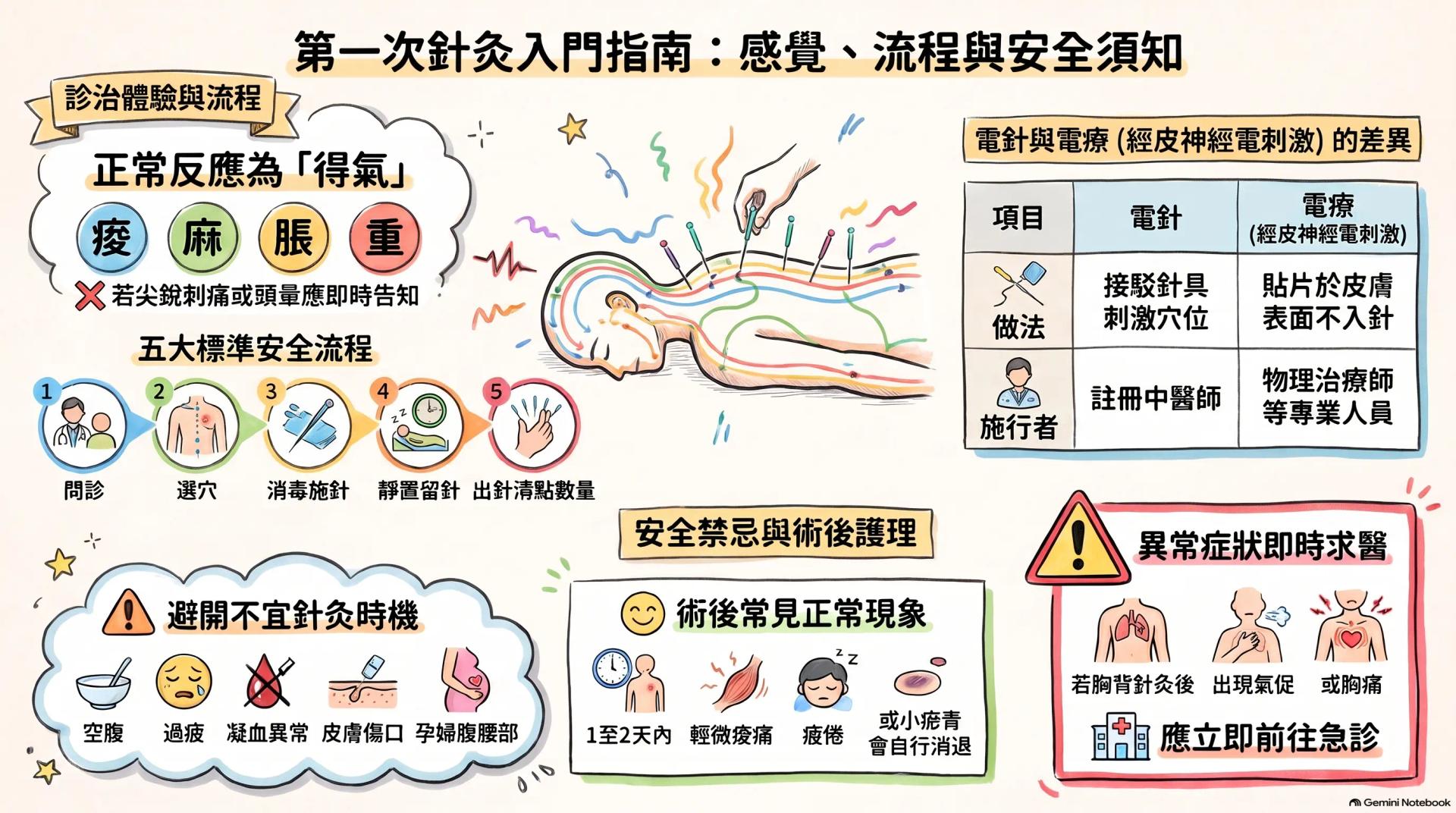
Does Acupuncture Hurt? What to Know Before Your First Visit
Does acupuncture hurt, and is feeling worse afterwards normal? Reviewed by Dr Wong, this guide covers the sensation, a typical session, electroacupuncture, session numbers and who should avoid it.
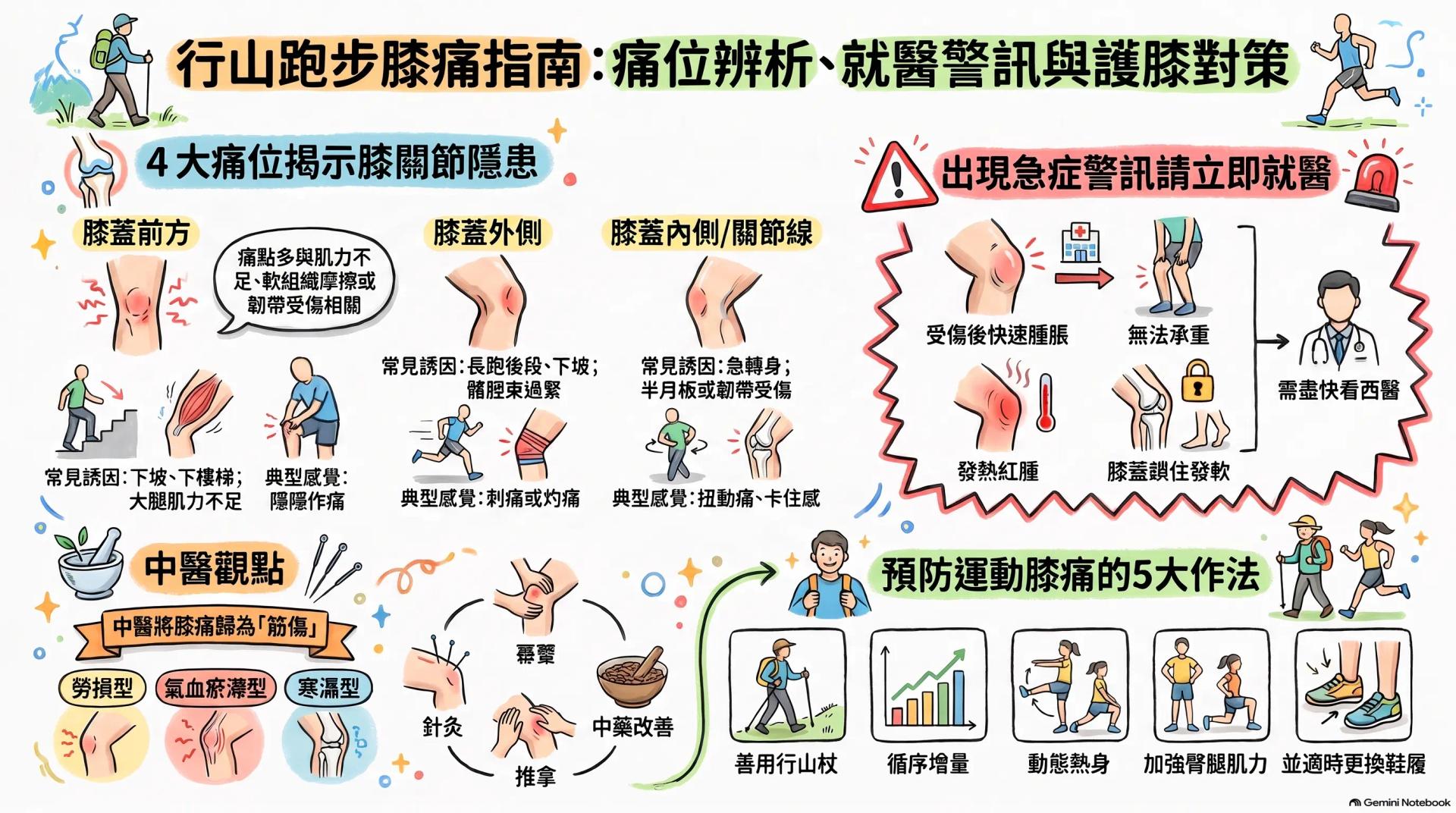
Knee Pain After Hiking or Running: TCM or Western Doctor?
Knee pain after a downhill hike or a long run? Reviewed by Dr Wong, this guide explains four common pain locations, warning signs that need a Western doctor, the TCM approach and prevention tips.
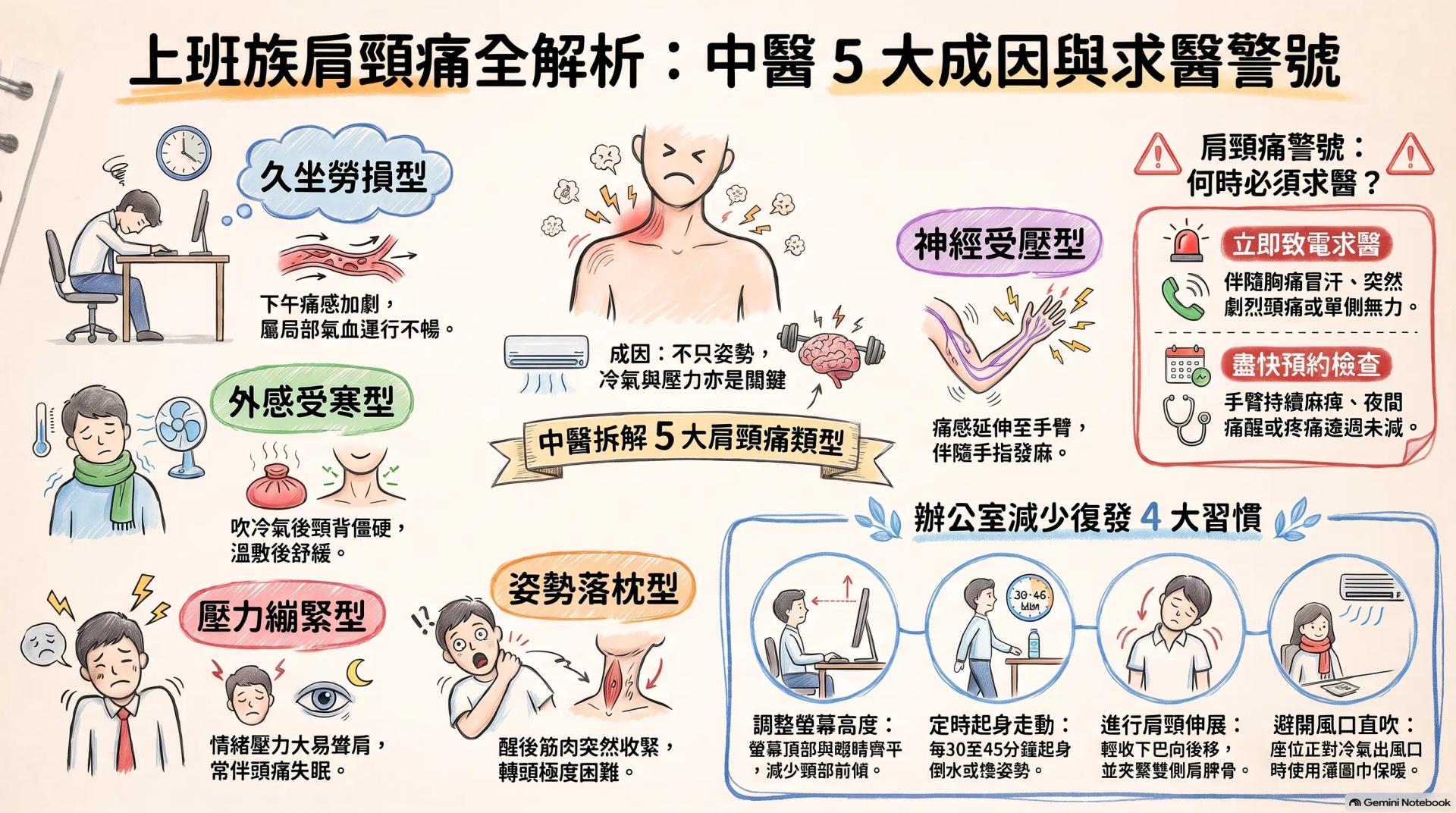
Office Neck and Shoulder Pain: 5 Causes and Warning Signs
Neck and shoulder pain at work is not just about posture. Reviewed by Dr Wong, this guide covers five common causes, the TCM approach, warning signs that need urgent care and simple office habits.