Office Neck and Shoulder Pain: 5 Causes and Warning Signs
Neck and shoulder pain at work is not just about posture. Reviewed by Dr Wong, this guide covers five common causes, the TCM approach, warning signs that need urgent care and simple office habits.
Medical review: Dr. Wong Ka Fai,Registered Chinese Medicine Practitioner #009985
1-Minute Quick Answer
Office neck and shoulder pain is often linked to long sitting, a forward head position, air-conditioning and stress. TCM treats it by pattern alongside posture changes. Chest pain spreading to the neck or fever with a stiff neck needs urgent care; arm numbness or weakness needs prompt checks (reviewed by Dr Wong, CMCHK 009985).
Office Neck and Shoulder Pain: 5 Causes and Warning Signs
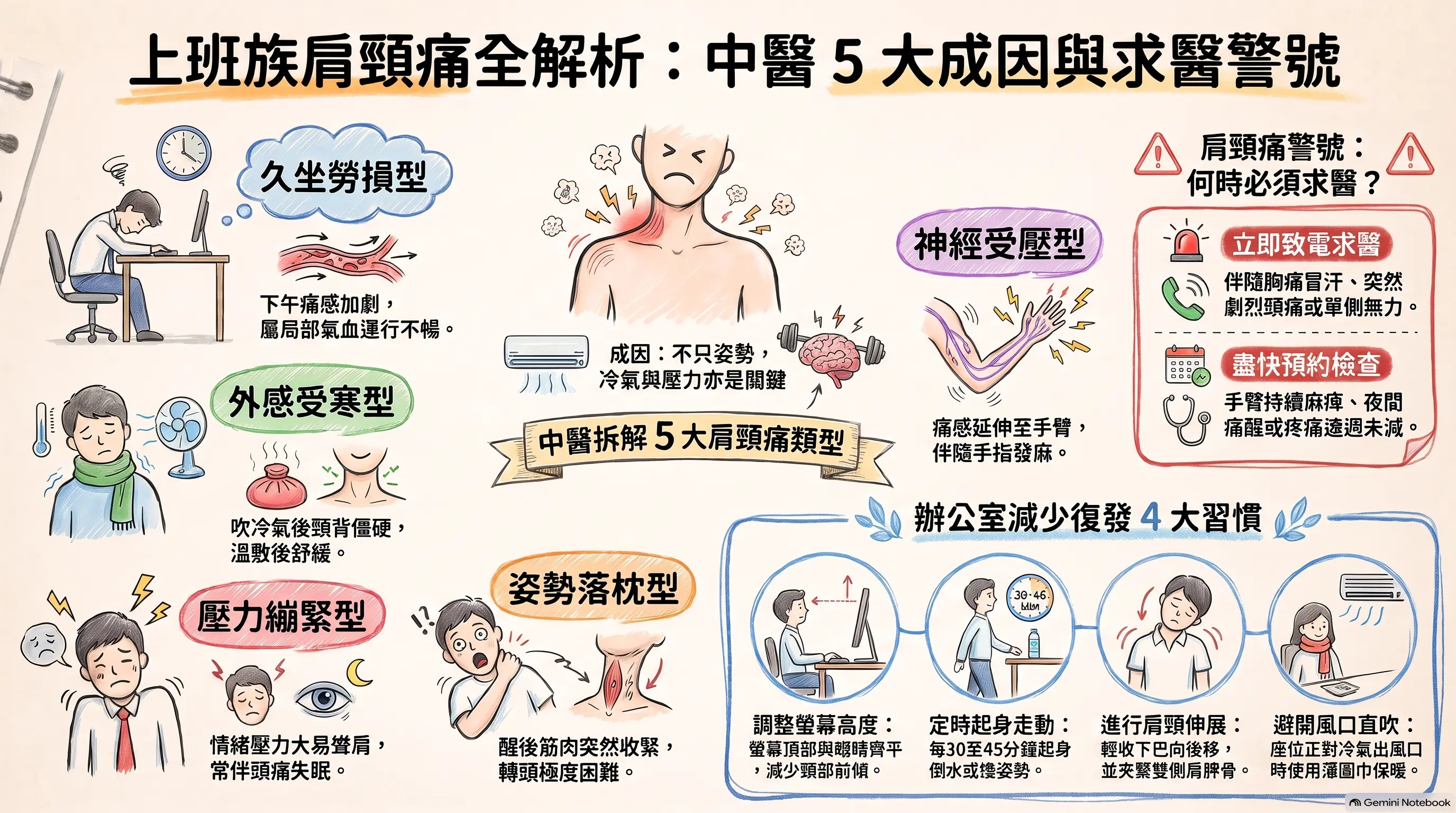 This image was generated with NotebookLM to help summarise the article; some Chinese characters may not display correctly.
It is three in the afternoon, and the back of your neck and shoulders feel as if a weight is pressing down. Turning your head catches slightly, pressing the area aches, but the work is not finished, so you carry on.
This is very common in Hong Kong. According to The Standard, a survey of 206 local office workers showed that 88% had experienced neck and shoulder pain in the past year, nearly 80% kept working through it, and fewer than 20% would consult a doctor. A 2024 questionnaire of over 3,000 people by the Hong Kong Sanatorium & Hospital group also found that, among respondents with pain, 62% had neck and shoulder pain, more than those with back pain.
Posture plays a part, but air-conditioning, stress and sleeping position can all tighten the neck and shoulders too. Different causes call for different approaches.
1. Why Neck and Shoulder Pain Keeps Coming Back
When you look at a screen for long periods, the head tends to drift forward and the shoulders round inwards. As the head moves forward, the muscles at the back of the neck and upper back have to work constantly to hold it, and over time they tighten and ache.
Once it hurts, people move and stretch less, so the muscles stiffen further and the cycle continues. Add air-conditioning blowing on the neck and stress that makes you hunch your shoulders without noticing, and the area rarely gets a chance to relax.
2. Five Common Causes and the TCM Approach
| Type | TCM view | Typical signs | Approach |
|---|---|---|---|
| Prolonged sitting | Sluggish flow of qi and blood (poor local circulation); sinews poorly nourished | Worst in the afternoon or after work, eases a little with movement | Acupuncture and tui na to release tension, plus posture changes |
| Cold exposure | "Wind-cold obstructing the channels" (cold tightening the channels) | Stiff neck and back after air-conditioning or a chill, dislikes drafts, feels better with warmth | Warming the channels, for example acupuncture with moxibustion |
| Stress-related tension | "Liver qi stagnation" (emotional stress disrupting the flow of qi) | Worse under stress, often with hunched shoulders, poor sleep or headaches | Soothing the liver and regulating qi (easing stress-related tension), releasing the neck and shoulders, adjusting daily routine |
| Stiff neck after sleep | Awkward sleeping position or sudden twisting; "contracted sinews" (muscles suddenly tightening) | Sudden neck pain on waking, especially hard to turn one way | Distal acupuncture points and gentle manual techniques |
| Nerve compression | Structural problems must be ruled out first | Pain spreading from the neck into the arm, or tingling fingers | Get checked first, then decide whether TCM is suitable |
Many people have two or three of these at once, such as prolonged sitting plus air-conditioning, and the practitioner addresses both the cold and the strain.
3. Ordinary Neck Pain, or Something Else?
| Situation | More likely | What to do |
|---|---|---|
| Pain at the back of the neck and shoulders, aching when pressed | Muscle tightness | Try self-care first; seek care if no better after two to three weeks |
| Pain spreading into the arm, tingling fingers | Nerve compression | Get checked promptly |
| Difficulty combing hair, dressing or reaching up; woken by pain at night | A shoulder joint problem, such as "frozen shoulder" | Have the shoulder joint checked promptly |
| Neck and shoulder pain with chest pain or pressure | Possibly heart-related | Seek medical help immediately |
According to a Sing Tao Headline report from October 2026 quoting an orthopaedic specialist, frozen shoulder used to be seen mostly around the age of 50, but cases among office workers in their thirties and forties have risen noticeably. If shoulder movement is clearly restricted or pain wakes you at night, have the shoulder joint checked rather than treating it as simple neck strain.
4. When to Seek Urgent Care or Get Checked
Seek medical help immediately or call 999 if you have:
- Chest pain or pressure spreading to the neck, shoulder, jaw or arm, or with sweating or breathlessness
- A sudden severe headache, or fever with a stiff neck and vomiting
- Slurred speech, or weakness on one side of the face or body
- Numbness or weakness in both hands or both legs, unsteady walking, or loss of bladder or bowel control
- Arm numbness or weakness that is worsening quickly
- Neck pain after a fall, a knock or a traffic accident
Seek medical help promptly if you have:
- Numbness or weakness in the arm or fingers
- Pain that wakes you at night or persists at rest
- Pain that has not improved after several weeks, or is getting worse
- Unexplained weight loss
5. How TCM Usually Treats Neck and Shoulder Pain
The practitioner first asks where it hurts, when and what triggers it, then examines the muscles and neck movement. Common methods include:
- Acupuncture: needling local neck and shoulder points and distal points to ease pain and muscle tightness.
- Tui na and soft tissue techniques: working directly on stiff soft tissue.
- Cupping: often used on the upper back and shoulders.
- Herbal medicine: tailored to the individual's constitution; cold-related and stress-related patterns, for example, are treated differently.
On the research side, a 2025 meta-analysis reached a broadly positive conclusion that acupuncture might help neck pain, but the quality of evidence ranged from very low to moderate. A 2024 meta-analysis on chronic neck pain found that acupuncture as an add-on therapy may provide pain relief lasting at least three months, but it was not clearly better than sham acupuncture. In plain terms, acupuncture can be one option, best combined with posture and exercise changes rather than used on its own.
6. Four Office Habits to Reduce Flare-ups
- Raise the screen to eye level. The top of the screen should be roughly level with your eyes; use a stand and external keyboard for a laptop.
- Stand up every 30 to 45 minutes. Fetch some water or take a few steps to change your neck and shoulder position.
- Two simple stretches. Sitting upright, gently tuck your chin so your head moves back, and hold for a few seconds; then squeeze your shoulder blades back and down, and repeat a few times. Stop and seek advice if you feel arm numbness or the pain worsens.
- Keep air-conditioning off your neck. Avoid sitting directly under a vent, or keep a light scarf or jacket at your desk.
A Note from the Practitioner
Before your visit, note when your neck and shoulder pain tends to get worse: after meetings, after air-conditioning, or on waking? This helps the practitioner work out the cause. If you are also seeing a physiotherapist, share your treatment plan so the two can be coordinated.
Recurring Neck and Shoulder Pain? Start with an Assessment
If neck and shoulder pain is affecting your work or sleep, or keeps returning despite self-care, you are welcome to book an assessment with Dr Wong. Dr Wong holds a master's degree in orthopaedics and traumatology from Guangzhou University of Chinese Medicine and focuses on pain and musculoskeletal injuries; common conditions he sees include neck pain and postural imbalance. He will first judge whether you need a referral for checks, then recommend a suitable approach. For more on pain conditions, visit our pain page.
How to book:
- WhatsApp: Book here
- Phone: 2110 9337
- Address: Unit 2706, Saxon Tower, 7 Cheung Shun Street, Lai Chi Kok
— Dr Wong Ka-fai | Registered Chinese Medicine Practitioner
Frequently Asked Questions about Office Neck and Shoulder Pain
Q1: Should I choose acupuncture or tui na for neck and shoulder pain?
The two can be combined. If the muscles are clearly stiff and tender, tui na works directly on the soft tissue; if the pain feels deeper, keeps returning or comes with headaches, the practitioner may lean towards acupuncture. The balance is decided after assessment, and anyone with warning signs such as arm numbness or weakness should be checked first.
Q2: How many acupuncture sessions does neck and shoulder pain need?
There is no fixed number. Recent pain linked to catching a chill or sleeping awkwardly usually improves faster; pain that has lasted months and is tied to work posture takes longer and needs posture and exercise changes too. Practitioners generally reassess after a few sessions.
Q3: Should I use heat or ice for neck and shoulder pain?
For pain from long-term tightness or cold exposure, warmth helps the muscles relax. If you have just strained the area and it feels hot and swollen, use brief cold packs for the first day or two instead. Avoid overheating or long heat sessions to prevent burns.
Q4: Should I worry if neck and shoulder pain comes with a headache?
Headaches from neck and shoulder tightness are common, usually felt at the back and sides of the head and worse when the neck and shoulders are pressed. However, a sudden severe headache, one unlike any before, or a headache with fever, a stiff neck, vomiting or slurred speech needs urgent medical attention.
Q5: Is waking up with a stiff neck related to my pillow?
It can be. A pillow that is too high or too low keeps the neck twisted all night. On your back, the pillow should support the curve of your neck; on your side, its height should roughly match the width of your shoulder. Frequent stiff necks may also reflect daytime tightness, which is worth addressing too.
References
- The Standard: Nine in 10 HK employees suffer from neck and shoulder pain, survey reveals
- Hong Kong Sanatorium & Hospital: Survey on pain among urban residents, 16 April 2024 (in Chinese)
- Xie CR, et al. Effectiveness of Acupuncture for Neck Pain: Systematic Review and Meta-analysis with Trial Sequential Analysis. J Pain Res 2025;18:6297-6316. PubMed
- Durable Effect of Acupuncture for Chronic Neck Pain: A Systematic Review and Meta-Analysis. Curr Pain Headache Rep 2024. doi:10.1007/s11916-024-01267-x. PMC
- Sing Tao Headline: Article on frozen shoulder in younger office workers, 26 October 2026 (in Chinese)
Every patient's constitution and condition are different; outcomes vary and require individual TCM assessment.
Disclaimer: This article is for health education only and does not replace individual consultation, examination, medication or treatment advice. If you have a related condition, persistent symptoms or are taking medication, please follow your doctor's instructions for follow-up and monitoring, and consult your attending doctor before making any change to your medication.
Disclaimer: This article is for health education and reference purposes only and does not constitute medical advice, diagnosis, or treatment. Each patient's condition is unique and treatment outcomes vary. Please consult a registered TCM practitioner or qualified healthcare professional for health concerns.
Further Reading
Hand-picked related articles and real cases to read next.
TCM Bone Setting: Does It Work, and Who Should Avoid It?
Does TCM bone setting work, and who should avoid it? Reviewed by Dr Wong, this guide explains the techniques, five groups who need checks first, what an assessment involves and aftercare.
Acupuncture vs Physiotherapy: Which Is Better for Your Pain?
Both acupuncture and physiotherapy can treat pain, but each has its strengths for different conditions. This article offers an honest comparison across treatment principles, suitable conditions, cost, and duration to help you decide.
Air-Con Headaches and Stiff Necks in Older Adults: A TCM View
Older adults often develop headaches, stiff shoulders and neck, blocked nose, sneezing and aching joints when the air-conditioning is on. Loosely called "air-conditioning sickness", these symptoms are not a formal medical diagnosis but they reflect a decline in autonomic regulation and weakened defensive qi. With Hong Kong's wide indoor-outdoor temperature gap in summer, older adults with hypertension, dyslipidaemia or diabetes are particularly vulnerable. This article uses the TCM concepts of cold attacking the surface, weak defensive qi and cold spleen-stomach to explain six common patterns, six home-cooling adjustments, and when Western care should come first.
Want to learn more? WhatsApp us for a free consultation
Book via WhatsAppExplore our full range of treatments: Traditional TCM Services
Related Articles
Does Acupuncture Hurt? What to Know Before Your First Visit
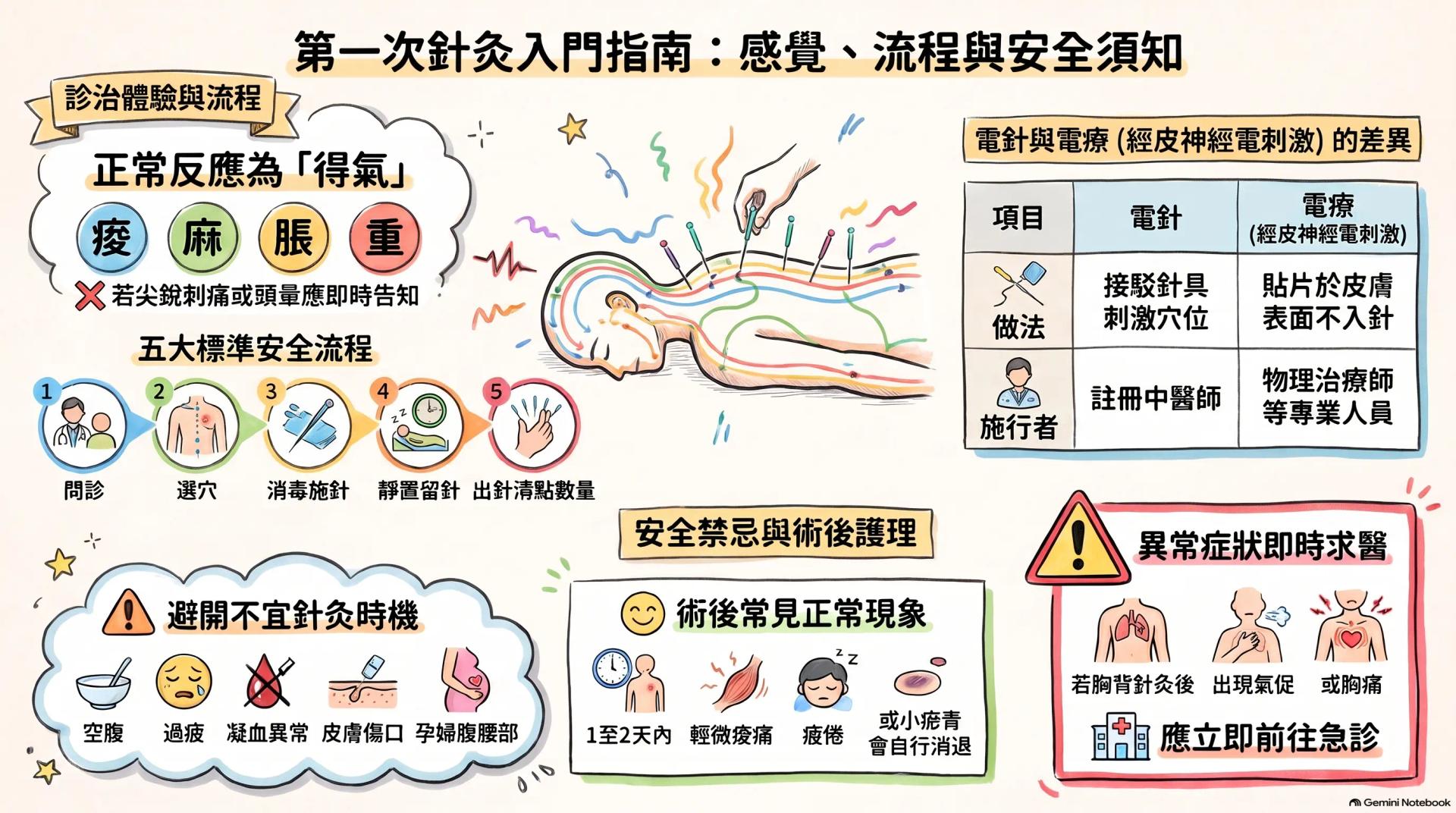
Does acupuncture hurt, and is feeling worse afterwards normal? Reviewed by Dr Wong, this guide covers the sensation, a typical session, electroacupuncture, session numbers and who should avoid it.
Knee Pain After Hiking or Running: TCM or Western Doctor?
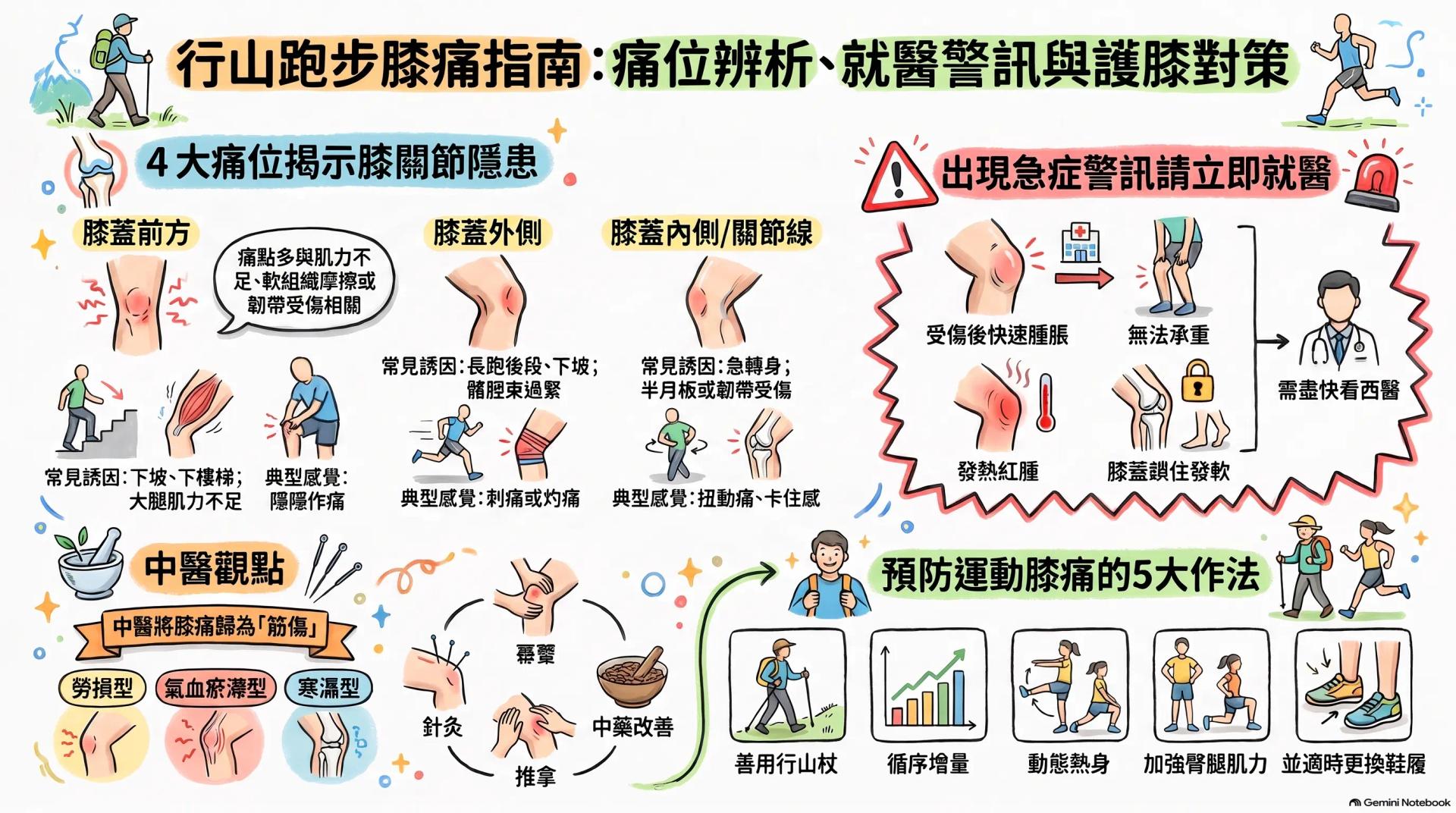
Knee pain after a downhill hike or a long run? Reviewed by Dr Wong, this guide explains four common pain locations, warning signs that need a Western doctor, the TCM approach and prevention tips.
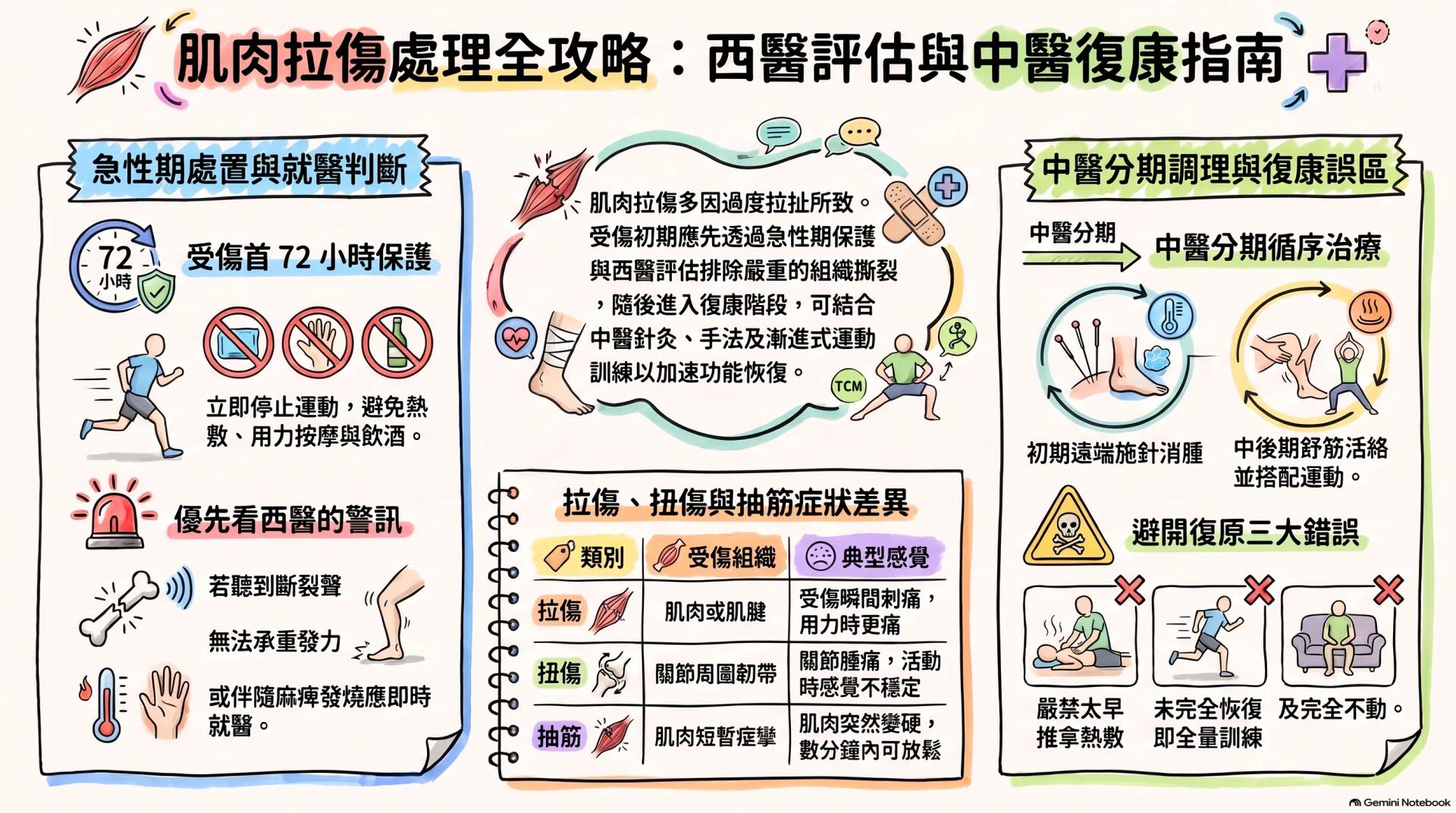
Muscle Strain: TCM or Western Doctor? Acupuncture Timing
Pulled a muscle running or playing sport? Learn when to see a Western doctor first, how to manage the first 72 hours and when acupuncture fits in. Reviewed by Dr Wong.