Low Milk Supply After Birth? Check If It Is Real, Then TCM Care
Feeling short of milk and wanting to boost supply? This article shows how to use urine output, weight and alertness to tell a genuine low supply from a latch or feeding problem, when to see a paediatrician or lactation consultant first, and how Chinese medicine can help at the level of constitution with herbs and acupuncture (no manual lactation techniques).
Medical review: Dr. To Ching, Jenny,Registered Chinese Medicine Practitioner #009330
1-Minute Quick Answer
Feeling short of milk is not always a real shortage: first check the baby's urine output, weight and alertness, since a low supply and a latch or frequency problem need different approaches. Chinese medicine uses herbs mainly with acupuncture, offers no manual techniques, and does not guarantee an ideal supply (reviewed by Dr To Ching, CMCHK 009330).
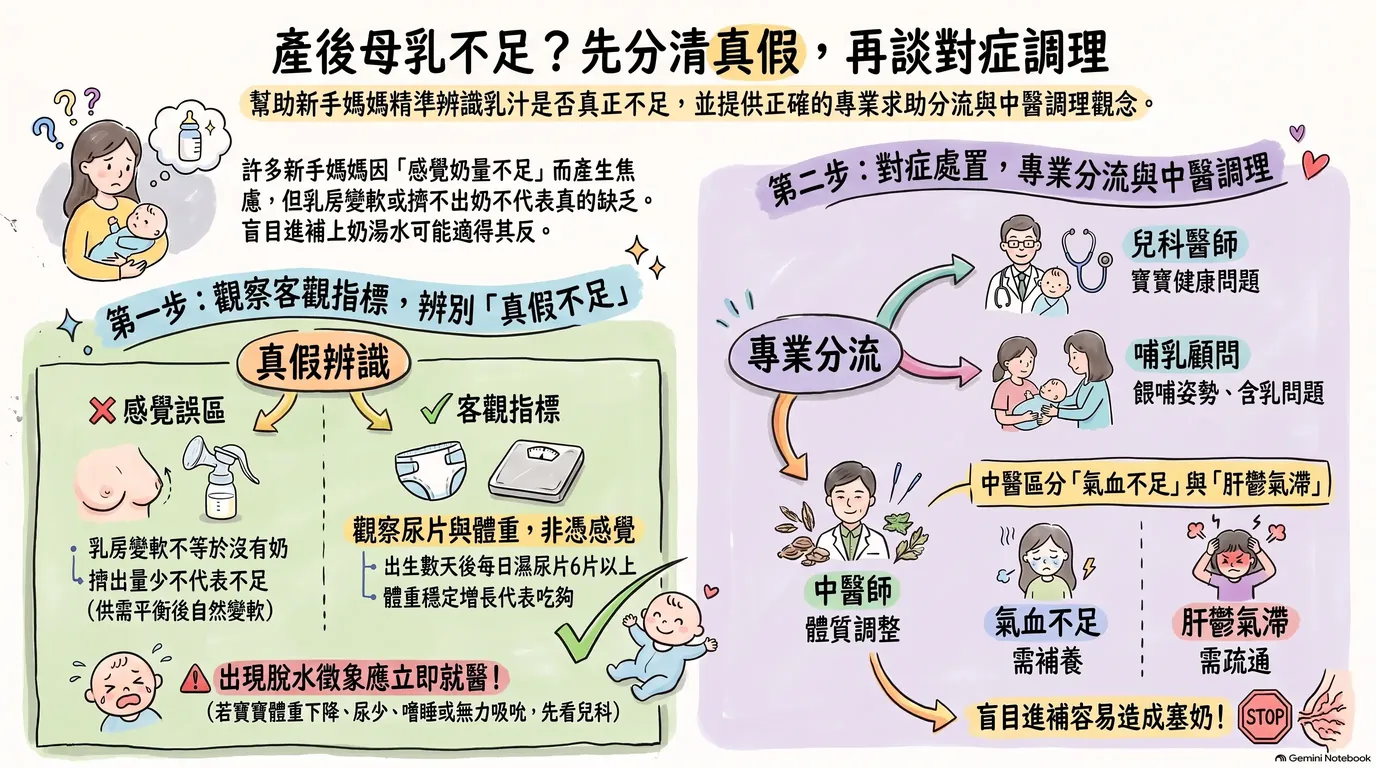 To help readers quickly grasp the content, this image was generated by NotebookLM. Some Chinese characters may not render correctly.
Important
If the baby is not gaining or is losing weight, has markedly reduced urine output, is lethargic or hard to rouse, or sucks weakly at feeds, these may be signs of inadequate intake or dehydration — a paediatric matter. Take the baby to a doctor first; do not focus only on boosting supply and delay.
In the first weeks of breastfeeding, what wears you down is often not the tiredness but the uncertainty: the baby never seems full, cries the moment you put them down, finishes one side and wants more, and you begin to wonder whether you simply "have no milk". Around you, some urge you to drink lactation soups, others to just add formula, and the conflicting advice only unsettles you further.
In truth, "feeling it is not enough" and "it really is not enough" are two different things. Some mothers do produce too little; but for many, the problem lies in the latch, feeding frequency or position, so the baby does not feed effectively and the supply only seems low. The direction matters, because the remedy differs entirely — pouring in lactation soups may not help, and can sometimes cause blockage.
Below, we first help you tell a genuine low supply from a "perceived" one, then cover the common causes, which situations call for professional help first, and how Chinese medicine can play a supporting role. By the end, you should have a clearer idea of whether your next step is to adjust feeding, see a lactation consultant, or take the baby to a doctor.
First, Distinguish: Genuine Low Supply, or "Perceived" Low Supply?
Many mothers worry about low supply when it is not necessarily the case. Rather than going by feeling, look at objective signs that the baby is getting enough:
- Wet nappies: a few days after birth, a baby usually has six or more clearly wet nappies a day, one of the common signs of adequate intake.
- Weight gain: newborns lose a little weight in the first days, then should gradually regain it; steady weight gain is an important sign of feeding enough.
- Alertness and sucking: a baby who is alert, sucks strongly, and settles for a stretch after a feed is usually feeding well.
By contrast, "the breasts no longer feel full", "not much comes out when I express", and "the baby keeps wanting to feed" cannot on their own tell you the supply is low — breasts naturally soften once supply and demand balance, and the amount expressed is not the amount the baby actually takes.
Important
If the baby is not gaining or is losing weight, has markedly reduced urine output, is lethargic or hard to rouse, or sucks weakly at feeds, these may be signs of inadequate intake or dehydration — a paediatric matter needing prompt attention. In this case, take the baby to a doctor (paediatrician / doctor) first; do not focus only on "boosting supply" and delay.
Why Does Low Milk Supply Happen?
From the physiology of lactation, milk production largely follows supply and demand — the more effectively the baby feeds, the stronger the signal to the body, and the more it makes. Common reasons for a low supply include:
- Poor latch: the baby cannot take enough of the nipple and areola, sucks inefficiently, and the breast is not adequately stimulated.
- Too few feeds or expressions: intervals too long or feeds too few mean the breast is not effectively drained, and the signal weakens.
- Introducing formula too early or in too large amounts: the baby who takes formula then feeds less at the breast, creating a "the less it sucks, the less it makes" cycle.
- Postpartum factors: heavy postpartum bleeding, extreme fatigue, severe lack of sleep, high stress, or certain hormonal problems can all affect lactation.
From a Chinese medicine perspective, postpartum low supply is generally of two types:
- Qi-and-blood-deficiency type (inadequate source): labour depletes qi and injures blood, so milk lacks a source. Typically the milk is thin and scant, the breasts soft without fullness, with pallor, fatigue and poor appetite.
- Liver-qi-stagnation type (impaired free flow): tension and stress lead to liver-qi stagnation and blocked breast channels, so milk is "present but hard to release". Typically the breasts feel firm, distended and sore yet yield little, with low or irritable mood and distension in the chest and flanks.
Distinguishing the type matters: qi-and-blood deficiency calls for nourishing and building up; liver-qi stagnation does not call for indiscriminate tonics — the more you tonify, the more distended it becomes, making blockage more likely.
When Should You Seek Professional Help First?
Managing breastfeeding problems is a matter of triage — the right person for the right problem:
- Baby not gaining weight, low urine output, poor alertness → this is the domain of a paediatrician / doctor. Take the baby for assessment first, to rule out inadequate intake, dehydration or other problems.
- Latch, position, feeding frequency, expressing technique, recurrent blockage → these are matters of feeding technique; consult a lactation consultant.
- A red, swollen, hot, painful breast with fever, chills and fatigue → this may be mastitis, and you should seek medical care promptly, rather than vigorously massaging it yourself or delaying.
Chinese medicine can help at the level of constitution, but the latch, equipment, and the immediate management of mastitis still call for the relevant professionals.
What You Can Do Day to Day (General Principles)
While seeking professional assessment, some general principles help improve supply:
- Increase the frequency of effective feeding or expressing: by the principle of supply and demand, draining the breast regularly and fully is key to maintaining and building supply.
- Ensure a correct latch: the baby needs to take the nipple and most of the areola to feed effectively; if unsure, have a lactation consultant watch a feed.
- Keep the mother well hydrated and rested: fatigue and dehydration both hinder lactation; emotional support matters too, as excessive stress suppresses supply.
One reminder: pouring in lactation soups or folk remedies on your own is not advisable. These soups are often high in fat, may not suit the qi-and-blood-deficiency type, and for the liver-qi-stagnation type may "add fuel to the fire" — blocking the breast before boosting supply. Whether dietary therapy is needed, and how to use it, is best advised by a practitioner according to your constitution.
How Can Chinese Medicine Help?
In treating postpartum low supply, Chinese medicine works through pattern differentiation — first distinguishing qi-and-blood deficiency (inadequate source) from liver-qi stagnation (impaired free flow), then providing care accordingly: for qi-and-blood deficiency, tonifying qi and nourishing blood and strengthening the spleen to support the source; for liver-qi stagnation, soothing the liver and freeing the channels to help the milk flow.
At Aspira TCM, Dr To Ching manages postpartum low supply primarily with oral Chinese herbal medicine, together with acupuncture: herbs to care for the constitution according to the pattern, supporting the generation of qi and blood or freeing the breast channels; acupuncture as a supportive measure to help free the channels and regulate, with results varying from person to person. Dr To may also offer advice and guidance on feeding position, latch and feeding frequency; for the finer points of latch and for feeding equipment, she will suggest consulting a lactation consultant. For other common postpartum concerns, see Is Postpartum Hair Loss Normal? TCM on Causes, Recovery Time and Care.
One point must be made clear: Aspira TCM does not provide breast massage or any lactation-inducing manual techniques. Dr To works only through herbs and acupuncture at the level of constitution, and offers advice on feeding. If what you need is breast drainage, lactation massage or equipment guidance, you should consult a lactation consultant or the relevant professional.
It should also be said that the role of Chinese medicine is supportive — caring for the constitution, easing the discomfort of blockage. It does not guarantee reaching an ideal supply, and does not replace paediatric assessment of the baby. If the baby shows the problems noted above with weight, urine output or alertness, be sure to seek medical care first. When taking any medication while breastfeeding, be sure to tell your practitioner so that suitable medicines can be chosen.
Before Chasing Supply, Tell Genuine From Perceived
Faced with the anxiety of "not enough milk", the first step is not to rush to tonify, but to distinguish: is the baby really not getting enough (look at urine output, weight, alertness)? Which type of cause is it? Is the supply truly low, or is it a matter of latch and frequency? The answers differ, and so does what you should do.
If you would like to know whether your postpartum situation is suitable for supportive Chinese medicine care, you are welcome to enquire with Aspira TCM via WhatsApp (WhatsApp: 9679 2293 / wa.me/85296792293); a practitioner can then assess and advise. If the baby is not gaining weight, has low urine output or poor alertness, please take the baby to a doctor first.
Medical disclaimer: This article is for health education only and does not constitute personalised medical advice. Each mother and baby differ, so approaches and outcomes vary. Chinese medicine can offer supportive care at the level of constitution, but does not provide manual lactation techniques, does not guarantee an ideal supply, and does not replace paediatric assessment of the baby, the help of a lactation consultant, or medical management of mastitis. If the baby is not gaining weight, has low urine output or poor alertness, or the mother has a red, swollen, hot, painful breast with fever, seek prompt care from a qualified healthcare professional. If you are breastfeeding, tell your practitioner before any medication is prescribed.
Disclaimer: This article is for health education and reference purposes only and does not constitute medical advice, diagnosis, or treatment. Each patient's condition is unique and treatment outcomes vary. Please consult a registered TCM practitioner or qualified healthcare professional for health concerns.
Further Reading
Hand-picked related articles and real cases to read next.
Postpartum Confinement Myths: Bathing? Washing Hair? TCM Advice and What to Avoid
Traditional postpartum confinement rules were shaped by a very different living environment. This article unpacks six common myths (no bathing, no drinking water, avoiding all wind, "the more tonics the better"), gives phased diet and lifestyle guidance, and lists what TCM does ask mothers to genuinely avoid — and when to see a Western doctor first.
Postpartum Hair Loss: TCM Causes, Recovery Timeline and Care
Two to four months after giving birth, hair comes away by the handful when washing or combing, and many mothers worry about going bald. This article first explains the Western view — postpartum hair loss is usually a temporary telogen effluvium, and most people recover on their own within six months to a year — then uses the TCM ideas that "hair is the surplus of blood" and "the kidney manifests in the hair" to unpack the roles of postpartum qi-and-blood depletion, blood deficiency, kidney deficiency and liver stagnation, and lists when to see a Western doctor first.
Postpartum Lochia That Will Not Settle: Telling Normal From Abnormal, and When to Seek Care
Weeks after the birth and the lochia still has not settled. This article explains the normal course of lochia, how it differs from a period, which situations require immediate medical care, the common causes and misconceptions, and how Chinese medicine can help.
Want to learn more? WhatsApp us for a free consultation
Book via WhatsAppExplore our full range of treatments: Traditional TCM Services
Related Articles

Sleep Talking, Limb Movements and Sleepwalking: What's Behind Them?
Many parents and partners have noticed a family member talking in their sleep, moving their limbs, or even sleepwalking. This article explains who this is most common in, how TCM understands it, and when it's time to see a doctor.
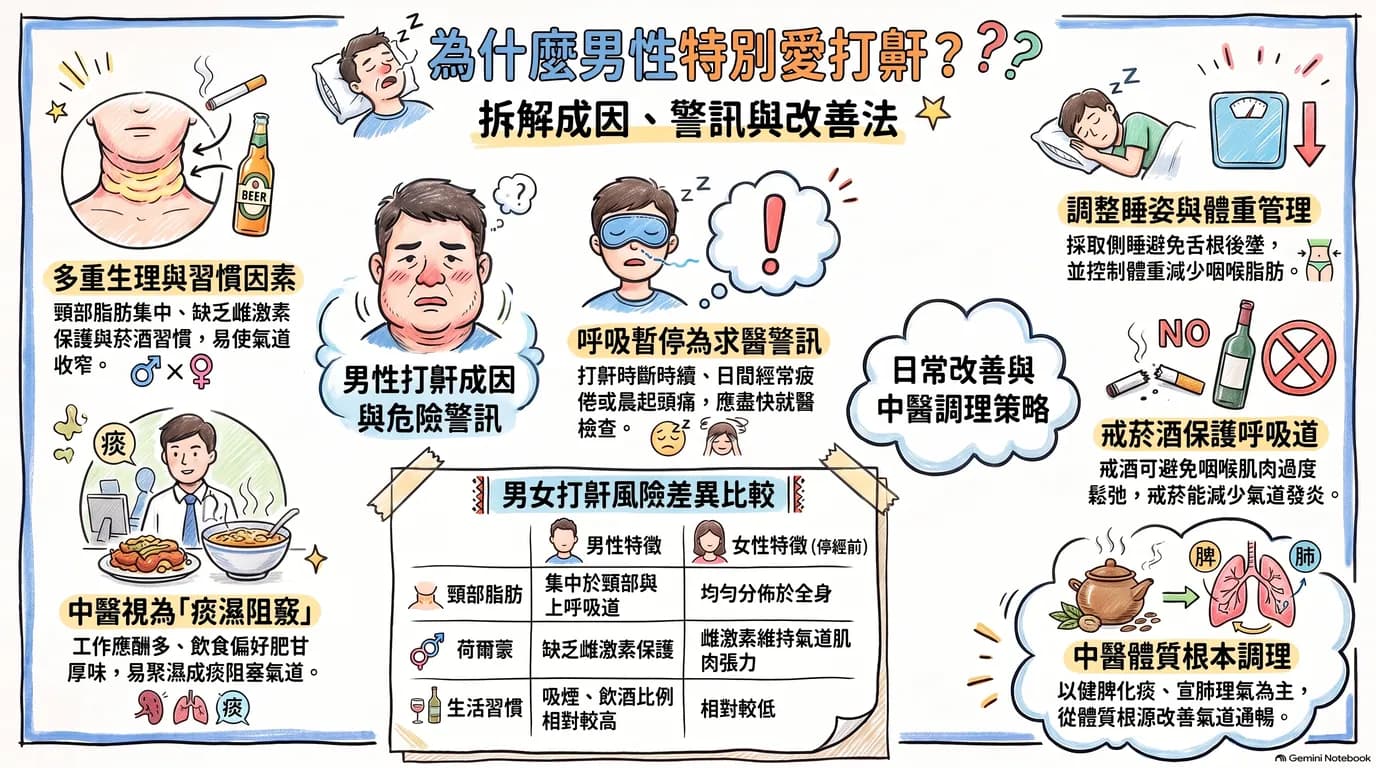
Why Do Men Snore More Than Women? Causes and Warning Signs
Snoring is far more common in men than women, and the reasons go beyond habit — physiology, hormones and lifestyle all play a part. This article explains why men snore more, which signs suggest a more serious problem, and how to ease snoring day to day.
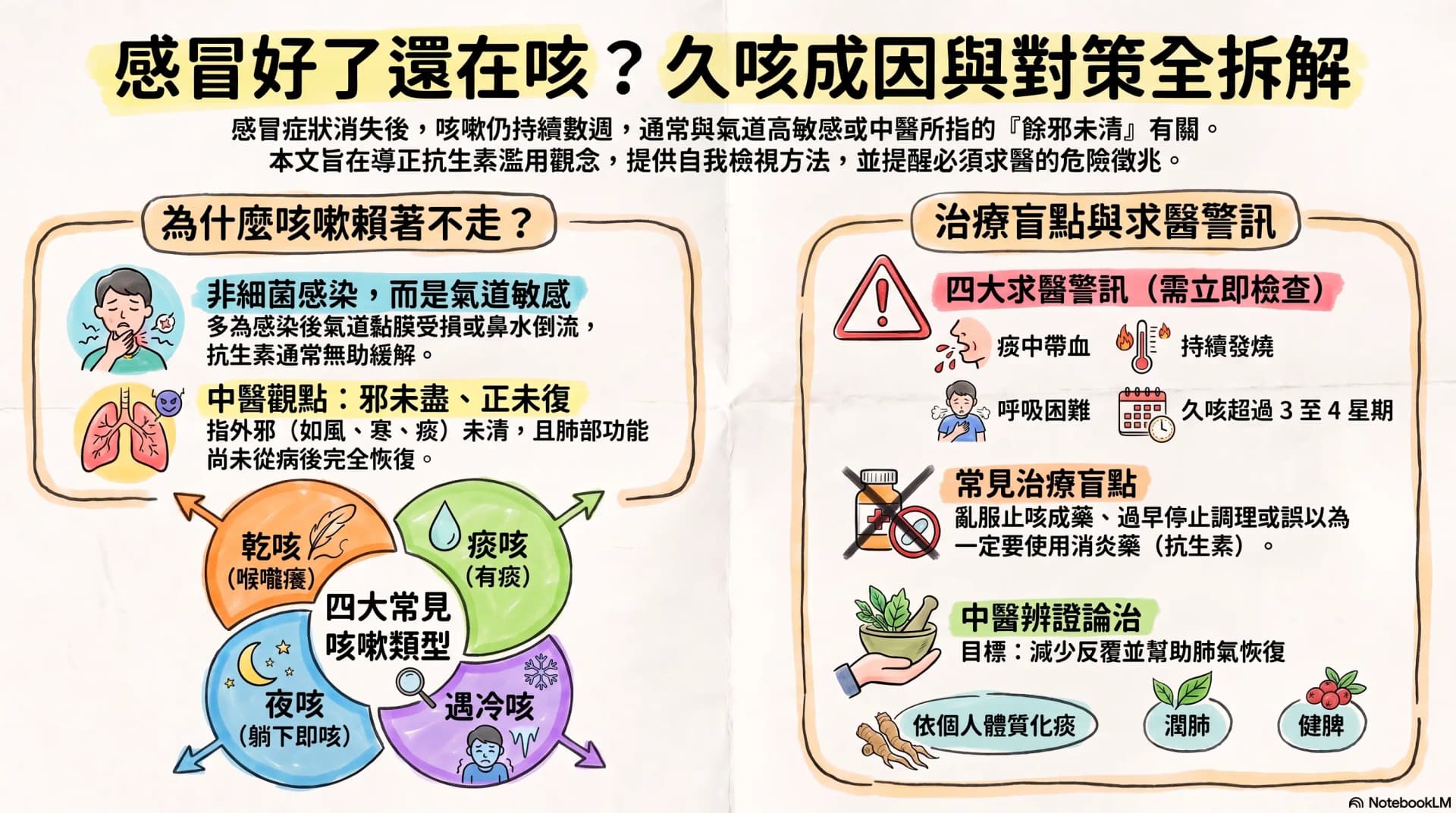
The Cold Has Gone but the Cough Will Not Clear: Causes of a Lingering Post-Cold Cough and How TCM Can Help
The cold is gone, but the cough drags on for weeks. This article breaks down the common types and causes of a lingering post-cold cough, the situations that warrant medical attention, the treatment blind spots, and how Chinese medicine can help through pattern differentiation.