Leg Swelling in Older Adults: Is It Heart Failure? 6 Causes
When an elderly parent's legs swell up, the first thought is usually "something's wrong with the heart". Heart failure is indeed one common cause, but leg swelling in older adults can come from many other directions. This article lays out six common causes — heart failure, kidney disease (including diabetic nephropathy), liver cirrhosis and low albumin, venous return problems, medication side effects, and TCM "deficiency-type oedema" — and adds six red flags that warrant seeing a Western doctor right away, plus three things carers can start doing today.
Medical review: Dr. Chan Wing Kiu, Joanne,Registered Chinese Medicine Practitioner #009463
1-Minute Quick Answer
Swollen legs in older adults are not always heart failure; kidney disease, liver cirrhosis with low albumin, poor venous return and medication side effects are also common. Sudden one-sided calf swelling, chest pain or breathlessness, much less urine, or a 2 kg weight gain within 3 days need urgent care (reviewed by Dr Chan Wing Kiu, CMCHK 009463).
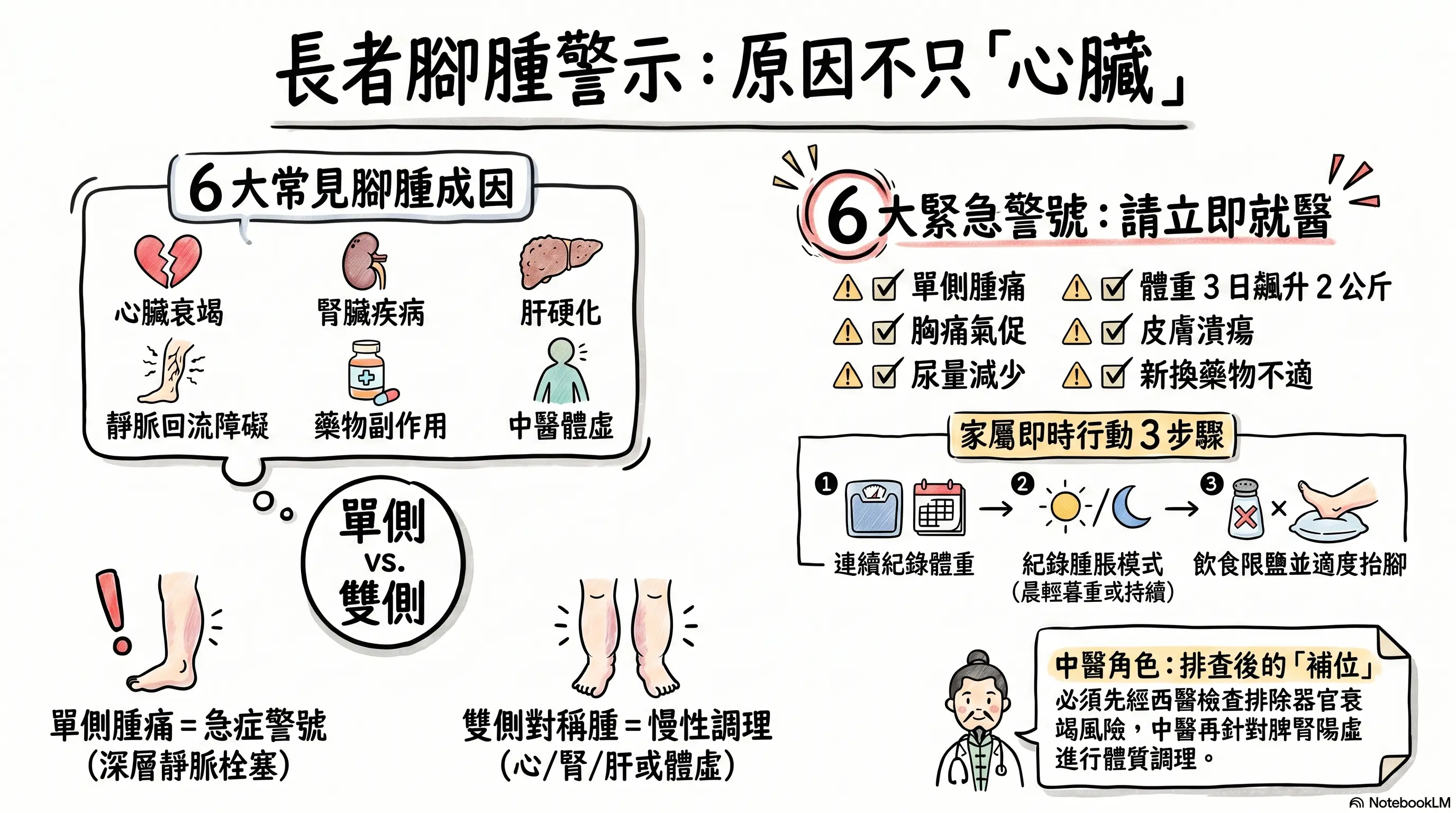 For quick reference, this image was generated by NotebookLM. Some Chinese characters may not render perfectly; we appreciate your understanding.
"My eighty-year-old mother's legs have been swollen for a week — is it something with her heart?" This is a worry many adult children carry about an ageing parent.
Heart failure is the cause most commonly associated with "old-age leg swelling" in the public mind, and is the direction most often raised in public health messaging. Clinically, however, leg swelling in older adults can come from many places other than the heart — kidney, liver, veins, medication and age-related deficiency can all swell the legs; some need emergency attention, others are chronic and stable.
This article sets out six common causes of leg oedema, with six red flags that warrant seeing a Western doctor immediately, so carers can sort out the next step. The TCM role is reserved for constitutional support after Western workup has cleared serious causes — it does not replace cardiac, renal, hepatic or thyroid evaluation.
Position statement: If swelling comes with chest pain, shortness of breath, inability to lie flat, fainting, sudden unilateral calf swelling with pain and redness, or rapid weight gain over a short period, attend the emergency department immediately — do not wait for a TCM consultation.
Six Common Causes of Leg Oedema in Older Adults
The table below gives an at-a-glance overview of all six causes so carers can compare them quickly; each cause is then detailed in full below.
| Cause | In one line |
|---|---|
| Cause 1: Heart failure | Bilateral, symmetrical swelling, often with breathlessness, worse lying flat |
| Cause 2: Kidney disease (incl. diabetic nephropathy) | Bilateral, can extend to the face and eyelids, foamy urine |
| Cause 3: Liver cirrhosis and hypoalbuminaemia | Bilateral swelling, may come with abdominal distension and jaundice |
| Cause 4: Venous return problems | Chronic forms usually bilateral; sudden one-sided pain, redness and swelling is an emergency (DVT) |
| Cause 5: Medication side effects | New swelling within one to several weeks of starting or increasing a drug |
| Cause 6: TCM deficiency-type oedema | Chronic, stable, mild-to-moderate bilateral swelling after Western causes are excluded |
Cause 1: Heart Failure
Heart failure is the most commonly associated cause of "old-age leg swelling" in the public mind, and one of the common clinical causes. When the heart's pumping efficiency falls and venous return slows, fluid accumulates in the interstitial spaces of the lower limbs — producing bilateral, symmetrical leg oedema.
Typical features:
- Both legs swollen at the same time, symmetrically
- Pressing the ankle or shin leaves a pit that takes several seconds to refill
- Shortness of breath, especially worse when lying flat — pillows needed to sleep
- Easy fatigue with markedly reduced exercise tolerance
- Frequent night urination, weight up over a few days
According to public information from heart-disease groups in Hong Kong, the city sees close to twenty thousand hospital admissions a year for heart failure. If this picture is suspected, evaluation by a family doctor or cardiologist (ECG, echocardiogram, blood work) is required — this is not for TCM to handle.
Cause 2: Kidney Disease (including diabetic nephropathy)
The kidneys remove excess sodium and water. As kidney function falls, sodium and water retention drives swelling. Common kidney-related causes in older adults include:
- Chronic kidney disease (CKD)
- Diabetic nephropathy
- Nephrotic syndrome (with heavy proteinuria and low albumin)
Diabetic nephropathy deserves special attention: roughly one in ten adults in Hong Kong has diabetes, with a higher proportion at age 65 and above. Long-standing high blood glucose damages the glomeruli, eventually leaking protein into the urine and causing oedema.
Typical features:
- Bilateral, symmetrical leg swelling, sometimes extending to the face and eyelids (worse in the morning)
- Foamy urine (a sign of proteinuria)
- Reduced urine output, increased night urination
- Known diabetes with poor glycaemic control
- Abnormal renal indices on blood tests (creatinine, eGFR)
If this picture is suspected, the family doctor should arrange urine testing (especially urine protein) and blood work for renal function and glucose.
Cause 3: Liver Cirrhosis and Hypoalbuminaemia
The liver makes albumin, which maintains colloid osmotic pressure inside the vessels. When liver function falls (cirrhosis, late chronic hepatitis) or protein intake/absorption is chronically inadequate, plasma albumin drops and fluid leaks from vessels into the interstitial space, producing oedema.
Typical features:
- Bilateral, symmetrical leg swelling
- Abdominal distension (possible ascites)
- Yellowing of skin or sclera (jaundice)
- Poor appetite, rapid weight loss
- Easy bruising, nose bleeds (impaired clotting)
A non-trivial proportion of adults in Hong Kong carry hepatitis B; older adults may also progress to cirrhosis through alcohol-related liver disease, drug-related liver injury or advanced fatty liver. If this picture is suspected, the family doctor should arrange liver-function tests and abdominal imaging.
Cause 4: Venous Return Problems
Veins carry blood from the limbs back to the heart. When valves or vessel walls falter, return slows and fluid pools in the calves. Venous-related leg swelling splits into two main groups:
Chronic venous insufficiency (including varicose veins):
- Bilateral leg swelling, mostly symmetrical but possibly uneven
- Worse after long standing or sitting, relieved by elevation
- Visible varicose veins and skin pigmentation on the calves
- Can progress to venous ulcers
Acute deep-vein thrombosis (DVT) — an emergency:
- Unilateral calf swelling with sudden pain, redness and warmth
- Often after prolonged sitting/lying, recent surgery, long-haul flights or bedrest
- A dislodged thrombus can cause a pulmonary embolism, which is life-threatening
DVT requires immediate emergency evaluation and must not be delayed. Compression stockings and leg elevation are interventions for chronic venous insufficiency — acute DVT is a different category entirely.
Cause 5: Medication Side Effects
Older adults are often on chronic medications, some of which list oedema as a known side effect. Drugs commonly seen in Hong Kong clinical practice that can cause leg swelling include:
- Some antihypertensives, especially calcium-channel blockers (e.g. amlodipine class)
- Non-steroidal anti-inflammatory drugs (NSAIDs), often used long-term for joint or back pain
- Corticosteroids, used for asthma, autoimmune disease or skin conditions
- Some diabetic medications, such as the thiazolidinedione class
- Hormonal medications
The pattern is: new oedema within one to several weeks of starting or increasing a medication. If this is suspected, return to the prescribing doctor for review — do not stop on your own. Drug-related oedema usually settles after the medication is stopped or switched.
Cause 6: TCM "Deficiency-Type" Oedema
When the five Western causes above have been ruled out and the picture is a mild-to-moderate, chronic, stable, bilateral symmetrical swelling, a TCM constitutional assessment can be considered. Common patterns:
| TCM pattern | Common features | Aggravating factors |
|---|---|---|
| Spleen-yang deficiency | Lighter in the morning, heavier in the evening; abdominal bloating and loose stools; pronounced afternoon lower-limb swelling; pale complexion | Long sitting, cold/raw foods, overwork |
| Kidney-yang deficiency | Cold lower back and knees, cold feet, frequent night urination, all-day fatigue | Age-related qi-and-blood decline, cold |
| Qi deficiency with fluid retention | Whole-day fatigue and weakness, breathlessness on slight exertion, swelling worse after activity | Overwork, post-chronic-illness |
| Cold-damp obstructing the spleen | Worse in damp weather, thick white tongue coating, heavy body sense, sticky/tasteless mouth | Damp weather, cold/raw foods |
In practice, older adults often present with a mix rather than a single pattern — "spleen-kidney yang deficiency with qi deficiency", "spleen-yang deficiency with cold-damp", and so on. Final pattern differentiation must be made by a registered TCM practitioner weighing tongue, pulse, night urination, bowels and medications.
The TCM direction is strengthening the spleen, warming kidney yang, moving qi and draining fluid (clearing stagnation and helping the body process excess fluid), and moving blood; this does not replace Western medications, and self-stopping antihypertensives, diuretics or other prescribed medication is not supported.
Dr Chan's clinical observation: "When an older person turns up with swollen legs, the first job is to tell apart 'acute' from 'chronic'. Acute unilateral swelling needs to go to A&E. Chronic, bilateral, symmetrical mild swelling should first have a family-doctor workup to clear heart, kidney, liver, diabetes and medication side effects — only then should TCM step in for constitutional support. That triage step must not be skipped."
Six Red Flags That Warrant a Western Doctor Right Away
Regardless of whether the older person is seeing a TCM practitioner, any of the following needs an immediate call to the family doctor or a trip to A&E.
| Signal | Risk |
|---|---|
| Sudden unilateral calf swelling with pain, redness or warmth | Deep-vein thrombosis (DVT) |
| Swelling with chest pain, shortness of breath, inability to lie flat | Worsening heart failure |
| Markedly reduced urine output, foamy urine or blood in urine | Acute kidney problem, renal haemorrhage, nephrotic syndrome |
| Rapid weight gain (e.g. > 2 kg in 3 days) | Cardiac, renal or hepatic fluid-handling problem |
| Known heart, kidney, liver, thyroid or diabetic disease — or new swelling after a recent medication change | Underlying disease change or drug side effect |
| Skin discolouration, ulceration or hardening at the swelling site | Late chronic venous insufficiency, diabetic foot, lymphatic disease |
In short: "fast, one-sided, with chest pain, shortness of breath or urine-output change" is an emergency; "slow, both-sided, lighter in the morning, with cold-aversion and fatigue" is more often the chronic stable picture.
Three Things Carers Can Start Today
Whatever the eventual cause, the following three things help the doctor's assessment:
- Keep a daily weight record. Weigh at the same time each morning for 7–14 days; if the gain exceeds 2 kg in 3 days, see a Western doctor at once.
- Note the pattern of swelling. Unilateral or bilateral; lighter in the morning or steady all day; with or without chest discomfort; how breathing is at night when lying flat. Write it down to bring to the consultation.
- Temporarily watch salt and elevate the legs. Cut soup bases, sauces and processed foods at meals; while sitting, raise both legs slightly above heart level for 20–30 minutes. Elevation is supportive, not curative — it should not be used to delay seeing a doctor.
When TCM Can Step In
TCM care for leg oedema in older adults is appropriate when:
- Western workup has been completed — ECG, blood tests (including renal, hepatic, thyroid, glucose, albumin), and where needed echocardiogram or abdominal ultrasound
- Acute risk has been excluded and the picture is chronic and stable
- The known cause is functional — age-related deficiency, weaker transformation, poorer venous return
- The patient is already in Western follow-up and wishes to add TCM care to improve constitution and overall energy
In this setting, TCM can work along the lines of strengthening the spleen, warming kidney yang, moving qi and draining fluid, and moving blood as constitutional support.
How Aspira TCM Clinic Approaches Leg Oedema in Older Adults
Before the first visit, please bring:
- The most recent family-doctor or specialist consultation record
- The most recent blood-test report (renal, hepatic, glucose, albumin, thyroid)
- Cardiology or renal follow-up reports (where available)
- A current medication list (antihypertensives, diuretics, analgesics, diabetic medications, supplements)
- Notes on weight trend and swelling pattern over the past 7–14 days (where available)
Dr Chan will decide on herbal and acupuncture plans based on pattern differentiation, and will flag scenarios that warrant returning to the family doctor or specialist; the overall principle is to fit in around Western management.
To find out whether TCM care suits your family member’s situation, contact Aspira TCM on WhatsApp (9679 2293 / wa.me/85296792293), or read more about Dr Chan Wing Kiu. If any of the warning signs above apply, please see a doctor first.
Disclaimer: This article is for general health education only and does not replace individual diagnosis, examination, medication or treatment advice. If an older person shows red-flag symptoms, attend the emergency department or contact the treating doctor immediately; any medication change should be discussed with the treating doctor first. The TCM role is constitutional support after Western workup has cleared serious causes — it does not replace cardiac, renal, hepatic, thyroid or diabetic evaluation.
Disclaimer: This article is for health education and reference purposes only and does not constitute medical advice, diagnosis, or treatment. Each patient's condition is unique and treatment outcomes vary. Please consult a registered TCM practitioner or qualified healthcare professional for health concerns.
Further Reading
Hand-picked related articles and real cases to read next.
Frequent Night Urination in Older Adults: A TCM Guide
Is it normal for older adults to wake up once or twice at night to urinate? Frequent night urination may relate to drinking habits, infection, prostate or bladder problems, diabetes, medication, or even heart and kidney function. This article explains the common causes, warning signs that need medical attention, and how TCM assesses nocturia in older adults.
Poor Appetite in Older Adults on Long-Term Medication and Supplements? A TCM Case Study on Spleen-Stomach Care Under Polypharmacy
Several chronic-disease pills, then poor appetite, early fullness and daytime tiredness — family carers naturally wonder whether some of those medications are "harming the stomach". Stopping them on your own, however, can destabilise blood pressure, blood sugar and cardiovascular risk. This case of a 76-year-old maps out 7 possible causes, 6 things family carers should do, the safety conditions for TCM (60-minute spacing between Western and Chinese medicine), and the spleen-stomach directions that TCM can offer.
Palpitations in Older Adults: A TCM Case and Warning Signs
An elderly family member starts to say they feel panicky, restless, or have an unsettled feeling all day, and the family swings between "is this a heart problem?" and "is grandpa just on edge?". This article uses a composite case ("Mr Lee") to illustrate how TCM assesses across three lines — heart, liver and spirit — and how families should distinguish situations that require Western emergency or specialist care from those a TCM practitioner can support.
Want to learn more? WhatsApp us for a free consultation
Book via WhatsAppExplore our full range of treatments: Traditional TCM Services
Related Articles
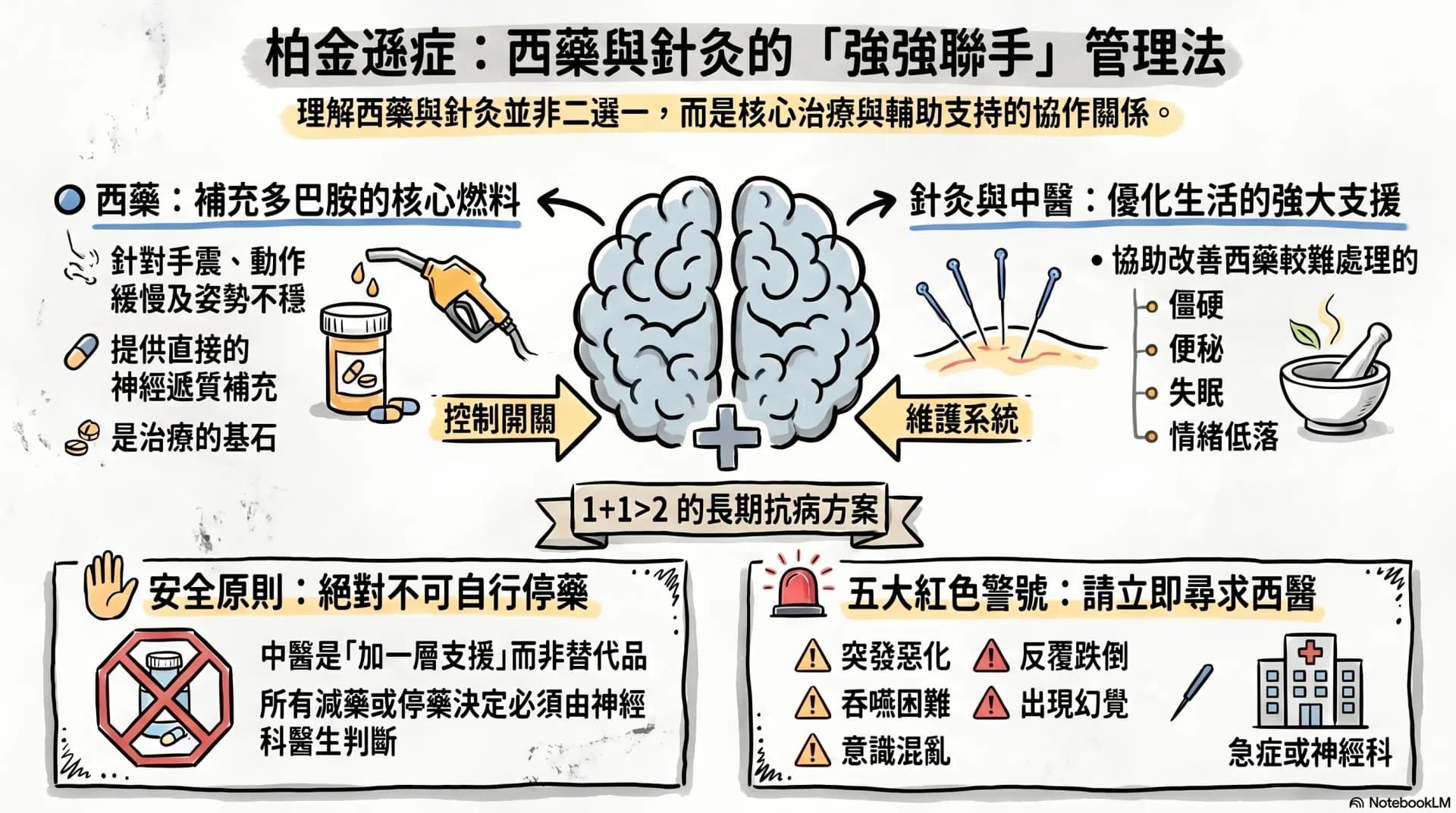
Acupuncture for Parkinson's Disease? Combining TCM and Medication
Parkinson's patients on long-term dopaminergic medication such as Madopar are often asked by family members whether acupuncture and Chinese herbs can help with tremor, stiffness, constipation or insomnia. This article compares the roles of Western medication and acupuncture-based TCM care across disease stages and TCM patterns, lays out where the two combine well, and lists the warning signs that must go to neurology or emergency care first.
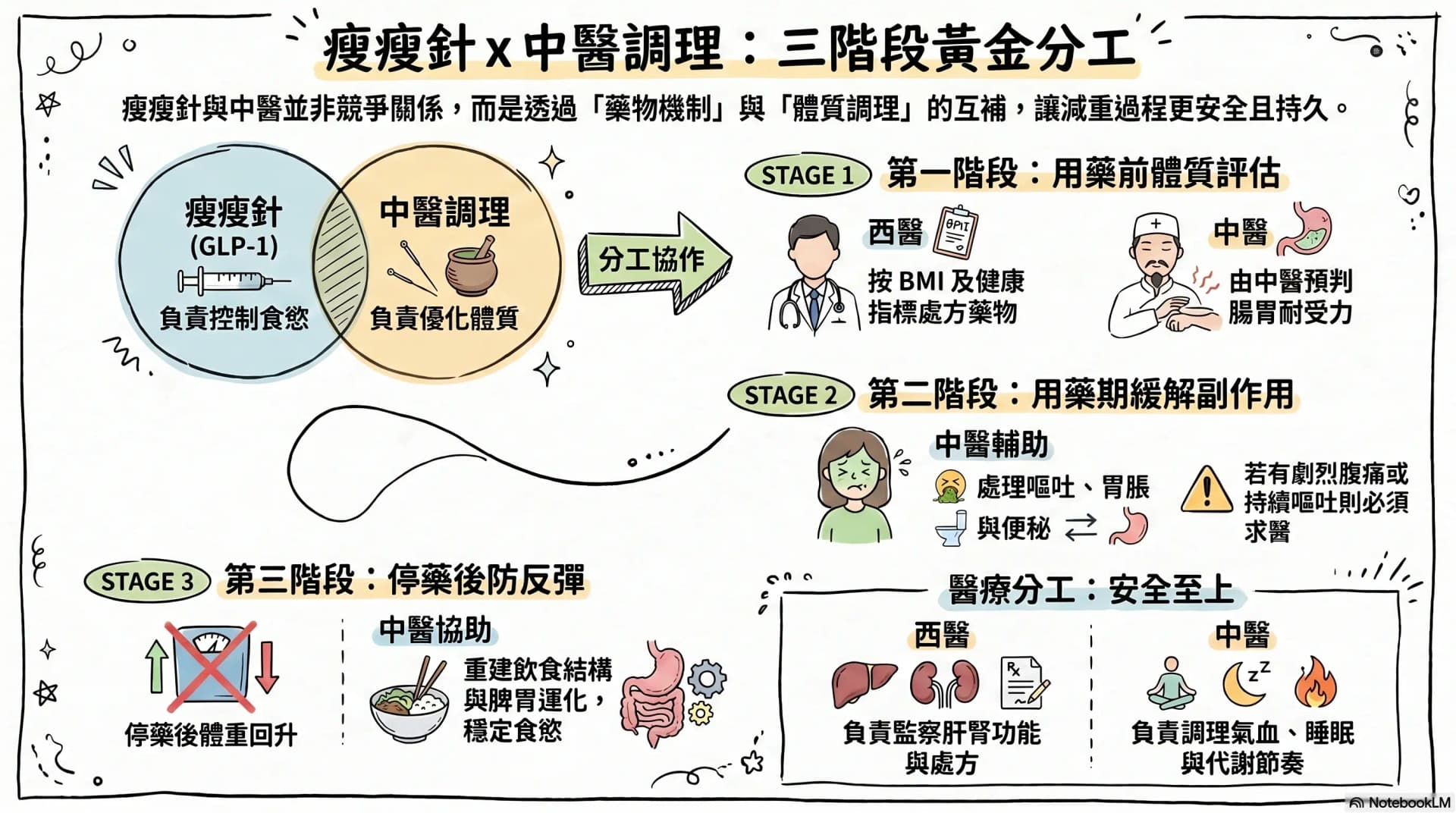
Can I See a TCM Practitioner While on a GLP-1 Injection?
GLP-1 weight-loss injections are now a major talking point in Hong Kong. This article compares the roles of prescribed GLP-1 medication and TCM care across three phases — before treatment, during treatment and after stopping — covering medical monitoring, side-effect relief and post-discontinuation rebound, and identifying scenarios that should not be managed by TCM alone.
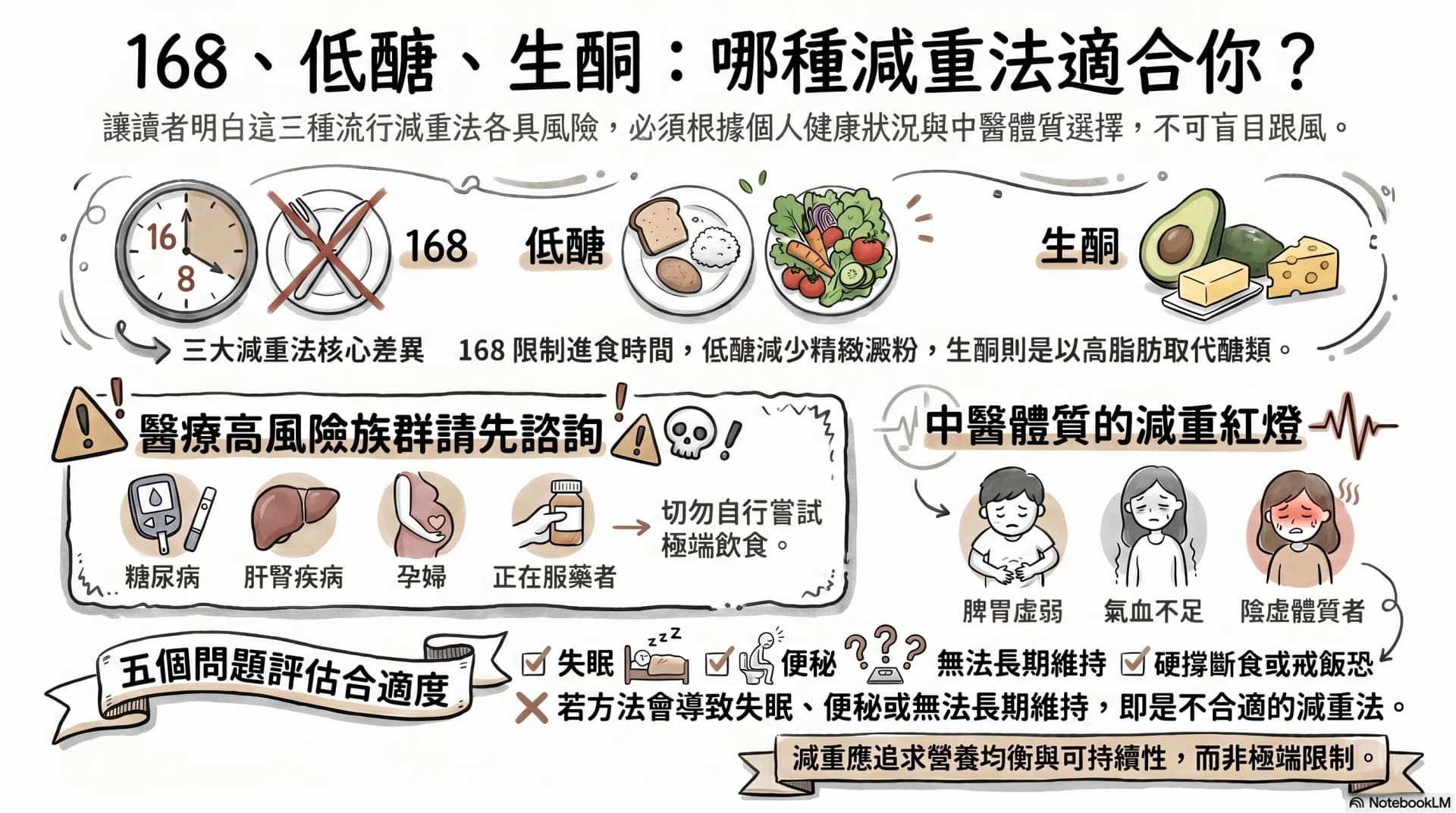
168 Fasting vs Low-Carb vs Keto: A TCM Guide to the Differences
168 fasting, low-carb diets, and keto are all popular weight-loss approaches, but they restrict different things — and their effects on digestion, sleep, blood glucose, bowels, menstruation, and mood differ accordingly. This article compares the three, explains which TCM constitutions need extra caution, and flags situations that warrant prior assessment by a Western doctor or registered dietitian.