Palpitations in Older Adults: A TCM Case and Warning Signs
An elderly family member starts to say they feel panicky, restless, or have an unsettled feeling all day, and the family swings between "is this a heart problem?" and "is grandpa just on edge?". This article uses a composite case ("Mr Lee") to illustrate how TCM assesses across three lines — heart, liver and spirit — and how families should distinguish situations that require Western emergency or specialist care from those a TCM practitioner can support.
Medical review: Dr. Chan Wing Kiu, Joanne,Registered Chinese Medicine Practitioner #009463
1-Minute Quick Answer
Recurrent palpitations in older adults may come from blood pressure swings, arrhythmia, poor sleep, medication side effects or emotional strain, often several at once. Chest pain, fainting, breathlessness or a persistently irregular heartbeat need urgent care; once ruled out, TCM can support the heart, liver and spirit (reviewed by Dr Chan Wing Kiu, CMCHK 009463).
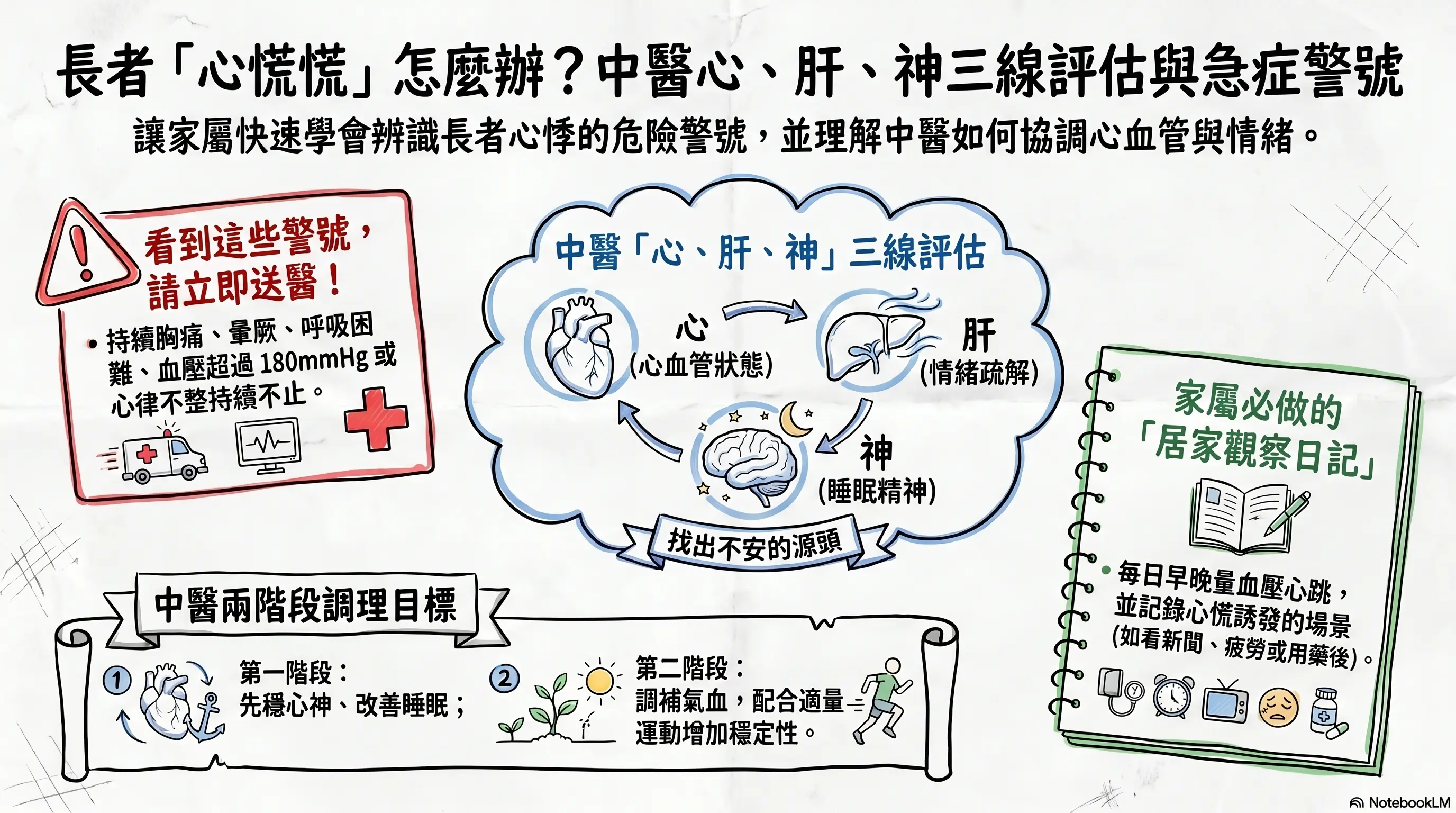 For quick reference, this image was generated by NotebookLM. Some Chinese characters may not render perfectly; we appreciate your understanding.
An elderly family member keeps saying they feel "panicky", "can't sit still", or "have an unsettled feeling all day". Watching from the side, the family swings between two impulses — take them in for tests, but risk making a fuss over nothing; reassure them not to worry, but risk missing a genuine warning sign. "Is something wrong with the heart, or is grandpa just on edge?" The uncertainty itself is wearing.
The cause is rarely a single one. It may be blood pressure fluctuation, new-onset atrial fibrillation, worsening sleep, a side effect of a recent medication change, or unresolved emotion — and often several layered together.
TCM has its own way of looking at palpitations and panicky feelings: it works across three lines — the heart, the liver and the spirit — covering cardiovascular state, emotional regulation, and sleep and mental state. In other words, "feeling panicky" may reflect what TCM calls an unsettled heart-spirit, but it can equally signal a Western-medicine pattern of arrhythmia or blood-pressure change. Distinguishing the two is what allows timely action.
This article uses Mr Lee's case of recurring palpitations to show how TCM assesses across the three lines and how to identify situations that warn of urgent Western care. The case is a clinical composite, not a single real patient.
Note: This article does not replace cardiology follow-up or emergency care. If your elderly family member develops chest pain, syncope, breathing difficulty or a persistently abnormal heartbeat, attend the emergency department immediately. Do not wait for a TCM appointment.
Mr Lee Over the Past One to Two Months
Mr Lee is 72, a retired clerical worker in generally stable health. He has known mild hypertension (one antihypertensive drug for over five years) and slightly elevated cholesterol (no medication), with regular review by his family doctor.
Over the past one to two months, the following changes appeared:
- Faster heartbeat and panicky sensation within 30 minutes of waking
- A "tightness" in the chest after his afternoon nap, but without true chest pain
- Restlessness in the evening; unable to settle through television; repeatedly getting up
- Sleep dropping from seven hours to five, with vivid dreams and early waking
- Drinking less water than usual (he felt bloated after meals)
- Home blood-pressure readings 10 to 15 mmHg above his baseline, though his doctor had not yet adjusted medication
His wife, worried about a possible cardiac issue, took him to his family doctor first. An ECG showed no clear arrhythmia or new ischaemia. The doctor asked them to check again in three days, monitor blood pressure and pulse closely, and arranged a cardiology referral. While waiting for cardiology, the family booked an appointment at Aspira TCM Clinic to ask what TCM could contribute.
Three-Line Assessment: Heart, Liver and Spirit
At the initial consultation, Dr Chan made the following observations:
| Item | Findings |
|---|---|
| Tongue | Red tongue with thin yellow coating; slightly dry edges |
| Pulse | Thin and rapid, with occasional irregular beats |
| Complexion | Slight redness over the cheekbones; sweat on the forehead |
| Temperature feel | Heat-averse; recent burning sensation in the palms |
| Hydration | Dry mouth before meals; bloated and reluctant to drink after meals |
| Bowel and urine | Slightly yellow urine; daily but firm stools |
| Mood | Restless, anxious, worried about future health |
The pattern, in TCM terms, is heart yin depletion combined with liver-qi stagnation and an unsettled heart-spirit. In plain language, age combined with sustained sleep loss has depleted fluids and weakened heart yin; worry about one's own health adds liver-qi stagnation; poor sleep then makes the heart-spirit harder to settle, and the three feed one another, producing the "all-day panicky feeling".
In other words, Mr Lee's discomfort is not simply "his heart problem getting worse" — but it cannot be dismissed either. The early presentation of atrial fibrillation, arrhythmia or a sharp blood-pressure swing can overlap with what looks like ordinary anxiety and insomnia, and only an ECG, blood-pressure log and cardiology assessment can distinguish them properly.
Warning Signs Requiring Western or Emergency Care
Whether or not your elderly family member sees a TCM practitioner, the following situations call for an immediate stop, contact with the family doctor or attendance at the emergency department:
- Persistent chest pain or pressure lasting several minutes, especially radiating to the jaw, left shoulder or left arm
- Sudden syncope, near-fainting, or unsteadiness on standing
- Shortness of breath, worse on lying down, requiring propped-up sleep
- Markedly irregular heartbeat, persistent palpitations or a pulse without a discernible rhythm
- New unilateral leg swelling
- Sudden severe headache, blurred vision, one-sided weakness or slurred speech (stroke warning)
- An abnormally high blood-pressure spike (for example systolic above 180 mmHg) with headache or vomiting
TCM is not the first option in any of these situations. Cardiovascular emergencies are measured in minutes; Western care must lead. TCM assessment and care belong after acute risk has been ruled out.
TCM Care in Phases
Once the family doctor confirmed that there was no acute danger, Dr Chan set out a phased plan.
Phase 1: Steady the heart-spirit alongside Western monitoring (weeks 1 to 3)
- Herbal direction: nourishing heart yin and calming the spirit, with liver-qi soothing where indicated (the precise formula is decided by pattern differentiation; this article does not list specific formulas or doses)
- Acupuncture direction: points such as Shenmen, Neiguan and Taichong for calming the spirit and soothing the liver
- Pace: weekly
- Daily habits: less strong tea, coffee and stimulating drinks; avoiding sustained exertion; no news or stimulating programmes within the hour before bed
- Western parallel: home blood-pressure and pulse measurement morning and evening, recorded; mindful daily hydration to avoid dehydration; continuing the prescribed antihypertensive; awaiting cardiology review
The aim of this phase is not to "cure" the palpitations immediately. The first step is to settle the heart-spirit and to stop sleep being broken every night, so that fatigue does not push blood pressure higher.
Phase 2: Replenish qi and blood, add gentle activity (weeks 4 to 8)
- Herbal direction: building on yin-nourishing and calming, adding qi and blood replenishment
- Acupuncture direction: adding Zusanli and Sanyinjiao to support qi and blood
- Pace: every two weeks
- Daily habits: a 20-minute walk or gentle exercise daily, adjusted to individual stamina; afternoon naps capped at 30 minutes
- Western parallel: adjusting pace based on cardiology findings; completing a 24-hour Holter monitor or echocardiogram on schedule if arranged
Daily Care for Heart and Mind: What Family Members Can Do
In the end, palpitations in an elderly family member are often a two-line concern — body and emotion together — and the family's role is not only to accompany them to clinic but to observe at home. Useful things to track:
- Twice-daily blood-pressure and pulse readings, with time and context (just woken, after meals, after emotion)
- Triggers: while watching the news, when thinking of children, after taking medication, after a tiring day — these clues help the doctor
- Sleep pattern: time to fall asleep, number of night wakings, time of early waking
- Appetite, bowel habits and water intake
- Mood changes: noticeably more worry, irritability or restlessness compared with baseline
Practical day-to-day care for most stable elderly people:
- Drink water in small frequent sips — warm water or weak tea — rather than a large cold glass at once
- Keep room temperature and ventilation steady; avoid prolonged exposure to extreme heat or cold
- Light meals; less processed and cured meat
- Reduce strong tea, coffee and caffeine-containing drinks
- Avoid heated discussion before bed; ten minutes of breathing practice or quiet music can help
- Keep walking routes well-lit and dry; reduce the risk of falling at night
Two Months On
At the two-month review, Mr Lee's situation had changed in the following ways (qualitative; individual responses vary widely):
- Palpitations were less frequent — from several times a day to occasional
- Sleep returned to six or seven hours, with fewer disturbing dreams
- Blood pressure still rose with strong emotion but came down faster than before
- Cardiology investigations showed no new abnormality; the doctor kept the existing antihypertensive and review schedule
- His wife reported that he was now happy to walk daily and felt brighter than before
Dr Chan's clinical observation: "Elderly patients with hypertension or arrhythmia are particularly prone to an unsettled heart-spirit when sleep, mood and medication change at the same time. The TCM role is to step in once Western medicine has ruled out the acute risks, and to steady heart yin, liver-qi and sleep at the same time so that things don't keep relapsing."
How Aspira TCM Clinic Coordinates Care
For an elderly patient with palpitations or panicky sensations, our first visit asks the family to bring:
- Recent family-doctor records, ECG and blood reports
- A 7- to 14-day blood-pressure and pulse log (morning and evening)
- The current medication list (antihypertensives, statins, anticoagulants and any supplements)
- Notes on triggers at home (time, place, emotion, physical response)
Dr Chan decides, on the basis of pattern differentiation, whether Chinese herbs or acupuncture are appropriate, and reminds families what to watch day-to-day. The whole programme is designed to work with cardiology follow-up, never marketed as "an alternative to cardiology" or as "a guarantee of restored rhythm".
To find out whether TCM care suits your family member’s situation, contact Aspira TCM on WhatsApp (9679 2293 / wa.me/85296792293), or read more about Dr Chan Wing Kiu. If any of the warning signs above apply, please see a doctor first.
Disclaimer: This article is for general health education only and does not replace individual diagnosis, examination, prescription or treatment. The case is a clinical composite, not a single real patient. If hypertension, arrhythmia or another cardiovascular condition is already known, please continue follow-up and monitoring per medical advice; any change in medication should first be discussed with the prescribing doctor.
Disclaimer: This article is for health education and reference purposes only and does not constitute medical advice, diagnosis, or treatment. Each patient's condition is unique and treatment outcomes vary. Please consult a registered TCM practitioner or qualified healthcare professional for health concerns.
Further Reading
Hand-picked related articles and real cases to read next.
Insomnia in Older Adults: Waking at Night, Dreaming, Early Waking
Does sleeping less in older age always mean insomnia? Waking easily at night, vivid dreaming, early waking, and waking tired may relate to nocturia, pain, mood, medication, sleep apnoea, or sleep habits. This article explains common causes, warning signs, and how TCM interprets insomnia patterns such as heart-spleen deficiency, disharmony between heart and kidney, and liver fire.
Dizziness in Older Adults: ENT, Cardiology, or TCM?
Dizziness in older adults can mean vertigo, near-blackout on standing, unsteady walking, or a heavy foggy head. Causes range from BPPV and blood-pressure fluctuation to arrhythmia, anaemia, low blood sugar, medication effects, stroke warning signs, and qi-blood deficiency. This article explains which situations suit ENT, cardiology, general medicine, emergency care, or TCM.
Leg Swelling in Older Adults: Is It Heart Failure? 6 Causes
When an elderly parent's legs swell up, the first thought is usually "something's wrong with the heart". Heart failure is indeed one common cause, but leg swelling in older adults can come from many other directions. This article lays out six common causes — heart failure, kidney disease (including diabetic nephropathy), liver cirrhosis and low albumin, venous return problems, medication side effects, and TCM "deficiency-type oedema" — and adds six red flags that warrant seeing a Western doctor right away, plus three things carers can start doing today.
Want to learn more? WhatsApp us for a free consultation
Book via WhatsAppExplore our full range of treatments: Traditional TCM Services
Related Articles
Father Fell 3 Times in 6 Months: A TCM and Physiotherapy Case
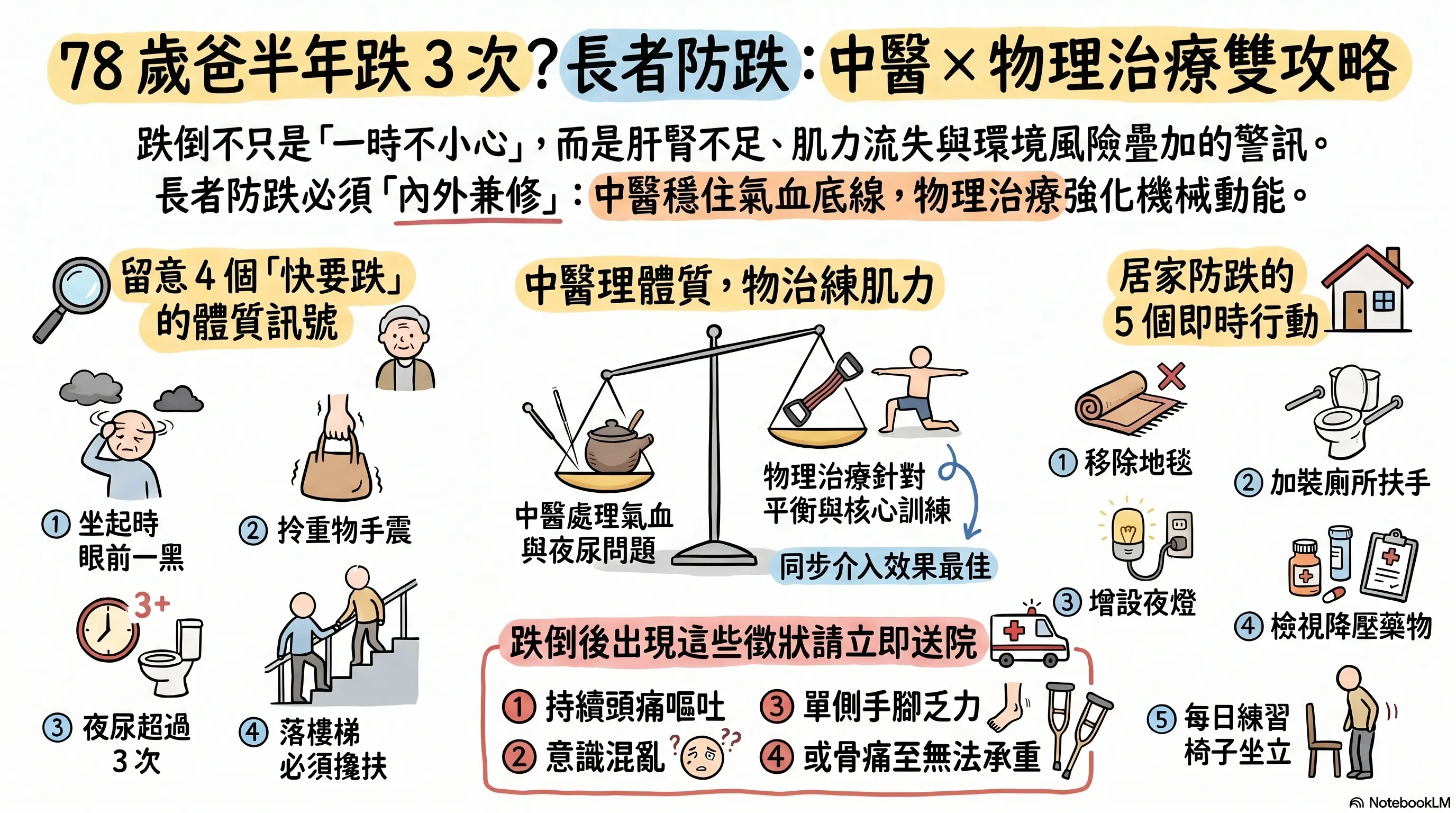
Mr Lee, aged 78, has fallen twice in his living room and once in the bathroom over the past six months — no fractures yet, but he walks less steadily and his confidence is gone. This case study follows the typical consultation profile of Mr Lee (pseudonym), handled jointly by Dr Wong and Ms Lau (Registered Physiotherapist), explaining the multi-factor analysis (liver-kidney deficiency, medication side effects, frequent night urination, sarcopenia, home-environment risk) and a three-month plan that pairs TCM qi-and-blood care with physiotherapy, plus four "about to fall" signals carers often miss.
Poor Appetite in Older Adults on Long-Term Medication and Supplements? A TCM Case Study on Spleen-Stomach Care Under Polypharmacy
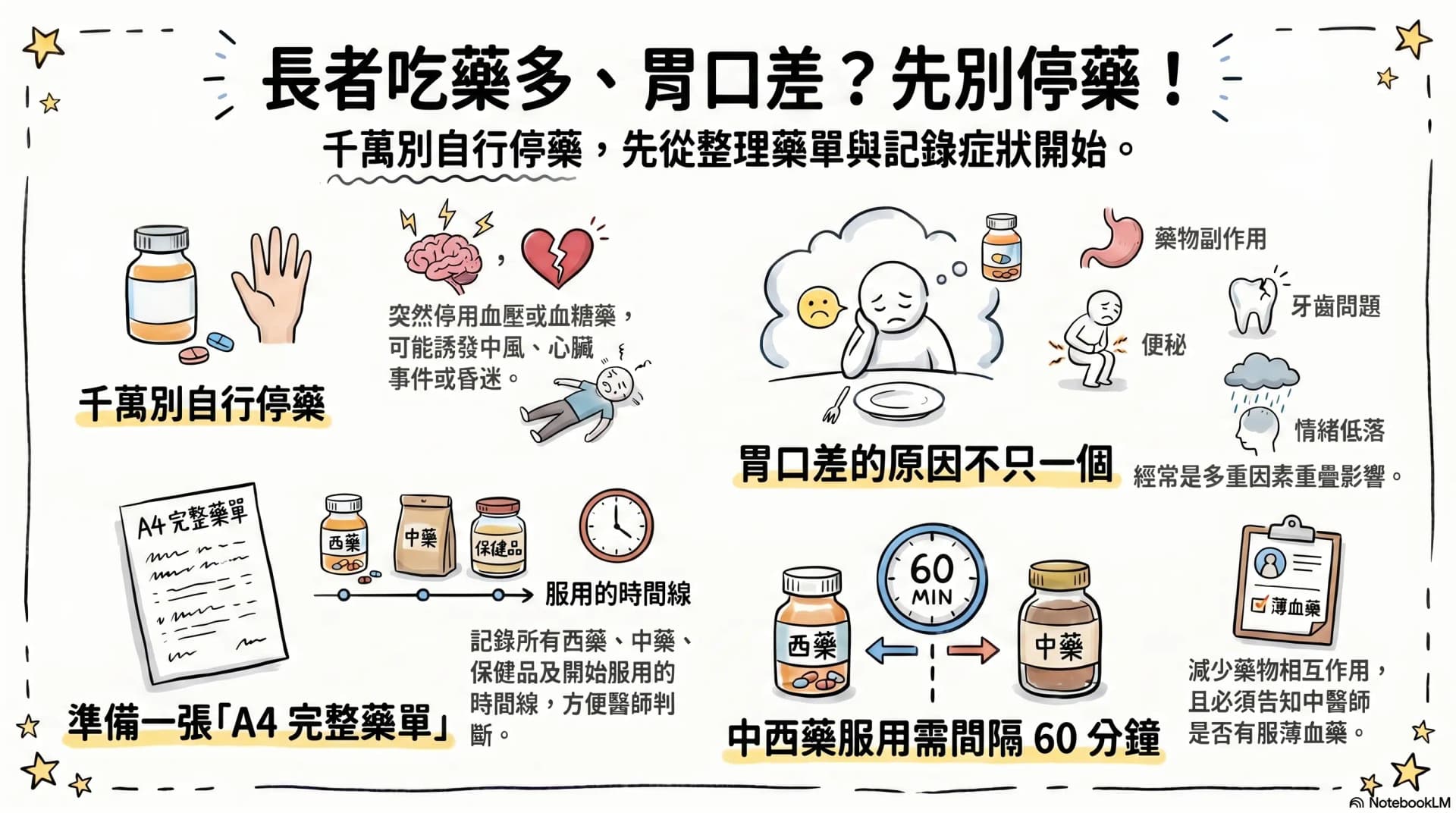
Several chronic-disease pills, then poor appetite, early fullness and daytime tiredness — family carers naturally wonder whether some of those medications are "harming the stomach". Stopping them on your own, however, can destabilise blood pressure, blood sugar and cardiovascular risk. This case of a 76-year-old maps out 7 possible causes, 6 things family carers should do, the safety conditions for TCM (60-minute spacing between Western and Chinese medicine), and the spleen-stomach directions that TCM can offer.
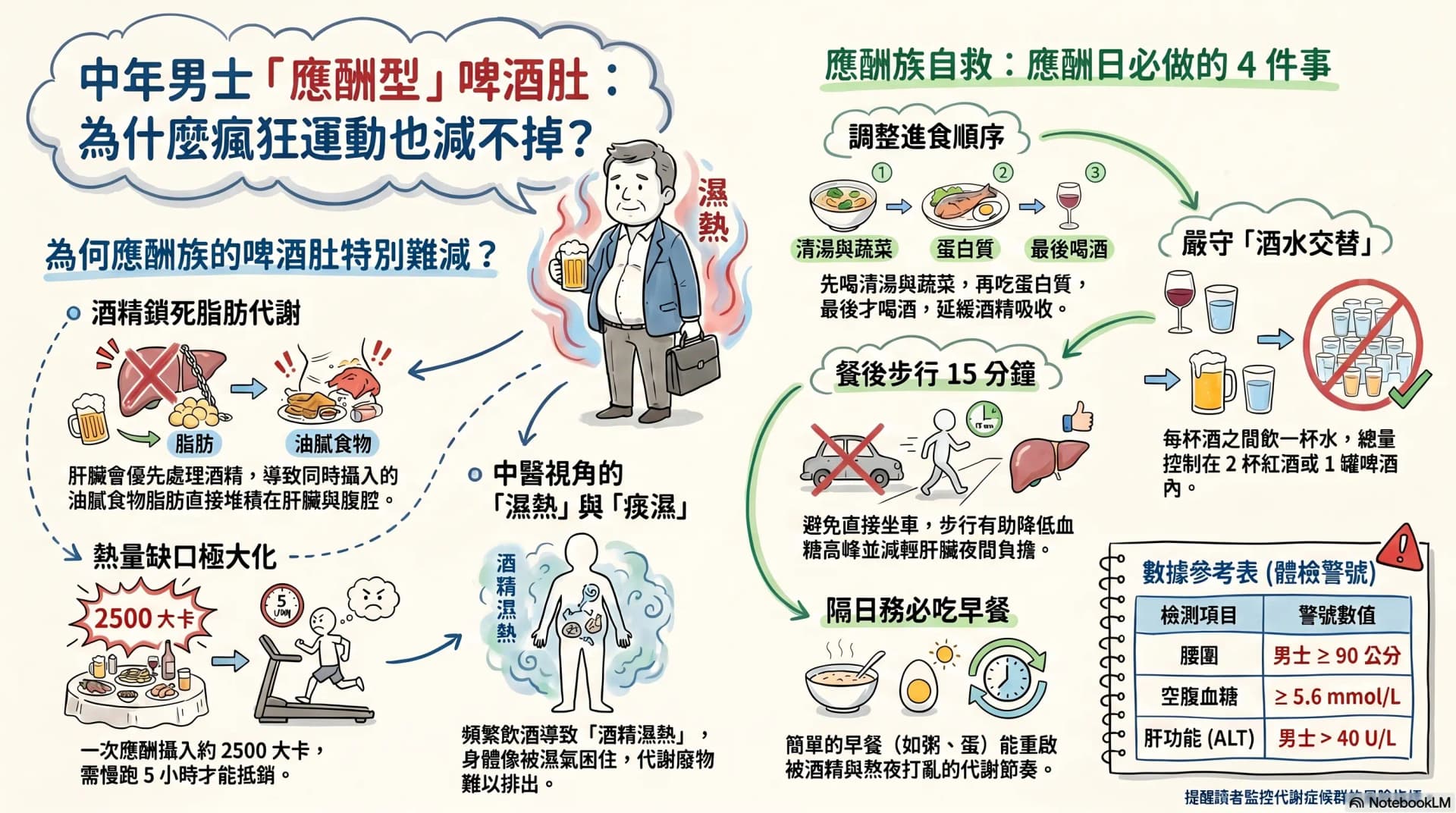
Middle-Aged Beer Belly That Won't Shrink? A TCM Case Study on Business Entertainment and Visceral Fat
Frequent client dinners, late-night meals and rising alcohol intake, yet the waistline keeps growing and the annual check-up flags borderline metabolic syndrome. This case study of a 48-year-old explains why visceral fat accumulates so readily in middle-aged men, how alcohol fuels the fatty-liver pathway, and how TCM evaluates four parallel drivers: damp-heat, phlegm-damp, late eating and stress-induced liver qi stagnation.