Father Fell 3 Times in 6 Months: A TCM and Physiotherapy Case
Mr Lee, aged 78, has fallen twice in his living room and once in the bathroom over the past six months — no fractures yet, but he walks less steadily and his confidence is gone. This case study follows the typical consultation profile of Mr Lee (pseudonym), handled jointly by Dr Wong and Ms Lau (Registered Physiotherapist), explaining the multi-factor analysis (liver-kidney deficiency, medication side effects, frequent night urination, sarcopenia, home-environment risk) and a three-month plan that pairs TCM qi-and-blood care with physiotherapy, plus four "about to fall" signals carers often miss.
Medical review: Dr. Wong Ka Fai,Registered Chinese Medicine Practitioner #009985
1-Minute Quick Answer
Recurrent falls in older adults rarely have a single cause: orthostatic hypotension, medication, night urination, sarcopenia, constitution and home hazards often combine. In this case, TCM care alongside physiotherapy strength and balance training led to no falls in 3 months. Headache, vomiting or inability to bear weight after a fall need hospital care (reviewed by Dr Wong Ka Fai, CMCHK 009985).
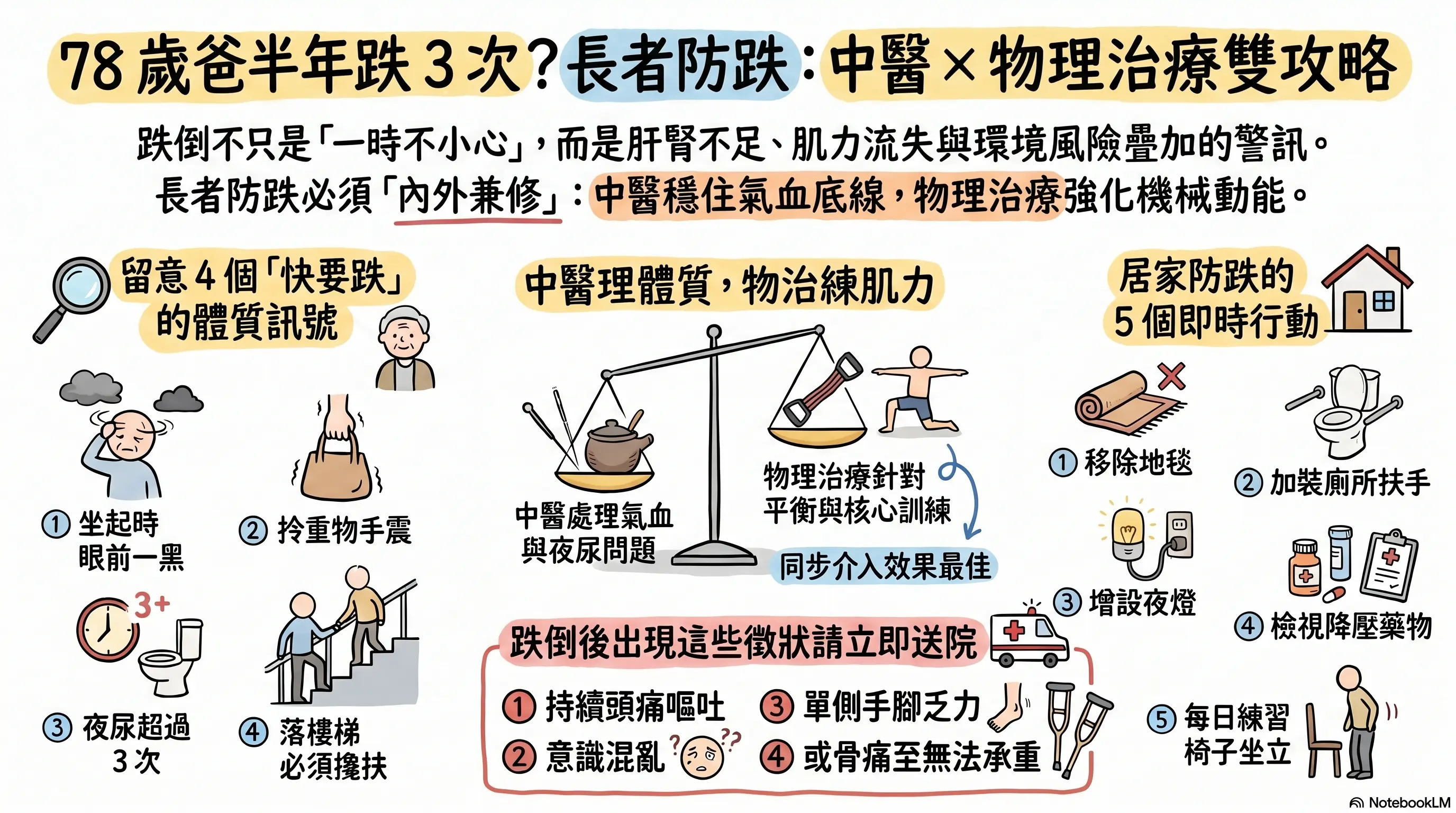 For quick reference, this image was generated by NotebookLM. Some Chinese characters may not render perfectly; we appreciate your understanding.
"Dad has fallen three times in six months. The last fall was in the bathroom — he hit the basin. No fractures, thankfully, but he is so frightened he doesn't dare go to the bathroom alone." This is how a daughter opened the consultation, bringing 78-year-old "Mr Lee" (pseudonym) to our clinic.
The truth is, an older person's fall is never just one thing. Liver-kidney deficiency, qi-and-blood deficiency, medication side effects, frequent night urination, sarcopenia, declining vision and home-environment risk often stack up together. Addressing fall risk along a single axis is therefore not enough — TCM addresses the body, physiotherapy addresses strength and balance, and only by running both in parallel can recurrent fall risk be meaningfully lowered.
This case study follows the typical consultation profile of Mr Lee — handled jointly by Dr Wong (TCM) and Ms Lau (Registered Physiotherapist) — and describes a three-month cross-disciplinary plan. The case is a composite of common clinical features rather than a single real patient.
Note: After a fall, if persistent headache, repeated vomiting, confusion, bone pain that cannot bear weight, one-sided limb weakness or slurred speech, or inability to walk normally appears, attend the emergency department immediately for head imaging and orthopaedic assessment — do not wait for a TCM or physiotherapy review.
Mr Lee's Past Six Months
Mr Lee is 78, a retired office worker, living alone in an older Hong Kong flat, with his daughter visiting weekly. His history includes mild hypertension (one antihypertensive for 8 years) and mild dyslipidaemia (no medication); no diabetes.
Over the past six months, the picture changed:
- Three falls — in the living room while turning while walking, tripping on a rug edge, and slipping in the bathroom
- No fractures, but bruises on elbows and knees taking weeks to clear
- Self-report: walking less steadily, holding the rail on stairs; briefly "seeing black" on standing up
- Night urination up from once a night to 3–4 times
- Broken, dream-heavy sleep, waking around 4 am
- Drinking less than before ("the more I drink, the more I have to get up")
- Diet: white congee, rice with vegetables, eggs — light on meat
His daughter worried this might be "early dementia" and brought him first to his family doctor for basic checks. Sit-to-stand blood pressure dropped 25 mmHg (consistent with mild orthostatic hypotension); the ECG showed no new abnormality. Blood tests were ordered — glucose, renal function, electrolytes, vitamin D — and the doctor advised slowing his rising movement, planning to review whether to adjust the antihypertensive at the next visit.
The family doctor also suggested combining physiotherapy and TCM for fall-risk care. Through a friend, the daughter booked Dr Wong at Aspira TCM Clinic and arranged a parallel assessment with Ms Lau, our Registered Physiotherapist.
Why Did Mr Lee Fall? A Multi-Factor View
A fall is rarely a single cause. Mr Lee's case unpacks along several lines:
Western medicine angle
- Orthostatic hypotension: a ≥ 20 mmHg drop on standing, particularly easy to trigger right after getting out of bed or rising — and the "seeing black" experience that goes with it
- Medication: 8 years on the same antihypertensive without dose review against age and body change; the morning dose may be running blood pressure low
- Sarcopenia: age plus low protein intake gradually depleting quadriceps and core muscle
- Frequent night urination: disrupted sleep cycle and morning fatigue, plus more chances to fall on the way to the bathroom
- Environment: rug edges, no bathroom grab bars, weak night lighting
TCM angle
Dr Wong's assessment:
| Item | Observation |
|---|---|
| Tongue | Pale, edges with teeth marks, slight purple stasis underneath |
| Pulse | Thin and weak; weaker pulse force on all three positions |
| Complexion | Pale, with light-coloured lips |
| Temperature sense | Cold-averse, cool hands and feet |
| Drinking | Clearly low fluid intake; no thirst |
| Bowels and urine | Stool every 2 days; night urination 3–4 times |
Dr Wong's pattern reading was liver-kidney insufficiency with qi-and-blood deficiency. In simpler terms: kidney qi has gradually fallen with age, so the lower back and knees lose their warmth; qi-and-blood production is insufficient and cannot reach the brain — "the sea of marrow is not full" — which is exactly the "seeing black on standing" and the unsteady gait.
Put another way, Mr Lee's recurrent falls are not "one careless moment"; they are constitution, medication and environment all pulling on one another.
A TCM × Physiotherapy Joint Plan
Dr Wong and Ms Lau built a three-month, parallel plan around Mr Lee's situation.
TCM line (led by Dr Wong)
- Herbal direction: tonifying liver and kidney, boosting qi and nourishing blood, with a small amount of blood-moving and channel-unblocking where appropriate (specific formulas chosen by pattern; this article does not list formulas or doses)
- Acupuncture direction: Baihui, Zusanli, Sanyinjiao, Taixi, Shenshu, Ganshu and surrounding areas
- Cadence: once a week for the first 4 weeks, then every 2 weeks
- Lifestyle: at least 1.5 litres of fluid a day, add protein to meals, aim for sleep before 11 pm
Physiotherapy line (led by Ms Lau)
- Initial assessment: Berg Balance Scale (BBS), quadriceps and core strength testing, Timed Up and Go test (TUG), gait observation
- Training content:
- Balance training: single-leg stance, tandem walking, light tai-chi-style movements
- Strength training: chair sit-to-stand, leg lifts, ankle dorsiflexion
- Gait training: slowed starts, broken-down turning, stair training
- Cadence: 1–2 sessions a week for the first 4 weeks; then once a week or as progress allows
- Home modification advice: remove rug edges that trip; install bathroom grab bars; add hallway night-lights; place a urine bottle by the bed to reduce night trips
Why running both lines matters
Put simply, physiotherapy addresses the "mechanical" side — strength, balance, gait. TCM addresses the "body" side — qi-and-blood, liver-kidney, night urination, sleep. Pure physiotherapy can build strength while night urination remains frequent, sleep stays broken, and overall reaction time stays low; pure TCM can settle qi-and-blood while muscle mass and balance remain inadequate. Running both together is the only response that fits the multi-factor nature of falls.
Four "About-to-Fall" Body Signals Carers Often Miss
If an older person in the household shows the following, even without a recent fall, treat them as an early "imminent fall" warning. Plan an assessment as soon as possible.
Signal 1: A Brief Blackout on Standing
Going from sitting or lying to standing, brain blood supply cannot keep up, producing a short blackout. In TCM this often corresponds to "qi-and-blood not reaching upward" or "sea of marrow not full"; in Western terms it corresponds to orthostatic hypotension and may be medication-related.
Signal 2: Hand Tremor When Carrying Things
Hand tremor when carrying shopping bags or a basket signals qi-and-blood deficiency or liver-kidney decline. Over time, balance of centre of mass deteriorates and fall risk rises.
Signal 3: Night Urination Three or More Times with Broken Sleep
Broken sleep alone lowers next-day reactivity; the trips themselves are a high-fall scenario. In TCM this often corresponds to kidney-yang deficiency or loss of bladder restraint.
Signal 4: Needs to Hold the Rail Going Downstairs, Shorter Step Length
Going downstairs needs more core stability and balance than going up. Holding the rail, shortened steps and needing to watch one's feet all point to falling strength and balance.
Three-Month Observations
At the three-month follow-up, Mr Lee's changes (qualitative; individual responses vary):
- Falls: 0 in 3 months
- Walking speed improved; he felt steadier
- Night urination down from 3–4 to 1–2 times
- Sleep settled at around 6 hours; dreams less intense
- Standing blood-pressure drop reduced from 25 to 15 mmHg (family doctor decided to keep the existing antihypertensive)
- Confidence recovered — back to using the bathroom alone
- His daughter reports he is willing to walk 20–30 minutes a day
Dr Wong's clinical observation: "An older person's fall is never 'one careless moment'. When body, medications, night urination and environment have all drifted at the same time, a fall is just a matter of time. The TCM role is to steady qi-and-blood and the liver-kidney axis, paired with physiotherapy's strength and balance work, and home modification — that is what 'preventing the disease before it shows' really means."
Five Things Carers Can Start Today
- Modify the environment: remove rug edges, install bathroom grab bars, add hallway and bedside night-lights, keep the floor dry.
- Review medications with the family doctor: particularly the timing of antihypertensives, diuretics and sleeping pills — do not stop on your own, but ask the family doctor to re-evaluate.
- Keep a "fall / near-fall" log: each fall or near-fall, note time, place, what happened and how it felt. Bring it to consultations.
- Do chair sit-to-stands together: 2–3 times a day, 10–15 reps — the simplest at-home strength training.
- Arrange periodic cross-disciplinary assessment: aim for at least one annual review of fall risk by the family doctor, a physiotherapist or a TCM practitioner.
When to Take the Older Person to Hospital After a Fall
Regardless of whether the person is on TCM or physiotherapy care, the following after a fall warrant immediate hospital attendance:
- Persistent headache, repeated vomiting, confusion or altered consciousness
- One-sided limb weakness, slurred speech or blurred vision (suspected stroke)
- Bone pain that cannot bear weight, deformity, inability to walk normally
- Severe bruising that is rapidly expanding
- Any unusual presentation in an older person on anticoagulants after a fall
TCM qi-and-blood care and physiotherapy strength training are considered only after acute risk has been excluded.
Aspira TCM Clinic × Physiotherapy Cross-Disciplinary Care
Before the first visit, please bring:
- Most recent family-doctor consultation record and medication list
- Records of any falls or near-falls over the past 12 months
- Recent vision and hearing assessments (where available)
- Blood-test report (glucose, renal function, electrolytes, vitamin D)
- A short description or photo of the home environment (rugs, grab bars, night-light status)
Dr Wong will determine herbal and acupuncture directions based on pattern differentiation; Ms Lau will assess balance, strength and gait and tailor a training plan; the overall principle is to fit in around family-doctor follow-up.
To find out whether TCM care with physiotherapy suits your family member’s situation, contact Aspira TCM on WhatsApp (9679 2293 / wa.me/85296792293), or read more about Dr Wong Ka Fai and our physiotherapy service. If any of the hospital warning signs above apply, please seek medical care first.
Disclaimer: This article is for general health education only and does not replace individual diagnosis, examination, medication or treatment advice. The case is a composite of common clinical patterns, not a single real patient. If the older person has known hypertension, arrhythmia, diabetes or other conditions, or is on antihypertensives, anticoagulants or sleeping pills, follow the treating doctor's instructions for follow-up; any medication change should be discussed with the treating doctor first. After a fall, red-flag features (persistent headache, vomiting, confusion, inability to bear weight) require immediate hospital attendance.
Disclaimer: This article is for health education and reference purposes only and does not constitute medical advice, diagnosis, or treatment. Each patient's condition is unique and treatment outcomes vary. Please consult a registered TCM practitioner or qualified healthcare professional for health concerns.
Further Reading
Hand-picked related articles and real cases to read next.
Sarcopenia & Muscle Loss: Warning Signs, Tests & Prevention
If you or an older family member has weaker limbs, poorer grip strength, slower walking, or more frequent falls, it may not be ageing alone. This guide explains common causes of sarcopenia, the risks it brings, how to screen for it, and how exercise, protein intake, and early assessment may help reduce muscle loss.
Dizziness in Older Adults: ENT, Cardiology, or TCM?
Dizziness in older adults can mean vertigo, near-blackout on standing, unsteady walking, or a heavy foggy head. Causes range from BPPV and blood-pressure fluctuation to arrhythmia, anaemia, low blood sugar, medication effects, stroke warning signs, and qi-blood deficiency. This article explains which situations suit ENT, cardiology, general medicine, emergency care, or TCM.
Osteoporosis Without Pain: Silent Bone Loss and Fall Risk
Osteoporosis itself produces no symptoms — and is often dismissed as "nothing to worry about if it does not hurt". Once bone has thinned enough, a minor fall, a cough, or even bending forward can fracture it. This article draws on Department of Health resources to list the "silent warning signs", explains when older adults should arrange a bone-density check, and describes how TCM — drawing on the principles of the kidney governing bone and the spleen governing muscle — can support fall prevention alongside Western treatment.
Want to learn more? WhatsApp us for a free consultation
Book via WhatsAppExplore our full range of treatments: Traditional TCM Services
Related Articles
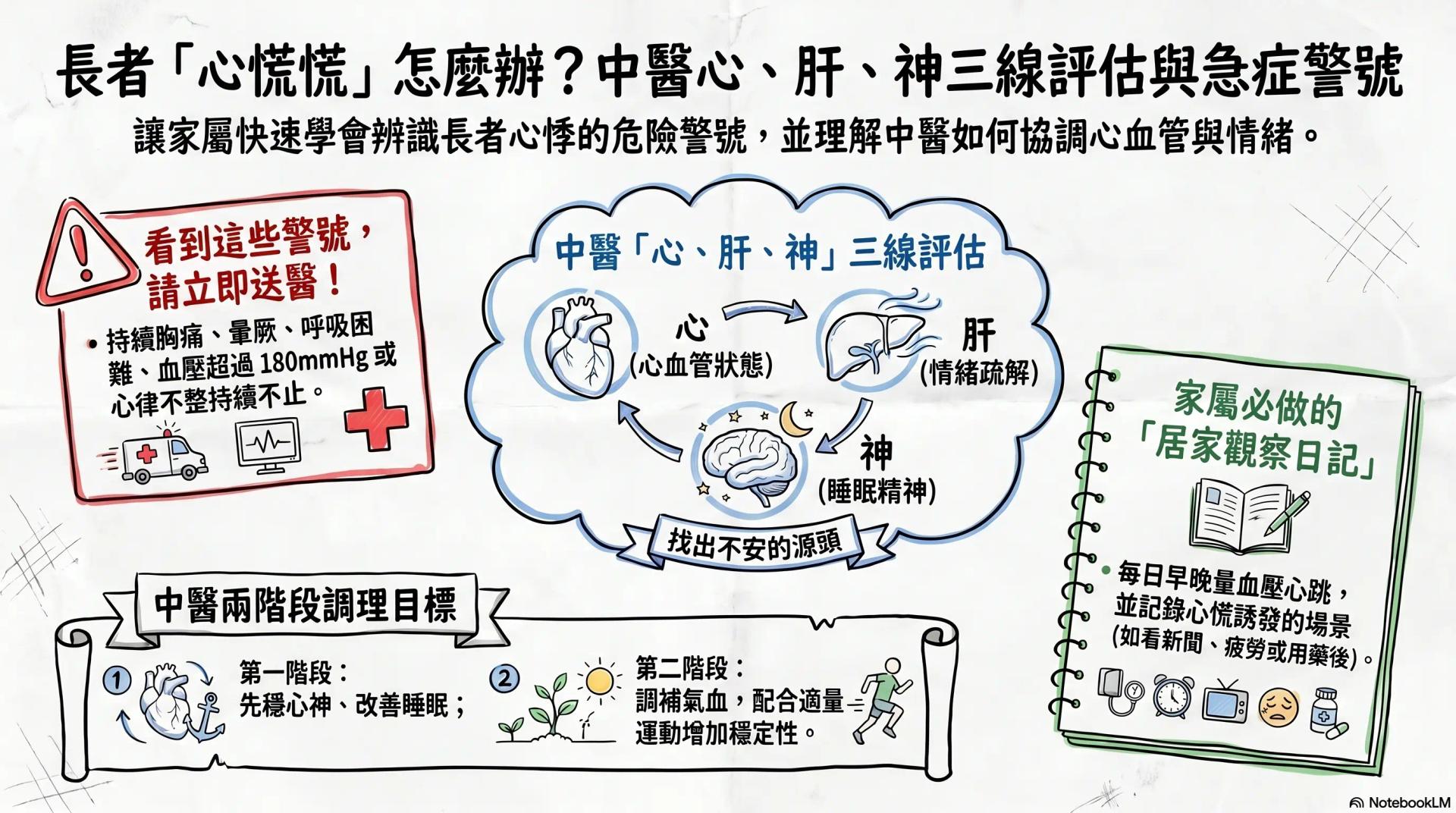
Palpitations in Older Adults: A TCM Case and Warning Signs
An elderly family member starts to say they feel panicky, restless, or have an unsettled feeling all day, and the family swings between "is this a heart problem?" and "is grandpa just on edge?". This article uses a composite case ("Mr Lee") to illustrate how TCM assesses across three lines — heart, liver and spirit — and how families should distinguish situations that require Western emergency or specialist care from those a TCM practitioner can support.
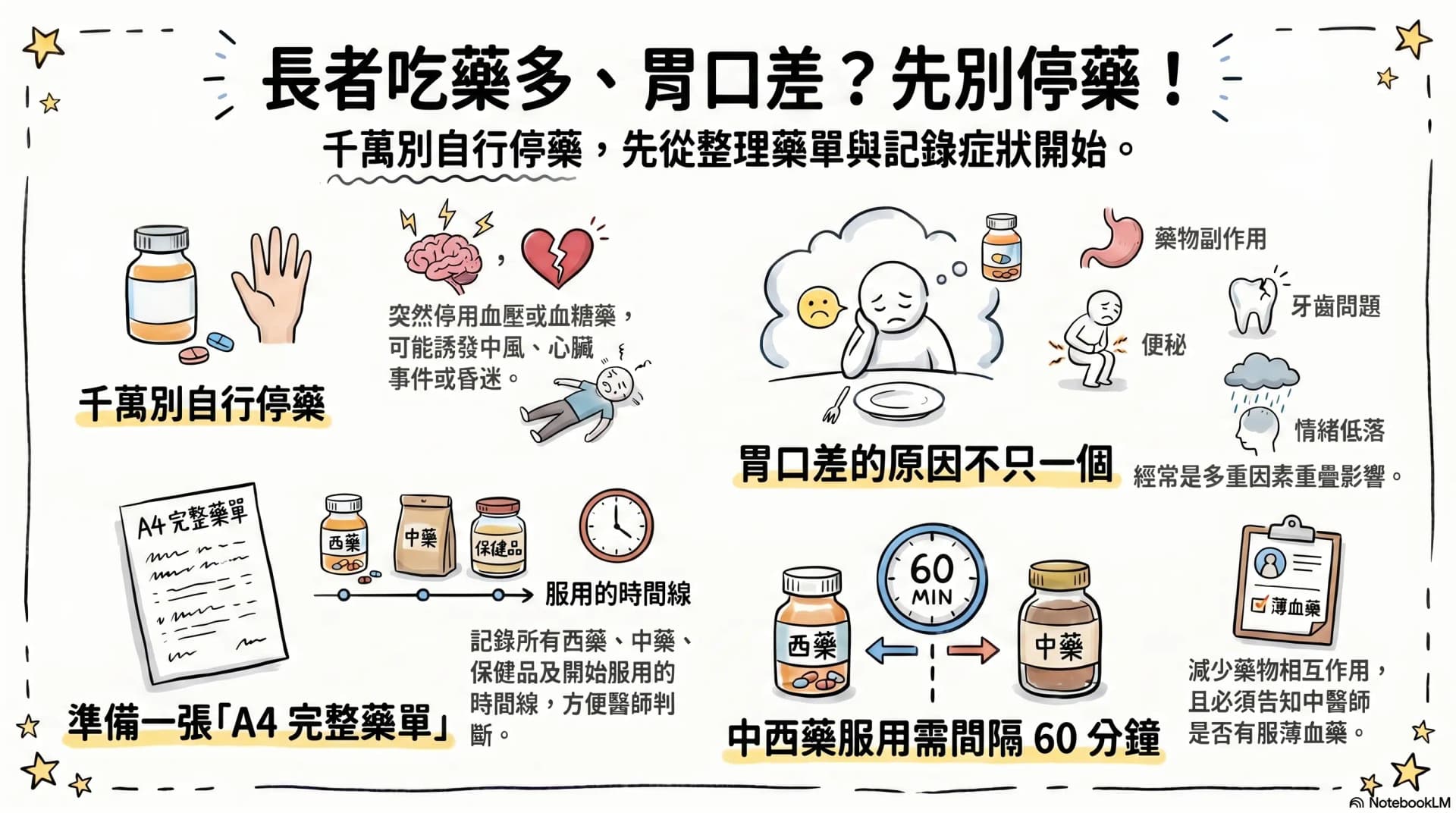
Poor Appetite in Older Adults on Long-Term Medication and Supplements? A TCM Case Study on Spleen-Stomach Care Under Polypharmacy
Several chronic-disease pills, then poor appetite, early fullness and daytime tiredness — family carers naturally wonder whether some of those medications are "harming the stomach". Stopping them on your own, however, can destabilise blood pressure, blood sugar and cardiovascular risk. This case of a 76-year-old maps out 7 possible causes, 6 things family carers should do, the safety conditions for TCM (60-minute spacing between Western and Chinese medicine), and the spleen-stomach directions that TCM can offer.
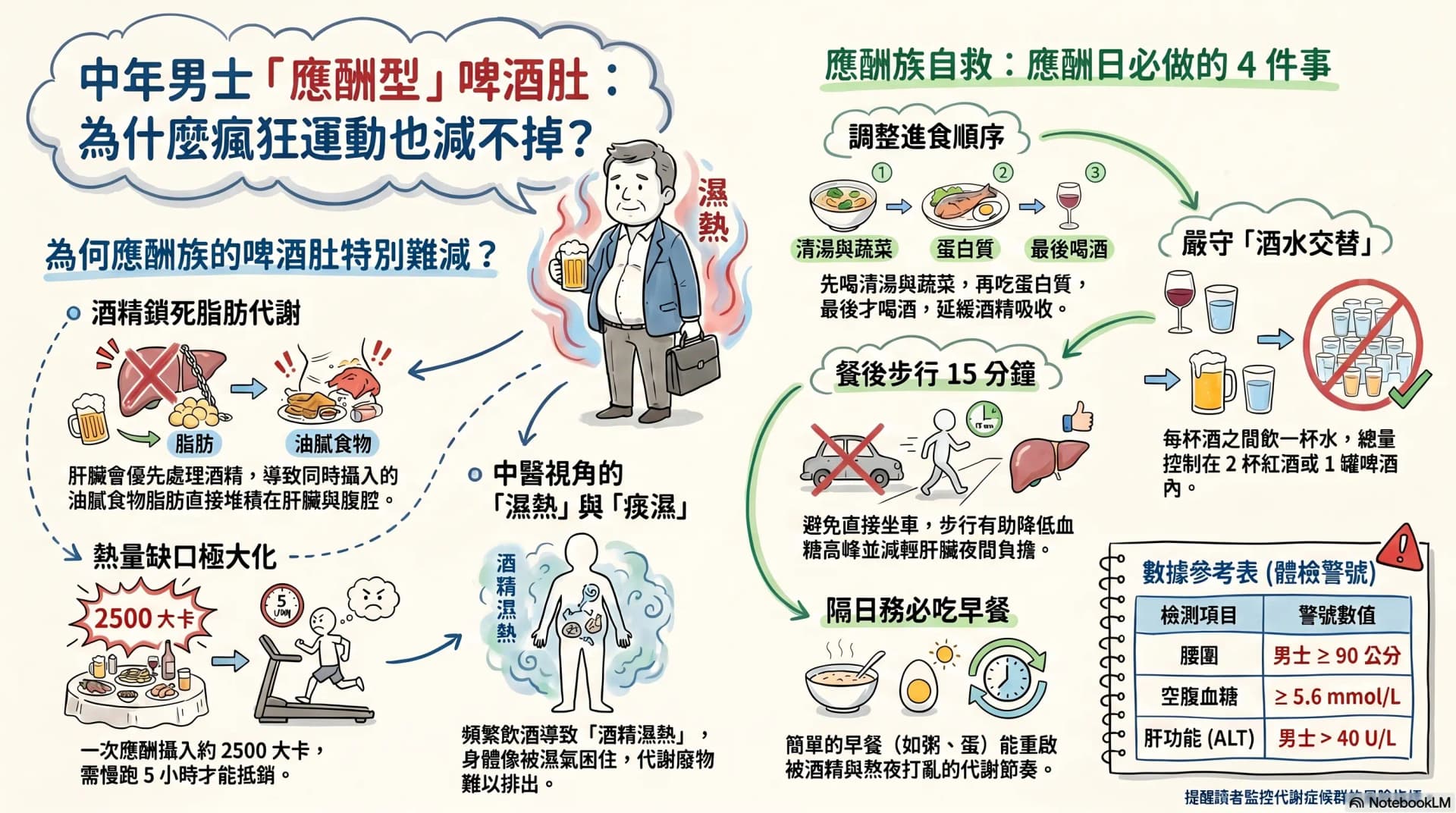
Middle-Aged Beer Belly That Won't Shrink? A TCM Case Study on Business Entertainment and Visceral Fat
Frequent client dinners, late-night meals and rising alcohol intake, yet the waistline keeps growing and the annual check-up flags borderline metabolic syndrome. This case study of a 48-year-old explains why visceral fat accumulates so readily in middle-aged men, how alcohol fuels the fatty-liver pathway, and how TCM evaluates four parallel drivers: damp-heat, phlegm-damp, late eating and stress-induced liver qi stagnation.