Osteoporosis Without Pain: Silent Bone Loss and Fall Risk
Osteoporosis itself produces no symptoms — and is often dismissed as "nothing to worry about if it does not hurt". Once bone has thinned enough, a minor fall, a cough, or even bending forward can fracture it. This article draws on Department of Health resources to list the "silent warning signs", explains when older adults should arrange a bone-density check, and describes how TCM — drawing on the principles of the kidney governing bone and the spleen governing muscle — can support fall prevention alongside Western treatment.
Medical review: Dr. Chan Wing Kiu, Joanne,Registered Chinese Medicine Practitioner #009463
1-Minute Quick Answer
Osteoporosis has no symptoms, so no pain does not mean no problem; a minor fall, a cough or even bending can cause a fracture. Postmenopausal women over 50, men over 65, anyone with a low-impact fracture or on long-term steroids should consider a bone density (DEXA) scan (reviewed by Dr Chan Wing Kiu, CMCHK 009463).
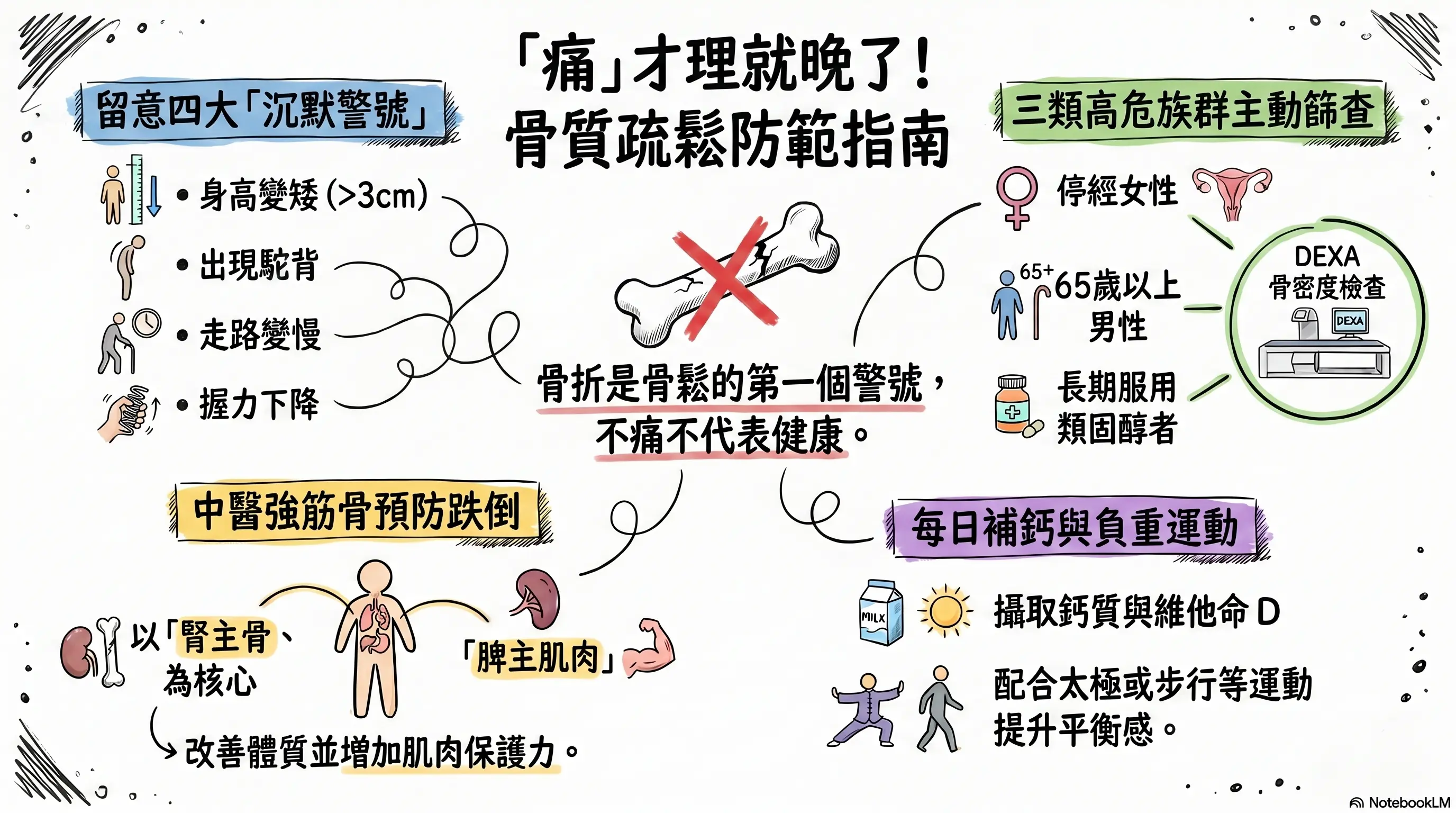 For quick reference, this image was generated by NotebookLM. Some Chinese characters may not render perfectly; we appreciate your understanding.
"Mum has never complained of back pain — how could she have osteoporosis?" "She has not fallen or broken anything, so she does not need a bone-density scan, right?" "She is just getting old; walking a bit slower is nothing special." These are common Hong Kong family conversations — and they are also the reason osteoporosis is so often missed.
The Department of Health's Elderly Health Service is clear that osteoporosis itself causes no symptoms. Pain, when it occurs, usually means a fracture has already happened. The most common fracture sites are the femur, the spine and the forearm; spinal bones can collapse over time without any impact, giving rise to a stooped back, kyphosis and loss of height. Waiting for "pain" is waiting too long.
This article will help older adults and their families understand: why osteoporosis can be entirely painless; what "silent warning signs" families should watch for; who and at what age should arrange a bone-density scan; what Western medicine leads on and where TCM can support; and what daily steps in diet, exercise and home safety can begin today.
Note: This article is general education for older adults and family carers. It does not apply to an acute fall, a suspected fracture or signs of spinal nerve compression — those need immediate medical attention. Any change in osteoporosis medication, anti-coagulants or hormonal therapy must be discussed first with the prescribing doctor.
Why "No Pain" Does Not Mean "No Danger"
Osteoporosis is a disease of bone metabolism: bone density falls, the structure becomes brittle, but the bone itself has few pain fibres so the early stage is not felt at all.
Bone turnover is a lifelong process. Peak bone mass is reached at 20–30 years; from about 35 the loss is around 1–2% per year, and after menopause women can lose 5–8% per year. When the bone-density T-score reaches –2.5 or lower, the WHO criterion for osteoporosis is met.
The greatest risk is not "the bone is brittle" — it is that the first sign is often the fracture itself. Osteoporosis is called the "silent epidemic" because bone strength slips quietly away until a minor fall, a cough or bending forward triggers a break.
For older adults, this is often the turning point in mobility and independence:
- Vertebral compression fracture: no obvious trauma needed — back pain can begin after bending or lifting, with later loss of height and a stooped posture
- Hip fracture: usually requires surgery and prolonged rehabilitation; first-year mortality after a first hip fracture can reach 20–30%
- Forearm fracture: a common result of catching a fall with the hand, with a lasting impact on self-care
The Elderly Health Service's 2023 statistics show that among 35,000-plus community-dwelling adults aged 65 and over, 15.7% had fallen at least once in the past year, with about 9.8% sustaining a fracture from the fall. The combined effect of osteoporosis and falls is one of the most common reasons older adults lose independence.
The Silent Warning Signs — Not Pain, but Worth Noticing
If families want to catch the picture early, the following non-pain signals are a useful starting point. None of them is diagnostic on its own, but each warrants a conversation with a family doctor or the Elderly Health Centre.
1. Loss of height
A drop of 1–2 cm year on year, or 3 cm or more compared with the height at age 30. This usually reflects subtle vertebral compression.
2. A stooped back, a rounding spine
Especially when the person cannot straighten up easily in the morning, or when the side profile shows a clear curve.
3. Walking more slowly
Not because of joint pain or weakness, but a quiet, unnoticed slowing. Walking speed reflects lower-limb strength and skeletal support.
4. Loss of grip strength
Bottle caps, wringing a towel and turning taps become noticeably hard. Grip strength is one of the international indicators of frailty.
5. Easy bruising on bumping into furniture
Large bruises appear from contact the person did not register as significant. This can reflect a fall in balance and reaction speed and a rising fall risk.
6. More nocturia and clumsy morning movements
More night-time trips to the toilet and slower morning movement raise the risk of night-time falls — and research shows night-time falls produce a higher proportion of serious fractures than daytime falls.
Who Should Arrange a Bone-Density Scan
Combining guidance from the Elderly Health Service and the International Osteoporosis Foundation, the following groups should consider a DEXA scan proactively rather than waiting for pain or a fracture:
- Post-menopausal women (usually from age 50)
- Men aged 65 or older
- People of small build
- A family history of osteoporosis or hip fracture
- Previous fragility fracture from minor impact
- Long-term steroid use
- Long-term smoking or heavy drinking
- Hyperthyroidism or long-standing endocrine disturbance
- Women who entered menopause early after chemotherapy, radiotherapy or surgery
DEXA is the standard tool to diagnose osteoporosis and to monitor treatment. Ultrasound devices are screening only and are not diagnostic.
"Bone Atrophy" in TCM — The Roles of Kidney, Spleen and Liver
TCM does not have the modern term "osteoporosis", but the classics describe "bone atrophy" and "bone bi" — brittle, easily broken bones, sore lumbar and knees, and weakness on walking. TCM looks at bone health through three organ systems.
The kidney governs bone and produces marrow
The TCM "kidney" is not the Western kidney alone but a system covering reproduction, the endocrine axis, growth and bone metabolism. Full kidney essence and abundant marrow mean strong bone. For osteoporosis in older adults, the TCM direction is often to tonify the kidney and replenish essence — a direction, not a fixed prescription.
The spleen governs the muscles and transforms qi and blood
The muscles around the bones are the first line of defence against fracture. A strong spleen-stomach gives muscles the material to repair and grow; weak spleen-stomach often shows as low muscle mass, falling grip strength and reduced bony protection.
The liver governs the sinews
The "sinews" include tendons, ligaments and parts of connective tissue. With ample liver blood the sinews are pliable and can "catch" a fall at the last moment. If an older adult also has dry eyes, cramps and easy irritability, liver blood may be insufficient.
It must be said clearly: TCM does not replace a DEXA scan or Western anti-resorptive medication. TCM's role is supportive — working on overall constitution and muscle resilience. The specific plan must be decided by a registered TCM practitioner in person.
When Western Medicine Leads, When TCM Can Support
| Situation | More appropriate lead |
|---|---|
| Confirmed osteoporosis (DEXA T-score ≤ -2.5) | Western lead; anti-resorptives (e.g. bisphosphonates, SERMs, monoclonal antibodies) or anabolic agents per doctor |
| Acute fall, suspected fracture | Immediate Western emergency care with X-ray or MRI |
| Already on Western medication, wanting to improve constitution and reduce side-effects | Integrative; TCM tonifies kidney and strengthens sinews while watching for interactions |
| High-risk group, silent warnings present | Arrange DEXA first; start diet, exercise and home-safety changes in parallel |
| Long-standing weak lumbar and knees, slow recovery from a fall, reduced stamina | TCM can support along tonify-kidney-replenish-essence and strengthen-spleen-and-qi lines, alongside physiotherapy |
A specific reminder: older adults on long-term anti-resorptives (such as bisphosphonates) must inform their dentist before any dental procedure — these medications are associated with a rare but serious complication of jaw osteonecrosis and require professional coordination.
Daily Steps That Help
Whether or not osteoporosis is confirmed, the following daily steps help bone health.
Diet
- Calcium 1,000–1,200 mg daily: milk, cheese, yoghurt (low-fat or skimmed preferred), white-bait, dried small fish, dried shrimp, firm tofu, calcium-fortified soy milk, dark leafy vegetables (Chinese cabbage, broccoli, choy sum), almonds and sesame
- Vitamin D 800–1,000 IU daily: egg yolk and vitamin-D-fortified milk; the best source is 15 minutes of daily sun exposure (avoiding sunburn)
- Reduce high-salt foods: salted fish, soy sauce and processed foods increase calcium loss
- Limit coffee, strong tea, cola and other caffeine- or phosphate-heavy drinks
Exercise
- Weight-bearing exercise 3+ times a week, 30–60 minutes: walking, tai chi, calisthenics, dance, climbing stairs
- Avoid high-impact activities (jumping, vigorous ball sports) if osteoporosis is confirmed, after consulting the doctor
- Balance training: tai chi and ba-duan-jin are especially valuable for older adults, improving balance and cardio-respiratory fitness together
Home safety
Following the Elderly Health Service's "Fall Prevention Tips":
- Keep walkways clear, floors dry, with no clutter
- Install grab bars in the bathroom; place non-slip mats; use non-slip stickers in the bathtub
- Ensure adequate lighting in the kitchen and bathroom; install night-lights
- Avoid wearing slippers outdoors; choose non-slip shoes
- Wear well-fitting clothes; avoid loose or trailing fabrics
- Avoid multitasking; hold the handrail on stairs
- Use walking aids (cane, four-foot cane, walker) when needed
How Aspira TCM Clinic Evaluates Osteoporosis in Older Adults
Dr Chan will first learn the patient's age, menopausal status, family fracture history, past falls, weak lumbar and knees, changes in grip strength and gait, current mobility, the tongue-and-pulse picture, and current Western medications (especially anti-resorptives, blood thinners, steroids and antihypertensives) and supplements.
If the situation is stable and suits TCM care, the direction is set along liver-kidney insufficiency, spleen-kidney deficiency, qi-blood deficiency or meridian stasis, considering Chinese herbs, acupuncture, external therapies, pain relief and lifestyle advice. If osteoporosis is already diagnosed and on medication, the focus is "supportive management" — improving weak lumbar and knees, mobility and overall constitution. Acute falls, suspected fractures, sudden back pain or short-term height loss are referred immediately to Western care or a specialist.
If you or an older family member has a silent warning sign (height loss, stoop, falling grip strength, slower walking), or has fallen and is worried about bone loss, bring DEXA, X-ray, medication list and any fall record, and book a TCM consultation.
To find out whether TCM care suits your family member’s situation, contact Aspira TCM on WhatsApp (9679 2293 / wa.me/85296792293), or read more about Dr Chan Wing Kiu. If any of the warning signs above apply, please see a doctor first.
Disclaimer: This article is general health education only and does not replace individual diagnosis, examination, medication or treatment advice. If you have a relevant condition, ongoing symptoms or are on medication, follow your doctor's instructions for follow-up and monitoring; any medication adjustment must be discussed first with your prescribing doctor.
Disclaimer: This article is for health education and reference purposes only and does not constitute medical advice, diagnosis, or treatment. Each patient's condition is unique and treatment outcomes vary. Please consult a registered TCM practitioner or qualified healthcare professional for health concerns.
Further Reading
Hand-picked related articles and real cases to read next.
Back Pain in Older Adults: Osteoporosis, Degeneration, or Sciatica?
Back pain in older adults may arise from muscular strain, lumbar degeneration, sciatica, osteoporotic fracture, falls, or other medical conditions. This article compares common causes, red-flag signs, when investigation is needed, and how TCM may help once urgent problems are excluded.
Sarcopenia & Muscle Loss: Warning Signs, Tests & Prevention
If you or an older family member has weaker limbs, poorer grip strength, slower walking, or more frequent falls, it may not be ageing alone. This guide explains common causes of sarcopenia, the risks it brings, how to screen for it, and how exercise, protein intake, and early assessment may help reduce muscle loss.
Dizziness in Older Adults: ENT, Cardiology, or TCM?
Dizziness in older adults can mean vertigo, near-blackout on standing, unsteady walking, or a heavy foggy head. Causes range from BPPV and blood-pressure fluctuation to arrhythmia, anaemia, low blood sugar, medication effects, stroke warning signs, and qi-blood deficiency. This article explains which situations suit ENT, cardiology, general medicine, emergency care, or TCM.
Want to learn more? WhatsApp us for a free consultation
Book via WhatsAppExplore our full range of treatments: Traditional TCM Services
Related Articles
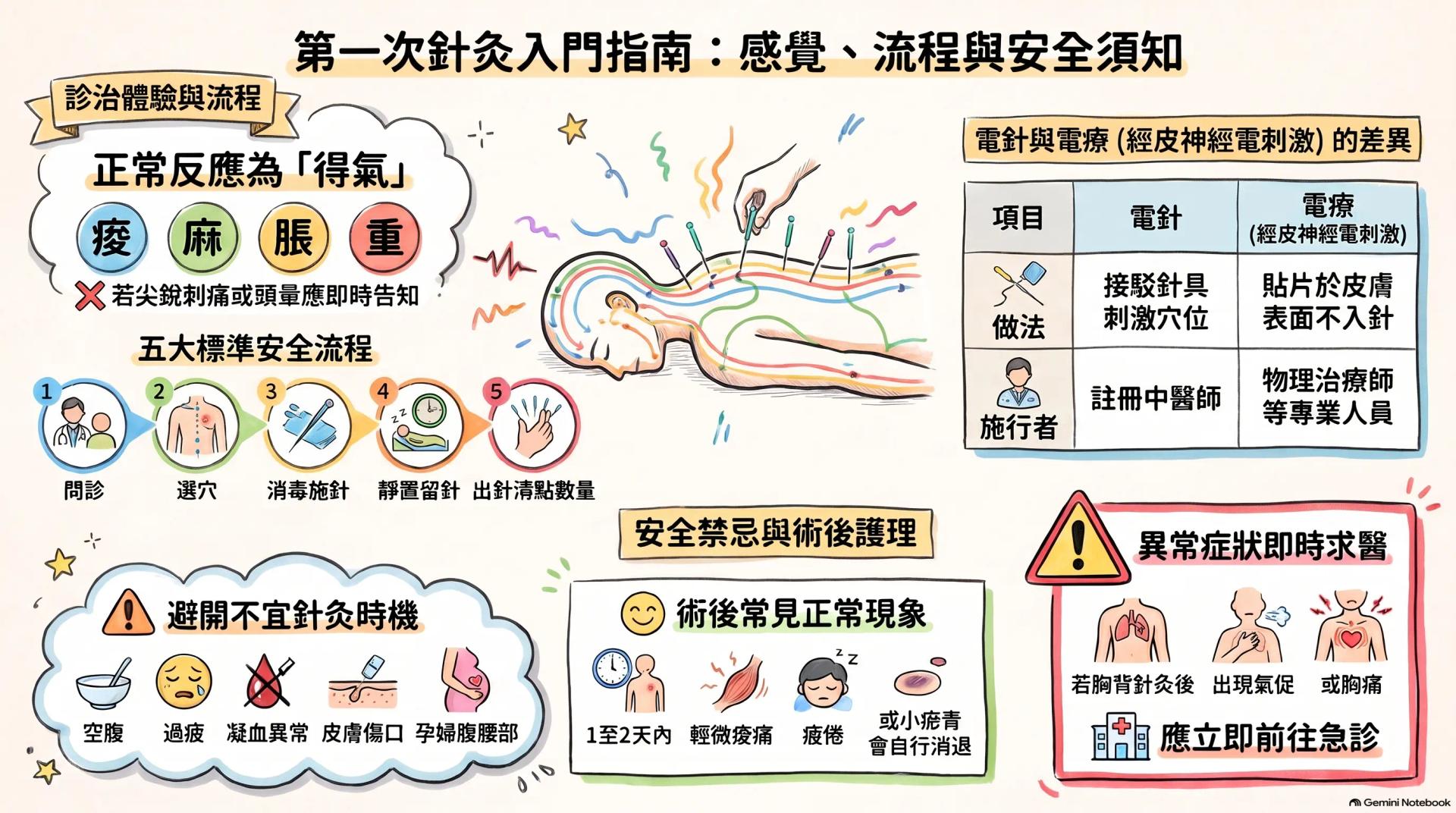
Does Acupuncture Hurt? What to Know Before Your First Visit
Does acupuncture hurt, and is feeling worse afterwards normal? Reviewed by Dr Wong, this guide covers the sensation, a typical session, electroacupuncture, session numbers and who should avoid it.
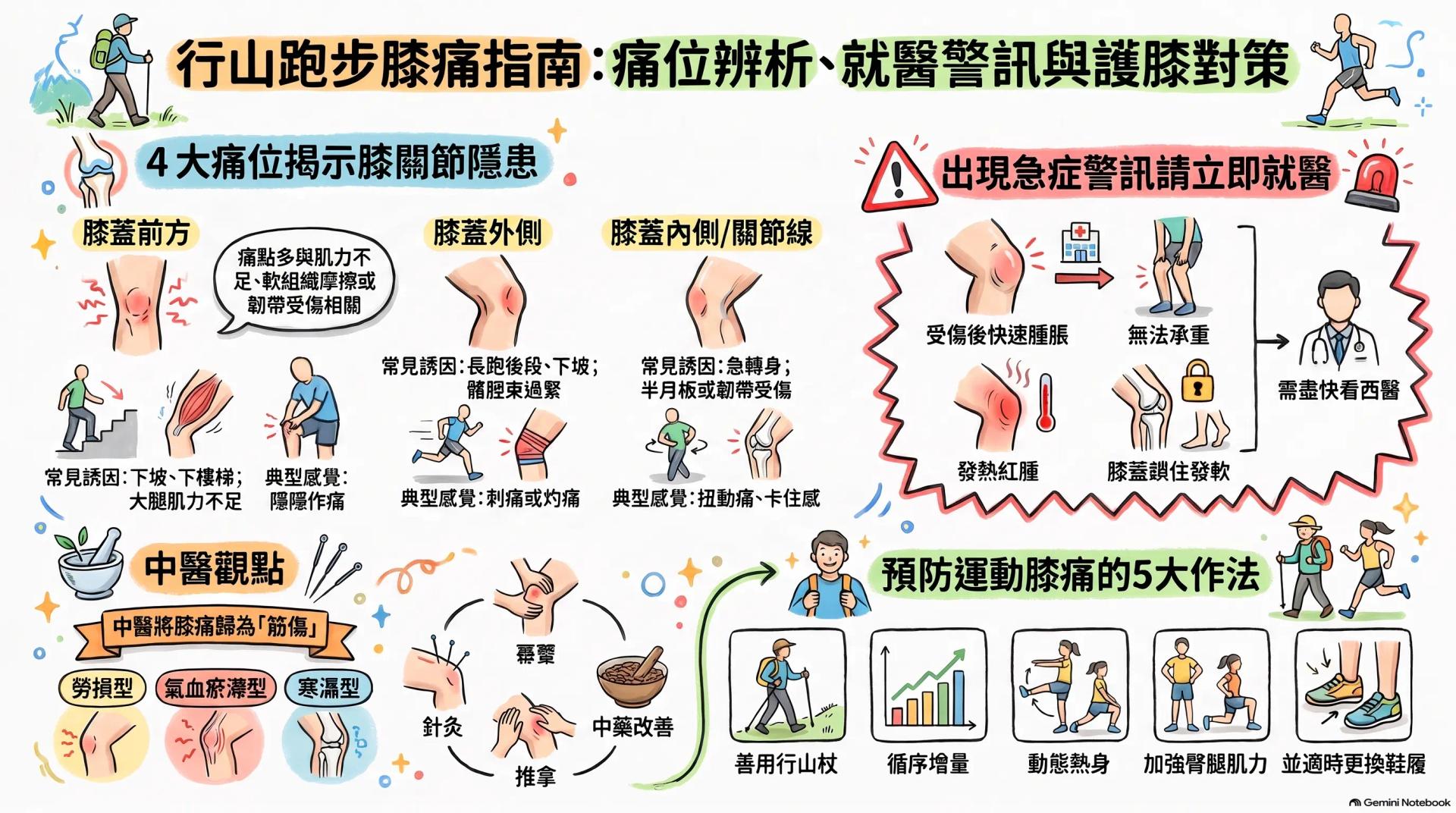
Knee Pain After Hiking or Running: TCM or Western Doctor?
Knee pain after a downhill hike or a long run? Reviewed by Dr Wong, this guide explains four common pain locations, warning signs that need a Western doctor, the TCM approach and prevention tips.
Office Neck and Shoulder Pain: 5 Causes and Warning Signs
Neck and shoulder pain at work is not just about posture. Reviewed by Dr Wong, this guide covers five common causes, the TCM approach, warning signs that need urgent care and simple office habits.