Exercising but Not Losing Weight? A TCM Guide to the Plateau
After three months or more of regular exercise, when weight and waistline stop budging, the reason is rarely simply "training harder is needed". Metabolic adaptation, insufficient recovery, hidden calorie creep — together with spleen-stomach weakness, qi-blood deficiency or liver-qi stagnation — can lock a regular exerciser into a plateau. This article walks through appetite, sleep and fatigue as three self-check signals, and clarifies whether the next step is to add volume, recover, or arrange a Western workup first.
Medical review: Dr. To Ching, Jenny,Registered Chinese Medicine Practitioner #009330
1-Minute Quick Answer
When weight stalls after three months of regular exercise, the usual causes are metabolic adaptation, poor recovery and hidden calorie creep, not a lack of effort. Check three signals — appetite, sleep and fatigue — to decide whether to train more, recover first or get a medical check-up (reviewed by Dr To Ching, CMCHK 009330).
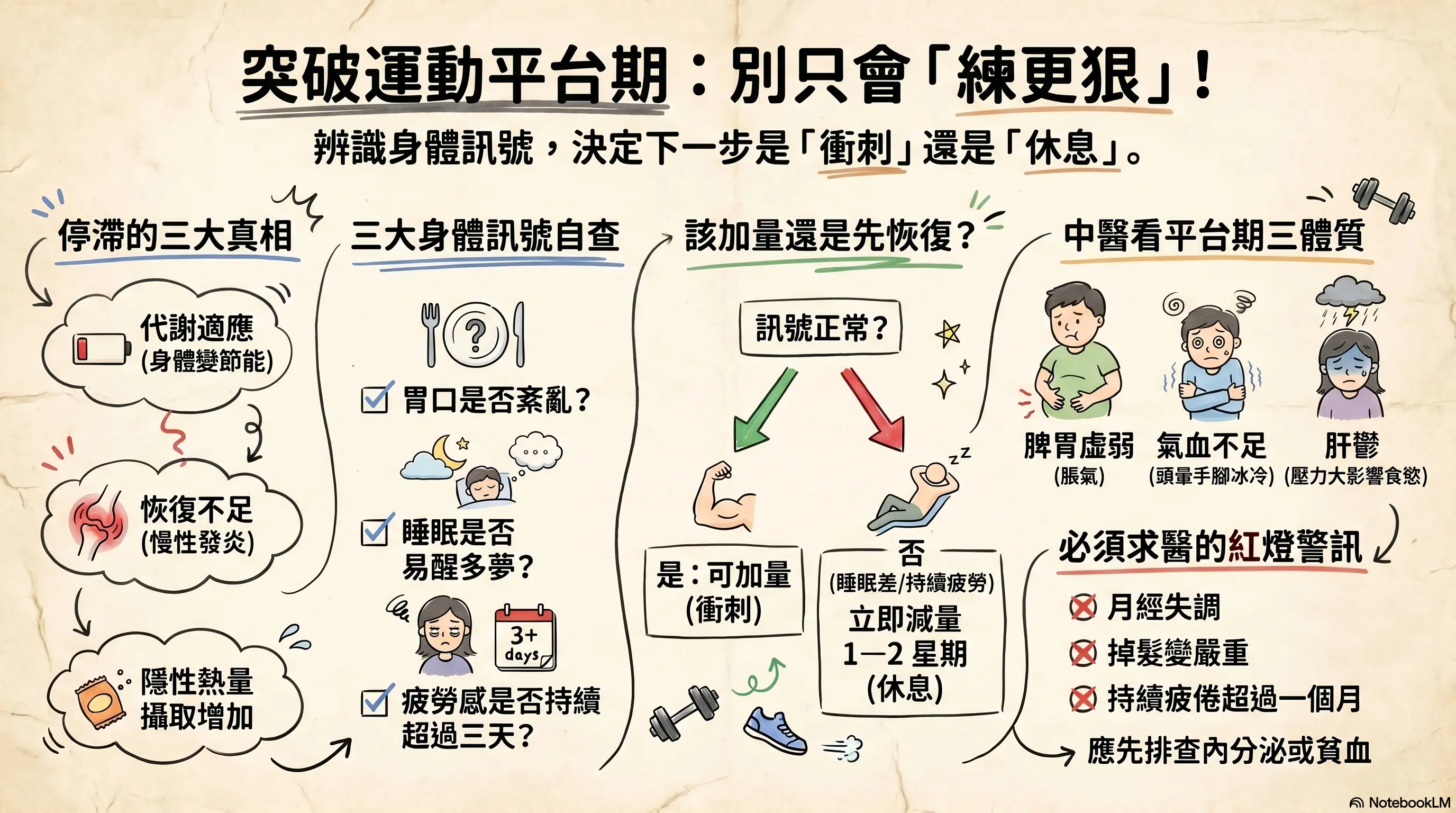 For quick reference, this image was generated by NotebookLM. Some Chinese characters may not render perfectly; we appreciate your understanding.
People who train seriously have all met this story: in the first one or two months, weight drops, clothes loosen and the waistline shrinks; after three months, the scale seems to "stick" — and sometimes even creeps back. A trainer may say, "Train harder", "Be stricter with food", and on goes more volume and a lower-calorie diet. But for some people, more training brings more fatigue, more restriction brings worse sleep, and the plateau only drags on.
The truth is, an exercise plateau is rarely just about "not training enough". The common clinical pattern is that as weight loss continues, the body adapts to the negative-energy balance, the basal metabolic rate falls, the deficit narrows and a "new equilibrium" emerges. From a TCM perspective, this "adaptation phase" usually arrives alongside signals of spleen-stomach, qi-blood or liver-qi imbalance — and those signals show up before the scale stops moving.
This article will help you separate the three real causes of an exercise plateau; show how to read appetite, sleep and fatigue as three self-check signals; decide whether to add volume or recover first; recognise when a Western workup for endocrine, anaemia or thyroid problems is needed; and outline how TCM, from the angles of spleen-stomach generation of qi-and-blood and liver-qi flow, can help a regular exerciser break out of the plateau.
Note: This article is general adult health education and does not substitute for the training-cycle management of competitive athletes or for individualised care of people with a history of eating disorders. If you have had no period for more than three months, significant hair loss, a confirmed thyroid or endocrine condition, or are on hormonal or metabolic medication, follow your prescribing doctor's instructions.
After 3 Months, Progress Stops — 3 Real Reasons
When a person sustains regular exercise for 3–6 months, the weight curve often flattens. The common reasons fall into three groups — none of which is simply "not training enough".
| Reason | Mechanism | Typical picture |
|---|---|---|
| Metabolic adaptation | As weight falls, the BMR falls; the deficit narrows | Same food and training, but weekly loss shrinks from 0.5 kg to almost zero |
| Insufficient recovery | Training load exceeds what the body can repair; chronic fatigue and low-grade inflammation | Soreness lingers, sleep worsens, easy colds, training performance falls |
| Hidden calorie creep | Larger portions after workouts, late nights with eating out, sweet weekend drinks | "Eating healthily" while daily intake has crept back to maintenance |
Watch out also for the "false plateau" — old eating habits resurfacing, or fluid retention around the cycle, can briefly look like a true plateau. If the body has lost less than 5% of starting weight, or if "stalling" happens within the first two months, the cause is more likely loose discipline or cyclical oedema than real adaptation.
Signal 1: Appetite
Appetite is the easiest signal to ignore, but in TCM it is the most direct read on the spleen-stomach.
Pattern 1: Overeating you cannot control after workouts
Often a sign that the load is too heavy or the deficit is too deep, triggering "compensatory appetite". Frequent after several days of higher volume or very low intake. The TCM picture is often "spleen-stomach yin–yang imbalance" — transformation cannot match expenditure, and appetite surges.
Pattern 2: Normal eating with post-meal bloating and slow digestion
A sign of spleen-qi deficiency. The TCM "spleen" is not the Western anatomical organ but the integrated digestive-absorptive function. With weak spleen-qi, the same portion can bring bloating, easy fatigue, tooth marks on the tongue and loose stools. Adding load at this point only deepens the deficit.
Pattern 3: Bingeing or losing all appetite under stress
In TCM, this is "liver-qi overacting on the spleen" — the liver governs the smooth flow of qi and influences emotion and digestion. Common dieting stressors — "scale anxiety" and "social-meal avoidance" — fall here.
Signal 2: Sleep
Sleep is the window for recovery hormones and muscle repair. When sleep changes in the following ways, a plateau is usually in progress.
- Trouble falling asleep, racing heart: overtraining and elevated cortisol
- Mid-night waking, light sleep with dreams: qi-blood deficiency, the spirit unsettled
- Early-morning waking, unable to return to sleep: liver-qi stagnation or sustained anxiety
- Same hours yet unrested in the morning: poor recovery quality, low-grade muscle inflammation
The TCM ideas of "the heart housing the spirit" and "the liver storing blood" map directly to sleep quality. Chronic short sleep blunts leptin and ghrelin and makes appetite regulation harder, which feeds back into the plateau.
If your sleep has been off for a week, do not add training load — recovery comes first.
Signal 3: Fatigue and Recovery Capacity
Fatigue divides into normal post-workout tiredness and a "chronic" version that exceeds the body's capacity to recover. The latter is the harbinger of a deepening plateau.
Common signs of chronic fatigue / overreaching:
- Soreness lasting more than three days after training
- Resting heart rate 5–10 beats above normal
- Colds, sore throats or mouth ulcers within a fortnight
- Stiff hands and feet in the morning
- Training performance regressing (cannot hit usual reps at the same weight)
- Marked reduction in menstrual flow, or a longer cycle
When three or more of these co-exist, the message is not "try harder" — it is "step back".
When to Add Volume vs Recover First: A Simple Decision Table
Putting appetite, sleep and fatigue together as a quick self-check:
| Signal combination | Next step |
|---|---|
| Stable appetite + 7+ hours sleep + recovery in 1–2 days | A modest 10% increase in intensity or duration is reasonable |
| Disordered appetite, normal sleep | Re-examine the calorie deficit; do not add training yet |
| Normal appetite, poor sleep | Restore sleep (less evening caffeine, lighter evening sessions); do not add load |
| Poor sleep + sustained fatigue | Cut training by 30–40% for 1–2 weeks; recovery first |
| Period changes + thinning hair + sustained fatigue | Arrange Western workup for endocrine, anaemia and thyroid first; do not add load |
When a Western Doctor Should Come First
TCM care can improve constitution and recovery, but the following situations need a Western workup first:
- More than three consecutive months of significantly lighter periods or amenorrhoea
- Marked hair loss, thinning shafts, visible scalp at the crown
- Heat intolerance, fast heart rate, tremor, weight loss with appetite up (possible hyperthyroidism)
- Cold intolerance, constipation, dull complexion, weight not falling or rising (possible hypothyroidism)
- Pallor, easy dizziness, marked exertional breathlessness (possible anaemia)
- PCOS-related symptoms: irregular cycles, acne, facial hair
- Persistent fatigue over one month that interferes with work
Basic Western tests include complete blood count, thyroid function, female reproductive hormones, fasting glucose and insulin; TCM does not replace these.
A TCM View of the Plateau: Three Constitutional Types
From the TCM perspective, three patterns recur, each with a different direction of care. Note again that these are treatment principles, not fixed prescriptions — the specific plan must be set by a registered TCM practitioner in person.
Spleen-stomach weakness
Common in people with a small appetite, post-exercise appetite drop, post-meal bloating, tooth marks on the tongue. Adding training intensity here is counter-productive; the direction is to tonify spleen qi and strengthen transformation, then adjust diet so the body has enough raw material for muscle.
Qi-and-blood deficiency
Common in light periods, pale complexion, dizziness after exercise, cold hands and feet. More training does not bring more muscle for this picture and tends to bring more fatigue and injury. The direction is to tonify qi and nourish blood, working in parallel on spleen-stomach production and meridian circulation.
Liver-qi stagnation
Common in high-stress patterns: trouble falling asleep, large swings in appetite under tension, premenstrual breast tenderness and irritability. The liver governs free flow; when it is stuck, sleep and the spleen-stomach rhythm suffer. The direction is to soothe liver qi and strengthen the spleen and calm the spirit.
These three rarely stand alone — they layer onto each other, and identifying the dominant one is the core of the TCM evaluation.
Day-to-Day Adjustments You Can Start With
While arranging any Western workup or awaiting the TCM evaluation, the following habits reduce the chance of the plateau worsening:
- Schedule a deload week every 6–8 weeks, cutting training load by 30–40% to let the body finish recovery.
- Aim for 7+ hours of sleep: the time is the recovery window for hormones and muscle.
- Include protein at every meal (lean meat, eggs, soy products, seafood), at 1.0–1.6 g per kg of body weight.
- Do not eliminate starch entirely. Very low carbohydrate intake hurts both performance and sleep and lengthens the plateau.
- Track training performance and food. Three consecutive weeks of regressing performance or disturbed appetite is a signal — do not push through.
- Measure waist and body-fat every 2–4 weeks: a steadier read than daily weighing.
How Aspira TCM Clinic Evaluates the Exercise Plateau
The registered Chinese medicine practitioner will first look at your training type and volume, the dietary structure of the past three months, sleep quality, menstrual changes, post-training recovery, the tongue-and-pulse picture, sources of stress, and any current Western medication, supplements, protein powder or meal replacements.
If the picture is stable and suits TCM care, the pattern is identified as spleen-stomach weakness, qi-blood deficiency, liver-qi stagnation or a mix, and Chinese herbs, acupuncture, ear-point therapy, nutritional adjustments and lifestyle changes are considered. If your period has stopped for over three months, hair loss is marked, or fatigue is interfering with daily work, a Western workup of endocrine, thyroid or anaemia takes priority.
If you have been training for months and weight or body-fat will not move, bring the last four weeks of training records, a food log, and notes on cycle and sleep, and book a TCM consultation.
To find out whether TCM care suits your situation, contact Aspira TCM on WhatsApp (9679 2293 / wa.me/85296792293), or read more about Dr To Ching. If any of the warning signs above apply, please see a doctor first.
Disclaimer: This article is general health education only and does not replace individual diagnosis, examination, medication or treatment advice. If you have a relevant condition, ongoing symptoms or are on medication, follow your doctor's instructions for follow-up and monitoring; any medication adjustment must be discussed first with your prescribing doctor.
Disclaimer: This article is for health education and reference purposes only and does not constitute medical advice, diagnosis, or treatment. Each patient's condition is unique and treatment outcomes vary. Please consult a registered TCM practitioner or qualified healthcare professional for health concerns.
Further Reading
Hand-picked related articles and real cases to read next.
Eating Little but Not Losing Weight? TCM on Weak Digestion
Skipping breakfast, eating only salad for lunch, and cutting rice at dinner may still leave weight unchanged — or even make you more tired, swollen, and stuck. This article explains why eating less does not always lead to better fat loss, and how TCM interprets weak digestion, dampness, deficiency, and the weight-loss plateau.
Why Do Late Nights Make You Gain Weight Faster? A TCM Look at Sleep, Cortisol and Runaway Appetite
After an all-nighter the cravings for chips, late snacks and milk tea come hard; the scale hasn't moved but the waistband has; new parents can put on 5 kg within six months. Late-night weight gain is not an illusion — the root cause is not "eating at night" but the cascade triggered when sleep quality drops. This guide explains how poor sleep drives weight gain through cortisol, ghrelin, leptin and insulin sensitivity, adds a TCM view of nighttime liver-gallbladder repair and constitutional patterns, lists when to see a Western doctor first, and offers four things you can start today.
Will Cutting Rice Make You Slim? TCM on the Risks of Cutting Carbs
Cutting white rice and starch — low-carb dieting — has been popular for years, but the rapid early weight loss is mostly water; longer-term carb restriction can bring constipation, menstrual changes, thinning hair, low mood and fatigue. From the TCM angle of "the five grains nourish life" and the spleen-stomach as the engine of transformation, starch is not the enemy. This article examines what carb-cutting actually does, four common after-effects, who should not try it, and the choices in food type, portion and timing that matter more than the binary of "cut or not".
Want to learn more? WhatsApp us for a free consultation
Book via WhatsAppExplore our full range of treatments: Traditional TCM Services
Related Articles
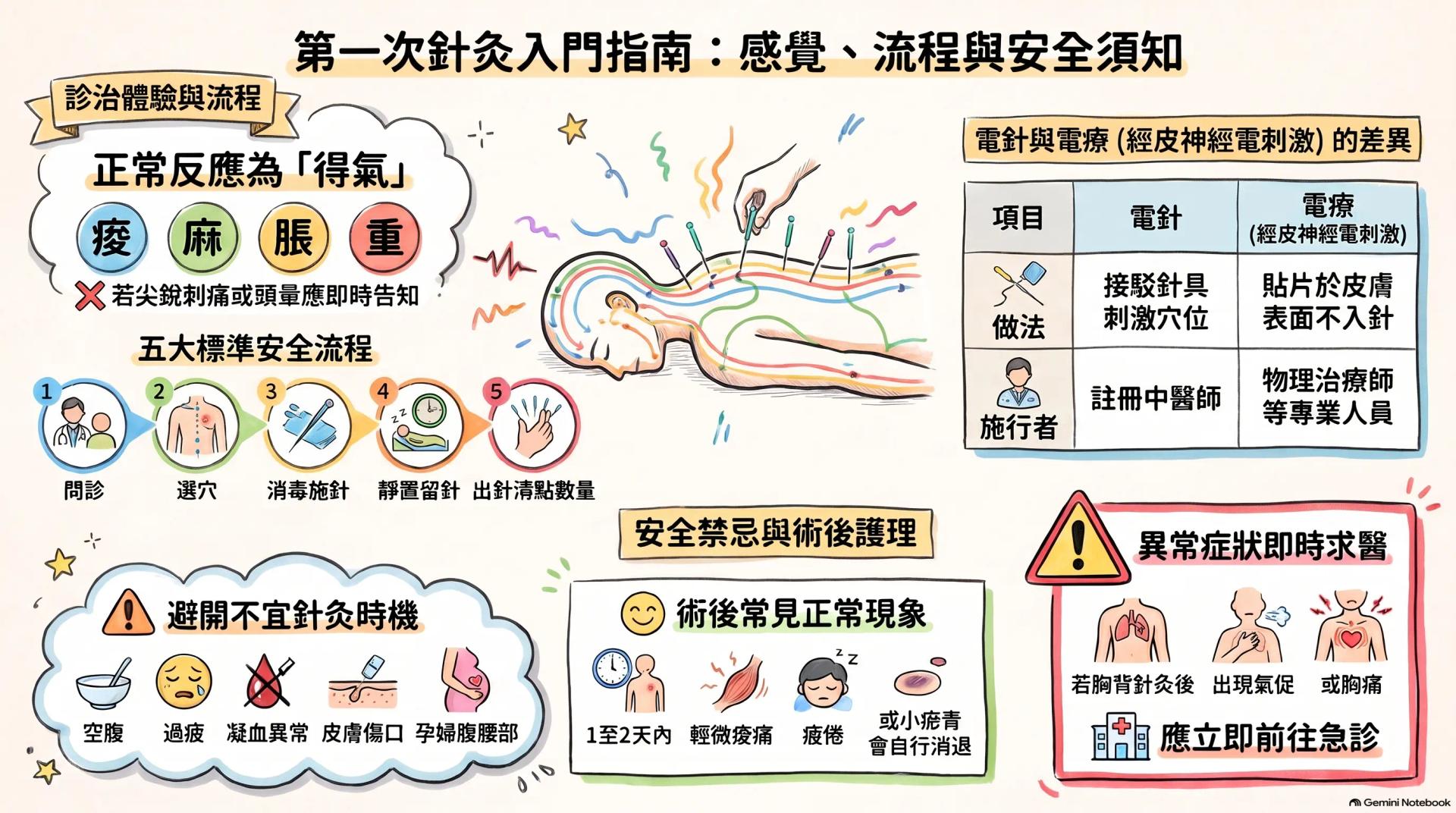
Does Acupuncture Hurt? What to Know Before Your First Visit
Does acupuncture hurt, and is feeling worse afterwards normal? Reviewed by Dr Wong, this guide covers the sensation, a typical session, electroacupuncture, session numbers and who should avoid it.
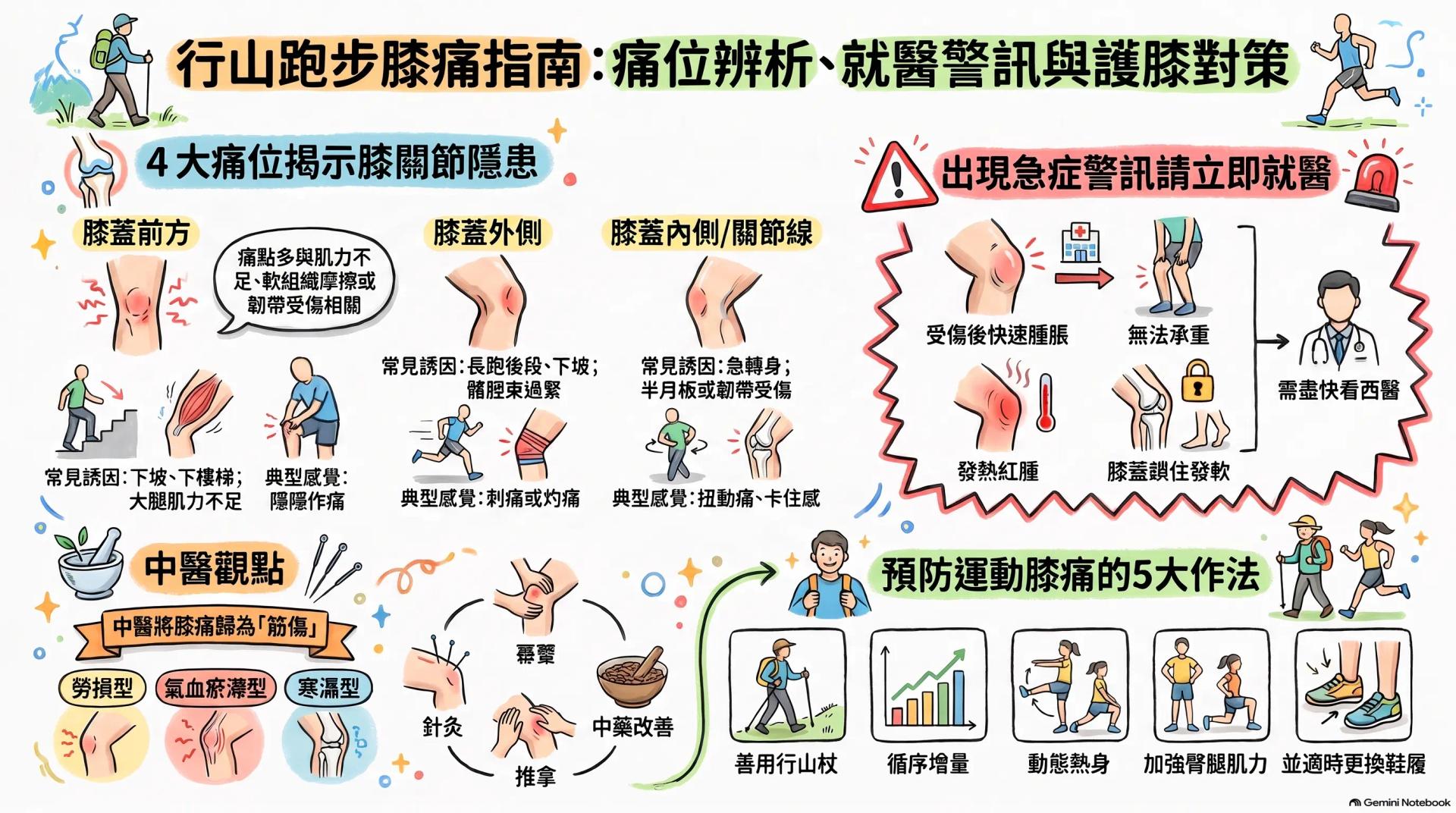
Knee Pain After Hiking or Running: TCM or Western Doctor?
Knee pain after a downhill hike or a long run? Reviewed by Dr Wong, this guide explains four common pain locations, warning signs that need a Western doctor, the TCM approach and prevention tips.
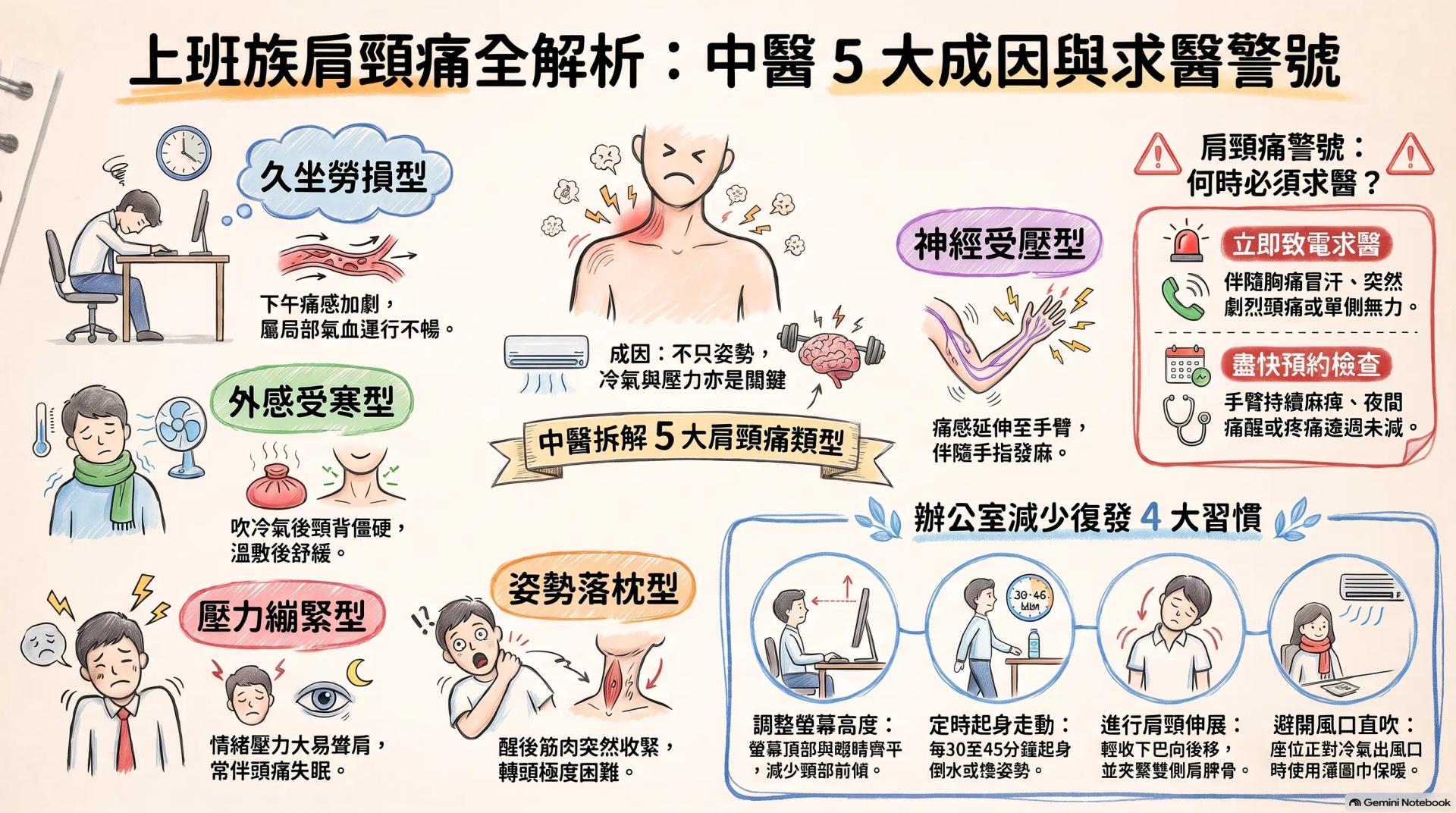
Office Neck and Shoulder Pain: 5 Causes and Warning Signs
Neck and shoulder pain at work is not just about posture. Reviewed by Dr Wong, this guide covers five common causes, the TCM approach, warning signs that need urgent care and simple office habits.