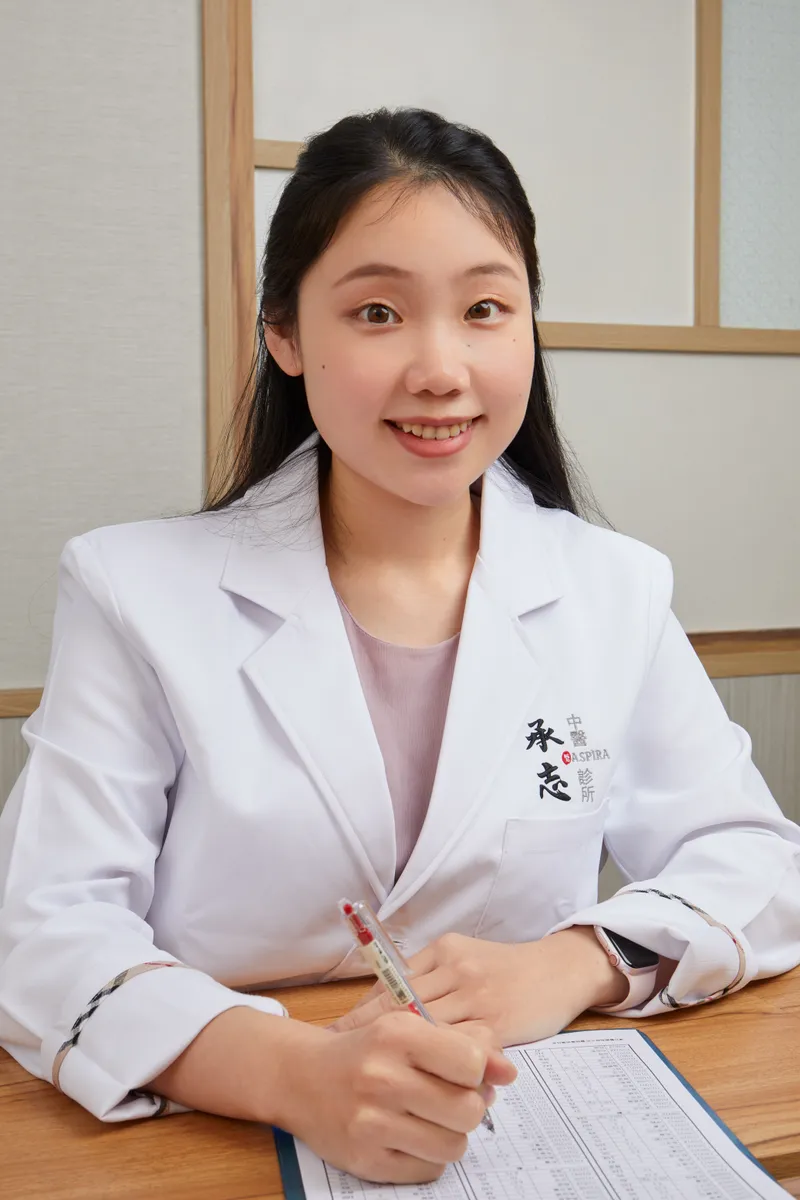
Dr. To Ching, Jenny
Registered Chinese Medicine Practitioner
Registered TCM Practitioner (Reg. No.:009330)
Specialties
Profile
Dr. To focuses on TCM gynaecology, using acupuncture and herbal medicine to treat menstrual pain, endocrine imbalance, and postnatal recovery, complemented by facial acupuncture and postpartum belly-binding for comprehensive pre-conception to postnatal care. She also has clinical experience in paediatrics, treating childhood allergies and digestive issues. Attentive and patient, with a gentle needling touch.
Qualifications
- Registered Chinese Medicine Practitioner (Hong Kong)
- Bachelor's Degree in Chinese Medicine, Beijing University of Chinese Medicine
- Master's Degree in Chinese Medicine (General Practice), The Chinese University of Hong Kong
- F.A.C.E. Cosmetic Acupuncture Certification
- Professional Postpartum Abdominal Binding Certification, TQUK, UK
Education
- The Chinese University of Hong KongMSc in Chinese Medicine
- Beijing University of Chinese MedicineBachelor of Chinese Medicine
Years of Practice
6 years
Articles by Dr. To Ching, Jenny
Overthinking and Sleepless Nights — Ms Lee's TCM Journey to Restful Sleep
A female office worker in her 30s struggled with difficulty falling asleep, frequent dreaming, and waking easily due to chronic work stress and anxiety. After six sessions over four weeks combining herbal medicine and acupuncture prescribed by Dr To, her sleep quality improved significantly and she regained her energy and quality of life.
Insomnia: Sleeping Pills or TCM? An Honest Comparison
Sleeping pills offer immediate relief but carry dependency risks; TCM treats insomnia at the root but requires patience. This article honestly compares both approaches — benefits, risks, costs, and who each is best suited for — to help you find the right solution for your sleepless nights.
Postpartum Belly Binding Guide: Timing, Cautions & 5 Steps
Rushing into postpartum belly binding can cause uterine prolapse and urinary incontinence. This guide from Dr To covers the golden timeline, three key contraindications, a five-step recovery flow, and how to integrate belly binding, pelvic realignment and core rebuilding into one complete postpartum recovery plan.
A Self-Check Guide to 4 Types of Menstrual Pain and Relief Tips
Menstrual pain is not something you simply have to endure. This guide explains the difference between primary and secondary dysmenorrhea, outlines four common TCM patterns, highlights five warning signs that need medical review, and offers practical relief strategies for everyday care.
“Pillow Face” After Injectables? 4 Common Causes and How TCM Cosmetic Acupuncture May Help
If the face looks increasingly puffy, heavy or unnatural after injectables, it may not be simple swelling. It may be the “pillow face” look that follows repeated aesthetic injections. This article explains four common causes, when to return to your injector first, and where TCM cosmetic acupuncture may help.
How TCM Reads Vaginal Discharge — Fishy, Yellow-Green, Bloody and Heavy
Persistent changes in vaginal discharge are health signals worth attending to. This article uses four dimensions — colour, smell, texture and volume — to help you tell normal from abnormal, outlines six common abnormal presentations, four TCM pattern directions, and how TCM works on the root constitution to reduce recurrence rather than only relieving itch or treating an infection.
Postpartum Confinement Myths: Bathing? Washing Hair? TCM Advice and What to Avoid
Traditional postpartum confinement rules were shaped by a very different living environment. This article unpacks six common myths (no bathing, no drinking water, avoiding all wind, "the more tonics the better"), gives phased diet and lifestyle guidance, and lists what TCM does ask mothers to genuinely avoid — and when to see a Western doctor first.
ADHD in Children: Symptoms and the TCM Approach
ADHD is a neurodevelopmental condition, not a parenting issue, and diagnosis must come from a developmental paediatrician or child psychiatrist. This article walks through the three ADHD presentations and their symptoms, the workup involved, four TCM pattern directions, how TCM can complement (not replace) mainstream treatment, five things parents can start today, and the warning signs that require Western medical attention first.
Endometriosis: Causes and TCM Care for Painful Periods, Infertility and Dyspareunia
Endometriosis is one of the most under-recognised chronic conditions in women's health, possible from menarche through to menopause. This article covers common symptoms, lesion locations, five TCM pattern directions, the different TCM approaches during and outside menstruation, how care coordinates with fertility planning, and warning signs that should not be left to TCM alone.
Kids Won't Eat? A TCM Perspective on the Causes and What Parents Can Do
Poor appetite in children is one of the most common parenting headaches. This article breaks down four common causes from a TCM perspective (spleen-stomach weakness, food retention, liver stagnation, post-viral effects), three things parents can start today, five common paediatric tuina techniques, three gentle food therapies, and the warning signs that warrant a paediatrician first.
Paediatric Allergic Rhinitis: A TCM Guide for Hong Kong Parents
A child who sneezes every morning with a blocked nose, rubs the nose and eyes, has dark under-eye shadows, sleeps poorly and struggles to concentrate at school — this is very likely allergic rhinitis. This article explains how to tell allergic rhinitis from a cold, how TCM works through lung, spleen and kidney insufficiency and a weak surface defence, treating the flare and the quiet phase differently, how the home dust-mite environment fits in, and when to see a Western doctor first.
Is My Child Growing Tall Enough? A TCM View of Growth and "Zhuan Gu"
When a child looks shorter than their peers, or grows only a little each year, parents naturally wonder about "bone transformation". This article first explains what normal growth is (the growth curve) and when to see a paediatric endocrinologist, then covers the key drivers of height (genetics, nutrition, sleep, exercise), and how TCM — through "the kidney governs the bones" and "the spleen and stomach are the foundation of later life" — conditions the spleen, stomach and kidney according to the stage of development. The point is to create good conditions for a child to grow, not to "force height", and no centimetre figure is promised.
Postpartum Hair Loss: TCM Causes, Recovery Timeline and Care
Two to four months after giving birth, hair comes away by the handful when washing or combing, and many mothers worry about going bald. This article first explains the Western view — postpartum hair loss is usually a temporary telogen effluvium, and most people recover on their own within six months to a year — then uses the TCM ideas that "hair is the surplus of blood" and "the kidney manifests in the hair" to unpack the roles of postpartum qi-and-blood depletion, blood deficiency, kidney deficiency and liver stagnation, and lists when to see a Western doctor first.
Preparing for Pregnancy: A TCM Preconception Care Guide
When a couple plans for pregnancy, they often hear "condition your body first" — but what does "conditioning" actually mean? This article explains what TCM preconception care focuses on (menstruation, qi and blood, the Chong and Ren channels), how it runs alongside Western pre-pregnancy checks, common constitutional directions and the idea of cycle-based care, and when to see a gynaecologist or fertility specialist first. TCM can improve the constitution and support preparation, but it cannot guarantee pregnancy.
PMS: Mood Swings, Breast Tenderness and Bloating — A TCM Guide
For one to two weeks before each period, many women feel like "a different person" — anxious, irritable, tearful, with tender breasts and bloating. This is very likely premenstrual syndrome (PMS). This article explains the common symptoms, how PMS differs from the more severe premenstrual dysphoric disorder (PMDD), how TCM addresses the mood, breast-tenderness and fluid-retention clusters through liver and spleen patterns across the cycle, and when to see a Western doctor first.
Eye Bags and Dark Circles That Eye Cream Cannot Fix: 4 TCM Patterns and How Cosmetic Acupuncture Can Help
Daily eye cream and eye masks, but the dark circles and eye bags only deepen — is it 'just age', or is the body sending a signal? Dark circles and eye bags can stem from qi-blood deficiency, liver-qi stagnation with insomnia, spleen deficiency with water retention, or kidney deficiency with blood stasis — and they may also reflect structural fat, chronic disease, or allergy. Dr To breaks down four TCM patterns, a self-check guide, five red-flag signals warranting medical investigation, and the cosmetic acupuncture directions that correspond to each pattern.
Postpartum Lochia That Will Not Settle: Telling Normal From Abnormal, and When to Seek Care
Weeks after the birth and the lochia still has not settled. This article explains the normal course of lochia, how it differs from a period, which situations require immediate medical care, the common causes and misconceptions, and how Chinese medicine can help.
Book now and start your health journey
Limited slots available today
Book via WhatsAppAspira TCM — Your path back to health