Sciatica Prevention: Bad Habits, Diet and Daily Care Tips
Sciatica isn't only about treatment — your daily habits and diet play a big role too. In this article, Dr Wong explains which everyday habits increase your risk of sciatica, which foods may help ease it, and simple daily habits that reduce the chance of it coming back.
Medical review: Dr. Wong Ka Fai,Registered Chinese Medicine Practitioner #009985
1-Minute Quick Answer
Long sitting, leg-crossing and poor lifting posture can raise your risk of sciatica, while foods like walnuts and kelp may help ease symptoms — Dr Wong recommends pairing this with daily stretching to reduce recurrence (reviewed by Dr Wong Ka Fai, CMCHK 009985).
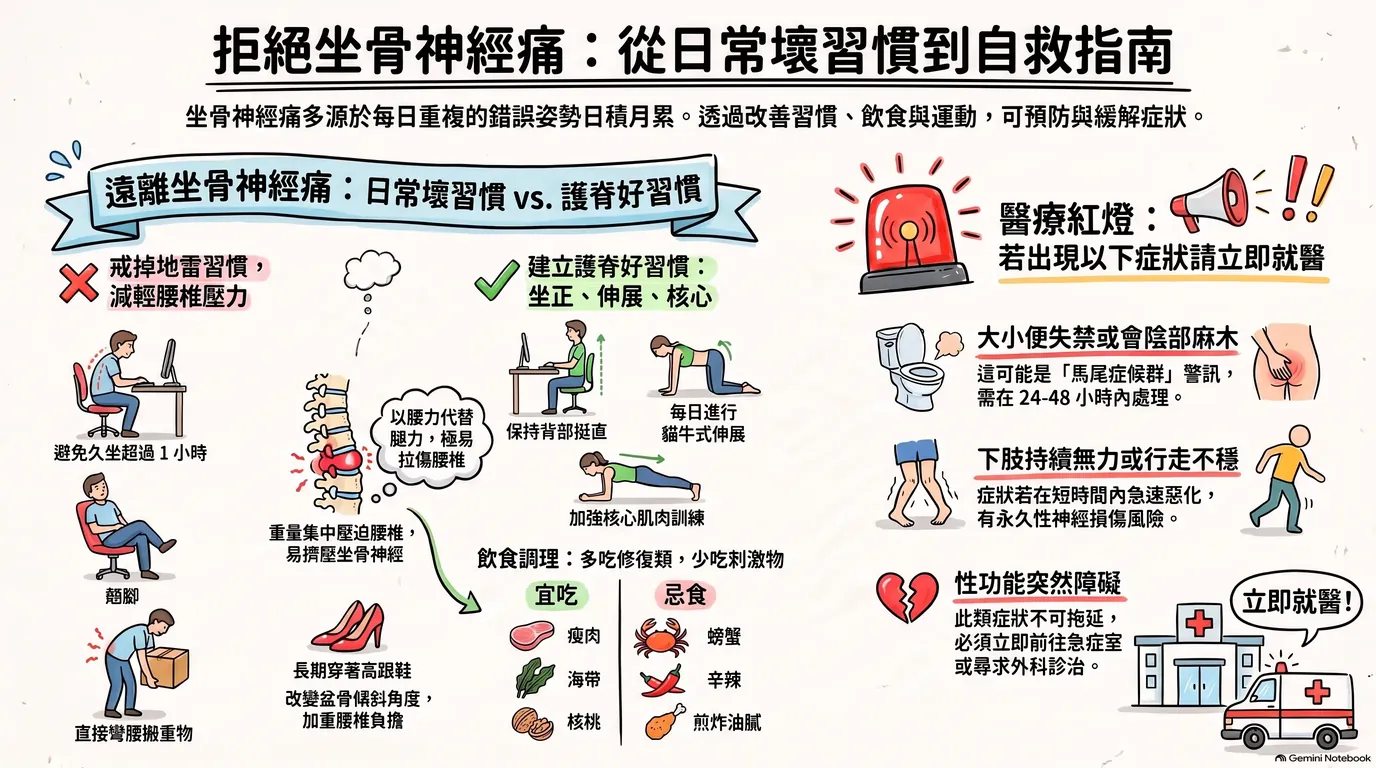 This image was generated using NotebookLM to help illustrate the article; some Chinese characters may not display correctly.
Many people assume sciatica is a condition that only affects older adults from wear and tear, unrelated to their own daily habits. In fact, sciatica is often not the result of a single strain, but of small, repeated movements in everyday life that gradually put strain on the lower spine.
Dr Wong regularly encounters this kind of question in clinic: many office workers who sit for long hours, and have a habit of crossing their legs, start noticing a dull, shooting pain in the buttock and the back of the thigh — sometimes radiating down to the calf — before realising it's an early sign of sciatica.
In this article, Dr Wong explains which everyday habits raise your risk of sciatica, which foods may help ease it, how to prevent it day to day, and — importantly — which situations mean you should see a doctor immediately rather than waiting it out.
What Are the Symptoms of Sciatica?
Sciatica is not simply lower back pain — it is pain that radiates along the path of the sciatic nerve, and typically presents as:
- Pain that starts in the lower back or buttock and extends down the back of the thigh to the calf or even the foot, usually on one side only
- A sharp, burning, or electric-shock-like sensation, in addition to the pain itself
- Numbness or tingling, especially after sitting or standing for long periods
- A sudden increase in pain when coughing, sneezing, or bending forward
Unlike ordinary lower back pain, sciatica pain doesn't stay confined to the lower back — it travels along the nerve and can affect everyday movements such as walking, sitting, or bending. With the symptoms in mind, the next sections cover which daily habits to watch out for, how diet and lifestyle can help with prevention, and when you should see a doctor without delay.
Daily Prevention: How to Reduce Your Risk of Sciatica
- Get up and move regularly — don't sit for more than an hour at a time
- Keep your back straight while sitting, with knees and hips at a 90-degree angle
- Bend your knees and use your legs, not your back, when lifting
- Stretch your lower back daily (e.g. cat-cow, bridge pose)
- Strengthen your core muscles
- Maintain a healthy weight to reduce strain on the lower spine
- Avoid sleeping on your stomach; if sleeping on your side, try placing a pillow between your knees
- Quit smoking
- Keep your lower back warm as the weather cools, to reduce exposure to wind, cold and dampness
Everyday Habits That Increase Your Risk of Sciatica
| Habit | Why it adds strain |
|---|---|
| Sitting for over an hour without moving | Body weight is concentrated on the lower spine for prolonged periods |
| Sitting cross-legged | Increases load on the lumbar spine, which can compress the sciatic nerve |
| Bending to lift without bending the knees | Uses the back instead of the legs, risking a lower back strain |
| Poor posture with no lower back support | An unsupported spine takes on more strain |
| Lack of exercise, weak core muscles | Without muscle support, the lower spine is more vulnerable to injury |
| Wearing high heels regularly | Alters pelvic tilt, adding strain to the lumbar spine |
| Smoking | Nicotine affects blood supply to bone, accelerating disc degeneration |
| Habitually sleeping on your stomach | Over-arches the lower back, adding pressure |
One-line takeaway: Sciatica is often not the result of a single strain, but the cumulative effect of these small daily habits.
Diet: Which Foods Can Help With Sciatica?
Foods to include
- Lean meat: provides quality protein to support recovery
- Kelp: considered in TCM to help ease nerve pain
- Walnuts: thought to support nerve function recovery
Foods to avoid
- Crab: considered a "trigger food" (發物) in TCM that may aggravate nerve pain
- Spicy or stimulating foods (such as chilli): irritate the digestive system and nerves
- Alcohol, fried and greasy food: adds to damp-heat, which is unhelpful for recovery
Herbal soups (for reference — check with a practitioner first, as constitutions vary)
Eucommia, Dipsacus and Papaya Soup Ingredients: 20g eucommia bark, 15g dipsacus root, 20g Chinese yam, 20g papaya, 5 red dates, 3 slices ginger, 500g lean meat Function: tonifies the liver and kidneys, strengthens tendons and bones, promotes circulation
Mulberry Mistletoe Egg Tea Ingredients: 30g mulberry mistletoe (桑寄生), 20g lotus seeds, 2 eggs, 5 red dates, 3 slices ginger Function: tonifies the liver and kidneys, dispels wind-dampness
Dr Wong's advice: dietary therapy is a supportive measure and cannot replace proper treatment. Everyone's constitution is different, so check with a practitioner before trying these soups — especially if you have a chronic condition or are taking medication.
When You Should See a Doctor Immediately
Most cases of sciatica can gradually improve with conservative treatment. However, the following warning signs are a medical emergency and require immediate attention at an emergency department or from a neurosurgeon — don't wait:
- Loss of bladder or bowel control, or urinary retention
- Numbness around the groin or inner thighs (saddle anaesthesia)
- Persistent leg weakness or difficulty walking
- Sudden sexual dysfunction
- Rapid worsening of symptoms over a short period
These signs may indicate cauda equina syndrome, which typically needs to be addressed within 24 to 48 hours — the sooner you seek treatment, the lower the risk of permanent nerve damage.
The TCM View of Sciatica
In TCM, sciatica falls under the categories of "bi syndrome" (痺症) and lower back and leg pain, and is generally linked to a few key factors:
- "Obstruction causes pain": when the flow of qi and blood is impeded, the meridians become blocked, resulting in pain and numbness.
- Liver and kidney deficiency: TCM holds that "the kidneys govern the bones, the liver governs the sinews" — when the liver and kidneys are deficient, the bones and sinews lose nourishment and become prone to strain and recurrence.
- Wind, cold and dampness: external pathogenic factors can invade and obstruct the meridians, particularly as the weather turns cold or with prolonged exposure to damp environments, often making symptoms worse.
- Qi stagnation and blood stasis: accumulated strain and poor posture over time can cause local qi and blood to stagnate, reinforcing the cycle of "obstruction causes pain."
How Does TCM Generally Approach Treatment?
- Acute phase: mainly acupuncture and tuina, to help relieve muscle spasm and pain by promoting circulation
- Recovery phase: combined with herbal medicine to tonify the liver and kidneys, dispel wind-dampness and invigorate blood circulation, addressing the underlying constitution
- Maintenance phase: exercise therapy and lifestyle adjustments to reduce the chance of recurrence
If your sciatica keeps coming back, see Sciatica That Never Fully Settles and Keeps Coming Back?. To learn more about the practitioner who leads our pain management care, see Dr Wong's profile.
Disclaimer: Every patient's constitution and condition are different, and treatment outcomes vary accordingly. The above is for reference only. Please consult a practitioner for a treatment plan tailored to your specific situation. Dietary and soup suggestions are shared for TCM academic purposes only and do not replace medical diagnosis or treatment. If you experience loss of bladder or bowel control, leg weakness, or other warning signs, please seek medical attention immediately.
Disclaimer: This article is for health education and reference purposes only and does not constitute medical advice, diagnosis, or treatment. Each patient's condition is unique and treatment outcomes vary. Please consult a registered TCM practitioner or qualified healthcare professional for health concerns.
Further Reading
Hand-picked related articles and real cases to read next.
Sciatica That Never Fully Settles and Keeps Coming Back? First Understand the Causes, Types and Common Treatment Pitfalls
Sciatica is a set of symptoms radiating along the sciatic nerve, not one disease. Causes vary — disc herniation, piriformis problems, lumbar degeneration — so treatment differs. Recurrence often comes from only masking pain, not identifying the type, or stopping early. TCM may combine acupuncture, cupping, bone-setting and herbs to ease symptoms; seek urgent care if bladder, bowel or leg strength is suddenly affected.
Sciatica Recovery — Combined Acupuncture and Bone-Setting Treatment
A professional driver in his 50s suffered from recurring sciatica for six months that severely impacted his work. After six sessions of combined acupuncture and bone-setting treatment by Dr Wong, his pain significantly improved and he returned to work.
Low Back Pain: 6 Common Causes & TCM Treatment Approaches
Low back pain is not always simply “kidney deficiency” or muscle fatigue. It may also be related to muscle strain, disc herniation, degenerative lumbar disease, kidney stones, urinary tract infection, or pelvic inflammation. This article explains six common causes of low back pain from a TCM perspective and outlines key distinctions and treatment directions.
Want to learn more? WhatsApp us for a free consultation
Book via WhatsAppExplore our full range of treatments: Traditional TCM Services
Related Articles
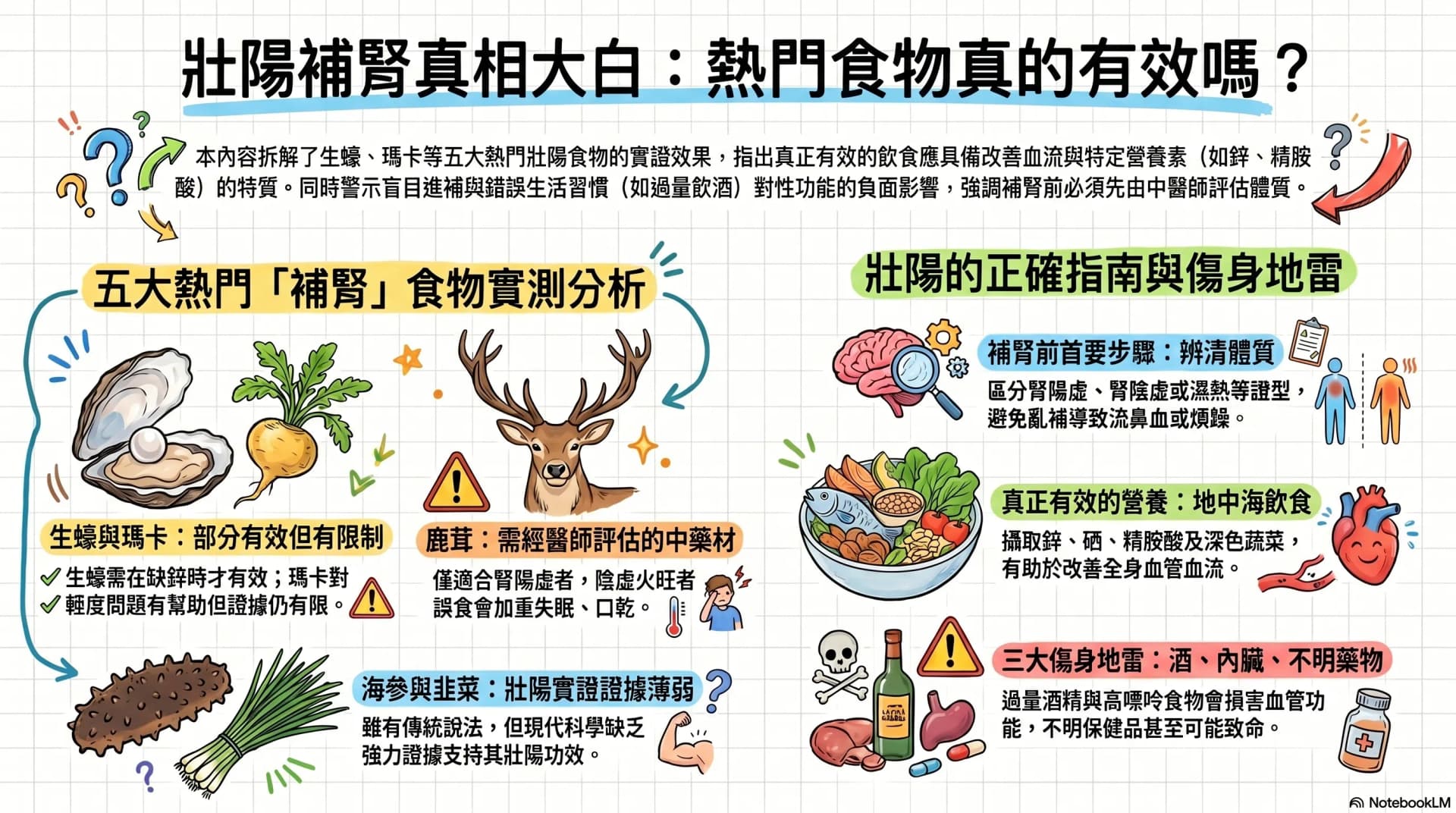
Do Oysters, Maca and Deer Antler Boost Male Vitality? 5 Myths
Do aphrodisiac foods actually work? This article opens with a rating table (effective / partly effective / effective within a TCM framework / weak evidence / no strong evidence), reviews the Chinese and Western medical evidence behind oysters, maca, deer antler, sea cucumber and Chinese chives, distils the 3 shared traits of foods that genuinely support male sexual function, and flags 3 commonly eaten items that can actually harm performance.
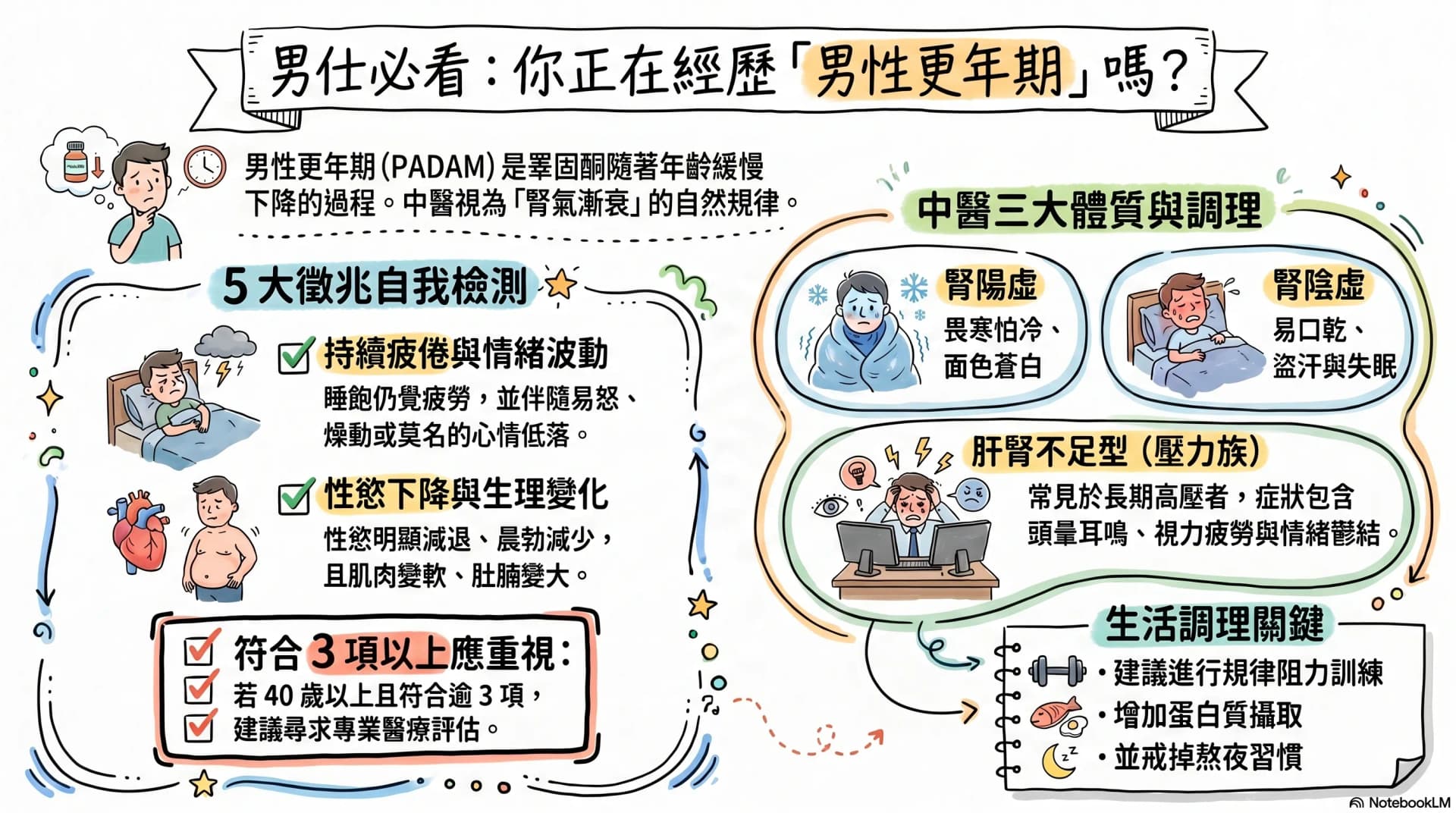
Male Menopause Through the TCM Lens: 5 Signs in Men Over 40
Unexplained fatigue, irritability, lower libido, poorer sleep and a growing belly after 40 are not just ageing or work stress — they may be male menopause. This article begins with a five-sign self-check, sets out three TCM patterns (kidney-yang deficiency, kidney-yin deficiency, liver-and-kidney insufficiency) with matching improvements, and compares the two treatment routes — testosterone replacement therapy versus TCM constitutional care.
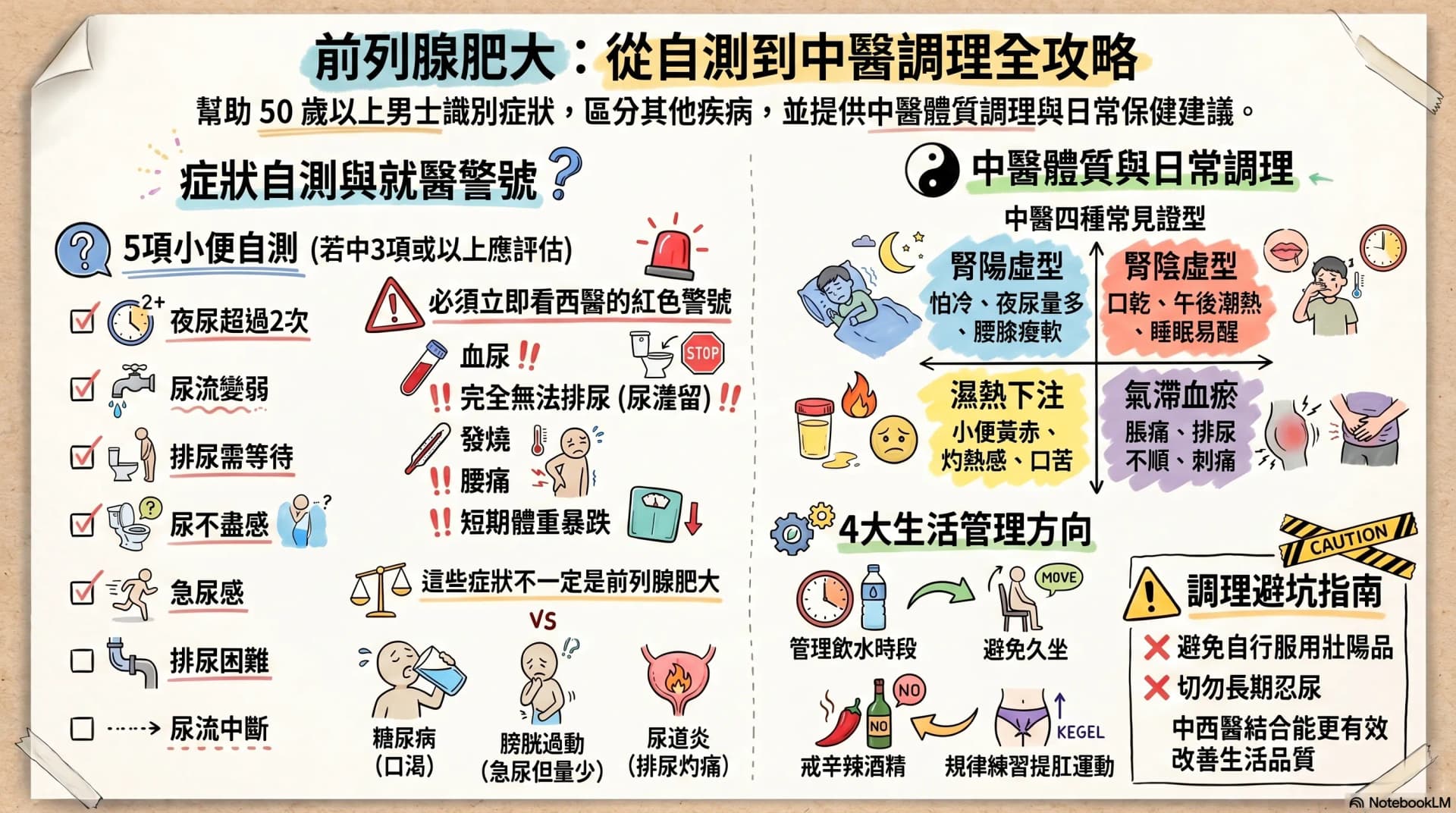
Enlarged Prostate: Are Nocturia and a Weak Stream Warning Signs?
After age 50, urinary frequency, nocturia, a weaker stream and having to urinate in stages may not simply be ageing. This article opens with a 7-symptom self-check, then sets out warning signs that warrant seeing a Western doctor immediately, four TCM constitution patterns, and four daily care directions any man can start with — helping you or your father decide the next step.